
Most deep tech founders do not lose because the tech is weak. They lose because someone bigger moves faster, copies what works, and wins the market with their own team and their own money. And when that happens, founders often say the same thing: “We should have protected this earlier.”
That is what this article is about.
An IP plan is not paperwork. It is a business move. When done well, it helps you build a moat fast, even before you have perfect product-market fit. It helps you tell a clear story to investors. It helps you price better. It helps you partner with large companies without fear. And it helps you sleep at night when a competitor shows up with a similar demo.
At Tran.vc, we work with technical teams building robotics, AI, and other hard tech. We invest up to $50,000 as in-kind patent and IP services, so you can turn your core work into real assets early, without giving up control too soon. If you want to see if this fits your startup, you can apply anytime here: https://www.tran.vc/apply-now-form/
IP Strategy Case Studies: How Deep Tech Startups Built Moats Fast
What this guide will give you
Deep tech founders rarely lose because their idea is “not good.” They lose because the world moves fast, and someone else ships a look-alike with more people, more money, and louder reach. When that happens, a team often says, “We should have protected this earlier,” even if they were the first to build it.
This guide shows how smart IP choices can help you stay in front, even when you are still early. The goal is not to “collect patents.” The goal is to protect what makes you hard to copy, and use that protection to sell, partner, and raise with more power.
Tran.vc helps technical teams do this in a very practical way. Tran.vc invests up to $50,000 as in-kind patent and IP services so you can build a strong foundation without giving up control too soon. If you want help mapping your IP path, you can apply anytime here: https://www.tran.vc/apply-now-form/
Why moats matter before you feel “ready”
Many founders think IP comes after the product is stable. That feels safe, but it is often the riskiest path. In deep tech, your earliest technical choices are usually your most unique choices. Later, your system becomes a set of standard parts, and it becomes harder to point to one “new” thing worth protecting.
A moat is not just legal coverage. A moat is a business edge that lasts. Strong IP can support that edge by making it costly for others to copy your core method, even if they can copy your surface features. The earlier you shape this, the more control you have later.
The simple idea behind every good IP plan
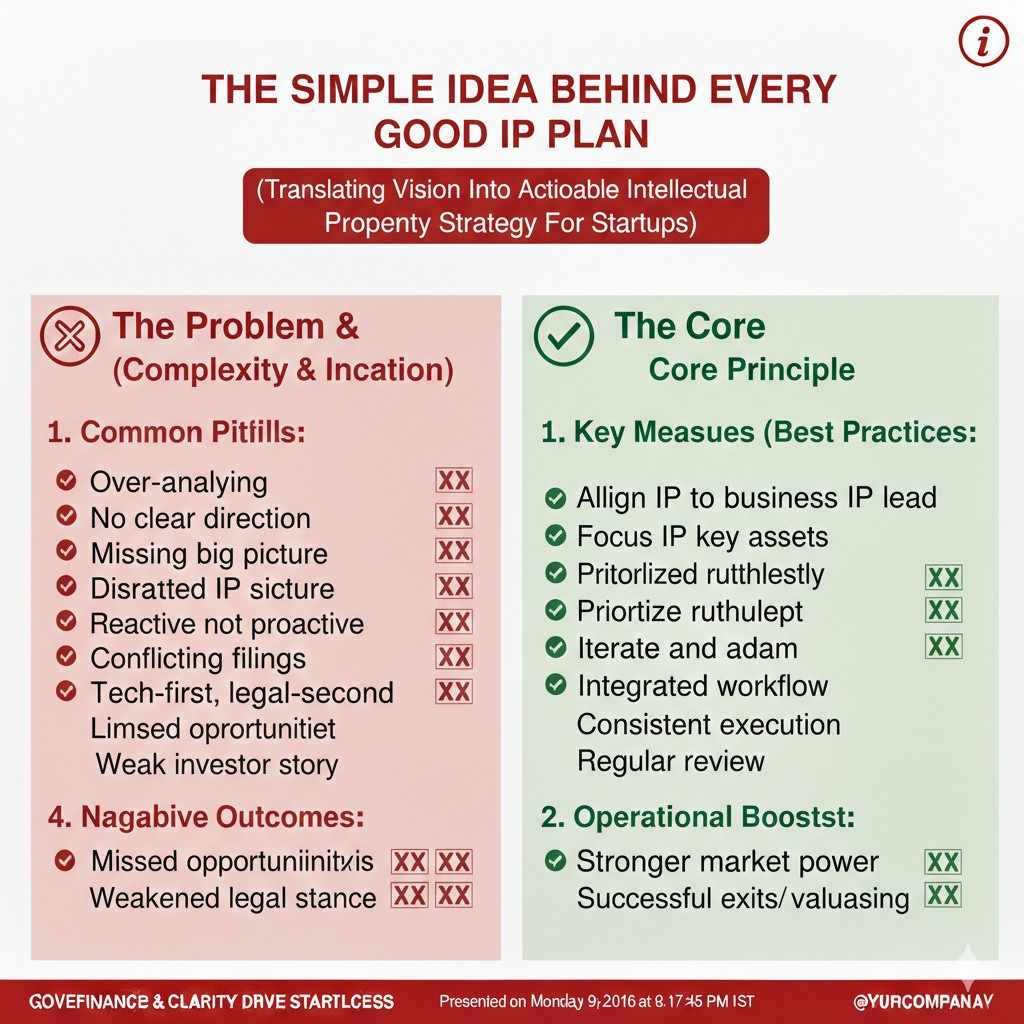
A useful IP plan starts with one question: “What part of our system makes customers choose us, and makes rivals struggle to match us?” That is the heart. Everything else is noise.
Once you know the heart, you protect it in layers. You may protect a method, a system design, a training flow, a sensor fusion trick, a control loop, or a special way your robot learns in the field. You do not protect “AI” or “robotics” as a whole. You protect the specific step-by-step path that makes your results possible.
A quick note on how the case studies are written
The case studies below are written in a real-world style. They are based on patterns we see across robotics, AI, and deep tech teams, but shared in a clean, simple way so you can copy the thinking. The point is to give you a playbook you can use this week, not theory you forget next month.
If you want Tran.vc to help you build your own plan and filings, apply anytime here: https://www.tran.vc/apply-now-form/
Case Study 1: Robotics Startup That Won a Factory Pilot Fast
The company and the pressure they faced
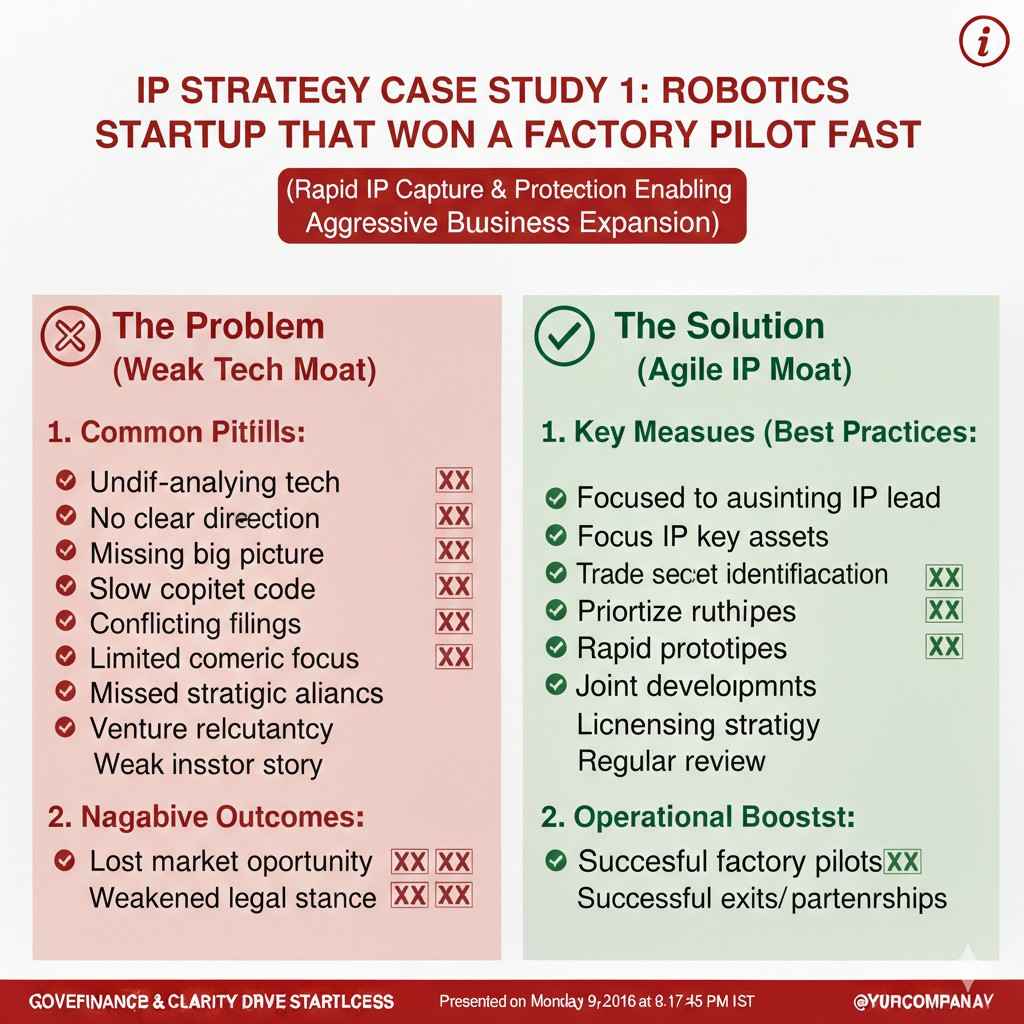
A small robotics team built a mobile robot for factory floors. The robot could move parts from one station to another without needing fixed rails. It could reroute when aisles changed, and it could keep working even when the environment was messy.
They were not the only team in this space. Bigger vendors already sold robots that looked similar from the outside. The founders knew a pilot would be hard to win if the buyer felt the robot was “just another cart.” They needed a fast way to prove they had something others did not.
The “secret” was not the robot body
At first, they believed the value was the robot design. The frame, the wheels, the payload system, the charging dock. It looked impressive, and it was hard to build.
But the hard truth was that a larger company could copy the body over time. The real edge sat inside the motion system and the safety behavior. Their robot could move near people with fewer slowdowns because it predicted how humans would move and adjusted its route early, not late. That meant less waiting, more throughput, and fewer “stop events.”
How they translated tech into protectable claims
The team did not try to patent “human-aware navigation.” Instead, they broke the problem into clear steps and choices. They focused on how the robot fused camera data with short-range sensors, how it scored risk in real time, and how it selected safe paths without freezing.
They documented how their risk score changed based on distance, speed, and direction of nearby workers. They also captured how the planner used that score to pick a path that kept speed high without breaking safety limits. This was not marketing talk. It was a repeatable method that could be written like a recipe.
The filing strategy that supported sales
They used a staged filing approach. First, they filed a core application that covered the method in a broad way, with enough detail to stand up later. Then they prepared a second set of narrower filings around key variations, like how the robot handled blind corners, forklifts, and heavy traffic zones.
This helped sales in a very direct way. In pilot talks, they did not wave a patent around like a trophy. They used it as proof that the system had a real technical core, and that the core had been captured. Buyers did not need legal details. They needed confidence that they were not buying a toy.
What changed after they treated IP as part of the product
Once the team had a clear IP story, their sales calls changed. They stopped explaining every feature and started explaining one big business result: “We reduce stop events without reducing safety.”
They also became sharper about what not to reveal too early. In early demos, they showed outcomes and user flow, but held back some internal tuning details. They learned how to share enough to win trust without giving away the part that made the system special.
The moat they built in six months
The result was not “one patent.” The result was a moat stack. They had patent coverage on the core motion safety method. They had trade secret controls around tuning data and deployment tooling. They had a clear product story that matched the protected core.
When a large vendor tried to push into the same factory, the buyer asked a direct question: “What is different about your system?” The founders answered cleanly, and the pilot moved forward.
If you are building robotics and want a similar moat plan, you can apply anytime here: https://www.tran.vc/apply-now-form/
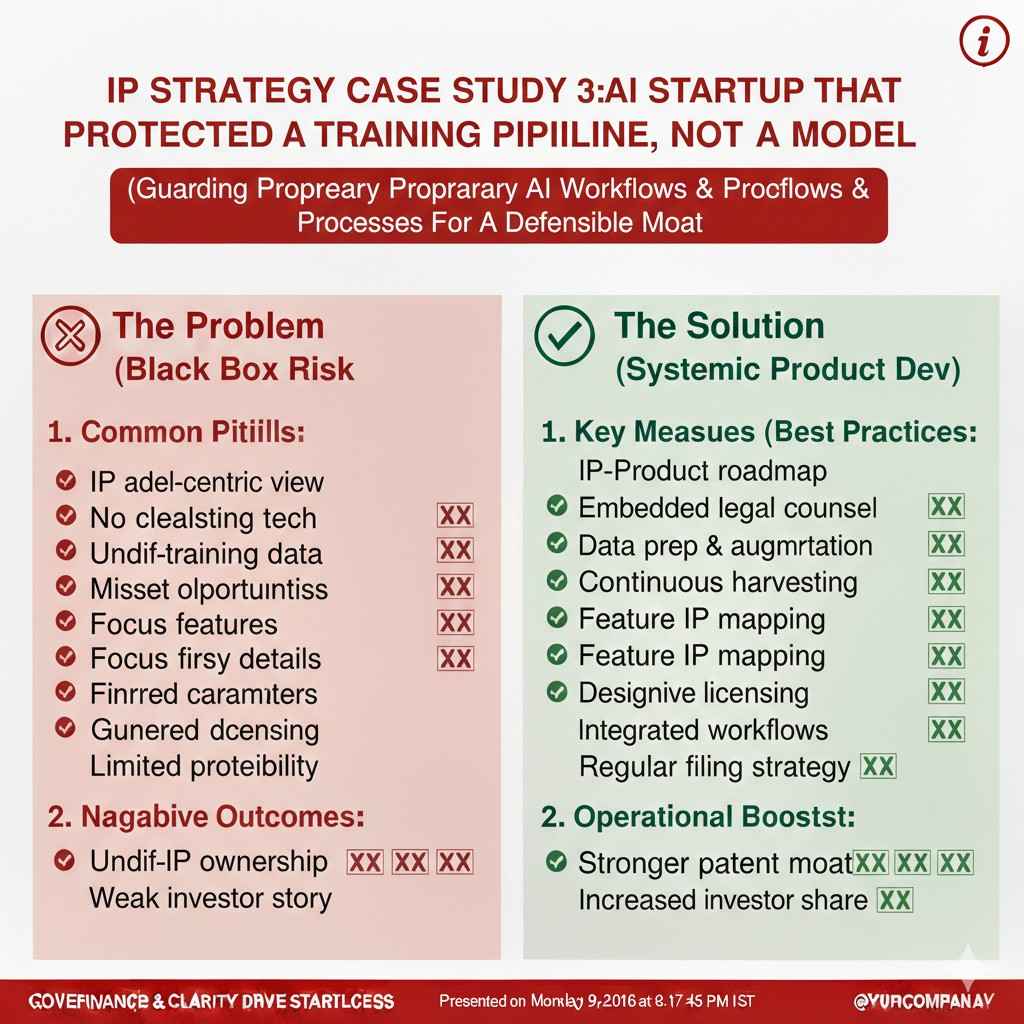
Case Study 2: AI Startup That Protected a Training Pipeline, Not a Model
The company and the common trap
An AI team built a system for inspecting defects in a manufacturing line. Their early accuracy looked strong, and their demos were exciting. They assumed they should protect the model. That is the trap many teams fall into, because “the model” feels like the invention.
But models change fast. Architectures shift. Data changes. Hardware changes. If they tried to protect one exact model setup, they would protect something that might not even be in the product next year.
The real edge was how they made small data work
This team had one hard problem: customers had very little labeled data. Some factories had only a few dozen examples of rare defects. Still, the system could learn quickly and improve in the field.
That capability came from a pipeline that mixed weak labels, synthetic samples, and active learning in a strict loop. The system picked which parts to label next, and it did it in a way that cut labeling time down a lot. This saved the customer money and sped deployment.
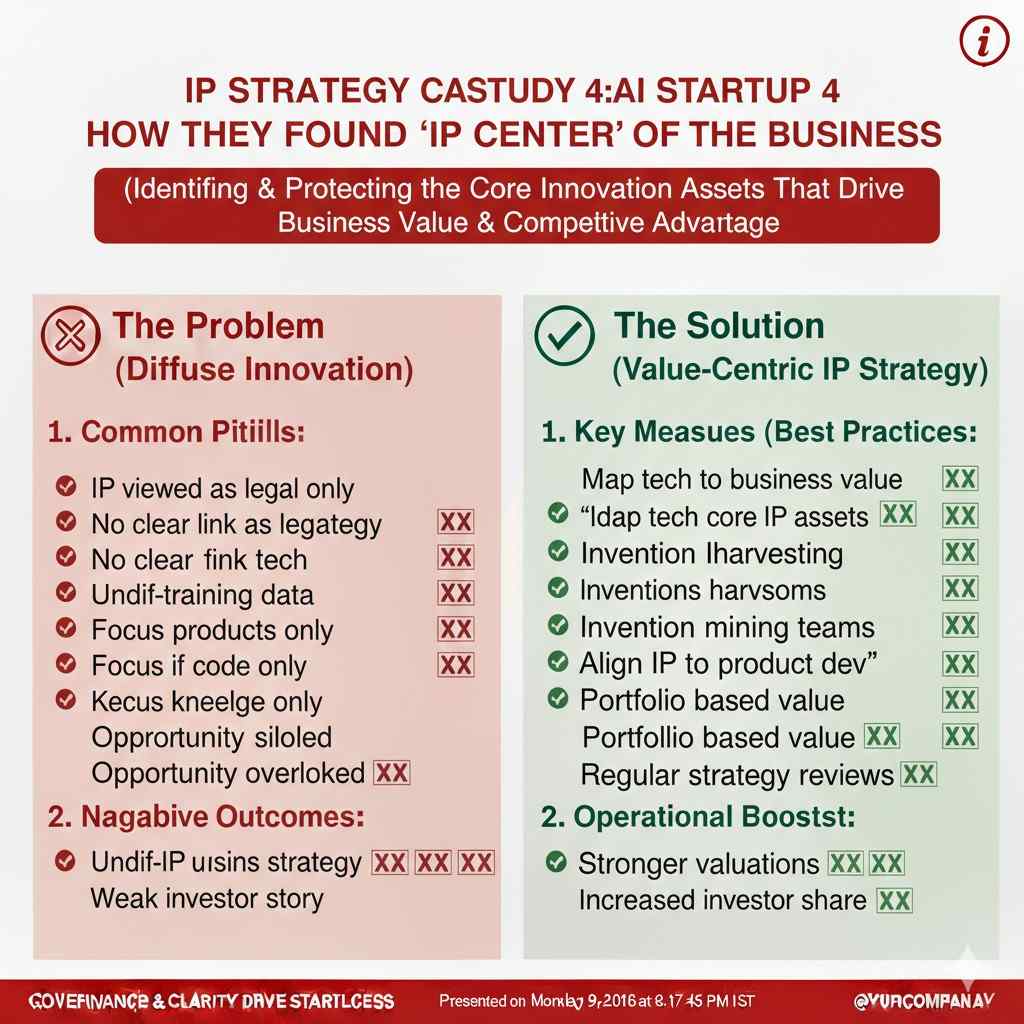
How they found the “IP center” of the business
They mapped their value into one sentence: “We hit target accuracy with far less labeled data.” That became the center. Then they asked what made that true. The answer was not a single neural net. It was a sequence of steps and rules that turned messy factory data into a usable learning set.
They documented the pipeline as a method with clear phases. They showed how the system selected samples, how it ranked uncertainty, how it generated synthetic cases, and how it updated the model without breaking stability. The key was the loop, not the model.
Why this approach helped them raise money
When investors looked at the space, they saw many computer vision startups. They worried that “anyone can train a defect model.”
This team could say, calmly and clearly, “We are not a model company. We are a deployment speed company.” They could show that their method reduced the cost and time to get value in a new factory. And because the method was captured as IP, the story felt stronger. It sounded like an asset, not a claim.
What they kept as trade secrets on purpose
They did not file everything. They kept certain data transforms and tuning choices as trade secrets. Those were the parts that were hard to reverse engineer and would be risky to publish in a patent.
They also built internal access rules so only a small set of people could see full pipeline settings. That is part of IP strategy too. It is not just legal filings. It is how you run your company in a way that keeps the core safe.
The moat effect in the market
Competitors could copy a demo. They could not copy speed of deployment without copying the pipeline logic and the labeling loop. Customers cared about time to value, so the moat was real in buying decisions.
If you are building AI and want to protect the part that actually matters, apply anytime here: https://www.tran.vc/apply-now-form/
Case Study 3: Hardware + Software Startup That Used IP to Win Partnerships
The situation that forced them to get serious
A deep tech team built a sensing device and a software layer that turned raw signals into useful insights. Their plan depended on partnerships with larger companies that owned distribution.
But large partners move carefully. They do not want to be locked into a small vendor unless the vendor has real leverage. Without leverage, the big partner can squeeze pricing, demand full ownership, or copy the idea and build it in-house.
The invention was the calibration method, not the sensor
The sensor itself used known components. That meant competitors could build something similar. What made this device valuable was its calibration and drift correction process. It stayed accurate in harsh settings where others failed.
The team focused their IP on the system method that corrected drift using signals gathered during normal use. It did not require a lab recalibration every time. That saved time and cut downtime for customers. It was a business win tied to a technical method.
How they used IP to shape the partner conversation
They prepared a clear, simple partner packet that explained what was protected and why it mattered. They did not send legal documents first. They told a story that business people could understand: “This is the method that keeps accuracy stable in the field, and it is protected.”
Once the partner saw there was a protected core, the power balance shifted. The conversation moved from “we will test this and maybe copy it” to “how do we work together without stepping on each other.”
The negotiation detail most founders miss
They used IP to control what the partner could request in the pilot. In many pilots, partners ask for deep technical details under the excuse of “integration.” That is a common place where startups leak their edge.
This team structured the pilot so the partner could validate results without needing the full inner workings. They shared interfaces, performance data, and test plans. They did not share the full calibration logic. The IP plan gave them the confidence to say “no” in a professional way.
The moat they built without being loud about it
They did not brag about patents. They used patents as quiet leverage. They kept the product moving, improved manufacturing, and shipped. But underneath, the protected method turned their device into something hard to swap out.
If partnerships are key to your plan, Tran.vc can help you build an IP strategy that supports deal-making. Apply anytime here: https://www.tran.vc/apply-now-form/
Case Study 4: Robotics Software Startup That Blocked Fast Followers
The market they entered and the risk they saw
This startup built software that helped warehouse robots coordinate tasks across large spaces. The market was crowded, and new teams entered every year with fresh demos and bold claims. Speed mattered, but so did staying power.
The founders knew that if their idea worked, others would rush in. They did not want to win only by being first. They wanted to make it hard for fast followers to offer the same results, even if they had more engineers.
The real invention lived in task allocation logic
At first glance, the product looked like fleet management software. That alone was not new. The edge came from how tasks were split and reassigned when conditions changed.
Their system did not just assign jobs once. It constantly rebalanced work based on robot health, battery state, congestion, and order urgency. Small choices in that logic led to big gains in throughput and fewer traffic jams.
Turning messy logic into something protectable
The founders worked closely with IP experts to turn what felt like “common sense” logic into a clear method. They wrote down how the system ranked tasks, how often it recalculated assignments, and what triggers caused a full rebalance versus a local tweak.
They realized that competitors could guess parts of this, but guessing was not the same as copying the full system. The full method, written step by step, became the heart of the filing.
How this stopped copycats without court battles
The goal was not to sue anyone. The goal was to slow them down. When new competitors appeared, they had to design around the protected method. That took time and often led to worse performance.
Sales teams could say, in a calm and factual way, that the core task allocation logic was protected. That alone made buyers think twice about switching to a newer, cheaper option that might disappear or change later.
The long-term effect on product focus
Because the team had clarity on what was protected, they kept improving that core instead of chasing every feature request. The IP plan acted like a product compass. It told them what mattered most.
If you are building robotics software and want to block fast followers early, you can apply anytime here: https://www.tran.vc/apply-now-form/
Case Study 5: AI Platform That Used IP to Shorten Sales Cycles
The slow sales problem
An AI platform helped enterprises forecast failures in complex systems. The value was real, but sales were slow. Buyers worried about vendor risk and long-term support.
The founders learned that trust, not accuracy, was the real bottleneck. Buyers wanted proof that this was not a short-lived tool that would be replaced next year.
The insight that changed everything
The platform worked because of how it combined signals over time, not because of any single prediction. It built a rolling health profile that updated with each new data point. That profile drove alerts and recommendations.
This rolling profile method was the invention. It turned raw streams into stable insight without constant retraining. Once the team saw this clearly, they knew what to protect.
How IP became a sales asset
They framed their IP as a sign of commitment. It showed they had invested deeply in the core method and planned to build on it for years.
During sales calls, they did not talk about claims or numbers. They talked about focus. “This is the system we are building the company around, and it is protected.” That reduced buyer fear and shortened decision time.
What they avoided on purpose
They did not over-file. They skipped side features and dashboard ideas. Those could change. They focused on the core analytic loop.
This kept costs down and made the story clean. Buyers could understand what was special in one conversation, not five.
Case Study 6: Deep Tech Startup That Used IP to Control Its Narrative
The confusion they faced early on
This team built a complex system that mixed hardware, firmware, and cloud software. Early feedback was mixed because people did not know how to describe the product.
Some called it hardware. Others called it a platform. Investors asked, “What exactly are you?” The team struggled to answer in a simple way.
How IP helped them clarify the story
When they mapped their IP, a pattern appeared. Every valuable part pointed back to one core method that linked the physical world to the digital model.
That method became the center of the company story. The product, the pitch, and the roadmap all aligned around it.
The hidden benefit of this alignment
Once the story was clear, hiring became easier. Engineers knew what they were building toward. Partners knew where the boundaries were.
IP was not just protection. It was structure.
How to Apply These Lessons to Your Startup
Start with value, not features
If customers disappeared tomorrow, what would they miss most? That is where your IP should start.
Do not protect what is flashy. Protect what makes money, saves time, or reduces risk for the buyer.
Write your system like a recipe
If you cannot explain your core method step by step, you are not ready to protect it. Clarity comes first.
Once it is clear, protection becomes much easier and more effective.
Decide what to file and what to hide
Not everything belongs in a patent. Some things are better kept quiet. A good IP plan uses both tools with care.
Tran.vc helps founders make these choices early, without waste or fear. If you want hands-on help, apply anytime here: https://www.tran.vc/apply-now-form/