
Raising money at the pre-seed stage is rarely about numbers on a spreadsheet. Most founders do not have revenue yet. Many do not even have a finished product. What they have instead is an idea, a small prototype, and a belief that the problem they are solving truly matters.
This creates a difficult moment in the life of a startup.
Investors want proof that people care about what you are building. Founders, on the other hand, are still building the thing that people are supposed to care about. It feels like a loop that never ends.
This is where early signals become incredibly important.
Three of the most powerful signals a founder can show at the pre-seed stage are Letters of Intent, waitlists, and pilot programs. These signals tell investors something simple but very powerful: real people want this product.
They show demand before revenue. They show interest before scale. They show belief before traction.
A founder who understands how to use these tools can raise funding earlier, negotiate from a stronger position, and build momentum long before the product is fully finished.
But most founders use these signals in the wrong way.
They collect waitlist emails but never convert them into real conversations. They ask for vague letters of intent that investors ignore. They run pilot programs that generate work but not proof.
The result is activity without leverage.
When done correctly, LOIs, waitlists, and pilots become something very different. They become proof that your idea is already moving in the real world. They show investors that customers are not just curious. They are ready.
This article will walk through how founders can use these signals the right way during pre-seed fundraising. You will learn how to collect them, how to structure them, and how to present them in a way that builds trust with investors.
You will also see why many deep tech founders struggle to use these tools properly, and how to fix that early.
At Tran.vc, we spend a lot of time helping technical founders turn early interest into real leverage. Many brilliant engineers build impressive technology but struggle to show investors why the market truly cares. This is exactly where the right early signals can change the entire fundraising story.
When you combine strong early customer signals with strong intellectual property, the conversation with investors becomes very different. You are no longer just pitching an idea. You are showing the early shape of a real company.
If you are building in AI, robotics, or deep tech and want help turning your invention into a defensible startup, you can apply anytime here:
Letters of Intent in Pre-Seed Fundraising
Why Investors Care About Early Customer Signals
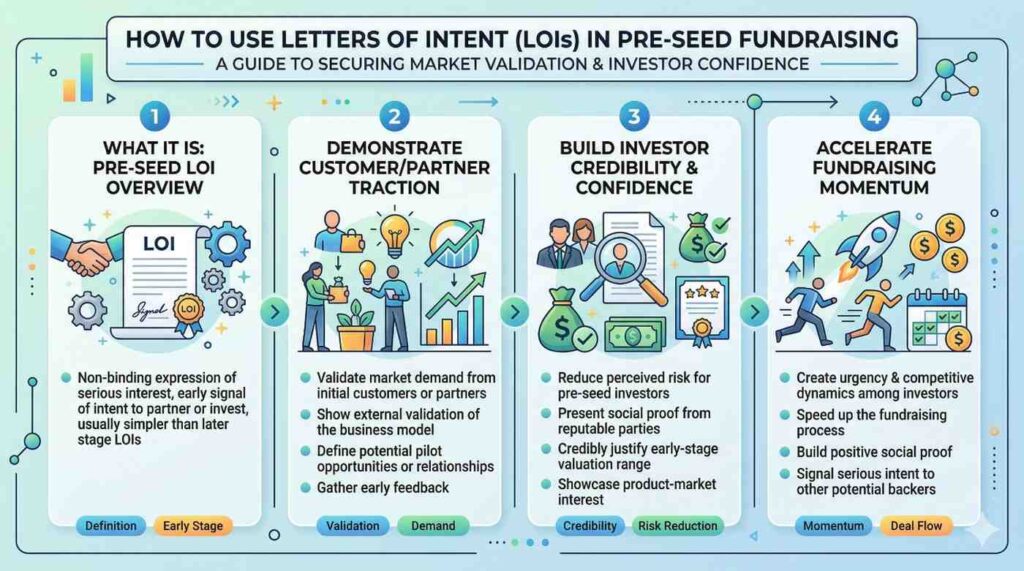
Most early stage investors understand something very clearly. At the pre-seed stage, very few startups have revenue. Many teams are still building the first version of their product. Some founders are still testing the core idea.
Because of this, investors do not expect polished traction.
What they want instead is proof that the problem is real. They want to see that someone in the market cares enough about the solution to take a small step forward.
This is why early customer signals matter so much.
A founder who shows real interest from real buyers immediately changes the tone of the fundraising conversation. Instead of debating whether the problem exists, investors begin asking how fast the startup can build.
That shift is extremely powerful.
Letters of Intent are one of the clearest ways to create this signal.
What a Letter of Intent Actually Means
A Letter of Intent, often called an LOI, is a short written statement from a potential customer that says they plan to use or buy your product once it is ready.
It is not a legal purchase contract. It does not force anyone to pay money. Instead, it shows that a buyer has seriously reviewed your idea and believes it could solve their problem.
That difference is important.
Anyone can say they like an idea during a quick call. Very few people will put their name, company, and signature on a document saying they intend to use the product when it launches.
That small step creates credibility.
When investors see a strong LOI from a respected company, they understand something important has happened. The founder has moved beyond theory. A real customer has already stepped forward.
The Difference Between Weak and Strong LOIs
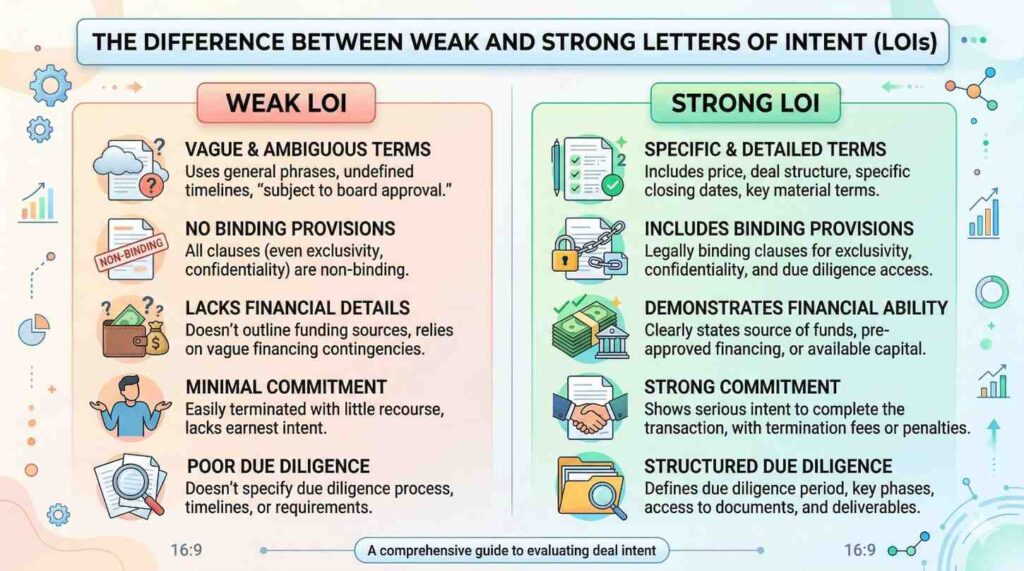
Not all LOIs are equal. Some carry real weight, while others mean very little.
A weak LOI is vague. It may say something like a company is “interested in exploring the solution” or “open to future discussions.” These documents look nice in a pitch deck, but experienced investors see through them quickly.
A strong LOI is much clearer.
It usually describes the problem the company wants solved. It explains how the startup plans to help. It may even mention a rough price range or expected deployment timeline.
Most importantly, it includes a clear statement that the company intends to become a customer if the product performs as expected.
That clarity makes a huge difference.
When investors read a strong LOI, they can imagine revenue forming in the near future. The startup is no longer just a concept. It is beginning to connect with the market.
Why Technical Founders Often Miss This Step
Many engineers and technical founders focus almost entirely on the product.
They believe the technology must be perfect before customers are approached. They spend months building systems, training models, or designing hardware before speaking deeply with buyers.
This approach feels safe, but it creates a major fundraising problem.
By the time they start raising capital, they still cannot show proof of demand. Investors see impressive technology but little evidence that the market is ready.
The founders then struggle to explain why customers will adopt the solution.
This is exactly where LOIs can change the story.
When technical teams start speaking with potential users early, they often discover companies that are eager to try the solution. These companies may not need a finished product. They simply need to believe the founder can deliver it.
An LOI captures that belief in writing.
How Founders Can Start Getting LOIs Early
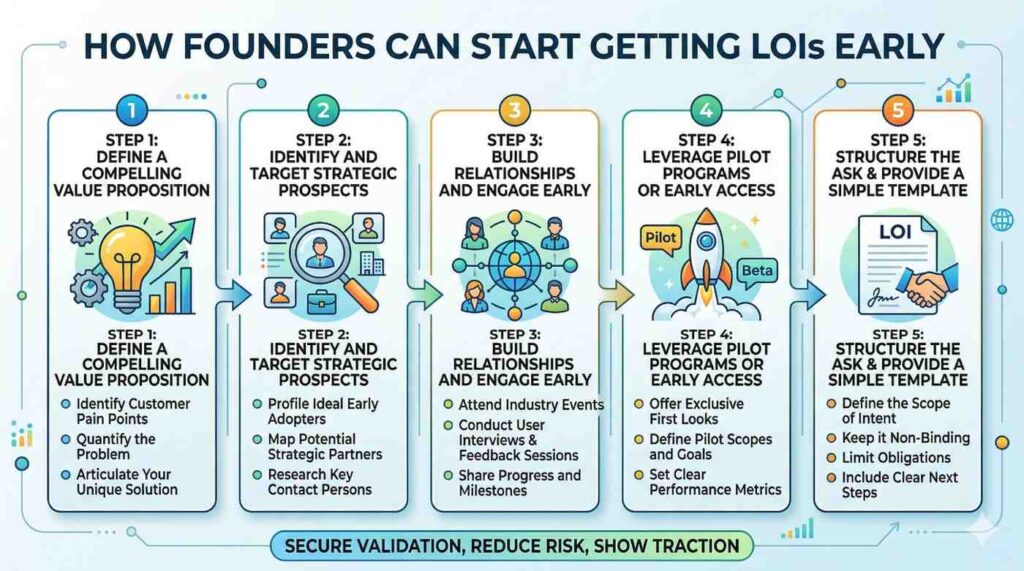
The process usually begins with conversations.
Founders should speak with companies that clearly feel the pain their product aims to solve. These discussions are not sales pitches. They are problem exploration sessions where founders learn how the issue affects real businesses.
During these conversations, something interesting often happens.
If the problem is real and the proposed solution makes sense, the buyer begins asking when the product will be ready. They want to know how soon they can test it.
That moment is the natural opening for an LOI.
The founder can explain that the startup is working toward launching the solution and is collecting early partners who plan to adopt the product. If the buyer expresses strong interest, the founder can ask whether they would be comfortable signing a short letter stating their intention to become a customer.
Many companies agree to this, especially if the product addresses a costly problem.
The key is to keep the document simple and clear.
What Investors Look for Inside an LOI
When investors review LOIs, they usually focus on a few specific signals.
First, they look at who signed the document. A letter from a respected company carries far more weight than one from a small unknown organization. Brand credibility matters.
Second, they look for clarity.
The document should clearly describe the product and the intended use case. It should explain why the company believes the solution will help their operations.
Third, investors often check whether there is a rough commercial outline.
This does not mean the final pricing must be decided. However, a range of expected pricing or a description of how the product would be purchased adds credibility.
These small details help investors understand whether the startup has truly engaged with the customer.
Turning LOIs Into Real Fundraising Leverage
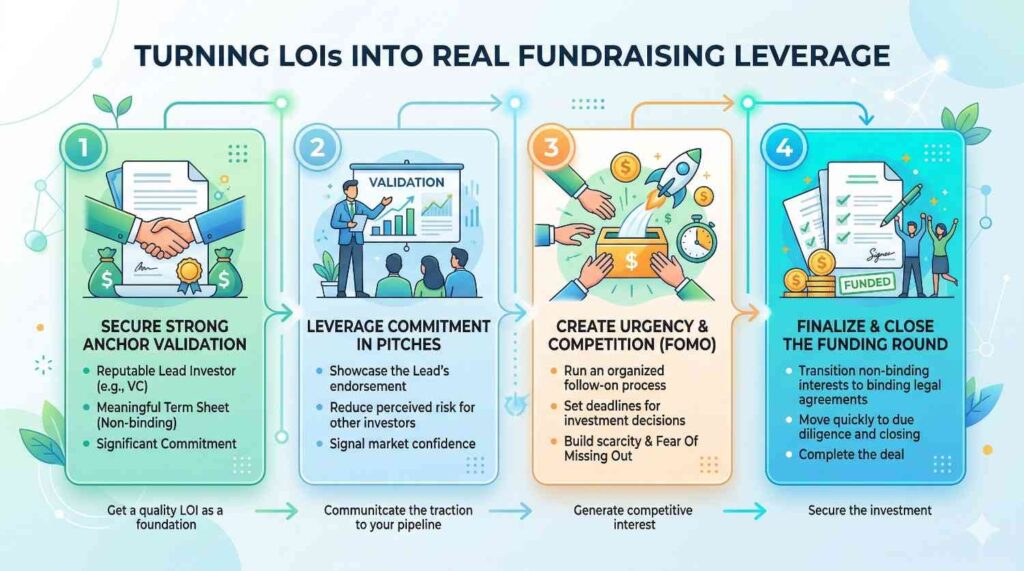
An LOI should never sit quietly in a folder.
Founders should actively use these documents when telling the story of their startup. Each letter shows that the market is already leaning toward the solution.
During fundraising, the founder can explain the problem, present the technology, and then introduce the companies that are waiting for the product.
This creates a powerful moment in the pitch.
Investors begin to see the early shape of revenue forming. Instead of asking whether the market exists, they start asking how quickly the product can reach those customers.
This change in conversation often speeds up fundraising dramatically.
At Tran.vc, we see this pattern often with deep tech startups. A founder may have brilliant technology but struggle to explain the market demand clearly.
When those founders begin securing strong LOIs and combine them with a thoughtful patent strategy, the story becomes much stronger. Investors see both customer demand and a protected technical advantage.
That combination is exactly what makes early stage companies attractive.
If you are building a deep tech startup and want help turning your innovation into protected intellectual property while preparing for fundraising, you can apply anytime here:
Letters of Intent in Pre-Seed Fundraising
Why Investors Care About Early Customer Signals
Most early stage investors understand something very clearly. At the pre-seed stage, very few startups have revenue. Many teams are still building the first version of their product. Some founders are still testing the core idea.
Because of this, investors do not expect polished traction.
What they want instead is proof that the problem is real. They want to see that someone in the market cares enough about the solution to take a small step forward.
This is why early customer signals matter so much.
A founder who shows real interest from real buyers immediately changes the tone of the fundraising conversation. Instead of debating whether the problem exists, investors begin asking how fast the startup can build.
That shift is extremely powerful.
Letters of Intent are one of the clearest ways to create this signal.
What a Letter of Intent Actually Means
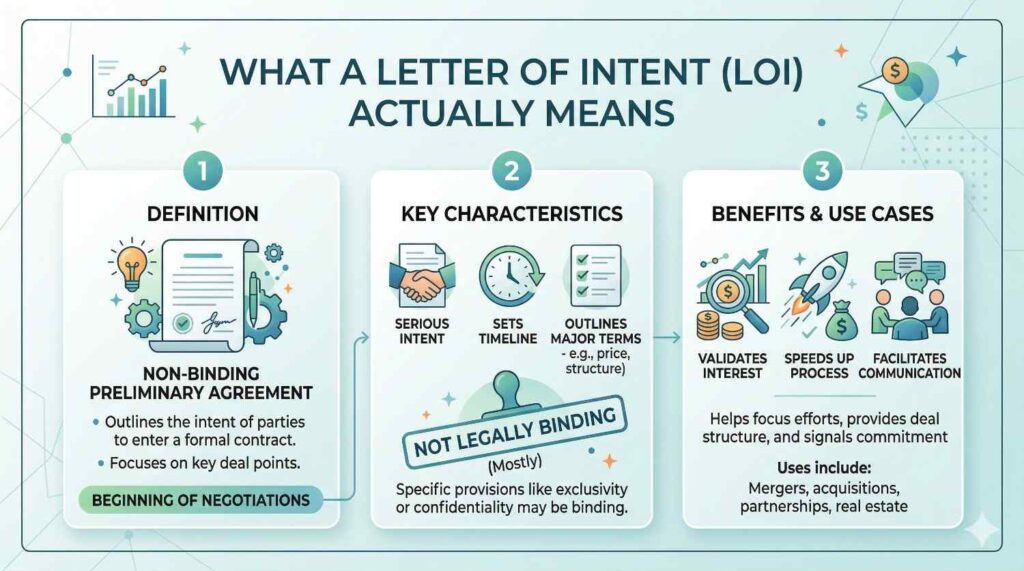
A Letter of Intent, often called an LOI, is a short written statement from a potential customer that says they plan to use or buy your product once it is ready.
It is not a legal purchase contract. It does not force anyone to pay money. Instead, it shows that a buyer has seriously reviewed your idea and believes it could solve their problem.
That difference is important.
Anyone can say they like an idea during a quick call. Very few people will put their name, company, and signature on a document saying they intend to use the product when it launches.
That small step creates credibility.
When investors see a strong LOI from a respected company, they understand something important has happened. The founder has moved beyond theory. A real customer has already stepped forward.
The Difference Between Weak and Strong LOIs
Not all LOIs are equal. Some carry real weight, while others mean very little.
A weak LOI is vague. It may say something like a company is “interested in exploring the solution” or “open to future discussions.” These documents look nice in a pitch deck, but experienced investors see through them quickly.
A strong LOI is much clearer.
It usually describes the problem the company wants solved. It explains how the startup plans to help. It may even mention a rough price range or expected deployment timeline.
Most importantly, it includes a clear statement that the company intends to become a customer if the product performs as expected.
That clarity makes a huge difference.
When investors read a strong LOI, they can imagine revenue forming in the near future. The startup is no longer just a concept. It is beginning to connect with the market.
Why Technical Founders Often Miss This Step
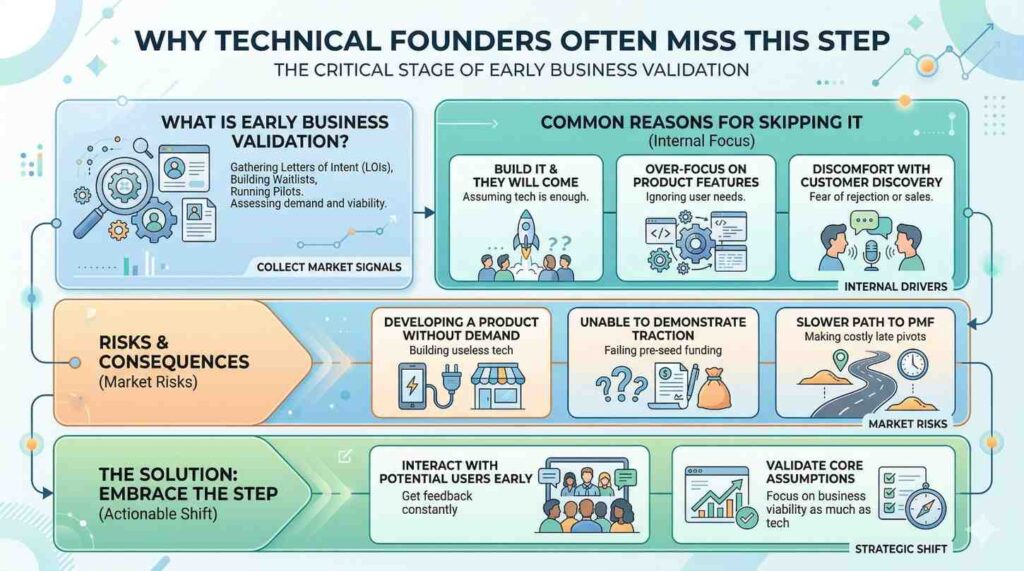
Many engineers and technical founders focus almost entirely on the product.
They believe the technology must be perfect before customers are approached. They spend months building systems, training models, or designing hardware before speaking deeply with buyers.
This approach feels safe, but it creates a major fundraising problem.
By the time they start raising capital, they still cannot show proof of demand. Investors see impressive technology but little evidence that the market is ready.
The founders then struggle to explain why customers will adopt the solution.
This is exactly where LOIs can change the story.
When technical teams start speaking with potential users early, they often discover companies that are eager to try the solution. These companies may not need a finished product. They simply need to believe the founder can deliver it.
An LOI captures that belief in writing.
How Founders Can Start Getting LOIs Early
The process usually begins with conversations.
Founders should speak with companies that clearly feel the pain their product aims to solve. These discussions are not sales pitches. They are problem exploration sessions where founders learn how the issue affects real businesses.
During these conversations, something interesting often happens.
If the problem is real and the proposed solution makes sense, the buyer begins asking when the product will be ready. They want to know how soon they can test it.
That moment is the natural opening for an LOI.
The founder can explain that the startup is working toward launching the solution and is collecting early partners who plan to adopt the product. If the buyer expresses strong interest, the founder can ask whether they would be comfortable signing a short letter stating their intention to become a customer.
Many companies agree to this, especially if the product addresses a costly problem.
The key is to keep the document simple and clear.
What Investors Look for Inside an LOI
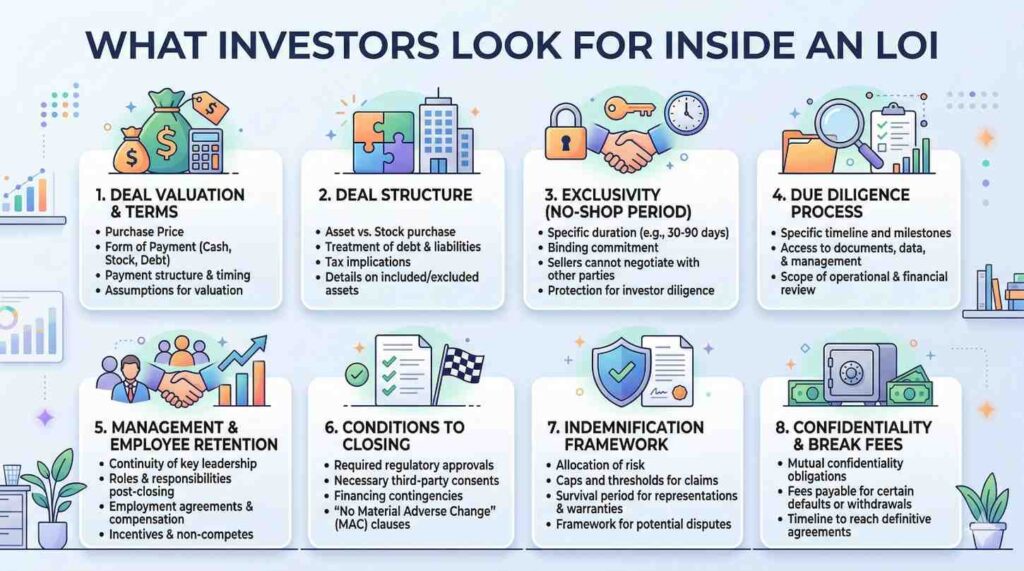
When investors review LOIs, they usually focus on a few specific signals.
First, they look at who signed the document. A letter from a respected company carries far more weight than one from a small unknown organization. Brand credibility matters.
Second, they look for clarity.
The document should clearly describe the product and the intended use case. It should explain why the company believes the solution will help their operations.
Third, investors often check whether there is a rough commercial outline.
This does not mean the final pricing must be decided. However, a range of expected pricing or a description of how the product would be purchased adds credibility.
These small details help investors understand whether the startup has truly engaged with the customer.
Turning LOIs Into Real Fundraising Leverage
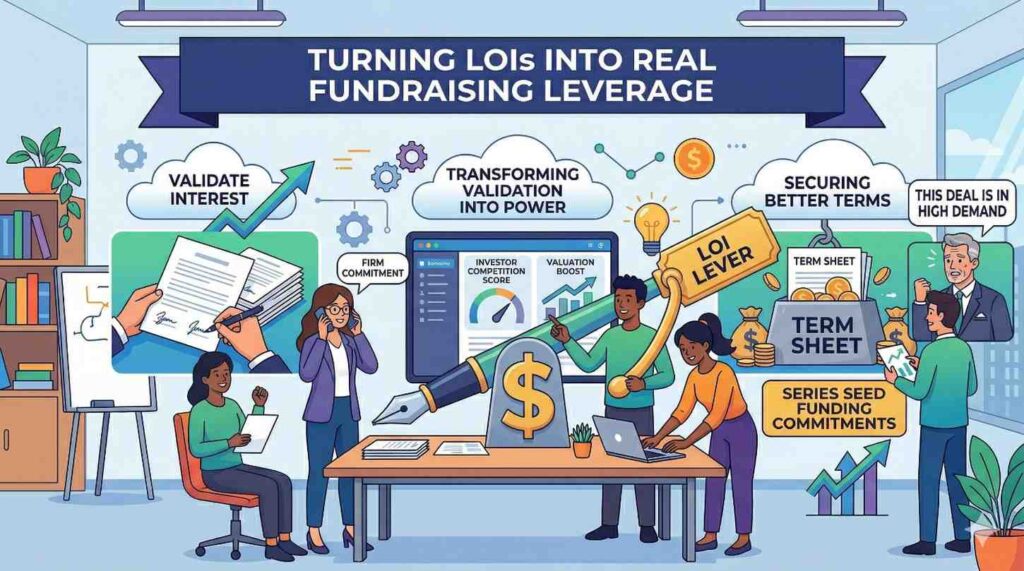
An LOI should never sit quietly in a folder.
Founders should actively use these documents when telling the story of their startup. Each letter shows that the market is already leaning toward the solution.
During fundraising, the founder can explain the problem, present the technology, and then introduce the companies that are waiting for the product.
This creates a powerful moment in the pitch.
Investors begin to see the early shape of revenue forming. Instead of asking whether the market exists, they start asking how quickly the product can reach those customers.
This change in conversation often speeds up fundraising dramatically.
At Tran.vc, we see this pattern often with deep tech startups. A founder may have brilliant technology but struggle to explain the market demand clearly.
When those founders begin securing strong LOIs and combine them with a thoughtful patent strategy, the story becomes much stronger. Investors see both customer demand and a protected technical advantage.
That combination is exactly what makes early stage companies attractive.
If you are building a deep tech startup and want help turning your innovation into protected intellectual property while preparing for fundraising, you can apply anytime here:
Waitlists in Pre-Seed Fundraising
Why Waitlists Matter More Than Most Founders Think

Many founders assume waitlists only matter for consumer apps.
They think waitlists are useful when launching a social product, a gaming platform, or a new mobile tool. Because of this belief, deep tech founders often ignore them completely.
This is a mistake.
A well-built waitlist can quietly become one of the strongest signals of demand in the early life of a startup. It shows that people are not just curious about the idea. They are actively raising their hand and asking to be included when the product launches.
That simple act carries meaning.
When someone joins a waitlist, they are giving you permission to continue the conversation. They are saying the problem matters enough for them to stay connected while you build the solution.
For investors, this is a useful signal.
It shows that interest exists before the product is finished. It shows that the founder understands how to attract attention from the market. Most importantly, it shows that demand may already be forming.
The Real Purpose of a Waitlist
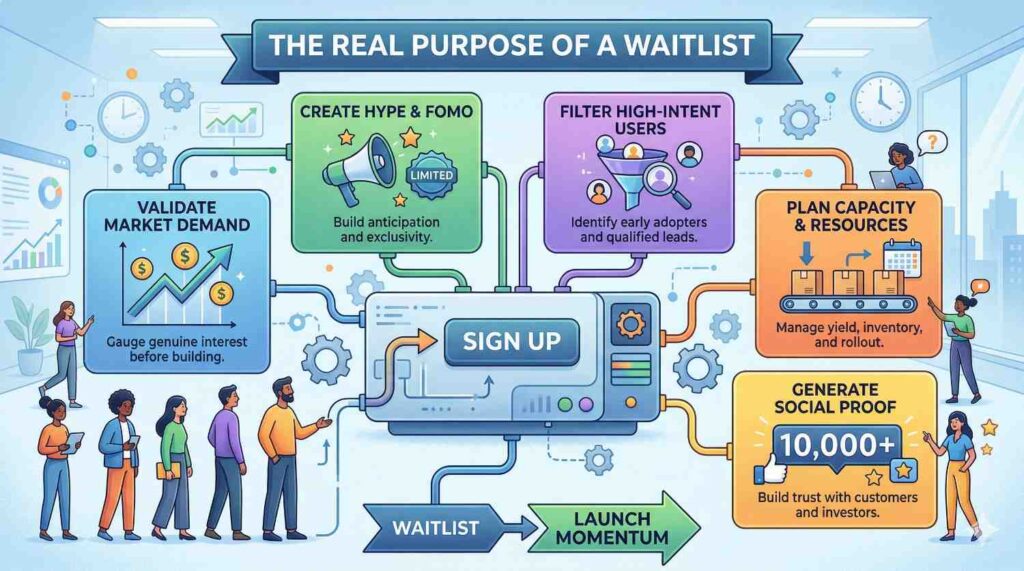
A waitlist is not just a collection of emails.
Many founders treat it like a vanity metric. They celebrate when hundreds of people join but never speak to those people again. The waitlist becomes a number inside a pitch deck rather than a living community.
That approach wastes the opportunity.
The true purpose of a waitlist is to create a small group of future users who stay close to the product while it is being built. These people become early testers, early advocates, and sometimes the first paying customers.
They also become a learning engine for the founder.
Every new person who joins the waitlist is a chance to understand the problem better. Why did they join? What part of the solution caught their attention? What result are they hoping for?
When founders ask these questions, the waitlist begins to generate real insight.
Why Waitlists Work Well in Deep Tech
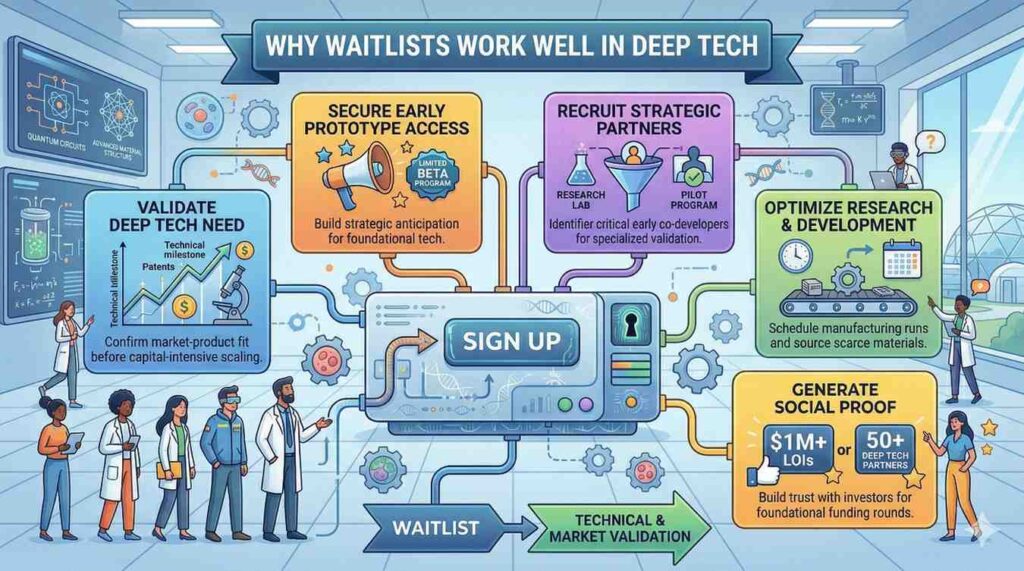
Deep tech products often take time to build.
AI platforms require training and testing. Robotics systems require hardware development. Infrastructure tools require careful engineering before they can safely operate.
Because of this, many deep tech founders assume customers will only appear after the product is complete.
In reality, the opposite is often true.
Companies that suffer from a painful operational problem are eager to see solutions emerge. If a startup appears with a clear idea for solving that issue, many potential users want to stay informed as the technology develops.
A waitlist gives them that path.
Instead of waiting quietly for the final product, these companies can follow the progress of the startup. They feel involved in the journey, and that involvement often turns into early adoption.
Building a Waitlist That Actually Matters
A meaningful waitlist starts with a clear problem.
The landing page or sign-up page should describe the pain point in very simple terms. Visitors should immediately understand who the product is for and why it exists.
If someone reads the page and instantly recognizes their own problem, joining the waitlist becomes a natural step.
The message must remain clear and direct.
Instead of explaining every technical detail, founders should focus on the result the product promises to deliver. People join waitlists when they believe the solution could make their work easier, faster, or less expensive.
Once someone joins, the real work begins.
Turning Waitlist Signups Into Real Conversations
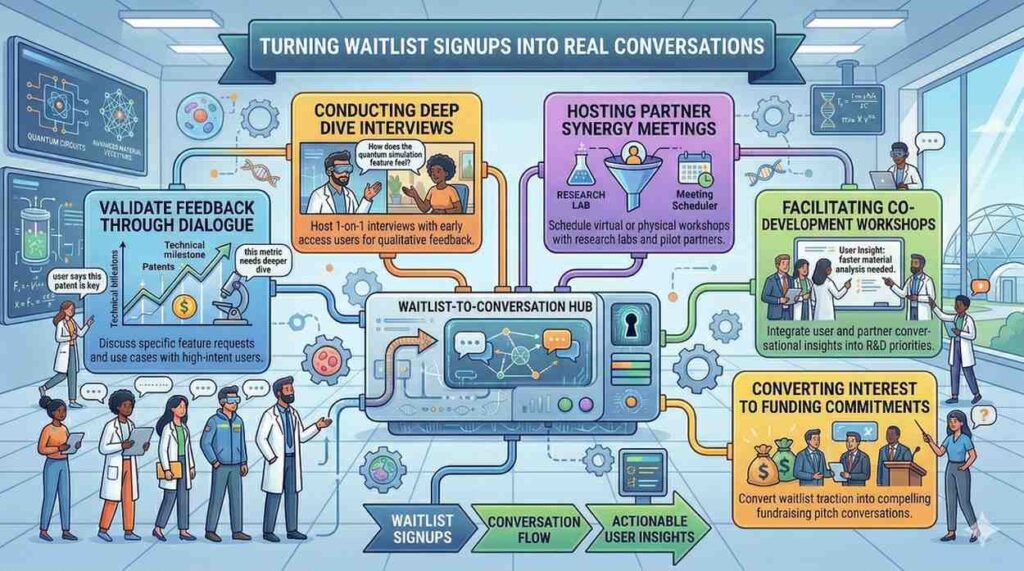
The biggest mistake founders make is ignoring their waitlist.
Someone signs up, receives a basic confirmation email, and then hears nothing until the product launches months later. During that time, interest fades and the connection disappears.
A better approach is to treat each new signup as the start of a relationship.
Founders can send a short message thanking the person for joining and asking a simple question about their current workflow. This opens a conversation that often reveals valuable insight about the market.
Some founders even schedule short calls with early waitlist members.
These conversations help refine the product and build trust with future users. The people who join the waitlist begin to feel that they are part of something being built for them.
That feeling creates loyalty.
How Investors Interpret Waitlist Data
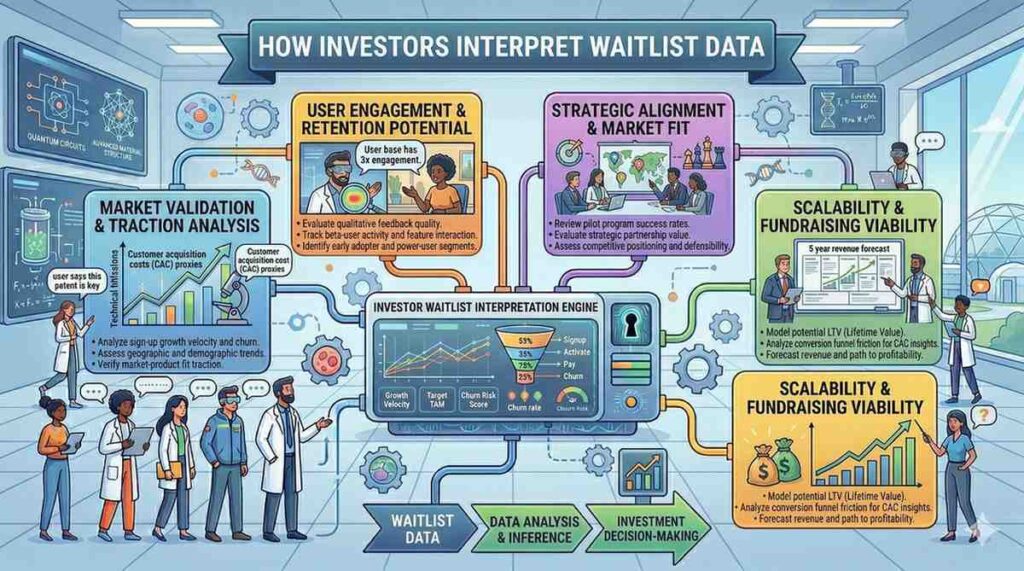
Investors rarely care about the raw number alone.
A waitlist of five thousand names might sound impressive, but it does not mean much if the founder cannot explain who those people are or why they joined.
What investors want to see is engagement.
They want to know whether waitlist members respond to emails, participate in product discussions, or volunteer to test early versions of the system. Engagement shows genuine interest.
Quality also matters.
If the waitlist includes decision-makers from real companies that match the startup’s target market, investors pay close attention. A smaller list of highly relevant users can be far more powerful than a large anonymous audience.
The story behind the waitlist becomes the key.
Using Waitlists to Strengthen a Fundraising Narrative
A thoughtful founder uses waitlist momentum to show that the market is already forming around the product.
During a fundraising conversation, the founder can describe how people discovered the startup, why they joined the waitlist, and what those users are asking for.
This gives investors a window into the demand forming around the product.
It also demonstrates that the founder is not building in isolation. The product is being shaped by real users who want the solution to exist.
That signal is powerful.
When a waitlist begins turning into early design partners or pilot customers, the startup moves even closer to real traction.
At Tran.vc, we often see technical founders discover strong demand once they begin sharing their work openly with potential users. When those signals are combined with strong intellectual property protection, the startup gains a serious advantage.
It becomes harder for competitors to copy the technology, and easier for investors to see long-term value.
If you are building in AI, robotics, or deep tech and want help turning your invention into protected intellectual property while preparing for fundraising, you can apply anytime here: