
Invented by BALDINI; Luca, PATRIA; Gaetano, DEBENEDETTI; Paolo, MASSINO; Davide, GAITO; Daniele, Telefonaktiebolaget LM Ericsson (publ)
The world of connected devices is growing faster than ever. As we move into the era of 6G and the Internet of Things (IoT), the challenge is not just about speed or data. It’s about letting different devices and apps work together, safely and simply, even if they come from many places. Today, we’ll break down an exciting patent application that tackles this challenge. We’ll look at why it matters, how it builds on what’s come before, and what makes this idea stand out. Let’s dive in.
Background and Market Context
The last decade has brought big changes to wireless networks. We started with 4G, then made the jump to 5G. Now, 6G is on the horizon, promising even faster speeds and lower delays. But 6G is not just about speed. It’s about connecting everything—from your phone, watch, and car to your city’s streetlights and even sensors in factories. Experts call this the Internet of Things (IoT), and it is quickly becoming a big part of daily life.
With more devices talking to each other, new uses are popping up. Imagine smart homes where your coffee maker talks to your alarm clock, or smart cities where traffic lights adjust to the real-time flow of cars. There’s also the Internet of Senses (IoS), where devices help us “feel” or “smell” things over the internet. For example, a future phone call might let you not only see but also share scents with the person you’re talking to.
However, this new world brings problems. There are so many types of devices and so many companies making them. Each device often comes with its own software and works best only with its own app. For example, your smart lock may only talk to its own app, not your home’s smart lights, unless both are from the same company. This creates “silos”—closed groups that don’t talk to each other. If you want a new app that mixes your car, your watch, and your home sensors, it’s almost impossible unless all the companies agree to work together. This slows down innovation, raises costs, and, maybe most importantly, increases the risks to your privacy and security.
Mobile network operators (MNOs)—the companies that run our cellular networks—see a chance to help. They already have control over who connects to their network, and they handle sensitive data daily. If they could manage the links between devices and apps, they could make things much simpler, safer, and more flexible for everyone.
The patent application we’re exploring is about a new way for these networks to let apps discover and control devices, even if the devices are from different makers. It proposes a method for the network to create profiles for each device and each user, manage who can do what, and keep sensitive data safe. The goal? To break down the barriers between devices, let apps do more, and keep everything secure and private. This is a big step towards a smarter, more open, and more secure connected world.
Scientific Rationale and Prior Art
To understand this invention, it’s important to see what has come before. In today’s world, the way apps and devices talk is pretty basic. Most devices are tied closely to their own apps. If you buy a smart thermostat, you use the thermostat’s app to control it. If you want to use it with another app or mix it with different devices, it’s very hard. Sometimes, you need special agreements between companies, or you have to go through complicated steps. This is a problem for users who want more flexibility and for developers who want to create new, creative apps.
Some standards exist to help devices talk, like Lightweight Machine-to-Machine (LwM2M) or the Semantic Definition Format (SDF). These help devices “describe” themselves and their abilities in a common way. But even with these, the problem of “who owns what” and “who can do what” remains tricky, especially when it comes to privacy and security. If an app from one company can suddenly control your home or car, you want to be sure it’s safe and that you’re in control.
Another problem is that network operators, who should know which devices belong to which users, don’t always have this information at the device level. Devices connect to the network, but the link between the device and the user isn’t always clear. This means that apps can’t always be sure which device belongs to which person, making it harder to manage permissions or to keep data private.
Let’s look at some key gaps in the current state of the art:
– Silos of Control: Devices and apps are bundled together. Mixing devices from different brands or types is hard, unless the makers cooperate.
– Poor Flexibility: If you want to build a new app that mixes health, home, and car devices, you have to negotiate with each device maker or use clunky workarounds.
– Weak Security and Privacy: Sharing access between apps and devices can expose user data, unless carefully controlled. It’s hard to track “who did what, when, and with which device.”
– No Central Control: Network operators can’t track device ownership and permissions in a fine-grained way, so they can’t offer better security or new business models, like device rentals.
The idea behind the patent is to solve these problems by giving the network itself a bigger role. If the network acts as a “middleman,” it can manage which devices belong to which users, what each device can do, and which apps are allowed to do what. This also means that new apps can be built that use any device a user owns, even if the devices are from different makers. The user stays in control, and privacy is protected by keeping sensitive info inside the network, not shared with every app.

Earlier research and standards have talked about ways to describe device abilities, manage identities, or secure connections. But the approach here is special because it ties together device profiles, user profiles, app permissions, and security in a single, network-controlled system. It’s like giving the network a “brain” that knows everything about who owns what, what each device can do, and who is allowed to do what—all while keeping private details hidden from third parties.
This is a new way to think about device and app management in the age of 6G and IoT. It’s not just about connecting things. It’s about managing them smartly, flexibly, and safely, unlocking new ways to use technology.
Invention Description and Key Innovations
At the heart of this invention is a smart system that lets the core network act as a trusted gatekeeper between users, devices, and applications. Here’s how it works, step by step, in plain language:
When a user gets a new device—maybe a smart watch, a sensor for their car, or a home appliance—it gets registered in the network. The network records what kind of device it is, what it can do, and who owns it. This information is stored in a central place, managed by the network operator.
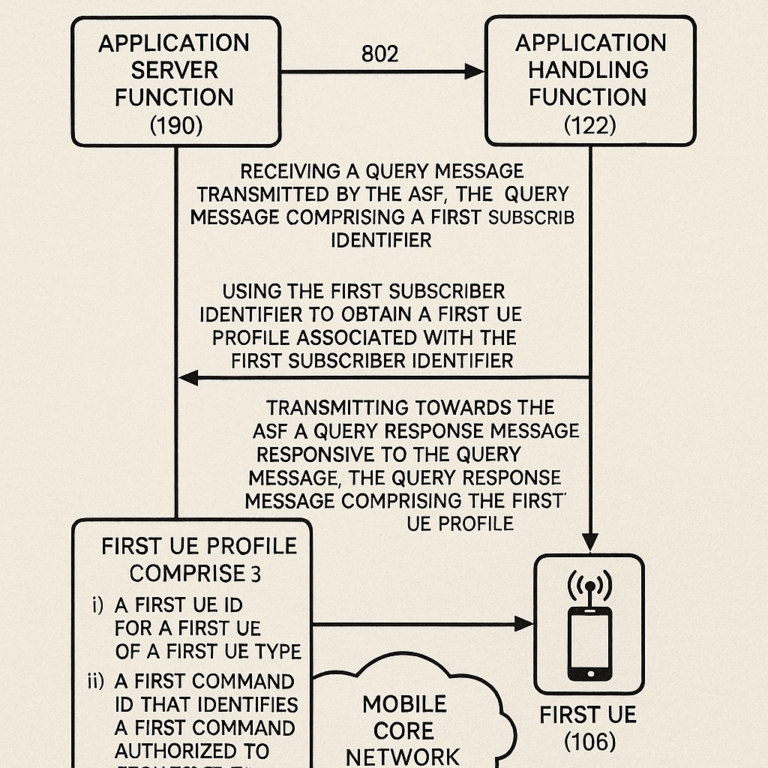
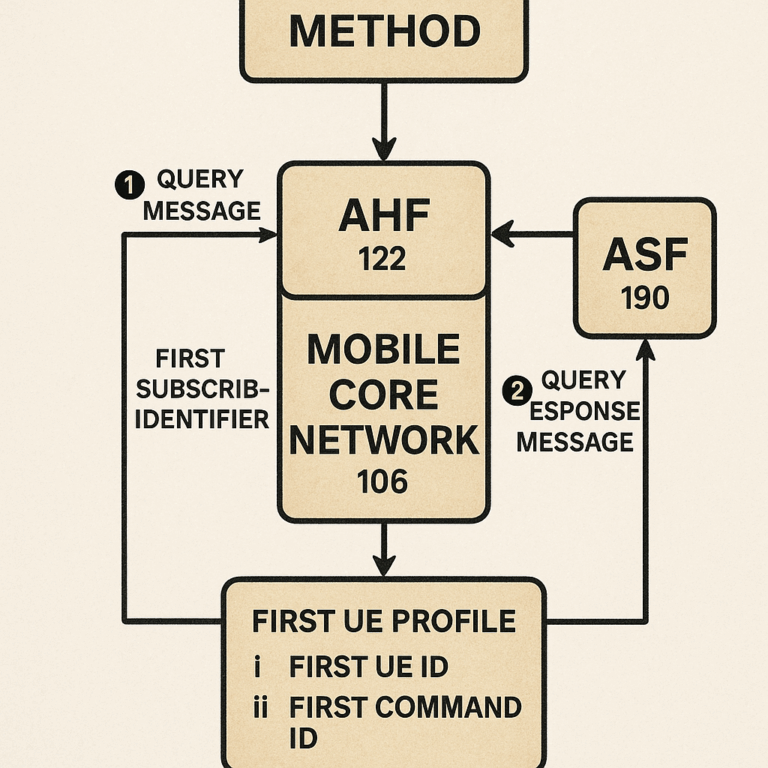
Next, when a user wants to use an app or service, the app asks the network, “What devices does this user have, and what am I allowed to do with them?” The network checks its records and sends back a “profile” for each device the user owns. This profile says what the device is, what commands can be run, and what the app is allowed to do. If the app asks for something it’s not allowed to do—like changing a setting it shouldn’t—the network can block it.
All of this is managed by two main functions in the network:
– The Application Handling Function (AHF): This is like a smart traffic cop. It keeps track of which devices belong to each user, what each device can do, and which apps are allowed to do what. When an app wants to do something, it checks with the AHF first.

– The Application Server Function (ASF): This is where the app “lives.” It asks the AHF for permission to interact with devices, and gets back a list of what it’s allowed to do.
Here’s what makes this system different and innovative:
1. Device and User Profiles Managed by the Network
Each device gets a profile that includes its type, what it can do, and who owns it. Each user has a profile that lists all their devices. These profiles are managed by the network, not by the device makers or app developers. This makes it easy to mix devices from different brands and use them together in new apps.
2. Fine-Grained Permissions
When an app wants to do something, it doesn’t get full access to every device. Instead, the user (through the network) decides which devices the app can use, and what commands it can run. For example, maybe you want your health app to read your watch’s temperature sensor, but not your heart rate. The network makes sure this is enforced.
3. Privacy and Security by Design
Sensitive details—like which user owns which device—are kept private inside the network. When apps interact with devices, they get only anonymized or encrypted identifiers. This means third-party apps can’t see private user data unless allowed. All actions can be tracked, so if something goes wrong, it’s clear who did what.
4. Support for Many Use Cases
This system opens the door to new kinds of apps. For example, you could have a single app that combines your city’s air quality sensors, your home’s thermostat, and your car’s location, even if all those devices are from different companies. Users can rent devices, share devices between family members, or even use devices on a pay-per-use model.
5. Smart Filtering
The network can “filter” what device features are shown to each app. For example, a smoke detector in your home might have features for both smoke and carbon monoxide. An app might be allowed to see just the smoke alarm feature, not the carbon monoxide readings. This gives more control and keeps things simple for users and app developers.
6. Flexible Registration and Ownership
Devices can be owned or shared by more than one user. For example, a car can be registered to both parents in a family. Devices can also be rented or temporarily assigned to different users. The network keeps track of all these relationships, making it easy to manage who can do what, and when.
7. Simple Yet Powerful Communication Flows
The patent lays out clear steps for how devices are registered, how apps request permission, and how commands are sent and checked. This makes it easier for device makers and app developers to build new things, knowing there’s a trusted system in the middle.
8. Built for the Future
Because it’s managed by the core network, this system is ready for the scale of 6G and the massive number of devices expected in the future. It can work with existing standards like LwM2M or SDF, but adds the missing pieces of ownership, permission, and privacy.
To sum up, this invention is about giving power and control back to users and network operators, while making life easier for app developers and device makers. It creates a trusted, flexible, and secure way for apps and devices to work together, no matter where they come from. This could unlock a wave of new, smart, and safe uses for connected technology.
Conclusion
The move towards a world packed with connected devices—at home, in cars, in cities, and on our bodies—brings amazing new possibilities. But it also brings real challenges, especially when it comes to making devices and apps from different places work together safely and flexibly. This patent application steps up to solve some of the toughest problems: device silos, lack of flexibility, and weak privacy and security.
By introducing a smart, network-managed layer that knows who owns what and who can do what, this invention bridges the gap between devices, users, and apps. It lets users control their own devices, lets apps unlock new features, and keeps sensitive information safe. It’s a vision for how the core network itself can drive the next wave of smart, open, and secure services in a 6G, IoT, and IoS world.
If you’re a device maker, app developer, or network operator, this approach opens new doors. It can help you build better, safer, and more creative products and services. For users, it means more choice, more control, and more peace of mind. As the connected world keeps growing, smart network solutions like this will be key to making everything work—simply, safely, and together.
Click here https://ppubs.uspto.gov/pubwebapp/ and search 20250233923.