
Traction is proof. It tells investors you can turn a hard idea into a real business. It shows customers trust you, even when the product is young. But you don’t need a big budget to get it. You need focus, a tight plan, and a way to measure what matters. This guide will show you how to build traction fast with the tools you already have. We’ll keep it simple, concrete, and hands-on. You’ll learn how to pick the right goal, set up clean signals, ship small but often, and turn each win into leverage for your next step. And because strong traction is stronger with strong IP, we’ll also show you how to protect what you build so copycats can’t ride your work. If you’re a technical founder and want help building a real moat while you grow, you can apply anytime at: https://www.tran.vc/apply-now-form/
Pick One Traction Goal
Define the moment that proves value

Traction is not every click or like. It is the one moment when a user gets real value and wants more. Your goal is to name that moment in plain words, using the user’s view, not yours. If you can point to one action that shows value, you can focus every step toward it.
Think about the task your product solves in the shortest path. A robot arm might complete its first accurate pick. An AI tool might return the first useful answer a human keeps. A data platform might deliver the first alert that prevents a loss. That first success is your moment. Tie your goal to it so your team knows what to chase.
Now translate that moment into a simple promise. For example, “First precise pick in under five minutes.” Or “First correct answer that a user saves.” Keep it short so it is easy to test and share. This becomes your north star for the next four to six weeks of work.
Choose a number you can control
A goal without a clear number becomes guesswork. Pick a metric that rises when users see value and that you can move with your own effort. Avoid vanity counts that depend on outside luck. Focus on a number tied to your core loop: new trials started, first success rates, time to first value, daily active users who complete the key action.
Keep the math simple. If you have ten new users a week and half reach first value, you can plan what happens if you double trials or lift the success rate. Start where you are, not where you dream to be. Aim for steady weekly gains you can reach by shipping small changes, talking to users, and fixing the rough edges.
If you are raising soon, pick a number investors respect for your type of product. If you sell software to teams, they want to see active accounts and expansions. If you sell a robot, they want to see cycle time, uptime, and paid pilots. Align your number to the proof they need. If you want help mapping the right proof points and building IP around them, you can apply anytime at: https://www.tran.vc/apply-now-form/
Build a Simple Traction Model
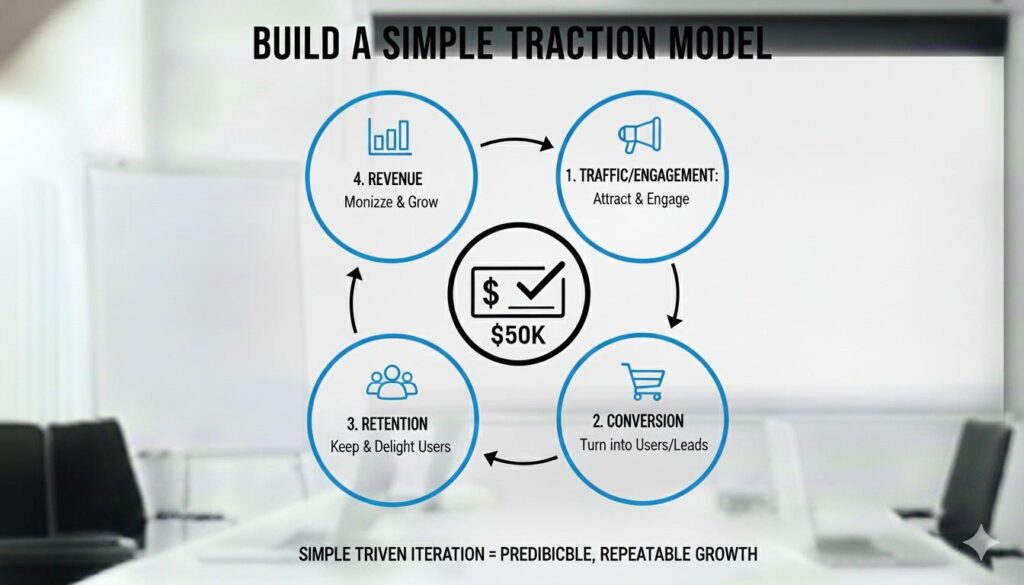
Draw your user path in five plain boxes: find, try, first value, repeat, pay. Keep each box honest and short. Write one sentence under each to state what must happen. This sketch is your traction model. It gives you a shared view and a shared language to spot leaks.
Map your funnel in five boxes
In each box, mark the one step users struggle with most. You do not need fancy tools to see this. Watch five users and take notes. Read inbound messages. Call trial users who never came back. Each clue tells you where to place your next bet. Fix the biggest leak first.
Set a weekly rhythm to review the five boxes. Ask what changed, what broke, and what small fix could move the number by Friday. Avoid big swings unless you have data that proves they will cut weeks of work. The power of a simple model is how it makes tradeoffs clear and keeps the team calm.
Use inputs, not only outputs
Outputs are the numbers we show others. Inputs are the actions we control. A small team on a small budget must live by inputs. Decide the inputs that drive each box and track them daily. For example, number of outreach messages, number of onboarding calls, number of bug fixes shipped, number of demos scheduled.
When outputs lag, inputs guide you. If your first value rate drops, check how many users got onboarding help this week. If trials fall, check how many partner intros you requested. This shift keeps you accountable without panic. It also makes post-mortems short and clear.
Inputs also show investors you know how to drive your engine, not just hope for good luck. That confidence stands out in the room. If you want a partner who helps you turn those inputs into patents and real moats, apply here: https://www.tran.vc/apply-now-form/
Craft a Tight Offer Users Can Say Yes To
Reduce the ask to reduce friction
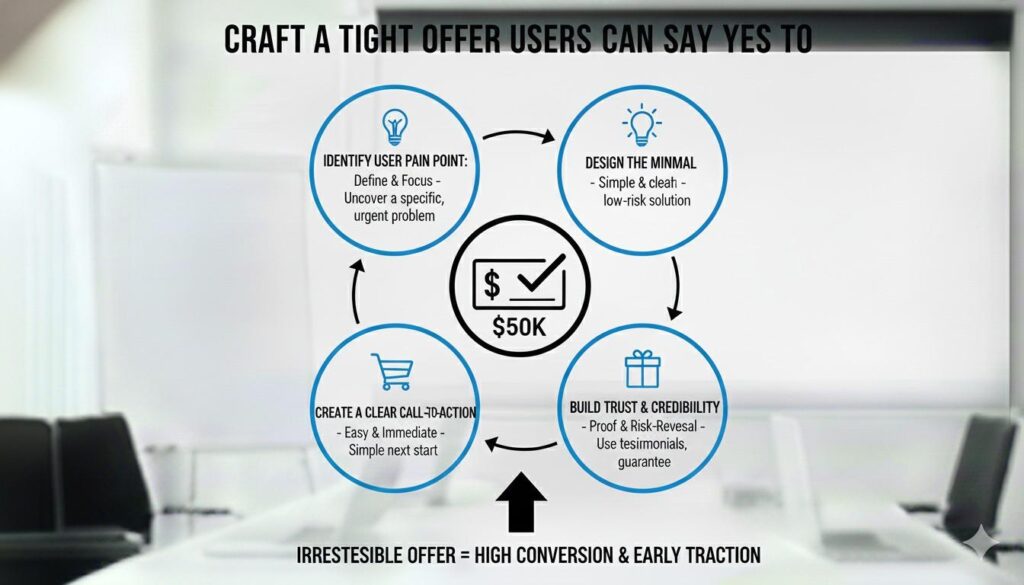
Early traction starts with a friendly ask. Cut the sign-up steps to the bone. Ask for one field, two at most. Delay credit cards unless you truly need them. Offer a short call to set things up if your tool is complex. The goal is the fastest path to first value, not a perfect database.
For hardware, keep pilots small and low-risk. Offer a limited scope, a clear safety plan, and a clean exit if results fail. A small pilot with fast proof beats a big pilot that takes months to start. Investors see a pipeline of short, tight pilots as strong traction in deep tech.
Use plain words to describe the value. Avoid buzz. Say what changes for the user after one day. Make the promise precise and modest. Then beat it. This helps trust build fast and makes referrals natural.
Anchor time-to-value with a clock
Time kills excitement. Set a time box for the first win and put a clock on your site, in your emails, and in your calls. “Your first accurate pick in 20 minutes.” “Your first useful insight in 24 hours.” Live by this clock. Design your onboarding to hit it even on bad days.
If you miss the clock, make it right. Add a make-good action the user values, like hands-on support, custom setup, or an extra month free. The point is not the gift. It is the signal that you care about outcomes. Users talk about vendors who keep promises.
A tight clock also keeps your team focused. It forces you to cut nice-to-haves and polish the steps that matter. This pressure is healthy when it points at value.
Turn Conversations into Customers
Build a two-step outreach script
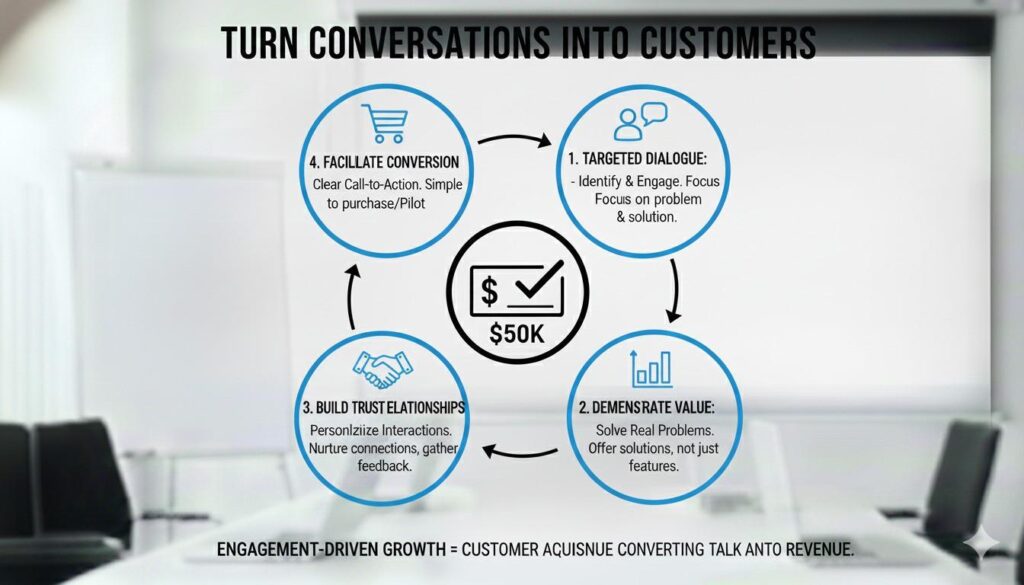
Cold outreach still works when it feels human. Keep your first note short and centered on the user’s world. Name a problem in their words, a result they want, and the tiny ask. Do not sell features. Ask for a quick sanity check or a two-minute reply.
In the second step, offer a short hands-on session where you try their data, their task, or their line. Make the offer specific: a 15-minute test that does one thing well. The goal is to turn talk into a real try. Every call should lead to the first value moment or a clear reason why it did not.
Track outreach like product. Note which openings get replies, which asks feel light, and which proofs land. Update your script weekly based on real results. Keep a small library of lines that work by segment. What works for a lab manager is not what works for a COO.
Use founder-led demos that teach, not pitch
In early days, the best demo is a lesson. Show how to do one job better, faster, or safer. Use the user’s data if you can. Narrate the steps in simple words. Pause to ask if this matches their world. Invite them to take the controls as soon as possible.
End with a clear next step tied to the clock. If they saw the first value, schedule the repeat. If they did not, book a quick follow-up to fix the gap. Send a short recap with the result, the time it took, and the date you will check progress. Keep the tone kind and direct.
Founder-led demos make your learning loop fast. You hear objections early and often. You see what confuses users. You also build trust because you show up and do the work. When you pair this with early IP planning, you hold the ground you win. If you want support on both fronts, apply at: https://www.tran.vc/apply-now-form/
Make Onboarding Feel Like a Concierge
Script the first ten minutes
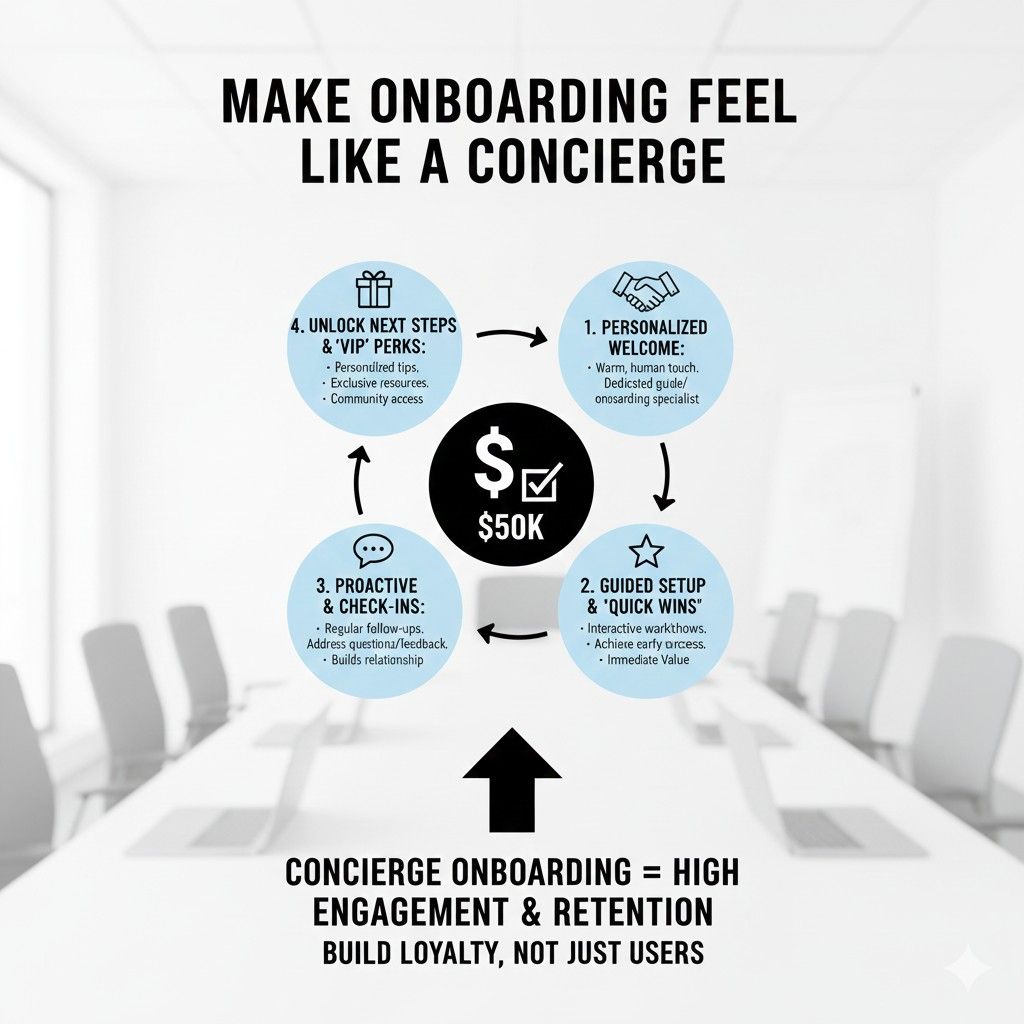
Those first minutes decide if a user stays or leaves. Script them. Greet the user by name. Confirm their goal in one line. Show the one action that leads to the first value. Then let them do it with you watching. Keep the steps few and the words plain.
Build small guardrails to prevent early errors. Preload a sample, prefill fields, and add one-click tips. If a step is risky, add a soft warning. If a step is slow, show a progress hint so the user does not wonder if things broke. Your aim is steady flow, not surprise.
Close by naming the next success and when it should happen. “Tomorrow you should see your first alert.” “By Friday your model should finish training.” Promise to check in, and do it. Send a simple note with the milestone and a friendly ask for feedback.
Offer white-glove help where it matters most
You cannot white-glove everything, but you can white-glove the moments that move the metric. Offer hands-on help for setup, first data import, first model run, or first robot task. Even one hour of help can turn a shaky trial into a strong win.
Record what users struggle with and fix it in product as soon as you can. Each fix removes the need for future white-glove time. Over a few weeks you can shift your effort from carrying users to guiding them. That is how you scale without a big team.
When users feel cared for, they forgive rough edges. They also share your product with friends. This word-of-mouth is the cheapest traction you can get.
Price for Proof, Not Perfection
Create a starter plan that de-risks the first deal
Early price should help both sides learn fast. Offer a starter plan with a clear limit and a clear success bar. Keep the price small enough to remove fear, yet real enough to signal value. This plan should be easy to approve and easy to expand after proof.
If you sell hardware, structure a paid pilot with clear deliverables and service baked in. If you sell software, charge for usage tied to the key action, not seats. This keeps your incentives aligned with outcomes. When users win, you win.
Write your plan like a contract the buyer would show their boss. Make the upside clear and the risk capped. This reduces delay and gets you in the door.
Use expansion triggers tied to outcomes
Do not push a big contract too soon. Instead, define the moment when both sides know it is time to grow. This could be a rate of successful picks, a drop in defect rate, or a number of alerts that saved time. Name the trigger and the next price tier now, not later.
This approach feels fair and calm. The buyer sees you are confident enough to tie growth to results. You avoid hard fights over price because the steps are clear from day one. Investors like to see this logic because it shows a path from pilot to scale.
As your results become repeatable, protect what makes them work. Document your methods. File smart patents. Build a moat that grows with your reach. If you want a partner who invests up to $50,000 in in-kind patent and IP work to help you do this right, apply at: https://www.tran.vc/apply-now-form/
Turn Customer Wins into Proof
Capture results while they are fresh
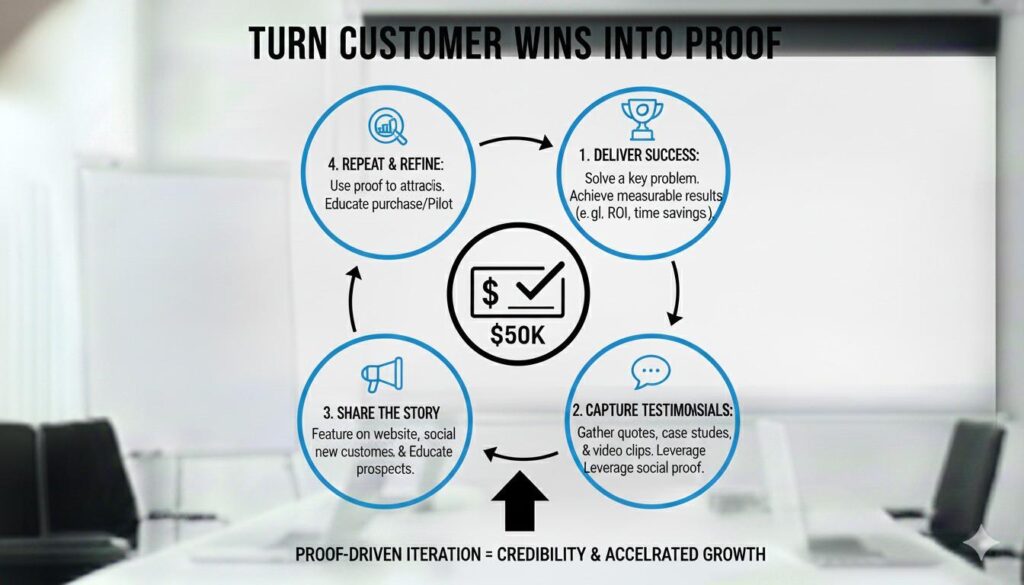
Every win is a story, and every story builds traction. But proof fades fast if you don’t capture it right away. When a user hits success — the first working prototype, the first efficiency gain, the first AI result they trust — ask them to share the details while the excitement is real.
Get permission to use their name if possible. If not, anonymize but keep the story concrete. Replace vague claims with real numbers: hours saved, parts made, errors cut. A simple paragraph of truth is worth more than a polished case study no one believes.
Save screenshots, charts, and quotes in one place. Even if you never publish them, these small facts will power your pitch deck, your investor calls, and your landing page. Every number makes the invisible visible — and shows you are not guessing about impact.
When you help users tell their story, they become proud advocates. They talk about you without being asked. That word-of-mouth builds momentum faster than paid ads ever will. It is how real traction grows from one spark to a fire.
If you want guidance on turning early wins into patent-backed assets and investor-ready proof, you can apply anytime at: https://www.tran.vc/apply-now-form/
Turn small stories into big signals
Most founders wait too long to talk about their progress. They think traction means thousands of users or a massive revenue curve. But investors care just as much about direction as scale. You can show traction with three strong customer stories — if you tell them right.
Frame each story like a before-and-after. Start with the pain, show what changed, then highlight what stayed solved. Use plain language and measurable facts. Avoid hype. If the result sounds too good, back it with proof — a testimonial, a log, or a simple graph.
Once you have a few stories, thread them together. Show that your product works in different settings, with different users, and still delivers results. That variety signals reliability. It makes your traction look broader and stronger.
Then weave those proofs into your investor conversations. Mention them naturally when you explain your growth. Let them be the quiet evidence behind your confidence. You don’t need a huge spreadsheet — you just need a few clear wins that no one can deny.
When you’re ready to turn those early signals into defensible IP and investor leverage, Tran.vc can help. Apply at: https://www.tran.vc/apply-now-form/
Build a Feedback Engine
Ask smarter, not more often
Feedback drives traction — but only if you listen in a way that gets to truth, not flattery. Early users often want to be polite, and polite feedback is useless. So make it safe for people to tell you what they hate. Tell them you want pain, not praise.
Ask questions that reveal behavior, not opinions. “When did you last try to solve this problem?” “What did you do before using us?” “What still frustrates you?” These are the questions that show what matters. Opinions change. Behavior doesn’t.
Keep your surveys short and your calls shorter. Record notes after each chat, tag the biggest pain, and share with the team. Over time, patterns appear — you’ll see which complaints repeat, which delights surprise users, and which ideas no one cares about.
That’s how you decide what to fix, what to drop, and what to double down on. It’s how you build the product users love — not because it’s perfect, but because it listens better than anyone else.
If you want help turning customer insights into patentable innovation, apply at: https://www.tran.vc/apply-now-form/
Close the loop with visible action
Feedback only builds trust when users see change. Don’t just thank them — show them what happened next. When you fix a bug they flagged, tell them. When you build a feature they asked for, send a quick note. When you say no, explain why.
This kind of transparency feels rare, and it earns loyalty. Users become part of your process instead of bystanders. They root for your success because they feel they helped build it.
Internally, create a rhythm for feedback review. Once a week, go over the top requests. Sort them into “fix now,” “plan soon,” and “not for us.” Share your reasoning openly. Even a small update makes people feel heard.
That small habit — closing the loop — turns noise into signal. It tells your users you’re not just another startup chasing hype. You’re a builder who listens, acts, and keeps promises. That’s traction money can’t buy.
Use Content as a Signal of Momentum
Teach what you learn
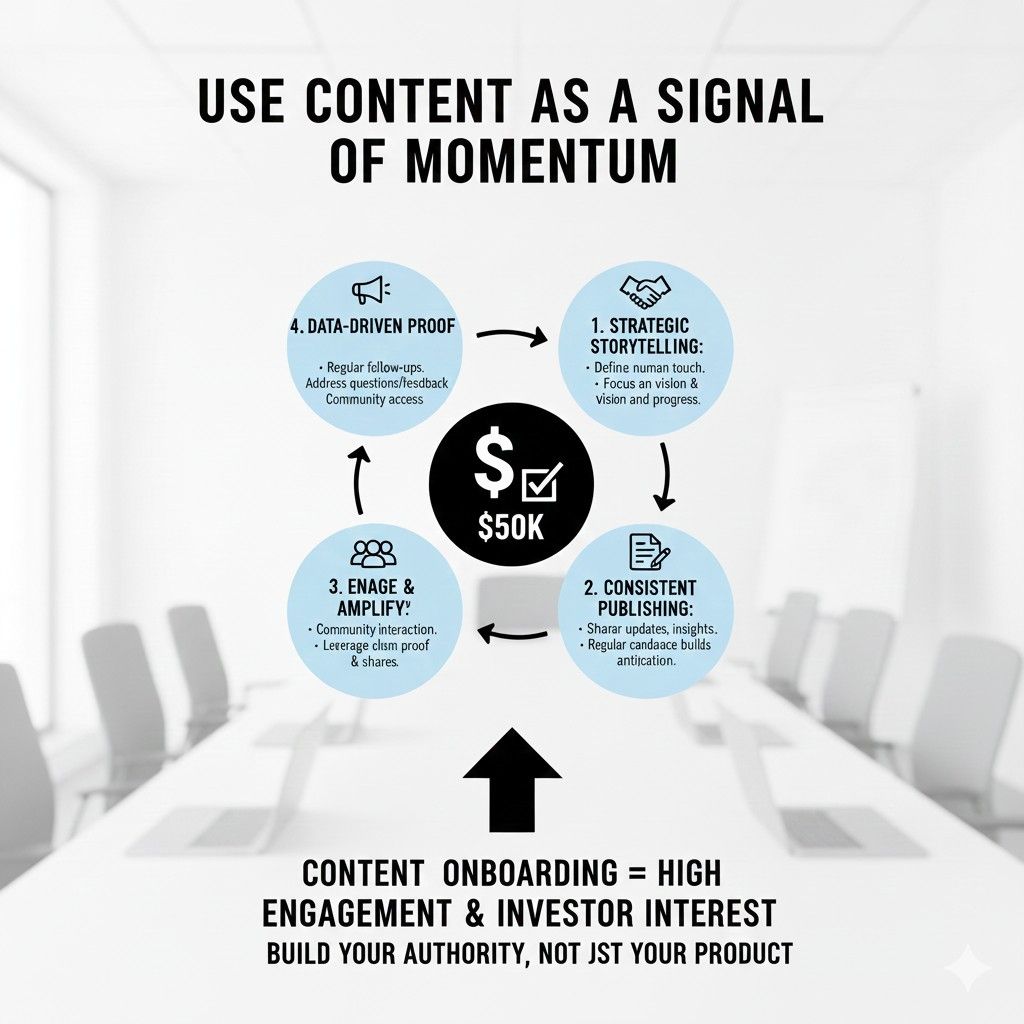
When money is tight, content is leverage. The best founders teach what they are learning as they build. Every small discovery — a better setup method, a data insight, a shortcut in automation — can become a short post or a one-page guide.
You don’t need polish. You need honesty. Write the way you talk. Share what worked, what failed, and what surprised you. The goal is to show progress and clarity, not perfection. When you write consistently, you show that your company is alive, learning, and moving fast.
Technical founders often skip this because they think no one cares about their niche. But the truth is, smart investors and early adopters are always watching for signals of deep learning. Teaching in public positions you as a domain expert. It’s a kind of traction that earns respect even before you scale.
Add one clear call to action at the end of every post — invite readers to test, comment, or partner. Make your learning loop open. It builds community and, with time, reputation.
When you’re ready to protect that technical edge with IP before your first round, Tran.vc is here to help. Apply now at: https://www.tran.vc/apply-now-form/
Turn engagement into relationships
Likes and views don’t prove traction. Relationships do. When someone comments, replies, or asks for more detail, take the time to respond personally. Offer a quick call, a demo, or a follow-up email. One real connection is worth a hundred likes.
Keep a simple list of people who engage with your content more than once. These are your early fans. Nurture them. Ask for feedback, show new features early, and thank them publicly when they help.
When you do this for months, you build a small but powerful circle of believers. They become your first customers, partners, and advocates. And they’ll introduce you to others. That’s organic traction — the kind that compounds quietly, without ad spend.