
When money is tight, every choice feels heavy. You watch the bank balance. You watch your calendar. You watch your team’s energy. And you try to keep building, selling, shipping, and hiring—while your revenue is still small or uneven.
This is the hard part of the startup story that most people skip. Not the pitch deck. Not the demo. The quiet, daily work of not running out of runway.
In this guide, I will show you how to manage burn when you have little revenue, without panic and without fantasy math. We will keep it simple, practical, and real. You will leave with clear steps you can use this week.
One note before we begin: if you are building deep tech—AI, robotics, hard engineering—your burn can get out of hand fast. IP planning can also get messy if you wait too long. Tran.vc helps founders protect what they are building early, with up to $50,000 in in-kind patent and IP services, so you can raise with more strength later. You can apply anytime here: https://www.tran.vc/apply-now-form/
How to Manage Burn When You Have Little Revenue
The real goal is control, not perfection

Most founders think burn control means “spend less.” That is only half true. The real goal is to stay in control long enough to reach the next step that changes your odds. That step might be your first repeatable customer, a stronger demo, a pilot that turns into a contract, or a clear proof that your tech works outside your lab.
When revenue is low, the danger is not just running out of cash. The danger is making rushed choices that hurt your product, your team, and your future fundraise. If you cut the wrong costs, you can slow learning. If you keep the wrong costs, you can bleed quietly. Burn control is about choosing on purpose, not reacting in fear.
A helpful way to think about it is this: every dollar you spend should buy either learning, delivery, or trust. Learning means you are proving something hard. Delivery means you are shipping value to real users. Trust means you are building proof for customers or investors. If a spend does not clearly do one of these, it is suspect.
Know the two kinds of burn you are dealing with
There is cash burn, and there is team burn. Cash burn is how fast money leaves your account each month. Team burn is how fast energy leaves your people. Both can kill you. Many startups try to fix cash burn by pushing the team harder, and that trade breaks the company.
Low revenue months are stressful, so the team starts to multitask. They jump from sales calls to bug fixes to investor emails to “just one more feature.” That creates constant context switching. It feels busy, but output drops. Burn goes up even when spend goes down.
You must manage both at the same time. If you only protect cash, you can lose your best people or your own health. If you only protect morale, you can wake up to an empty bank account. The right plan keeps runway stable and keeps work focused.
A quick reminder for deep tech teams
If you build AI, robotics, or other deep tech, burn can spike from things that look “normal” on the surface. Compute, sensors, parts, lab time, contractors, and testing can quietly become your biggest line items. Even small choices, like a tool subscription or a dev environment, can compound.
This is also where IP can be a hidden risk. When you move fast, you can publish, demo, or ship in ways that make patent options harder later. The best time to plan IP is early, when money is tight and the product is still forming. Tran.vc helps founders do this with up to $50,000 in in-kind patent and IP services, so your work becomes a real asset instead of just effort. You can apply anytime at https://www.tran.vc/apply-now-form/
Step 1: Get clear on your burn in a way you can trust
Stop using “average burn” when revenue is messy

If your revenue is small, it is often not steady. You might have one paid pilot, then nothing for two months, then a lump payment. If you use simple averages, you can lie to yourself without meaning to. Averages hide the weeks where your cash balance drops fast.
Instead, look at burn as a cash flow story. Ask, “What leaves my account each week, and when does it leave?” Rent might hit on day one. Payroll might hit every two weeks. Cloud bills might hit at the end of the month. If you know the timing, you can avoid sudden surprises.
A founder who sees burn weekly usually makes better choices than a founder who only checks monthly. Weekly views reduce panic because nothing feels random. You see patterns. You can act before you hit the wall.
Build a simple “next 13 weeks” view
You do not need a fancy model. You need a view that tells the truth. A 13-week cash plan is enough for most early startups. It is close enough that you can predict it, and long enough that you can act on it.
List what you must pay each week. Payroll, tools you cannot cut, insurance, minimum cloud spend, and any key vendors. Then list the revenue you are sure about. Be strict. If a customer says “we plan to pay,” that is not sure. If a signed contract says “net 30,” that is closer to sure, but still watch for delays.
When you see the next 13 weeks clearly, burn becomes less emotional. It becomes math you can manage. That clarity alone can remove a lot of stress from your day.
Separate fixed costs from “choice” costs
Many founders mix these together. Fixed costs are hard to change fast, like a lease or a core salary you cannot drop overnight. Choice costs are things you can adjust this month, like software, contractors, travel, and some parts of cloud spend.
When you separate them, your options become clearer. If you are short on runway, you usually cannot “optimize” fixed costs in one week. You can renegotiate some, but that takes time. Choice costs are where you can act now.
This also helps you avoid fake savings. Cutting a small tool that saves your team hours can increase team burn and slow shipping. That can cost more than it saves. Choice costs should be judged by impact, not by price alone.
Know your runway the honest way
Runway is not “cash divided by burn.” That is a rough idea, not a plan. The honest runway question is, “On what exact date do I lose control if nothing changes?” This forces you to face timing and risk.
Also, do not assume revenue arrives on time. Early customers pay late. Procurement drags. Legal reviews stall. If you rely on that payment to make payroll, you are living on hope, not control.
A strong founder builds a buffer. Even a small buffer buys calm. Calm improves decisions. Better decisions extend runway more than last-minute cuts ever will.
Step 2: Decide what you will not do right now
Burn is often a symptom of too many priorities

When revenue is low, your best move is not always “more effort.” It is often “less spread.” Many startups burn cash because they burn attention. They start three product paths. They chase five types of customers. They try two pricing models at once. The team becomes busy, not effective.
A clear “not now” list can be your most powerful burn tool. Not because it sounds disciplined, but because it stops waste that hides inside “important” work. Every extra path has meetings, bugs, new edge cases, and more support.
If you do not choose your focus, your calendar will choose it for you. Your inbox will choose it for you. That is how burn grows in silence.
Choose one “make money” path for the next 60–90 days
When revenue is small, the company needs a simple near-term win. Not a big dream. A practical win that creates cash or creates proof that leads to cash. This could be one customer segment, one use case, or one pilot type that you can repeat.
This does not mean you abandon the long-term vision. It means you choose the shortest bridge to survival. Survival is not the final goal, but it is the first goal.
A good test is this: if you had to explain your plan in one minute to a smart stranger, could you say who you sell to, what pain you solve, and why you can deliver it now? If it takes ten minutes, your focus is still too wide.
Protect the work that increases trust
Trust is the currency you use when revenue is low. Customers need to trust you will deliver. Partners need to trust you will show up. Investors need to trust you are building something real.
That means you should protect the work that builds proof. Shipping a stable demo. Writing a clear case study. Getting a letter of intent. Running a pilot with measurable results. These things reduce doubt.
If you cut proof-building work, you might save money this month and lose the ability to sell next month. Burn management is not just cost cutting. It is keeping the engine that creates confidence.
Use IP as a trust lever, not a paperwork task
For deep tech teams, IP is not just legal work. It is proof that your ideas have value and that your moat can be real. The tricky part is that IP is easy to delay because it does not feel urgent compared to shipping.
But waiting can create risk. A demo, a pitch, a paper, even a public GitHub repo can affect patent choices depending on timing and what is disclosed. You want a simple plan early, so you can move fast without stepping on your own future.
Tran.vc exists for this exact moment. They invest up to $50,000 in-kind in patent and IP services so founders can protect core inventions early, without draining scarce cash. If you are building AI, robotics, or other tech where defensibility matters, you can apply anytime at https://www.tran.vc/apply-now-form/
Step 3: Turn your burn into a tool, not a threat
Define what “good burn” looks like for your stage

Not all burn is bad. Burn is a tool. The question is whether your burn buys progress you can measure. Good burn produces learning that reduces risk. It produces shipping that creates value. It produces traction that makes sales easier.
Bad burn produces motion without outcomes. More code without adoption. More meetings without decisions. More spend without clear proof. When burn is low and revenue is low, bad burn can end the company fast.
A simple practice is to tie your spend to a small set of outputs for the next month. Not ten outputs. Two or three. Outputs that a customer would care about, or that would shorten the sales cycle. When spend has a job, you stop paying for “maybe.”
Track one number that tells you if you are improving
Founders often track everything and still feel lost. In low revenue periods, pick one number that tells you if burn is turning into value. It might be “number of sales calls with qualified buyers,” or “time to get a pilot running,” or “weekly active users,” depending on your business.
The number should be close to cash. If it is too far from cash, it will not guide burn choices. For example, “website visits” is often too far. “Calls booked with the right buyer” is closer. “Pilot signed” is even closer.
This one number is not your whole story. It is your compass. When your compass is clear, it is easier to say no to costs that do not help.
Make spending decisions in writing
This sounds small, but it changes behavior. When money is tight, decisions become emotional. A founder feels pressure and buys something hoping it helps. Or cuts something important out of fear.
Try a simple rule: any spend over a certain amount gets a short written note. Two paragraphs. What do we expect this to do? What will we measure in two weeks? What will we stop if it does not work?
Writing slows you down just enough to avoid impulse. It also gives you a record. Later, you can look back and see what decisions helped. That learning makes your burn smarter over time.
Step 4: Cut costs without cutting your ability to win
Start by removing “silent leaks”
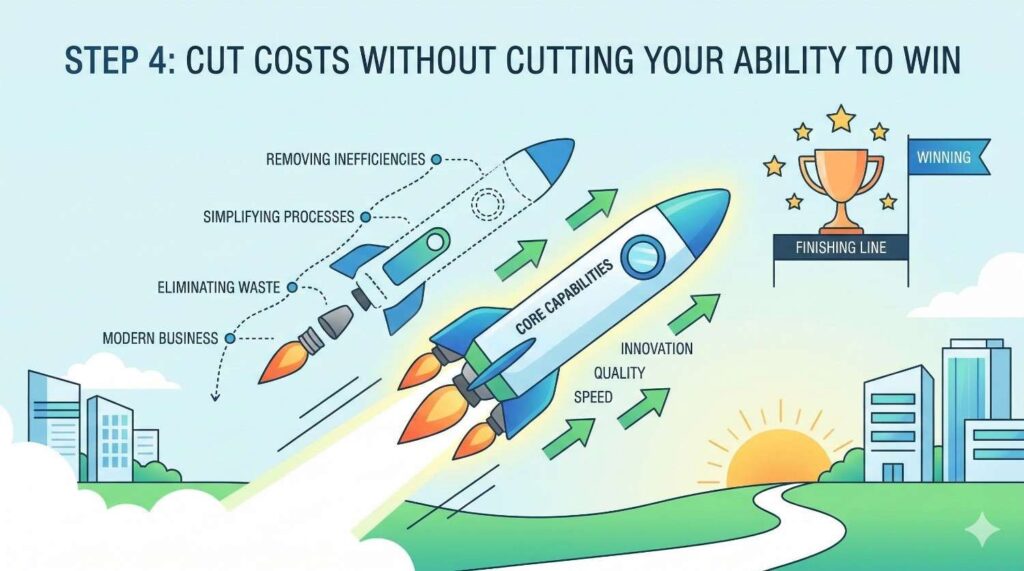
When revenue is low, the first cuts should be the ones that do not touch your core progress. Most startups have quiet leaks that feel small each month but add up fast. These are costs that exist because nobody looked at them in a while, not because they are helping you ship or sell today.
Look for tools that were added during an earlier sprint and never removed. Look for duplicate software that two people bought without knowing. Look for services that charge per seat when only one person uses them. Look for support plans that made sense when you had more cash but are not needed now.
The main point is not to become cheap. The point is to become awake. A company that knows what it pays for is already ahead, because it can decide with intent.
Keep the tools that save time on your critical path
Some founders cut subscriptions first because it is easy. But the cheapest cut can be the most expensive mistake. If a tool helps you ship faster, catch bugs earlier, or run sales outreach smoothly, it may be worth keeping even in a tight month.
The right question is not, “Is this tool expensive?” The right question is, “Does this tool reduce the time it takes to reach the next revenue event?” If it does, cutting it can slow your progress and extend your low-revenue phase. That can cost far more than the subscription.
If you are unsure, run a small test. Pause the tool for two weeks and see what breaks. If nothing breaks, cut it. If the team loses hours, keep it and cut something else.
Treat cloud spend like a product decision, not an IT bill
Cloud bills can get weird fast, especially for AI teams. The mistake is to treat cloud spend as a fixed cost you accept, rather than a design choice you can shape. Your architecture choices affect your burn more than you think.
If you are training models, look at when your instances are running. Many teams pay for idle machines because nobody turned them off. If you are running inference, look at traffic patterns and right-size what you use. If you have logs, keep only what you need. If you store data, set rules for what stays hot and what moves to cheap storage.
You do not need to become a cloud expert. You need one person to own the bill and review it weekly until it is stable. A 30-minute weekly habit can save more than a big “cost cutting month” ever will.
Cut contractors with care and clarity
Contractors can be a gift or a drain. They are a gift when they remove a bottleneck you cannot solve quickly. They are a drain when they exist because nobody wrote down what “done” means.
If you are cutting contractors, do it with respect and with a clean handoff. Loose ends are expensive. A half-finished project often costs more later because the team must re-learn context. If you keep a contractor, make their work narrow and measurable. Give them one outcome, one timeline, and one owner on your side.
Also be honest about why the contractor exists. If they are covering a skill gap you must have, cutting them may slow your core work. In that case, reduce scope instead of cutting completely. A smaller weekly budget with a clear goal can keep progress moving.
Renegotiate the big items early, not late
Vendors are more flexible than founders assume, but timing matters. If you wait until you are desperate, you negotiate poorly. If you start early, you can often get extended payment terms, discounts for annual commitments, or a reduced plan for a few months.
The key is to explain your situation with calm. Many vendors prefer a smaller payment to losing you completely. This is especially true if you are a young company that could grow later.
Renegotiation is not failure. It is normal business. The earlier you practice it, the stronger you become.
Step 5: Make payroll a strategy, not a default
Be honest about what your team can carry
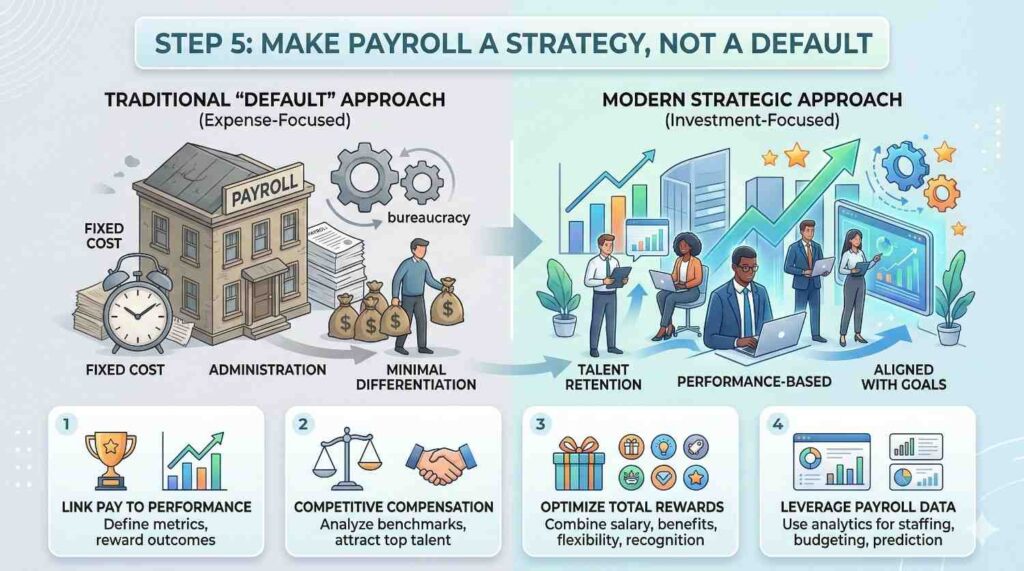
Payroll is usually the largest burn line. It is also the most sensitive. Founders often avoid looking at it closely because it feels personal. But ignoring payroll is not kind. It is risky.
You need to know what your current team can deliver in the next 60 to 90 days. Not in theory, in practice. If you have too many people doing “nice to have” work, burn rises without moving revenue closer. If you have too few people doing core work, progress stalls and morale drops.
The goal is not to shrink to the smallest team. The goal is to shape the team around the shortest path to proof and cash.
Use role clarity to reduce burn without layoffs
Sometimes you can reduce burn pressure without letting anyone go, simply by tightening roles. Early teams often have fuzzy boundaries. Two people do the same work. Three people review every decision. Meetings grow because nobody knows who owns what.
If you define ownership clearly, you reduce rework and lower stress. That is a form of burn reduction. It saves time, and time is money. It also improves morale because people feel trusted and useful.
If you are the founder, this starts with you. Decide who owns shipping, who owns sales motion, who owns customer success, who owns the budget. When ownership is clear, you can move with fewer meetings and fewer mistakes.
Consider temporary changes before permanent cuts
If runway is tight, you may need to make hard calls. But there are steps between “do nothing” and “layoffs.” Some teams choose temporary salary reductions with clear written terms. Some move to four-day weeks for a season. Some founders stop taking salary for a period. Some switch benefits to lower-cost options.
These choices are serious and must be handled with care. They only work when trust is high and communication is honest. If you try to hide the truth, people will assume the worst. If you share the plan clearly, many teams will support a reasonable bridge plan.
The key is to attach any temporary change to a clear goal and a clear date. “We do this until we hit X,” or “We do this until this date, then we revisit.” Without that, it feels endless, and morale breaks.
If layoffs are needed, protect your future ability to build
Layoffs are painful. If you must do them, do them in a way that reduces long-term harm. The worst version is when you cut randomly, keep unclear roles, and leave the remaining team scared and confused.
If you face this, keep the functions that connect to revenue and delivery. Keep the people who hold key system knowledge. Keep the builders who can ship your core product. Reduce side projects. Reduce experiments that do not connect to your near-term revenue path.
Also plan for the week after. The remaining team will be emotionally drained. If you push too hard, you risk losing more people. Give space, reset priorities, and return to a smaller, clearer plan.
Step 6: Replace “growth” thinking with “cash cycle” thinking
Low revenue startups often die from slow collection, not weak sales

Many founders work hard to close deals, but then they ignore the cash cycle. A customer says yes, but procurement takes weeks. Invoices go out late. Payment terms are long. You deliver value, but cash arrives too slowly.
When revenue is low, you must treat collection as part of product. It is not a back-office chore. It is a survival system.
Make it easy for customers to pay you. Send invoices the same day you deliver. Confirm the billing contact early. Ask about payment terms before you start work, not after. If your customer is large, learn their process and follow it closely. The fastest way to lose runway is to deliver and then wait in silence.
Design your offering to get paid sooner
If your current offer requires months of work before a customer pays, your burn will always feel scary. You can improve this by packaging work into smaller paid steps.
For example, instead of “full system build,” consider a paid assessment, a paid pilot setup, or a paid proof test that is short and clear. The customer gets value quickly. You get cash sooner. You also learn if they are serious.
This is not about tricking people. It is about aligning value and timing. If you are building deep tech, customers often want proof before they commit. A smaller paid step gives them proof and gives you runway.
Price for speed and risk, not for your effort
When you are early, it is tempting to price based on hours. But customers do not buy hours. They buy outcomes. If your tech reduces their risk or saves them time, that is value. If your solution is hard to build, that is also value, because not everyone can do it.
Pricing is a large topic, but one rule helps when revenue is low: avoid pricing that creates long delays before cash hits your account. If a customer needs a long contract to approve a large number, you can lose months. A smaller initial deal can close faster and still lead to a bigger contract later.
You are not giving away value. You are buying speed.