If you are building a real tech company in AI, robotics, or deep tech, you are building something people will copy. Not “maybe.” They will. If you show traction, if you get press, if you hire great people, if your product works—copying comes with the territory.
In Europe, patents are one of the cleanest ways to stop that copying, or at least make it expensive and risky. But most founders do not touch European patents early because they sound complex, slow, and full of legal traps. That fear is fair. The system has its own language, its own timelines, and its own hidden costs.
Still, the basics are learnable. And once you understand how the European Patent Office (EPO) works, you can make smarter choices. Choices that protect your core idea without burning cash. Choices that keep you flexible while you are still iterating. Choices that help you raise from a position of strength.
That is exactly what Tran.vc helps with. We invest up to $50,000 in-kind in patent and IP work for early founders, so you can build an IP base before you are forced to “sell the story” to investors. If you want help mapping your invention into a clear patent plan, you can apply anytime here: https://www.tran.vc/apply-now-form/
In this article, I will walk you through the EPO in plain words. Not law school words. Founder words. You will learn what the EPO is, what it is not, what a “European patent” really means today, how timing works, what you should do before you file, and how to avoid the most common mistakes that quietly destroy patent value.
This will be tactical. It will be practical. And it will be written for a startup founder who needs to make decisions fast, without guessing.
The EPO in one clear idea
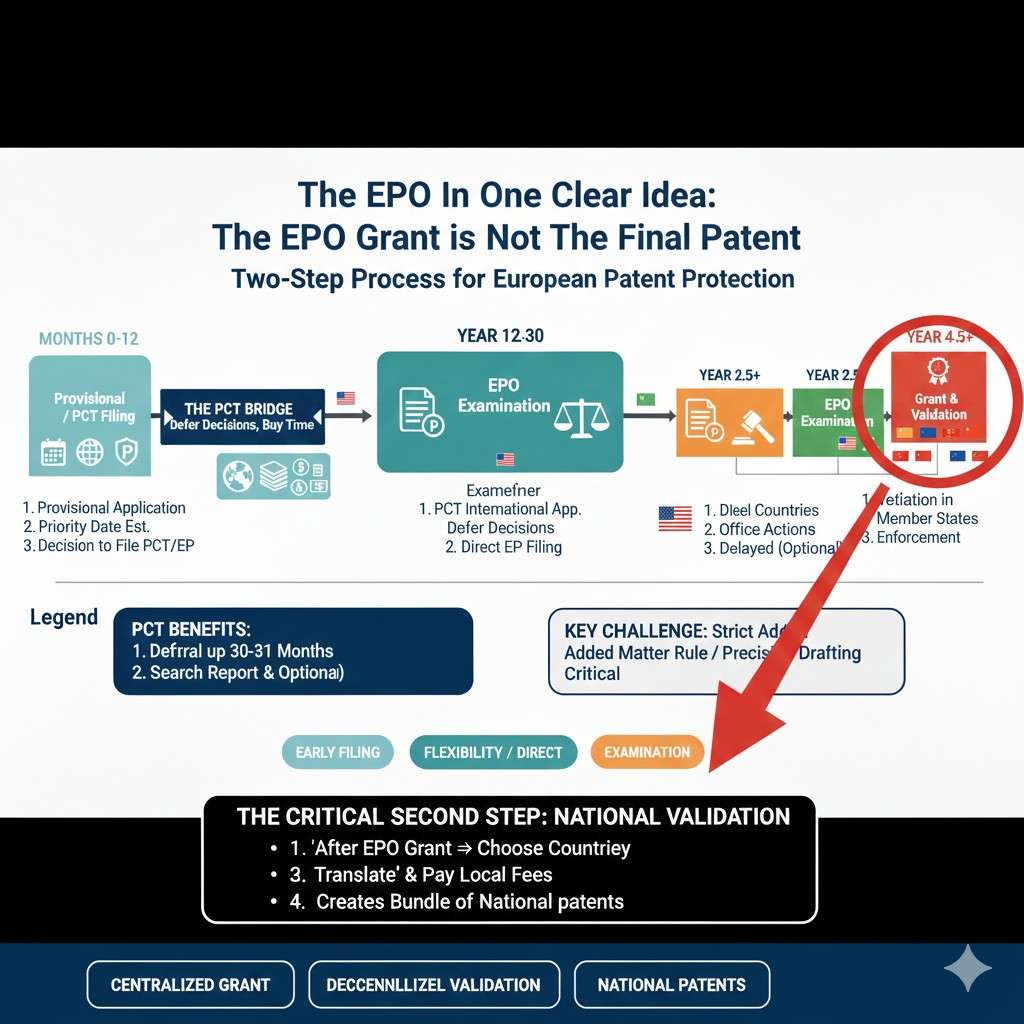
The EPO is a single place where you can file one patent application and run one examination process that can later turn into protection across many European countries.
That sentence sounds simple, but it hides the thing that confuses people most: the EPO is not a “one patent for all of Europe” button.
Think of the EPO like a central gate. You file once. You get examined once. If the EPO says “yes,” you then choose where you want that patent to take effect.
So the EPO helps you avoid doing the early work country by country. You do not need to file in France, Germany, Italy, and so on separately at the start. You can go through one main process first.
This matters for startups because early-stage teams need focus. You need to spend your time building, hiring, selling, testing, and learning. The EPO route can reduce chaos. But it can also create false comfort if you assume it is “one and done.” It is not.
The smart founder view is: the EPO is a way to keep options open while you learn where your real markets and real threats are.
And keeping options open is one of the best strategic moves you can make early.
If you want support building that “options plan” the right way—so you are not over-filing or under-protecting—Tran.vc can help. Apply anytime: https://www.tran.vc/apply-now-form/
What “Europe patent” really means now
For a long time, people said “European patent” when they meant “a patent examined by the EPO.” After the EPO grants it, you “validate” it in the countries you care about. Each country then treats it like a national patent.
So if you validate in Germany and the UK, you get enforceable rights in Germany and the UK. If you skip Spain, you do not get rights there. That is the basic idea.
Now there is also something called the Unitary Patent (and a new court system tied to it). The key thing for you as a founder is not the politics. It is the decision: do you want one unitary right covering many EU countries at once, or do you want a classic route where you validate country by country?
This is not something you need to decide on day one. You decide later, closer to grant. But you do need to know that Europe now has two “paths” after the EPO says yes.
Here is the founder-friendly way to think about it:
If your plan is to move fast across many EU markets, and you like simple management, a unitary approach can be attractive.
If your plan is to focus on a few key countries, or you want more control over where you can be sued or where you need to fight, the classic route can be attractive.
Both can be smart. The best choice depends on your product, your market entry, your budget, and your risk tolerance.
What you should not do is ignore this until the last minute, when you are already stressed, fundraising, and shipping.
A good IP partner brings this up early, so you can design the application in a way that supports either path.
That is the kind of support Tran.vc is built for—real patent strategy, not paper-pushing. If you want to talk it through, apply here: https://www.tran.vc/apply-now-form/
Why European patent strategy feels “hard” for startups
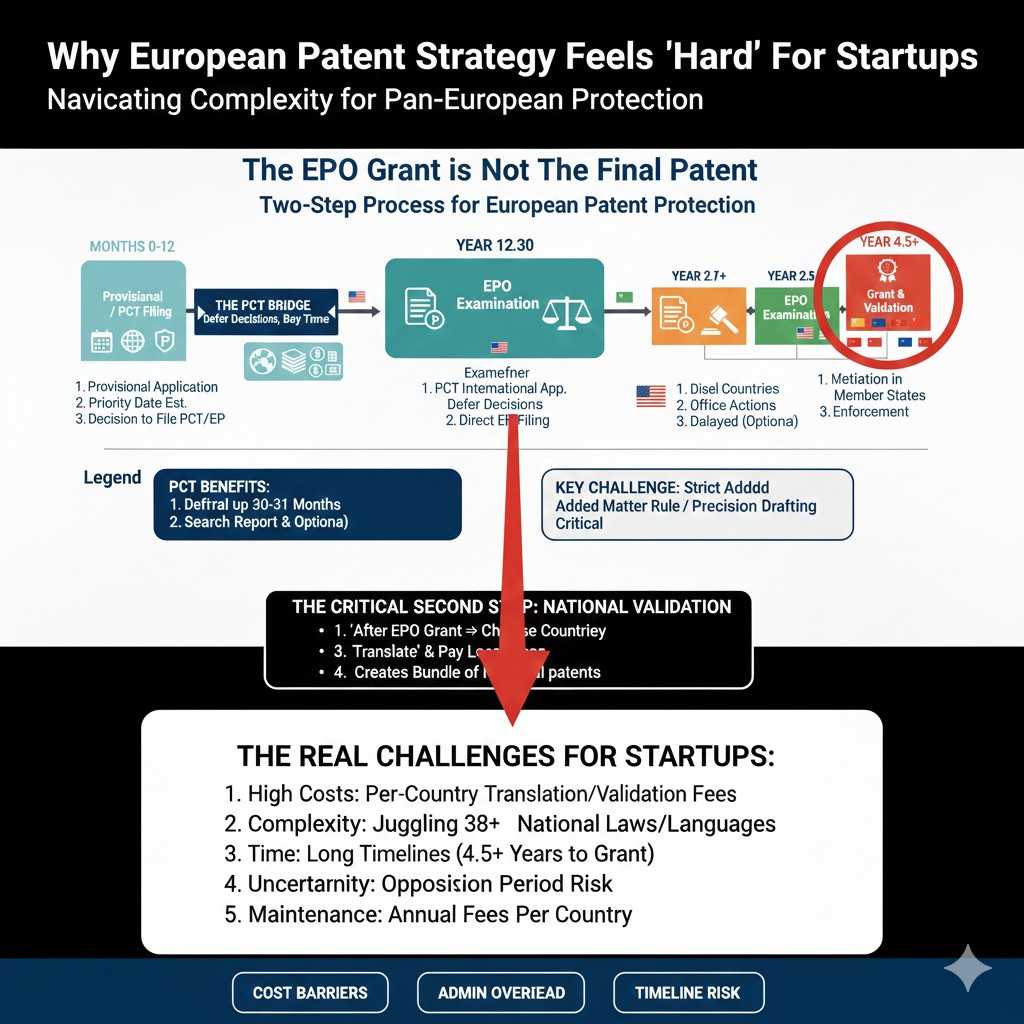
Most founders struggle with Europe for three reasons.
First, Europe is many markets. Your customers might be in Germany, your hardware might be tested in Sweden, your competitors might copy in Poland, and your manufacturing might sit outside Europe entirely. So the map is messy.
Second, Europe is language-heavy. Even when the EPO process itself uses a small set of languages, validation and enforcement can create translation and local steps. That creates cost surprises.
Third, Europe is timeline-heavy. The EPO can take time. Startups move in weeks and months. Patent offices move in months and years. That mismatch makes founders feel like patents do not fit a startup.
But patents can fit startups when you treat them like a strategy asset, not a trophy.
Your first goal is not “get a patent.” Your first goal is “lock in a filing date and build a claim plan around what will matter later.”
In other words, you want to secure an early spot in line, then shape the details as you learn more.
This is why early filings often start as a strong “first filing” that is broad, clear, and tied to real technical value. Later, you build out more filings as the product becomes sharper.
This approach can work extremely well in Europe, because the EPO cares deeply about technical detail. If you give it real engineering content, you have a better shot later.
And if you are building AI and robotics, you almost always have technical detail. You just need to express it in the right way.
The EPO cares about “technical” inventions (and this matters for AI)
This is one of the biggest founder blind spots.
In the US, software patents can be tricky, but the style is different. In Europe, the EPO often asks a blunt question: what is the technical contribution?
If your invention is “a business idea with code,” the EPO will not like it. If your invention is “a technical solution to a technical problem,” you are in a stronger position.
This is not about adding fancy math or obscure words. It is about being honest about what your system improves in the real world.
If you are building an AI model, you need to tie it to a technical effect. That could be better image processing in a robot. Lower compute for on-device inference. Improved signal filtering for a sensor. Better planning for a motion control loop. Reduced network load in a distributed system. More stable training in a safety-critical setting. Improved latency in a real-time pipeline.
You do not need to make it up. You just need to name it clearly, then back it with how you do it.
The EPO rewards that kind of writing.
The EPO is not impressed by “we use AI to optimize X.” That is marketing. The EPO wants: what is X, what is the constraint, what is the baseline, what is the mechanism, and what changes in the system because of your method.
This is where startups can win, because startups are often the ones doing the real novel engineering.
If you want to convert your engineering into strong EPO-ready patent language, Tran.vc can support you with attorneys who know how to frame AI and robotics the way the EPO expects. Apply anytime: https://www.tran.vc/apply-now-form/
Start with the one thing that matters: novelty (and what can destroy it)
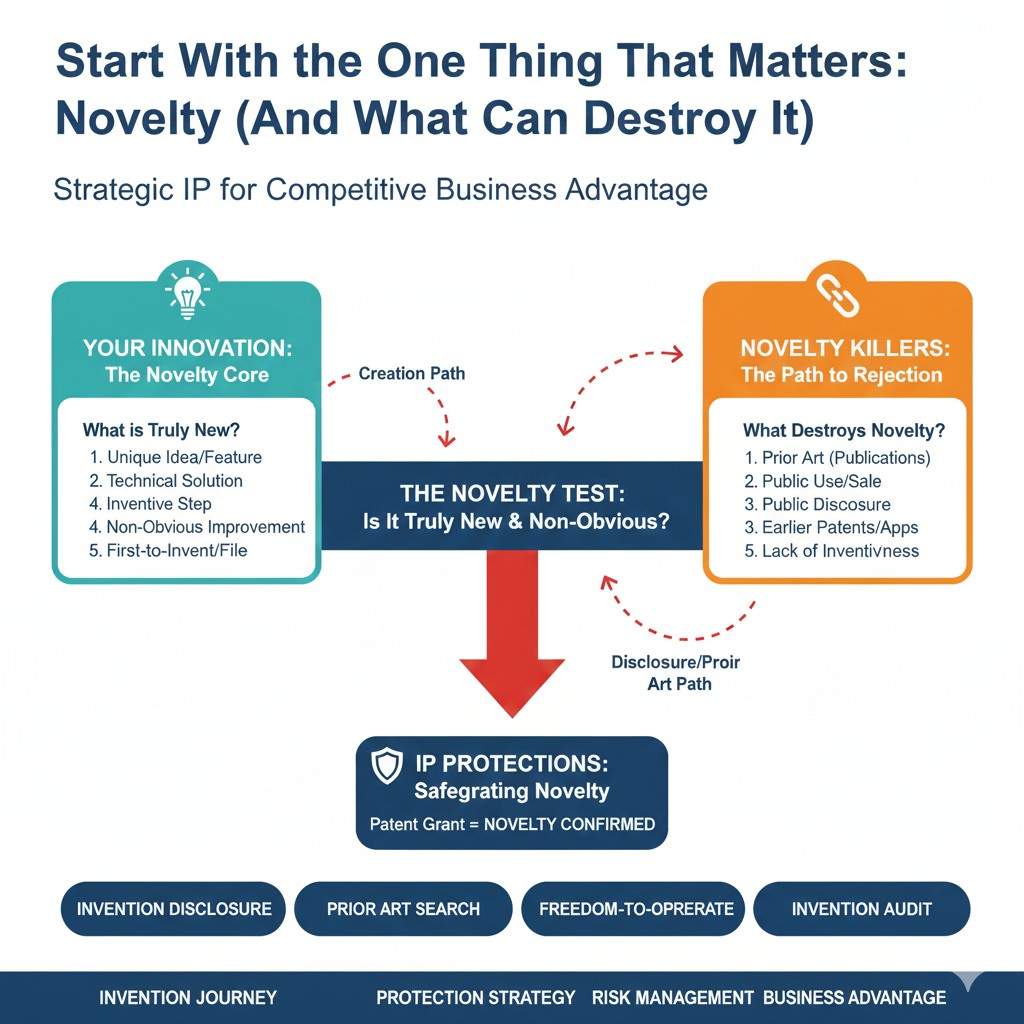
European patents follow the same basic global rule: you cannot patent what is already public.
But founders often misunderstand what counts as public.
If you publish a blog post with the core method, that is public.
If you put the method in a GitHub repo, that is public.
If you present it at a demo day and investors film it, that can be public.
If you share a preprint paper, that is public.
If your customer can reverse engineer it from your shipped product, that can be public.
And the EPO is strict about this. Europe is not the place where you want to gamble with “maybe we can still patent it.”
So the founder habit you want is simple: file before you disclose.
That does not mean you stop talking. It means you control what you say, and you file the key pieces first.
This is especially important if you are hiring, fundraising, or applying to accelerators. Those moments create disclosure risk.
A practical approach is to create a “disclosure map” for your startup:
What must we share for sales?
What must we share for hiring?
What must we share for fundraising?
What can we keep hidden?
Once you do this, you can decide which parts deserve early filings. Often, it is not the whole product. It is the key mechanism that makes your results possible.
And that is the part you want competitors to have trouble copying.
Tran.vc helps founders build this map and file the right things early, without wasting filings on weak ideas. If you want that help, apply here: https://www.tran.vc/apply-now-form/
What an EPO patent application looks like in real life
A European patent application is not just one page that says “I invented a robot.”
It is a full technical document. It describes:
What problem exists today.
Why current approaches fail or fall short.
What your invention does differently.
How it works in enough detail that a skilled person could reproduce it.
Examples, variants, and different ways it can be implemented.
And then, the most important part: the claims.
If the description is the story, the claims are the fence.
The claims define what you can stop others from doing.
Many founders make a mistake here. They think the patent is the story. But courts and competitors care about the claims.
A strong EPO strategy is not just “write a good story.” It is “build a claim set that protects the right core.”
For startups, this means you need to know what your core is.
Not your UI.
Not your branding.
Not your pitch deck.
Your core is the technical mechanism that delivers the benefit customers pay for.
If you have not nailed that down yet, that is normal. You are early. But you can still file, as long as you capture the right technical pieces and include multiple versions so you have room to adjust later.
This is one reason Tran.vc focuses on founders in deep tech and AI: these teams often have real mechanisms worth protecting, even before the product is “done.” If you want help turning your core mechanism into a strong first filing, apply here: https://www.tran.vc/apply-now-form/
The EPO timeline in plain words
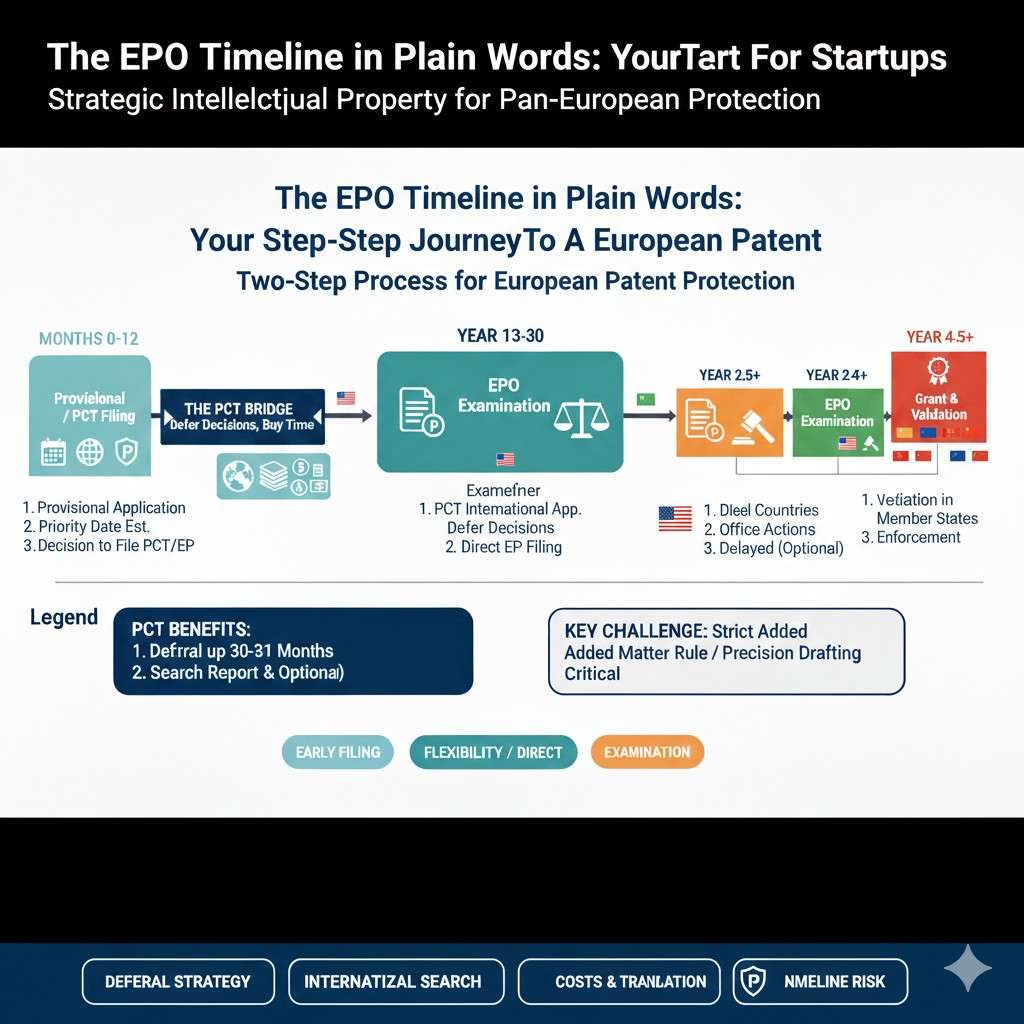
The EPO process has steps that repeat in a predictable way.
You file.
You get a search report and an opinion. This is the EPO telling you what they found that is close, and what they think of your claims.
You respond. This is where you argue, adjust, and narrow or refine.
The EPO examines again.
This back-and-forth continues until the EPO allows the case, or rejects it, or you decide to stop.
Founders often fear this because it sounds like an endless legal battle. But it is closer to product iteration than you think.
You ship a version.
Users tell you what breaks.
You patch.
You repeat.
Patent examination is like that, except the “user” is the examiner, and the feedback is about novelty and inventiveness.
The important founder lesson is: your first filing does not need to be perfect. It needs to be strong enough that you can adapt.
If your first filing is thin, you have no room to adapt. If it is rich with technical options, you can respond to what the EPO finds and still keep meaningful protection.
This is one of the biggest tactical points in European patents.
Your best move is to over-invest in the quality of the first technical write-up, because Europe rewards substance.
A small but powerful founder tactic: write the invention before you write the product
This sounds odd, but it works.
Most founders describe their product the way they pitch it.
But a patent is not a pitch.
The best way to prepare for an EPO filing is to write a short “engineering note” that answers a few practical questions in plain language:
What is the system input?
What is the system output?
What is the key transformation in the middle?
What constraints make this hard?
What are the baseline methods?
What did we change?
What improved?
What are three other ways we could do it if we had to?
You can do this without legal words. Just write like you are explaining it to a smart engineer who joined the team yesterday.
Then your patent team can turn that into the structured form the EPO expects.
This saves time. It improves accuracy. And it keeps you from filing a patent that only describes the current build and not the broader invention.
This is exactly the sort of founder-led IP work Tran.vc encourages. It makes your patents stronger and reduces wasted attorney time.
If you want a team that will guide you through this without drowning you in jargon, apply here: https://www.tran.vc/apply-now-form/
Europe Patents: EPO Basics for Startup Founders
What the EPO is really doing for you
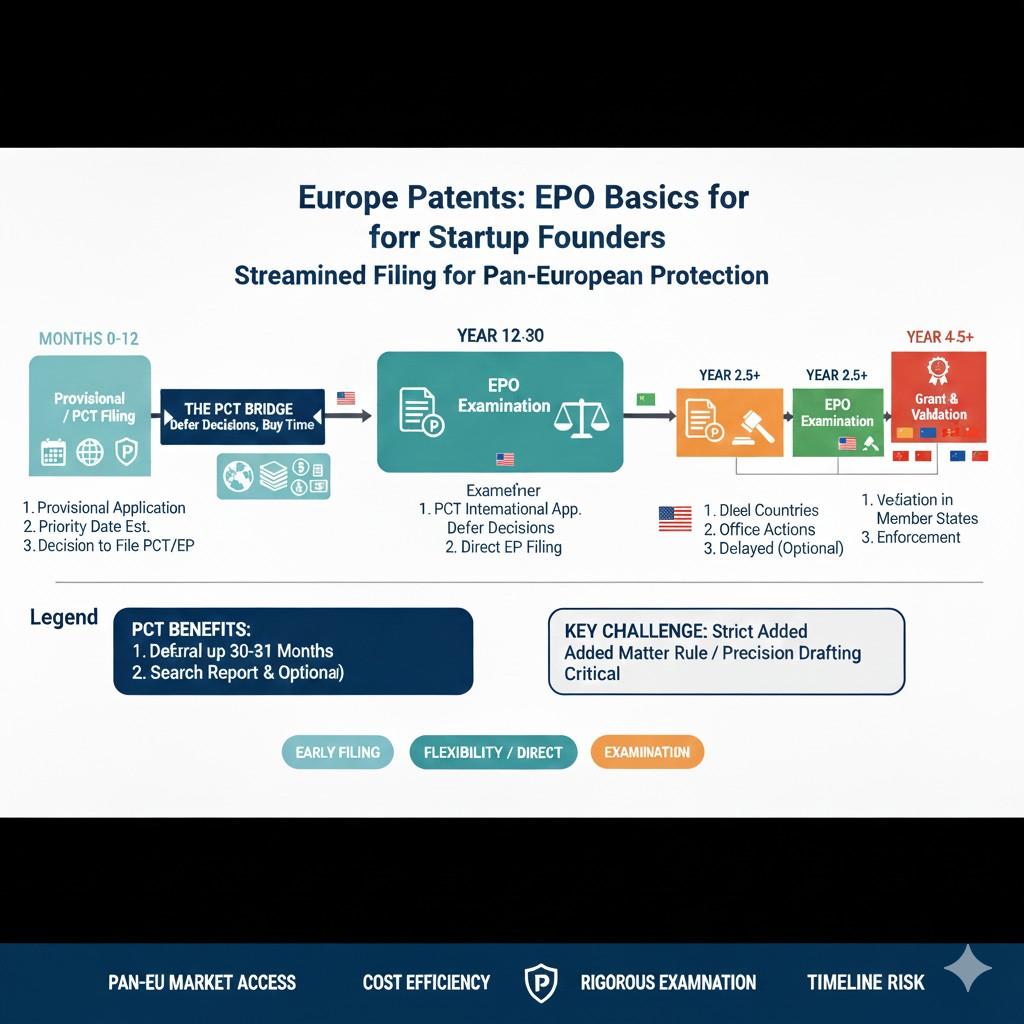
The EPO is a single, central office where you can file one patent application and have it reviewed under one process. That is useful because Europe is not one country. Without the EPO, you would need to start separate filings in many places, with many rules, many forms, and many timelines.
For a startup, this “one front door” matters. It helps you move with more control. You can put your stake in the ground early, then decide later which countries are worth the extra spend. That keeps you from paying for protection in places you may never sell in.
What the EPO is not doing for you
A common mistake is thinking the EPO gives you a single patent that automatically protects you everywhere in Europe. It does not work that way. The EPO gives you one examination process, and if you succeed, you get a granted European patent that still needs choices after grant.
Those choices are where founders often get surprised. The EPO can grant the patent, but you still decide where it takes effect, and you still manage costs and rules that can vary by country. In short, the EPO helps you reach the “grant,” but your business plan decides what happens next.
Why founders should care early, even before sales
European patents are slow compared to startup speed, but that does not make them useless. The real early value is not “winning a lawsuit.” The value is that a filed application can become an asset you can point to when you raise, negotiate, or partner.
If you can show that the core method is protected and that you filed before you went loud, you change how others treat you. Competitors become more cautious. Investors ask fewer hard questions about defensibility. And you have a cleaner story when you enter Europe.
If you want Tran.vc to help you build that story with real filings, you can apply anytime here: https://www.tran.vc/apply-now-form/
What can be patented at the EPO
The EPO’s favorite kind of invention
The EPO is built to protect technical inventions. That means inventions that solve a technical problem in a technical way. If your work improves how a machine works, how a system runs, how data is processed in a technical pipeline, or how hardware and software interact, you are often in a good position.
In AI and robotics, there are many strong fits. Think about control loops, sensing, safety systems, low-latency inference, edge compute, better signal handling, or new ways to reduce compute while keeping accuracy. When you can point to a clear technical effect, the EPO tends to listen.
The “business idea” trap founders fall into
The EPO does not like patents that are just business plans dressed up as software. If the invention is mainly a rule for selling, pricing, ranking, matching, or managing people, the EPO will push back. Even if code is involved, the EPO often asks whether the novelty is really technical or mainly an abstract decision.
This is where many AI startups get stuck. They describe what the model does for the business, not what it changes in the technical system. If the invention reads like a pitch deck, it tends to struggle. A stronger approach is to describe what happens inside the system, step by step, and why that system behavior is better than before.
How to translate your startup into “technical effect”
You do not need fancy language. You need clear cause and effect. A technical effect can be lower latency, less memory use, less battery drain, more stable output, fewer failures, faster convergence, improved sensor fusion, or safer motion planning. It is something you can measure or observe in a system.
When you write your invention for Europe, focus on the mechanism that creates the improvement. What changes in the pipeline. What data is transformed. What decision is made differently. What part of the system is now less constrained. If you can explain it to a new engineer in plain words, you can usually shape it into strong EPO-ready content.
If you want help doing that without losing speed, Tran.vc supports founders with experienced patent teams. Apply here: https://www.tran.vc/apply-now-form/
AI patents in Europe without the confusion
When AI is a strong fit
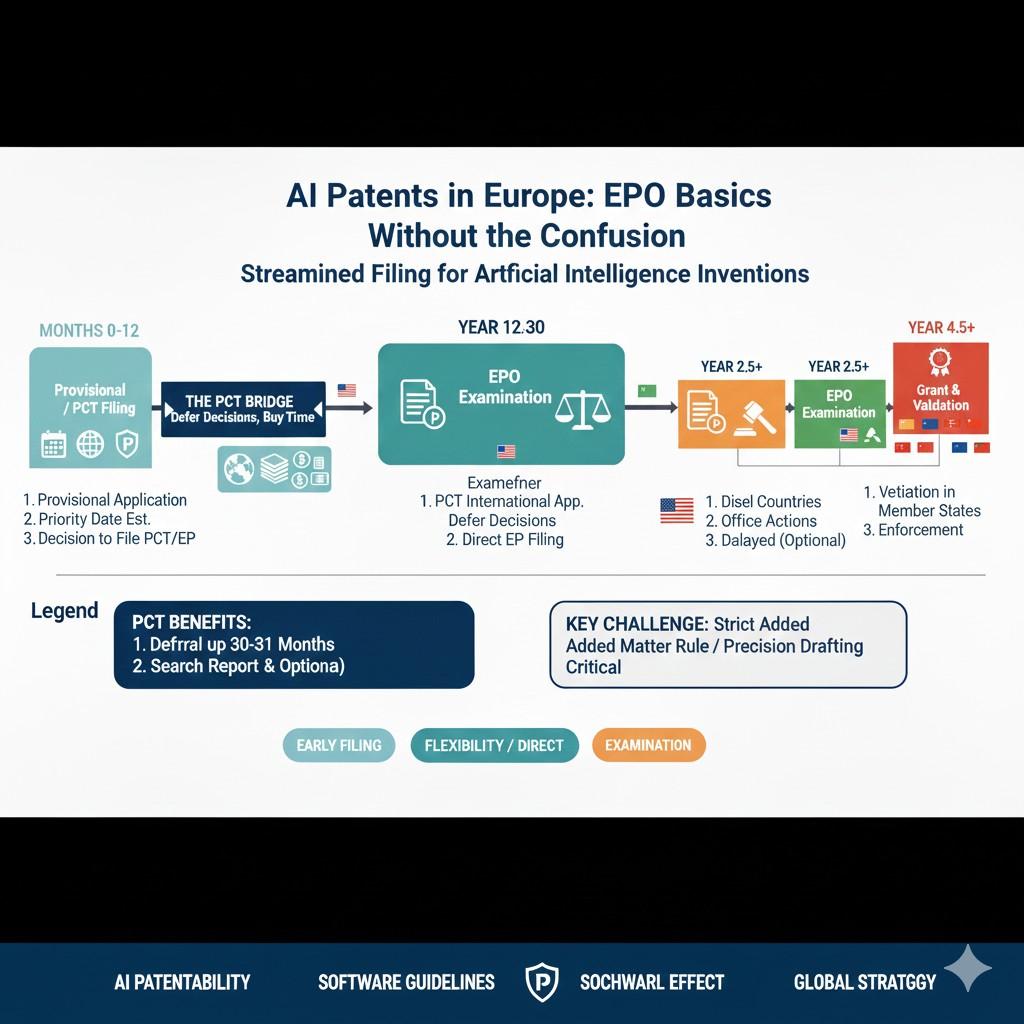
AI can be a great fit at the EPO when it is used as part of a technical system. If the model improves image processing for a robot, reduces compute cost for edge inference, improves fault detection in machines, or stabilizes a noisy sensor stream, that is often a solid base.
In these cases, the invention is not “AI for AI’s sake.” It is AI as a tool that creates a real technical improvement. The EPO usually wants you to connect the model to the system, not leave it floating as an abstract prediction engine.
When AI becomes weak at the EPO
AI becomes weaker when it is presented as a generic “we use ML to optimize outcomes” statement. If the invention is mainly about choosing better business actions, the EPO may treat it as non-technical. Even if a neural network is involved, the office looks for what is truly new and technical.
Another weak spot is when the application does not include enough detail. If you hide the core of the model and only talk about outputs, the EPO may say the filing is not enabling, meaning it does not teach enough. You do not need to publish your secret sauce in full, but you do need to explain enough that the invention is real and repeatable.
How to write AI inventions so Europe takes them seriously
A practical way is to describe the whole pipeline. Start with the data source and constraints. Then explain preprocessing, feature choices, training setup, inference flow, and the technical integration. Tie it to the hardware environment, timing constraints, memory limits, and real-world noise.
Also include more than one version of the approach. Startups change quickly. If your patent only covers the exact model you ship today, it may become outdated. A good European filing includes variations, so you can adjust your claims later without losing the filing date.
Tran.vc helps teams capture AI inventions in a way that supports strong claims while keeping room to evolve. Apply anytime: https://www.tran.vc/apply-now-form/
Robotics patents in Europe with practical founder framing
Why robotics often performs well at the EPO
Robotics is naturally technical. It touches sensing, control, mechanics, safety, and real-world constraints. The EPO tends to understand these problems and may be more comfortable with them than abstract software-only inventions.
If your robot does something that was hard before—moves safer, senses better, manipulates more reliably, or runs with less compute—you likely have patentable material. The key is to identify the real “why” behind the improvement and describe it with enough detail.
Where robotics founders accidentally lose patent value
A common mistake is describing only the end behavior, not the mechanism. Saying “the robot can pick objects faster” is not enough. The EPO will ask how. If the improvement comes from a new grasp planning method, a sensor fusion trick, a calibration method, or a control stability approach, that is what you need to protect.
Another mistake is waiting until the product is polished and public. Robotics demos get filmed. Hardware gets shown at events. Once the core method is public, Europe can become unforgiving. The simplest habit is to file before you demo the deep part of the system.
How to decide what part of a robot to patent first
Do not start with the whole machine. Start with the part that creates the advantage. That could be a method in software, a special sensor arrangement, a control method, or even a manufacturing or calibration process. Choose the “engine,” not the “car.”
Then capture it as a stand-alone invention. Write it so it still makes sense even if the robot body changes. That way, you protect the durable value, not a single design snapshot that can be redesigned around.
If you want a partner to help you pick the right “engine” and file it early, apply here: https://www.tran.vc/apply-now-form/
The single biggest risk: losing novelty
What counts as a public disclosure
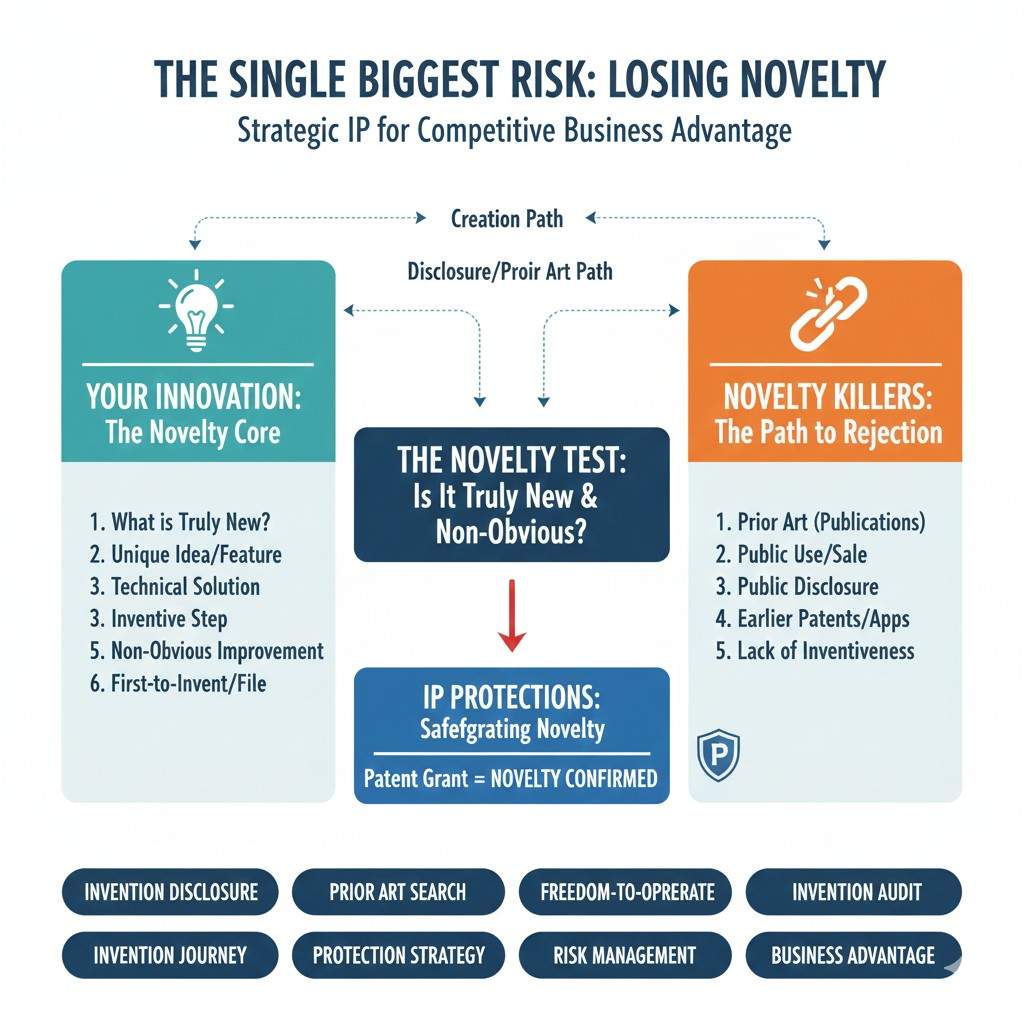
In Europe, novelty can be destroyed by many normal startup actions. A detailed blog post can do it. A GitHub repo can do it. A paper can do it. A public demo can do it. Sometimes even a partner or customer situation can get messy if the sharing is not controlled.
Founders often assume a small audience means safety. But public is public. If an outsider can access the information, or if it can spread without control, you should treat it as disclosed. Europe generally does not forgive casual disclosure the way some founders assume.