
Pilot agreements and LOIs can feel like “paperwork” compared to building product.
But when you are raising money, these documents can act like proof. Proof that real buyers want what you are building. Proof that you can sell. Proof that your startup is not just a story.
If you use them well, a pilot agreement or LOI can move your fundraising from “interesting” to “investable.” And if you use them poorly, they can do the opposite. They can slow deals down, create risk, or make investors think your sales motion is weak.
At Tran.vc, we work with technical founders who are building robotics, AI, and deep tech. Many of them are strong builders, but they have not had to sell before. We help them turn early customer interest into clean, fundable traction. We also help protect what matters with up to $50,000 in in-kind patent and IP services, so the traction you earn does not become a free roadmap for others.
If you want help shaping pilots, LOIs, and an IP plan that makes investors lean in, you can apply anytime here: https://www.tran.vc/apply-now-form/
Introduction
A pilot agreement or an LOI is not “the deal.” It is the bridge to the deal.
It is the thing that lets a customer say yes without taking a big risk. And it is the thing that lets an investor believe your future revenue is not wishful thinking.
The goal is simple: create a document that makes it easy for the customer to start, and easy for you to raise.
Most founders get this wrong in one of two ways:
They make it too soft. A feel-good email that says, “We plan to work together.” It sounds nice, but it does not carry weight in a funding round.
Or they make it too heavy. A long contract with strict terms, big penalties, and legal language that scares the customer away.
There is a middle path. It is firm where it needs to be firm, and flexible where it should be flexible.
That is what this guide is about.
Before we go deeper, one quick point that matters a lot in robotics and AI: pilots and LOIs can create “value,” but they can also leak your secret sauce. When you show a customer how your system works, you may be showing a future rival what to copy. This is why IP strategy and pilots should be built together, not in two separate lanes.
Tran.vc exists for this stage. We invest up to $50,000 in in-kind patent and IP services so you can move fast and still protect your edge. If you are building something hard and you want to raise without giving up control too early, apply here: https://www.tran.vc/apply-now-form/
What investors really want from a pilot or LOI
Investors do not fund pilots. They fund the path from pilot to repeat sales.
So when an investor looks at your pilot agreement or LOI, they are silently asking:
- Does this prove a real buyer exists?
- Does it prove the buyer has a problem that hurts enough to pay?
- Does it show a clear next step to revenue?
- Does it show a sales motion that can repeat?
- Does it reduce “maybe” and increase “likely”?
A strong LOI can do this even before you have revenue. A strong pilot agreement can do this even if the pilot is small.
But only if the document is built with the right signals.
The signals that matter most
The best pilots and LOIs do not try to impress with fancy terms. They show clear commitment.
Commitment can look like money. Even a small paid pilot is a powerful sign.
It can look like time. A named champion and a set start date.
It can look like access. Data, site access, hardware access, integration support.
It can look like a decision path. “If X happens by Y date, we move to Z.”
These are investor-friendly signals because they show intent that is hard to fake.
A company can say “we love this product” in a meeting. That costs nothing.
But if they sign a document that commits to a timeline, a success bar, and a real next step, that is different. That is a bet.
And investors fund bets.
LOI vs pilot agreement: what is the real difference?
Founders often mix these up. Here is the clean way to think about it.
An LOI is usually a “plan to buy” document. It says: “If you deliver what we need, we intend to purchase under these terms.”
A pilot agreement is usually an “agree to test” document. It says: “We will run a test together, under these rules.”
Sometimes an LOI includes a pilot section. Sometimes a pilot agreement includes an intent-to-buy section. That is fine.
But in fundraising, your main job is to avoid confusion. You want investors to understand, in one minute, what is signed and what comes next.
So your documents should make three things obvious:
- What the customer is committing to now
- What you are committing to now
- What happens if the pilot works
If those three things are clear, investors feel calm.
If they are fuzzy, investors assume risk.
The biggest mistake: treating LOIs like vanity metrics
Some founders chase LOIs like trophies.
They stack logos. They celebrate “10 LOIs signed.” They put it on a slide.
Then investors ask one question: “How many convert?”
And the room gets quiet.
A weak LOI is one that is easy to sign and easy to ignore. It looks good but does not predict revenue.
A strong LOI is one that is hard to sign because it requires real thought and real internal buy-in. That kind predicts revenue.
So the goal is not the count. The goal is the quality.
If you have one LOI that has real terms, a timeline, and a clear trigger to a paid deal, that can beat ten vague LOIs.
What a “fundraising-ready” LOI includes (without becoming a contract)
There is a fear founders have: “If I ask for too much, the customer will walk.”
That fear is normal. But the answer is not to ask for nothing. The answer is to ask for the right things.
A fundraising-ready LOI should feel like a clear handshake. Not a trap.
Here are the parts that create that effect.
1) The exact problem and the exact use case
Do not write: “Customer intends to explore using AI.”
Write: “Customer intends to deploy computer vision to reduce missed defects on Line 3.”
This matters because investors want to know your product is tied to a real pain. Not a vague “innovation” budget.
The tighter the use case, the more your traction looks real.
2) The buyer and the champion
You want a name, a title, and a department.
Even if the LOI is signed by procurement or legal, your document should name the person who will run the work day to day.
Investors know this truth: deals do not move because companies move. They move because one person cares.
A named champion is a signal of seriousness.
3) A timeline with dates, not “Q2”
Dates show urgency. They also show you can manage a process.
A good LOI includes a target start date, a target decision date, and a target roll-out date if the pilot works.
If you cannot get all three, get two. If you cannot get two, get one.
A date turns a dream into a plan.
4) A clear “if-then” path to purchase
This is the heart of fundraising value.
You want something like: “If the system meets the agreed success bar, the parties intend to enter a paid agreement within X days.”
Notice the language. It is still “intent,” but it is intent tied to a trigger and a time box.
That is what investors can underwrite.
5) A price range or pricing logic
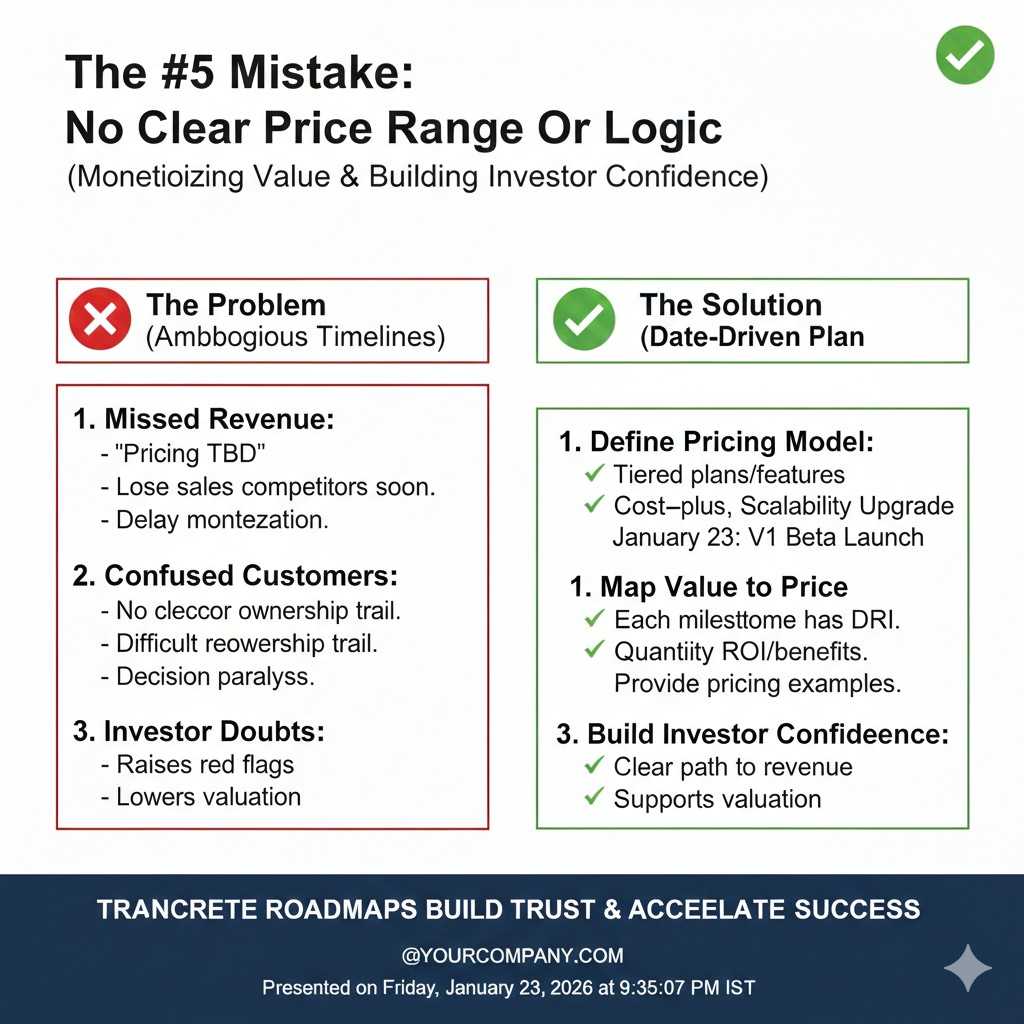
Many founders avoid price because they feel it is early.
But investors do not need an exact number. They need to see that the customer has accepted the order of magnitude.
A price range can work. A “not to exceed” can work. A per-site or per-unit model can work.
The point is to show that money was discussed and not rejected.
If a customer signs an LOI with a price range, that is a strong signal. It means they can picture paying you.
6) What each side will provide
For robotics and AI pilots, this is huge.
If your pilot needs data, you must name the data.
If your pilot needs site access, you must name the access.
If your pilot needs sensors, you must say who supplies them.
If your pilot needs integration help, you must say what “help” means.
This protects you. It also protects the pilot timeline, which protects your fundraising timeline.
Investors hate “pilot drift,” where a pilot keeps slipping because the customer did not provide what was needed.
7) Confidentiality and IP boundaries
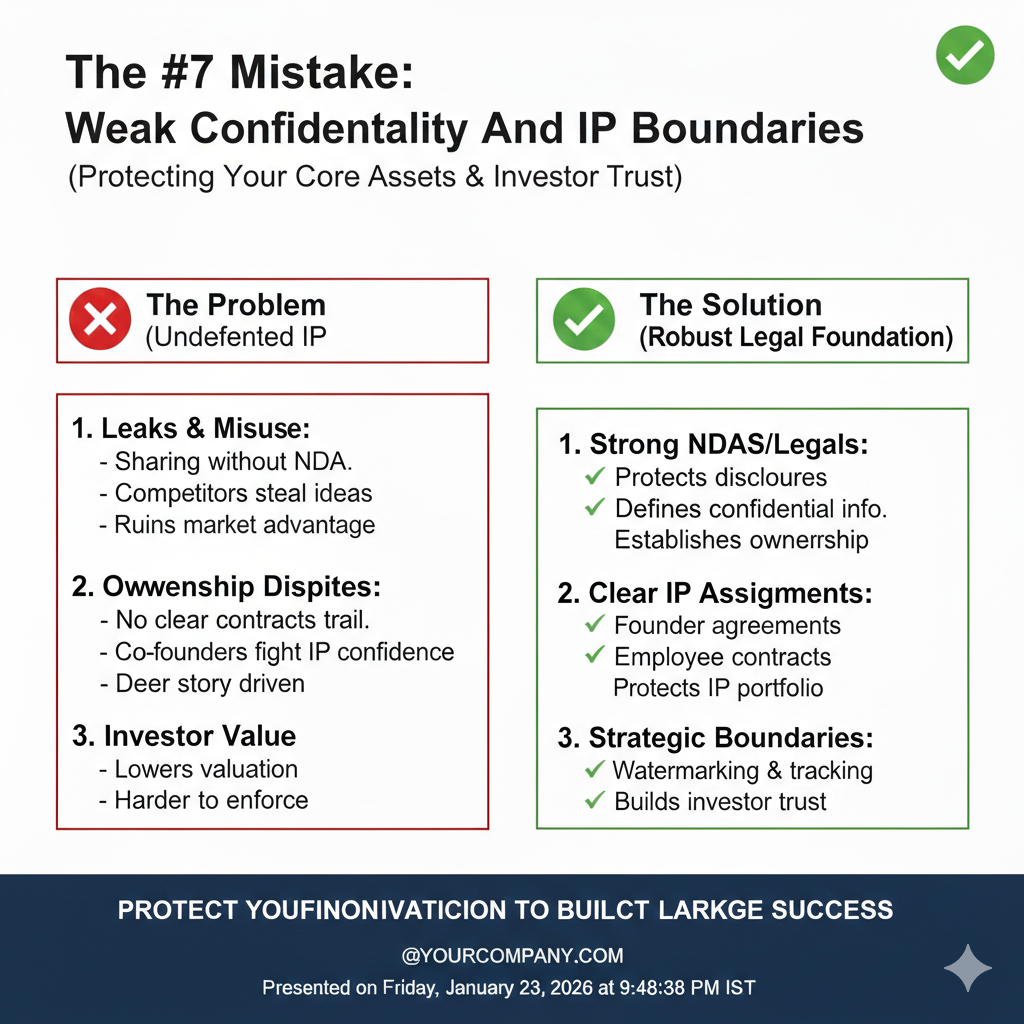
This is where Tran.vc leans in hard, because it is easy to get hurt here.
Your LOI should not be a full legal contract. But it should still state the basics:
- Your pre-existing tech stays yours
- Their pre-existing materials stay theirs
- Anything you build that is general to your product stays yours
- They get a limited right to use what is needed for the pilot
You do not need to be aggressive. You need to be clear.
This is not just legal hygiene. It is fundraising strength. Investors want to see you protect the core.
If you want help building IP protection while still closing pilots fast, apply anytime: https://www.tran.vc/apply-now-form/
Pilot agreements: where fundraising traction becomes real traction
An LOI is often the step that helps you get the pilot.
The pilot agreement is where you show you can deliver.
And for fundraising, the pilot agreement is a tool to do two things:
- Make success measurable
- Make the next sale almost automatic
Many pilots fail, not because the tech is bad, but because “success” was never defined. Everyone walks away with a different story.
You do not want that.
You want a pilot that ends with one of two outcomes:
- “We hit the bar, and we are buying,” or
- “We did not hit the bar, and here is why.”
Both outcomes teach you something. But only the first one helps your round.
So you design the pilot agreement to push toward outcome one.
The single most important line in a pilot agreement
It is not the payment clause.
It is not the liability clause.
It is the success definition.
If you define success well, you can run the pilot, create a clean result, and show investors a strong chart.
If you define success poorly, you get a messy pilot, a messy result, and a messy fundraising story.
Success should be:
- specific
- measurable
- achievable in the pilot window
- tied to a real business pain
In robotics, success might be “reduce cycle time by X%.”
In computer vision, it might be “detect defects at Y precision with Z false positives per hour.”
In an AI agent workflow, it might be “reduce manual review time by X hours per week.”
Pick a metric the buyer cares about. Not a metric that flatters your model.
Paid vs unpaid pilots: the real truth
There is a lot of debate about whether you should charge for pilots.
Here is the practical view for fundraising:
A paid pilot is stronger than an unpaid one, because it proves budget exists.
But an unpaid pilot can still be fundable, if it includes real commitment in other forms and a strong conversion path.
If you can charge, charge. Even if it is small.
A $10k pilot can do more for your round than a $0 pilot with a famous logo.
Because the $10k shows someone took out a corporate credit card, or cut a PO, or got finance approval.
That is friction. And friction is proof.
If you cannot charge, do not panic. Instead, “charge in kind.” Ask for value that costs them something:
- dedicated engineer time
- access to a production site
- access to a real dataset
- written internal memo to proceed if success is hit
- agreement on a decision meeting date
When something costs them, it makes the pilot real.
How to write pilot terms that do not scare the customer
Most customers do not sign pilot agreements because they love legal documents.
They sign because they want the outcome.
So your job is to make the document feel safe and clear.
Here are the tones that work best:
- calm, not pushy
- clear, not clever
- simple, not “lawyerly”
Use short sentences. Use plain words. Avoid threats. Avoid big penalties.
Also, do not pretend you can remove all risk. You cannot. But you can reduce it.
The “two-way safety” frame
A great pilot agreement protects both sides:
It protects them from buying something that does not work.
It protects you from wasting months on a pilot that never had a chance to convert.
When you explain it that way, buyers say yes more often.
You can literally say: “This pilot agreement is to make sure we both win. It keeps the test focused and fair.”
That line disarms tension.
The conversion plan: the part founders forget
A pilot without a conversion plan is a science project.
A pilot with a conversion plan is a sales process.
Your agreement should include what happens after the pilot, not in a vague way, but in a scheduled way.
For example:
- a mid-pilot review meeting
- an end-of-pilot decision meeting
- a draft commercial agreement shared before the pilot ends
This is not “pushy.” This is professional.
It also helps fundraising because you can show investors: “Here is our pipeline. Here are our decision dates.”
Investors love decision dates.
Where IP fits into pilots and LOIs (and why it impacts fundraising)
In deep tech, your pilot is often the first time you expose your edge.
A robotics demo may reveal your control loop approach.
A vision pilot may reveal your labeling strategy.
An AI workflow pilot may reveal your data schema and prompts.
A customer may be honest and still leak your idea inside their company. Not out of malice. Just by talking.
And if the customer is a large company, their vendor network is wide. Ideas travel.
This is why your pilot paperwork should connect to an IP plan.
A simple rule that helps: file early on the core concept before you go wide with pilots.
That does not mean filing everything. It means filing the core.
This is exactly what Tran.vc helps with. We invest up to $50,000 in in-kind IP and patent services so founders can move fast, show traction, and still protect what is unique.
If you are about to sign pilots or LOIs and you want to do it the right way, apply here: https://www.tran.vc/apply-now-form/
LOIs and Pilot Agreements Are Not the Same Thing
What an LOI is really saying
An LOI is a clear note that says, “We want to move forward, and here is what that could look like.” It is not the final deal. It is a way for a customer to show intent without going through a full legal process too early.
In fundraising, the LOI works like a signal flare. It tells investors there is real pull from the market. It also tells them you are already in active talks, not just running demos.
What a pilot agreement is really saying
A pilot agreement is closer to “We are doing the test now, and these are the rules.” It is more practical than an LOI because it covers what will happen week to week. It sets expectations for access, timelines, roles, and success targets.
For investors, a pilot agreement feels more real because work is already scheduled. It shows the buyer is not only interested, but ready to spend time and effort on implementation.
Why the difference matters in a funding round
When founders mix LOIs and pilots in their story, investors get confused. Confusion creates doubt, and doubt slows decisions. You want your documents to match your stage and your claims.
If you say you have “customers,” but all you have is soft LOIs, investors will push back. If you say you are “in pilots,” but there is no signed plan, investors may assume your pipeline is fragile.
What Makes an LOI Help Fundraising
The LOI must reduce “maybe”
A weak LOI is easy to sign and easy to ignore. It often reads like a polite email, not a business plan. Investors have seen many of these, and they do not treat them as traction.
A strong LOI makes the customer commit to something that has weight. It does not have to be binding, but it must be specific enough that walking away would feel like backing out of a plan.