
If you are building a startup with one or more co-founders, you are not just building a product. You are also building a small government. Someone gets to make calls. Someone gets to approve big moves. Someone can block a decision even when everyone else is excited.
That “government” is shaped by two things: the board and voting rights.
Most founders wait to learn this until a problem shows up. A fight. A stalled round. A co-founder who stops working but still has power. An investor who wants control “just for safety.” By then, the paperwork is already signed and the damage is hard to undo.
This guide will help you understand the basics early, in plain words, so you can set clean rules before stress hits. And if you want hands-on help building real leverage before your seed round, you can apply to Tran.vc anytime here: https://www.tran.vc/apply-now-form/
What a board really is (without the fluff)
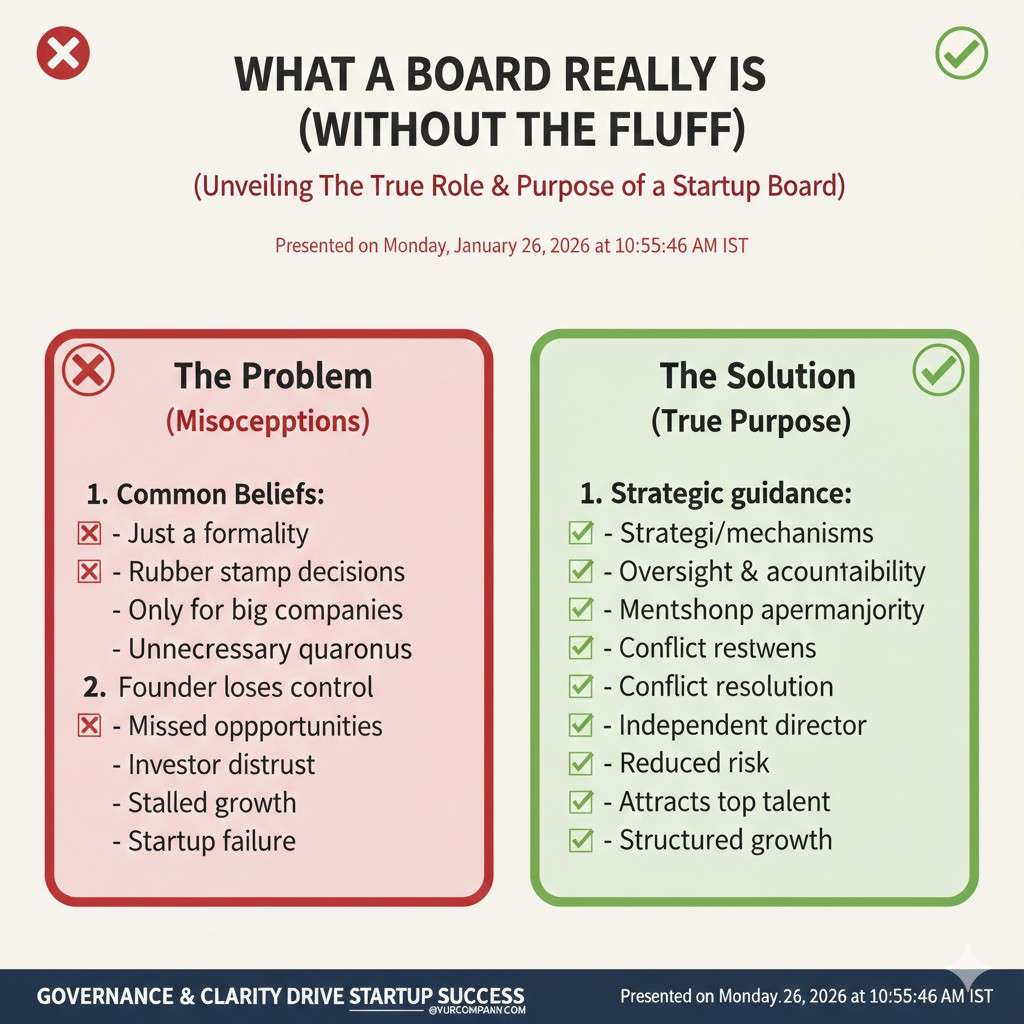
A board of directors is a small group with legal power over the company. The board is not “advice club.” The board is not “people who like your startup.” The board is the group that can hire and fire the CEO, approve major deals, and control key parts of the company’s future.
In the early days, the board is often just the founders. That sounds simple, but it creates real consequences. If you and your co-founder are the only two board members, you can deadlock. If there are three board members, two can outvote one. If you add one outside person as a “neutral,” they can become the swing vote. That can be good, or it can be a quiet loss of control.
Here is the simple rule: the board is about control at the top. Voting rights are about control across all owners. They overlap, but they are not the same.
When you hear “governance,” this is what people mean. Governance is the rulebook for who decides.
Voting rights are not the same as ownership
Many first-time founders assume this: “If I own 60%, I control 60% of decisions.” That is often not true.
You can own more shares but still have less power if:
- you agreed to special votes for someone else,
- you created multiple classes of stock,
- you gave a board seat away,
- you signed protective rights that force approvals.
Ownership is a slice of the pie. Voting power is the fork.
And sometimes, founders accidentally hand away the fork.
A classic example is when a small investor asks for “approval rights” on basic things. It can sound harmless: “We just want to be kept safe.” But approval rights can turn into a lock on your company. You might need their yes to raise money, change prices, hire a key leader, sell the company, or even take on a loan.
Another example: two founders split shares 50/50 and think it is “fair.” On paper, yes. In real life, it can become a trap. If you disagree on a big move, nobody wins. Decisions stall. Opportunities die. The startup becomes slow at the exact time it needs to be fast.
So the real goal is not “equal.” The goal is “clear.”
The early founder mistake: mixing friendship with power design
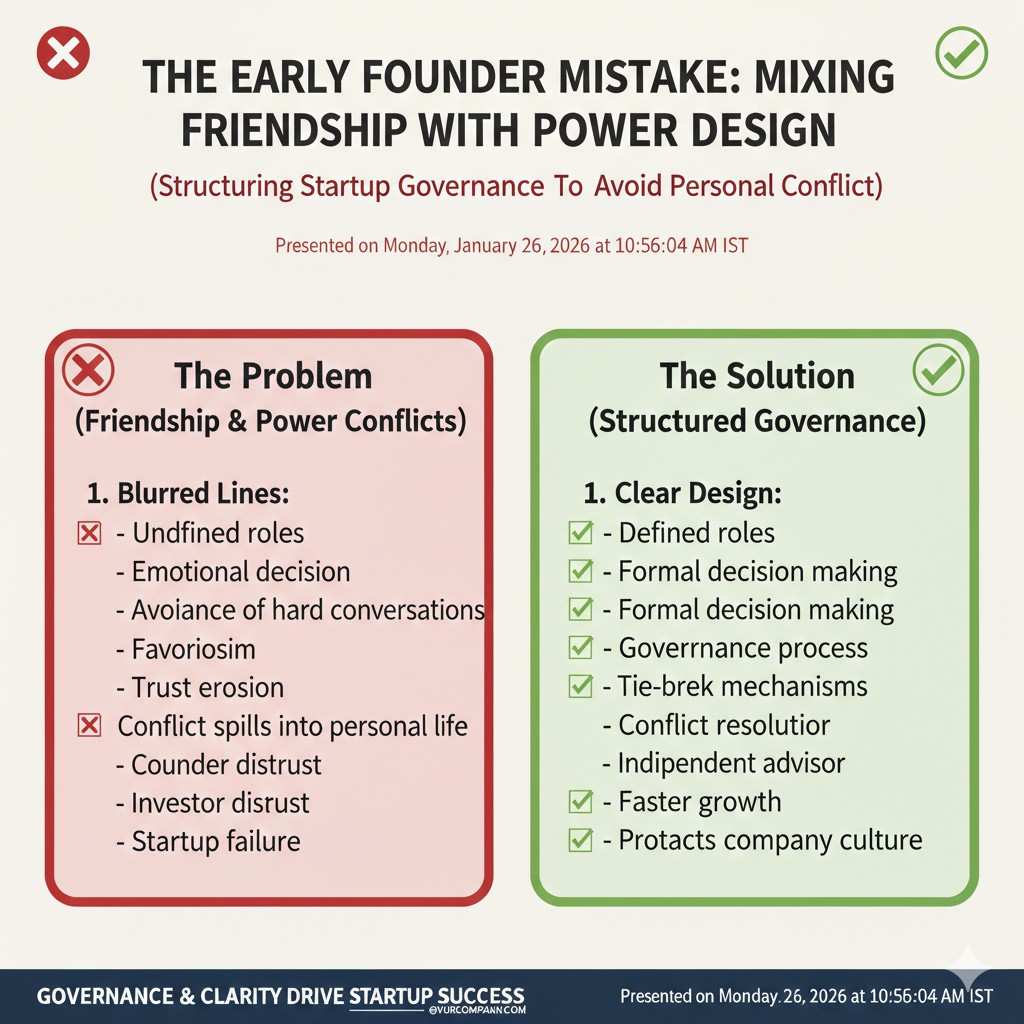
You can like your co-founder and still design strong rules. In fact, if you like each other, you should design even stronger rules. Because when things get hard, you will be tired, stressed, and scared. That is when weak governance breaks.
The best co-founder teams talk about power early, while the relationship is still healthy. They set rules that keep trust strong, even during conflict.
This is what that looks like in practice:
You decide how major choices will be made before the first major choice shows up.
You decide what happens if one founder slows down, burns out, or leaves.
You decide what happens if you need to replace a CEO someday, even if it feels impossible to imagine today.
These are not “bad vibes” topics. These are “adult startup” topics. And they are a sign of respect.
Also, if you are building deep tech, AI, or robotics, your risk is higher. The timelines are longer. The money needs are bigger. The IP matters more. Governance is not a side issue. It is part of your moat. Investors look for it, even when they do not say it out loud.
Tran.vc exists for this kind of company. We help technical founders turn inventions into assets that are hard to copy, while keeping founder control strong early. If you want support on the IP and strategy side, apply anytime: https://www.tran.vc/apply-now-form/
Two types of decisions you must separate: board decisions and stockholder decisions
In most startups, there are decisions the board makes and decisions the stockholders make.
Board decisions often include:
- approving budgets,
- approving option grants,
- hiring and firing the CEO,
- approving fundraising terms,
- approving big contracts,
- approving acquisitions or a sale process.
Stockholder decisions often include:
- approving a merger or sale in some cases,
- approving changes to the charter,
- approving increases to authorized shares,
- approving certain class rights if you have multiple classes.
But here’s the part founders miss: you can move power from one bucket to the other with documents.
For example, if your company charter says that certain actions require a separate vote of preferred stockholders, then even if your board supports a move, the preferred holders can block it. That is not rare. That is normal in venture deals.
This is why founders need to read the “protective provisions” section like their life depends on it. Because sometimes, it does.
Even if you do not plan to raise venture money right away, you still need to understand this now. It will shape how you negotiate later. It will shape how you keep leverage.
Why the board matters even when you are tiny
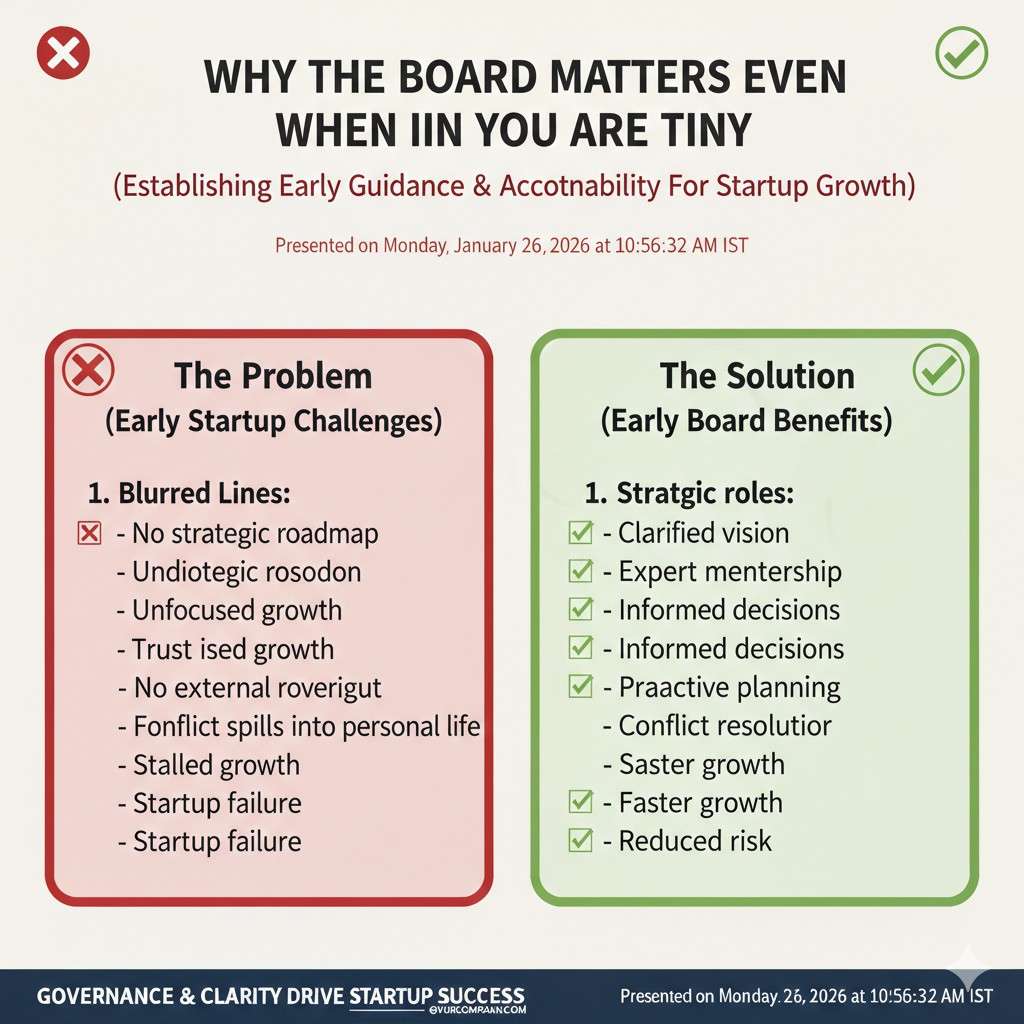
Founders often say: “We are just two people. We don’t need a board.”
But the law still treats your company as a real company. A board is not just a growth-stage thing. It is part of the structure from day one. Even if you never hold a formal meeting, you are still expected to act like directors. You are expected to make decisions with care. You are expected to avoid conflicts of interest. You are expected to protect the company, not just yourselves.
This becomes real when:
- you take investor money,
- you grant stock options,
- you sign contracts with major partners,
- you hire executives,
- you deal with a lawsuit or a dispute,
- you sell IP or license it.
If you do not have clean board actions and clean records, diligence becomes painful. Some deals die because the paperwork is messy. Others survive, but you lose leverage because the other side sees risk and pushes harder.
Good governance is not about being fancy. It is about being ready.
The “two-founder board” problem and how it breaks startups
If there are only two founders and both are directors, you have two board seats.
That creates a 1–1 tie risk. When you agree, it’s fine. When you do not, you are stuck. No one can approve key actions that need board approval. That can stop fundraising, hiring, option grants, and major deals.
The bigger risk is not that you disagree today. The bigger risk is that life happens.
One founder’s priorities can shift. A health issue. A family issue. A new interest. A loss of belief in the product. Or just a slow drift where one person carries more and starts to resent it.
If that founder still has equal board power, they can block the company even if they are no longer building.
So what do smart teams do?
They design an escape hatch early.
There are a few common ways, and each has trade-offs:
- adding a third board seat that breaks ties,
- making one founder CEO and giving the CEO certain tie-breaking powers,
- using written consent rules with clear roles,
- keeping the board founder-only until a real investor round.
We will go deeper into these in the next section because this is where many founder fights start.
Board seats are not trophies
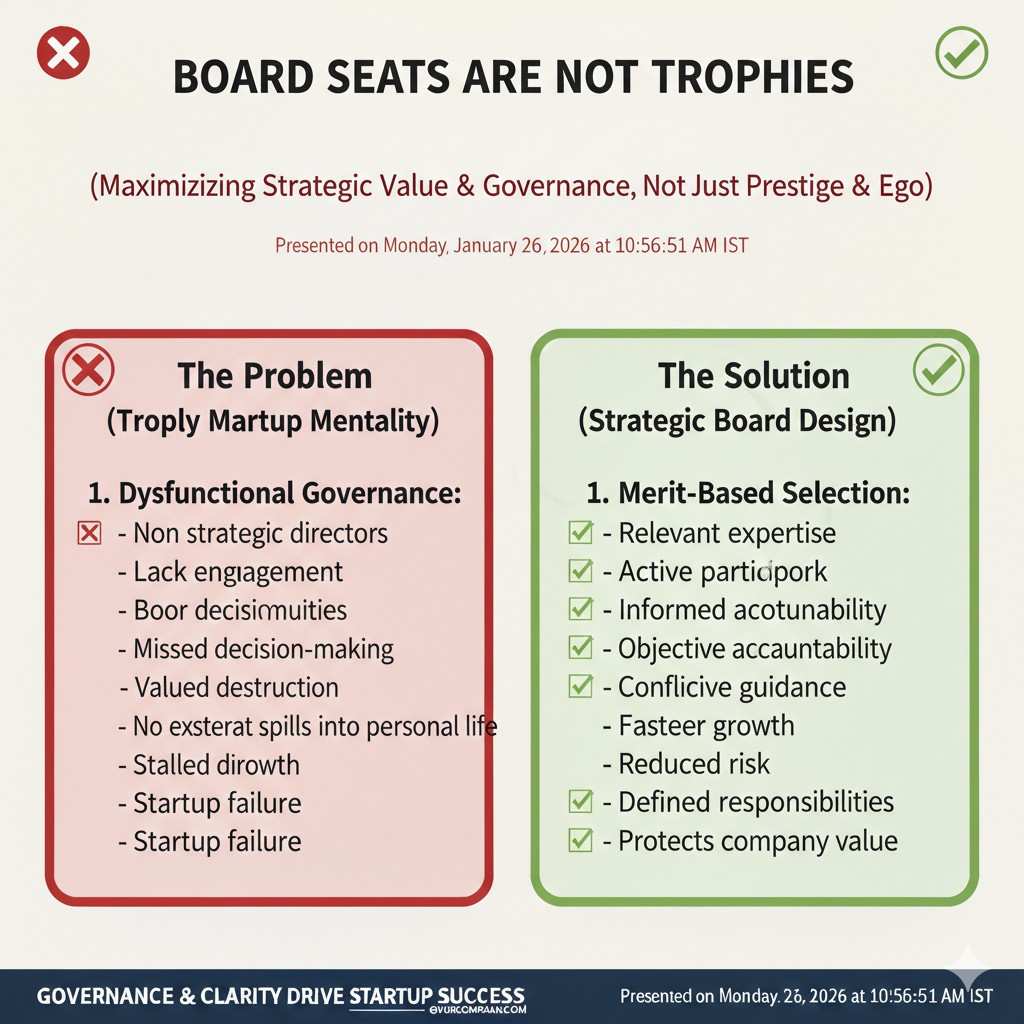
A board seat is not a status thing. It is a control thing.
When someone has a board seat, they get:
- a vote on major actions,
- access to sensitive company info,
- influence over leadership decisions,
- a say in fundraising terms and timing.
That is why giving away board seats too early is risky. Many early-stage deals bundle a board seat because it signals “seriousness.” But seriousness does not pay your bills. Control does.
There are moments when adding an outside board member is smart. For example:
- when you need deep domain help and you trust them fully,
- when you need a tie-breaker and both founders agree on the person,
- when you want credibility for a future round and the person has a strong name,
- when the person is truly independent and not tied to one founder.
But you should not do it because it “sounds right.” You should do it because it solves a clear problem.
Also, remember this: removing a board member is often harder than adding one. Many founders learn that the hard way.
The quiet power move: observer rights
Sometimes investors ask for an “observer” seat instead of a board seat. That can sound lighter. And it can be. An observer usually does not vote, but they can attend board meetings and see documents.
In some cases, this is a fair compromise. It gives the investor visibility without direct control. But it still changes the room. People talk differently when an investor is present. Founders may start performing instead of solving problems. Tough internal issues may not get discussed openly.
So if you allow an observer, you should set clear rules:
- what they can access,
- what they cannot share,
- when they can be excluded for conflict,
- what confidentiality looks like.
This is not about being paranoid. It is about being precise.
The biggest founder goal: keep decision-making fast
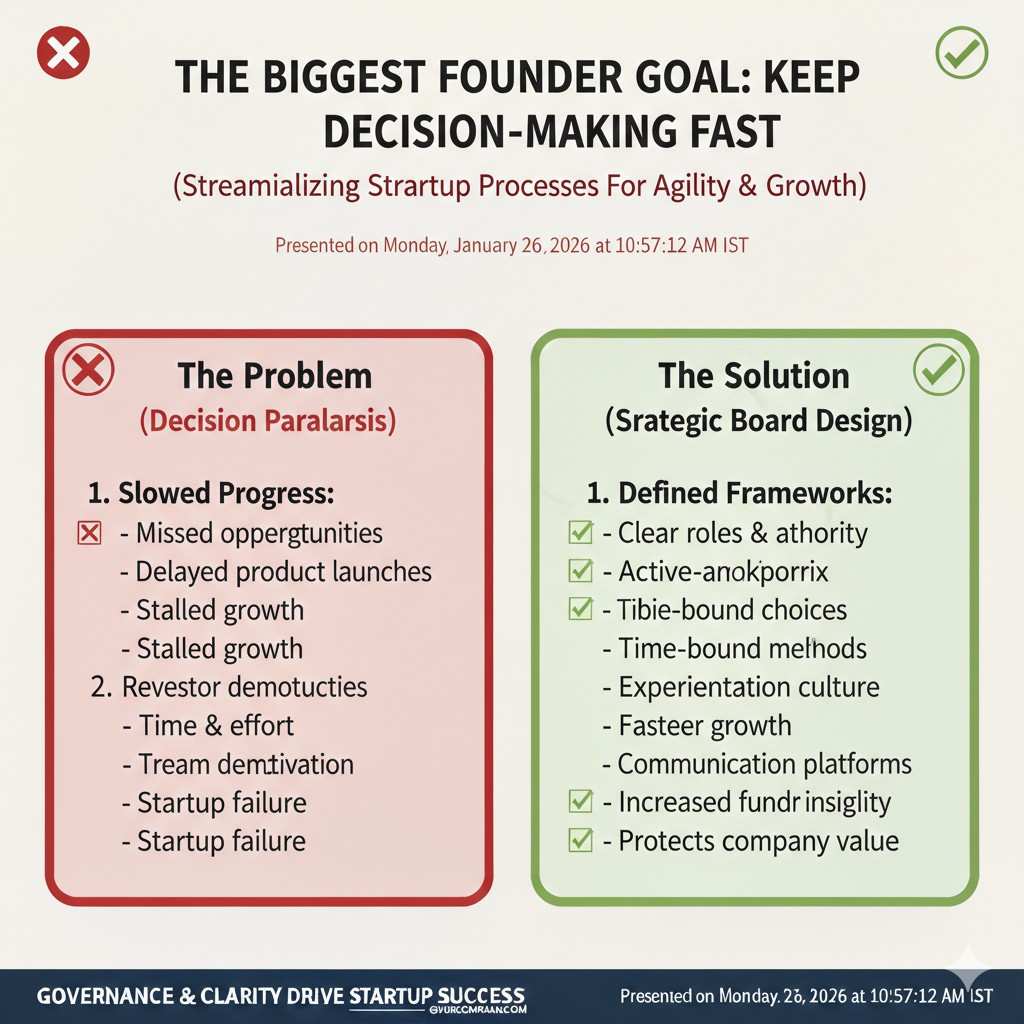
Startups win by moving faster than larger players. If your governance makes you slow, you will lose even with great tech.
A good board setup for an early company should do three things:
- let you make normal decisions quickly,
- protect the company from reckless choices,
- reduce the odds of founder deadlock.
You are looking for balance: freedom with guardrails.
Most founders either create no guardrails and later regret it, or create too many guardrails and later feel trapped.
The sweet spot is usually simple:
- founders keep board control early,
- big actions require real discussion,
- tie-breaker plans exist,
- voting rights are clear and limited.
You can do all of this without complex language.
One more piece founders skip: IP and board control are linked
If you are building AI, robotics, or deep tech, your core value often sits in what you invented. The code. The data methods. The models. The hardware design. The training pipeline. The way the system learns. The way it moves. The way it senses.
If governance gets messy, IP often gets messy too.
Founder fights often lead to:
- unclear invention ownership,
- missing invention assignments,
- patent filings delayed or abandoned,
- trade secrets leaked,
- ex-founders claiming rights,
- investors getting nervous in diligence.
This is one reason Tran.vc focuses on patent and IP services as part of early support. Strong IP makes the company more valuable. Strong governance makes it easier to protect and fund. Together, they create leverage.
If you want to build that foundation now, you can apply anytime: https://www.tran.vc/apply-now-form/
Board and Voting Rights Basics for Co-Founders
The Board Basics
What the board is in plain terms
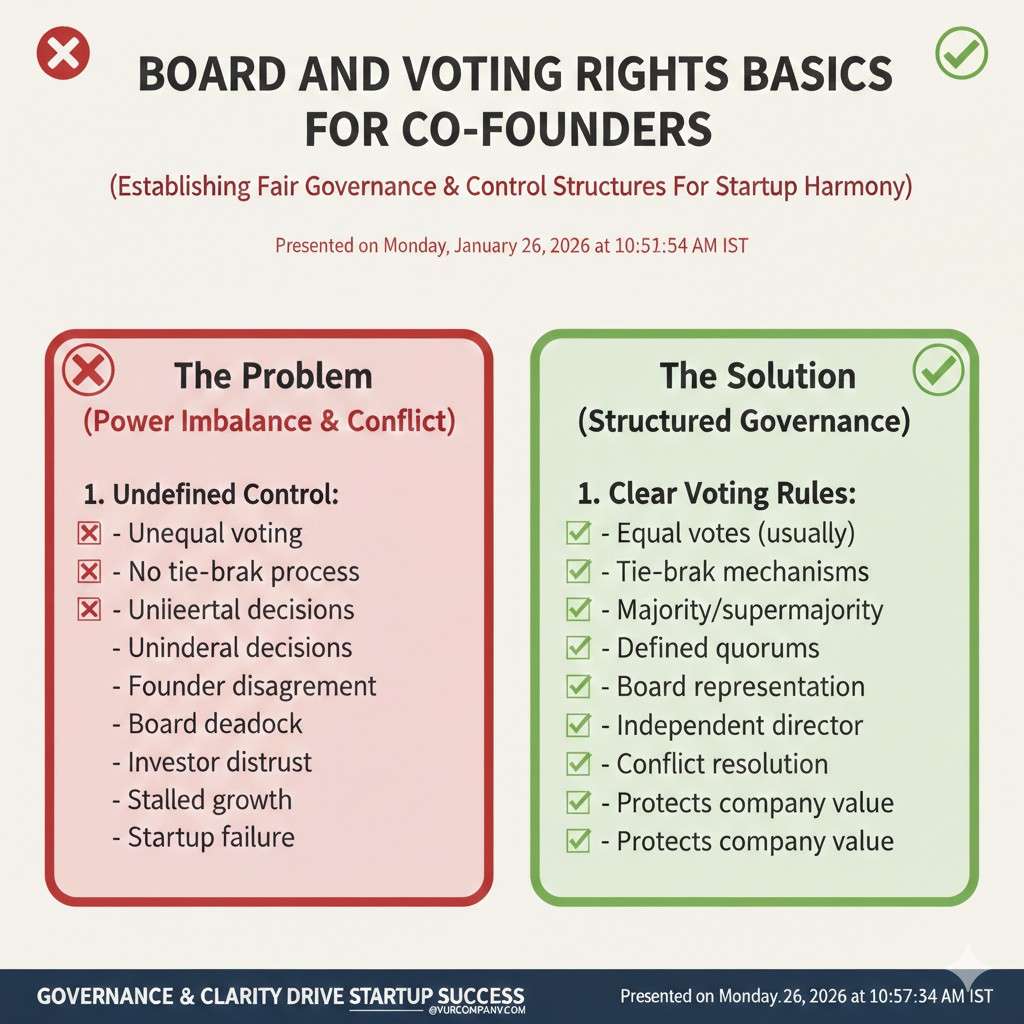
A board is a small group that has legal power over the company. People call it “oversight,” but in real life it is the group that can approve or block big moves. It is also the group that can hire or remove the CEO. That is why a board seat is not a badge. It is real control.
In the early days, the board is usually made up of founders. That sounds harmless because you trust each other right now. The problem is that the board is built for hard days, not easy ones. When pressure hits, the board structure decides whether the company moves forward or gets stuck.
What the board does day to day
The board approves things that change the shape of the company. This can include raising money, issuing stock options, approving major contracts, and setting key company policies. The board may also approve the budget and review major risks, even if the company is still small.
Many founders treat board work like a future problem. But investors and lawyers will expect you to act like a real board from the start. That means clean approvals, clear records, and choices that protect the company, not just one person’s preference.
Why board control matters early
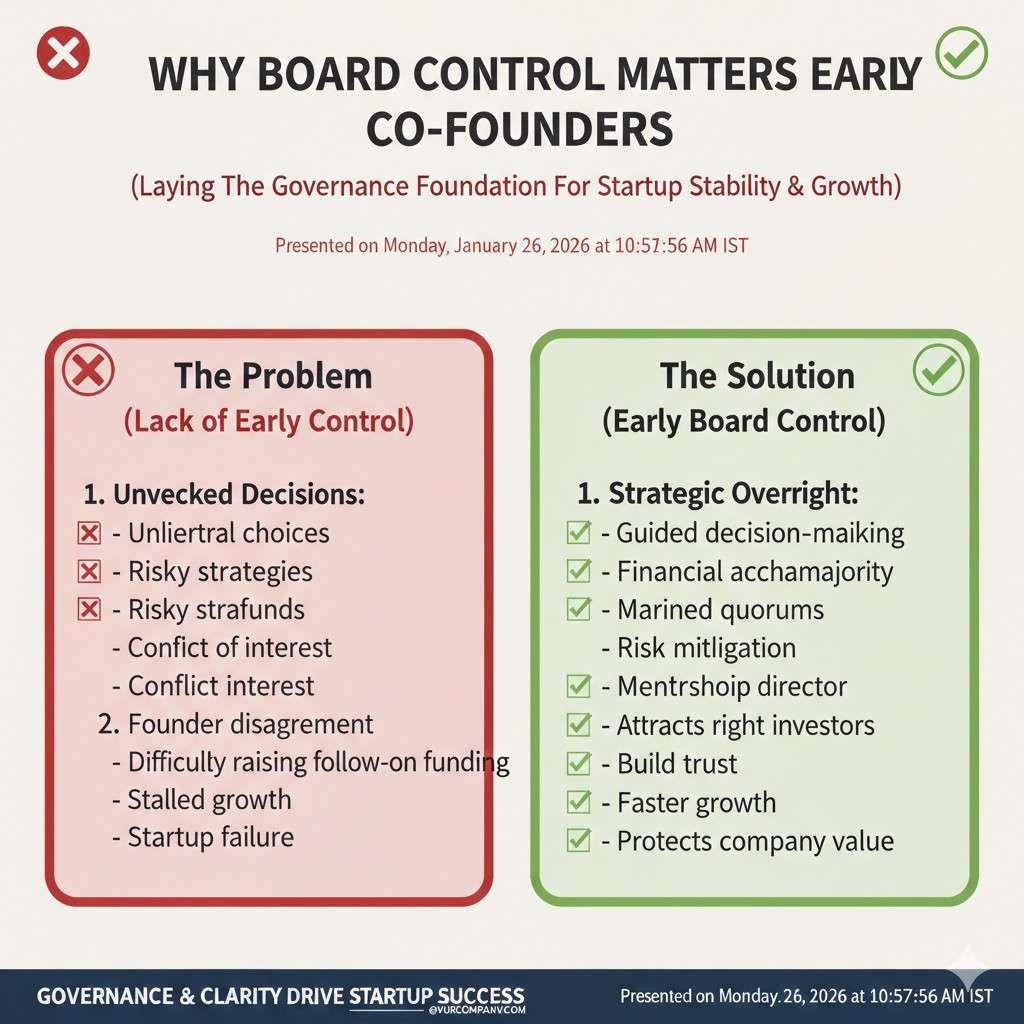
Early control decides how fast you can act. If the board is set up in a way that creates ties, you can lose weeks on choices that should take a day. That delay shows up in missed hires, slow fundraising, and weak execution.
Board control also shapes your leverage with investors. If you hand away board power too soon, you may find yourself asking permission to run your own company. That is a hard place to be when you are trying to build something new.
If you want founder-friendly help building strong early foundations, Tran.vc supports technical teams with up to $50,000 in in-kind patent and IP services. You can apply anytime at: https://www.tran.vc/apply-now-form/
Voting Rights Basics
Ownership and voting are not the same thing
Ownership is about economics. Voting is about power. Many founders assume that more shares always means more control. In real startups, that is often not true, because special voting rules can reshape who decides.
A person can hold fewer shares but still have extra rights that let them block key actions. These rights often show up in fundraising documents, stock terms, and investor protection clauses. If you do not spot them early, you may sign away control without noticing.
How voting rights show up in real life
Voting rights show up in two common places. First, they show up in stockholder votes, where owners approve certain major changes. Second, they show up as special approval rules that require one group to say yes, even if everyone else agrees.
This matters because it can create hidden veto power. You might have board support for a move, and still be blocked by a required stockholder vote. Or you might have stockholder support and still be blocked by a board vote. These are different systems, and you must know which one applies to which decision.
Why voting rights become a trap in fundraising
In many deals, investors ask for rights that sound reasonable. They may say they only want to “protect their investment.” The issue is that protection can quietly turn into control, especially when the rights are broad.
If an investor can block a future fundraise, they can slow your growth or force you into terms you do not want. If they can block a sale, they can hold the company hostage. The goal is not to reject all investor rights. The goal is to keep them narrow, clear, and tied to truly major actions.
Board Decisions vs Stockholder Decisions
The key difference founders must understand
Board decisions are made by directors. Stockholder decisions are made by the owners of shares. These two groups can be the same people early on, but the rules are still separate. That separation matters once investors join, because they may get voting power as stockholders even if they do not have board seats.
This is where founders often feel surprised. They think, “We control the board, so we control the company.” But certain actions may legally require stockholder approval, and the voting thresholds may change based on what classes of stock exist.
What usually needs board approval
The board typically approves actions that are part of running and shaping the business. This often includes option grants, executive hires, fundraising terms, major contracts, and decisions that affect company finances in a material way.
Even if your team is small, these approvals matter. If you do not document them properly, diligence becomes harder later. Buyers and investors want to see that key actions were approved the right way, because sloppy approvals create legal risk.
What usually needs stockholder approval
Stockholders often vote on structural changes. These can include changes to the company charter, increases in authorized shares, and certain merger or sale actions. If you have different classes of stock, one class may get separate voting rights on some topics.
This is why a company can feel “controlled” by someone who owns less than you. The documents can give that person a required vote on specific actions. You may still run daily operations, but you may not be free to make major structural moves without them.
Common Early Board Setups for Co-Founders
Two-person board: simple but risky
A two-person board is common when there are two founders. It feels balanced because each founder has equal say. The problem is deadlock. If you disagree on a major decision, there is no tie-breaker and no clear way to move forward.
Deadlock is not rare. It can happen because of strategy differences, stress, or a change in commitment levels. It can also happen because a founder is not present or is slow to respond, which still blocks board action. The company becomes stuck at the top.
Three-person board: the tie-breaker effect
A three-person board usually prevents deadlock because two votes can carry a decision. Often the two founders each hold one seat, and the third seat is an independent person agreed by both founders. This third seat can create stability if the person is truly fair.
The risk is that the third person becomes the real power center. If they lean toward one founder, the other founder may feel outvoted on every key issue. If they are tied to an investor, the founders may lose practical control earlier than they expected.
Founder-controlled board with future investor seat
Many startups keep a founder-controlled board early, then add an investor seat after a priced round. This can make sense because it matches board power to company stage. Early on, speed matters most. Later, stronger oversight can be helpful as the stakes grow.
The key is to be clear about when the board changes and why. If you add investor board seats too early, you may lose freedom before the company has momentum. If you wait too long, you may look immature to sophisticated investors. The right timing depends on your path.
Tie-Breakers and Deadlock Planning
Why “we’ll figure it out” is not a plan
Founders often say they will handle conflict when it happens. That sounds optimistic, but it ignores how conflict actually feels in real time. When a dispute shows up, each founder believes they are protecting the company. That makes compromise harder, not easier.
A deadlock plan is not pessimism. It is a safety feature. It protects the company from freezing when two smart people see the world differently. It also reduces personal stress because you are not negotiating the rulebook during a crisis.
Practical ways to avoid deadlock without giving away control
One approach is adding an agreed independent director who can break ties. Another approach is creating clear CEO authority for certain operational choices, while keeping major structural moves for the board. A third approach is setting a process for disputes, such as a formal internal discussion window and then a decision rule.
The best method depends on your working style. If you and your co-founder debate a lot, you need a structure that keeps debate productive and time-bound. If you tend to avoid conflict, you need a structure that forces clarity instead of silent resentment.
When a founder stops contributing but keeps power
This is one of the hardest founder situations. A founder may reduce effort, or disappear for long periods, but still keep a board vote. That gives them the ability to block fundraising, hiring, and options. It can cripple the company even if the team is ready to move.
The cleanest protection is to plan for this early through vesting, role clarity, and board composition. Vesting affects ownership over time, but board power is separate. So you need both: a fair equity plan and a board plan that prevents a non-working person from freezing the company.
How Investors Change the Board and Voting Map
The moment the game changes
The governance game changes when outside money arrives. Investors may ask for a board seat, observer rights, and special votes on key actions. Some of these requests are normal. The risk is agreeing to terms that shift power too far, too soon.
Founders should treat every control term like a permanent change, because it often is. Even if you “trust this investor,” the company may later raise from others, and the early terms become part of the baseline that future investors build on.
Protective provisions and veto rights
Protective provisions are clauses that require a specific class of stock, often preferred, to approve certain actions. These actions might include raising more money, selling the company, changing the charter, or taking on debt beyond a threshold.
Some protective provisions are reasonable because they prevent founders from making extreme moves that harm investors. The problem comes when the list is too long or the language is too broad. Broad veto rights can turn routine company moves into permission-seeking.
Investor board seats versus observer seats
A board seat comes with a vote. An observer seat usually does not. An observer can still attend meetings and access information, which can influence decisions even without a formal vote.
Observer rights can be a fair middle path early, but they still change the dynamic in the room. The key is to set clear boundaries for confidentiality, conflicts, and what information is shared. A loose observer arrangement can create leaks or pressure that founders did not expect.
If you want help setting these terms in a founder-friendly way while also building strong patent and IP assets that increase leverage, Tran.vc supports early teams with in-kind IP services. You can apply anytime at: https://www.tran.vc/apply-now-form/