
Most technical founders can explain their model in five minutes.
But ask them, “How big is your ESOP pool, and who controls it?” and things get quiet.
That is normal. ESOP pools feel like “HR stuff.” In truth, they are a core part of your funding plan. They change your cap table, your control, your hiring speed, and even how investors judge you in diligence.
If you are building robotics, AI, or any deep tech, your ESOP plan matters even more. You will hire people who can build hard things. Those people often take less cash early, but only if the equity is clear, fair, and well-run.
So this guide is here to make ESOP pools simple.
We will walk through what an ESOP pool is, why it exists, how it affects your ownership, and how early-stage teams can set it up in a way that helps hiring without giving away the company by accident. And we will do it in plain words, like we are sitting at a table with your cap table open.
Quick note: Tran.vc helps early-stage technical founders build real moats through
and smart IP planning, not hype. ESOPs and IP are connected in a real way: both shape leverage. If you want a partner that can help you build a stronger foundation before you raise your next round, you can apply anytime here: https://www.tran.vc/apply-now-form/
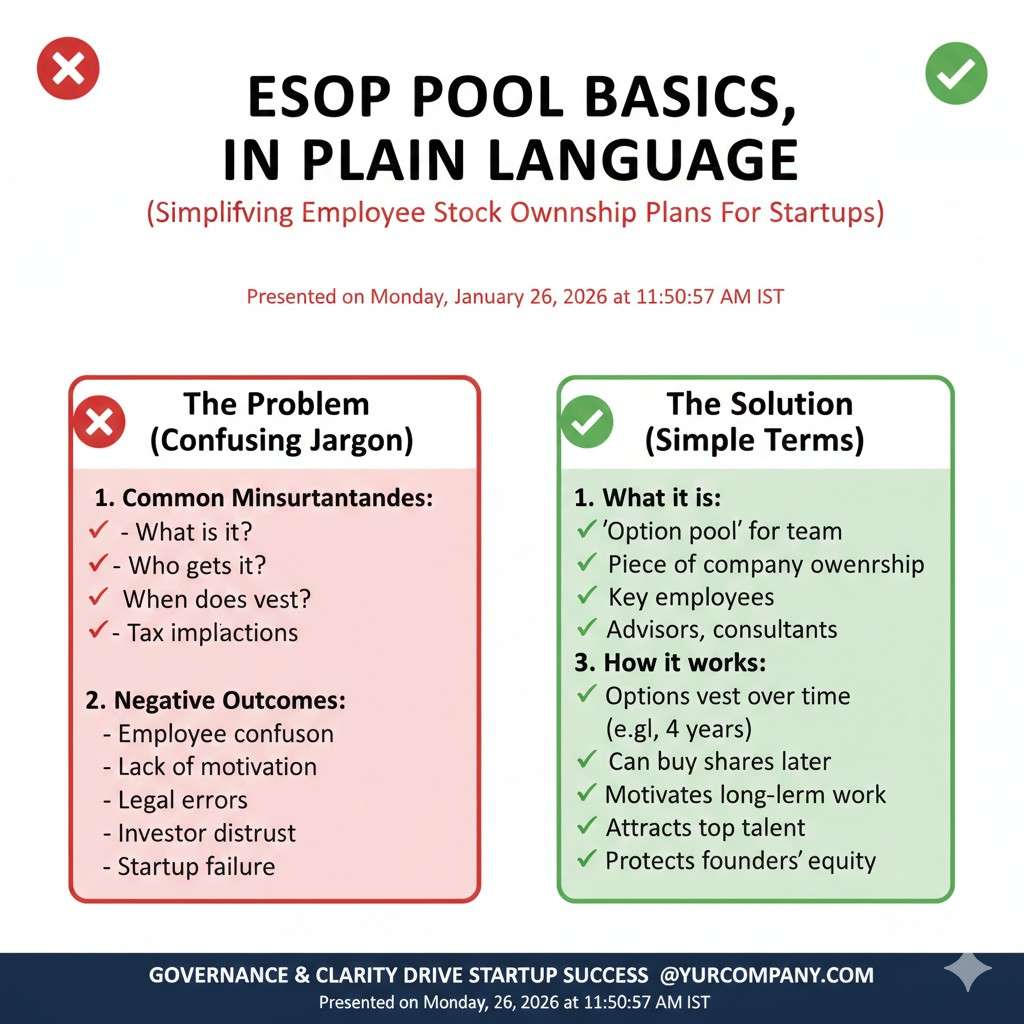
ESOP pool basics, in plain language
An ESOP pool is a set of shares kept aside for your team.
That is it.
Those shares are meant for employees, early leaders, advisors, and sometimes key contractors. The pool sits “unused” until you grant equity to a person.
Think of it like an empty shelf in your warehouse. You built the shelf so you can place boxes there later. The shelf itself does not ship product. But without it, you cannot store what you need when demand hits.
The “pool size” is how big that shelf is, as a percent of the company.
For example, if your company has 10,000,000 total shares, and your ESOP pool is 1,500,000 shares, then your pool is 15% of the company (before those options are used).
And here is the key idea most first-time founders miss:
Even if you do not give those options to anyone yet, they still affect who owns what on paper.
Investors and lawyers look at the “fully diluted” cap table. Fully diluted means: assume every option could turn into a share one day. So the pool acts like real dilution right now, even if nobody has exercised anything.
This is why ESOP pools become a negotiation point in fundraising.
Why investors care about your ESOP pool so much
Investors want you to hire fast.
They also want to know that the money they invest will go into product and growth, not into “scrambling” to create an option plan later.
So they ask: “Do you have an ESOP pool set up? Is it big enough for the next 12–18 months of hiring?”
If you do not, they often push you to create one before or at the time of the round.
That sounds fair. The catch is where the dilution comes from.
This is the part that can cost you a lot if you do not understand it.
The quiet fight: who pays for the ESOP pool?
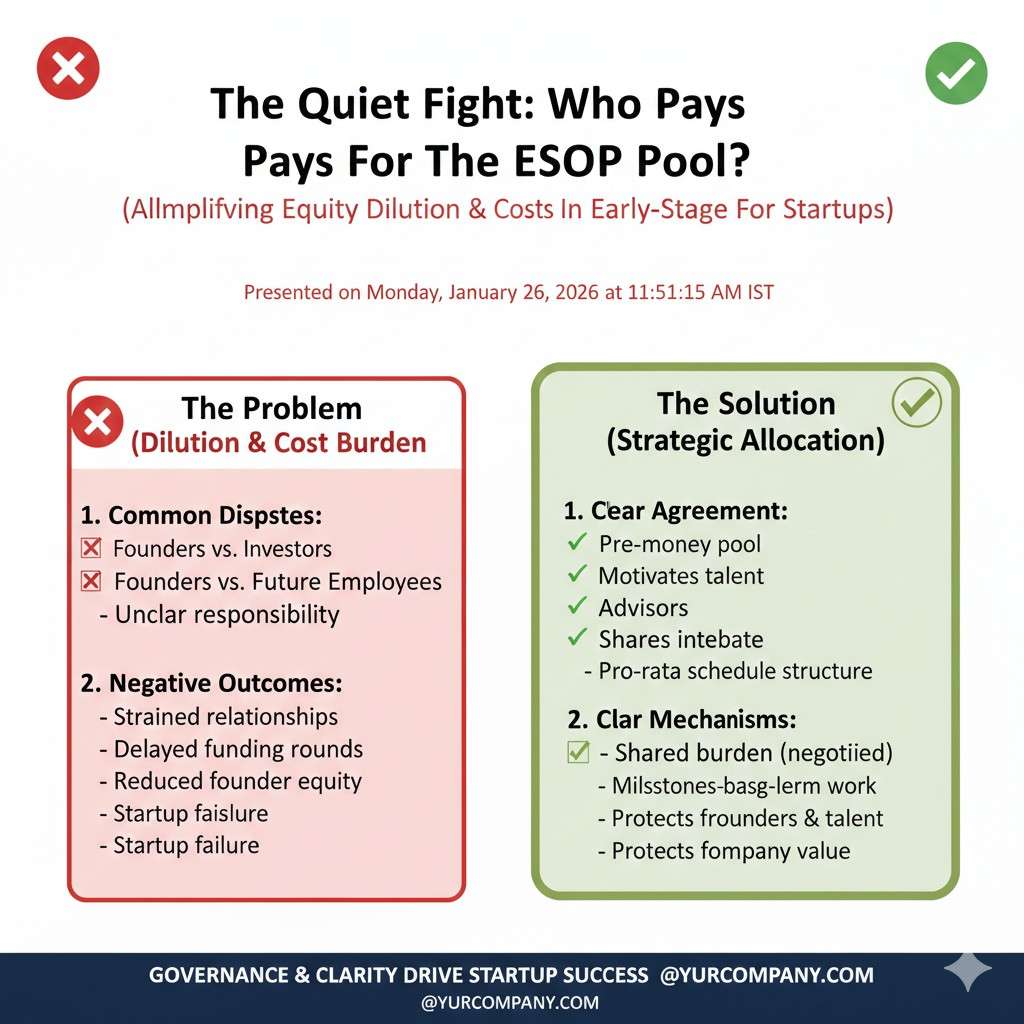
When an investor says, “We need a 10–15% ESOP pool,” there are two main ways that happens:
- The pool is created before the investor’s money goes in.
- The pool is created after the investor’s money goes in.
These two look similar on a slide. They are not similar on your cap table.
If the pool is created before the round, the dilution mostly comes out of the founders’ ownership.
If it is created after the round, everyone shares that dilution, including the investor.
So many investors try to set it up so the founders take the full hit. It is common. It is not always evil. It is just how term sheets often come.
Your job is to see it clearly, not emotionally.
The right move depends on your stage, how badly you need the round, how strong your metrics are, and how much hiring you truly need.
But you cannot make a good choice if you do not even know the mechanics.
Options vs shares: what you are really giving
Most ESOP pools are made of stock options, not outright shares.
A stock option is the right to buy shares later at a fixed price. That price is called the “exercise price” or “strike price.”
So when you grant options to an engineer, you are not handing them shares today. You are giving them the right to buy shares later, usually at a low price set by your company’s valuation at the time.
If your company grows, that right can become valuable. If your company stays flat, it may not.
This is why options are used. They align incentives over time.
But options also come with rules, tax issues, and a lot of confusion if you do not explain them well to your team.
A strong founder does not hide behind legal words here. A strong founder makes it understandable.
Vesting: the timer that protects both sides
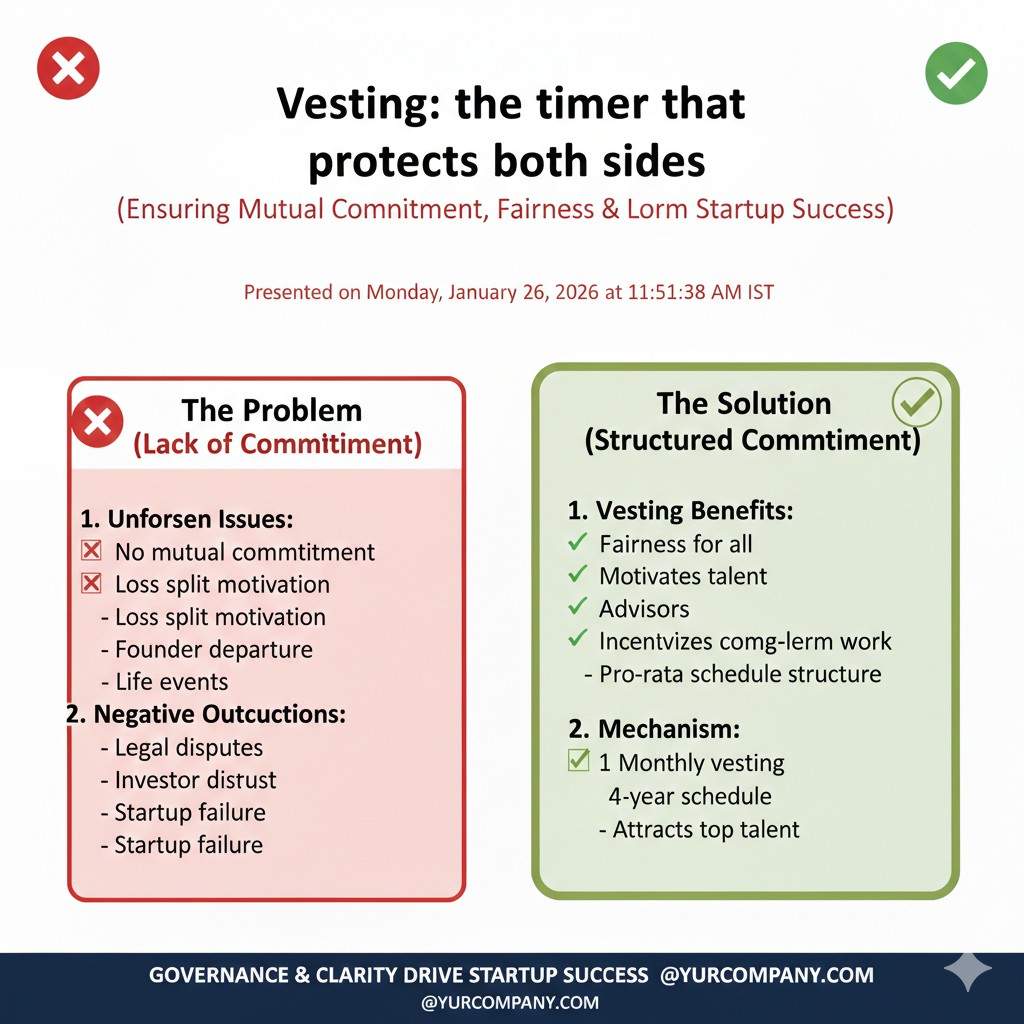
Most startup options “vest.” Vesting means the options are earned over time.
A common setup is 4 years of vesting with a 1-year cliff.
That means the person earns nothing until they complete 12 months. After that, they earn a chunk. Then they earn the rest monthly or quarterly until year 4.
Why do this?
Because early-stage startups are risky. You do not want to give a big equity grant to someone who leaves in three months. Vesting protects the company.
It also protects the employee in a strange way. It forces both sides to commit to a time horizon and talk about expectations early.
Vesting sounds simple. It is not always simple in practice.
Founders often make mistakes like:
- Promising equity numbers in a hurry, without thinking about pool impact.
- Granting too much too early to one hire, then realizing later they cannot hire the next three key people.
- Forgetting that refresh grants may be needed if the company is still private years later.
A well-planned pool helps avoid all of that.
The ESOP pool is not an “HR plan.” It is a hiring budget.
The cleanest way to think about your ESOP pool is to treat it like a hiring budget.
Not a money budget. An ownership budget.
If you have 12% in your pool, that is your “equity spending power” for key talent for a certain time period.
Just like cash, it can run out.
And just like cash, you should not spend it blindly.
This is why you want to map it to your hiring plan.
Not with a fancy spreadsheet. With simple thinking:
- Who are the few hires that truly change outcomes in the next year?
- What is the market reality for equity in your stage and space?
- How long do you need this pool to last before the next funding event?
Deep tech teams often need fewer hires than consumer startups early, but those hires may be more senior and more expensive in equity terms. Robotics founders, for example, might need a hardware lead, a controls lead, and a strong product engineer. These are not easy hires. Your equity plan must match that reality.
“But I do not want to dilute.” A real answer.
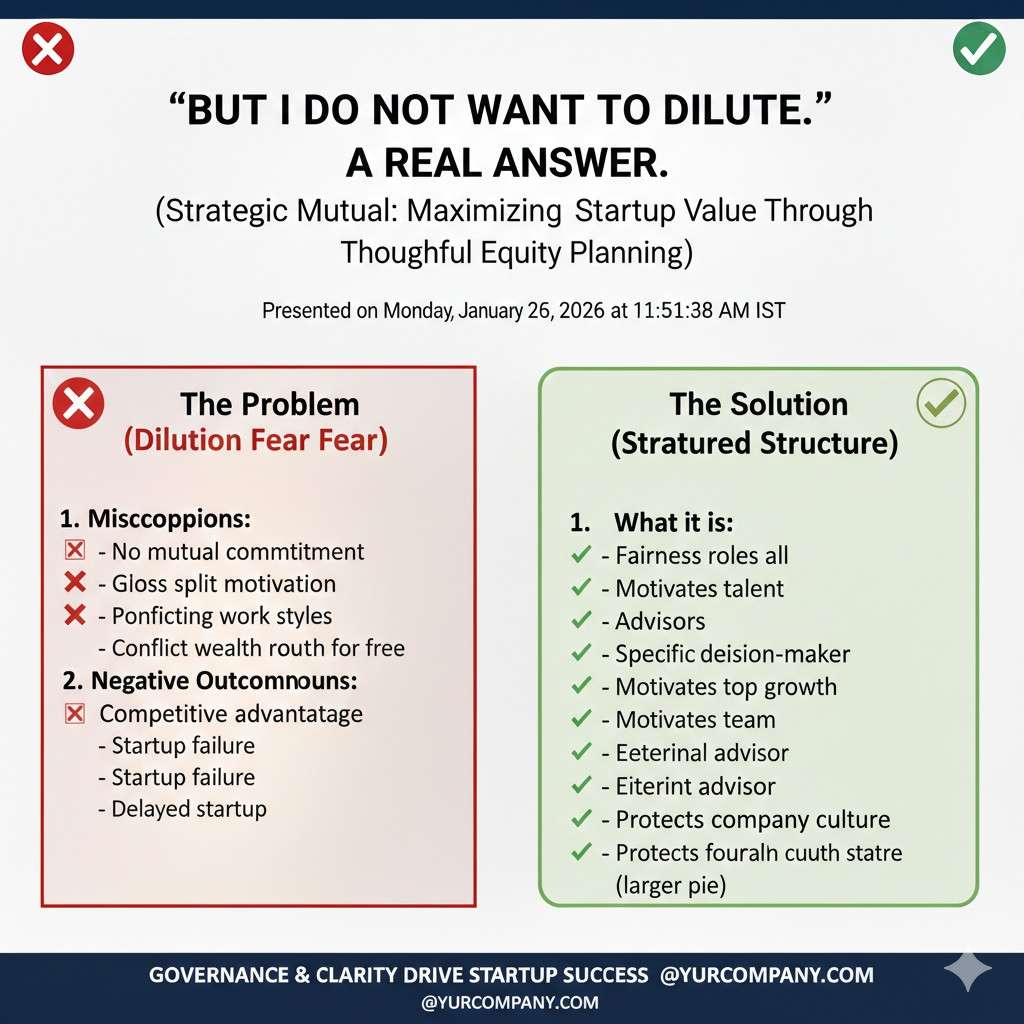
No founder wants dilution. That is rational.
But you need to separate two kinds of dilution:
- Dilution that buys you capability (key people who build the thing).
- Dilution that buys you nothing (sloppy planning, oversized pools, unclear grants).
ESOP pools can be either.
The goal is not to avoid an ESOP pool. The goal is to use it with intent.
If you do it right, the pool helps you build a stronger company faster, which can increase the value of the shares you still own.
If you do it wrong, you lose ownership and still struggle to hire because the plan is unclear or unfair.
A founder-friendly way to size the pool early
At the earliest stage, you typically size your pool based on your next 12–18 months of hiring needs.
If you are pre-seed, you may only need a handful of grants:
- one key technical hire
- maybe one go-to-market hire later
- a small set of early employees
- a couple of serious advisors (not “logo advisors”)
In many early cases, founders create a pool in the range that investors expect, but they do it in a way that matches their plan.
The trap is picking a number because someone said it on Twitter.
The better move is to back into it:
If you plan to hire, say, 4–6 people before your next round, how much equity might that take in your market?
You do not need perfect precision. You need a plan that is not fantasy.
A founder who can explain their ESOP pool in two minutes comes across as mature. That often helps in fundraising because it shows control and clarity.
And control and clarity matter when you are trying not to give up too much too soon.
If you want help thinking through this alongside your IP plan and your next fundraise, Tran.vc is built for this stage. You can apply here anytime: https://www.tran.vc/apply-now-form/
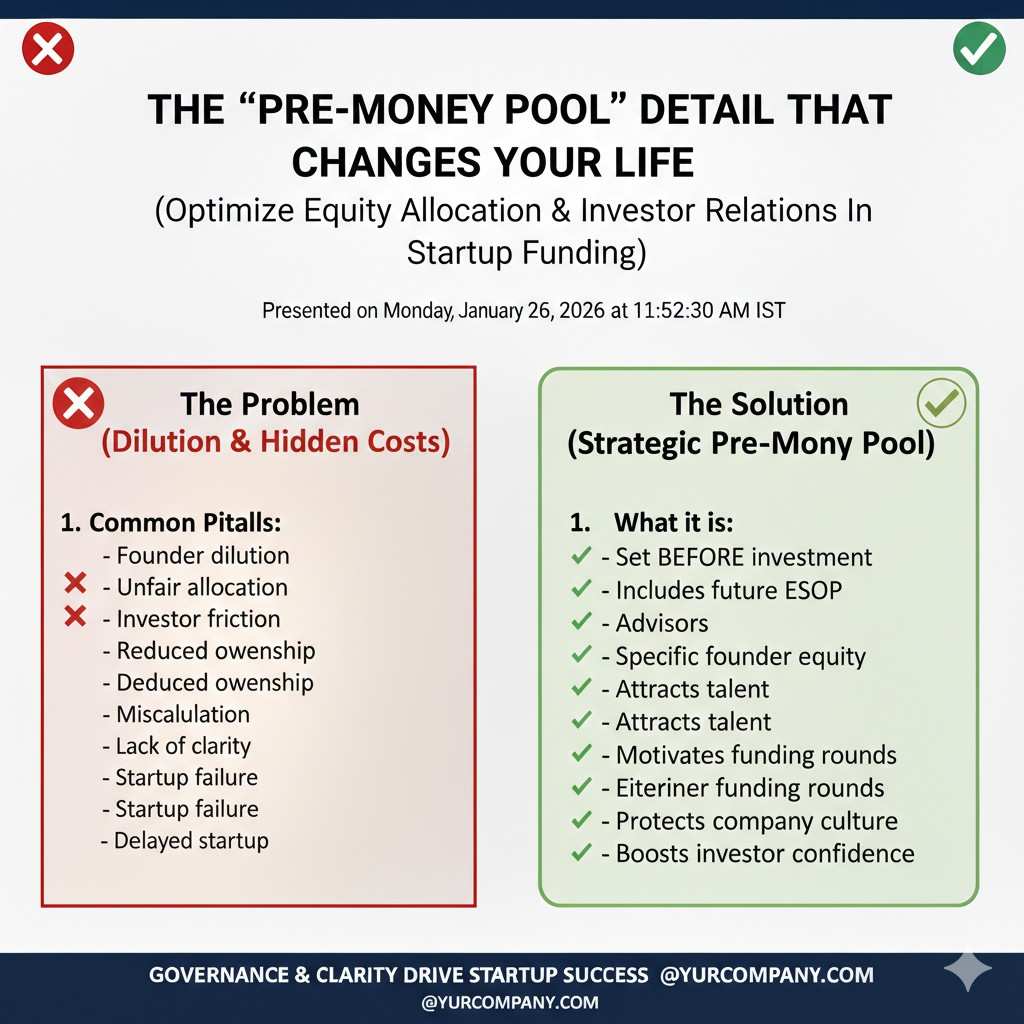
The “pre-money pool” detail that changes your life
Let’s make this real with a simple story.
You and your cofounder own 100% of the company.
An investor offers to invest, and says: “We need a 15% ESOP pool available after the financing.”
If the term sheet is written in the most common way, that usually means: the pool is created before the investor’s shares are issued, so that the pool exists post-close, and the investor is not diluted by it.
So the founders get diluted twice:
- once by the creation of the pool
- then again by the investor’s new shares
This is not “bad.” It is just math.
But you must see it, or you will be shocked later when your ownership drops more than you expected.
Many founders feel like something “unfair” happened, when in reality they did not model the cap table.
In the next section, we will walk through the math in a way that is easy to follow, and show how to negotiate it without sounding defensive.
ESOP Pool Basics for Early-Stage Startups
Why this matters earlier than you think
Most founders treat ESOP like paperwork that can wait.
But ESOP decisions change your cap table from day one, even if you have not hired anyone yet.
If you are building robotics or AI, this hits harder.
You will need rare talent, and rare talent will ask direct questions about equity.
Tran.vc works with technical founders at this exact stage, before the messy parts begin.
If you want help building a strong base around IP and fundraise-ready structure, apply anytime: https://www.tran.vc/apply-now-form/
What you will get from this guide
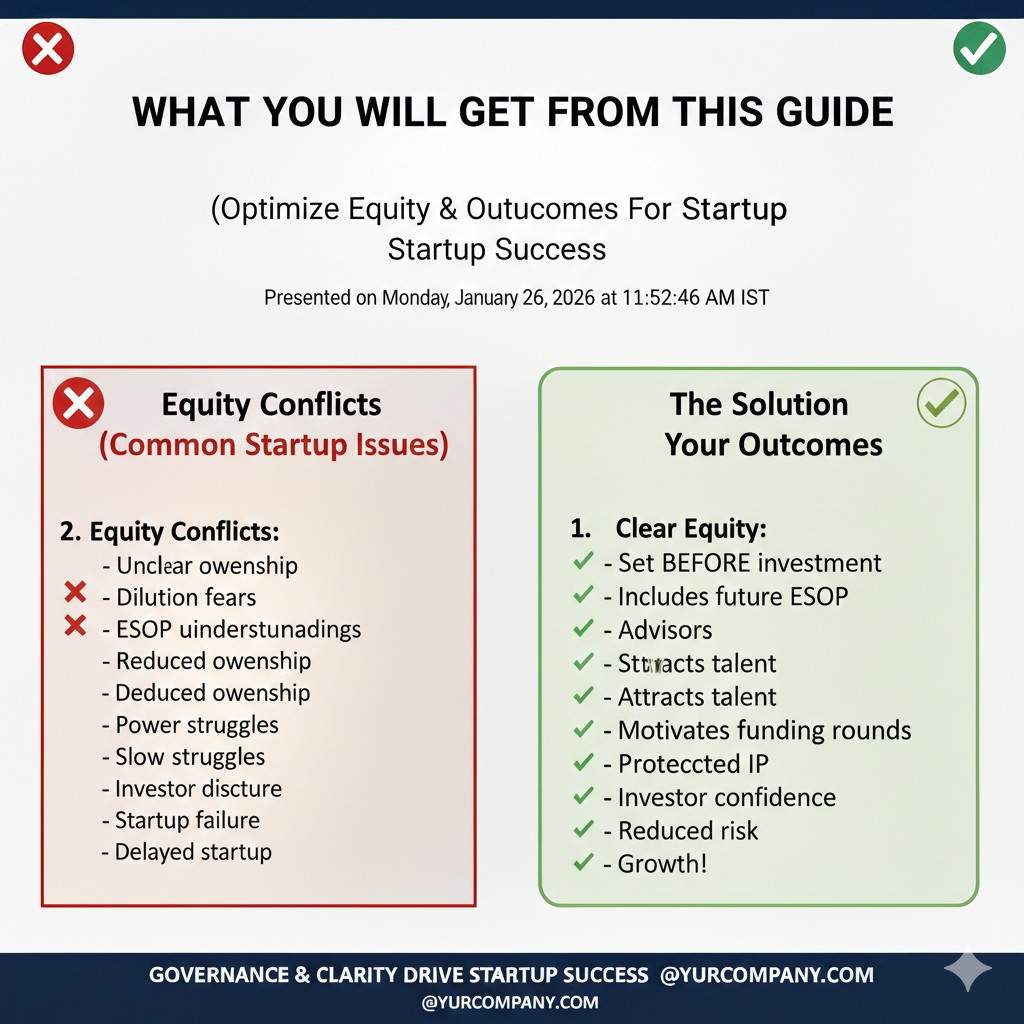
You will learn what an ESOP pool is, how it affects ownership, and how investors think about it.
You will also learn how to size a pool based on real hiring needs, not internet advice.
The goal is simple: hire well, stay fair, and protect founder control.
You should feel calm when a term sheet mentions an ESOP pool, not confused.
A quick promise about the writing
I will keep the language simple and the tone direct.
I will use short paragraphs so it reads like a clean conversation, not a legal memo.
You will see clear headings so you can jump to what you need.
And every section will push toward actions you can take this week.
What an ESOP pool really is
The plain meaning
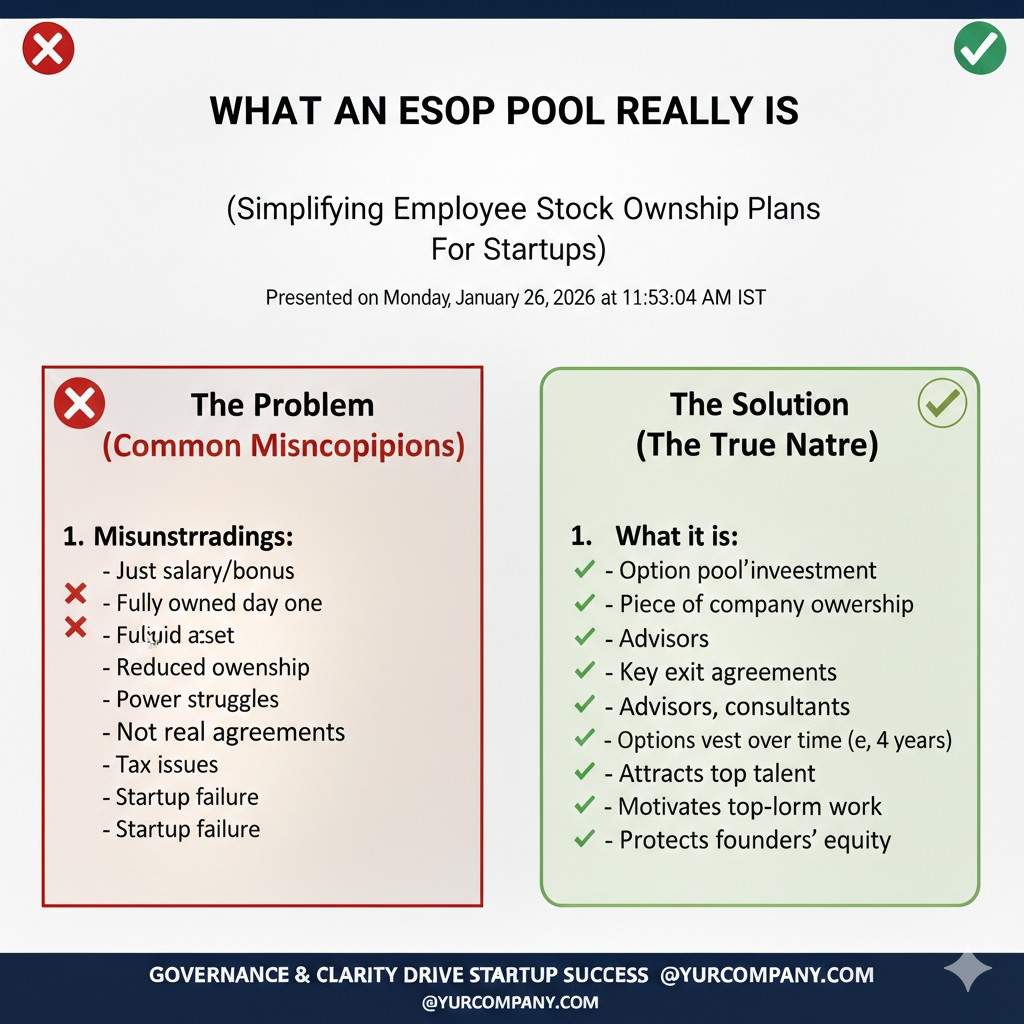
An ESOP pool is a set of shares set aside for your team.
Those shares are not “given away” on day one, but they are reserved.
Most startups keep the pool in the form of stock options.
Options are a right to buy shares later, usually at a low price.
Why it exists in the first place
Early startups cannot pay top cash salaries.
Equity fills that gap and helps you attract people who believe in the long game.
An ESOP pool also keeps you from making random one-off deals.
It creates a clear system so grants are consistent and defendable.
The cap table connection
Even if your ESOP pool is unused, it still shows up in the cap table model.
That is because investors look at “fully diluted” ownership.
Fully diluted means the math assumes the options may become real shares later.
So the pool affects founder ownership earlier than most people expect.
Options, shares, and the simple mechanics
Options are not shares today
When you grant options, the person does not own shares right away.
They gain the right to buy shares later at a fixed price.
That fixed price is called the exercise price.
It is usually based on a fair value set around the time the options are granted.
Exercise is the conversion moment
When someone “exercises,” they pay the exercise price and receive shares.
Before exercise, they hold an option, not a share.
This matters because options have rules.
They expire if a person leaves, and they often have a limited window to exercise.
Why early employees still care
Employees care because their upside depends on how options turn into ownership.
If the process is unclear, they will discount the value in their mind.
This is why clear communication is part of the ESOP plan.
A pool is not only numbers; it is trust.
Vesting is the safety system
Vesting protects the company
Vesting means equity is earned over time.
It stops a short-term hire from walking away with long-term ownership.
The most common schedule is four years with a one-year cliff.
That means nothing is earned until one year is completed.
Vesting protects the employee too
Vesting forces both sides to make a real commitment.
It also gives employees a clear timeline for what they earn and when.
When you explain vesting well, employees feel respected.
That respect often matters more than a slightly larger grant.
What founders often forget
Founders sometimes promise equity too early, before they know the pool impact.
Later they realize they cannot hire the next key person without making the pool bigger.
The fix is not to become stingy.
The fix is to plan the pool like a real budget.
ESOP pool sizing is a hiring plan, not a guess
The best way to think about pool size
Treat the ESOP pool as a hiring budget made of ownership.
If you spend it too fast, you lose flexibility when you need it most.
Your pool should match your next 12 to 18 months of hiring.
It should not be sized based on what another startup did in a different market.
What “enough” usually means
Most early-stage investors want to see room for key hires.
They do not want you to return in six months asking to expand the pool.
At the same time, an oversized pool can be wasteful.
If you reserve too much, you dilute founders without a clear hiring reason.
A simple approach founders can use
Start with the roles that truly change your outcomes.
Then think about what equity you may need to offer for each role at your stage.
If your plan is four hires, your pool should reflect four hires.
You can also leave a small buffer for surprises, because surprises always happen.
Tran.vc often helps founders connect hiring plans to fundraise plans and IP plans.
If you want guidance before your next round sets these terms in stone, apply here: https://www.tran.vc/apply-now-form/
The investor focus: who “pays” for the pool
The key phrase to watch for
Investors often ask for a pool that is “available post-financing.”
That phrase sounds harmless, but it can hide a big shift in dilution.
The real question is whether the pool is created pre-money or post-money.
That decides who absorbs the dilution.
Pre-money pool, explained simply
If the pool is created before the investor invests, founders take most of the hit.
The investor then buys into a company that already has the pool carved out.
This is why founders sometimes feel surprised by ownership drop.
They expect one dilution event, but they get two stacked together.
Post-money pool, explained simply
If the pool is created after the investor invests, everyone shares the dilution.
That includes founders and the investor.
This structure is not always offered automatically.
But founders who understand the math can discuss it calmly and clearly.
The math that makes this real
Why modeling is not optional
A term sheet can look friendly, and still cut founder ownership sharply.
This happens because the pool and the investment interact.
When you model it, you see the outcome in black and white.
When you do not model it, you are guessing.
A clean example without complexity
Imagine founders own 100% today.
An investor wants to invest and also wants a 15% pool after the round.
If the pool is carved out before the investment, founders shrink first.
Then the investor’s new shares shrink founders again.
What to take from the example
The lesson is not to fear investors.
The lesson is to read the language and run the numbers.
When you can say, “I modeled this,” the tone changes.
You become a founder who negotiates with clarity, not emotion.