
Most founders do not start a company because they want a “salary job.” They start because they want to build something that matters, own it, and grow it. Then reality hits fast: rent is due, food costs money, and your brain works worse when you are stressed about basics.
So the question shows up early, sometimes in week one:
Should I pay myself a real salary now, or take less pay and keep more equity?
This is not a “money vs dreams” choice. It is a control and survival choice. It is also a trust choice—because how you set founder pay sends a signal to your co-founders, your first hires, and later, your investors.
Here is the most helpful way to think about it: salary is what keeps you stable today, and equity is what can make you rich later. But “later” only happens if you stay in the game long enough to reach it. A founder who burns out, or who is forced to take a full-time job on the side, loses more than cash. They lose speed, focus, and often the company.
That is why the best answer is usually not “all salary” or “all equity.” The best answer is a smart mix that matches your stage, your runway, your personal life needs, and the kind of business you are building.
At Tran.vc, we see this up close with deep tech, AI, and robotics teams. Your path is often longer and heavier than a simple app. You may need time for R&D, testing, and real proof. That means you must plan your founder pay like an engineer plans a system: no weak points, no hidden cracks, and no wishful thinking.
Also, one more thing that founders forget: equity is not only for “later investors.” Equity is also what you use to hire great people, keep co-founders aligned, and stay in control. If you take too little salary and then later give away too much equity to survive, you can end up with neither stability nor ownership.
So in this article, we are going to make this very practical. We will talk about:
- when salary helps your company (not just you)
- when taking too much salary hurts trust and fundraising
- how to choose a number that is fair and defendable
- how to set founder pay when you have co-founders with different life needs
- and how to protect equity so you do not regret early choices
And since Tran.vc helps founders build strong IP early—patents, strategy, and filings worth up to $50,000 in-kind—this topic connects directly to how you keep leverage. When your company has real IP assets early, you often need less “panic equity” later. You can raise from a stronger place, with more control. If you want to see if that fits your startup, you can apply any time here: https://www.tran.vc/apply-now-form/
Before we go deeper, I want you to do one quick mental check. Be honest:
Are you choosing low salary because you truly cannot afford pay right now, or because you feel guilty paying yourself?
Guilt is a bad finance plan. It pushes founders into silent stress. Silent stress becomes slow decisions, conflict with co-founders, and sloppy choices under pressure. If you cannot pay yourself much yet, that is fine. But it should be a clear choice with a clear plan, not a shame choice.
Now let’s set a simple base rule you can use right away:
If a founder is full-time, they should be able to cover basic living costs without panic.
Not luxury. Not “tech lifestyle.” Just the level that lets them think well and work hard.
Because the company is not buying a founder a nice life. The company is buying focus.
And focus is expensive to lose.
Founder Salary vs Equity: What to Choose Early
What this choice really means
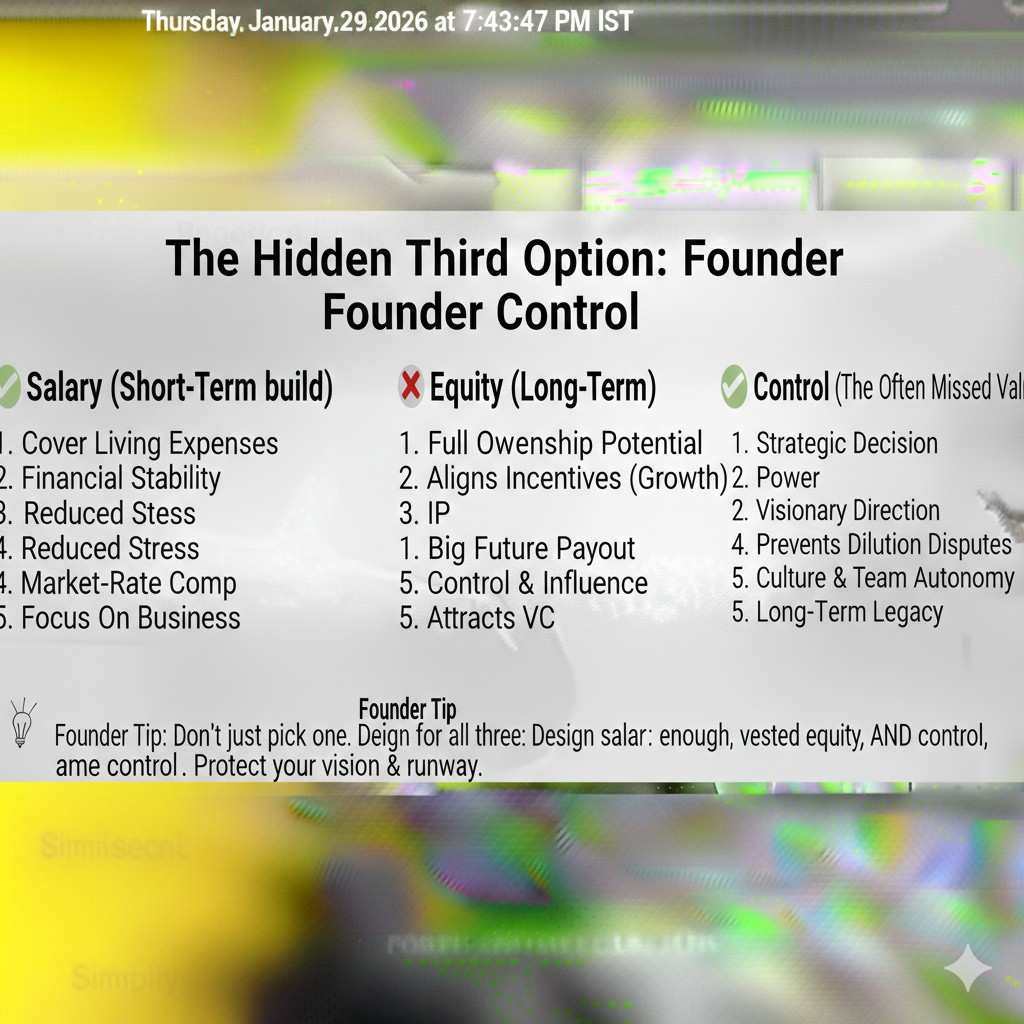
When people say “salary vs equity,” it sounds like a simple trade. Take more money now, or take more ownership later. But for a founder, it is not that clean. This decision touches your focus, your runway, your relationships, and your ability to raise money without losing control.
Salary is the fuel that keeps you working at full strength today. Equity is the engine that can pay off later if the company grows. The mistake is treating them like two separate topics. They are tied together, because the way you pay yourself changes how long you can keep building, and how much of the company you still own when things finally work.
If you are building robotics, AI, or deep tech, the trade can feel sharper. You may have longer build cycles, more testing, and higher costs before revenue. That makes it even more important to choose a plan that keeps you steady without draining the company.
If you want help building leverage early with patents and IP strategy, Tran.vc invests up to $50,000 in in-kind patent and IP services for technical startups. You can apply any time here: https://www.tran.vc/apply-now-form/
Salary is not “greed,” and equity is not “free”
Many founders carry a quiet fear: “If I pay myself, I will look selfish.” That fear can push you into a bad plan. It can also create a story in your head that suffering proves commitment. Investors do not fund suffering. Customers do not buy suffering. Teams do not scale on suffering.
On the other side, equity can feel like a painless choice because it does not leave the bank account. But equity is not free. Every percent you give away early has a cost later. And that cost can be very high when you are finally getting traction and the company is worth much more.
A calm founder with enough pay to think clearly often makes better decisions than a founder running on stress. A founder who protects equity early often raises later with more choice. The goal is not to “win” one side. The goal is to create a plan that keeps you building and keeps your ownership strong.
The hidden third option: control
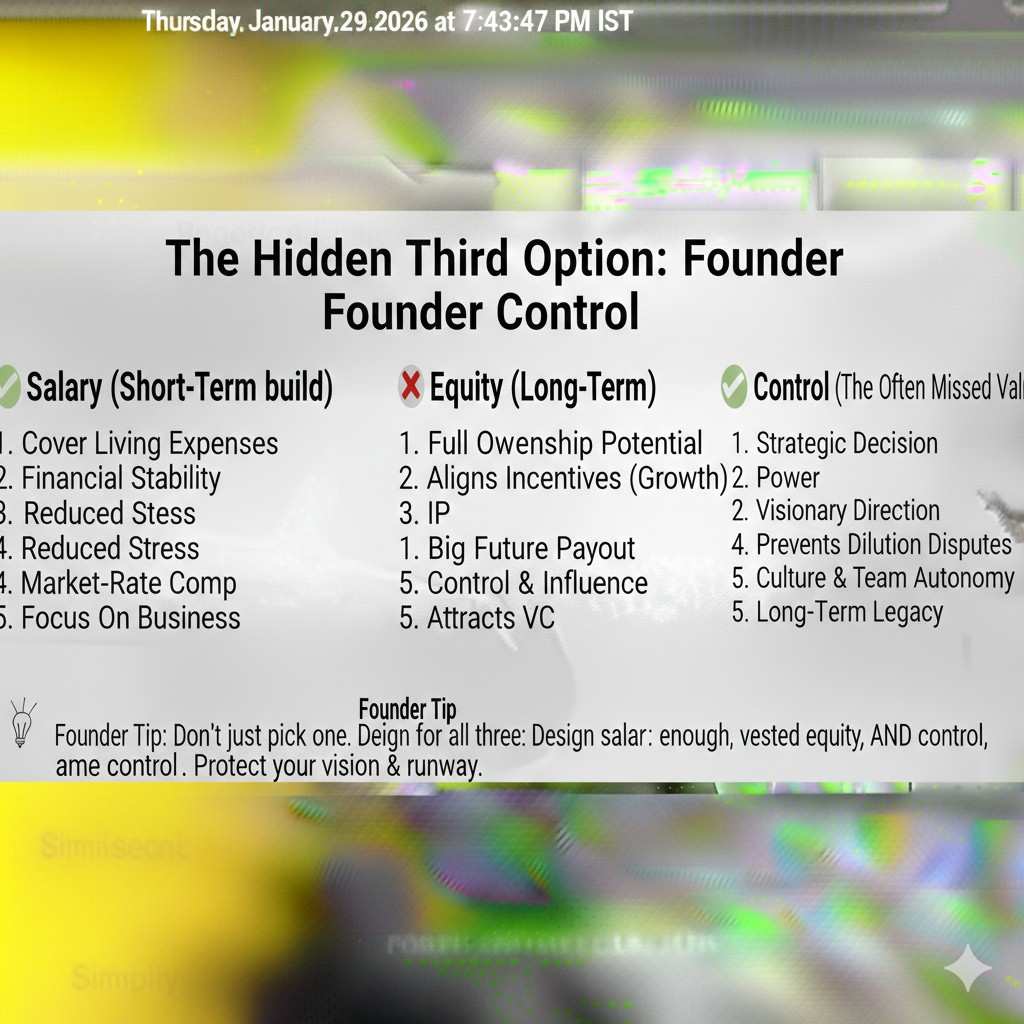
Most founders talk about salary and equity as if those are the only levers. But there is a third lever that matters just as much: control. Control is your ability to make key calls without being forced by outside pressure, whether that pressure comes from investors, time, or personal money stress.
If you take too little salary, your personal pressure rises. That pressure can force you into weak fundraising terms. If you take too much salary, company pressure rises. That pressure can force you into fast fundraising before you are ready. Both paths can reduce control, just in different ways.
So the real question becomes: what pay and equity plan gives you the most control for the longest time?
Founder salary early
Why founder salary matters more than people admit
Founder salary is not a bonus. It is a tool. A founder who cannot pay bills becomes distracted, and distraction kills speed. Speed matters because early-stage companies compete against time more than they compete against rivals.
When you set a small but real salary, you remove daily anxiety. That anxiety shows up in subtle ways, like choosing short-term hacks instead of building the right product. It can also show up in co-founder tension, because money stress makes people more sensitive and less patient.
A company needs founders to be stable. Even if you are tough, your brain still has limits. Your best work happens when you have enough sleep, enough food, and a mind that is not always running numbers in the background.
What “reasonable salary” looks like at the start

A reasonable early founder salary is usually not based on market pay. It is based on “basic life cost” plus a small buffer so you are not in panic mode. Think rent, food, health costs, transport, and simple living needs.
The right number depends on where you live and what your life looks like. A founder with kids, a mortgage, or family support may need more than a single founder with low fixed costs. This is not unfair. It is reality. What matters is how you handle it with honesty and a clear plan.
If you have co-founders, the goal is not that everyone gets the same paycheck. The goal is that everyone can stay fully engaged without building resentment.
How investors read founder pay
Investors often say they want founders to be “all in.” Some founders hear that and assume “all in” means “zero salary.” That is not what serious investors mean. They want to see that you are committed, but also that you are thinking like a builder, not a gambler.
A small, explainable salary can actually increase trust. It shows you are planning for endurance. It also shows you are not hiding personal risk that could blow up later and harm the company. Investors fear founder risk because founder risk becomes company risk.
The red flag is not salary itself. The red flag is a salary that looks out of line with stage, runway, and progress. If you are pre-revenue and paying yourself like a senior executive, it suggests poor judgment. If you are paying a basic amount and can explain it clearly, most investors accept it.
Salary can protect your equity, not reduce it
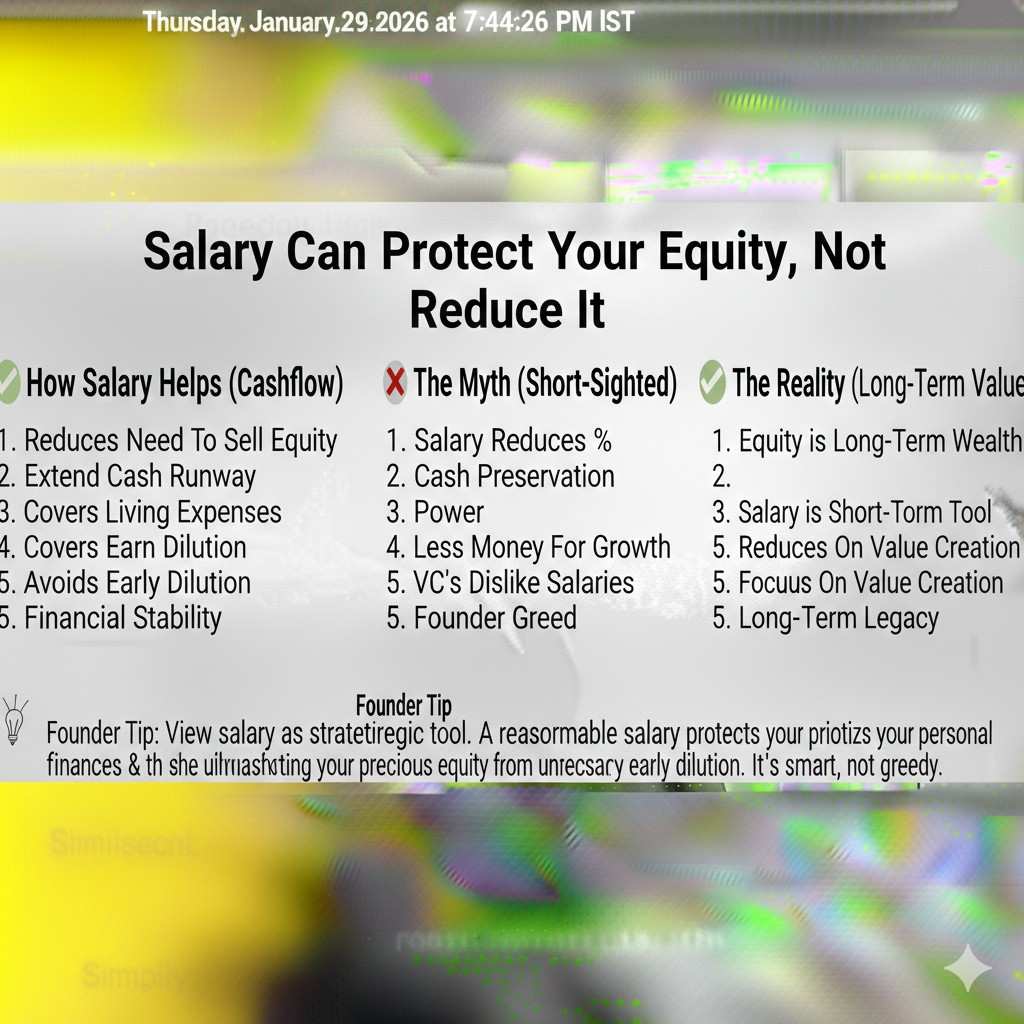
This part surprises many founders. A modest salary can protect your ownership. When you pay yourself enough to stay focused, you reduce the chance that you will need emergency money later. Emergency money often comes with bad terms, like giving up more equity than you planned.
Founders who starve themselves sometimes end up selling big pieces of the company just to survive. That is the worst outcome, because you suffer now and you also lose upside later.
The goal is to avoid panic fundraising. A steady salary, even if it is small, can be part of that defense.
Founder equity early
Why equity is your strongest long-term tool
Equity is not only about wealth. It is also about who gets to decide the future of the company. Equity affects voting power, board control, and the ability to stay aligned as the company grows.
In the early days, equity is also your main hiring currency. Great early employees often take lower pay because they believe in ownership. If you give away too much equity early, you may later struggle to hire the talent you need without diluting yourself even more.
Equity is also what keeps co-founders tied together through hard phases. When the build is long and progress feels slow, ownership can be the glue that keeps everyone committed.
Equity feels big now, but it gets expensive later
Early on, giving away 1% might not feel like much. The company might not even have revenue yet. But if the company succeeds, that 1% can become life-changing money. It can also become a key piece of control you wish you still had.
This is why many founders regret early equity giveaways. They trade equity for short-term comfort without seeing the future cost. This is also why equity should be treated with care, especially before product-market fit.
The right mindset is to treat equity like a limited resource. You can spend it, but you should spend it only when it truly increases the chance of success.
The common equity traps founders fall into
One trap is giving equity away to “helpers” too early. This can be advisors who are not really active, contractors who are doing paid work, or early partners who are not taking real risk. Small pieces add up fast, and later you may realize the cap table is messy.
Another trap is splitting equity with co-founders without clear roles, expectations, and vesting. When things get hard, unclear agreements create conflict. Conflict slows the company and sometimes ends it.
A third trap is giving equity away because you feel rushed. Rushed choices happen when you do not have a plan. A plan gives you time, and time gives you better decisions.
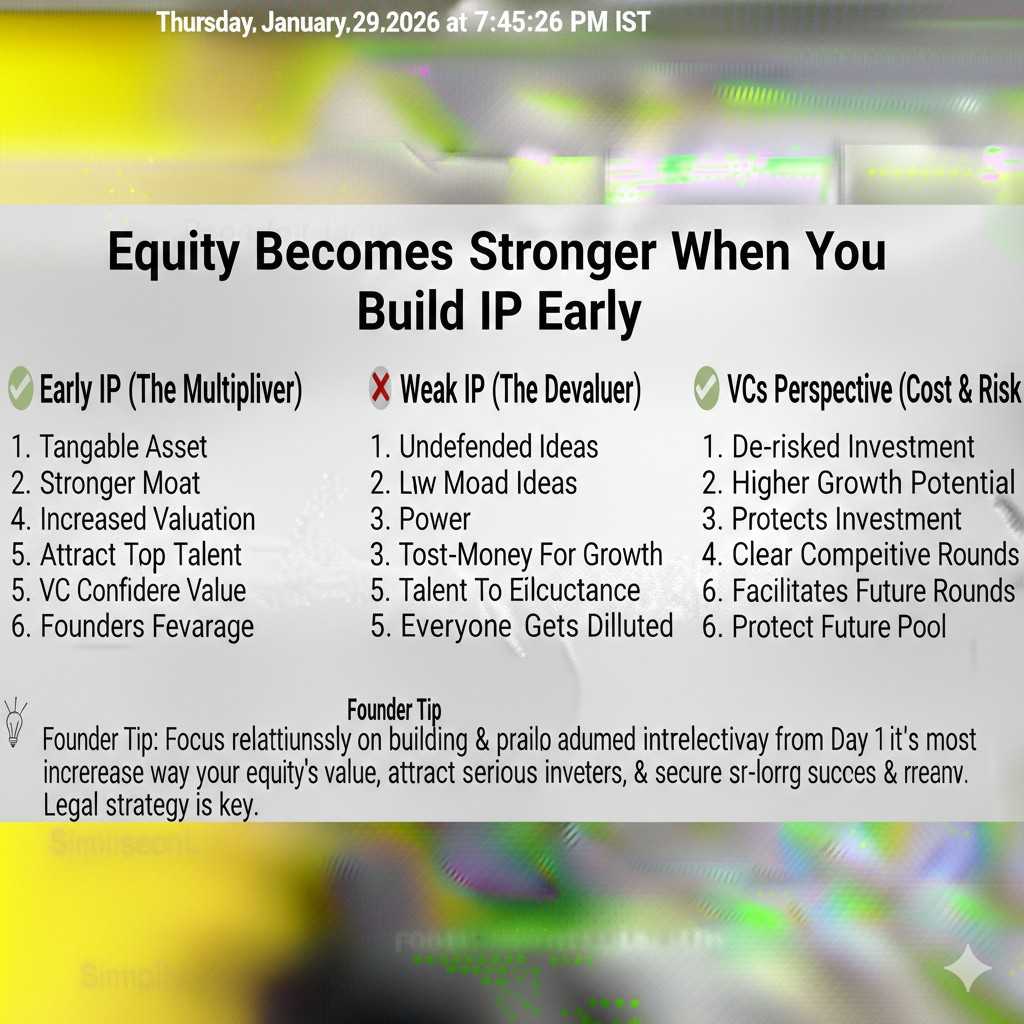
Equity becomes stronger when you build real IP early

For deep tech and AI founders, patents and strong IP strategy can increase your leverage. Leverage is your ability to say “no” to bad terms. When you have defensible technology, investors often take you more seriously. It also becomes harder for competitors to copy you, which can protect value as you grow.
This is a big part of what Tran.vc does. Instead of only writing a check, Tran.vc invests up to $50,000 worth of in-kind patenting and IP services so you can build a real moat early. If you want to explore that, you can apply here: https://www.tran.vc/apply-now-form/
Salary vs equity in real life
The real trade-off is time, not pride
In practice, founders are not choosing between “money” and “ownership.” They are choosing how much time they can buy to build the company properly. Salary buys time by reducing personal stress. Equity buys time by giving you hiring power and future fundraising strength.
When founders frame it as a pride issue, they make emotional choices. Emotional choices often swing too far. Either they pay themselves nothing and burn out, or they pay too much and shrink runway.
A better framing is to ask: what plan lets the company move fast for the next twelve months without creating a new risk?
The simplest way to decide: match salary to runway and milestones
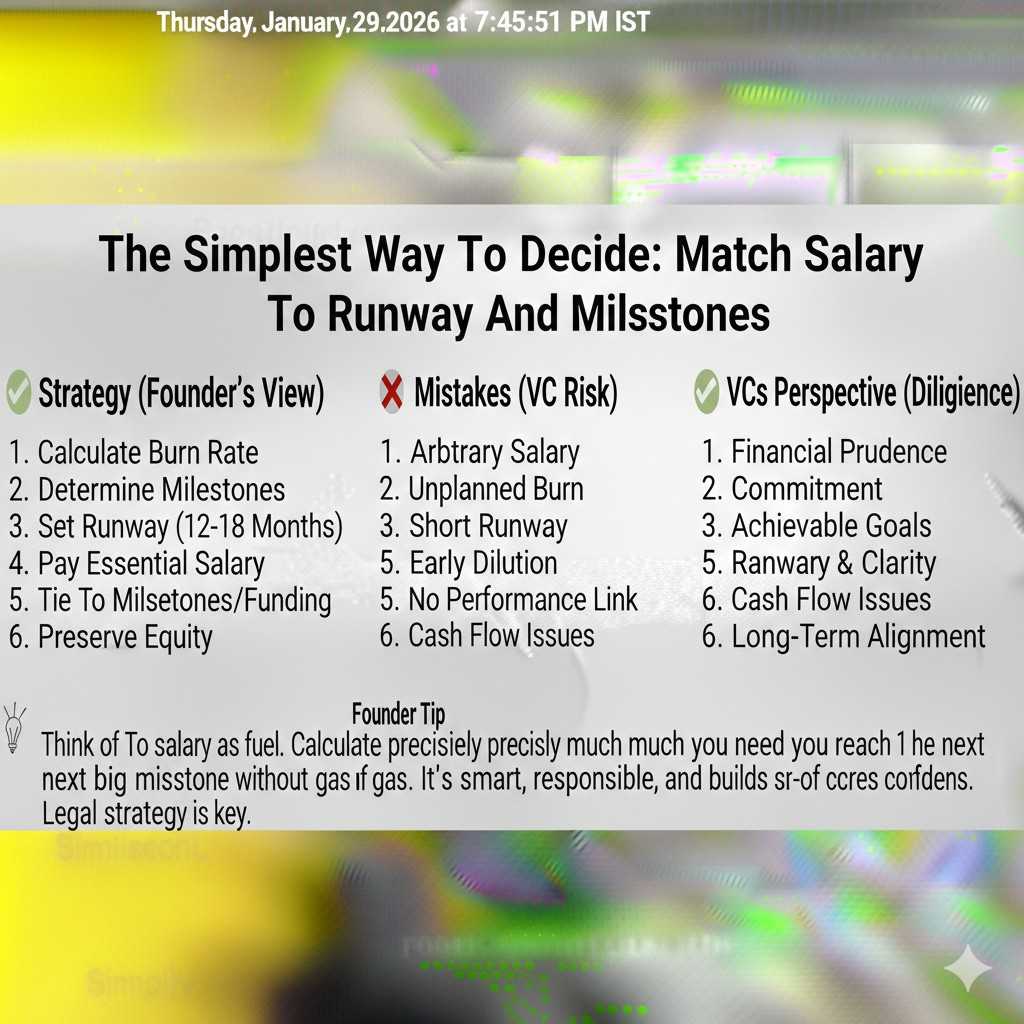
A useful rule is that founder salary should be tied to runway and clear milestones. If cash is low, pay should be low. If cash increases, salary can increase in steps, but only when the company hits real progress.
This creates a story you can explain to co-founders and investors. It also creates fairness, because pay becomes connected to results and constraints, not personal feelings.
Even if you cannot pay much right now, you can still create a written plan that says when pay will change. The plan reduces anxiety because it replaces guessing with a path.
How to talk about salary and equity with co-founders
Money is one of the fastest ways to break trust if it is handled poorly. The key is to talk early, talk clearly, and write things down. It is easier to agree on a plan when everyone is still excited, rather than after stress builds.
If one founder needs more salary due to life needs, it does not have to be a fight. You can treat it as a temporary adjustment. Some teams balance it later through small equity changes, or by raising salary for others when the company can afford it. The important part is that it feels fair, and that nobody feels trapped.
Avoid vague promises. Vague promises become resentment later. Clear agreements protect the relationship and keep the focus on building.
Why your first hires will care about this
Early employees watch founder behavior closely. If founders are not paying themselves enough and are always stressed, employees feel that stress too. They worry the company is unstable. It can hurt morale and retention.
If founders are paying themselves too much while asking employees to sacrifice, that also damages trust. People may stay for a while, but they will not give their best effort. In early startups, you need people who truly care.
A balanced founder salary can create confidence. It signals that leadership is serious and planning for survival, not just dreaming.
How to choose a founder salary number early
Start with a simple goal: remove money fear
If you are picking a founder salary, your first goal is not comfort. It is calm. Calm is what lets you work long hours, make clear calls, and stay steady when things break. Money fear is the opposite of calm. It makes small problems feel huge and pushes you into fast, weak choices.
So the first step is to write down the smallest monthly number that covers your real basics. This is not the number you “wish” you could live on. It is the number that prevents you from falling behind. Include rent, food, health costs, basic bills, and any debt payments you cannot pause.
Once you have that, add a small buffer for the things that always show up. A car repair. A medical visit. A flight for a family issue. Without a buffer, you will still feel pressure, and pressure will still leak into company decisions.
The outcome you want is simple: you should not be thinking about money all day. You should be thinking about the product, customers, and progress.
Tie salary to runway so you do not hurt your future self
Now look at the company side. A founder salary is not only about you. It is also about how long the company can survive. If salary shortens runway too much, you are buying calm today and selling control tomorrow.
A useful way to think about it is this: runway is your freedom. The longer your runway, the more power you have to wait for the right customers, the right hires, and the right investors. Short runway forces rushed fundraising, and rushed fundraising often comes with heavy dilution and terms that you regret.
So after you set your “basic calm” number, you check what it does to runway. If the company has very little cash, you may need to lower pay for a period. That is fine, as long as it is a clear decision with a clear timeline, not an endless sacrifice plan.
Many founders do better with a step plan. Start low, then raise salary in small jumps only after specific milestones, like a signed pilot, a working prototype, a revenue target, or a closed round.
Use milestones that are real, not vague
This is where founders often cheat themselves. They create milestone plans that sound good but have no clear finish line. “When we have traction” is not a milestone. It is a feeling, and feelings change with stress.
A real milestone is something you can point to without debate. A signed contract with a date and amount. A working demo that meets defined performance. A formal LOI with a clear next step. A key patent filing submitted. A round closed with money in the bank.
The reason this matters is that salary talks become tense when the company is under pressure. If your milestones are vague, every discussion turns into a fight. If your milestones are clear, the conversation becomes calmer because the plan is already agreed.
Plan for taxes and health coverage early
Founders sometimes set a salary that barely covers bills, then get surprised by taxes or health insurance costs. That surprise can break your plan.
If you are paying yourself as an employee, taxes may be taken out automatically. If you are paying yourself in another way, you may need to set aside money for taxes on your own. Either way, do not ignore this part. A salary number is not real unless it works after tax.
Health coverage is another common blind spot, especially in the US. If you are leaving a job with good benefits, you need a plan for that gap. The cheapest plan is not always the safest plan, and one medical event can cause a crisis that pulls you away from the company.
This is not about being pessimistic. It is about being prepared so the company is not damaged by personal risk.
How to protect equity while still taking enough pay
Avoid the “zero salary, big dilution later” pattern
A lot of founders do this without noticing. They starve themselves early to save runway. Then, when a surprise happens, they raise money in a hurry. Because they are rushed, they accept a low valuation or tough terms. They give away a big chunk of equity just to keep going.
In that story, the founder suffered and still lost ownership. That is the worst trade.
A better approach is to aim for sustainable pace. Sustainable pace is not slow. It is steady. It is the kind of pace that you can keep for years, not weeks. Sustainable pace protects equity because it reduces emergency decisions.
If you can take even a modest salary and keep working at full strength, you increase your chances of hitting milestones that let you raise on better terms.
Use equity like a scalpel, not a shovel
Equity is powerful. It brings co-founders together, attracts early employees, and helps you get senior talent you cannot yet afford in cash. But it should be used with care.
When you give equity, ask one question: does this equity meaningfully increase the chance that the company wins?
If the answer is “maybe,” pause. If the answer is “no,” do not spend it. If the answer is “yes,” then structure it so it is earned over time. That protects the company and keeps everyone aligned.
If you have already given away pieces too easily, you do not need to panic. You do need to stop the leak. The earlier you tighten it, the easier it is to manage.
Keep your option pool in mind from day one
Founders often forget about the option pool until an investor brings it up. Then it feels like surprise dilution. But it is not really surprise. It is a predictable need.
You will likely need equity set aside for hiring. If you do not plan for it, you will either struggle to hire or you will dilute yourself in a messy way later. Planning early keeps you in control.
This is also where clean IP and strong early assets help. When your company has defensible technology and a clear story, you can often hire with confidence and raise with leverage. You are not selling hope. You are selling a foundation.
Tran.vc helps founders build that foundation early through patent strategy and filings worth up to $50,000 in-kind. If you want to see how that works for your startup, apply here: https://www.tran.vc/apply-now-form/
Understand that equity is not just a number, it is a signal
Every equity grant sends a message. It tells people what you value. It also shapes the culture of the company.
If you hand out equity too easily, it can create a culture where people expect ownership without long-term commitment. If you never share equity, it can create a culture where people feel like hired hands, not builders.
The best culture usually sits in the middle. People who take real risk and build real value earn real ownership. People who are short-term helpers get paid in cash, not in permanent pieces of the company.
This is a simple idea, but it can save you years of regret.
What to do when co-founders have different money needs
Different needs do not mean different commitment
One founder may have savings. Another may be supporting family. Another may have student debt. If you pretend these differences do not exist, they will still exist, and they will show up later in unhealthy ways.
A founder with less financial pressure can often take a smaller salary for longer. A founder with more pressure may need a higher salary to stay focused. This does not mean one person cares more. It means their life setup is different.
The goal is to keep everyone full-time and fully engaged. If a founder is forced to take consulting work on the side, that hurts the whole team. Hidden side work often creates delays and confusion that are hard to explain.
Build a “fairness story” you can defend
Teams break when people feel that something is unfair and nobody will name it. You want a fairness story that feels clean and explainable.
One approach is to pay different salaries for a set period, then rebalance later when revenue or funding increases. Another approach is to keep salaries close, but give a small adjustment through future raises or bonus-like catch-up when the company can afford it.
Some teams adjust equity to match salary differences, but this should be done carefully because it can create long-term resentment if not handled well. Many teams do better by keeping equity tied to role, risk, and responsibility, while using salary to handle life needs.
Whatever you choose, write it down. A written plan is not about mistrust. It is about protecting trust.