
Side letters show up in cross-border deals when one side wants something “extra” that is not in the main contract. Sometimes that “extra” is harmless, like a small process note. But in global deals—where laws, cultures, time zones, languages, and regulators collide—side letters can quietly become the most dangerous pages you sign.
This matters a lot for early-stage founders. When you are raising money, signing a partner deal, licensing tech, or doing a joint build with a foreign company, you are often moving fast. You may feel pressure to “just agree” so the deal can close. And that is exactly when side letters sneak in.
A side letter is a separate document that sits next to the main agreement. It can change how the main agreement works. It can add rights, remove duties, or give special treatment to one party. It might be called a “letter agreement,” “side agreement,” “supplement,” “comfort letter,” or “understanding.” The name does not matter. What matters is this: if it creates a promise, a right, or a rule, it can shape the deal in real life.
Now, side letters are not always bad. In some settings, they are normal. For example, some investors ask for a side letter to confirm a small reporting item, or to fit a special legal need. Some enterprise buyers ask for one to align on a rollout plan. Some global partners use them to handle local rules without rewriting the whole global template.
But the title of this piece is “When to Avoid Them,” because in global deals, side letters often cause harm in ways people do not see at signing time.
Here is the core problem: side letters create two truths. The main contract says one thing. The side letter says another thing. That split can lead to confusion, fights, and costly clean-up—often at the worst moment, like when money is on the line, a product is shipping, or a regulator is asking questions.
In global deals, there are extra risks:
A side letter might not be translated the same way as the main contract. One line can change meaning across languages. The “plain” English sentence that feels safe can become risky in another language or in a local court.
A side letter can break the “single contract” idea. Many global contracts rely on a clause that says, “This agreement is the whole deal.” Side letters punch holes in that. And once there is one hole, it becomes easier for someone to argue there are more “understandings” you never meant to accept.
A side letter can hurt trust in later rounds. When a new investor does diligence, they look for hidden promises. If they find side letters, they will wonder what else is hidden. Even if the side letter is fine, it can still slow the round, raise legal bills, and create fear.
A side letter can create unfairness among investors or partners. In fundraising, if one investor gets special rights in a side letter, other investors may feel tricked. In many cases, the company can be forced to give the same rights to others, or face claims later.
A side letter can create a compliance mess. Some rights trigger reporting duties, tax issues, data duties, or sanctions screening. If the side letter is not run through the right checks, you can break a rule without knowing it.
A side letter can weaken your IP position. This is the big one for Tran.vc founders. A single sentence that “clarifies” ownership, grants broad license rights, or allows use of your know-how can punch a hole in your moat. It can also make patent filings harder if it forces early disclosure or creates confusing inventorship or assignment terms.
So when should you avoid a side letter? A simple rule works well: if the side letter changes risk, money, control, ownership, or key promises, avoid it and put the terms in the main agreement.
That rule sounds strict, but it saves pain. If a term is important enough to fight about later, it is important enough to put in the main contract now.
There is also a second rule that helps in global deals: if you cannot explain the side letter in one short sentence to a future investor, regulator, or acquirer, you should not sign it.
Because that is what will happen. In 18 months, someone will open a data room and ask, “What is this?” If you need ten minutes to explain it, you are already in trouble.
Let’s make this real with a simple picture.
Imagine you are an AI robotics startup. You sign a pilot with a large overseas manufacturer. The main contract says the pilot is “evaluation only,” no license, no transfer of IP, and no reverse engineering. Great. Then the buyer asks for a side letter: “We agree your team will support our engineers for 60 days and share best practices to ensure success.” That sounds fine. But “best practices” in practice becomes: share model tuning notes, architecture diagrams, and deployment scripts. Now your crown jewels are in their hands. Later, they build an internal version and claim they did not “reverse engineer” because you “shared” it. In some countries, courts may read that side letter as permission, or at least as proof you intended to help them learn.
That is how side letters hurt. They do not shout. They whisper.
Another common example is fundraising. A global investor wants a side letter that promises “most favored nation” terms, extra information rights, a special veto, or a special liquidity path. You might think it is one investor, so it is fine. But your next lead investor may demand to see it, then say, “If they have it, we need it too.” Suddenly the company is boxed in. You did not mean to give away control, but the side letter did it for you.
So in this series, we will focus on one goal: help you spot the moments when a side letter is a trap, and show you what to do instead.
We will talk about the common reasons people ask for side letters in global deals. We will cover the types that are usually safe and the types that are high risk. We will walk through red flags—like secret promises, broad wording, unclear law, and “friendly” terms that turn sharp later. And we will end with a practical way to respond when a partner says, “It’s just a side letter.”
One more important point before we move on.
Avoiding side letters does not mean being difficult. It means being clear. Clarity is kind. It protects both sides. It also shows you are a serious founder who can handle real contracts.
If you are building deep tech, AI, or robotics, your edge is not just your product. It is your know-how and your IP. If you give it away through a “small” side letter, you may not get a second chance.
This is exactly why Tran.vc exists. We help technical founders turn inventions into assets that hold up under pressure—pressure from partners, investors, and global buyers. If you are signing deals across borders, and you want your IP, patents, and ownership story to stay clean, you can apply anytime here: https://www.tran.vc/apply-now-form/
Side Letters in Global Deals: When to Avoid Them
Why this matters in cross-border work
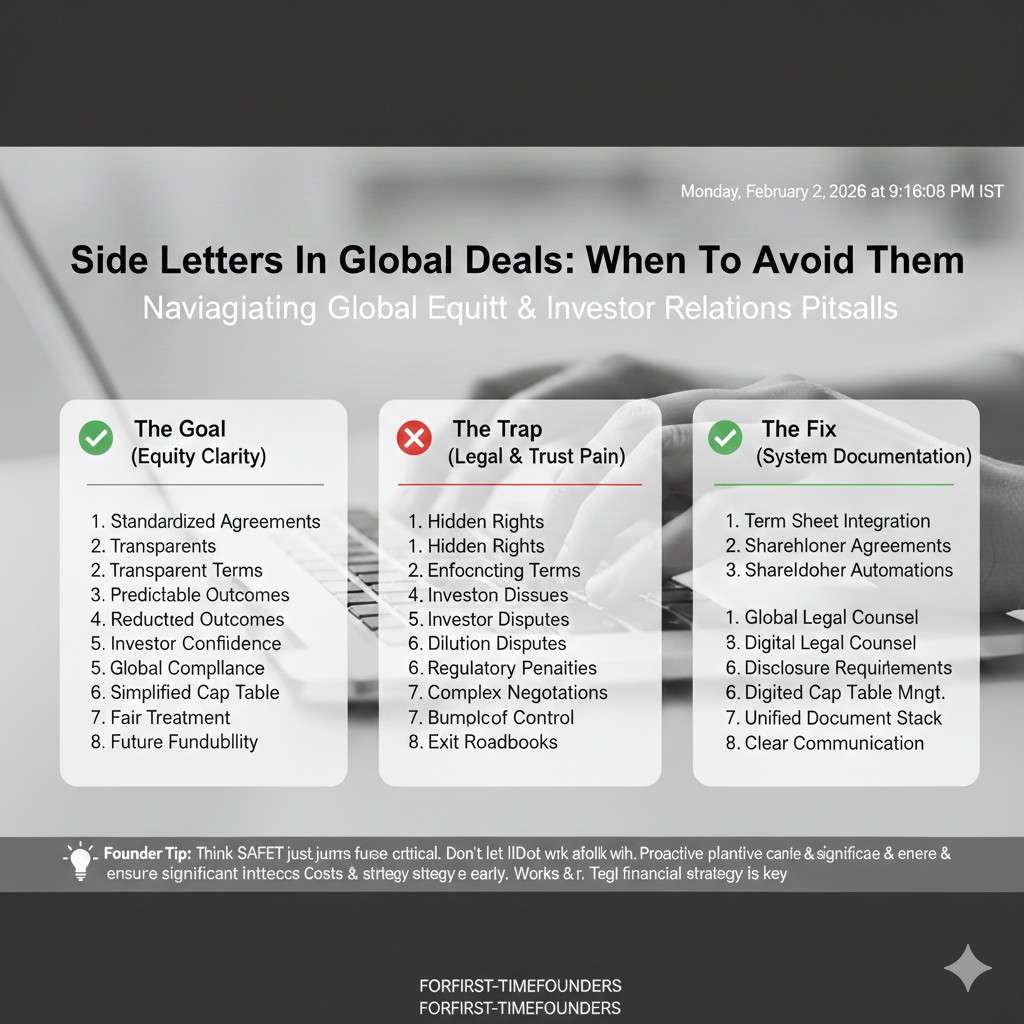
A global deal already has moving parts. Different time zones. Different work habits. Different ideas of what “done” means. Add different legal systems, and the same sentence can land in two very different ways.
A side letter can look like a small add-on, but it often becomes the “real deal” when a problem shows up later. That is because side letters tend to cover the exact things people fight about: access, control, timing, data, and what happens when someone wants out.
If you build AI, robotics, or deep tech, this risk is even higher. Your edge is often hidden in how you built the system, how you train it, and how you deploy it. Side letters are a common place where that hidden value leaks out without anyone calling it a leak.
A quick note for founders before we go deeper
If you are negotiating fast, it is easy to treat side letters as paperwork. The other party may even say, “It’s not part of the contract.” That line is often said with a smile.
In real disputes, the question is not what someone called the document. The question is what the document does. If it changes behavior, expectations, or rights, it matters.
If you want support building a strong IP story before you sign global deals, Tran.vc can help. You can apply anytime here: https://www.tran.vc/apply-now-form/
What Side Letters Really Do in Global Deals
They create two versions of the truth
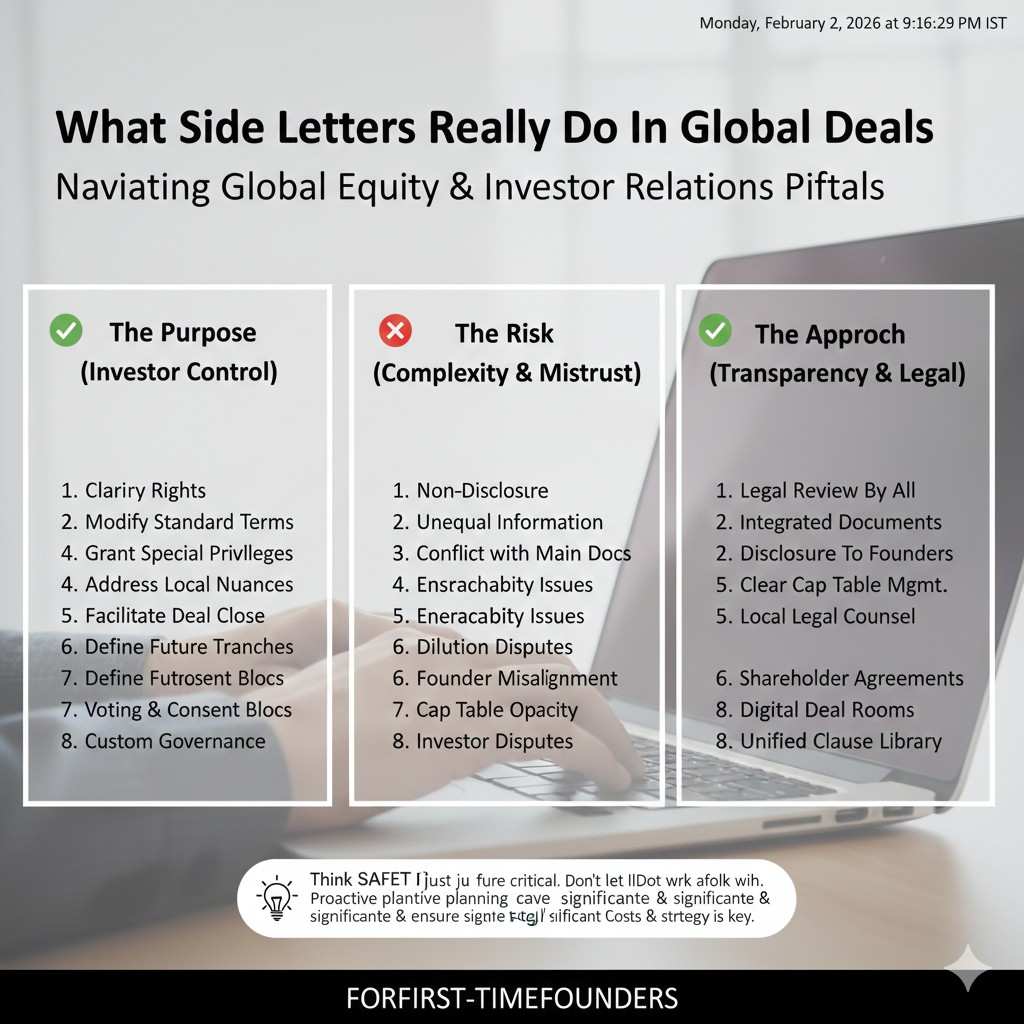
The main contract is supposed to be the single place that defines the deal. When a side letter shows up, you now have at least two documents that talk about the same relationship.
Even if both documents are “true,” they might not match in tone or detail. One may be strict. One may be friendly. That gap is where arguments grow, because each side will point to the version that helps them most.
In global deals, this “two truths” problem gets worse because people rely on different teams. A local team may read the side letter. The head office may only read the main contract. Later, both teams swear they are right.
They change power without looking like they change power
The most dangerous side letters do not feel aggressive. They sound like teamwork. They use words like “support,” “cooperate,” “help,” and “share.” Those are good words, but they can create very broad duties.
If the side letter says you will “support integration,” that can turn into a demand for constant engineering time. If it says you will “share best practices,” that can become a demand for methods, tools, and training that your patents and trade secrets depend on.
The power shift happens because the side letter often lacks the same limits that exist in the main contract. The main contract might have clear scope, clear fees, and clear boundaries. The side letter often does not.
They become a hidden lever in future talks

A side letter rarely stays quiet. It shows up later when you raise, sell, or sign your next big deal. A new investor will ask for all “side agreements.” A buyer will do the same.
When they see extra promises outside the main contract, they worry you have unknown risks. They may ask for price cuts, stricter terms, or a longer diligence cycle. Even if the side letter is harmless, it can still slow everything down.
If you want a clean story when you fundraise, it is better to keep key rights and duties in one place, and keep extra papers to a minimum.
Why Side Letters Show Up So Often
The “template problem”
Large companies love templates. Their legal team has a global master agreement, and they do not want to touch it. Editing the template can trigger long internal reviews, so they look for a shortcut.
The shortcut is a side letter. It lets them keep the template “unchanged” while still getting what they want. From their view, it feels efficient. From your view, it can create a messy, split contract.
In global deals, the template is often written for a different country’s rules. A side letter is then used to patch the gaps. The patch can work, but patches can also tear.
The “relationship move”
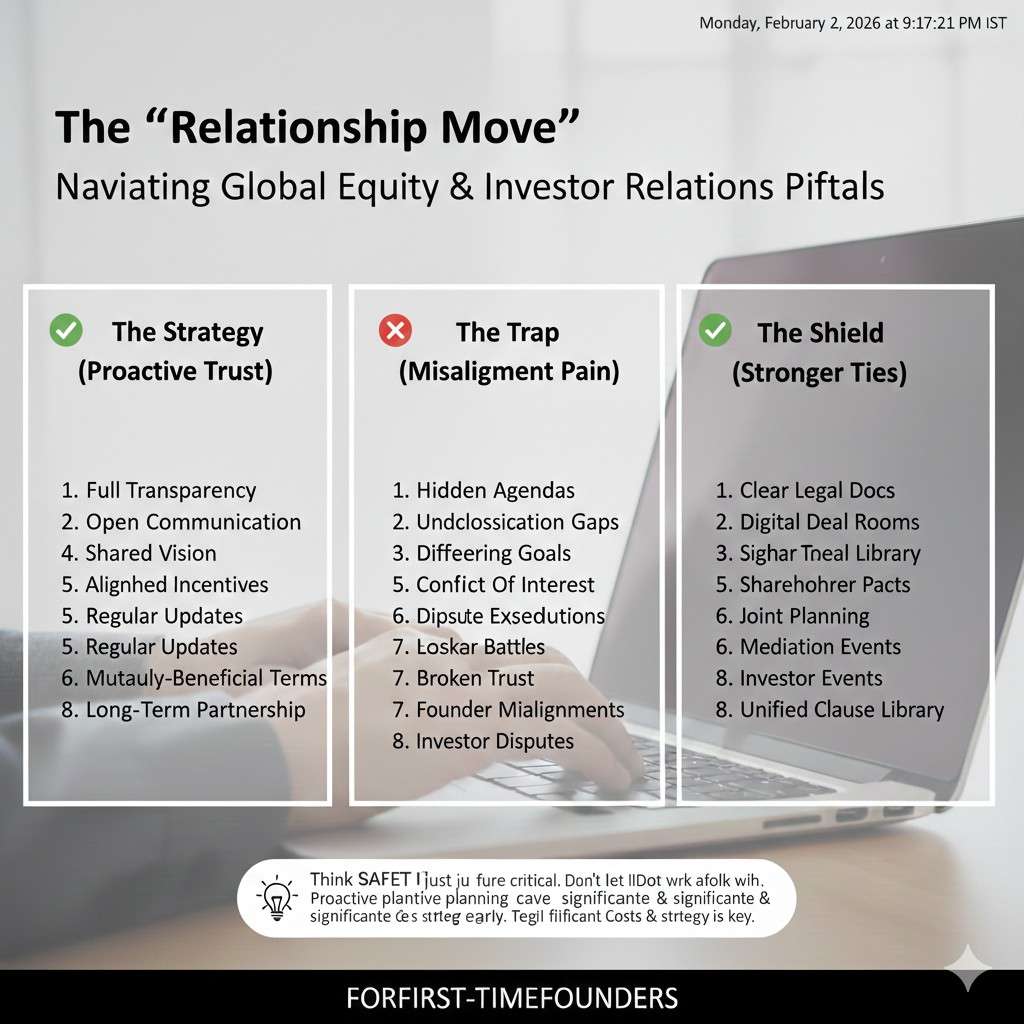
Sometimes a partner wants to make a personal promise without involving the whole legal machine. A senior leader may want to “assure” you that budgets will be there, timelines will be fair, or your product will be rolled out.
They may suggest a side letter to show goodwill. That can feel comforting in the moment, but goodwill does not pay legal bills when staff changes or priorities shift.
Also, leadership changes more often than founders expect. The person who signed the side letter may leave. The new leader may say, “That is not our plan.” You then have to fight to prove what the letter means.
The “quiet advantage”
Not every side letter is friendly. Some are designed to give one party a benefit that others will not see. In fundraising, this shows up when one investor asks for special rights off the cap table record.
In partnerships, this shows up when a big buyer asks for special price, special access, or special exclusivity terms, without making those terms visible in the main agreement. They may want the option to push you around later without making it obvious today.
If you feel even a small hint of secrecy, treat that as a major sign to slow down. Secrecy in contracts is rarely good for the smaller party.
When You Should Avoid Side Letters
When they touch ownership or rights to use your tech
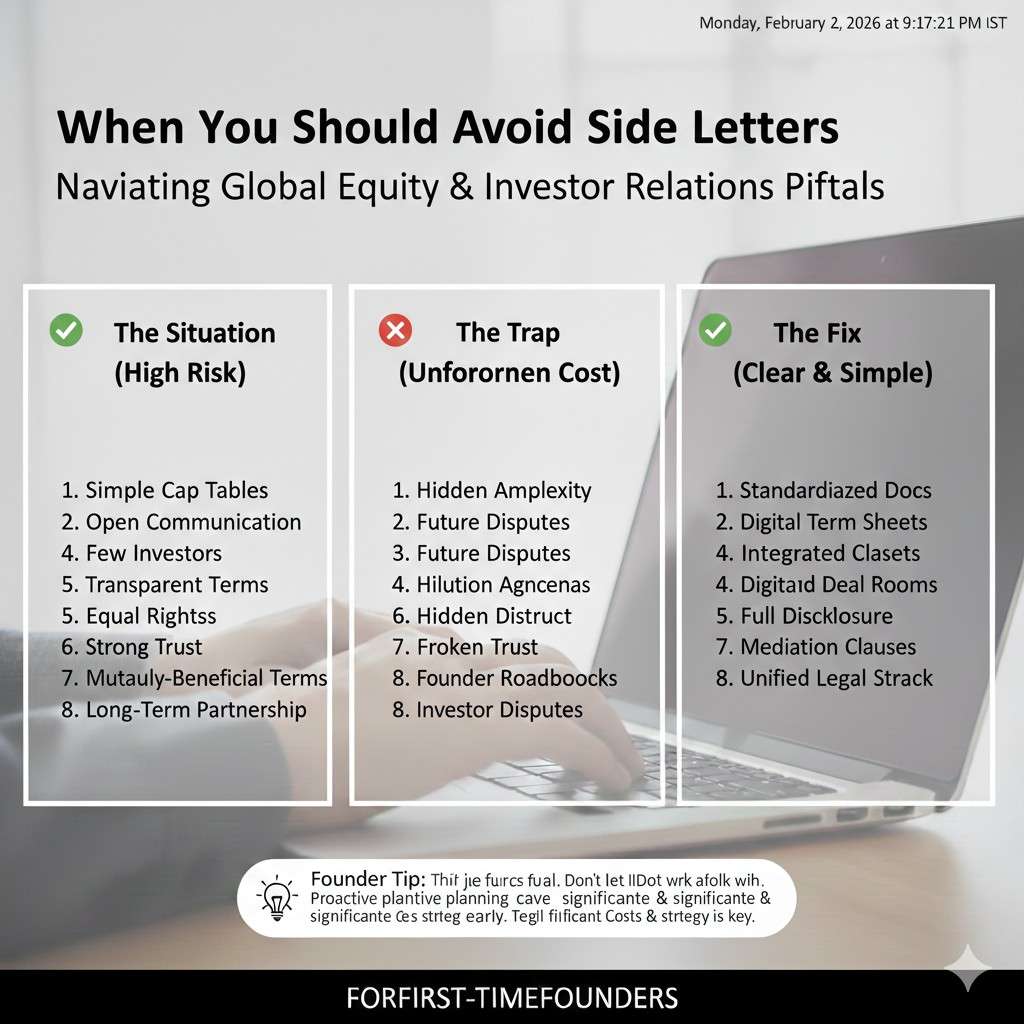
If a side letter talks about who owns what, who can use what, or what happens to improvements, it should almost never live outside the main contract.
Ownership and license terms need tight wording. They need clear borders. They need a strong link to your IP plan, including patents you will file later. Side letters tend to be drafted fast, and fast drafting creates holes.
Even one loose line can cause trouble. For example, “We can use your materials for internal purposes” sounds simple, but “materials” can include code, training data, model weights, design files, or test results. “Internal purposes” can become “we built a competing tool for our internal factories.”
If the term changes how your invention can be used, put it in the main agreement where it will get full review and proper limits.
When they change money, pricing, or payment timing
Payment terms are not just finance terms. They shape behavior. They decide who has leverage when things get hard.
In global deals, late payment can be common, and collections can be painful across borders. If a side letter changes pricing, adds rebates, adds credits, or changes payment triggers, it can create cash stress that kills a small company.
Even worse, side letters may promise future discounts tied to volume, but without a firm volume commitment. That is how you get locked into low pricing without guaranteed growth.
If it affects what you get paid, treat it as core and keep it inside the main contract.
When they create extra duties for your team
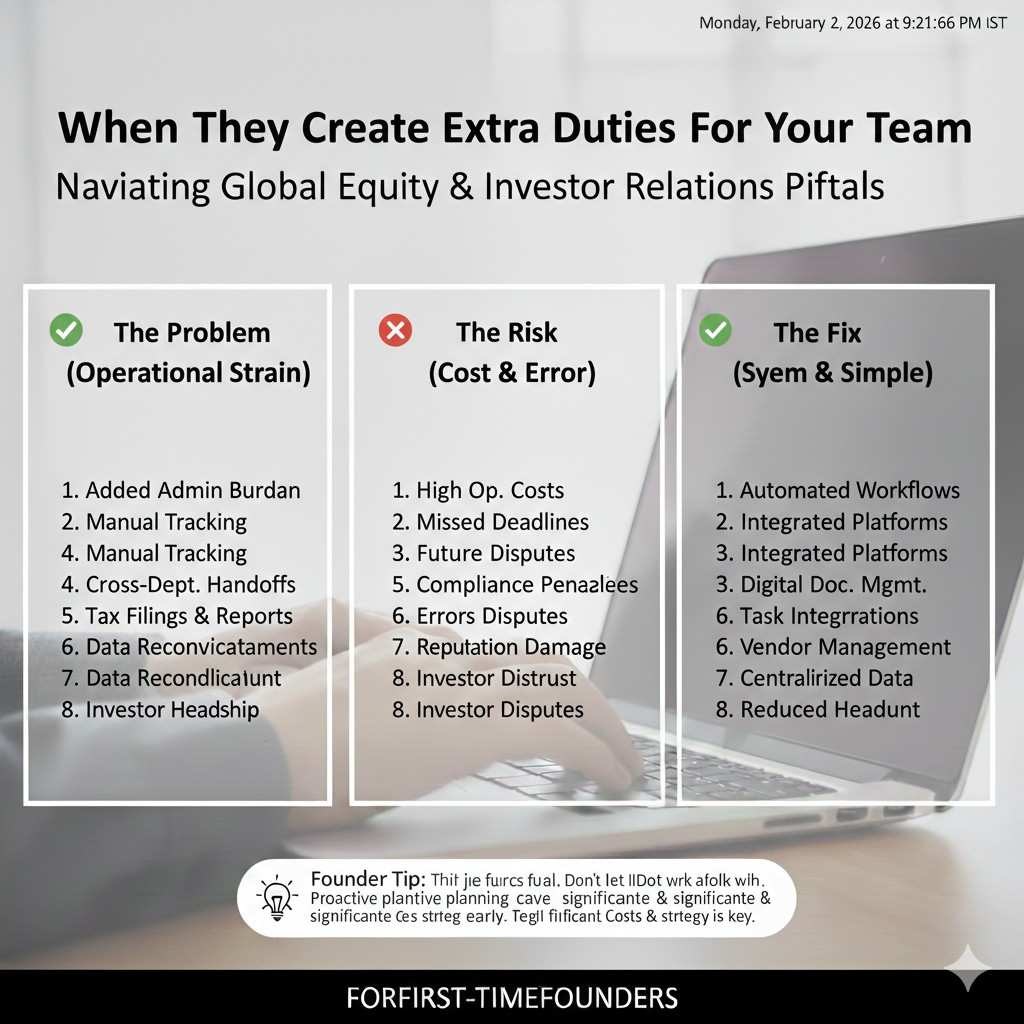
Founders often sign side letters that say, “We will provide support” or “We will help with training” because they want the deal to work.
Support is fine when it is scoped and priced. Support is dangerous when it is open-ended. Side letters are a common place for open-ended support.
The problem is not that you want to help. The problem is that “help” becomes an obligation. An obligation turns into missed deadlines for your product roadmap. Missed deadlines turn into slower growth. Slower growth makes fundraising harder.
If it demands time from your engineers, it is not a small add-on. It is part of the deal. Treat it with the same care as the main contract.
When they create special rights for one investor in a round
In fundraising, side letters often hide the most sensitive rights. Extra information rights. Special vetoes. Special liquidity promises. Rights that can block future rounds or force a sale earlier than you want.
In a global round with investors from different regions, side letters can also create confusion around what is “standard.” One investor may insist their local market expects it, while your lead investor may view it as a red flag.
A clean cap table is not just a spreadsheet. It is a trust system. If one party gets special hidden power, trust breaks. When trust breaks, future money gets expensive.
If you are unsure whether a side letter term is “special power,” assume it is, and push it into the main documents or remove it.
If you want to raise without giving away control early, Tran.vc’s approach is built for that. We help you use IP and patents as leverage, so you do not need to accept bad side deals. You can apply anytime here: https://www.tran.vc/apply-now-form/
The Global Risks That Make Side Letters Worse
Local law can treat them differently than you expect
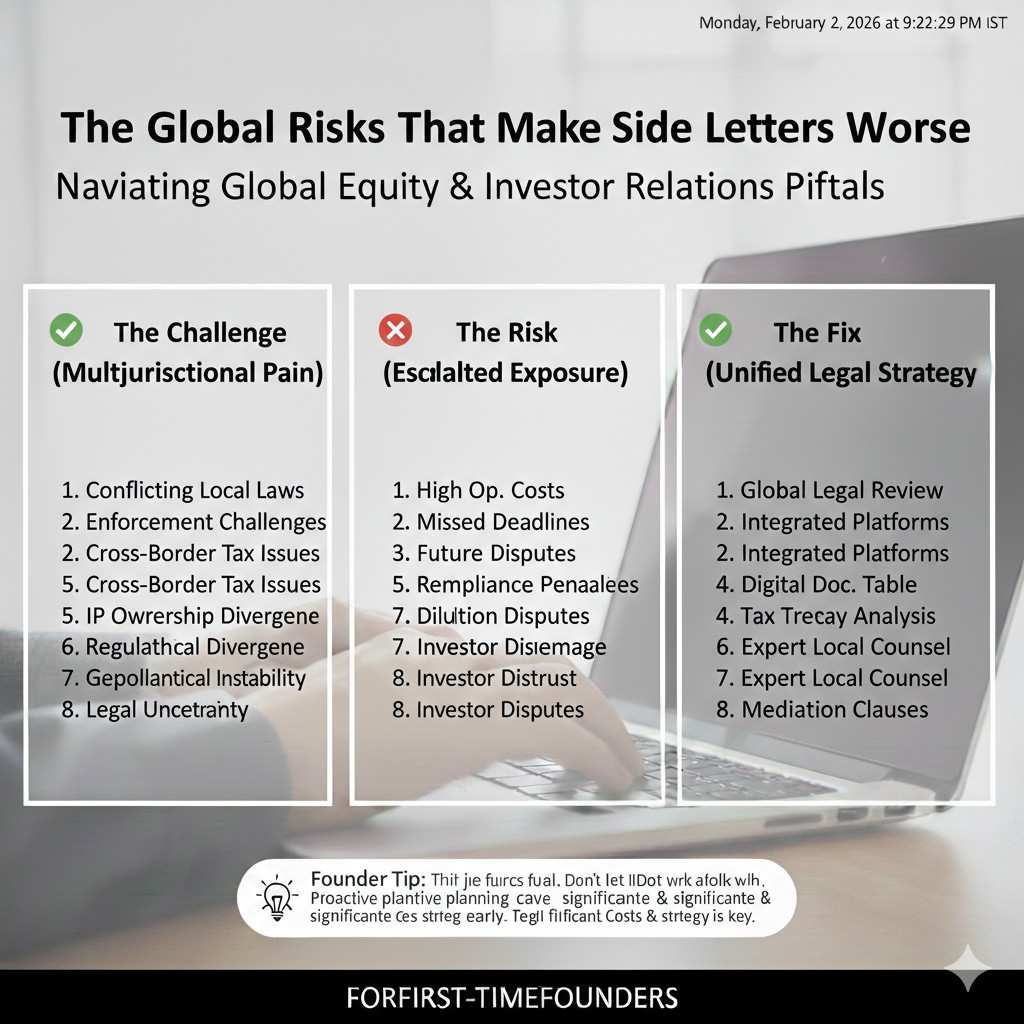
In some places, courts may read side letters as part of the full agreement even if the main contract says it is the “entire agreement.” In other places, the court may treat the side letter as a separate contract with its own remedies.
This matters because remedies decide real-world outcomes. A side letter might allow termination, damages, or injunctive relief that you did not plan for. In a foreign court, that can be very costly to fight.
Also, some countries have rules about language, consumer-like protections in certain industries, or requirements for signatures and stamps. If your side letter does not follow local formalities, you may end up with a document that is hard to enforce when you need it.
Translation and “business English” can create gaps
Even when everyone speaks English, global English is not the same as U.S. legal English. Words like “shall,” “best efforts,” “reasonable,” and “support” carry different weight in different places.
If a side letter is written in casual business language, people may assume it is not legally binding. But later, a dispute team can argue it was a promise, and that both sides acted like it was real.
If a side letter is translated, you can also get meaning drift. One version may be tighter, the other may be broader. Then you have a fight about which version controls.
Regulators and compliance teams do not like hidden promises
Side letters can trigger reporting or compliance duties without anyone noticing. A side letter that gives special access to data can touch privacy rules. A side letter that creates special pricing can touch transfer pricing and tax questions. A side letter that involves a restricted region can raise sanctions screening issues.
Many startups do not have a full compliance team early. That is normal. But it means you must avoid creating hidden compliance obligations by accident.
If a side letter touches data, location of data, or who can see data, treat it as high risk and insist on clear limits in the main contract.
A Founder’s Lens: The IP Trap Inside Side Letters
“Sharing” can be a quiet IP handover
AI and robotics deals often need collaboration to succeed. That is true. But collaboration must be structured.
A side letter may say you will “share documentation” or “share know-how.” Those phrases can include things that are not protected by patents yet. They can include trade secrets. They can include small design choices that make your system work better than others.
Once those things are shared, you may not be able to call them secrets later. That can weaken your position in patent filings and also weaken your ability to stop copying.
The safer path is to treat knowledge transfer like a product feature: scoped, limited, priced, and tracked. And it should sit in the main agreement with clear boundaries, not in a side letter that reads like a friendly note.
Improvements and “feedback” can become ownership disputes
Many global partners want the right to use “improvements” or “feedback.” They may frame it as fair, since they are helping you test in the field.
The risk is that “improvements” in AI and robotics are often huge. Data from operations can change model performance. A new workflow can become a key part of your product. If the side letter says they own improvements created “during the project,” you could be giving away the most valuable growth you will ever get.
The main contract should clearly state who owns what you build, who owns what they build, and what happens to joint work. If a partner wants special treatment, it should be negotiated carefully and placed in the main agreement with precise definitions.
Patent timing can be harmed by informal promises
Some side letters push you to share details early to meet a deadline. Others push you to publish joint case studies quickly.
If you are not careful, that kind of early disclosure can hurt patent strategy. Public disclosure timing matters. Also, inventorship and assignment must be clean. If your side letter creates confusion about who contributed what, you can create problems that are hard to fix later.
This is one reason Tran.vc focuses so much on early IP planning. A strong patent plan does not just help in court. It helps you negotiate, because you know what must be protected and what can be shared. If that is helpful for your startup, you can apply here anytime: https://www.tran.vc/apply-now-form/
Practical Signals a Side Letter Is Becoming a Problem
The other party wants it kept “off the record”
If someone says the side letter is “not for the data room,” “not for other investors,” or “not to be shared,” that is a serious warning.
Deals built on secrecy tend to break under stress. Also, you will need to disclose key agreements in future financing and in many acquisition talks. You do not want to choose between honesty and breach.
A healthy deal can be explained openly. If it cannot, the structure is likely wrong.
The wording is broad because “we trust each other”
Trust is good, but contracts exist because trust changes when money or deadlines show up.
If the side letter uses vague words like “as needed,” “from time to time,” “best efforts,” or “reasonable support,” it is creating a wide door.
Wide doors are fine for big firms with large teams and legal budgets. For a startup, wide doors become unpaid work, missed roadmaps, and loss of leverage.
It conflicts with the main contract, even slightly
Sometimes the conflict is subtle. The main contract says no exclusivity, but the side letter says they will be your “preferred” partner. The main contract says no license, but the side letter says they can “use” outputs internally. The main contract says disputes go to arbitration, but the side letter says “either party may seek relief in court.”
Even small conflicts create big risk because disputes are often decided by which document is read as controlling. If your documents are not aligned, you are giving away clarity, and clarity is leverage.