IP Basics

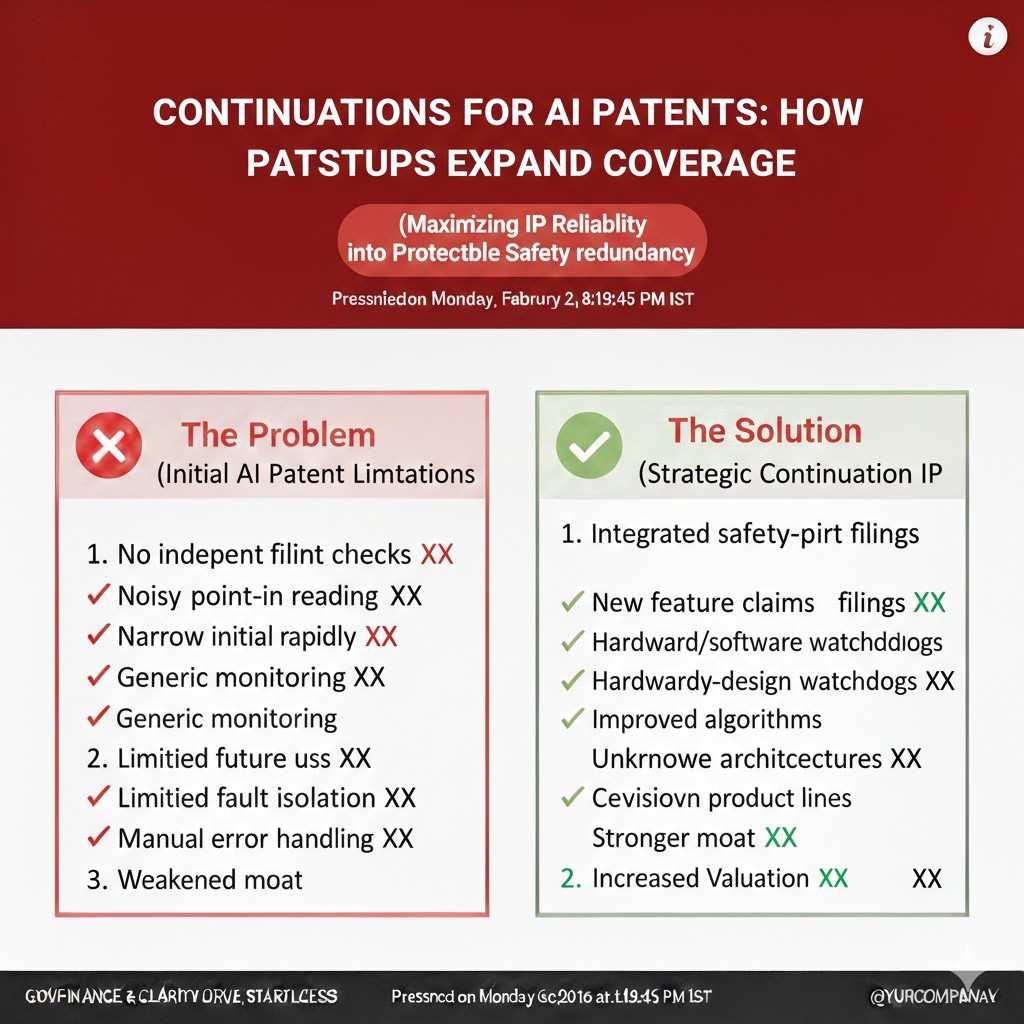
Continuations for AI Patents: How Startups Expand Coverage

AI startups move fast. Your patent plan has to move fast too. If you build in AI, you already know this pain: your model changes, your data changes, your product shifts, and your “real” invention becomes clear only after you ship and learn. But patents do not work like product sprints. A patent filing freezes […]

Continuations for AI Patents: How Startups Expand Coverage Read More »

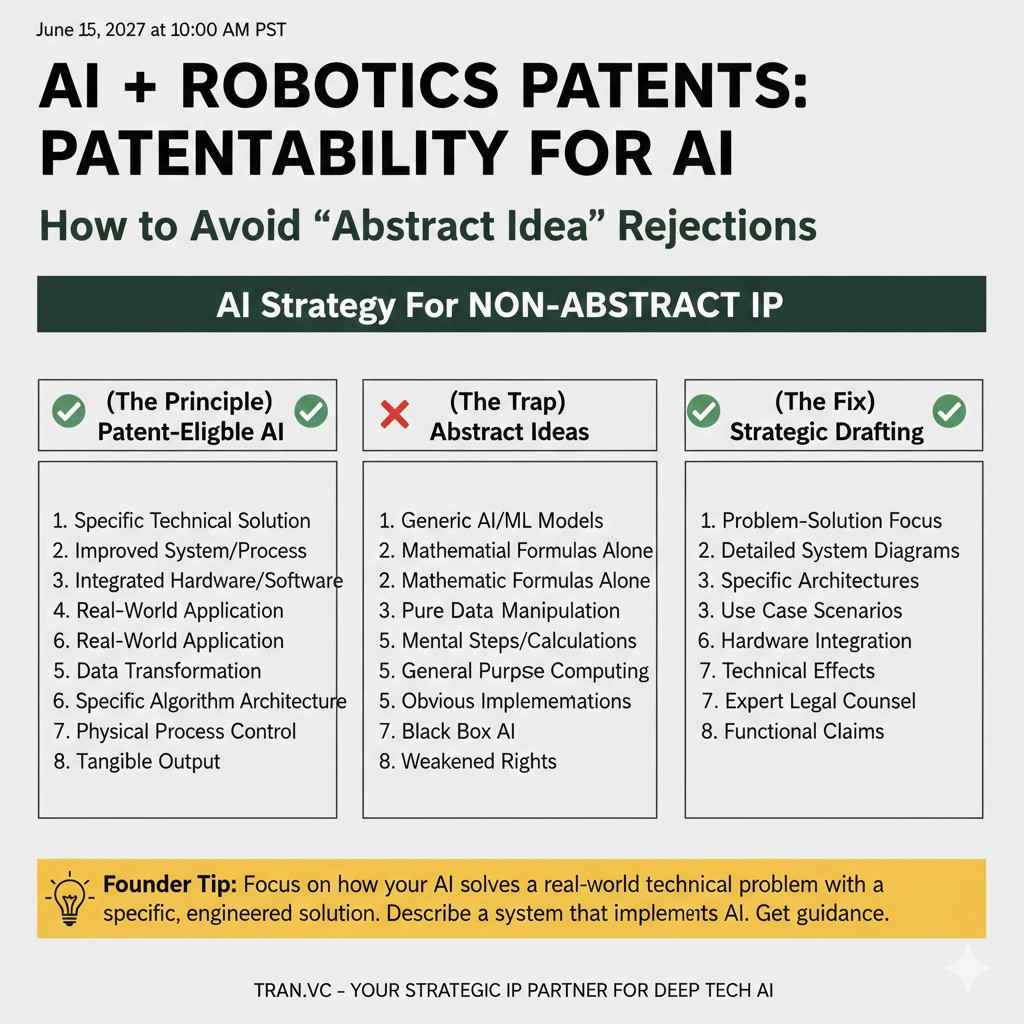
Patentability for AI: How to Avoid “Abstract Idea” Rejections

Most AI founders do not lose time because their tech is weak. They lose time because their patent gets blocked by two words: “abstract idea.” It feels unfair. You built something real. It runs. It saves money. It makes decisions faster. Yet the patent office may say: “This is just math” or “This is just

Patentability for AI: How to Avoid “Abstract Idea” Rejections Read More »

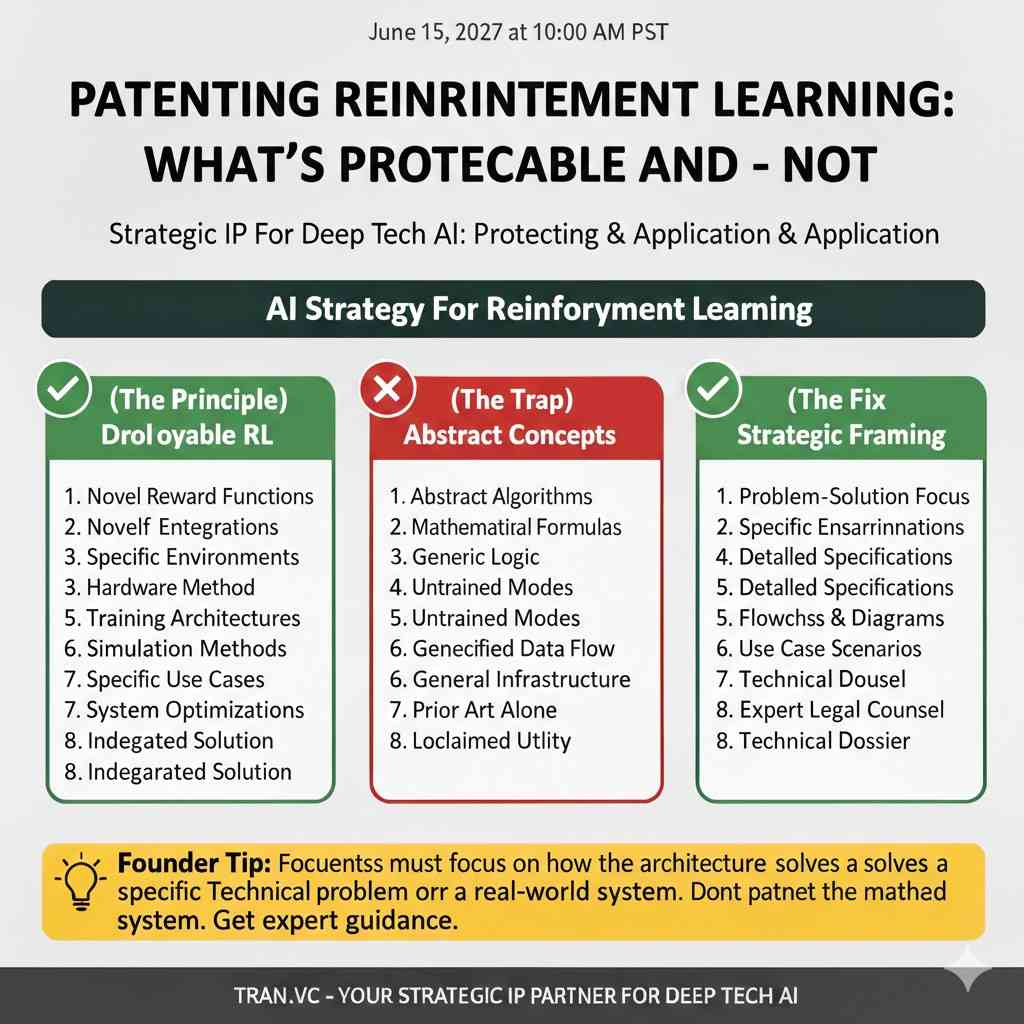
Patenting Reinforcement Learning: What’s Protectable and What’s Not

Reinforcement learning can feel like magic. An agent takes actions, gets rewards, and slowly learns how to win—sometimes in ways even the builders did not expect. If you are building robots, AI systems, or real-world control software, reinforcement learning can become the core of your product. And when it becomes core, one question shows up

Patenting Reinforcement Learning: What’s Protectable and What’s Not Read More »

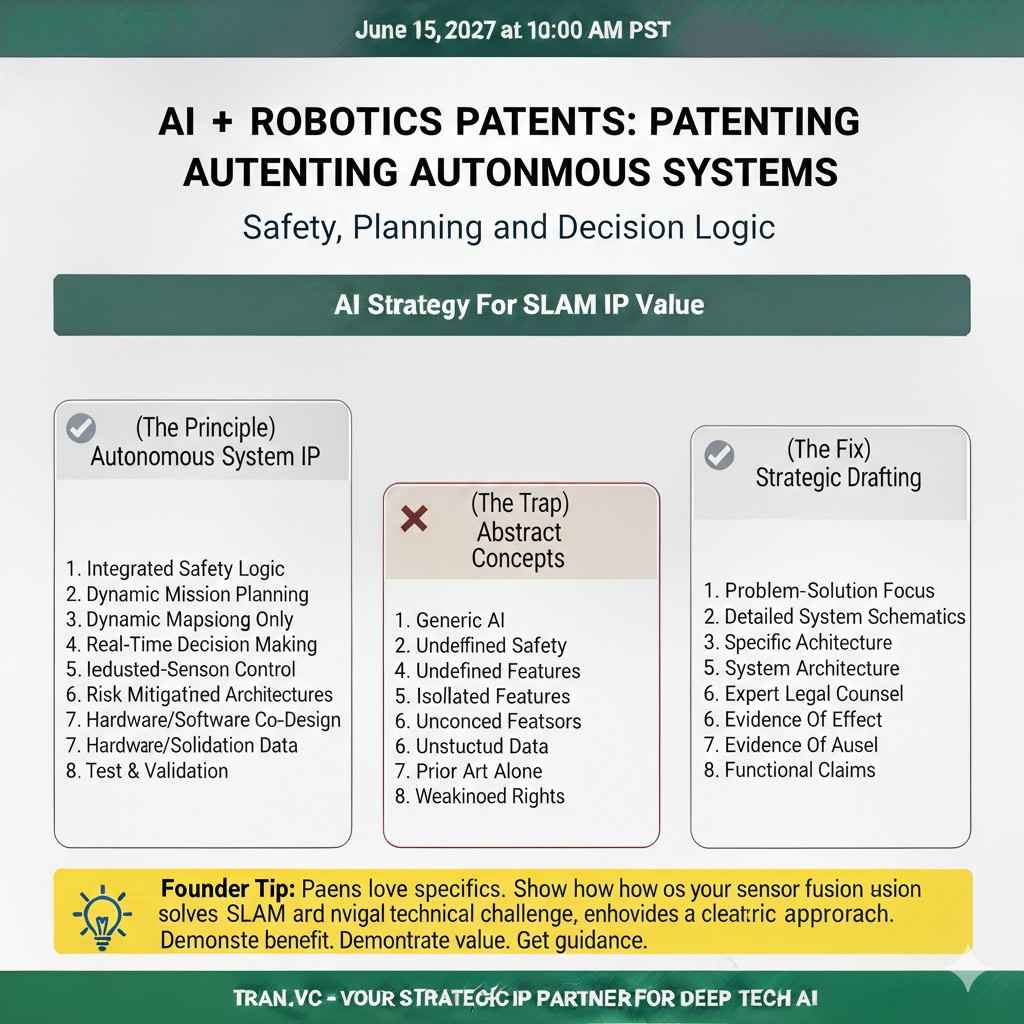
Patenting Autonomous Systems: Safety, Planning, and Decision Logic

If you build autonomous systems, you are not “just shipping code.” You are teaching a machine how to act in the real world. That means safety, planning, and decision logic are not side details. They are the product. And here is the part most founders miss: these are also the parts you can often protect

Patenting Autonomous Systems: Safety, Planning, and Decision Logic Read More »