
Conversion rate benchmarks sound cold and dry. But for a founder, they are very personal. They tell you, in simple numbers, if people actually want what you built.
You can talk to users. You can run surveys. You can collect feedback on calls. All of that matters. But when you strip everything back, one question remains: do people move forward, or do they walk away? That is what conversion rate answers.
For early AI, robotics, and deep tech products, this is even more important. Your product may be complex. Your tech may be advanced. But buyers still behave in simple ways. They click. They sign up. They ask for a demo. They start a trial. They pay. Or they don’t.
That is why conversion rate benchmarks are so useful. They give you a reality check. They show if you are close to product fit, still searching, or trying to sell something people do not yet understand or trust.
This article will help you use conversion rates the way serious founders do. Not as a vanity metric. Not as a random number to compare with a generic “industry average.” But as a clear signal of where you are on the path to product fit, and what to fix next.
We will walk through what “good” looks like for key steps in your funnel. We will talk about what low, average, and strong conversion rates usually mean in the real world. And we will break down what to do when your numbers tell you that users are interested, but not yet fully sold.
You will also see why strong conversion rates and strong IP work together. When your product starts to click, copycats follow. If your code, models, or hardware are not protected, a better-funded rival can copy your best ideas and use your own traction against you. That is where a partner like Tran.vc comes in.
Tran.vc invests up to $50,000 in in-kind patent and IP services to help founders turn raw tech into protected assets that are hard to copy. While you tune your funnel and chase product fit, Tran.vc helps you build an IP base that makes those gains more durable.
If you are a technical founder building in AI, robotics, or deep tech, and you are starting to see early signs of conversion and traction, this is the moment to get both your funnel and your IP in order. You can apply any time at:
https://www.tran.vc/apply-now-form/
What Conversion Rate Really Means
Why conversion rate is a signal, not a score

Conversion rate is often treated like a grade. Founders look at a number, compare it to something they saw online, and feel either proud or worried. But real founders know the number itself is not the point. What matters is what the number explains. A conversion rate shows how a user behaves when faced with a choice. It tells you if they see enough value to move forward. It reveals friction, confusion, or missing trust long before someone writes a review or sends feedback.
When you treat conversion rate as a signal, you start listening in a different way. You stop chasing random optimization tricks and begin asking deeper questions. Why did people hesitate? What made the step feel heavy? What promise did they expect the product to fulfill? These questions are simple, but they guide you toward product fit with far more clarity than raw opinions alone.
For early deep tech products, this signal becomes even clearer. If your model, hardware, or system is solving a real pain, users lean in. They may forgive messy design or a rough workflow because the value lands. When the value is not obvious, even perfect UX cannot push them forward. That is why conversion data often exposes the truth faster than qualitative tests. You are not looking at what people say. You are looking at what they do.
How conversion reveals real demand, not just curiosity
People click on ads or sign up for waitlists for many reasons. Some are curious. Some want to explore. Some are just bored. None of this means they intend to use your product in a serious way. This is why early “top of funnel” data often lies to founders. A thousand people may visit your site. A hundred may sign up. But only a handful will take the next step that shows intent.
A conversion rate helps you separate polite interest from true demand. When people move deeper into the funnel, it tells you that they are not only intrigued but also feel a clear pull toward the outcome your product promises. That pull is the first sign of product fit. It is the early whisper that says you are building something people value enough to take action.
Why simple funnels reveal complex truths
A funnel looks simple when drawn on a slide. But each step holds emotion, expectation, and doubt. People worry about risk. They ask themselves if the product will actually help them. They wonder if it will be worth their time. They pause when something feels unclear. At every moment, they make a choice, and those choices form the story your conversion rates tell.
This is why even tiny improvements in clarity or trust can create big jumps in conversion. When you give people confidence, they move forward more easily. And when they move forward, you learn faster. Early-stage founders need this speed. You cannot afford to guess for months. You need signals that shorten the search for product fit. Conversion data gives you that pace.
If you are moving toward fit and want to protect the IP behind your growth, remember you can apply any time at:
https://www.tran.vc/apply-now-form/
Benchmarks That Hint You Are Close to Product Fit
What “good” usually looks like in early funnels

There is no perfect universal number for conversion. Every product is different. Deep tech has a very different rhythm from a simple SaaS tool. But certain ranges tend to show similar patterns across teams. When your landing page, signup flow, or demo requests fall into these patterns, you can start reading the signals with more confidence.
A strong landing page conversion does not mean everyone understands your product. It means your promise is clear enough that people want to learn more. A strong signup or request-for-demo conversion does not mean your product is perfect. It means the user feels they might gain enough value to spend more time exploring. These early steps are clues. When you understand them, you can guide your product path with far more focus.
Founders often misunderstand low conversion numbers. They assume a low rate means people do not want the product at all. But many times, the problem is not demand. It is friction. Hard-to-read messaging. Slow loading flows. A signup form that asks for too much too soon. When you fix the friction, the rate often jumps, and the insight becomes clear: the idea was strong; the experience was weak.
Why high conversion rates matter more for deep tech
If you are building robotics, AI systems, or machine intelligence tools, your market expects clarity. Buyers want proof that your system works. They want to know how it saves them time, money, or risk. When you give them that clarity, your conversion rates rise more sharply than you might expect. Deep tech users are not casual shoppers. They are problem-solvers. When they see value, they move.
This is why early conversion spikes in deep tech are such powerful signs. They mean your message is finally matching the pain your users feel. It means the product is not only interesting but starting to become needed. At this stage, copycats also notice. Competitors begin to watch your moves and study your angles. Protecting your algorithms, models, and methods becomes urgent, because traction without IP creates openings that bigger players can exploit.
This is where Tran.vc supports founders early, with up to $50,000 in in-kind patent and IP services. When your funnel begins to strengthen, your moat must strengthen with it. You can apply any time at:
https://www.tran.vc/apply-now-form/
When conversion rates show strong intent, not just momentum
As users move deeper into your funnel, their actions become more meaningful. When someone books a call, starts a trial, or completes a setup process, they are not just exploring. They are committing. These conversions are the most reliable signals of product fit. People do not invest time in tools they do not believe in. Time is their most costly resource.
When you see a sudden rise in deeper funnel engagement, pay attention. It often means your core value is resonating. Something you built is solving a problem that hurts enough to push users forward. At this moment, you can either accelerate into product fit or stall if you do not refine fast enough. Strong founders listen carefully and make bold product choices guided by this behavior.
Why Conversion Benchmarks Are Not Absolute Truth
The danger of copying generic industry numbers

Founders often search for standard conversion rates online. They find numbers that sound official, then try to match them. But most benchmarks lack context. They ignore price, market maturity, audience awareness, and complexity. A frictionless consumer tool may convert at 20 percent. A specialized robotics platform may convert at 4 percent and still be a sign of strong demand.
If you aim for the wrong benchmark, you will misread your product. You may assume you are behind when you are actually in a healthy zone. Or you may believe you are ahead when the product still feels confusing to users. Conversion insight comes from reading the story behind the number, not the number alone.
The best founders look inward. They measure improvement over time. They watch how conversion changes as they adjust messaging, pricing, onboarding, and product flow. When the rate climbs steadily, they know they are moving closer to fit. When the rate stays flat despite clear testing, they know the core value is not clicking yet. That is the honest truth conversion data offers when read correctly.
How user intent shapes every conversion number
Not all traffic is equal. Not all leads behave the same way. You may have strong numbers one week and weak numbers the next, even if your product did not change at all. Sometimes the audience shifts. Sometimes referral sources vary. Sometimes demand rises or falls due to events outside your control. This is why conversion benchmarks must always be paired with context.
If your audience arrives with high intent, your numbers naturally improve. If they arrive cold, they drop. A founder’s job is not to force numbers up at all costs. Your job is to understand why the numbers behave the way they do and then adjust your path. When you learn to separate intent from friction, you gain a clear view of what truly needs fixing.
When you combine this insight with a strong IP strategy, you build a company that is not only growing but protected. That is the work Tran.vc does with technical founders every day. If you want support while you grow into product fit, apply at:
https://www.tran.vc/apply-now-form/
How to Read Conversion Rates in Early-Stage Funnels
Why the first steps in the funnel matter more than founders think

The very top of your funnel often feels vague. People visit your page, skim your message, and leave without saying a word. For many founders, this stage feels too fuzzy to judge. But early traffic behavior reveals truth long before deeper steps do. When a visitor stays longer than a moment, it shows your message slowed them down. When they scroll, it shows curiosity. When they click or sign up, it shows intent beginning to form.
These small actions tell you whether your product promise is clear. Most people decide within seconds if they feel a spark. They either sense that your product might help them, or they move on without a second thought. When your early conversion is consistently low, it often means the first impression is unclear. It could mean your message is too heavy, too technical, or too vague. When your early conversion rises, it means your value feels simple and direct.
This is why founders should never ignore early funnel behavior. If users are not showing interest at the first step, they will not magically convert later. Early conversion is not just a number. It is the first sign that your product story makes sense to the people you want to reach.
How mid-funnel conversion exposes real friction points
Once a user signs up or requests more info, they shift from curiosity to evaluation. This is where the mid-funnel stage begins. They look deeper. They ask tougher questions. They start measuring your product against their needs. Many founders assume this part is about explaining features, but it is really about lowering mental load.
A user at this stage wants to understand how the product fits into their workflow. They want to know how fast they can see value. They want to feel sure that the time they invest is worth it. When mid-funnel conversion drops, it often means users are getting stuck. Not because the product is weak, but because the path feels heavier than expected. Maybe the onboarding feels long. Maybe the demo page is unclear. Maybe the language feels too technical.
When mid-funnel conversion rises, it tells you something else. It shows that people now see clarity. They feel guided. They trust the next step. In early-stage companies, this is often the strongest sign that your product value is becoming real in the eyes of the user. Before revenue grows, before reviews come in, this part of the funnel tells you the story of progress.
Why end-of-funnel behavior exposes the purest form of demand
The deepest part of the funnel is where users make their most meaningful choice. They start a trial, book a call, enter payment details, or commit to a setup process. These actions show commitment, not curiosity. A user will only take these steps if they believe your product brings real value to their life or business.
When end-of-funnel conversion is strong, it means the product has crossed a psychological line. People now trust that your solution will solve something painful. This is the closest signal you can get to product fit before revenue consistently rises. Strong end-of-funnel conversion means your product is no longer just interesting. It is wanted.
Weak conversion at this stage tells a different story. It usually means people felt hope at the top, interest in the middle, but doubt at the final moment. This doubt often comes from unclear pricing, missing proof, or a fear that the product will take too long to adopt. The good news is that these issues are fixable. And when founders fix them well, end-of-funnel performance tends to jump faster than expected.
If you start to see strong conversion in deeper steps, that is the moment to begin thinking about protecting your product. Growth without IP protection invites fast competition. Tran.vc helps with this by investing up to $50,000 in in-kind patent and IP services for early-stage technical founders. You can apply at any time:
https://www.tran.vc/apply-now-form/
Why Some Products Convert Quickly While Others Grow Slowly
How product clarity speeds conversion

Sometimes a product with simple value converts far faster than a product with advanced features. This is not because simple products are better. It is because people understand them faster. When your value is clear within seconds, people move forward with ease. When your value takes too long to explain, even strong products feel distant.
Deep tech founders often struggle here. Their products are powerful, but the message feels heavy. Users cannot see the promise quickly, so they hesitate. When you break down the value into the simplest form, conversion rises. You do not need to remove complexity from the product. You need to remove complexity from the story you tell. Once the story becomes simple, the product feels closer, and users feel ready to move forward.
Clarity is not just a marketing trick. It is a product advantage. Products that feel simple from the outside win attention faster. Products that feel confusing lose people before they reach deeper steps. When you want stronger conversion, start by sharpening your story until it feels effortless to read.
Why pricing choices shape conversion far more than founders expect
Pricing is often treated as a late decision. Many founders wait until the product grows before testing different prices. But pricing affects conversion from day one. It changes how people judge value. It changes how they trust your product. It changes their sense of risk.
When pricing is unclear or complicated, conversion drops because people do not know what they are stepping into. When pricing is simple and direct, conversion rises because people understand the cost of trying your product. Even a rough price creates clarity. Most founders underestimate how much uncertainty slows down conversion.
High prices are not always a problem. They just require clear proof. Lower prices are not always the answer. They can create doubt about quality. The goal is not to pick the cheapest number or the highest one. The goal is to choose a price that reinforces trust at the moment they decide to move forward.
Why some products need more time before conversion becomes stable
Certain markets move fast. Others move slowly. If you sell a tool for small teams, conversion may rise quickly. If you sell AI tools, robotics hardware, or systems that integrate with complex workflows, the path may be longer. These users think deeply before making a change. They compare tools carefully. They often need to test value over time.
Slow conversion is not failure. It often reflects a thoughtful buyer. What matters is whether conversion improves as trust grows. When you track how users behave over weeks instead of days, you often see steady signs of fit that do not show up in short windows. This is why early founders should not panic when numbers move slowly. Speed is not the only measure of progress. Direction matters more.
If you are seeing slow but steady signs of early traction, this is usually the right time to protect the IP behind your product. Once users begin to understand your value, competitors will too. Tran.vc helps founders secure their ideas early with in-kind patent and IP support worth up to $50,000. You can apply at:
https://www.tran.vc/apply-now-form/
Turning Conversion Data into Daily Action
Start with one key step in your funnel

Many founders try to fix the whole funnel at once. They move headlines, change prices, rewrite emails, and adjust product flows all at the same time. Then the numbers move a little, but no one knows what worked or what failed. This makes learning slow and confusing, especially in the early stage.
A better way is to pick one step in the funnel and focus on it for a short period. For example, you might decide to improve the step from “site visit” to “sign up,” or from “demo booked” to “demo attended.” You treat that step as your main project. You talk to users around that moment. You watch recordings. You read messages. You run small tests that change just one thing at a time.
When you narrow the focus like this, each change teaches you something clear. If your conversion rises even a little, you know which idea helped. If it drops, you know what to stop doing. Over time, this calm focus builds a funnel that feels smooth to users, instead of a patchwork of random changes.
Fix friction one piece at a time
In most funnels, people do not drop off because of one huge problem. They slip away because of many small ones. A button is hard to see. A form asks for too much data. A sentence feels vague. A key benefit sits below the fold. None of these alone kills the funnel, but together they push people away.
When you look at your conversion rates, ask a simple question at each step: “What could make this feel lighter?” You are not trying to trick users into moving forward. You are trying to remove tiny bits of pain. Maybe you cut the form in half. Maybe you move the sharpest benefit to the top. Maybe you add a clear line that says how long something will take.
Each small change should serve one goal: help the right user feel safe and ready to move forward. When you treat conversion as a way to remove friction, not to push harder, you build trust. And when you build trust, your funnel starts to reflect real demand instead of forced clicks.
Talk to users at the moment they decide
The best time to understand conversion is right around the moment of choice. If you can, reach out to people who almost took the step but stopped. Ask them what they felt. Ask what held them back. Keep the questions simple and respectful. You are not trying to sell them again. You are trying to learn.
You will hear very clear patterns over time. Some will say the value was not clear. Others will say they were not sure if the product worked with their tools. Some will worry about cost or hidden work. Each answer is a clue to a change that might lift conversion next week. You do not need hundreds of calls. Even ten focused talks can reveal the main issues.
As you get closer to product fit and these calls turn more positive, it is also time to think about your moat. If users are telling you they love a specific feature, workflow, or model, you should ask if that part can be protected. That is where Tran.vc comes in, with up to $50,000 in in-kind patent and IP services to turn those loved parts into legal assets. You can apply any time at:
https://www.tran.vc/apply-now-form/
Concrete Benchmarks for Common B2B Funnels
From visitor to lead or sign up
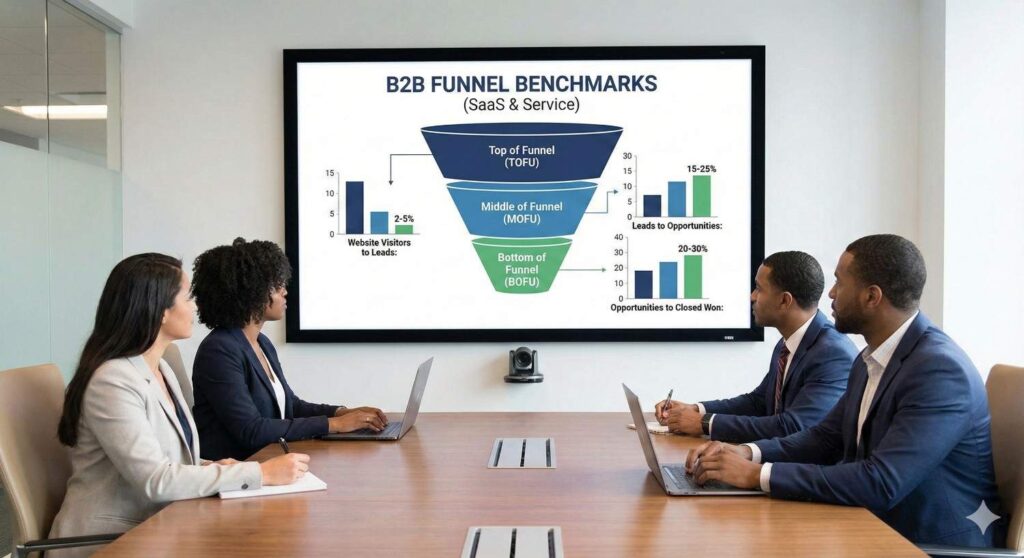
Let us talk about real numbers in simple terms. We will use “out of 100 people” instead of heavy percent talk. This keeps things clear.
On most early B2B sites, if 1 to 3 people out of 100 who visit your page sign up, join a waitlist, or ask for more info, you are in a normal range. This does not mean you have product fit. It only means your offer is not missing the mark. If fewer than 1 out of 100 take any step, your message is likely unclear or too far from what they want.
If you see 5 or more people out of 100 take a clear step, like join a list or ask for a demo, you are in a strong area for an early product, especially in deep tech. This usually means your promise is sharp. People feel that you might solve a real pain. You should still refine, but you now have a base signal worth building on.
The key is to compare yourself to your own past. If last month you had 1 out of 100 visitors act, and now you have 3 out of 100, your story is getting better. That rise is a stronger sign than any generic “good rate” you might read online.
From lead to meeting or demo
The next big step is when a lead agrees to a meeting, demo, or call. Here, we care mostly about “warm” leads. These are people who showed clear interest, not random cold names you bought or scraped.
If out of 100 warm leads, about 20 to 30 join a demo or meeting, you are in a common early zone. It means people are curious, but still weighing options. If fewer than 10 out of 100 show up, something is off. The invite may feel too vague. The value of the meeting may not be clear. The timing might not match their needs. You should tighten the promise of the call and make it easy to book or reschedule.
If 40 or more out of 100 warm leads take a demo, you are seeing strong intent. This usually means buyers feel your tool might be worth a real look. In AI and robotics, this often happens when your message speaks in clear, simple terms about a painful job they want to speed up or remove. At this level, your job is to make sure the demo itself proves the promise fast, without long tours or deep theory.
From trial or pilot to true use or payment
The final key benchmark is what happens after someone starts a trial or pilot. Many tools see people sign up and then never touch the product again. That is not success. The real sign of fit is how many cross the gap from “started” to “actually use it” and “decide to pay.”
For a trial, if out of 100 people who start, only 5 or fewer become active and keep using it, the fit is weak. They did not see enough value fast. If 10 to 20 out of 100 become real users or paying accounts, you are in a fair zone. It means the value is there for some, but the path is not clear for all.
If 25 or more out of 100 trial users turn into true, steady users or paying customers, you are getting close to strong product fit, especially in B2B deep tech. It means a big share of people who taste the product decide it is worth their time and money. At this point, the main work is to keep smoothing onboarding and to protect the key functions that users value most.
This is also the stage where copying becomes a real risk. If your trial-to-paid step is strong, others will notice. They will try to mimic your idea, your copy, or your core tech. Working with a group like Tran.vc to turn your core tech into protected IP can help you hold your ground as you grow. You can apply at:
https://www.tran.vc/apply-now-form/
Reading Conversion Together With Retention
When good conversion and bad retention clash

Strong conversion without strong retention is a warning sign. It means your promise is good, but your product does not yet keep the promise. People sign up, try the tool, and then fade away. They may not complain, but they quietly stop using it.
If you see many people move forward in the funnel but leave after a short time, the product may be missing key pieces. Maybe the setup is too hard. Maybe the output is not as strong as they hoped. Maybe the tool does not fit into their real day-to-day work. The funnel did its job. The product now needs to catch up.
The fix here is not more traffic or clever copy. The fix is to improve the product so it delivers the outcome users expect in a short, clear path. Once that happens, both conversion and retention rise together, and that is when product fit starts to feel real.
When low conversion hides a strong product
Sometimes, the opposite happens. Retention is strong, but conversion is weak. The few users you have love the tool, use it often, and tell you they would be sad to lose it. But new people entering the funnel do not seem to get it. They drop off early or never start at all.
This is usually a story problem, not a product problem. The product works, but the words around it do not. Your site may speak in terms your buyers do not use. Your offers may feel generic or unclear. Your pricing may be hidden or confusing. In this case, your job is to bring your message in line with the real value your happy users feel.
One of the best ways to do this is to repeat their own words. Ask them why they use the product. Note the simple phrases they use. Then pull those phrases into your site and emails. When your message sounds more like your best users, conversion at the top of the funnel often jumps without huge changes to the product itself.
When both conversion and retention are strong
When many people move through the funnel and most of them stay, you are in rare and powerful ground. This does not always mean you have huge scale yet, but it does mean your product is doing something people truly care about. They see the value before they try it, and they keep feeling it after.
At this stage, the main questions shift. You move from “Does this product matter?” to “How do we grow it in a safe way?” You need better systems, clearer plans, and a strong moat. This is when you start to think about patents, defensible know-how, and structures that stop larger rivals from copying your work and pushing you aside.
This is the ideal phase to work with partners like Tran.vc. They help you turn your tech edge into legal protection, while you keep tuning the funnel and product. Their model is to invest up to $50,000 in in-kind patent and IP work, so you can grow with a real shield, not just hope. If you feel you are close to this point, you can apply at:
https://www.tran.vc/apply-now-form/
When to Layer in IP and Moat Building
Use conversion spikes as your timing signal
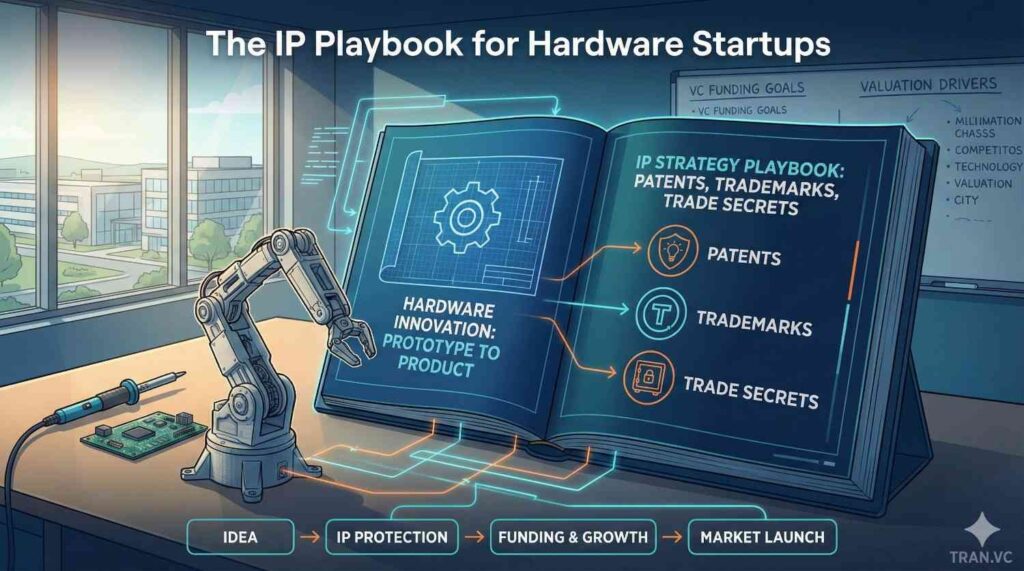
You do not need patents on day one. At the idea sketch stage, things will change too much. But you also should not wait until a bigger firm copies you and runs faster. So how do you know when to act? One of the cleanest signals is a sharp rise in conversion at key steps in your funnel.
When more visitors turn into leads, more leads turn into calls, and more trials turn into long-term use, it means your product is starting to land. Users see value. That value sits inside your models, code, hardware design, data flows, or workflows. If you leave these unprotected for too long, you give rivals a free map of what works.
By using conversion spikes as a timing cue, you can act early, but not blind. You work with IP experts when you already have proof that some part of your product is special in the eyes of users. That is exactly when the work of building a moat gives you the most return.
Protect what your users actually value
Not every feature needs a patent. Not every line of code is worth guarding. The best IP strategy focuses on the parts of your product that users value most and that rivals would most want to copy. Your conversion and retention data can point to these parts.
If users convert higher after you launch a new AI model, that model may be worth protecting. If they stay longer after you add a smart robotics flow, that flow might be a core asset. If a certain method makes setup ten times faster and drives more trials to paid, that is a process to guard.
Tran.vc helps you find these pieces and shape them into a real IP plan. They work with patent lawyers and operators who understand both law and startups. The goal is not to file random patents. The goal is to file the right ones, at the right time, in the right way, so your conversion wins are backed by strong legal ground. If you want that kind of help, apply at:
https://www.tran.vc/apply-now-form/
Grow with leverage, not fear
When founders build on a base of strong conversion and strong IP, they move differently. They raise money with more confidence. They say no to bad terms. They avoid panic moves just to “stay ahead.” Their data shows demand. Their IP shows protection. Together, these create real leverage.
This is what Tran.vc calls “seed-strapping.” You grow like a bootstrapped team, with focus and care, but you also prepare for serious seed rounds with assets that investors respect. You are not just selling a story. You are showing proof of demand and proof of ownership. That mix is rare, and it is powerful.
Bringing It All Together
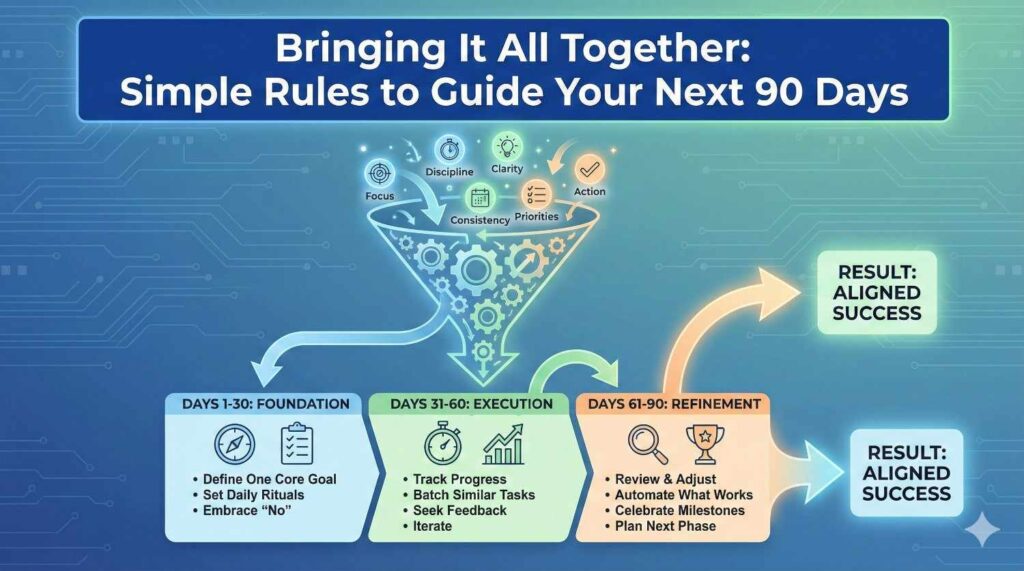
Simple rules to guide your next 90 days
You do not need to be a data scientist to use conversion rates well. You just need a few simple rules and the discipline to follow them. First, pick one main step in your funnel and track how many people move through it out of 100. Second, work to remove friction at that step and watch how the number changes over a few weeks. Third, talk to users around that step to learn why they move or stop.
As the numbers rise, look deeper. Are people who move forward also staying and using the product? If yes, your product is likely getting closer to fit. If no, you need to adjust the product to keep the promise your funnel makes. Treat every change as a chance to learn, not a final answer. In 90 days, this steady approach can change the shape of your business.
At the same time, keep an eye on moments when your conversion and retention jump. Those are signs that some part of your product is very special. That is your cue to think about IP and moat building, so that your hard-won gains do not become someone else’s quick win.
Why founders who measure and protect win
In the end, conversion rate benchmarks are not about chasing “good” numbers for their own sake. They are about seeing your product the way the market sees it. Each step in your funnel is a quiet vote. Every “yes” and every “no” tells you something. Founders who listen to these signals and act on them, day by day, move toward product fit faster than those who guess.
But fit alone is not enough in deep tech, AI, and robotics. Once you have proof that people want what you built, you must protect the engine behind that demand. That means turning your code, models, algorithms, and methods into assets. Assets that are hard to copy. Assets that give you leverage with investors and partners.
This is the gap Tran.vc is built to fill. They sit at the point where early traction meets early protection. They invest up to $50,000 in in-kind patent and IP services so that technical founders can turn growing conversion and retention into real, defensible company value.
If you are a technical founder and you see signs that your product is starting to click, this is your moment to act with intention. Use your conversion data to sharpen your product. Use your IP strategy to guard what makes it special. And if you want a partner in that process, you can apply to Tran.vc any time at:
https://www.tran.vc/apply-now-form/