
Most founder breakups do not start with a big fight. They start with a quiet feeling that something is “off.” One person feels they are carrying the company. Another feels ignored. Someone works nights and weekends while someone else disappears for days. The work changes, the stress rises, and the equity split that felt “fair” in week one starts to feel like a trap by month six.
This is why equity is not just math. It is trust, clarity, and a shared story about what each person is truly signing up for. And when that story is fuzzy, equity becomes the thing you fight about when everything else gets hard.
At Tran.vc, we see this pattern a lot, especially with deep tech, AI, and robotics teams. The tech is serious. The build is long. The first version can take months before anyone outside your team even understands what you made. In these kinds of companies, founder equity has to survive a long road. It has to survive missed deadlines, pivots, funding talks, and the moment you realize you are not building a demo—you are building a real business.
So this article is about equity splits that still feel fair later, when you are tired, when money is tight, and when the company is finally starting to matter.
We will keep it simple and very practical. No theory. No fancy terms. Just what works in the real world, and how to set it up so your equity split does not become the reason your company falls apart.
One more thing before we begin: if you are building something hard to copy—new models, new robotics control, new sensors, new systems—equity is only one part of your protection. Your other protection is your IP. If you want help turning your work into strong patents and a clear IP plan, Tran.vc invests up to $50,000 in in-kind patent and IP services for founders like you. You can apply anytime here: https://www.tran.vc/apply-now-form/
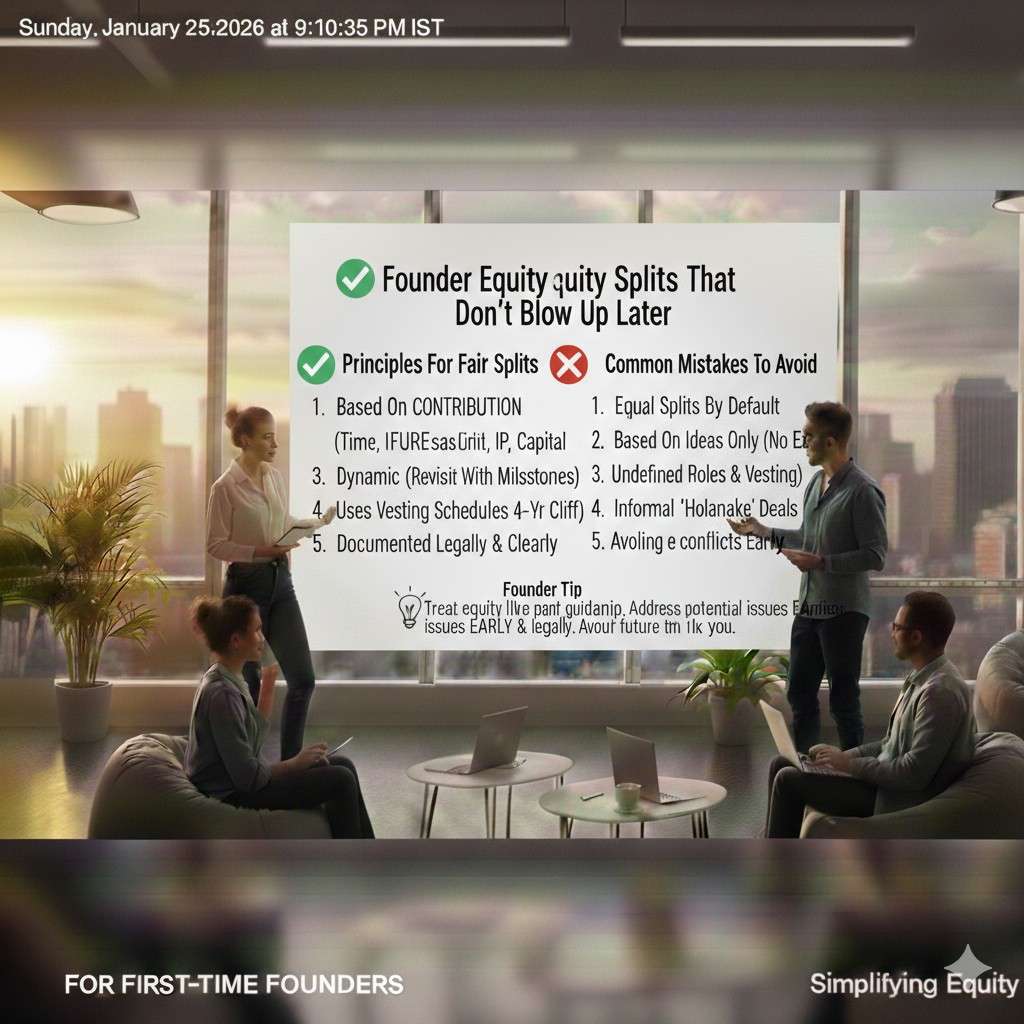
Founder Equity Splits That Don’t Blow Up Later
The real reason equity splits explode
Equity fights rarely happen because founders cannot do math. They happen because people remember the early days in different ways. One founder remembers the nights with no sleep. Another remembers the risk of quitting a stable job. Someone remembers paying for servers. Someone else remembers doing all the sales calls that kept the team alive.
In the first few weeks, everyone is excited. You assume effort will stay even. You assume the work will match each person’s strengths. You assume the product path is clear. Later, reality shows up. The work shifts. The pressure grows. The “equal” split starts to feel unequal, not because someone is bad, but because the job changed.
The safest equity split is not the one that sounds nice on day one. It is the one that can handle change without turning co-founders into enemies. If your split cannot survive hard months, it is not a split. It is a delayed breakup.
Why deep tech teams get hit harder
If you are building robotics, AI, or other heavy tech, the build cycle is longer. Early progress is often invisible to outsiders. That means you do more work before you get praise, revenue, or funding. In that kind of timeline, small trust issues grow into big ones.
Deep tech also brings a second issue: who “owns” the invention story. If the core system came from one founder’s prior research, or one person’s code base, you can get silent tension fast. Even if everyone is acting polite, the unspoken question is, “Is this really ours, or mostly theirs?”
That is why equity in deep tech must be paired with clear IP thinking. Patents, invention records, and clean ownership make the story fair and provable. It protects the team from each other, in a good way, because it reduces guesswork. Tran.vc helps teams do this early, with up to $50,000 in in-kind patent and IP services, so your foundation is not built on hope. You can apply anytime here: https://www.tran.vc/apply-now-form/
The hidden cost of “let’s just split it 50/50”
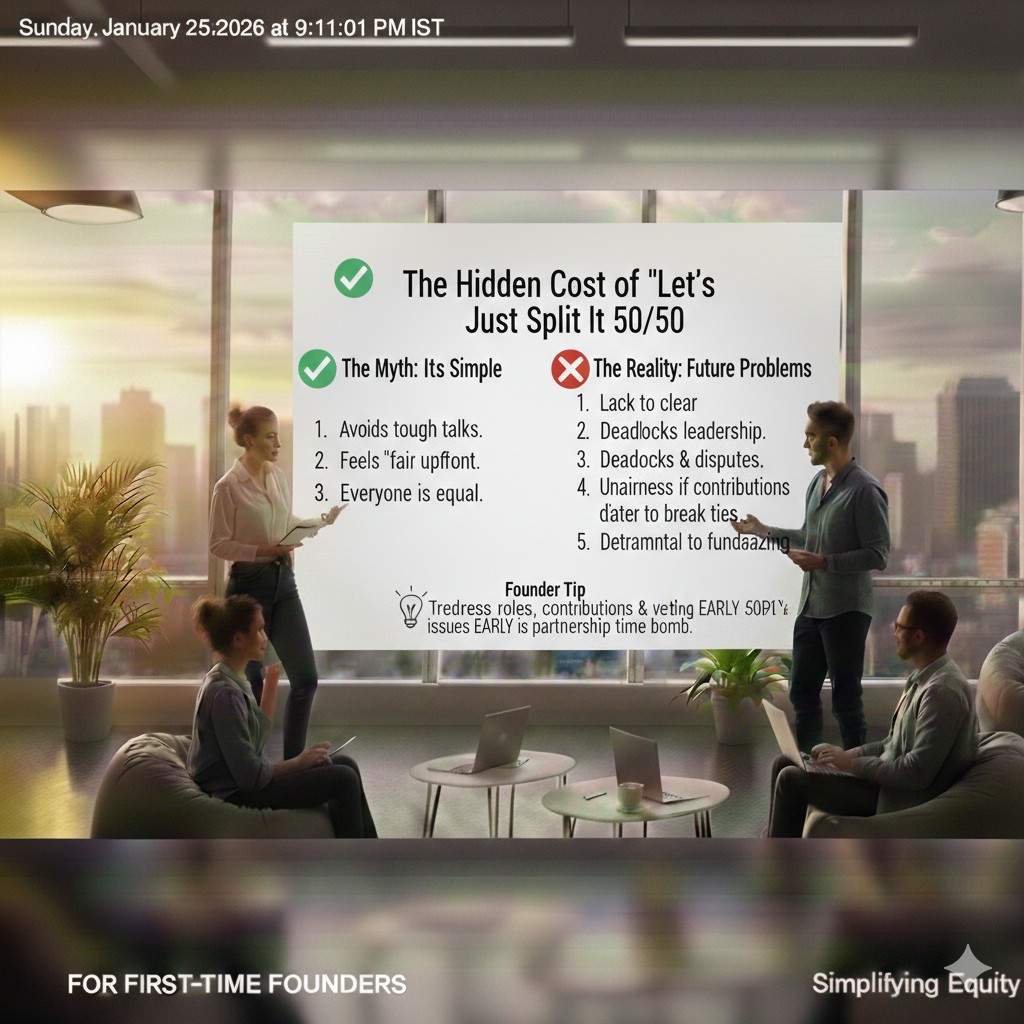
A 50/50 split is not always wrong. Sometimes it is the best choice. But most teams choose it to avoid a hard talk. That is the danger. If you skip the hard talk now, you will have it later, when you are stressed and tired, and when the company is valuable enough to fight over.
The real question is not, “Is 50/50 fair today?” The real question is, “If one of us carries the company for six months, will we still feel okay?” Many founders say yes in the beginning, because they cannot imagine that happening. But it happens all the time. One founder becomes the default leader. One becomes the default closer. One becomes the default builder who never stops.
So if you go 50/50, do it because you truly want equal power and equal responsibility, and you have a plan for what happens when effort becomes uneven. A split without a plan is not simple. It is fragile.
Step one: define the job before you define the split
Start with roles, not percentages
Most teams start with a number. That is backwards. You want to start with the real work that needs to happen in the next 12 to 24 months. That work is what creates the company. Equity is your way of paying for that work with ownership instead of cash.
So you need to ask, in plain words, what each founder is truly responsible for. Not “helping with product” or “supporting business.” Those phrases hide the truth. You want clear ownership. Who is responsible for shipping? Who is responsible for getting customers? Who is responsible for hiring the first key people? Who is responsible for raising money, if you raise?
When roles are clear, equity talks get calmer. You are not arguing about feelings. You are matching ownership to responsibility. And responsibility is something you can see.
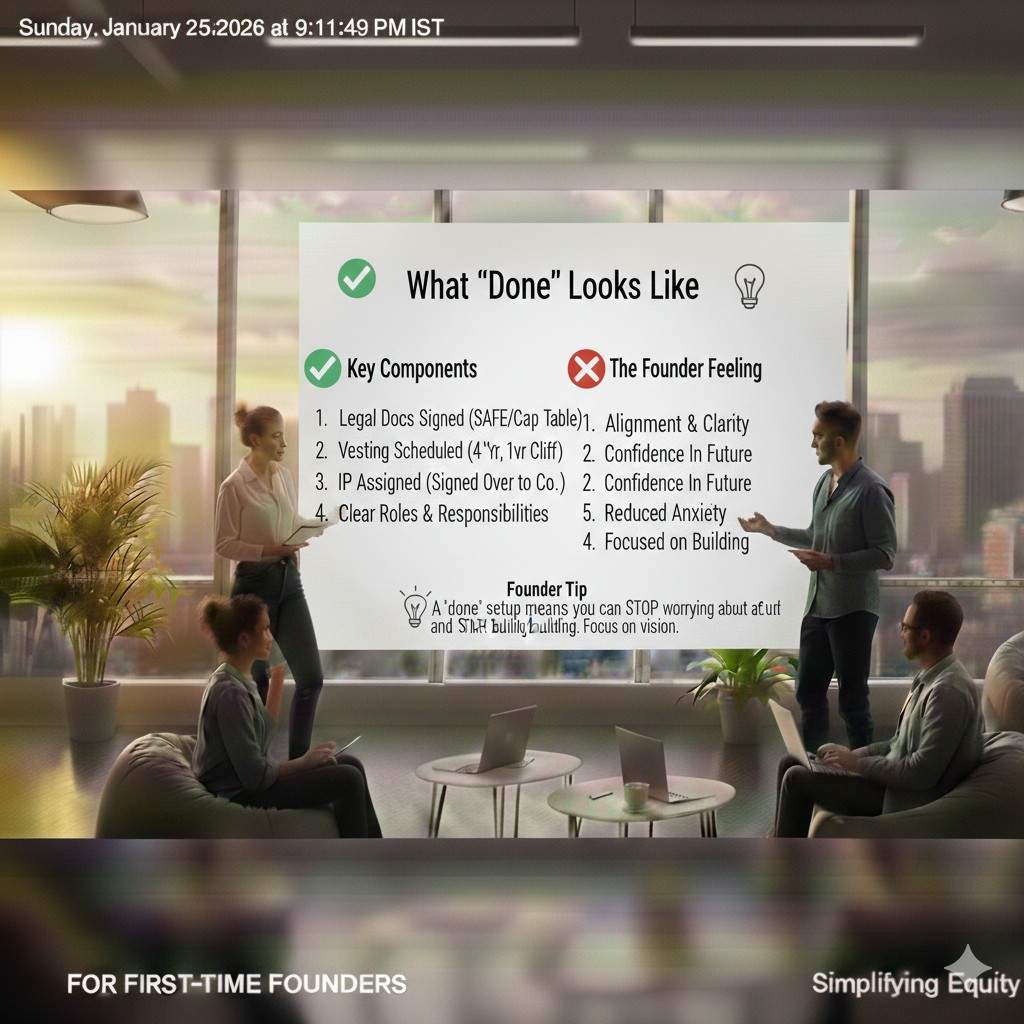
Write down what “done” looks like
A role is not real unless you can tell if it is being done well. This is where most teams drift into conflict later. One founder thinks they are doing their part because they are “working hard.” Another founder thinks they are not doing their part because nothing is getting shipped.
You can avoid that by writing down what “done” means for each role. If one founder owns engineering, “done” might mean a working prototype by a certain date, stable system tests, and a clear plan for the next build. If one founder owns go-to-market, “done” might mean a certain number of customer calls each week, a clear list of target users, and a repeatable way to get meetings.
This is not about being strict. It is about avoiding the silent mismatch where one person believes they are contributing and the other does not agree.
Make time commitment explicit
Time is the most common lie founders tell each other, usually without meaning to. People say, “I’m all in,” when they really mean, “I’m excited and I will try.” That sounds similar at the start, but it becomes a serious problem later.
You need to be clear about hours and focus. Is everyone full-time? If not, for how long? If someone is finishing school, working a job, or caring for family, that is not shameful. It is normal. But it changes the risk and the load for the others.
Equity can handle different time levels if you say it early. Equity breaks when everyone pretends the time level is the same, then resents each other later.
Step two: understand what you are really paying for
Past work is not the same as future work
Many equity talks get stuck on what happened before the company was formed. Someone built the first version. Someone spent years on research. Someone paid for early costs. Those things matter. But if you focus too much on the past, you can miss the truth: the company is mostly built in the future.
A fair split respects what already exists, but it also rewards the long road ahead. If one founder did a lot before the others joined, it is fair to recognize that. But if that founder will not carry the next two years of building, the split should not pretend they will.
The goal is not to “pay back” the past forever. The goal is to set incentives so the future work happens with energy and trust.
Risk is real, but it must be measurable

Founders often say, “I’m taking more risk, so I should get more equity.” Sometimes that is true. But risk needs a clear meaning, not a vague feeling. Risk can mean leaving a high salary. It can mean moving countries. It can mean putting savings into the company. It can mean taking on personal debt.
If you want to price risk into equity, be specific. What is the risk, and what is the size of it? Otherwise you will argue later because one person’s “risk” will feel invisible to the other.
A clean way to handle risk is to separate it from equity when possible. For example, if someone is putting cash in, consider a simple loan to the company that can be repaid later, instead of permanently changing the equity split. Not always, but often, this keeps things fair.
The “idea” is not the main asset
Many teams overvalue the idea. The idea feels special because it is the start. But in almost every case, the idea changes. The market pushes back. Customers ask for something else. A competitor appears. Your original plan breaks, and you adapt.
The main asset is execution. It is the building, the selling, the learning, and the choosing. So if someone is arguing for more equity because they had the original idea, be careful. That can be a sign they do not understand how startups work yet.
In deep tech, the idea can be tied to real invention. That is different. But even then, what matters is how you turn invention into a product people pay for. If one founder has key invention pieces, that is where patents and clear IP ownership become important. It turns “I built this” into a clean, team-owned asset.
Tran.vc is built for this exact moment. If you want to protect the invention story early, with patents that investors take seriously, you can apply anytime here: https://www.tran.vc/apply-now-form/
Step three: use vesting so the split can survive reality
Vesting is not about mistrust

Many first-time founders hear “vesting” and feel insulted. They think it means, “I don’t trust you.” That is not what it means. Vesting is a seatbelt. You do not wear it because you expect a crash. You wear it because crashes happen.
Vesting protects the founders who stay if someone leaves early. And it also protects the person who leaves, because it creates a clear and fair rule instead of a messy fight. Without vesting, you are gambling that nobody quits, gets sick, burns out, or changes their mind. That is not a smart gamble.
The most common vesting setup, in simple terms
A common setup is four years of vesting with a one-year cliff. That means nobody fully earns their equity on day one. The first year is a test of real commitment. After one year, a chunk becomes earned. Then the rest earns over time.
You do not need to copy this exactly, but you need something. The details matter less than the principle: equity should be earned by showing up and doing the work over time.
In deep tech, you might adjust vesting based on milestones, because progress can be lumpy. But milestone vesting can also create arguments if milestones are not clear. Time-based vesting is simple, and simple is usually safer when emotions are involved.
What happens when someone leaves

This is the part founders avoid talking about, and it is exactly why things blow up later. You need a clear rule for good exits and bad exits. You need to define what happens if someone leaves because of health, family, or a job offer. You also need to define what happens if someone is not doing the work and the team needs to move on.
If you do not define this early, the remaining founders feel trapped. They feel like they must keep a non-performing founder just to avoid conflict. That kills companies.
A fair setup gives the company the right to buy back unearned equity if someone leaves early. It also makes sure the terms are clear enough that nobody can twist them later.