
When you start a company, you usually worry about product, hiring, and runway. Currency risk feels like a “later” problem. But if you sell in one currency and pay bills in another, or if you raise money in USD and spend in INR or EUR, currency moves can quietly cut your runway without warning.
That is what FX risk is: your money changing value because exchange rates changed.
This article will keep things simple and practical. No theory. Just what a startup founder should plan for so surprises do not hit you in the middle of a launch, a hire, or a fundraise.
And one quick note from us at Tran.vc: if you are building in AI, robotics, or deep tech, your IP is often your best protection and your best leverage. We invest up to $50,000 in-kind in patent and IP services, so you can turn your work into assets early. You can apply anytime here: https://www.tran.vc/apply-now-form/
Introduction: FX risk is a runway risk
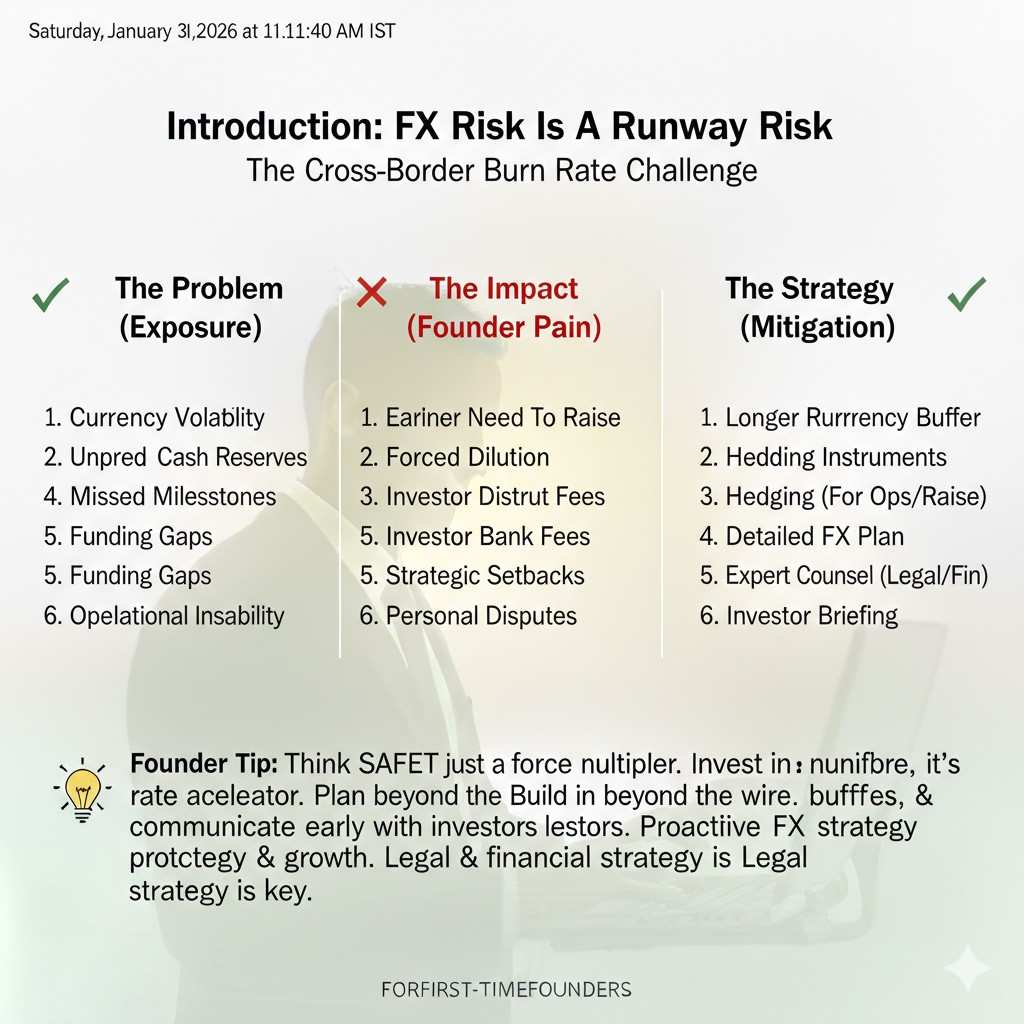
FX risk is not only for big companies. Startups feel it more, because you do not have much slack. A 6% move in the wrong direction can wipe out months of careful planning.
Here are a few normal startup situations where FX risk shows up:
If you bill customers in USD but pay your team in another currency, your revenue can shrink overnight in your home currency.
If you raise in USD and keep the money in USD while spending in INR, EUR, GBP, or CAD, your costs may rise even if you do nothing.
If you pay cloud bills, vendors, or hardware suppliers in USD while your revenue comes in another currency, you can lose margin even while sales look “up.”
If you run a remote team across countries, your payroll can drift month to month.
The tricky part is that nothing “breaks” right away. Your bank account still has money. Customers still pay. Your bills still clear. But your runway is thinner than you think.
FX Risk for Startups: What to Plan For
A quick note before we start
Tran.vc helps technical founders protect what they build early. If you are building in AI, robotics, or deep tech, your inventions can become real business assets when you lock in smart IP from day one. Tran.vc invests up to $50,000 in-kind in patent and IP services, so you can build a moat before you raise a big round. You can apply anytime here: https://www.tran.vc/apply-now-form/
Why FX Risk Matters More Than Most Founders Think
FX risk is not a “finance team later” problem
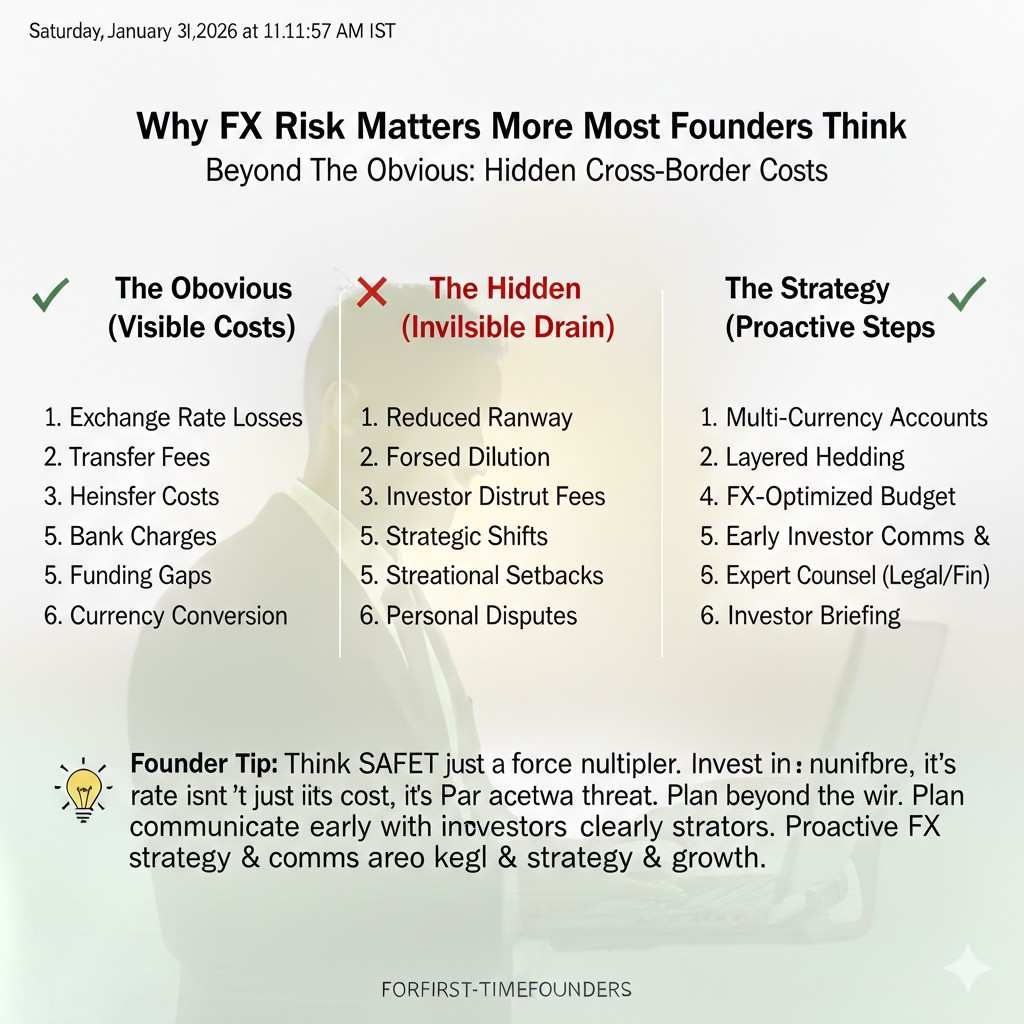
A startup is a small boat. A big company can take a wave and stay steady. A startup takes the same wave and can tilt hard. That is why FX risk matters early, even if you are not selling globally yet.
When currency moves against you, it often shows up as a slow leak. Your runway shortens, your gross margin drops, and hiring plans get tighter. None of this looks dramatic on one day, but it adds up across weeks.
The simple definition that actually helps
FX risk means exchange rates change, and your money loses value in the currency you need to spend. It is not about “making money on trading.” It is about keeping your plan stable.
If you collect revenue in one currency and pay costs in another, you are exposed. If you hold cash in one currency but your future bills are in another, you are exposed. That is it.
The hidden reason it hurts so much

Most startup plans are tight by design. Your forecast might assume you can hire two engineers, run cloud services, and ship a pilot in six months. If FX moves the wrong way, you may still do all those things, but you might do them with less cash than you thought.
That creates stress at the worst time. It can force you to raise earlier than planned, or take weaker terms because you need speed more than leverage.
Where FX Risk Shows Up in Real Startup Life
Revenue mismatch: getting paid in one currency, spending in another
Many startups sell to US buyers because budgets are larger and sales cycles can be clearer. They invoice in USD. But they pay most costs in INR, EUR, or another local currency. That sounds safe at first, because USD often feels strong.
The problem is that “often” is not “always.” If the USD weakens versus your local currency, your USD revenue buys less payroll. Your sales numbers might look the same in USD, but your team costs climb in your home currency without a single new hire.
Cost mismatch: paying vendors in USD while earning elsewhere
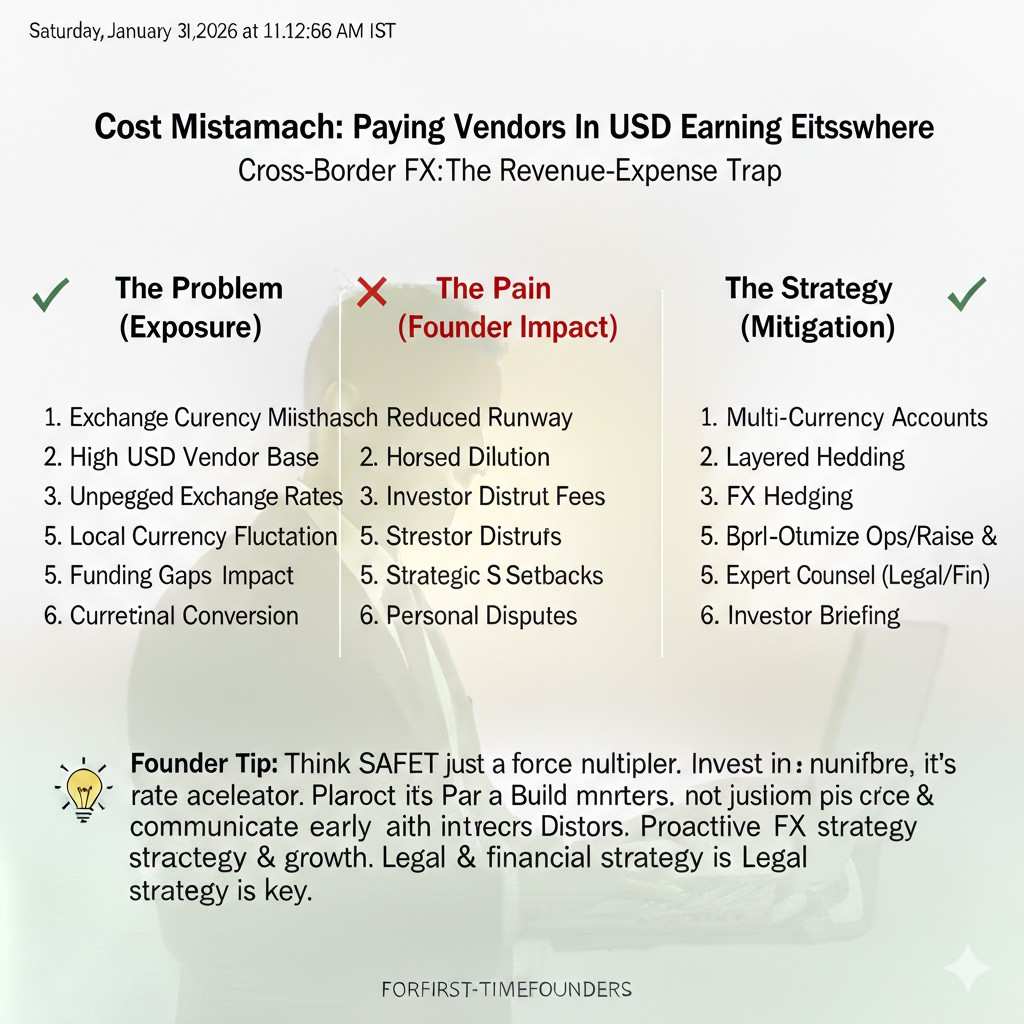
Cloud providers, software tools, data services, and some hardware suppliers charge in USD. Many founders accept that as the cost of building fast. But if your revenue is in a local currency, then a stronger USD hits you like a price increase.
This is the kind of risk that makes margins feel confusing. You may be growing, but your cost line grows too, and you cannot explain why until you look at the FX rate.
Cash mismatch: raising in USD but living in a different currency
Some founders raise in USD and keep most of the cash in USD. That can feel safe, because USD is stable and global. But your burn might be in another currency, and your runway depends on the rate when you convert.
If your local currency weakens, you may feel lucky because USD converts into more local currency. But if your local currency strengthens, your USD cash buys fewer months. Your runway can swing even if your spending stays flat.
People mismatch: multi-country teams and uneven salary pressure
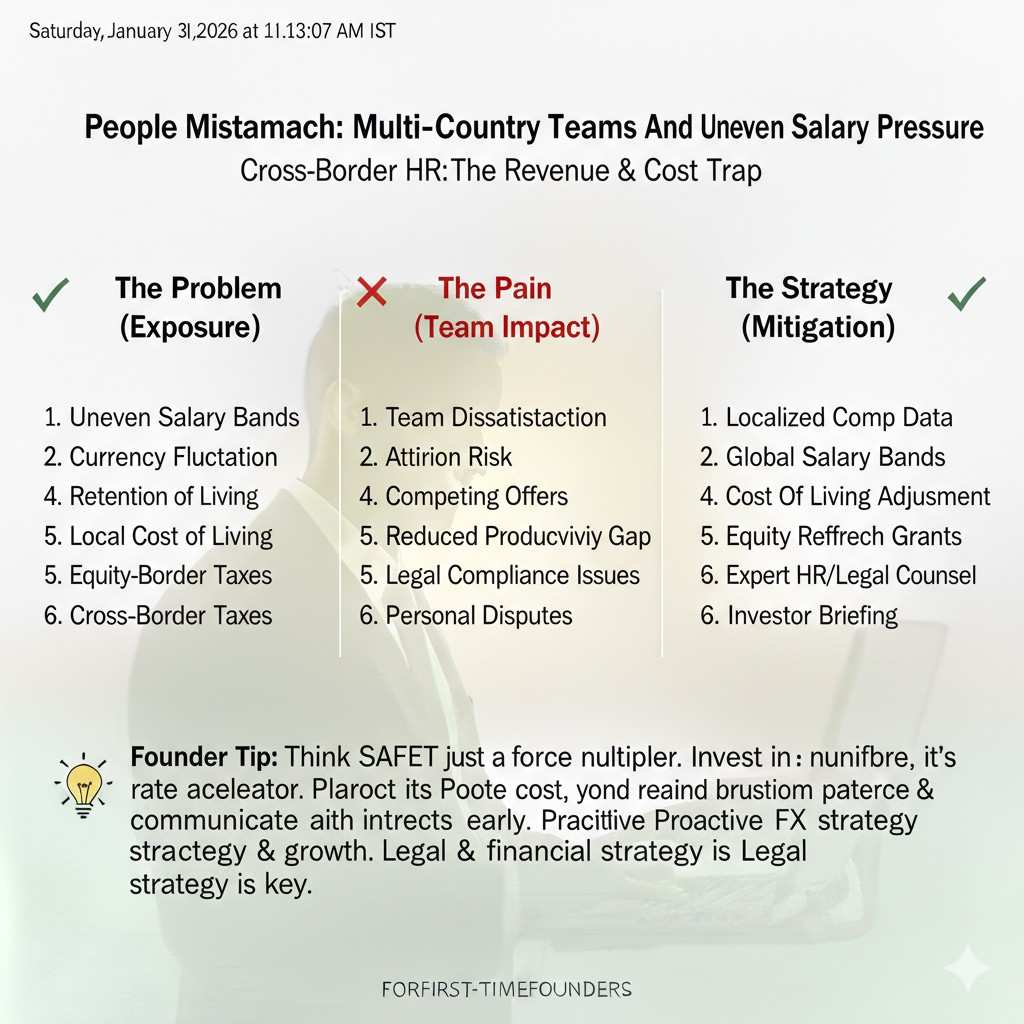
Global teams are common now. You might pay one engineer in Poland, one in India, and a sales lead in the US. Even if each salary is “fair” locally, the total cost in your base currency moves as rates move.
That matters because salary is not a one-time bill. It repeats every month. Small exchange moves can become large budget changes over a year.
The Four Main FX Risks Startups Should Plan For
Transaction risk: what happens between invoice and payment
Transaction risk is the risk that the exchange rate changes between the moment you agree on a price and the moment money lands. This is very real for startups because payment terms are not always fast.
If you invoice in USD and your customer pays in 30 or 60 days, the USD might be worth less when you convert. Or if you sign a supplier contract priced in USD and you pay in 45 days, the USD might be worth more when you pay.
This risk is most painful when your margins are thin, because a small move can erase the profit you expected from that deal.
Operating risk: the slow drift that changes your whole model
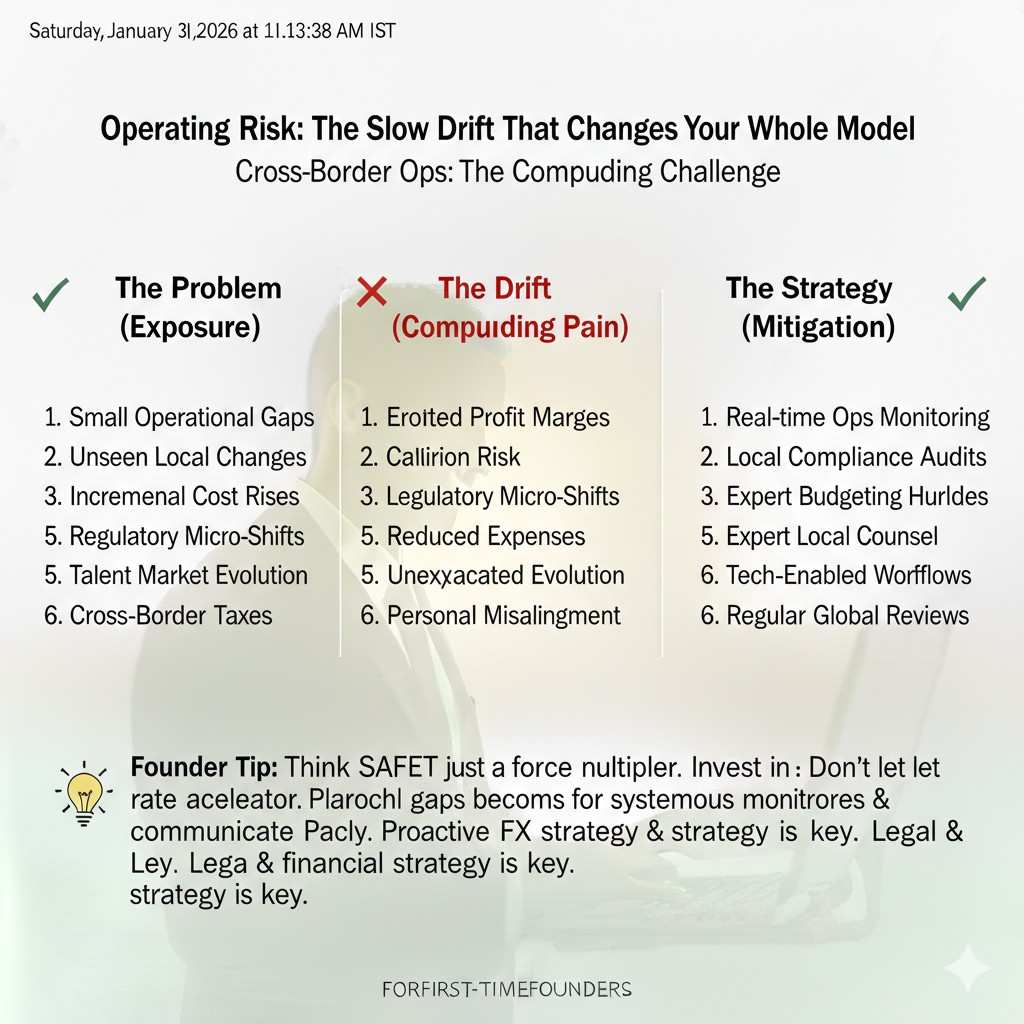
Operating risk is broader. It is what happens to your business over months as currencies move and your cost base and price points stop matching.
A common example is a startup that prices low to win pilots. That is fine if costs stay steady. But if vendor costs rise due to FX while your pricing stays fixed, the pilot becomes a loss leader in a bad way. You are not just investing in growth; you are paying for it more than planned.
Operating risk is also why founders feel “we are doing everything right, but the numbers keep getting worse.” Sometimes the product is fine. The mismatch is the real issue.
Balance sheet risk: what your accounts say you own and owe
Balance sheet risk is about assets and liabilities in other currencies. If you have receivables in USD and you report in another currency, the value of those receivables changes when rates change.
Startups can feel this when they start dealing with larger contracts, longer payment terms, or multi-country subsidiaries. Even if you do not think you have a complex balance sheet, one big cross-border contract can create this risk.
Funding risk: how FX changes your runway and your raise timing
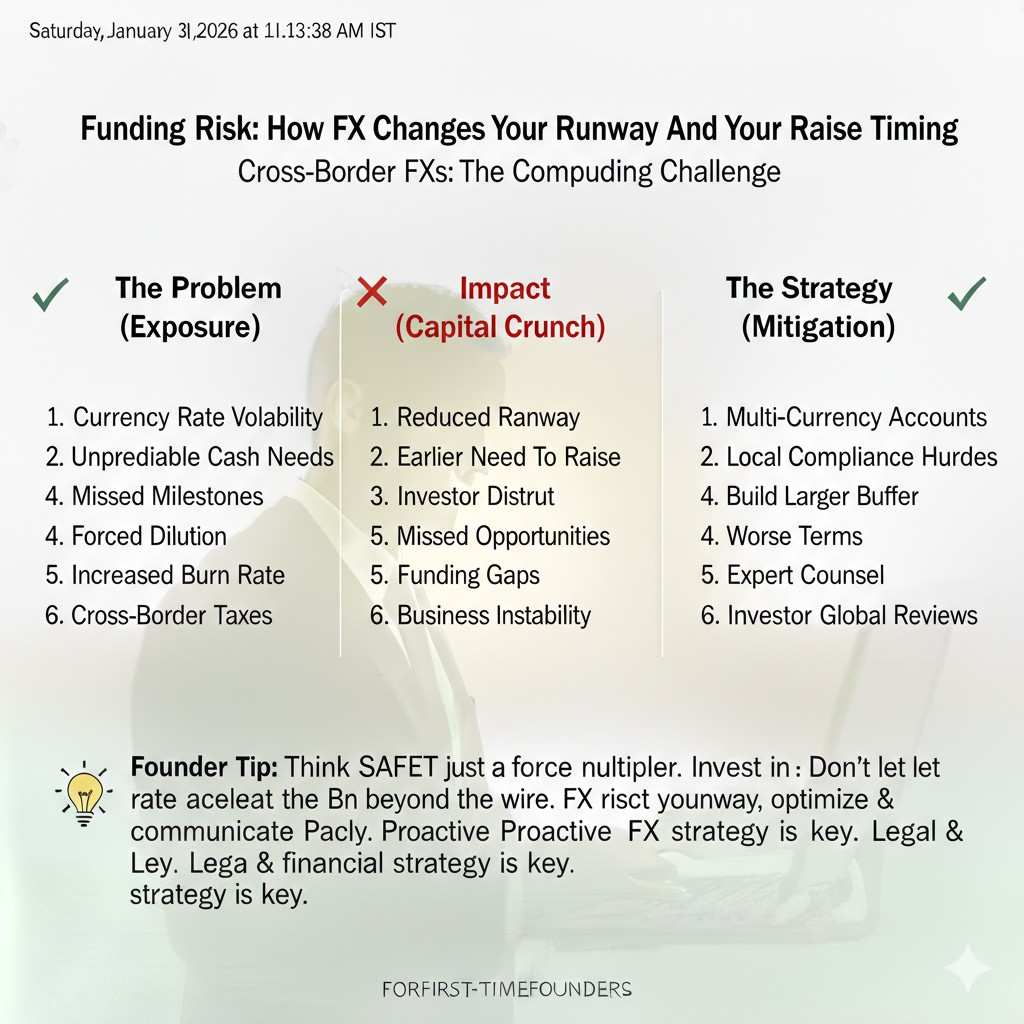
This is the one founders feel in their gut. You plan a raise for six months from now. Then FX moves, and suddenly your runway is not six months. It is four and a half.
That changes your position in every conversation. You negotiate differently when you have time. You negotiate differently when you are under pressure. FX can quietly push you into that pressure zone.
How to Spot FX Risk Early Without Becoming a Finance Person
Start with one simple question: what currency pays for your next 6 months
Look at your next six months of bills. Payroll, cloud, rent, contractors, legal, tools, and any hardware. What currency is each bill in?
Now look at your expected inflows for those same six months. What currency will that money arrive in?
If those two sets do not match, you have FX risk. That is not a failure. It is normal. The goal is to see it clearly before it surprises you.
Track exposure like you track burn
Most founders know their burn rate. But many do not know their currency exposure, which is the share of burn that depends on FX.
If 70% of your monthly costs are in USD, and your revenue is in EUR, your exposure is high. If only 10% is mismatched, it is lower. This is a useful mental model because it helps you focus on what matters instead of worrying about every small payment.
Notice where timing creates danger
Timing is the quiet killer. A deal looks profitable when you sign it, but the cash comes later. A supplier quote looks fine, but the payment is due later. When there is a gap, FX can move inside that gap.
You do not need a fancy spreadsheet to see this. You just need to look at your largest payments and your largest expected receipts, and mark the dates.
Practical Ways to Reduce FX Risk Without Heavy Tools
Match currency where you can, even if it is not perfect
The easiest protection is to earn and spend in the same currency. If your biggest vendor bills are in USD, then pushing more revenue into USD can help. If payroll is in INR, then holding some INR can help.
Founders sometimes resist this because they want everything in one “main” account. But stability matters more than simplicity. You can keep it clean with two accounts and good habits.
Build a “conversion rule” and stop guessing each month
Many founders convert money when they feel like it. That is a problem because it turns FX into a monthly stress decision. A better approach is to set a simple rule, such as converting a fixed amount on a fixed schedule.
For example, if you know you need a certain amount in local currency each month for payroll, you can convert that amount ahead of time. This is not about timing the market. It is about making your runway predictable.
Price with FX in mind, especially for longer contracts
If you sell annual contracts or long pilots, FX can hurt you if costs rise but pricing stays fixed. You do not have to add complex clauses, but you should think about where flexibility is possible.
Some startups price in the currency that matches their cost base. Others price in the customer’s currency but include enough margin to handle a reasonable FX move. The point is to plan for reality, not hope for stable rates.
Keep your largest risks small and boring
This sounds simple, but it works. Do not let one giant invoice create all your risk. If possible, split large payments into milestones. If possible, negotiate shorter payment terms. If possible, avoid being exposed for 90 days on a big amount.
Startups win by staying alive. Boring risk control is part of that.
Why This Connects to Fundraising and IP Strategy
Investors hate surprises more than they hate costs
Most good investors understand that FX moves. What they do not like is when founders do not see it coming. If FX wipes out runway and the founder cannot explain it, confidence drops.
If you can explain your exposure clearly, and show a simple plan, you look more mature. That can help you raise with more control and less panic.
Strong IP gives you more leverage when runway gets tight
This is where Tran.vc fits in. If you build real IP early, you can create leverage that does not depend on short-term market conditions. Investors take you more seriously when you can show a protected invention, not just a roadmap.
If you are building in AI, robotics, or deep tech, your patents can become a shield and a signal at the same time. You can apply anytime here: https://www.tran.vc/apply-now-form/
Simple Forecasting So FX Does Not Surprise You
A good forecast is not fancy, it is honest
A startup forecast should help you make decisions, not impress anyone. If your model assumes one exchange rate and never changes, it is not a forecast. It is a wish.
The easiest way to make it useful is to accept that rates move. You do not need to predict the future. You only need to see how sensitive your runway is to normal swings, so you can plan with calm.
Use “rate bands” instead of one perfect number
Most founders pick a single rate for the year. That creates false comfort. A better habit is to think in three bands: a baseline rate you use for planning, a worse rate that could happen, and a better rate that could happen.
When you do this, you stop asking, “What is the exact rate next month?” and you start asking, “If the rate moves against us, what breaks first?” That question leads to action. It often shows you the few expenses that create most of your risk.
Tie FX planning to runway, not to profit talk
Early startups live and die by runway. If FX moves can shorten runway by a month or two, that matters more than whether the move “looks small” in percent terms.
So instead of tracking FX as a market topic, track it as a runway topic. In your monthly finance review, add one simple check: if rates moved 5% against you, how many weeks of runway do you lose? When you see it in weeks, it becomes real.