
A cap table is supposed to be a simple story: who owns what, who earned it, and why it makes sense. But many startups end up with a cap table that looks alive on paper and dead in practice. Too many tiny owners. Too many old promises. Too many “we’ll fix it later” deals. And when you finally need the cap table to do its one real job—help you raise money, hire great people, or close a key partnership—it turns on you.
That is what I mean by a “zombie” cap table.
It is not always a disaster on day one. In fact, it often starts as a series of “small” choices that feel harmless. You give someone a slice to help for a month. You hand out advisor equity without clear work. You accept a “friend and family” check on awkward terms. You add a co-founder fast because you need morale. You promise future equity as a handshake. Each move seems fine in the moment. But over time, your cap table becomes crowded, confusing, and hard to explain. And investors do not fund confusion.
This article will show you how zombie cap tables are born, how to spot early signs, and how to prevent the slow drift that kills leverage. We will keep it practical and direct. No heavy jargon. No long lists. Just the real mechanics founders face—especially technical founders building AI, robotics, and other hard tech—where early value is often in the invention itself, not in revenue.
And one more thing up front: your cap table and your IP strategy are tied together. When your ownership is messy, your invention story gets messy too. When your invention story is weak, your leverage goes down. That is why Tran.vc exists: we help technical teams build real protection early through patent strategy and filings—up to $50,000 in in-kind IP services—so you raise with strength, not stress. If you want to build an IP-backed moat before you raise your seed, you can apply anytime here: https://www.tran.vc/apply-now-form/
How to Avoid a “Zombie” Cap Table
What a “Zombie” Cap Table Really Means
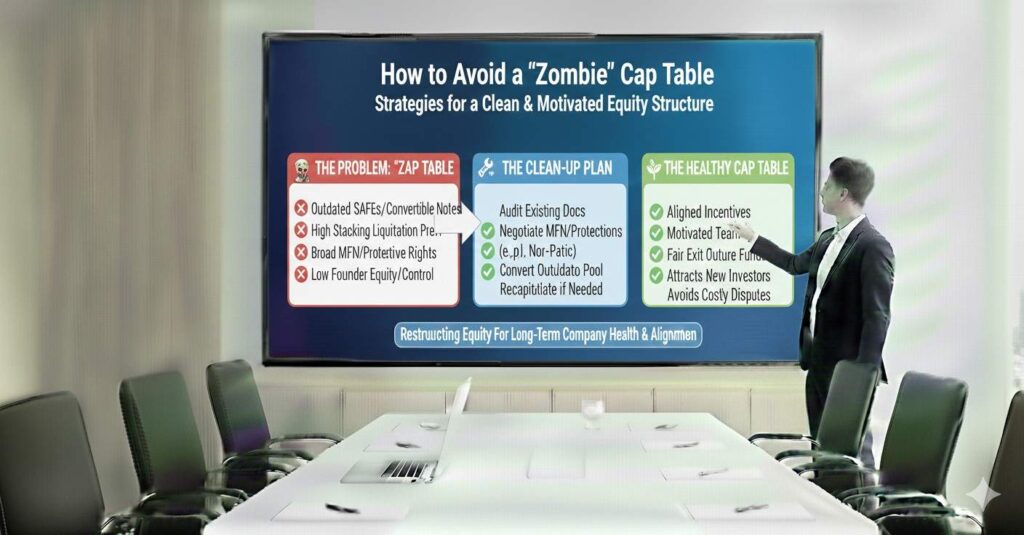
A “zombie” cap table is one that still exists and still “works” in a legal sense, but it does not help you move forward. It slows down hiring, scares off strong investors, and turns simple decisions into long arguments. It is the kind of ownership setup that keeps showing up in every deal discussion, even when you want to focus on the product.
You can think of it as ownership that is stuck in the past. It reflects old relationships, old assumptions, and old trade-offs that no longer match the company you are building today. That mismatch is what creates friction. And friction is expensive, because it eats time, trust, and speed.
Founders often feel a zombie cap table only when they try to raise. A seed investor asks, “Who owns what, and why?” Then the room goes quiet. Not because you are hiding anything, but because the story is messy. The truth is simple: investors back clarity, and they avoid confusion.
A zombie cap table is also a signal problem. It tells outsiders that the team may not be able to make clean decisions under pressure. Even if your tech is strong, that signal can drag your valuation down. In some cases, it can stop the round completely.
Why This Problem Hits Technical Founders Harder
Technical founders build value early through invention. In AI, robotics, and deep tech, the first “real” asset is often the core idea itself. That asset must be owned cleanly by the company, and the people who created it must have clear roles and clear incentives to keep building.
When ownership is scattered across too many people, you create doubt about control. Investors start to wonder who can block a decision. They worry about whether the company can file patents smoothly, assign inventions correctly, and defend the work if a dispute happens later.
This is why cap table health and IP health go together. If the cap table is unclear, it often points to deeper problems in how the company handled early contributions. And if early contributions are unclear, IP ownership can become unclear too. That is a risk most serious investors do not want to carry.
If you want a practical way to strengthen both, Tran.vc helps founders lock down early patent strategy and filings as in-kind support, up to $50,000. It is one way to turn invention into a clean asset that investors can trust. You can apply anytime at https://www.tran.vc/apply-now-form/
How Zombie Cap Tables Are Born
The “Quick Equity” Trap
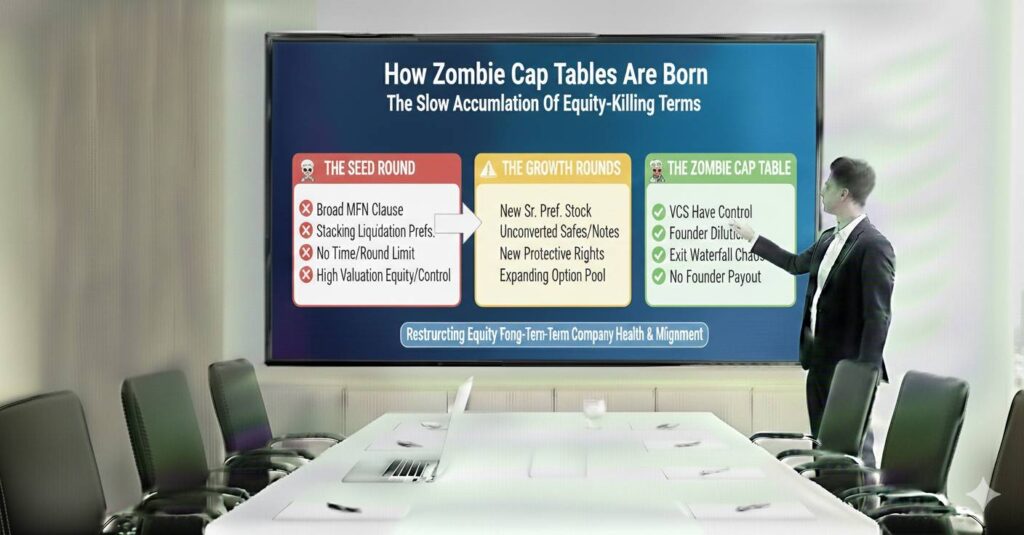
Most zombie cap tables start with a good intention: move fast and keep people motivated. A founder feels grateful, or nervous, or stretched thin. Someone helps with code, design, intros, or early advice. The founder wants to be fair, so they offer equity fast.
The problem is not generosity. The problem is giving equity when you do not yet know what the work is worth. Early-stage work is hard to price because the company has not proven anything yet. If you give away ownership too soon, you are locking in a price before you have real data.
Later, when the company is more real, you realize the trade was too expensive. But by then, the equity is already out. Even if the person is kind and reasonable, reversing the deal can be painful. If they are not kind, it becomes a long, distracting fight.
The key lesson is that speed should not replace structure. You can still move fast while keeping ownership clean. The goal is to match equity to real, ongoing value, not to short bursts of help.
The “Many Small Checks” Problem
Another common path is raising tiny checks from many people early on. Sometimes it is friends and family. Sometimes it is angels. Sometimes it is people who want to “be part of it.” You may feel pressure to accept because cash is tight, and every dollar helps.
The hidden cost is that each investor is a new voice and a new relationship you must manage. A crowded cap table also creates paperwork and legal complexity. Later investors may want clean terms, and they may hesitate if there are too many small holders with different rights.
The issue is not the people. It is the geometry of the cap table. Too many small owners can make it hard to run a clean round later. It also makes it harder to do simple actions like approvals, consents, and updates.
If you want early support, it is often better to keep the investor base small, aligned, and easy to communicate with. Fewer owners with clear terms usually beats many owners with mixed expectations.
The Advisor Equity That Never Had a Job
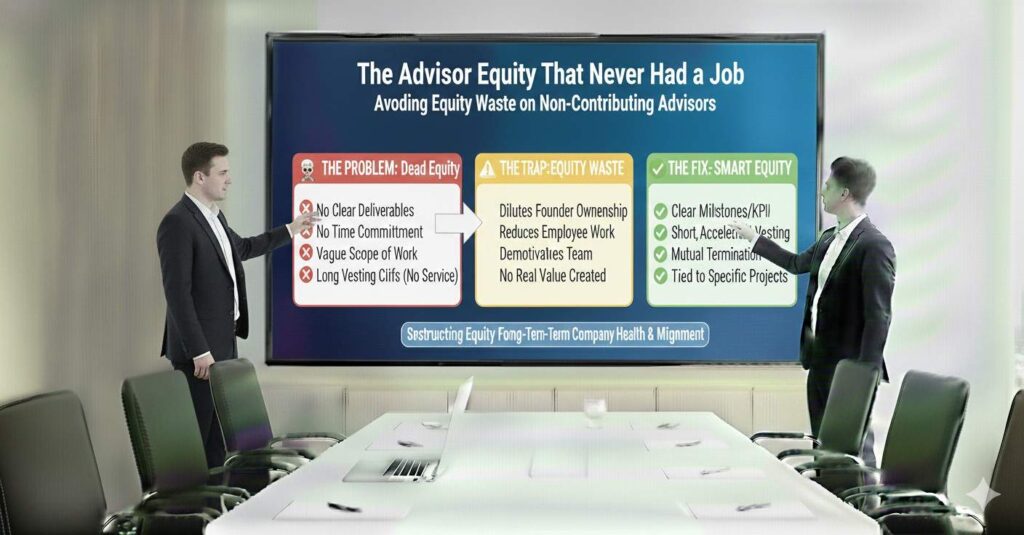
Advisors can be helpful, but advisor equity is one of the fastest ways to create a zombie cap table. It happens when the advisor role is not clear, the time commitment is not real, and the equity grant is not tied to outcomes or consistent effort.
Many founders give advisor equity as a sign of respect. Others give it because the advisor asked for it, or because it feels “standard.” But if the advisor does not show up, the equity still stays. Then you have a permanent owner who does not add value and does not move with the company.
This creates two problems at once. First, it reduces the ownership left for the team that is actually building. Second, it creates awkwardness when future investors ask why this person owns a meaningful chunk.
Good advisors are worth it. The right structure makes sure the equity is earned over time, and only if real help happens. If you do that, advisors strengthen your company instead of haunting it.
The Co-Founder Title Given Too Easily
The co-founder choice is one of the most emotional decisions in a startup. When you are early, it can feel lonely. If someone is excited and helpful, it can be tempting to label them as a co-founder quickly.
But co-founder equity is not a thank-you gift. It is a long-term bet on someone’s ongoing role in the company. If you give it to someone who is not truly committed, you may end up with a major owner who leaves early.
When that happens, the cap table becomes a memory of a relationship that no longer exists. You still carry the dilution, but you do not get the work. If there is no vesting, or if vesting is not enforced, the problem gets much worse.
A clean co-founder setup is not just fair. It protects everyone. It keeps the team aligned, and it prevents resentment later when the company starts to matter.
The Hidden Costs of a Zombie Cap Table
Fundraising Turns Into a Repair Project
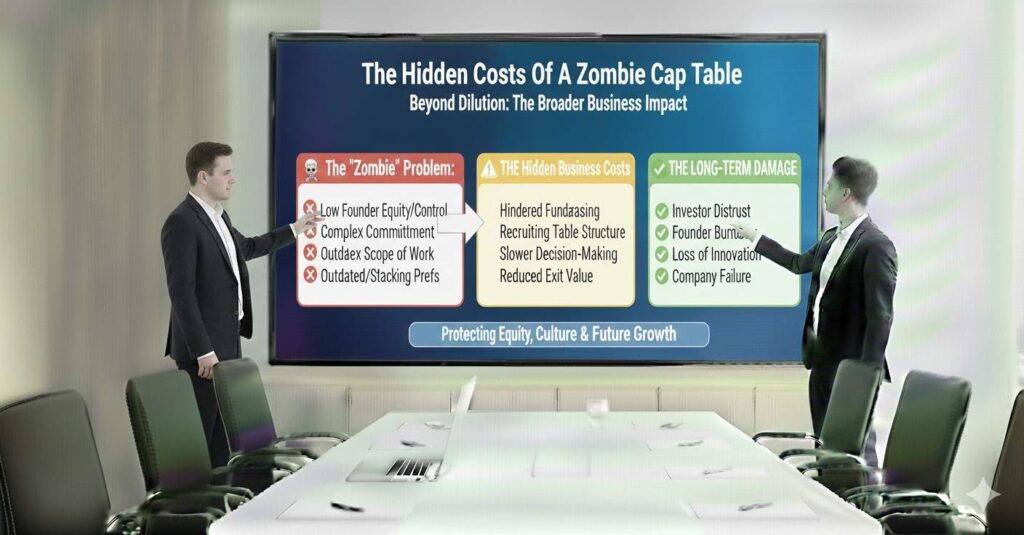
When your cap table is healthy, a fundraising process is about the future. Investors ask about the market, the product, the team, and the traction. When your cap table is unhealthy, the conversation shifts to the past.
Instead of selling the vision, you spend time explaining old deals. You answer questions about why a person owns 3% when they worked for two weeks. You justify why there are twelve tiny investors from an old pre-seed round with unusual terms.
This slows everything down. It also reduces your negotiating power, because investors sense that you need the round to “fix” things. When you look trapped, you lose leverage. And in venture, leverage is the difference between a strong round and a painful one.
If you can keep the cap table clean from the start, fundraising stays focused on growth. That is where you want it.
Hiring Gets Harder Than It Should Be
Top hires care about upside. They want to join a company where the equity story makes sense. If the option pool is too small because the cap table is crowded, you will struggle to make competitive offers.
Even when you can offer equity, the story can feel thin. A candidate asks, “How much is left for the team?” If the answer is “not much,” they may choose a cleaner startup, even if your product is better.
A zombie cap table also creates internal tension. The people doing the work may feel under-rewarded compared to early owners who no longer contribute. That tension can quietly damage culture.
A healthy cap table helps you hire with confidence. It lets you reward the people who are building the future, not the people who happened to be around in the past.
Decision-Making Becomes Slow and Political
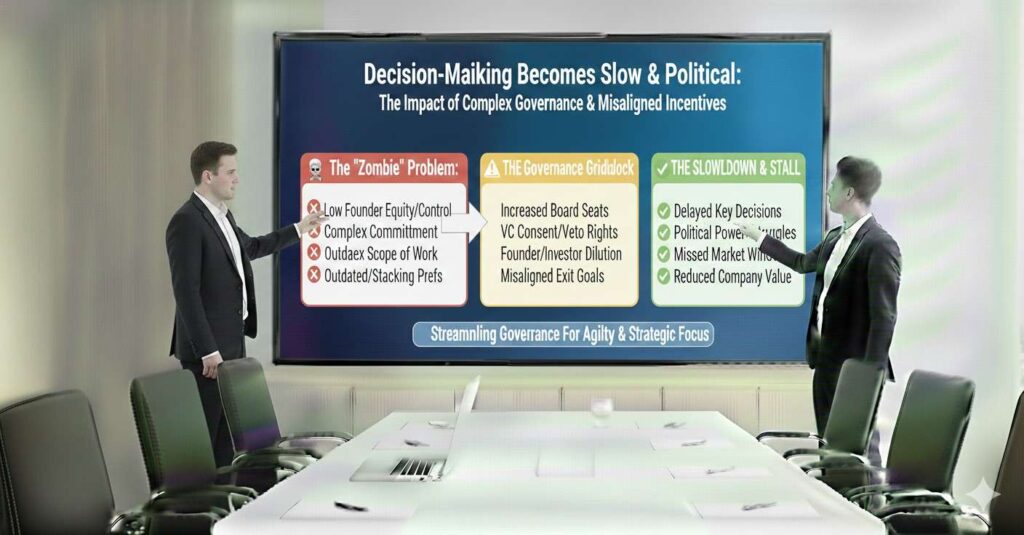
Ownership is power, even when people try to be friendly. When too many people own pieces of the company, you may find yourself managing opinions instead of making decisions.
Sometimes the issue is formal voting rights. Sometimes it is informal pressure. Either way, it can slow the company down. And startups die from slow decisions more often than they die from bad decisions.
A clean cap table supports fast execution. It makes roles clear, incentives clear, and authority clear. That clarity becomes more valuable as the stakes rise.
IP and Ownership Can Get Tangled
In technical startups, IP is not just paperwork. It is the backbone of your defensibility. If early contributors are not properly documented, or if ownership is spread across people who wrote code without clear agreements, you can end up with IP risk.
That risk shows up in diligence. Investors ask who created what, whether inventions were assigned to the company, and whether any former contributor could claim rights. If the cap table is messy, it often hints that these basics might be messy too.
This is one reason Tran.vc focuses on IP services early. When your patent strategy is clear and your filings are done correctly, it helps you tell a clean story. It also supports cleaner ownership decisions because you know what the real assets are.
If you want to build a strong IP base before you raise, you can apply anytime at https://www.tran.vc/apply-now-form/
How to Spot a Zombie Cap Table Early
You Cannot Explain Every Line in Plain Words
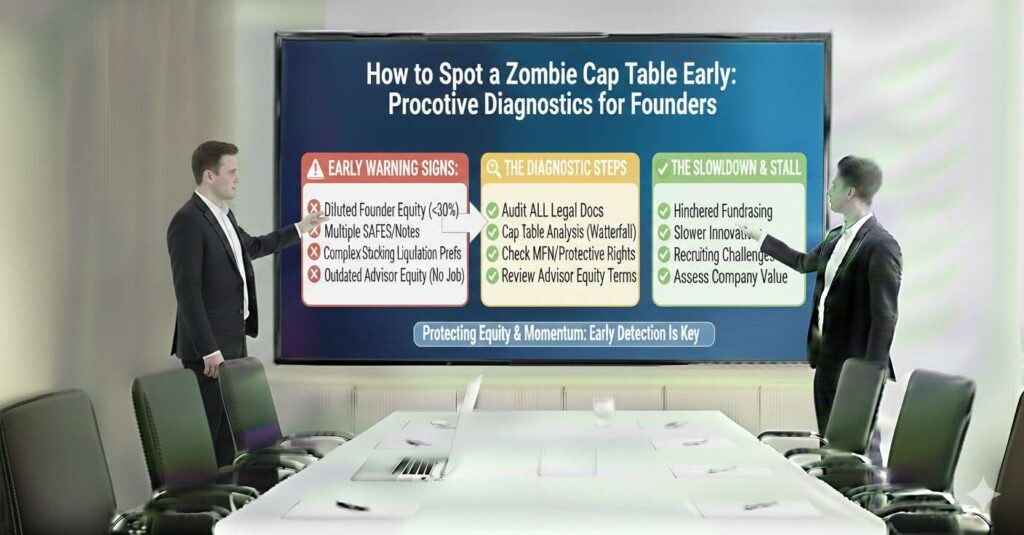
A healthy cap table can be explained without drama. If you struggle to explain why someone owns what they own, that is an early warning sign.
It does not mean you are wrong or unethical. It usually means the deal was made under stress, without enough structure. The longer you wait, the harder it becomes to fix.
A simple test is this: if an investor asks about any name on the cap table, can you explain their role, their contribution, and the reason the percentage makes sense today? If you cannot, you may already be drifting into zombie territory.
Too Many Owners Who Are No Longer Close to the Company
People move on. That is normal. But when many people move on and keep meaningful ownership, you create dead weight.
This can happen with former contractors, old advisors, early friends, or even an early co-founder who left. The issue is not that they own something. The issue is that the ownership no longer matches active contribution.
Investors want to see a team that is highly motivated and highly aligned. A cap table full of “ghosts” creates doubt about alignment. It also makes future compensation harder.
You Have No Room Left for an Option Pool
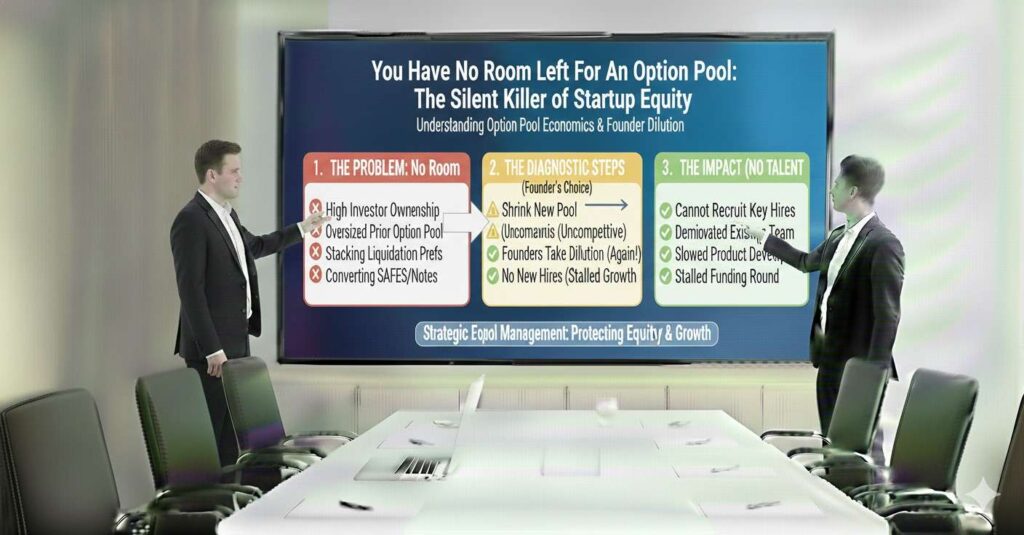
If you are early and your cap table is already tight, you have a problem. Most startups need a real option pool to hire and retain. If you cannot create that pool without crushing the founders, investors will push for it anyway, and you will feel the pain later in the process.
A strong cap table plan makes room for future hires. It assumes you will need leadership, engineers, product talent, and operators. It also assumes you will need to reward them in a way that feels meaningful.
If you plan for this early, it is easier. If you ignore it, the option pool becomes a surprise tax right when you are trying to close a round.
Your Early Equity Deals Have No Earning Mechanism
Equity should usually be earned over time when the role is ongoing. If you gave equity as a fixed gift, and the person’s involvement is uncertain, that is a sign of trouble.
When equity is earned, it stays fair even if plans change. When equity is granted up front without earning, it becomes hard to fix later.
This is why vesting, milestones, and clear agreements matter. They are not “legal fluff.” They are tools to keep the cap table alive, fair, and usable.
How to Prevent a Zombie Cap Table From Day One
Start With a Simple Ownership Story
Before you sign anything, you need a story that stays true even when the company grows. The story should be easy to say out loud without skipping parts. It should explain why the founders own what they own, why the company has enough room to hire, and why early supporters were treated fairly without putting the whole company at risk.
If you cannot tell that story in plain words, you are not ready to give out equity. This is not about being perfect. It is about being consistent. When your early deals fit one clear story, your cap table stays clean. When every deal has a different logic, the cap table starts to look like a patchwork quilt.
A practical way to keep the story simple is to treat equity like a long-term tool, not a short-term reward. Cash is for small tasks when possible. Equity is for people who will carry the company with you over time.
Treat Equity Like a Salary Paid Over Time
Most founders understand paying salary over time. You do not pay a full year of salary on day one. You pay each pay period. Equity should often work the same way when the role is ongoing.
When you give equity up front, you are paying the full bill before you know if the work will happen. That is how zombie cap tables begin. You end up with owners who already got paid but are no longer around.
The cleaner approach is to set equity so it is earned through continued involvement. That way, if the person leaves early, they do not keep a big chunk. If they stay and build, they earn what was promised.
This principle is especially important for co-founders, early employees, and long-term advisors. These relationships are high impact. You want the incentive to match the journey.
Keep Early Help on a Short Leash
Early startups need help in many areas. A friend may introduce you to a customer. A designer may polish your deck. A senior engineer may review your architecture for two hours. These are useful actions, but they are not always worth ownership.
The trap is turning every helpful moment into equity. If you do that, you will end up with twenty small owners who each did one small thing. That creates clutter and questions. It also shrinks the upside for the people who will do the hard work for years.
Instead, treat small help as small help. Say thank you. Pay cash when you can. Offer a future paid role if it makes sense. Keep equity for roles with clear, ongoing responsibility.