
Founder-market fit is not a buzz phrase. It is a simple question with a hard answer:
Are you the right person to build this company in this market, right now?
Not “Can you build it?” Many people can build many things. The real question is whether you can keep building it when it gets messy. When customers push back. When your first plan fails. When a competitor shows up. When the problem turns out to be twice as hard as you thought.
If you have founder-market fit, you do not need to force belief every day. You still work hard, but you are not pretending. You are not acting like a founder. You are just doing what you always do: you notice a real problem, you care enough to stay with it, and you have the skills and insight to make progress faster than most people.
This matters even more in deep tech, AI, and robotics. In these markets, the product is not just a landing page and an API wrapper. The product is a system. It has edge cases. It has safety and data issues. It has long sales cycles. It has real-world limits. It often needs trust before it gets adoption. If the founder is not truly matched to the market, the company bleeds time and energy. Not because the idea is bad, but because the founder is fighting the market instead of moving with it.
So this article is about a simple goal: self-diagnose your founder-market fit without hype, without ego, and without lying to yourself.
And one note before we start: founder-market fit is not a “you have it or you don’t” label. It is closer to a score. You can raise it. You can also lose it if you drift too far from the problem. That is good news. It means you can work on it.
Tran.vc exists to help technical founders build real leverage early, especially when you are building hard tech and you want to protect what matters. If you are building something in robotics, AI, or deep tech, and you want to turn your work into an asset investors respect, you can apply anytime here: https://www.tran.vc/apply-now-form/
Link One: You and the Problem
The “No Audience” Test

A clean way to spot real founder-market fit is to remove the crowd.
Ask yourself if you would still build this if nobody could see it. No posts, no demo day, no praise, no “founder identity.” Just you, the work, and a long stretch of unknowns.
If the answer is yes, that is not romance. That is stamina. And stamina is a real edge in robotics, AI, and deep tech, where progress often feels slow before it feels fast.
The Energy Pattern You Cannot Fake
Many founders say they are “excited,” but their week says something else.
Look at how you act after a hard day of work. Do you find yourself reading more, testing more, and thinking about the problem in the shower? Or do you avoid it and hope tomorrow will be easier?
Founder-market fit often shows up as a steady pull. You still get tired, but your mind stays engaged. You keep returning to the problem because it feels like a puzzle you were built to solve.
The “I Have Seen This Before” Advantage
Your best advantage is not your code. It is your lived pattern.
If you have been close to this problem, you notice things that outsiders miss. You can tell the difference between what people say and what they do. You can see where the workflow breaks, where the handoffs fail, and where teams hide risk.
This is why founders who have “done the job” often move faster. They waste less time on the wrong version of the problem. They also speak in words buyers trust, because they sound like someone who has been there.
Deep Interest Versus Surface Interest
There is a difference between liking a topic and caring about a problem.
Surface interest is when you enjoy the headlines. Deep interest is when you are willing to sit with details that are boring to most people. In robotics that can be calibration, safety checks, uptime, and integration. In AI it can be data drift, labeling, privacy, evaluation, and failure cases.
If you find those details interesting, it is a strong signal. It means you are not only chasing a trend. You are willing to do the work that makes a real product work.
The Cost You Are Willing to Pay
Every market has a “price of entry,” and it is not always money.
Some markets demand long sales cycles. Some demand trust and proof. Some demand pilots and security reviews. Some demand patient testing in the real world.
Founder-market fit means you accept that price without constant resentment. You do not love the pain, but you do not act surprised by it. You plan for it and keep moving.
If you are building IP-heavy tech and want a strong moat early, Tran.vc can help you turn your inventions into defensible assets while you build. You can apply anytime: https://www.tran.vc/apply-now-form/
Link Two: The Problem and the Buyer
A Problem Is Not Real Until Someone Pays

Many founders mistake interest for demand.
A buyer can be curious and still not buy. They can like your demo and still not move. They can even admit it is a problem and still delay for a year.
In founder-market fit, you learn to treat money, time, and risk as the real signals. A buyer who will pay, assign a team, and commit a timeline is showing you the truth. Everything else is noise.
Knowing the Real Signer, Not a Vague Persona
If you cannot name the person who signs, you do not yet have a market.
“Enterprises” do not sign. “Logistics companies” do not sign. A specific role signs. A specific leader owns the budget, owns the risk, and owns the decision.
When you know the signer, your message becomes sharper. Your product choices get clearer. Your sales motion becomes simpler because you stop trying to please everyone.
The Fear That Makes Buyers Move
Buyers rarely buy because they are excited. They buy because they are afraid of staying the same.
So the question is not only “What do they want?” The question is “What happens if they do nothing?”
In robotics, fear can be missed output targets, labor shortages, safety incidents, rising costs, or failures that stop a line. In AI, fear can be fraud loss, churn, compliance trouble, slow cycle time, or being outpaced by a competitor.
When you can name that fear in plain words, you are closer to founder-market fit because you understand the buyer’s real driver.
Urgency Is a Schedule, Not a Feeling
A buyer can feel pain and still delay.
Urgency shows up as a date. A contract renewal. A new regulation. A headcount freeze. A new product launch. A promised outcome to the board.
When you find these time anchors, you stop selling in general terms. You start selling into a real window. That is when deals become possible, and your product roadmap stops being guesswork.
The Hidden Risk That Blocks “Yes”
Even when a buyer wants your solution, they may fear the blame.
In B2B, many people lose by choosing wrong, not by choosing nothing. If your tool breaks, leaks data, harms uptime, or creates safety issues, the buyer may carry the cost.
Founder-market fit improves when you can reduce that fear. You do it with proof, tight scope, clear safety boundaries, strong security habits, and realistic claims. You also do it with IP and defensibility, because buyers and investors both trust what is protected and well-framed.
If you are building a deep tech product and want to protect what you are creating, Tran.vc invests up to $50,000 worth of in-kind patenting and IP services so your early work becomes an asset, not just a feature. Apply here: https://www.tran.vc/apply-now-form/
Link Three: You and the Buyer
Trust Is the Real Shortcut

Many founders think speed comes from shipping faster.
In B2B, speed often comes from trust. When a buyer trusts you, they share real data. They reveal real constraints. They bring the right people into the room. They help you test in the field.
Founder-market fit means you can earn trust without pretending. You speak clearly, you respect the buyer’s world, and you do not force a story that does not match reality.
Speaking the Buyer’s Language Without Losing Yourself
Trust grows when you sound like someone who understands the job.
This does not mean using fancy words. It means using the right simple words. It means naming the real workflow and the real constraints. It means caring about the “last mile” issues that make or break adoption.
If buyers often respond with, “Yes, that is exactly our problem,” you are building credibility. If they respond with, “Interesting,” but they stay vague, you may not yet be aligned with their world.
Handling Pushback Without Getting Defensive
Pushback is information, not rejection.
When you have founder-market fit, you can stay calm when a buyer says no. You do not argue. You get curious. You ask what they would need to say yes, what would make them nervous, and what alternative they are using today.
This is a key self-diagnosis signal. If buyer pushback makes you angry or embarrassed, you may be too attached to your version of the problem. Fit improves when you can treat feedback as data.
The Proof You Can Create Early
You do not need a giant case study to earn early trust.
You need small, clean proof that matches the buyer’s risk. A narrow pilot. A clear before-and-after metric. A controlled test. A safe deployment plan. A tight success definition that both sides agree on.
Founders with real fit naturally move toward this style of proof. They do not rely on hype because they know the market will punish it.
Strengthen Buyer Confidence
Why IP Can Strengthen Buyer Confidence

In deep tech, defensibility is part of trust.
If a buyer believes your solution is special but easy to copy, they may worry you will not last. If they believe you have protected key parts of your approach, they are more likely to view you as a serious vendor, not a short-term experiment.
This is one reason Tran.vc exists. Strong patents and IP strategy can turn your technical edge into a durable business edge while you are still early. If that is what you want, apply anytime: https://www.tran.vc/apply-now-form/
A Simple Self-Score You Can Trust
Why You Need a Score, Not a Feeling

Founder-market fit is easy to describe and hard to measure. That is why many founders rely on mood. If a call goes well, they feel fit. If a call goes badly, they feel lost. That swing is normal, but it is not a good compass.
A score helps because it forces you to look at facts. You can still be human. You can still have doubts. But you are not letting one good meeting or one rough week define your reality.
A score also helps you talk to co-founders with less heat. Instead of arguing about belief, you can point to signals and decide what to fix.
The Three Buckets That Matter Most
To keep this simple and honest, your score should come from three buckets that match the three links we already talked about.
The first bucket is “You and the Problem.” This is about depth, stamina, and insight. The second bucket is “Problem and Buyer.” This is about urgency, budget, and a real decision path. The third bucket is “You and Buyer.” This is about trust, credibility, and your ability to learn from the market without breaking.
You do not need a fancy spreadsheet. You need clarity. And you need to write down answers, not just think them.
The “You and the Problem” Score
Start with a plain review of your own history. Not your resume, but your real contact with the problem.
Have you been near this problem long enough to see how it repeats? Have you watched people try and fail to solve it? Have you felt the cost of the problem yourself, or lived inside the workflow that causes it?
If you have only read about it, your score is not zero, but you should treat your view as fragile. You may be right, but you have less protection against blind spots. If you have lived it, your score rises because your instincts are grounded in reality.
Now look at your skill match. Do you have the technical ability to build the first working version without waiting for a huge team? In deep tech, early speed often comes from being able to build and test quickly, even if the product is not pretty.
If you need five hires before you can learn anything, your learning loop will be slow, and your founder-market fit is harder to prove.
The “Problem and Buyer” Score
This bucket is about whether the market can actually pull your product into a deal.
Ask yourself if you can name the buyer role, the signer role, and the person who will use it day-to-day. If you cannot name all three, you may still be early, but your score is not strong yet.
Then ask if the problem has a “clock.” A clear reason it must be fixed soon. Without a clock, you might still sell, but you will spend a lot of time chasing. In robotics and AI, long cycles already exist. A missing clock turns a long cycle into a dead cycle.
Also look at the buyer’s risk. If your product touches safety, uptime, compliance, or core data, your buyer must believe you can handle that weight. This does not mean you need a huge brand. It means you must show careful thinking and controlled proof.
The “You and Buyer” Score
This bucket is about whether you can get close enough to the buyer’s world to build the right thing.
Do buyers take your calls and stay engaged? Do they introduce you to others? Do they share real data, real processes, and real constraints? Those behaviors are not kindness. They are a form of trust.
Also ask how you handle feedback. If you leave customer calls with clearer thinking, you are learning. If you leave with a need to defend yourself, you may be protecting your ego instead of protecting your company.
A strong sign is when buyers correct you and you feel grateful, not embarrassed. That emotional shift matters because it keeps you in the market long enough to get real traction.
If you want Tran.vc to help you build defensibility while you test and refine fit, you can apply anytime here: https://www.tran.vc/apply-now-form/
The One-Week Founder-Market Fit Test
Day One: Write the “Truth Draft”

Most founders write a pitch. Few write a truth draft. A truth draft is a private document where you say what is real, what is unknown, and what you are assuming.
You write what you think the problem is, who feels it, what they do today, what it costs them, and what they fear if they do nothing. You also write what you are not sure about.
This matters because hidden assumptions grow into expensive mistakes. When assumptions are written, they become testable. And founder-market fit is not proven by confidence. It is proven by tested beliefs.
Day Two: Find Five Conversations That Can Hurt You
In one week, you do not need fifty calls. You need five calls that can tell you the truth.
The right calls are with people who will not flatter you. They might be busy operators, technical leads, or buyers who have seen many vendors. They have no reason to be polite. That is exactly why you want them.
Your goal is not to convince them. Your goal is to learn where your story breaks. If you avoid calls that can hurt you, you are not diagnosing fit. You are protecting a fantasy.
Day Three: Ask for the Workflow, Not the Opinion
A common trap is asking, “Would you use this?” People do not know. They guess. They try to be nice. That answer is weak data.
Instead, ask them to walk you through what they do today. Ask where it slows down. Ask where it fails. Ask what happens when it fails. Ask who gets blamed. Ask what they tried before.
When you listen to the workflow, you learn what is stable. You learn what is political. You learn what is painful. And you learn whether you truly understand their world.
Founder-market fit often shows up as moments where you can finish their sentence, not because you are clever, but because you have been close to problems like this before.
Day Four: Build a “Small Proof” That Matches Their Risk
Many founders build a big demo that looks impressive and proves little. A better move is to build a small proof that matches the buyer’s fear.
If the buyer fears uptime risk, build a proof around reliability and monitoring. If they fear safety, build a proof around guardrails and safe failure. If they fear data risk, build a proof around privacy, controls, and clear handling rules.
This small proof should be narrow and measurable. It should not require months. It should be something you can put in front of a buyer and say, “This is what I can prove right now, and this is what I cannot yet prove.”
Buyers respect that honesty far more than big claims.
Test the Pull
Day Five: Test the “Pull”
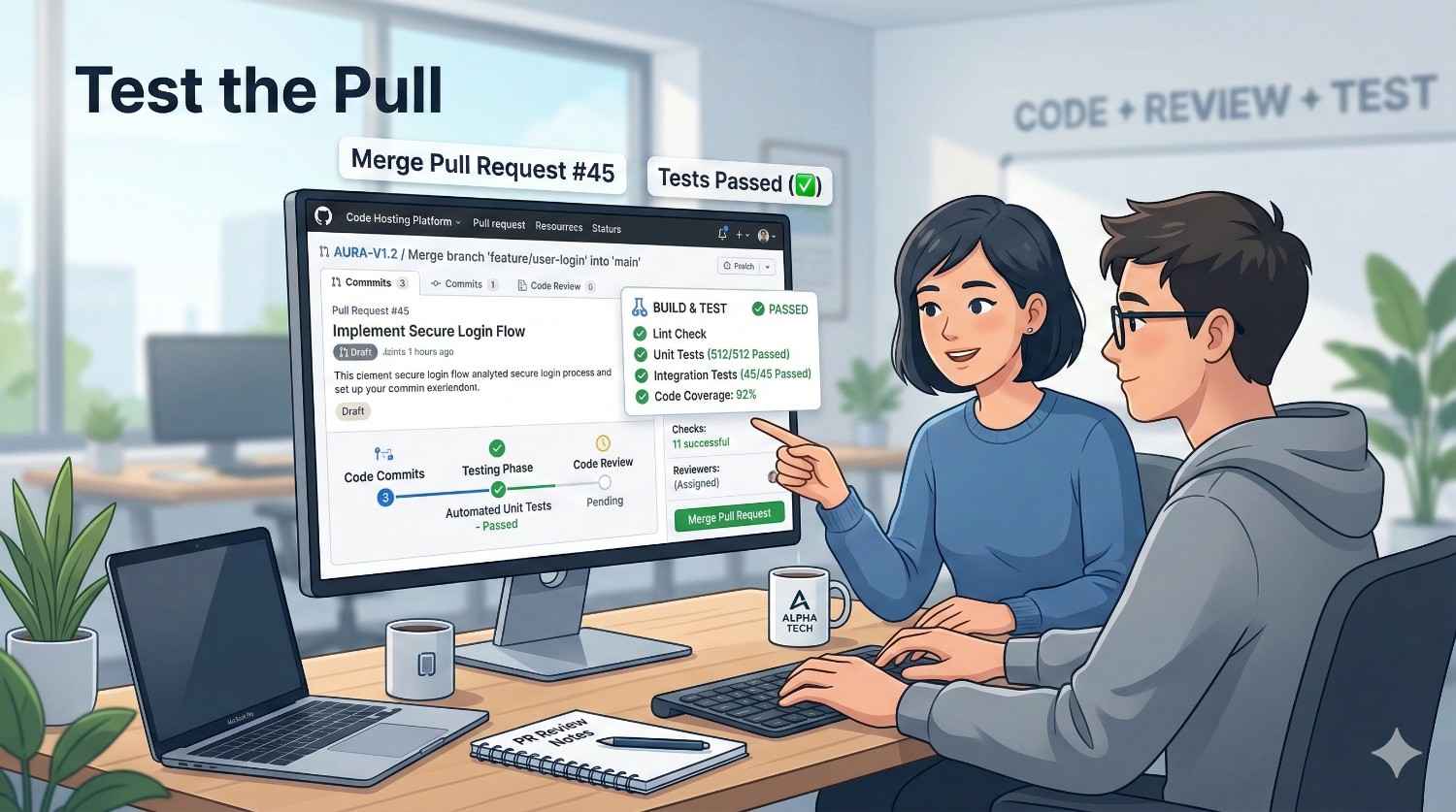
After those conversations and that small proof, you are looking for pull. Not praise.
Pull looks like a buyer asking what it would take to try it. It looks like a buyer offering data. It looks like a buyer introducing you to procurement or security. It looks like a buyer asking for timelines and next steps.
Praise looks like “This is cool.” Pull looks like “What would a pilot look like?” Those are different worlds.
If you do not see pull, it does not mean you failed. It means you have clear feedback to adjust your market, your buyer, your problem framing, or your proof.
Tran.vc works best with founders who want to run these tests fast while also building a moat that lasts. If you are building in AI, robotics, or deep tech and want up to $50,000 in in-kind patenting and IP services, you can apply here: https://www.tran.vc/apply-now-form/