
You can build the best tech in the world and still lose your company.
Not because your product fails. Not because you run out of users. But because, on paper, your company does not truly own what it sells.
That is what IP assignment fixes.
If you are a technical founder, you may think, “I wrote the code. I designed the model. I built the robot. Of course it’s mine.” In real life, your company is a separate legal thing. Investors, acquirers, and even big customers do not care what feels true. They care what is true in writing.
This article will walk you through IP assignment in plain words. No legal fog. No long lists. Just the real risks, the clean steps, and the exact habits that keep your company safe.
If you want help doing this the right way, Tran.vc can support you with up to $50,000 in in-kind patent and IP services, built for AI, robotics, and deep tech founders. You can apply anytime here: https://www.tran.vc/apply-now-form/
What “IP assignment” really means

“IP” is short for intellectual property. It includes things like source code, model weights, training pipelines, robot designs, CAD files, firmware, chip layouts, data labeling methods, tests, docs, and all the small ideas that make your product work.
“Assignment” means you move ownership from one person to another.
So IP assignment is a simple idea: every founder (and everyone who builds) signs a paper that says the company owns the work.
This is not about trust. It is about clarity.
If your company does not own the work, then your company is just a shell. It might have a name, a website, a bank account, and a pitch deck. But the core asset is not locked inside the company. It is floating around with people. That is where deals die.
Why this is a big deal for technical founders
Founders often delay IP assignment for one reason: it feels like paperwork that can wait.
It cannot.
Here is the uncomfortable truth: most early-stage tech value is IP. Not revenue. Not brand. Not headcount. IP.
For AI and robotics startups, this is even more true. Your value is in the “how”:
- How your system senses the world
- How it plans
- How it controls motion
- How it trains
- How it runs on edge
- How it gets better with time
- How it handles failures
- How it uses data
If that “how” is not owned by the company, investors will slow down. Acquirers will walk. Enterprise customers will pause legal review. And if something goes wrong between founders, the company can break.
IP assignment is like putting your invention inside a safe and giving the company the key.
The common mistake: “We’ll fix it later”
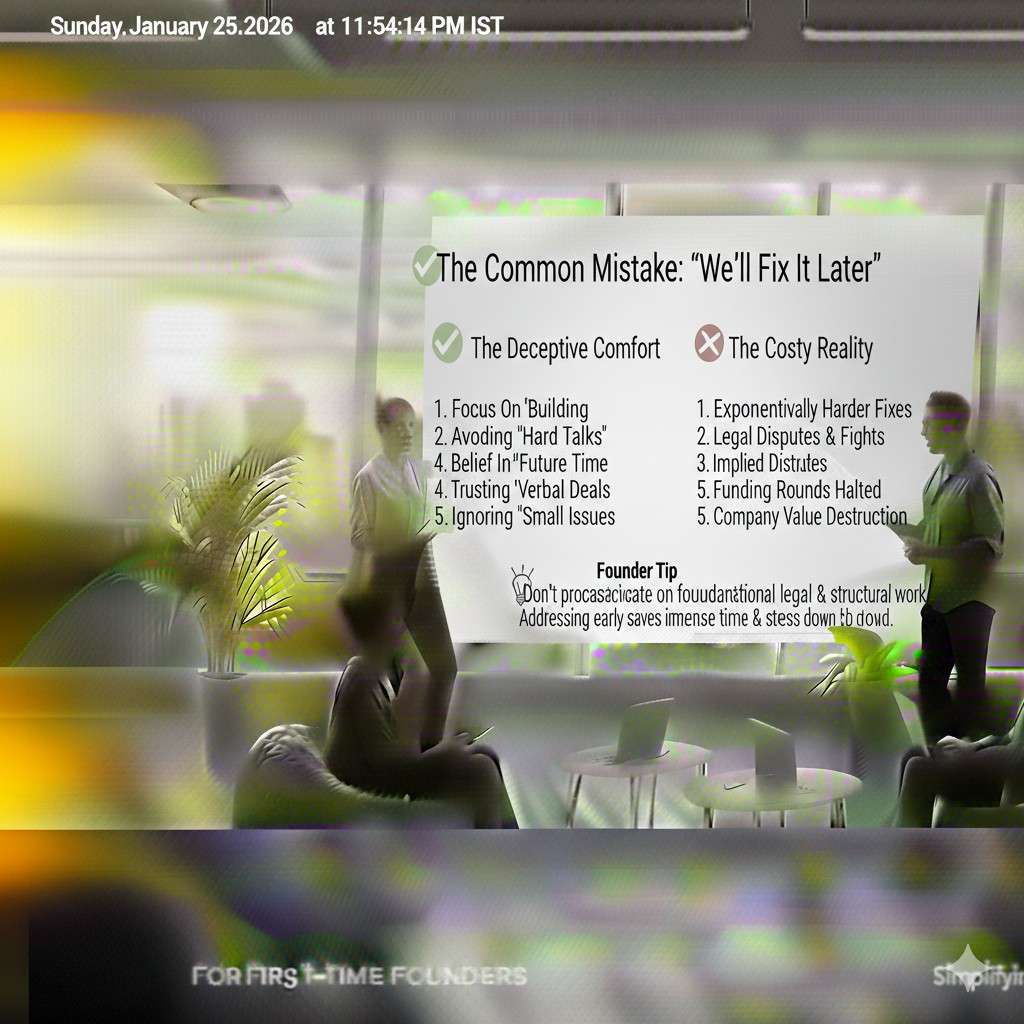
Later is expensive.
Later is messy.
Later is when you already have a term sheet and the investor’s lawyer asks for proof that the company owns the tech. That is not the moment you want to find out that:
- a co-founder wrote early code on a personal laptop and never assigned it
- a friend helped build a core feature and never signed anything
- an intern pushed key commits but signed no invention paper
- a contractor owns the rights under their local law because the agreement is weak
- a founder filed a patent personally and never transferred it to the company
- a founder used code from a past employer by mistake
- a founder used open-source in a way that forces you to open your own code
When you “fix it later,” you usually fix it under pressure. That is when people get emotional, lawyers get strict, and timelines slip.
The best time to do IP assignment is when everyone is still aligned and excited.
The second best time is today.
If you want help cleaning it up fast, you can apply to Tran.vc here: https://www.tran.vc/apply-now-form/
What happens if you skip IP assignment
Let’s make this real. Here are the ways this goes wrong in the real world.
Deals die in diligence
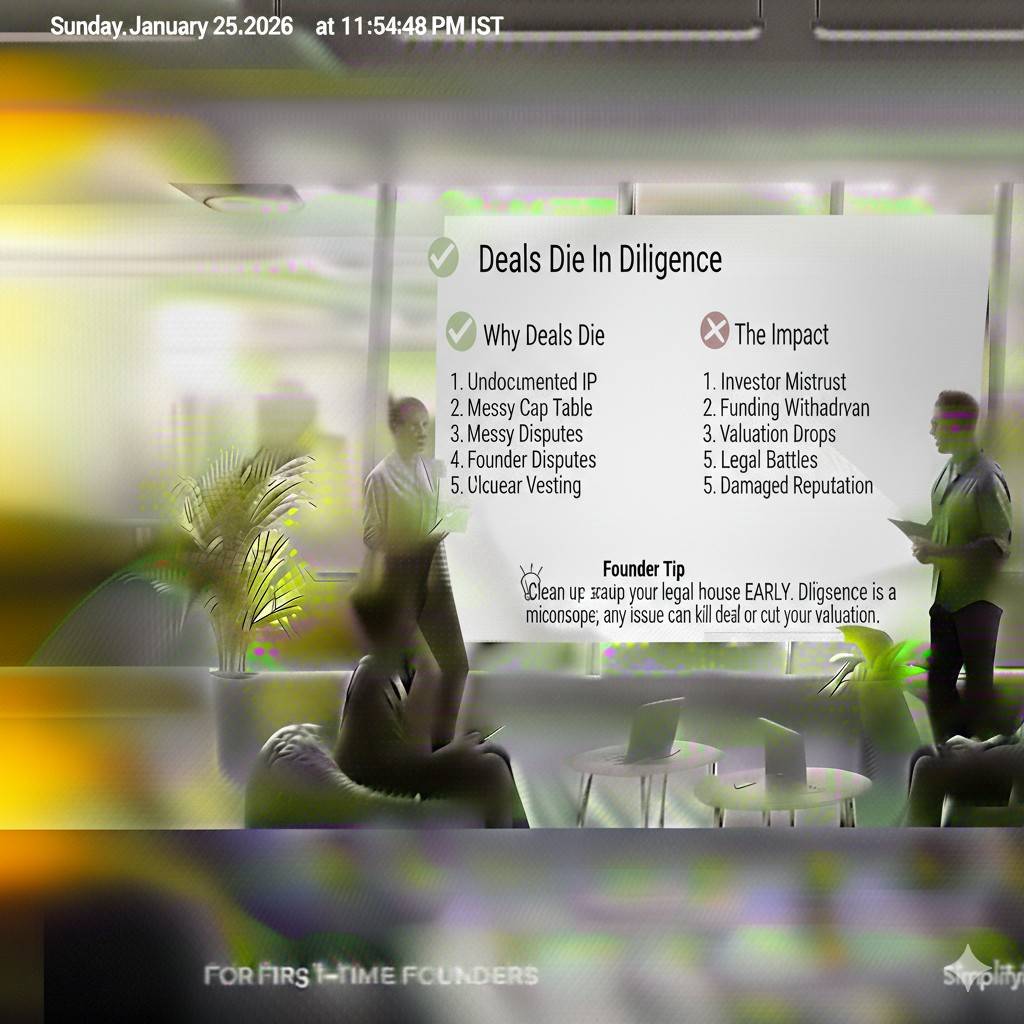
When you raise money, investors do diligence. That means they check if the company is real, if the cap table is clean, and if the company owns what it says it owns.
If there is a gap, investors do not always say “no.” They often say, “We need this fixed before close.”
That sounds fair. But it can kill momentum. Other investors notice delays. Your round drags. Your runway shrinks. You start making bad choices because time is tight.
All because you skipped one paper.
Founder breakups turn into ownership fights
Most founders start as friends or teammates. But stress changes things. When the company hits a hard patch, people leave.
If a founder leaves and the IP was never assigned, that founder may still own key parts of the tech. Even if they do not mean to harm you, the ownership gap becomes a negotiation tool.
You do not want to be negotiating your core asset while trying to ship product.
Customers walk during legal review

Enterprise buyers ask one big question before they buy: “Do you own what you’re selling?”
If you do not, they fear lawsuits. They fear supply risk. They fear that your company cannot keep supporting the product.
Even if your product is strong, legal can block the deal.
You can lose the right to patent
Patents get weird when ownership is unclear. If inventors are not properly tied to the company, filings and transfers can become delayed or disputed.
Also, if you are filing patents, you want a straight chain of title. That means ownership history is clear and documented.
This is one reason Tran.vc focuses so much on early IP structure. It is not just about filing patents. It is about making those patents bankable.
Apply anytime here: https://www.tran.vc/apply-now-form/
The simple mental model: “Who owns the work?”
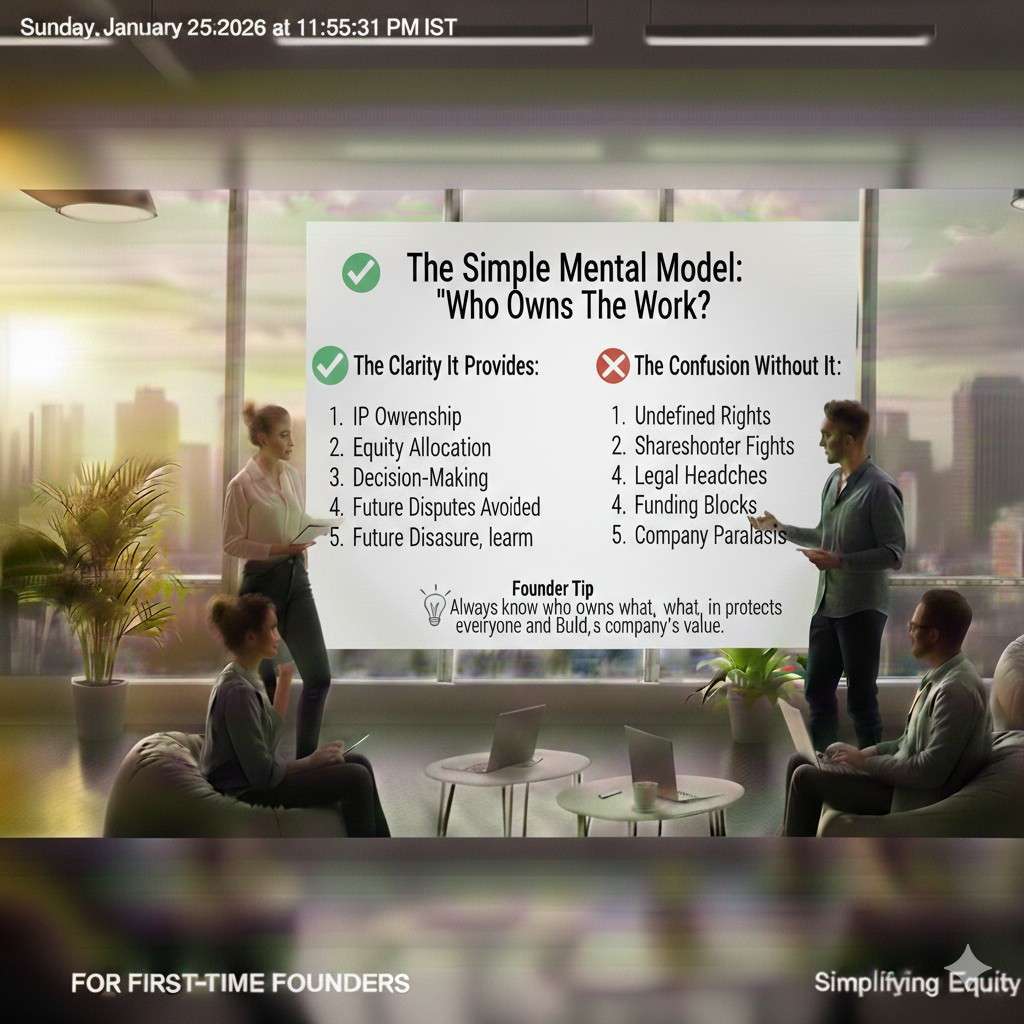
Whenever something is created, ask one question:
Who owns it right now?
If a founder created it before the company existed, the founder owns it.
If a founder created it after the company existed, the founder may still own it unless there is a proper agreement.
If a contractor created it, the contractor often owns it unless the contract clearly assigns it.
If an employee created it in the scope of the job, the company often owns it, but you still want signed invention and IP terms to avoid fights and to cover edge cases.
If a friend created it for “equity later,” that is a danger zone.
If you want your company to own the work, you need signed documents.
It is that simple.
What documents actually matter
There are a few papers that show up again and again. I will explain them in plain terms.
1) Founder IP assignment
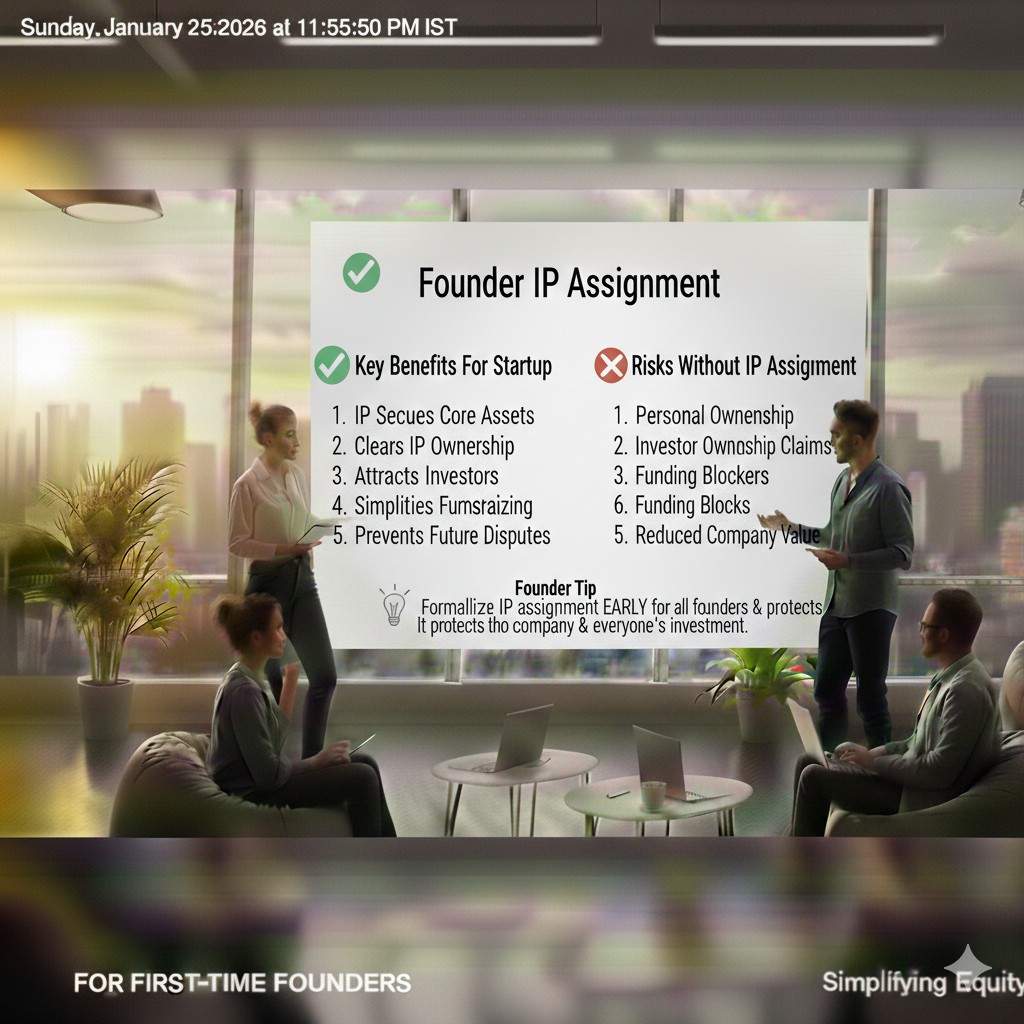
This is the big one. It says: “I created certain tech and I transfer it to the company.”
It can cover:
- work done before incorporation
- work done after incorporation
- improvements, updates, and related work
Good assignments also include “further assurances,” which means the founder promises to help later if signatures are needed for patents or other filings.
2) Invention assignment agreement
This is usually signed by employees and sometimes founders too. It says: “If I invent something related to the company’s business while I work here, the company owns it.”
This helps with future work, not just past work.
3) Contractor IP assignment
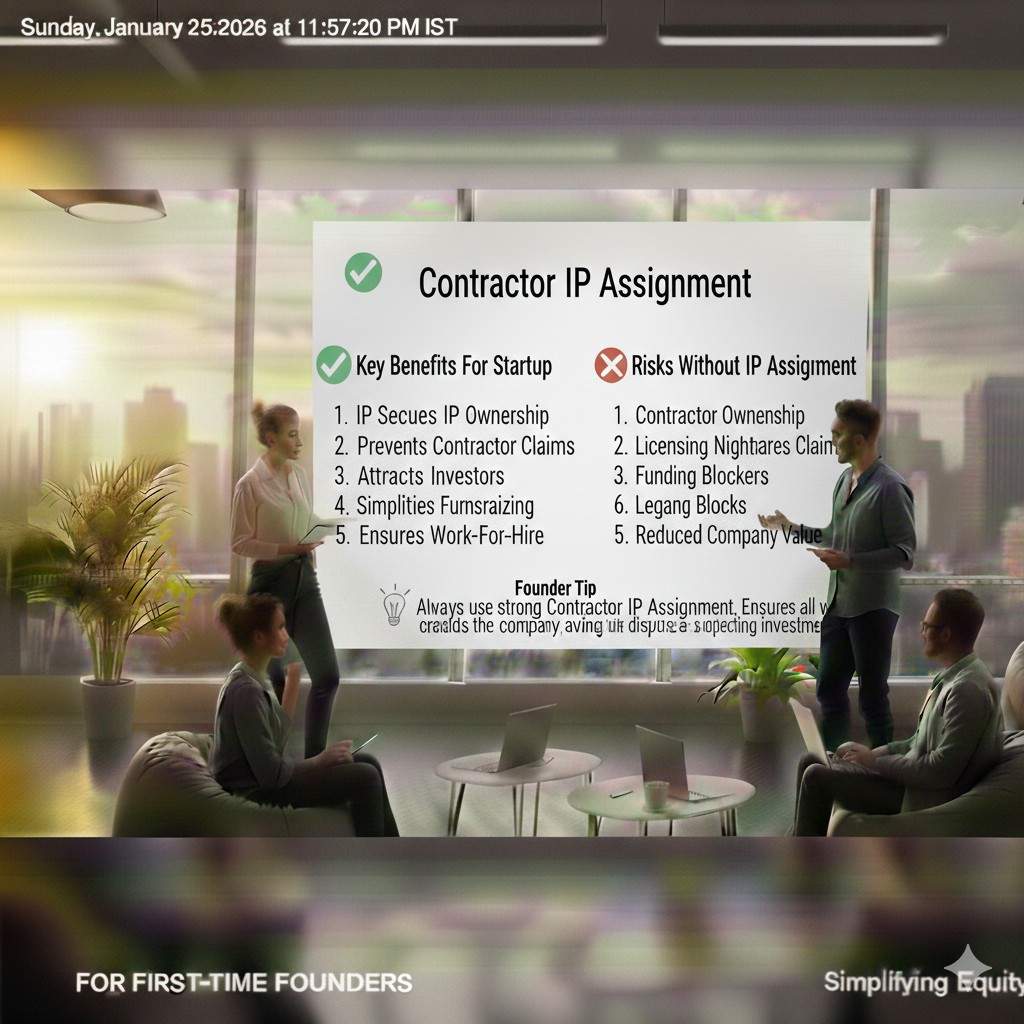
Contractor rules are risky. Many founders think paying an invoice means you own the work. That is not true.
You need a contractor agreement that clearly says:
- work is “work made for hire” where allowed
- and if not allowed, the contractor assigns the rights anyway
- the contractor confirms they used no third-party IP that would infect your product
- the contractor promises to help later if you need signatures
4) Patent assignment
If a patent application is filed in an inventor’s name, you usually want a signed paper transferring it to the company (or confirming it belongs to the company).
Even when you file through the company, there can still be signatures needed from inventors.
5) Open-source and third-party IP records
This is not one paper, but it is just as important. You want clear notes on what you used, what license it has, and how you comply.
If you ignore this, you can end up with a product you cannot sell under your current model.
The founder moment that causes most IP problems
It often starts like this:
You are building fast. You have no budget. So you ask someone you know to help.
A former teammate helps with a core module. A student helps with data labeling scripts. A friend helps build a UI. Someone in another country helps with CAD.
Everyone is friendly. Nobody wants to talk about legal stuff. You say, “We’ll do paperwork later.”
Then later comes.
And later looks like a funding round, a big pilot, or a possible acquisition.
At that point, the helper has leverage. Not because they are a bad person. But because the asset is tied to them.
This is why the best practice is simple: no commits without paper.
Not because you are cold. Because you are building a real company.
IP assignment is not only about code
Founders hear “IP” and think “software.” In AI and robotics, IP is bigger than software.
It includes:
- datasets, labeling guides, and data collection methods
- model architecture choices and training tricks
- evaluation tools and safety checks
- simulation setup and domain randomization
- robot kinematics choices and control tuning
- calibration routines
- sensor fusion logic
- mechanical designs, enclosures, mounts
- testing rigs, manufacturing notes, jigs
- even the way you do deployment and monitoring
A lot of this never sits in one Git repo. It sits in notebooks, docs, lab notes, CAD folders, and shared drives.
That is why “assignment” must cover more than code. It must cover “all inventions and works” tied to the business.
The clean way to do this from day one
If you are pre-seed, you can do this with calm, not stress.
Here is the smooth path.
Step one: collect the truth
Before you sign anything, write down what exists:
What was built before the company was formed?
Who worked on it?
Where is it stored?
What tools and accounts were used?
Was any of it built at a past job?
Was any open-source copied in?
This is not for blame. It is for clarity.
Step two: lock the “chain of title”
Chain of title means there is a clear story of ownership from the moment the work was created to today.
For founders, it usually looks like:
Founder created work → founder assigns to company → company owns it.
If a patent exists:
Inventor created invention → inventor assigns to company → company owns it → company files and maintains.
This is what investors want to see.
Step three: fix the risky edges
The riskiest edges are helpers and contractors.
If anyone helped, get a signed contractor assignment. If they will not sign, you may need to replace that work.
That sounds harsh, but it is better to rewrite code now than lose a funding round later.
Step four: keep it clean going forward
After the cleanup, make this a habit:
New hire? They sign on day one.
New contractor? They sign before they start.
New invention? It gets documented and tied to the company.
No exceptions.
If you want a team that helps you do this right, Tran.vc was built for exactly this stage. Apply anytime: https://www.tran.vc/apply-now-form/
The tricky part: work done before you incorporated
This is common and normal.
Most founders build first, then form the company.
That early work matters a lot. Sometimes it is the core product.
If you wrote the code before the company existed, the company does not magically own it later.
You need an assignment that clearly covers pre-company work.
This is one of those “small things” that quietly blocks funding later. Investors will ask:
“Was the core tech built before incorporation?”
“Has it been assigned to the company?”
If the answer is “not yet,” they will ask you to fix it.
So fix it now.
Another tricky part: past employer risk
This part is uncomfortable, but it matters.
If you built any part of your startup while still employed somewhere else, you must be careful. Many employment agreements say the employer owns inventions made during your employment that relate to the employer’s business, or were made using employer time or equipment.
Even if you used your personal laptop, it can still be messy.
This does not mean you cannot start a company. It means you need to be clean:
Do not bring code from your old job.
Do not use old employer repos, docs, or data.
Do not reuse internal tools.
Do not build on confidential methods.
If you are not sure, treat that uncertainty as a real risk and get proper legal guidance. This is exactly the type of situation where experienced IP support saves you from future pain.
Tran.vc works with founders on these edge cases early, so you do not get surprised later. Apply here: https://www.tran.vc/apply-now-form/
The “friend helped me” problem, and how to solve it
Many great startups begin with “friends helping friends.” That is fine. But you need to move from “friend mode” to “company mode.”
Here is a respectful way to handle it:
You explain that investors require clean ownership. You say you are locking everything into the company so the company can grow. You tell them this protects everyone, including them, because it prevents future disputes.
Then you offer a simple agreement.
If they want equity, do it properly through the company, with proper paperwork. If they want cash, pay them with a contract. But do not keep the work floating with no assignment.
If they refuse to sign, you need to decide if that work is worth the risk. In many cases, rewriting is safer.
This is not personal. It is just what serious companies do.
What investors look for, in plain terms
Investors do not expect perfection early. They do expect basics.
They want to see:
The company owns the core IP.
Every founder has assigned their work.
Employees and contractors are covered.
Patents, if any, are owned by the company.
There are no obvious open-source landmines.
There is no clear conflict with a prior employer.
When these are clean, your round moves faster.
When they are not, the round slows down or gets priced down.
And here is the key point: a clean IP story gives you leverage. It makes you easier to fund, easier to partner with, and easier to sell later if you choose to.
“But we’re just early. We don’t even have revenue.”
That is exactly why this matters.
When you are early, you cannot prove much. You cannot point to long revenue history. You cannot point to a mature sales pipeline.
So what can you prove?
You can prove you built something real.
You can prove you can keep building.
And you can prove the company owns what is being built.
That last part is one of the few things fully under your control right now.
A simple story to remember
Imagine two startups that both built the same working prototype.
Startup A has IP assignment done. Every founder signed. Every contractor signed. Code is in company repos. Patents, if any, are owned by the company.
Startup B has great tech, but it lives on personal accounts, and a former teammate wrote a core part with no agreement.
If you are an investor, which one feels safer?
Most investors will pick Startup A, even if Startup B’s demo looks slightly better.
Because risk kills deals.
IP assignment is one of the cheapest ways to remove a huge risk.
How to make IP assignment painless
Founders get stuck because they think it will take weeks. It does not have to.
The painless approach looks like this:
Use standard templates that match your state and company type.
Make sure every founder signs.
List what is being assigned in plain terms, even if broad.
Store signed copies in one place.
Tie it into your onboarding process so it never slips again.
The hardest part is not the paper. The hardest part is making the decision to treat your company like a company.
Once you do, the rest is just execution.
The hidden benefit: it makes your patent strategy stronger
A lot of founders think patents are a separate topic. They are not.
Patent work becomes smoother when ownership is clear.
When the company owns inventions cleanly:
- you can file faster
- you can show investors a clear asset
- you reduce the risk of later disputes
- you make it easier to enforce your patents
Tran.vc’s model exists because early patent and IP work can change a startup’s path. Not by adding hype, but by building real assets that others cannot copy.
If you are building in AI, robotics, or deep tech, and you want to do this right early, apply here: https://www.tran.vc/apply-now-form/
What to do if you already messed this up
If you are reading this and thinking, “We definitely skipped this,” you are not alone.
Here is the calm way to fix it.
First, gather the facts. Who built what? When? Under what relationship? Employee, contractor, friend, co-founder?
Second, get signatures from everyone who touched core work. Do not delay. The longer you wait, the harder it gets.
Third, if someone will not sign, decide whether you can replace the work. If you cannot replace it, you may need to negotiate. The key is to do it before a major deal, not during one.
Fourth, clean up your systems going forward. Move code to company-controlled repos. Move docs to company drives. Move key accounts to company emails. Keep access and ownership aligned.
If you want expert help doing this fast and in the right order, Tran.vc can support you with hands-on IP and patent services. Apply anytime: https://www.tran.vc/apply-now-form/
IP assignment and “control”: what founders worry about
Some founders feel uneasy because “assignment” sounds like giving something away.
But remember: you are not giving it to a stranger. You are giving it to the company you own.
This is how you protect your own upside.
If the company does not own the work, then your equity is less meaningful. You can have 60% of a company that owns nothing.
Assignment makes your equity real because it ties the value to the entity that can raise, sell, license, and operate.
This is founder-friendly, not founder-hostile.
The most common founder myths
Let’s kill a few myths that cause people to delay.
Myth: “We have a Git history, so ownership is obvious.”
Git shows who typed. It does not show who owns.
Myth: “We’re friends. Nobody will fight.”
Friendships change under pressure. Paper prevents pain.
Myth: “We’re not incorporated yet, so we can’t do this.”
You can assign after incorporation and cover pre-incorporation work. Just do it quickly.
Myth: “It’s expensive.”
It is far more expensive to fix during diligence.
Myth: “Only big companies need this.”
Small companies need it more, because you have less margin for legal surprises.
A practical way to think about timing
If your startup has any of these, you should treat IP assignment as urgent:
You have a co-founder.
You have contractors.
You have interns or students helping.
You are about to raise money.
You are talking to enterprise customers.
You are filing patents.
You are building something hard to recreate.
Most serious AI and robotics startups match at least three of these.
How Tran.vc fits into this
Tran.vc is not a firm that writes a small check and disappears. Tran.vc works with technical founders to turn real engineering work into real business assets.
That includes:
- making sure your IP is owned cleanly
- building a patent strategy that matches your product roadmap
- filing patents the right way, early enough to matter
- avoiding common traps that slow funding
Tran.vc invests up to $50,000 in in-kind IP and patent services, designed for founders who want leverage without giving up control too soon.
If that sounds like your path, apply here: https://www.tran.vc/apply-now-form/
A simple closing rule: no paper, no product
This may sound strict, but it will save you.
If someone builds for your startup, they sign the right papers.
If you built before the company existed, you assign it.
If you file patents, you keep ownership clean.
If you use open-source, you track it.
This is not bureaucracy. This is how you protect your company.
You are building something hard. Something worth defending. Do not let missing paperwork be the reason it falls apart.
If you want Tran.vc to help you lock down ownership and build a strong IP moat from day one, you can apply anytime here: https://www.tran.vc/apply-now-form/