
Most co-founder breakups do not happen because someone is “bad.” They happen because no one talked about the hard stuff early—then money, stress, and time turn small cracks into a split.
There is one clause that quietly stops a lot of breakups before they start:
Founder vesting with a clear “bad leaver / good leaver” rule.
It sounds legal. It is not scary when you set it up the right way. And it does one simple thing: it keeps the company fair if someone leaves.
Because the real pain is not someone leaving. The real pain is this:
One founder leaves after 6 months… but keeps 50% forever.
Now the person still building feels trapped. The team feels stuck. Investors walk away. The product slows down. Resentment grows. That is how a company dies.
This clause makes sure that does not happen.
And if you are building deep tech—AI, robotics, hardware, new models, new systems—this matters even more. These startups take time. The work is hard. The timeline is long. If your equity is not built for time, it will break under time.
If you want Tran.vc to help you build strong IP and a company foundation you can raise on later, you can apply anytime here: https://www.tran.vc/apply-now-form/
The real reason co-founders break up
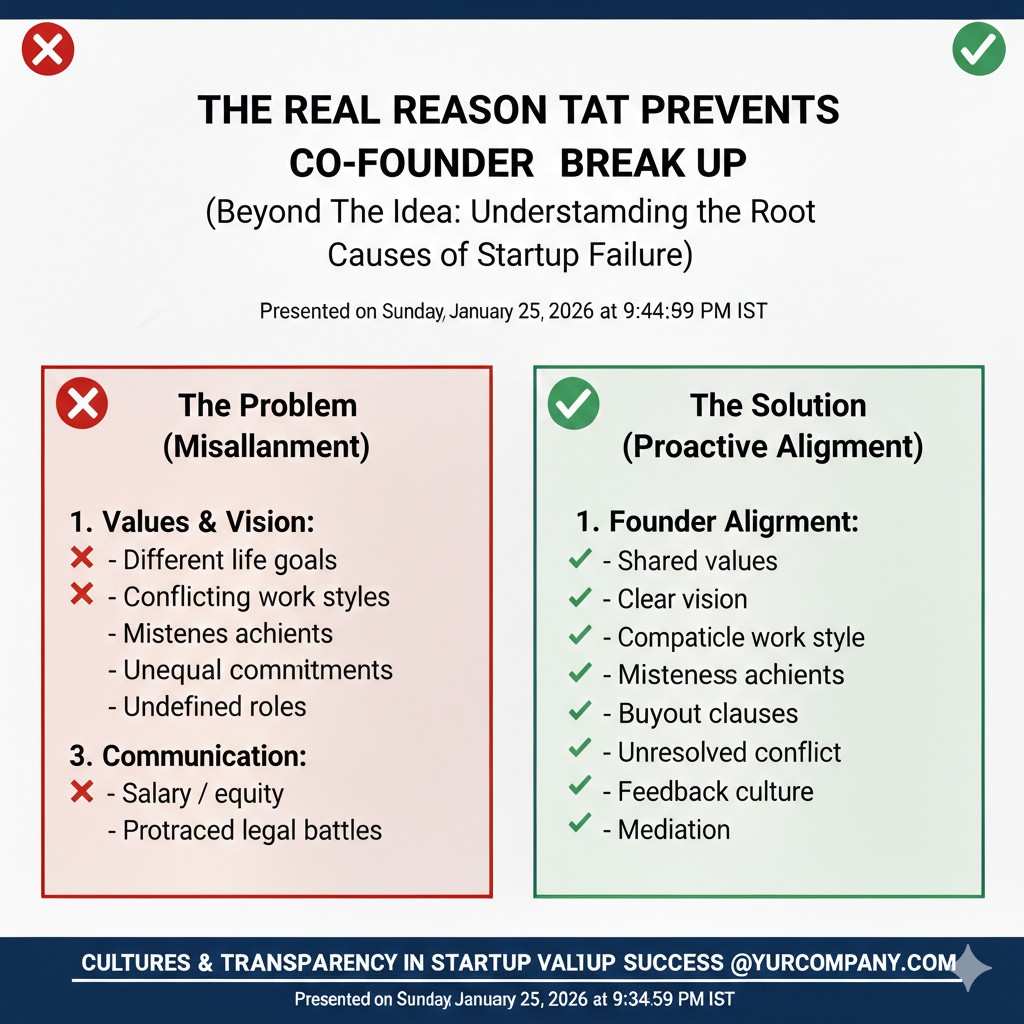
Let’s be honest. Early startup life is a pressure cooker.
At first, everything feels clean and exciting. You are building. You are moving fast. You are dreaming big. You tell yourself you will “figure the legal stuff later.”
Then later comes.
A few months in, one founder starts working less. Or they take a full-time job “for a bit.” Or they stop showing up for calls. Or they disagree on the roadmap. Or they want to sell early. Or they want to raise money fast. Or they want to stay bootstrapped. Or they want to move cities. Or their family needs them.
These are normal life things.
But equity is not a “life thing.” Equity is a forever thing. If you do not plan for change, you create a silent bomb.
Most founder fights are not about feelings. They are about fairness.
- “I built 90% of this and you still own half.”
- “I took the risk and you walked away.”
- “I cannot raise because you won’t sign.”
- “I cannot hire because our cap table is a mess.”
- “I cannot sleep because I feel used.”
This is why the clause matters. It creates a fair rule that both sides can live with—before emotions enter the room.
If you want help setting up founder paperwork the right way while also turning your inventions into real IP assets, Tran.vc can help. Apply here: https://www.tran.vc/apply-now-form/
The clause in plain words
Here is the clause in plain words:
“You earn your founder shares over time. If you leave early, you give back the part you did not earn.”
That is it.
This is called vesting.
Most people think vesting is only for employees. It is not. It is even more important for founders.
Because founders start with a lot of equity. That is the point. If one founder stops early but keeps a huge piece, the company becomes unfair and hard to run.
Founder vesting protects:
- the founders who stay
- the team you will hire
- future investors
- the company’s ability to make decisions
But vesting alone is not the full story.
The full story is vesting plus one more piece:
a “good leaver / bad leaver” rule.
That rule answers one hard question:
If someone leaves, do they keep what they vested… or do they lose more?
This is where breakups often happen, so it helps to set the rule now, while you still trust each other.
Why this clause prevents breakups
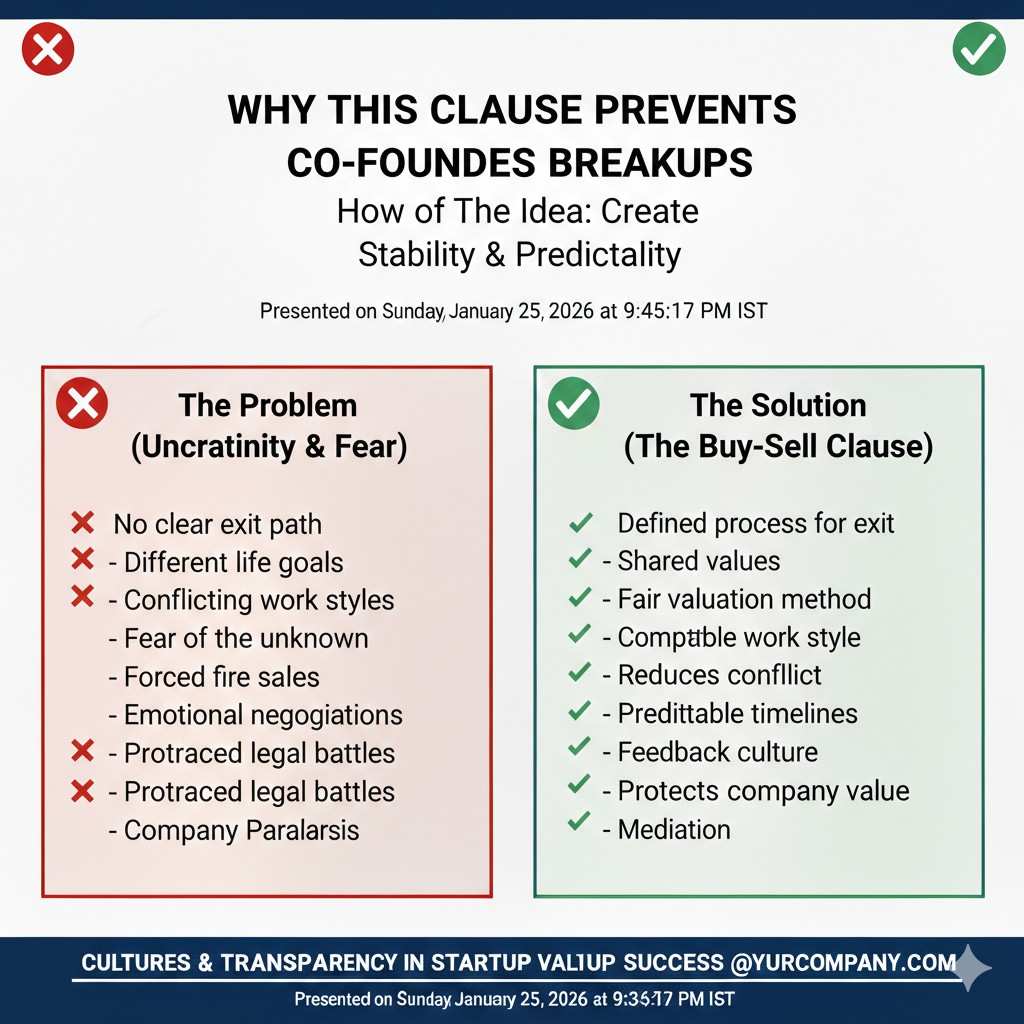
A good clause does not just “protect the company.” It protects the relationship.
It does that in three ways.
1) It removes the fear that someone can quit and still win
A lot of co-founders carry a quiet fear:
“What if I do all the hard work and they leave with half?”
Even if no one says it, it changes behavior. People start tracking who worked more. They start keeping score. They start getting angry over small things. That is poison.
Vesting removes that fear.
When both people know equity is earned over time, the relationship becomes calmer. You can focus on building instead of counting hours.
2) It makes hard talks easier later
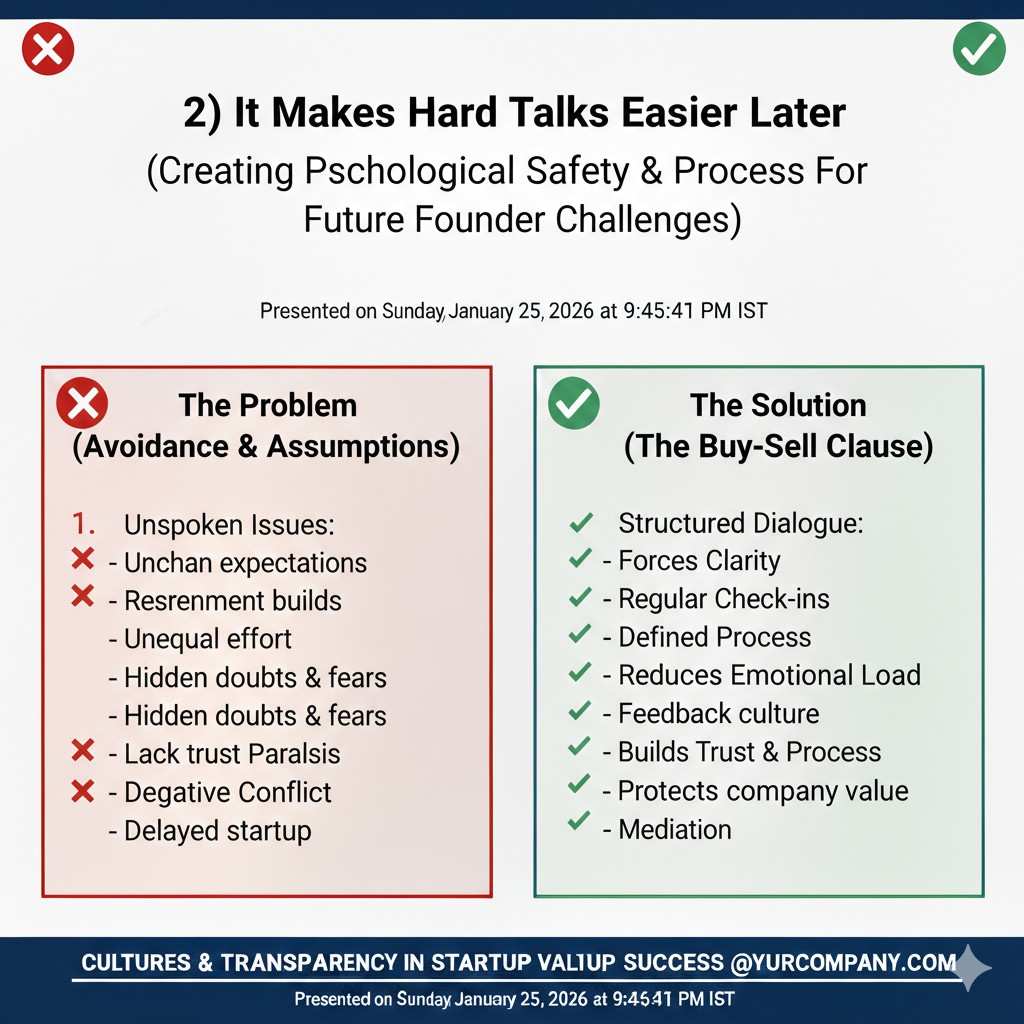
When a founder is not showing up, you may need a hard talk.
Without vesting, that talk feels like a threat. It becomes personal fast.
With vesting, the talk is more simple:
“We set a fair deal. If you cannot keep going, that is okay. The shares you did not earn return to the company.”
That is not punishment. That is the agreement.
3) It keeps the cap table clean, so investors do not run away
Investors do not want to fund a company where a non-working founder owns a huge block.
Even seed investors who love your tech will pause if they see dead equity. They know it leads to fights later. They know it can block future rounds.
A clean vesting plan makes your company look serious.
And if you are building AI or robotics, the market already assumes you need time, patents, and real defensibility. Founder drama is the last thing you want on top of that.
Tran.vc’s whole model is built around helping technical founders set up strong foundations early—especially IP foundations—so you can raise later with leverage. If that is your path, apply here: https://www.tran.vc/apply-now-form/
What the clause should say (without legal fluff)
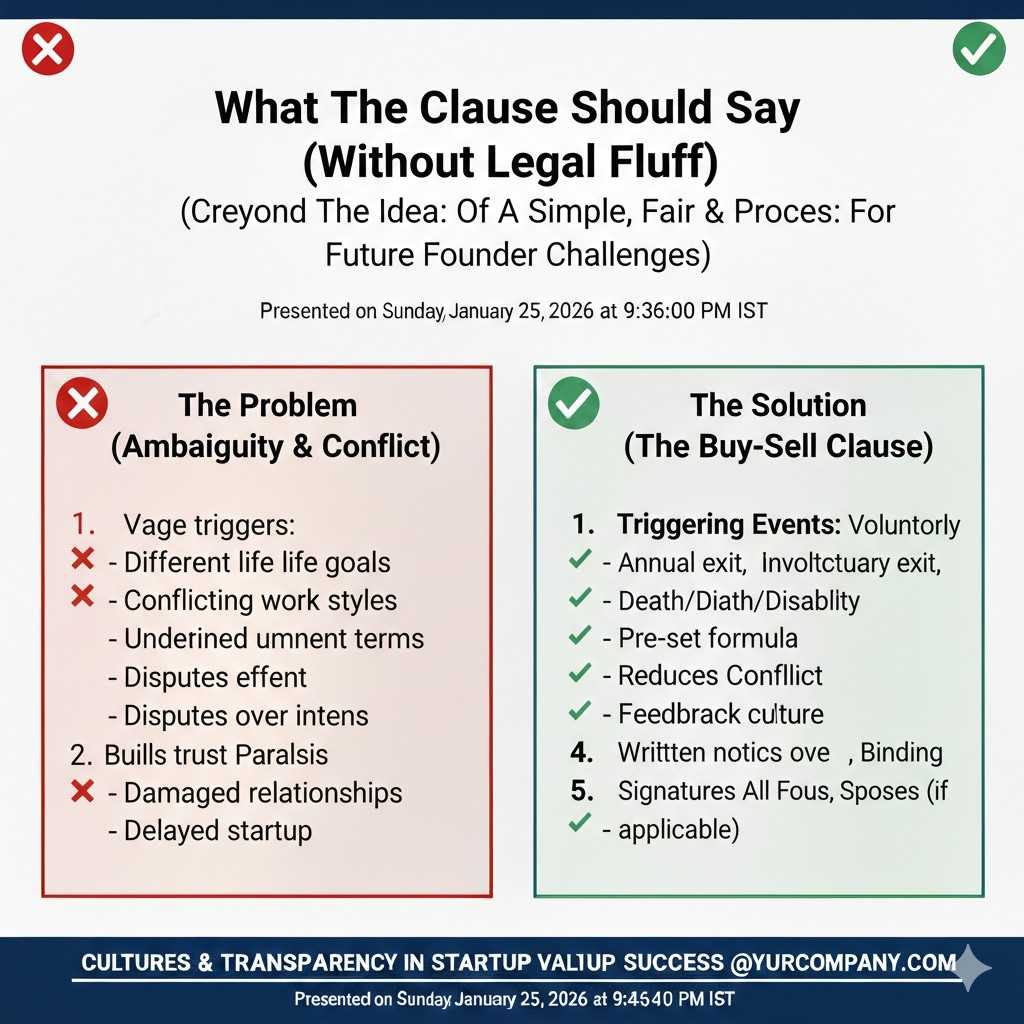
I am not your lawyer, and this is not legal advice. But I can show you the structure founders use when they do it right.
A strong founder vesting clause usually has these parts:
1) Vesting term: Often 4 years.
2) Cliff: Often 1 year.
3) Monthly vesting after the cliff: After month 12, shares vest monthly.
4) Repurchase right: If you leave, the company can buy back unvested shares for a low price (often what you paid, like $0.0001 per share).
5) Good leaver / bad leaver: This decides what happens to vested shares in certain exits.
Let’s unpack this in human language.
The cliff: the part that saves friendships
The cliff is simple:
If you leave before 12 months, you keep nothing.
That sounds harsh until you remember why it exists.
The first year is the “truth year.” It is when you learn if:
- you can work together
- you can handle stress
- your life has space for a startup
- you can build and ship
- you can sell the vision
- you can survive the lows
The cliff is not there to punish. It is there to stop a common disaster:
Someone joins as co-founder, tries it for 3 months, quits, and still owns a huge piece.
That story happens all the time. The cliff stops it.
It also stops a softer version:
Someone stays “kind of involved,” just enough to claim they worked, but not enough to truly build.
When the cliff exists, both founders know the first year matters. It sets the tone.
Vesting after the cliff: the fairness engine
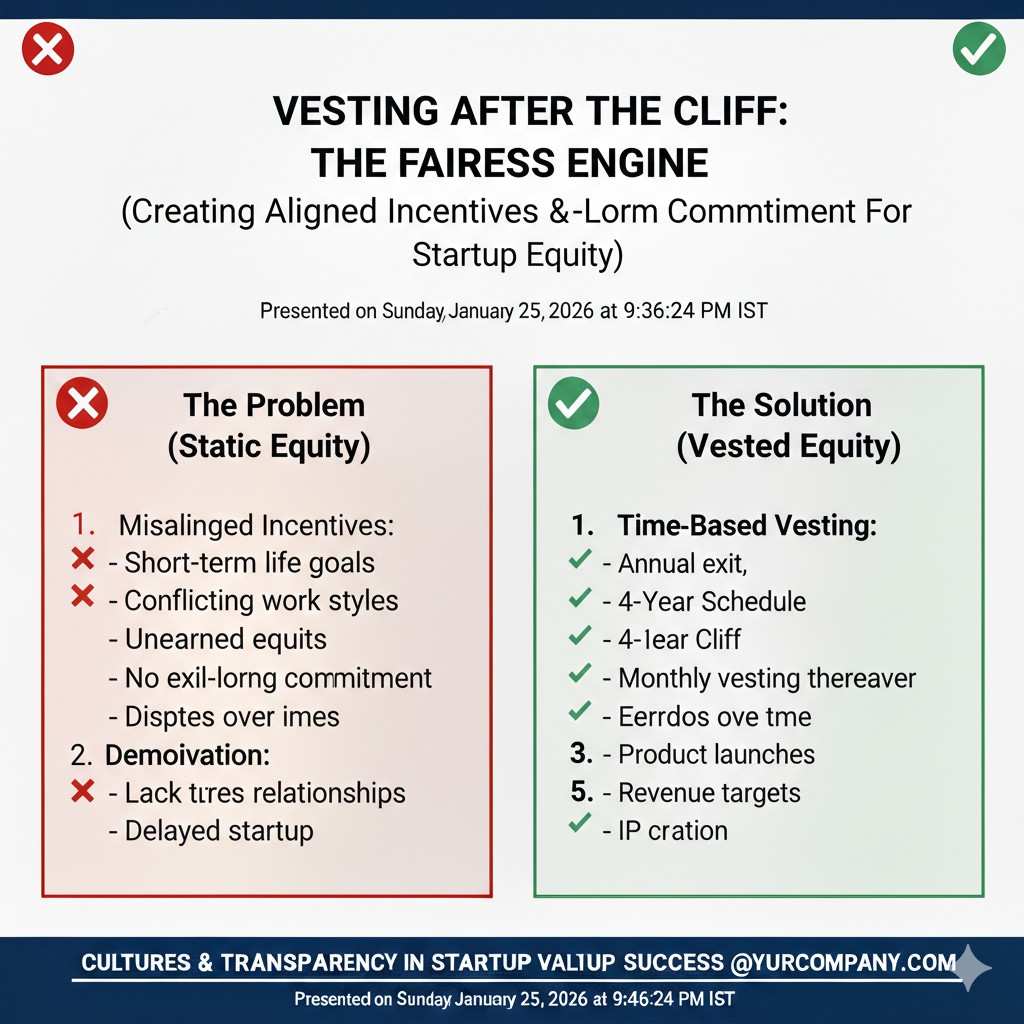
After the cliff, vesting usually happens slowly over time.
So if you have 4-year vesting with a 1-year cliff:
- At month 12, you vest 25%
- Then you vest the remaining 75% over the next 36 months
If you leave at month 18, you have vested:
- 25% at month 12
- plus 6 months worth after that
This is what makes it fair.
You do not get everything for showing up early. You get it for staying in the game.
In deep tech, this is huge. Robotics and AI products can take longer to reach real revenue. If equity is front-loaded, the person who stays to do the hard middle years gets punished. Vesting fixes that.
The repurchase right: the “clean exit” tool
The clause needs one more tool to work.
It is called a “repurchase right.”
That means:
If a founder leaves, the company can buy back the unvested shares.
This is what keeps the cap table clean.
Without it, vesting is just a promise. With it, vesting is real.
Founders often avoid this part because it feels awkward. But it is the part that prevents later chaos.
Here is the mindset that helps:
You are not planning a breakup. You are planning a fair exit route.
Just like a good building has fire exits even if you never expect a fire.
The good leaver / bad leaver part
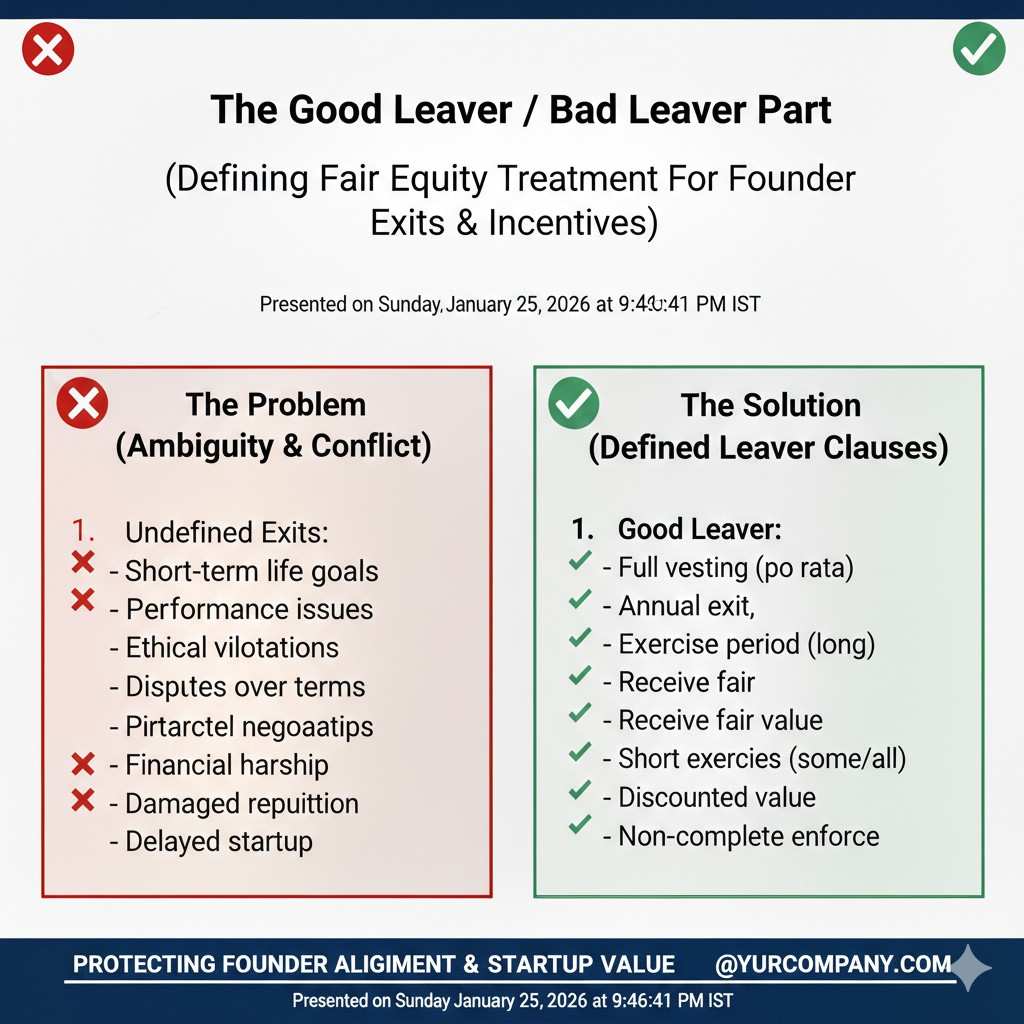
Now we come to the part that many founders skip. And skipping it is how silent anger grows.
A “good leaver” is usually someone who leaves for reasons like:
- health issues
- family crisis
- being terminated without cause
- being asked to step away in a fair, agreed way
A “bad leaver” is usually someone who leaves for reasons like:
- quitting and walking away without notice
- being fired for cause (fraud, theft, serious misconduct)
- violating key duties (like stealing IP or breaking confidentiality)
Why does this matter?
Because sometimes a founder leaves in a way that hurts the company. Sometimes they leave in a way that is truly unavoidable.
If you do not define this early, you will define it later during conflict. That is when every word becomes a fight.
When you define it early, it becomes a shared rule.
In many setups:
- A good leaver keeps what they vested.
- A bad leaver may lose some or all vested shares, or the company may have the right to buy them back at a lower price.
This part needs careful drafting with a lawyer. But the key is not the exact legal style. The key is the principle:
Leaving should have clear outcomes.
And both founders should know those outcomes now.
Tran.vc works with real patent attorneys and startup veterans. If you want help building an IP-first foundation and avoiding early founder mistakes, apply here: https://www.tran.vc/apply-now-form/
The second clause that should sit beside it
Founder vesting is the main clause that prevents breakups.
But there is one more clause that should sit right beside it, because it protects what you are building:
IP assignment.
This means:
Everything you build for the company belongs to the company.
Not to you personally. Not to your laptop. Not to your side project folder.
If you are doing AI or robotics, this is not optional. Your code, models, training methods, system design, data pipelines, hardware designs—these are the company’s core assets.
If a founder leaves and still “owns” key IP, you can get stuck. You may not be able to sell. You may not be able to raise. You may not be able to ship.
Even worse, you may end up in a fight about who owns what.
Vesting protects equity fairness. IP assignment protects the product itself.
At Tran.vc, this is the heart of the work. Turning inventions into defensible assets is not paperwork. It is leverage. If you want that kind of foundation, you can apply anytime: https://www.tran.vc/apply-now-form/
A simple founder talk you can have this week
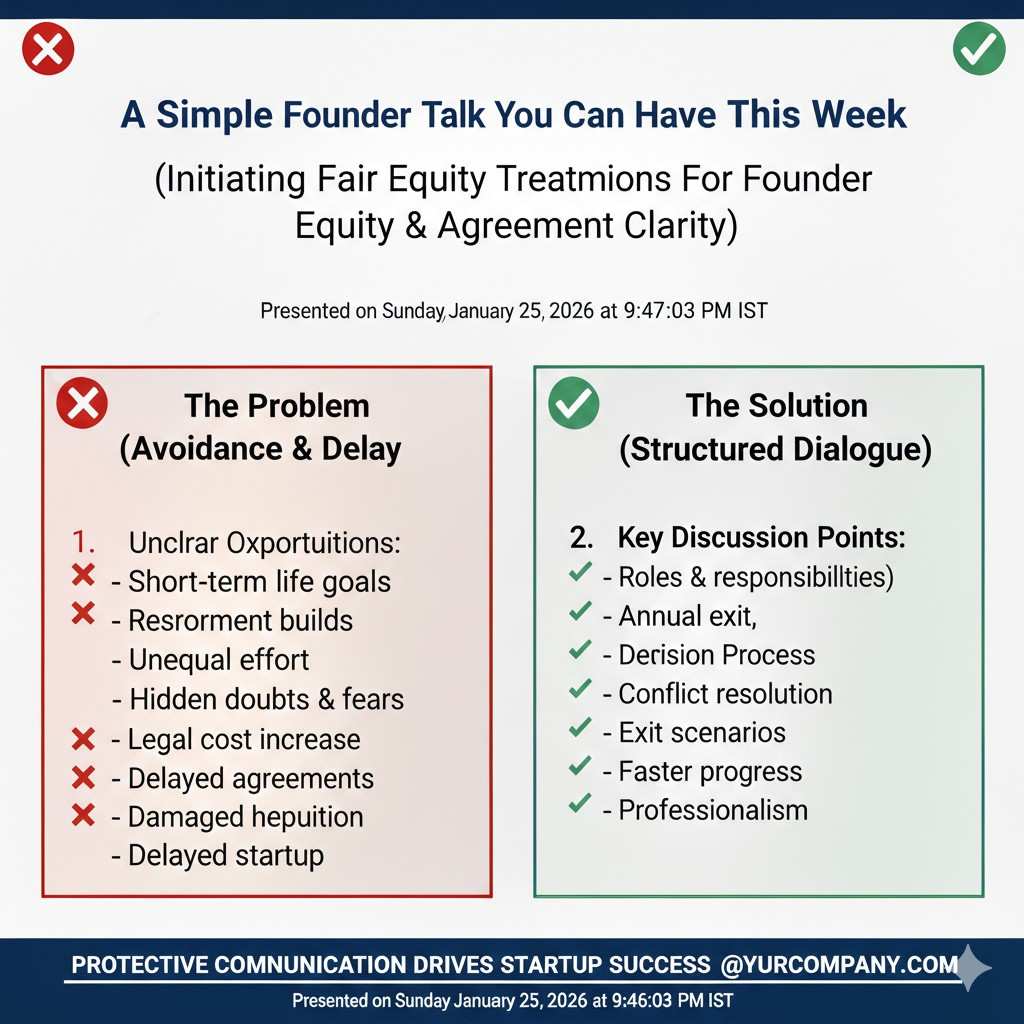
Many co-founders avoid these talks because they worry it will “feel like we don’t trust each other.”
The truth is the opposite.
Avoiding the talk is what creates distrust later.
Here is a calm way to start it:
“I want to make sure this stays fair for both of us no matter what happens. Can we set founder vesting so if one of us has to step away early, the company stays clean and neither of us feels hurt?”
That is it. No threats. No drama.
If the other person reacts badly to that question, that is also useful information.
Because the right co-founder does not fear fairness.
What to watch out for
Some vesting setups look normal but still create trouble.
One common mistake is setting vesting but skipping the cliff. That makes it too easy for someone to leave with a chunk early.
Another mistake is setting vesting but not setting repurchase rights, so you cannot actually reclaim the unvested shares.
Another mistake is not aligning vesting with roles.
If one founder is full-time and the other is part-time, equal equity with equal vesting can still feel unfair. It can work, but only if both sides are honest about what “part-time” really means and how long it will last.
Introduction
Why co-founder breakups hurt more than failed ideas
Most startups do not die because the idea was bad.
They die because the people building it could not stay aligned long enough to finish the work.
A co-founder breakup is not loud at first. It does not start with shouting or legal letters.
It starts quietly. Missed calls. Short replies. Small tension that never gets named.
In the early days, founders often tell themselves that trust is enough.
They believe good intentions will carry them through hard moments.
That belief feels right when energy is high and nothing has gone wrong yet.
But startups are pressure machines.
Time pressure. Money pressure. Personal pressure.
And pressure always exposes what was never clearly agreed on.
When things get hard, people do not fight about feelings.
They fight about fairness.
That is why co-founder breakups hurt so deeply.
They mix business failure with personal disappointment.
And once trust cracks, it is almost impossible to rebuild.
The silent mistake founders make in the first month
In the first few weeks of building, founders move fast.
They ship code. They sketch products. They talk to users.
They tell themselves the legal and equity details can wait.
This delay feels harmless.
After all, nothing bad has happened yet.
But this is the exact moment when the most important decision should be made.
Because early agreements are made with calm minds and shared optimism.
Later agreements are made under stress, fear, and imbalance.
Most founders never sit down to ask one hard question early enough:
“What happens if one of us leaves?”
Not because they expect it to happen.
But because life has a way of interfering with plans.
Health changes. Family needs grow. Jobs pull people away.
Motivation shifts. Risk tolerance fades.
When there is no clear answer to that question, resentment fills the gap.
Why this matters even more in AI and robotics startups
Deep tech startups are different.
They are slower, heavier, and more demanding than most software companies.
AI and robotics take time to mature.
They require long research cycles, testing, and iteration.
Revenue often comes later, not sooner.
This means co-founders must stay committed longer before seeing results.
And long timelines increase the chance that someone’s situation changes.
When one founder leaves early but keeps a large share, the damage is lasting.
The remaining founder carries the workload but not the control.
The company becomes stuck between past effort and future execution.
Investors notice this immediately.
They see risk where founders see history.
And they often walk away without explanation.
This is why structure matters more than optimism in deep tech.
You are not just building a product.
You are building something that must survive time.
The one clause founders underestimate
There is one clause that quietly prevents many of these breakups.
It is not flashy. It does not feel inspiring.
But it protects fairness better than any promise ever could.
That clause is founder vesting with clear exit rules.
At its core, it is simple.
You earn your ownership by staying and building over time.
If you leave early, you keep only what you earned.
This idea feels obvious once stated.
Yet many founders skip it because it feels uncomfortable to discuss.
They worry it signals distrust.
They worry it feels too formal for an early relationship.
In reality, it does the opposite.
It removes fear.
It replaces assumptions with clarity.
How clarity keeps relationships intact
When founders know the rules upfront, behavior changes.
People show up with more honesty about their limits.
They commit with clearer eyes.
There is less scorekeeping.
Less silent comparison of effort.
Less fear of being taken advantage of.
Clear rules create emotional safety.
They allow hard conversations to happen without blame.
If someone needs to step away, the process is known.
There is sadness, but not betrayal.
There is disappointment, but not chaos.
This is how companies survive founder changes without collapsing.
And how friendships survive business stress.
Why this article exists
This article is not about legal theory.
It is about preventing pain that founders rarely see coming.
The goal is not to scare you.
It is to give you a simple tool that protects your future self.
Especially if you are building something hard.
Something technical.
Something that deserves time to grow.
At Tran.vc, this lesson comes up again and again.
Founders with strong ideas lose momentum because early structure was ignored.
Founders with solid structure raise later with confidence and leverage.
If you want help building a company that lasts—and protecting the IP that makes it valuable—you can apply anytime at https://www.tran.vc/apply-now-form/
In the next section, we will look closely at what this clause actually is, how it works in real life, and why it is the single most effective way to prevent co-founder breakups before they start.