
Most startup fights do not start in court. They start in a Google Doc, a Slack thread, or a quick “we’ll sort it out later” talk between founders.
Then you raise money. Or you try to sell. Or a big customer asks for proof you own your tech. And suddenly a simple question becomes a serious one:
Who owns the IP?
If you are building in AI, robotics, hardware, or deep tech, this question is not a “legal detail.” It is the backbone of your company. Your code, models, designs, data workflows, training methods, edge devices, firmware, and core algorithms are often the main thing you have. If ownership is messy, the company is weaker than it looks.
This article is about the three areas that cause the most pain for early teams:
Assignment (the paperwork that transfers ownership), inventorship (who the law says created the invention), and the common traps that quietly break ownership.
I am going to keep this simple and practical. No fancy terms. No long legal lectures. Just what founders need to do, what to avoid, and how to fix issues before they become expensive.
This is written for founders who move fast. The people shipping prototypes, hiring early engineers, working with contractors, and sometimes building with a past employer’s tools still in their head. If that is you, you are not alone. These traps are common because startups are busy and the work is intense.
One more thing before we begin: Tran.vc exists for this exact moment. Tran.vc invests up to $50,000 in in-kind patenting and IP services for AI, robotics, and other technical startups, so you can lock down ownership early and build a real moat while you build the product. If you want help getting your IP clean, defensible, and investor-ready, you can apply anytime here: https://www.tran.vc/apply-now-form/
Startup IP Ownership: Assignment, Inventorship, and Common Traps
What “IP Ownership” Really Means in a Startup
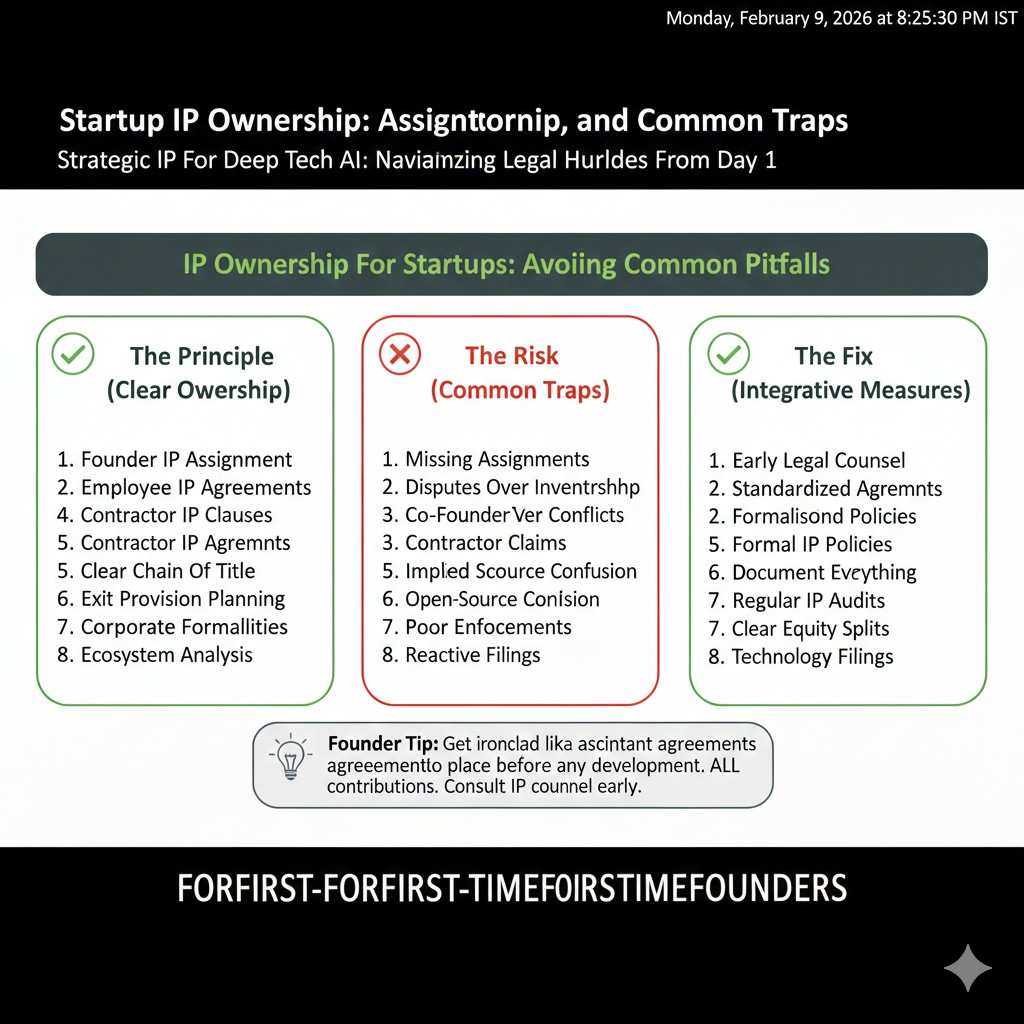
When people say “we own the IP,” they often mean, “we built it.” In startups, that is not enough. Ownership is not a feeling. It is a paper trail that shows the company has the rights to use, change, sell, and protect the work.
For deep tech teams, IP is usually the core value. If you are building a robot, your motion planning, sensor fusion, control logic, and safety methods matter. If you are building AI, your training pipeline, model tweaks, data handling, and deployment flow matter. Ownership is about whether the company truly controls those things, not just whether the team created them.
A clean ownership story is also about time. Investors and buyers do not want to spend months guessing who owns what. They want quick proof. If your records are unclear, they assume risk. Risk lowers valuation, slows deals, and can kill a round at the last minute.
If you want to build with strength from day one, you need to treat IP like a product feature. You design it. You document it. You keep it clean as you grow. Tran.vc helps teams do this early by investing up to $50,000 in in-kind patenting and IP services, so you do not have to “figure it out later.” Apply anytime at https://www.tran.vc/apply-now-form/
Why Investors Ask About Assignment and Inventorship
Investors ask about IP for one reason: they are buying into the future cash flow of the company. If you cannot protect the core tech, competitors can copy it. If you cannot prove ownership, you may not be able to sell it, license it, or defend it.
They also ask because ownership problems are common. Startups move fast and hire quickly. People join as contractors. Friends help on weekends. Advisors suggest changes. Sometimes a founder starts building before the company exists. Each one of these moments can create a gap.
That gap usually shows up in two places. The first is assignment, which is about transfer of rights. The second is inventorship, which is about who the law says created the invention. They sound similar, but they are not. Mixing them up is one of the fastest ways to end up with a patent that does not truly protect you.
The Simple Map: Ownership, Assignment, and Inventorship
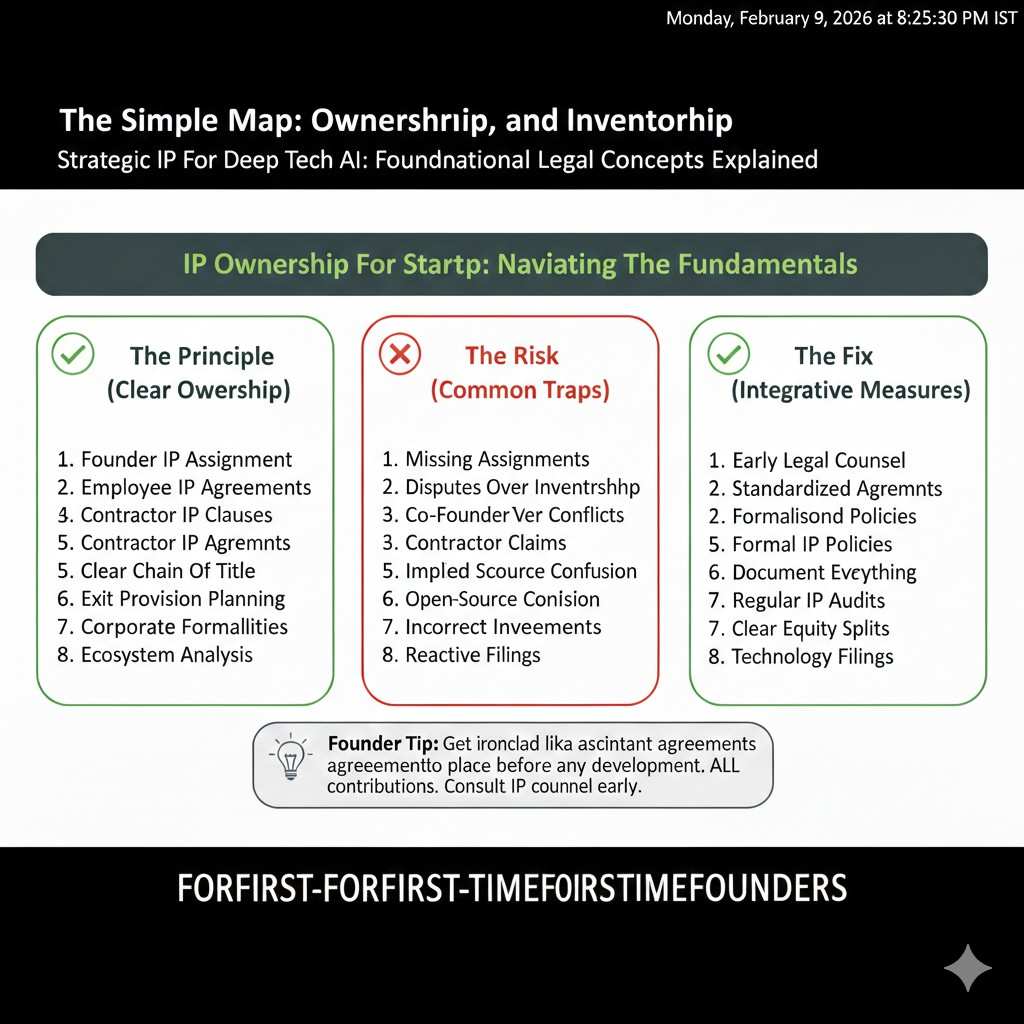
Think of this as a simple map. Ownership is the final goal: the company controls the IP. Assignment is a tool to reach that goal: it moves rights from a person to the company. Inventorship is a legal label: it names the true creators of a patented invention.
A person can be an inventor but not an owner, if they assigned their rights to the company. A person can also be an owner of some IP even if they are not an inventor, like when a company buys rights. This is where founders often get confused, especially in teams where many people touch the product.
If you understand this map early, you can build clean habits. Clean habits make fundraising easier, partnerships safer, and patent work stronger. If you want expert help setting this up the right way, Tran.vc’s application is always open at https://www.tran.vc/apply-now-form/
Assignment: The Paper That Moves IP Into the Company
What an IP Assignment Really Does
An IP assignment is a written agreement that transfers ownership of IP from a person to a company. That person can be a founder, employee, contractor, or advisor. Without an assignment, the company may only have an informal right to use the work, or in some cases, no right at all.
This matters because the default rule is often simple: the creator owns what they create, unless they properly transfer it. Many founders assume the company owns the work because they paid for it or because it was built “for the startup.” That assumption can be wrong.
A strong assignment removes doubt. It makes it clear that the IP belongs to the company, not the person. It also covers future work, so new inventions created while someone is working for the startup also become company property.
Founder Assignment: The “Before and After” Problem
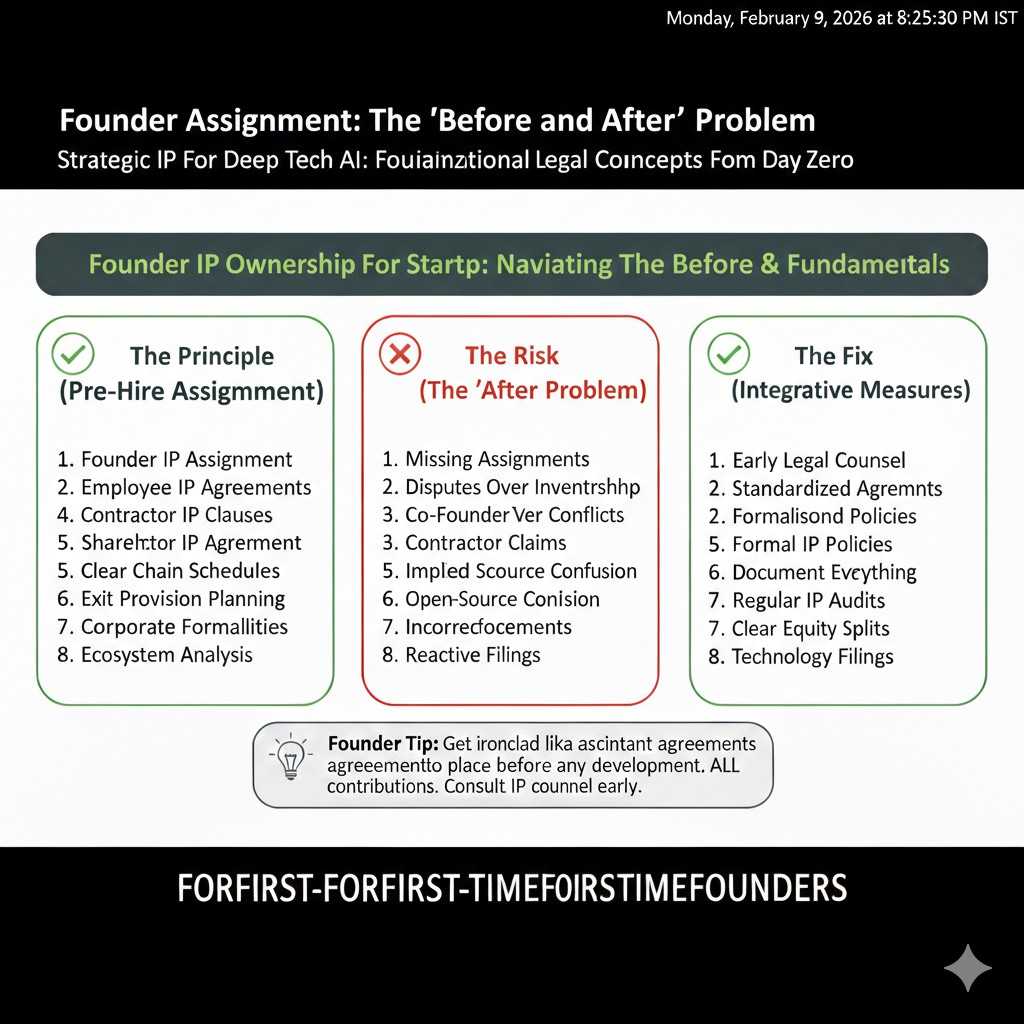
Founders often build early prototypes before the company is formed. They may write code on personal laptops, test models at home, or sketch designs on their own time. This is normal. The trap is that this work may stay personally owned unless it is formally assigned.
The fix is usually straightforward. Once the company exists, founders sign an assignment that transfers all relevant pre-company work into the company. This should be done early, not during a fundraise. Doing it late creates questions like, “Why wasn’t this done sooner?” and “Is there anything else missing?”
It is also important to keep the founder story consistent. If one founder assigned everything and another did not, you create imbalance. That imbalance can become conflict later, especially if the product becomes valuable and the relationships change.
Employee Assignment: Offer Letters Are Not Enough
Many startups think an offer letter solves ownership. It often does not. Some offer letters mention confidentiality, but do not clearly assign inventions. Some do assign, but only in vague terms. Vague terms are risky.
Employees should sign an invention assignment agreement that clearly states that inventions created within the scope of their work belong to the company. It should also address work created using company time, company tools, or company information, because those areas often become disputes.
This is not about distrust. It is about clarity. Clear agreements protect both sides. The employee knows what is expected. The company knows it can keep building without future claims.
Contractor Assignment: The Most Common Ownership Gap
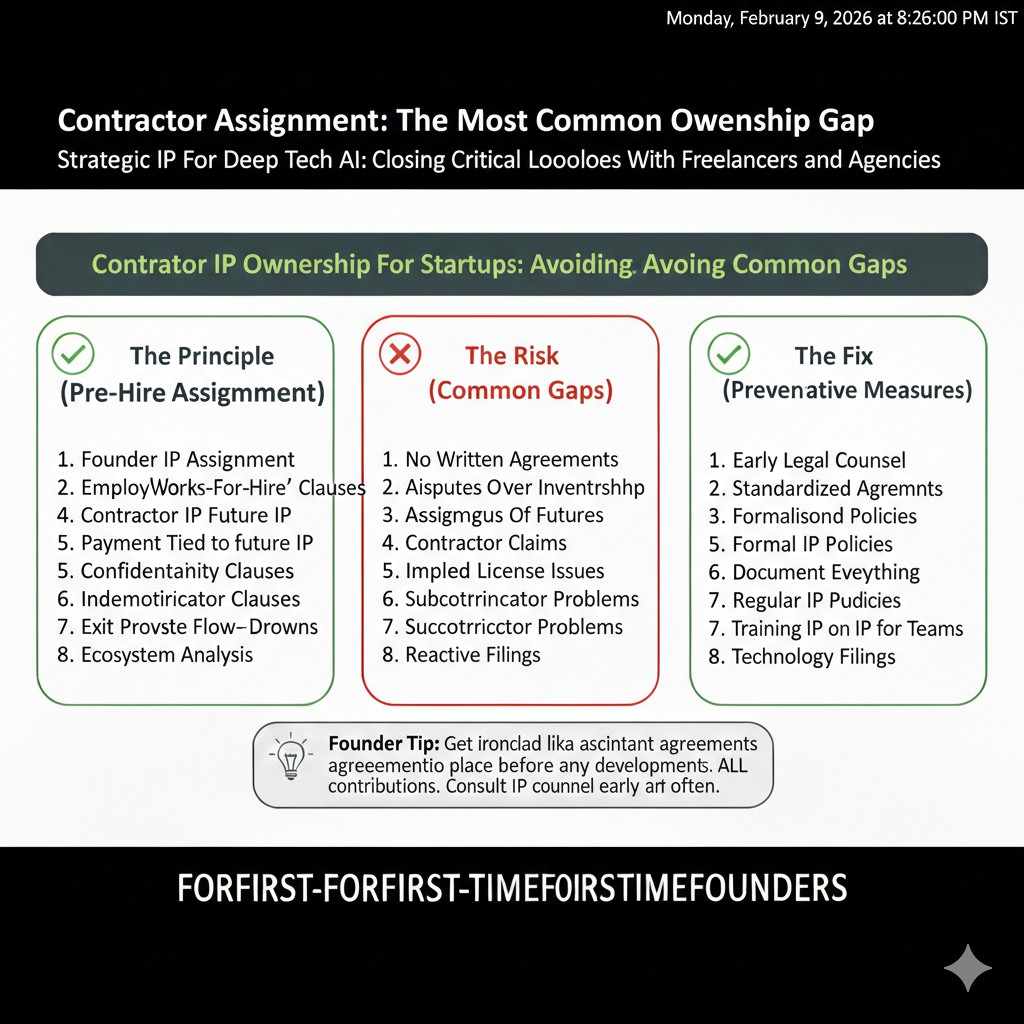
Contractors are a big source of IP problems. People hire a freelancer to build a prototype, design a PCB, write firmware, or create data pipelines. They pay an invoice and assume ownership transfers. Payment does not automatically transfer IP.
If you do not have a signed agreement that includes assignment, the contractor may still own the work. You might have a license to use it, or you might have nothing clear at all. Investors see this as a red flag because a key part of the product might be outside company control.
The best time to fix contractor ownership is before the work begins. The second best time is now. If you already used contractors, you can often get a clean assignment signed, but it is easier when the relationship is still positive.
Advisor and Mentor Contributions: Helpful Words Can Still Create IP
Advisors usually give guidance, not deliver code. But in deep tech, advice can cross into invention. An advisor might propose a new architecture, suggest a novel training trick, or point out a new control method that becomes core to your product.
If that person’s input rises to the level of inventorship for a patent, you may need to name them as an inventor. If you do not, the patent can become vulnerable. Even if you do name them, you still need assignment so the company owns the rights.
This is why it is wise to have advisors sign agreements that cover confidentiality and IP rights, even if they are not building anything directly. It prevents awkward disputes later and keeps the company’s IP story clean.
If you want a team to help you build this foundation early, Tran.vc invests up to $50,000 in in-kind patenting and IP services for deep tech startups. Apply anytime at https://www.tran.vc/apply-now-form/
Inventorship: The Legal Truth Behind Patents
Inventorship Is Not a Reward System
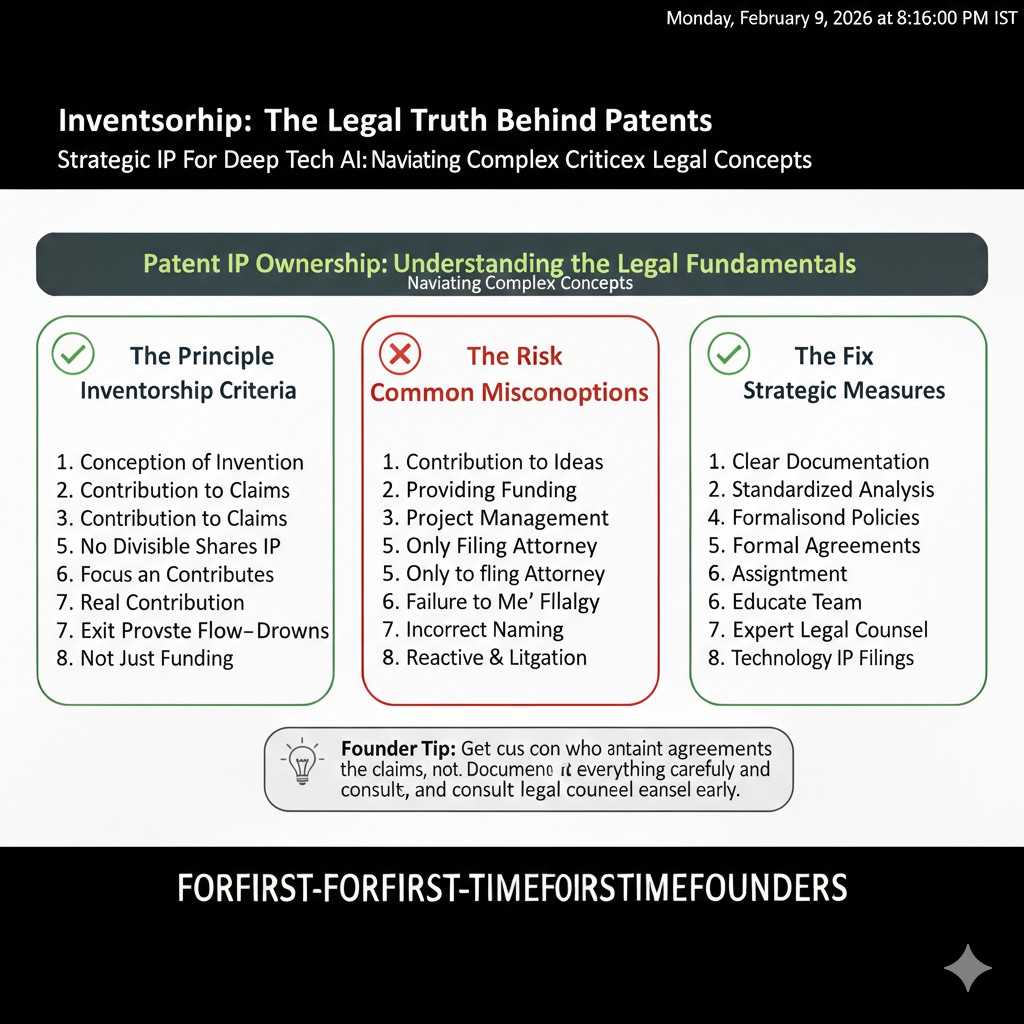
Inventorship is often treated like a “credit” system. It is not. It is a legal requirement that must reflect who actually contributed to the claimed invention in a patent.
This is one of the most misunderstood parts of startup IP. A CEO may feel they should be on every patent. A manager may expect credit because they led the team. A junior engineer may think they do not count because they “only coded.” None of those feelings decide inventorship.
Inventorship is tied to the patent claims. The claims are the numbered statements at the end of a patent that define what the invention is. If you contributed to the ideas captured in the claims, you may be an inventor. If you did not, you are not.
How Inventorship Can Change Over Time
Inventorship is not fixed at the start of a project. It can change as the invention becomes clearer. Early on, many people might brainstorm. Later, only a few people may shape the key ideas that end up in the claims.
This is why patent work should involve careful interviews and documentation. A good patent process traces the invention back to specific contributions and dates. It also ties those contributions to the final claims.
Getting inventorship wrong can be serious. Leaving out a true inventor can create legal problems. Adding someone who is not a true inventor can also create issues. The right approach is to treat inventorship as a fact-finding task, not a political choice.
Why Assignments Still Matter Even When Inventorship Is Correct
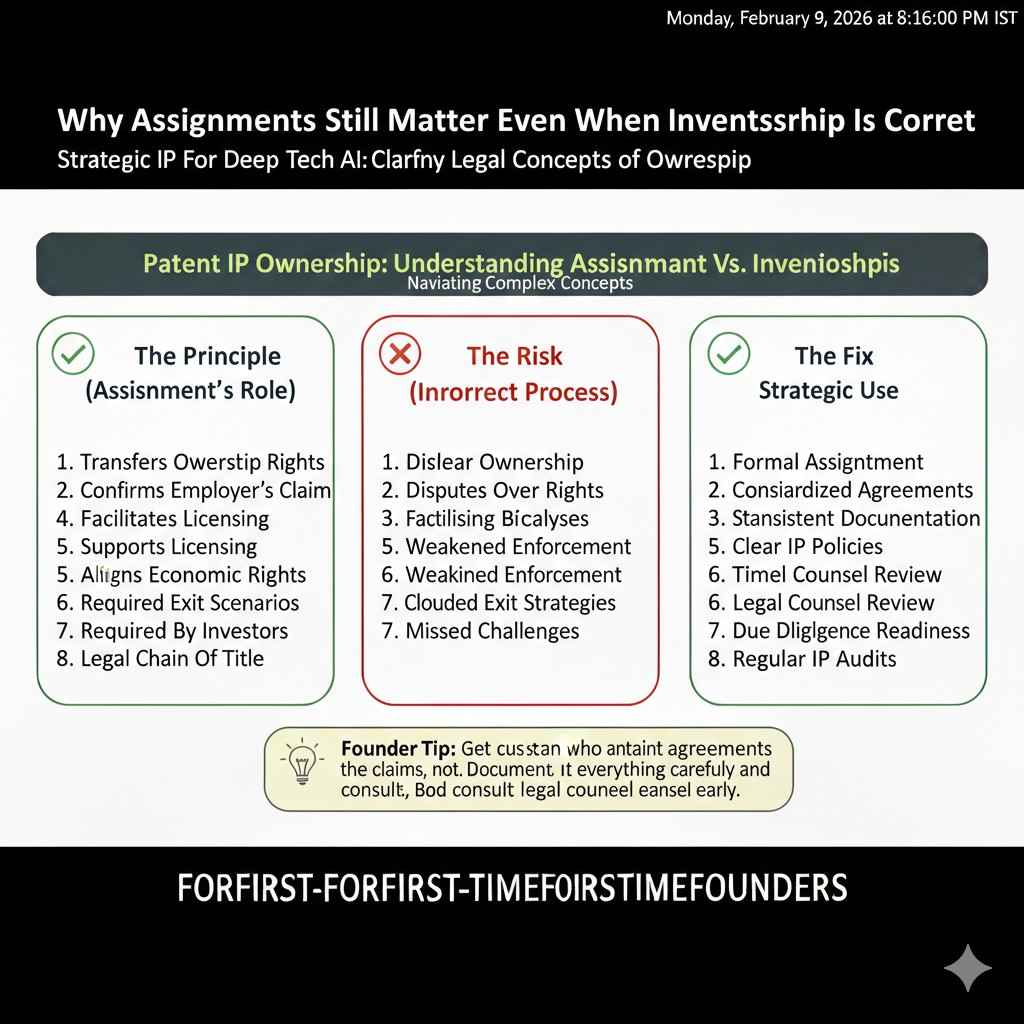
Even if your patent lists the correct inventors, the company may not own the patent unless those inventors assigned their rights. Patents begin with inventors. Ownership must be transferred to the company through assignment.
This is why assignment and inventorship must work together. Inventorship is about truth. Assignment is about ownership. When both are correct, your patent is far stronger.
This also explains why clean HR and contractor systems matter for patent strategy. If you cannot get assignments signed, your patent portfolio becomes fragile. It may exist on paper but be hard to enforce or sell.
The Special Problem in AI and Robotics Teams
AI and robotics teams tend to collaborate across functions. Data engineers shape datasets. ML engineers tune models. Robotics engineers integrate sensors. Hardware engineers change the physical system. Each change can shape what is truly new.
This makes inventorship harder. A small change in a sensor pipeline may enable a new control method. A change in labeling may make a model behave in a new way. A deployment constraint may create a new solution.
That is why strong teams treat invention capture as a habit. They do not wait until the end. They keep short internal notes on what changed, why it was hard, and what new solution worked. Those notes become gold when it is time to file.
Tran.vc helps founders capture inventions and turn them into strong filings, with real patent support, early in the company’s life. If you want that support, you can apply anytime at https://www.tran.vc/apply-now-form/
Common Traps That Break Startup IP Ownership
“We Built It Together” Without Documents
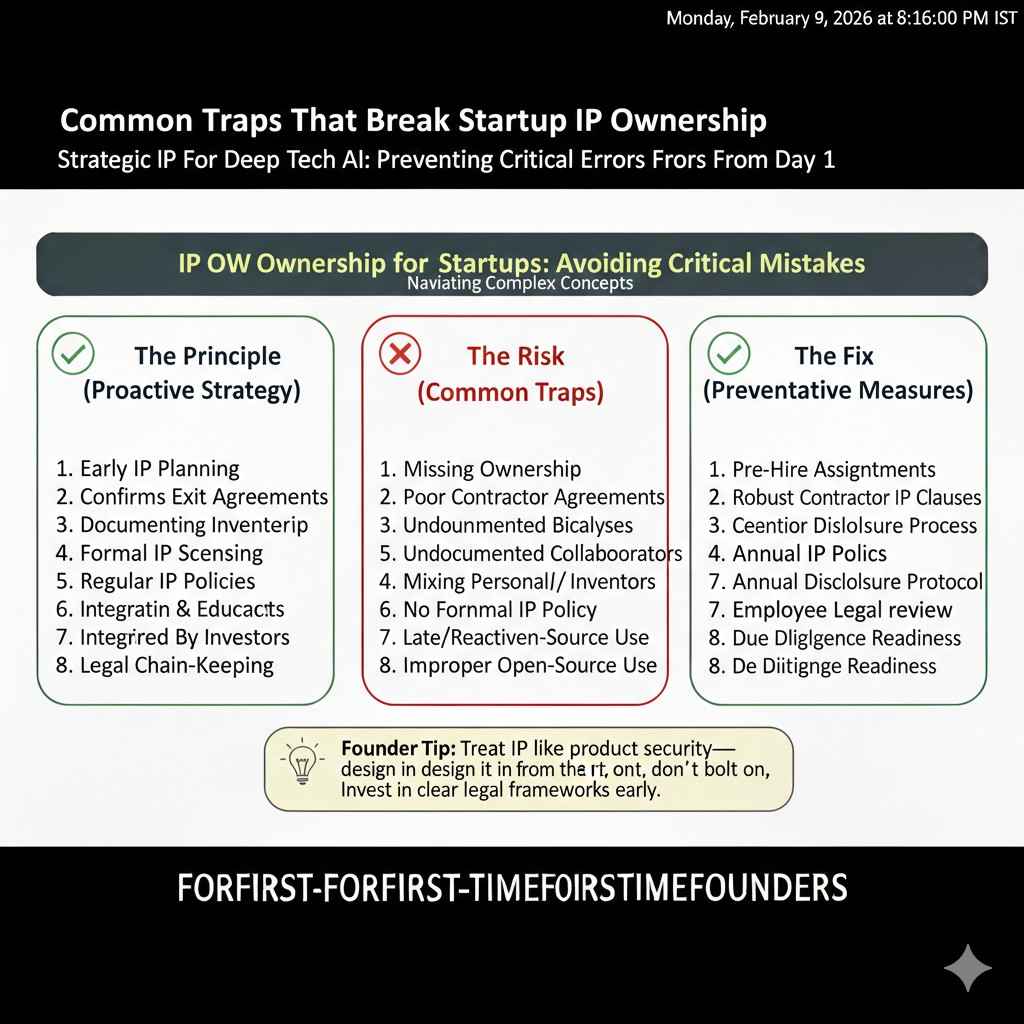
This trap is the quiet one. Friends build a prototype. A co-founder’s roommate helps for a week. A former teammate contributes a key improvement. Everyone is friendly, so nobody signs anything.
Years later, the startup is valuable. The product includes pieces of that early work. Now someone feels left out or wants payment. Without documents, it becomes hard to prove what happened and who owns what.
The fix is simple but not always easy. Every person who creates or meaningfully improves core IP should sign proper agreements. It is not rude. It is normal business. The best founders do it early because it protects relationships.
Using Old Employer Code or Know-How the Wrong Way
Many founders leave a job and start building. They carry knowledge in their heads, which is normal. The trap is copying old code, reusing old designs, or relying on confidential details from a past employer.
This can create claims that your startup’s work is not truly yours. Even if you did not mean harm, the risk is real. It can scare investors and create legal trouble.
The safe path is to rebuild cleanly. Do not copy. Do not bring files. Do not use old repos. Document that your work is new and created at the startup. If you are unsure, get guidance early, before the company grows around a risky base.
Open Source: Helpful, but Easy to Misuse
Open source is a gift to builders, but it can become a trap if you do not manage it. Some licenses require you to share your code if you distribute a product. Some licenses restrict how you can mix code.
If your product includes robotics stacks, ML libraries, or firmware components, you can accidentally pull in code that creates obligations you did not expect. This is not about fear. It is about attention.
A good habit is to track what you use, understand the license, and keep a clear record of where it is used. This also makes due diligence smoother. Investors often ask about open source risk, especially in software-heavy deep tech.
Joint Development With Customers or Partners
Early startups sometimes co-build with a customer. A pilot customer gives requirements, test data, lab time, or engineering help. A partner might contribute modules or designs. These deals can move fast, and the paperwork can lag behind.
The trap is ending up in shared ownership. Shared ownership can sound fair, but it often becomes messy. It can limit your ability to use the tech freely, patent it, or license it. It can also create confusion about who can sue if someone copies.
A safer approach is to define ownership upfront. Your startup should own what it builds. The partner may get a limited license for their use case. That way, you keep your company’s core assets clean.
Not Capturing Inventions Until It Is Too Late
Many teams wait until fundraising to think about patents. By then, the invention might have been shown publicly, posted online, or shared in demos. In some places, that can reduce patent options.
Even when patents are still possible, waiting makes the story weaker. Memories fade. Contributors change jobs. Files get lost. Invention capture works best when it is close to the moment of creation.
This does not mean filing a patent every week. It means building a habit of noting what is new and why it matters. Then you can choose what is worth protecting.