
Most university spinouts begin the same way.
A lab result surprises you. A prototype works better than it should. A professor says, “This could be big.” And for the first time, you can see a real company at the end of your research.
Then the licensing talk starts.
Someone from the tech transfer office (TTO) sends over a “standard” term sheet. It looks harmless. A few pages. Some legal words. A royalty rate. Maybe an equity slice. Some milestones. A clause about “improvements.” A sentence about “exclusive” rights.
And yet, this is the moment where many founders quietly lose their future.
Not because they did anything wrong. Not because they were careless. But because university IP deals are designed to protect the university first. That is their job. Your job is to protect the company you are about to build.
Licensing university IP can be a great path. It can also trap you. It can slow fundraising, scare off customers, and make it harder to hire. In the worst cases, it can leave you building a business where you do the work, take the risk, and still don’t fully control what you are selling.
This article is about how to do it right.
Not with hype. Not with vague advice like “get a good lawyer.” But with clear, practical thinking you can use before you sign anything. You will learn how to spot the deal terms that quietly take away your leverage, how to ask for changes without burning bridges, and how to structure a license so you can grow fast without being handcuffed later.
You will also learn when a license is not enough—and when you need a real IP plan that gives investors comfort and gives you room to build a moat that competitors can’t copy.
That is exactly what Tran.vc helps with. Tran.vc invests up to $50,000 in in-kind patent and IP services for deep tech teams—AI, robotics, and other hard tech—so you can turn your work into protected assets early, before a big round forces you into a rushed, weak position. If you are building a spinout and want to protect the tech and negotiate from strength, you can apply any time here: https://www.tran.vc/apply-now-form/
Now, let’s get grounded in the real problem.
A university “license” is not just permission. It is the rulebook for your company.
It decides what you can sell, where you can sell, how long you can sell, and what happens if you miss a deadline. It decides whether investors can get clean ownership later. It decides whether your company can buy the IP one day. It decides whether you can file patents on improvements. It decides whether you can pivot. It decides what happens if your first idea changes, like almost every startup does.
So the first mindset shift is simple:
You are not “getting a license.”
You are setting the limits of your future business.
That is why the details matter so much.
The second mindset shift is also simple:
Most TTOs start with a template that is built for their risk, not your growth.
Templates are not evil. They are just blunt tools. They aim for “good enough” across many deals. But a spinout is not “many deals.” Your company is one case. Your technology is one case. Your market is one case. Your funding path is one case.
So your job is to make the license fit your reality.
Here are a few realities that matter in almost every university spinout, even if no one says them out loud.
First, your company is not fully formed yet. You may not even have a CEO. You may not have pricing. You may not have a product. You may still be validating the market. That means you need flexibility.
Second, your first target market is rarely your final market. The best founders learn from the world and adjust. If the license locks you into one narrow “field of use,” you can end up stuck. You might find the real market and then discover you do not have rights to sell into it.
Third, investors care about clean control. They can accept a university license. Many great companies start that way. But investors will dig into the fine print. If they see terms that can cut off the company later, they either walk away or demand painful changes.
Fourth, universities can move slowly. Startups cannot. Your deal has to handle speed. If the university needs six months to approve a simple change, your company can lose the window. The license has to reduce future approvals, not increase them.
And fifth, your lab work will continue to evolve. New ideas will appear. New methods. New versions. New data. Your license has to be clear on what counts as an “improvement” and who owns it. If that is unclear, you can end up in a fight over the very progress you create.
Let’s talk about the biggest hidden mistake founders make early.
They treat the license like a legal problem.
It is not just legal. It is business strategy.
Royalties change pricing. Equity changes control. Milestones change product plans. Sublicense rules change partnerships. Assignment rules change fundraising. Improvement rules change R&D choices.
When you look at it that way, you stop asking “Is this normal?” and start asking “Does this help or hurt our ability to win?”
That is where the best spinouts separate from the stuck ones.
You can still be respectful. You can still be collaborative. You can still honor the university. You can do all of that and still negotiate.
A strong negotiation does not mean being aggressive.
A strong negotiation means being clear.
Clear about your plan. Clear about what your investors will need. Clear about the risks you cannot carry. Clear about what you can offer in return, like progress reports, fair economics, and a good relationship that makes the university proud.
If you take that approach, many TTOs will work with you. Not all. But many.
Now, before we go deeper, let’s define the goal of a good university IP license in one sentence:
A good license protects the university’s contribution while giving the startup enough control to build, raise, and scale.
If you remember that, you will know what to push for.
And if you want help doing it with a team that lives in the IP world every day—especially for AI, robotics, and deep tech—Tran.vc is built for this. Apply any time here: https://www.tran.vc/apply-now-form/
The License Is Your Company’s Rulebook
Think like a founder, not like a student
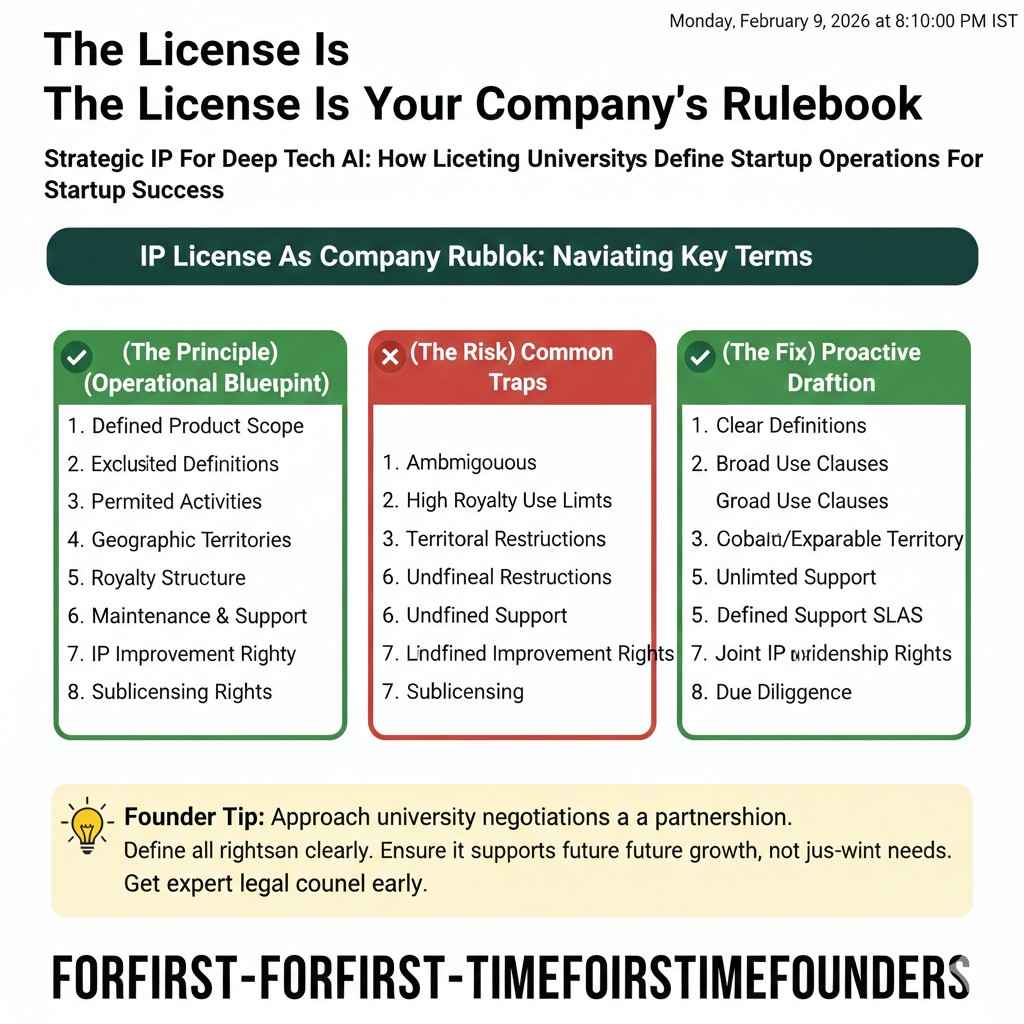
A license is not a form you sign so you can “start the company.”
It is the set of rules that will follow you into every investor call, every big customer talk, and every new product decision.
If you treat it like paperwork, you will miss the parts that quietly decide who controls the future.
When a deal feels “standard,” that is often a sign you should slow down.
“Standard” usually means it was built to fit the university’s process, not your market, your risk, or your growth plan.
The one question that keeps you safe
When you read any clause, ask one simple thing.
“If this goes wrong, can it kill the company?”
That question changes how you read every page.
It also helps you focus, because you do not need to fight every term. You need to fix the terms that can break you.
If you want a second set of expert eyes, Tran.vc helps founders do this early, before terms harden.
You can apply any time here: https://www.tran.vc/apply-now-form/
Exclusivity: What You Really Need
Exclusive does not always mean protected
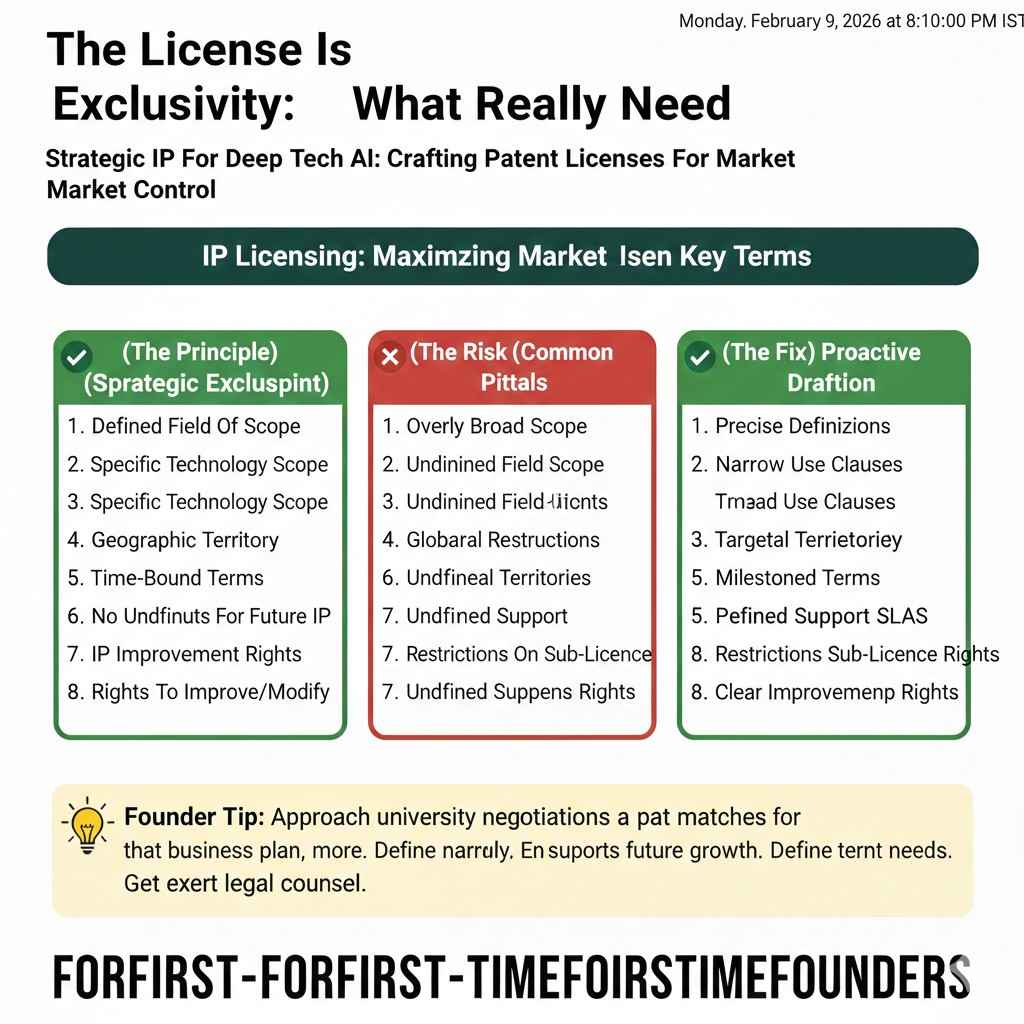
Many founders push for an exclusive license because it feels like safety.
But exclusivity is only useful if it is real in practice.
Some “exclusive” deals still let the university grant rights to others in hidden ways, like for research use, teaching, or special programs.
Those carve-outs can be fine, but you must understand what they allow.
If a “research use” carve-out is broad, it can let a well-funded lab build a competing version while you are trying to sell.
Field of use is where you can get trapped
Universities often grant exclusivity only inside a defined field, like “medical imaging” or “warehouse robots.”
That field sounds reasonable until your company learns the market is different than you guessed.
A common spinout story goes like this.
You start in one niche because that is where the lab work began.
Then customers pull you toward a better niche, and suddenly the license says you do not have rights there.
Field limits are not evil. They are just risky when they are narrow.
A better approach is a field that matches how your product will evolve, not how the paper described it.
Territorial limits can block scale
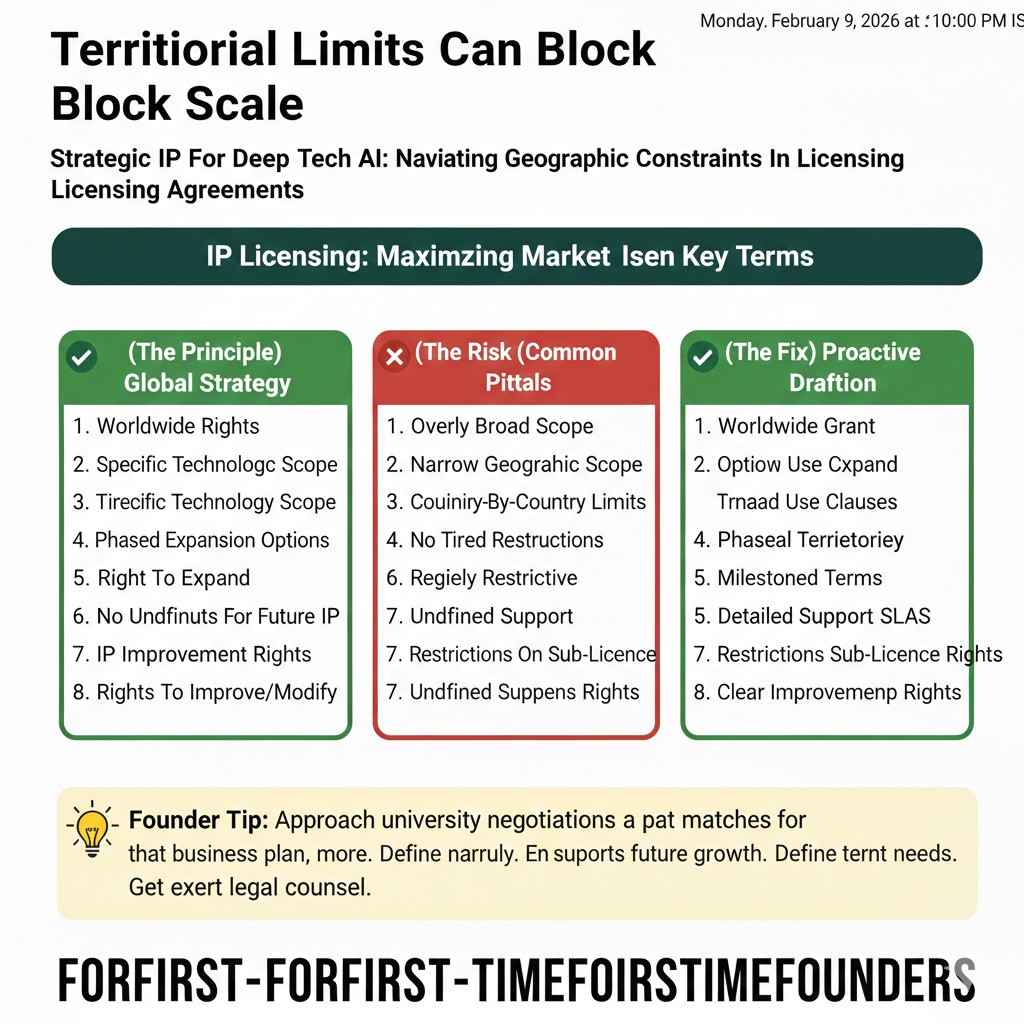
Some licenses limit geography, like “North America only.”
That may sound fine early, but it creates a problem when a global customer asks for rollout in Europe or Asia.
Investors also notice this fast.
A company with capped markets looks smaller, even if the tech is strong.
If you truly cannot get global rights now, you can sometimes negotiate a clear path to expand later.
The key is making that path automatic and priced fairly, not “subject to university approval” with no promise.
Economics: Royalties, Equity, and the Real Cost
Royalties change your pricing power
Royalties feel small when you read them as a percent.
But they become painful when you try to price competitively or when you sell through partners.
A royalty stack can also happen.
If you later license other IP, you may end up paying multiple royalties on one sale.
The problem is not “royalties exist.”
The problem is when royalties stay high even after the company takes huge risk and spends years building the market.
A healthier structure often has a step-down.
As revenue grows, or after a funding event, or after you hit a clear milestone, the royalty drops to a level that does not punish success.
Equity asks: who gets paid for the same value
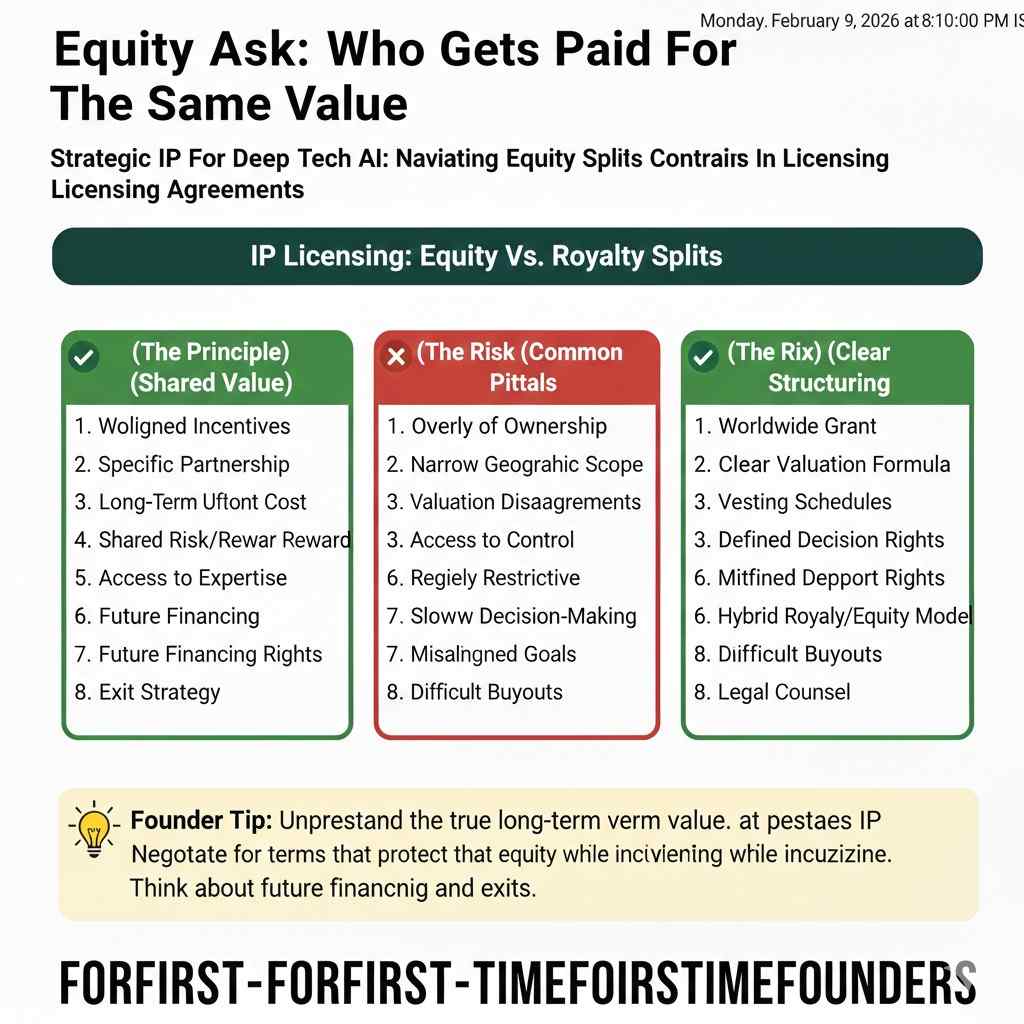
Universities often ask for equity plus royalties.
Sometimes that is fine. Sometimes it is too much.
A simple way to think about it is this.
Equity is a bet on the company. Royalties are a tax on every sale.
When you do both, you need to make sure the total is not so heavy that the company becomes unattractive to investors.
Investors want you hungry, not squeezed.
Equity terms can also cause trouble if they come with special rights.
If the university asks for board seats, veto rights, or strange protections, that can block later rounds.
Minimum payments can create early failure
Some licenses include minimum annual payments, even before you have real revenue.
That is one of the fastest ways to kill an early spinout.
It forces you to choose between paying the university and paying the team.
It also pushes you to sell too early, before the product is ready, which harms reputation.
A better approach is to match payments to reality.
If the company is pre-revenue, then costs should be low and tied to progress, not tied to calendar time.
If you are unsure what is “reasonable” for your case, Tran.vc helps founders model license economics in a way investors will accept.
Apply any time: https://www.tran.vc/apply-now-form/
Milestones: The Silent Termination Machine
Milestones sound fair until they hit real life
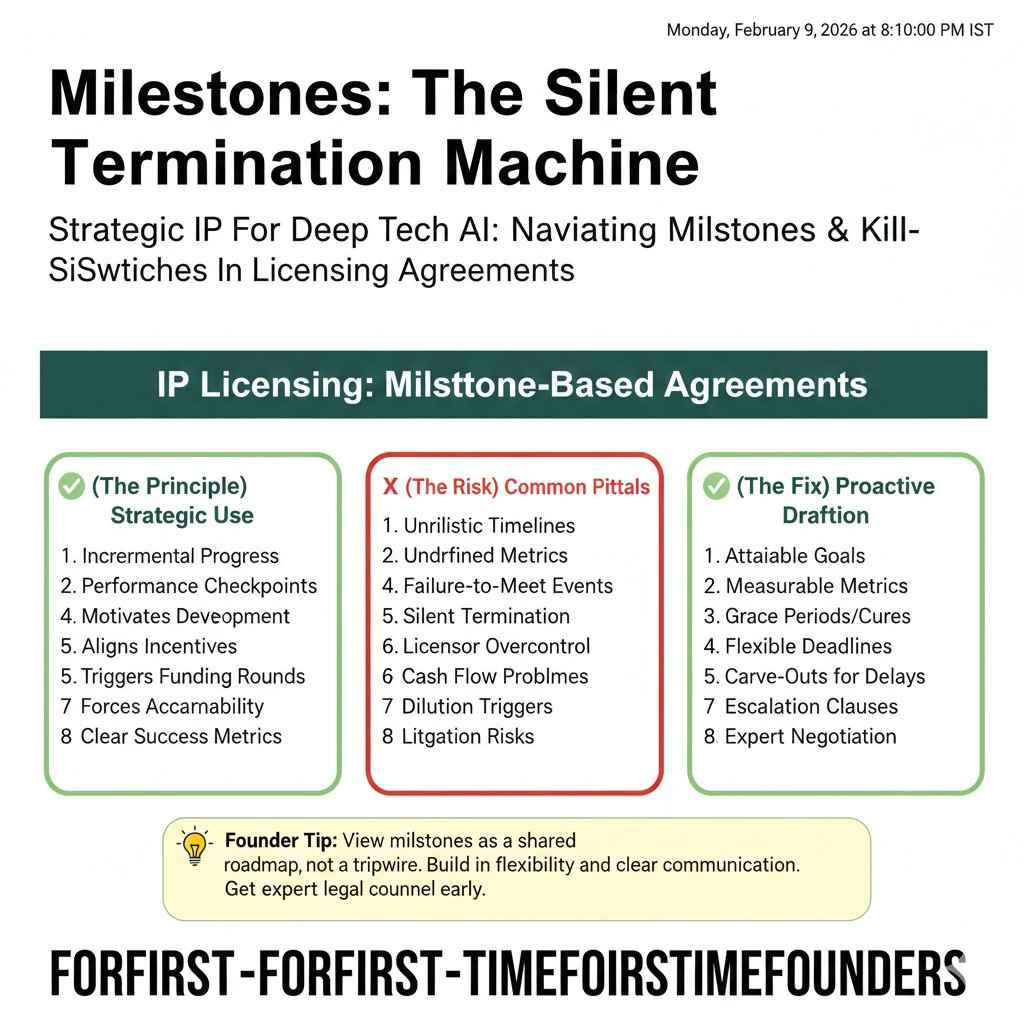
Milestones are often written as dates and numbers.
“Product launch by X date.” “First commercial sale by Y date.” “Raise Z dollars by year two.”
They sound simple, but startups do not move in straight lines.
A key hire delays. A regulator changes rules. A customer pilot takes longer. A competitor shifts the market.
If milestones are strict and the penalty is termination, you are building on a cliff.
One slip and you lose the license, even if the company is healthy.
A smarter milestone design
Good milestones reflect effort and direction, not perfect timing.
They also include cure periods, meaning you get time to fix a miss.
They can include clear ways to reset dates when delays happen for reasons outside your control.
This is not about avoiding accountability. It is about avoiding a deal that collapses when normal startup life happens.
A good license assumes things will change, and it gives both sides a fair way to adjust without drama.
Improvements: Who Owns What You Build Next
This is where founders lose their future
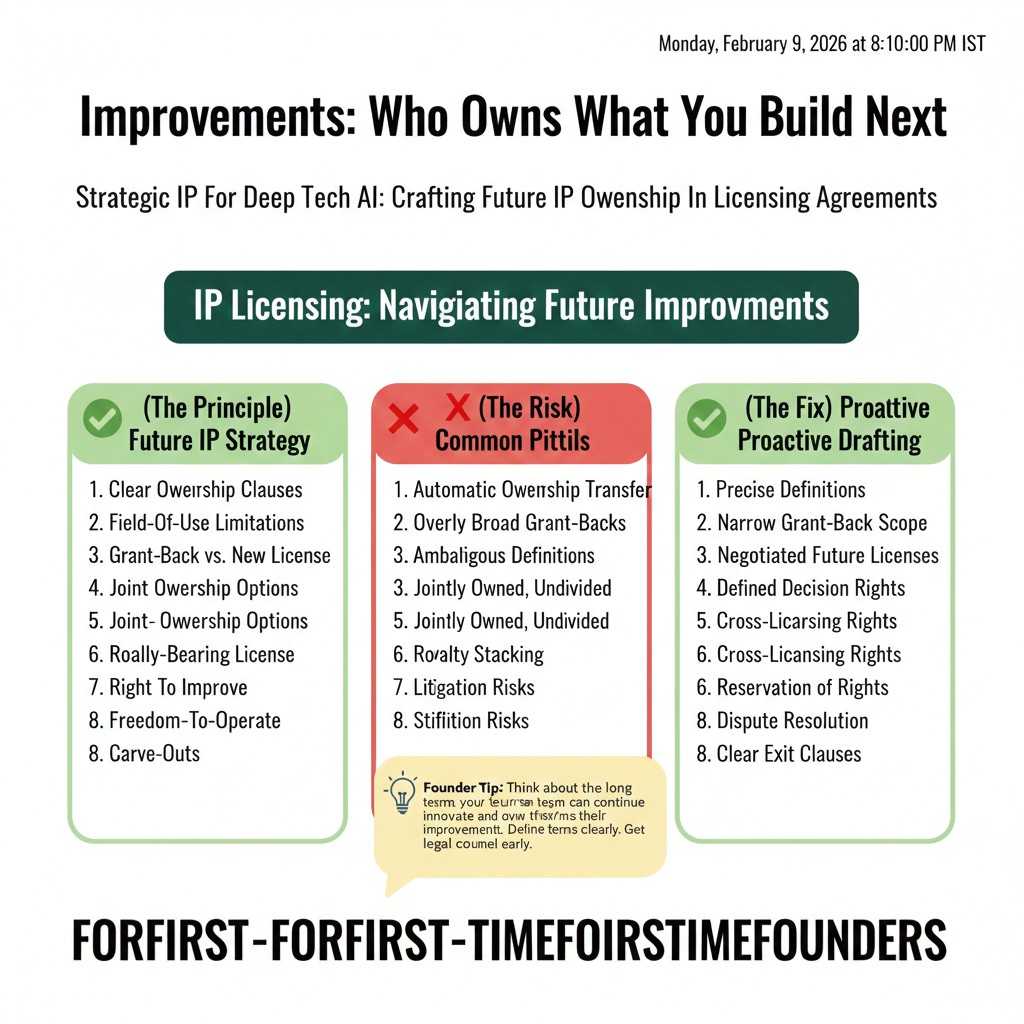
“Improvements” is one word that hides a big fight.
If the license says the university owns all improvements, you may end up giving away the very progress your company creates.
This matters because the first patent from a lab is rarely the full product.
Most value is built after the spinout starts, when you turn a concept into something reliable, fast, cheap, and usable.
If the deal pulls those improvements back to the university, your company can become dependent forever.
That is a hard story to sell to investors.
The clean way to frame improvements
You want the license to be clear about what the university owns and what the company owns.
In simple terms, work done by your company, with your company resources, should belong to your company.
If university researchers continue related work, that is fine too.
But then you need a clear option to license that future work on fair, pre-set terms.
Without that option, you can get “ambushed” later.
A new patent files, and suddenly your product needs it, and the university has all the leverage.
Watch for “grant-back” clauses
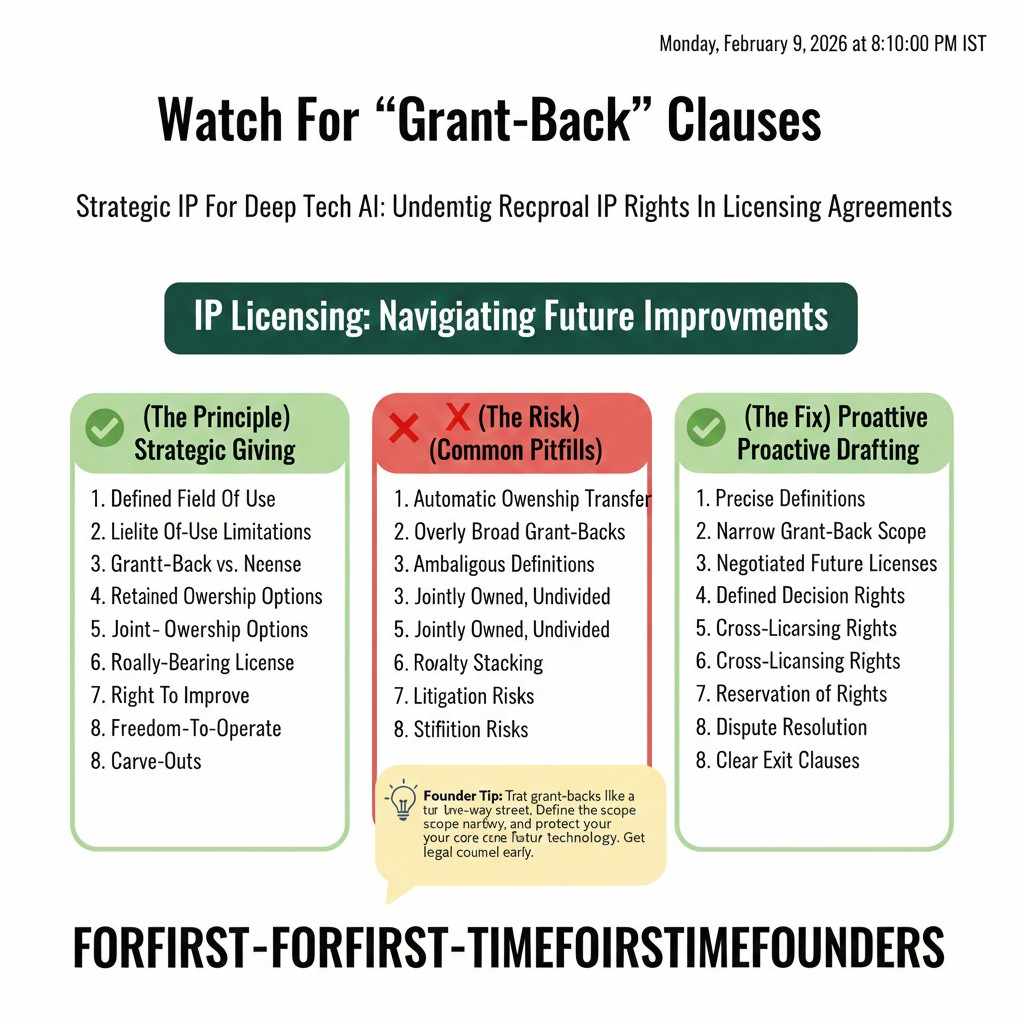
A grant-back can require you to give the university rights to your future IP.
Sometimes it is limited and reasonable, like letting the university use it for research.
Sometimes it is broad and dangerous, like letting them license it to others.
A safe version allows internal research use only, with no ability to help a competitor.
If the clause goes beyond that, it deserves serious negotiation.
Sublicensing and Partnerships: How You Make Money Later
Partners often require sublicensing
Many deep tech companies grow through partners.
System integrators, OEMs, cloud marketplaces, hospital networks, big robotics distributors.
If your license limits sublicensing, you may be blocked from the very channels that make you scale.
Some university licenses demand a large share of sublicensing income.
That sounds fine until you realize partner deals often include complex economics.
If the university takes too much of sublicensing value, partners become harder to land.
Or the deal becomes unattractive to you, and you avoid the partnerships you need.
The “control” universities want, and the control you need
Universities often want notice and approval rights for sublicenses.
The intent is not bad. They want to protect misuse.
But startup speed matters.
If every partnership needs a committee sign-off, your company will move at academic pace.
A better structure often uses clear rules instead of approvals.
For example, you can agree on what a “permitted sublicense” is, and require reporting, not permission.
That keeps safety without slowing growth.
Assignment and Change of Control: The Fundraising Gate
This clause decides if you can raise a real round
Investors look for one thing in university licenses early.
Can the license be assigned to a new owner, like the company after a financing, or after an acquisition?
If assignment requires university approval, you have risk.
Even if the university says “we usually approve,” investors dislike “usually.”
They want certainty, not a hope.
Acquisition terms can drain value
Some licenses include “change of control” payments or automatic renegotiation at acquisition.
That can reduce your exit value and make acquirers nervous.
Acquirers want clean ownership paths.
If they see a risk that the university can reopen terms during the deal, they may reduce price or walk.
A cleaner approach is simple and predictable.
If there is a buyout option, make it priced and clear.
If there are change-of-control terms, make them modest and defined, not open-ended.
Tran.vc often helps founders prepare IP and license terms that investors can accept without long back-and-forth.
If you are in this stage, apply any time: https://www.tran.vc/apply-now-form/