
Most founders think “IP due diligence” is a thing that happens right before a big round or an exit.
Investors and acquirers see it very differently.
To them, IP due diligence is a fast way to answer one simple question:
“Is this company real… and is it safe to bet on?”
Not “Is the tech cool?” Not “Is the demo strong?”
Safe. Ownable. Defensible. Clean.
Because when money gets serious, nobody wants surprises. They want proof that:
- your company truly owns what it built
- your team did not carry risky baggage from past jobs
- your patents (if you have them) match the product, not a science project
- your open-source choices won’t blow up a sale later
- your contracts do what they should do
- your IP story can survive a tough lawyer in a closed room
This is where deals slow down. This is also where deals die.
And here’s the part most founders miss: you do not “prepare for due diligence” later. You build so that due diligence is easy from day one.
That is exactly what Tran.vc helps you do. Tran.vc invests up to $50,000 in in-kind patenting and IP services so you can build the right foundation early—before you get cornered by a term sheet, before an acquirer starts poking holes, and before a competitor copies what you built. You can apply anytime here: https://www.tran.vc/apply-now-form/
In this article, we’ll walk through what investors and acquirers actually ask for during IP due diligence, why they ask, what “good” looks like, and what you can fix right now—without turning your life into paperwork.
We’ll keep it simple, direct, and practical.
What IP Due Diligence Really Looks Like in Practice
It starts earlier than most founders expect
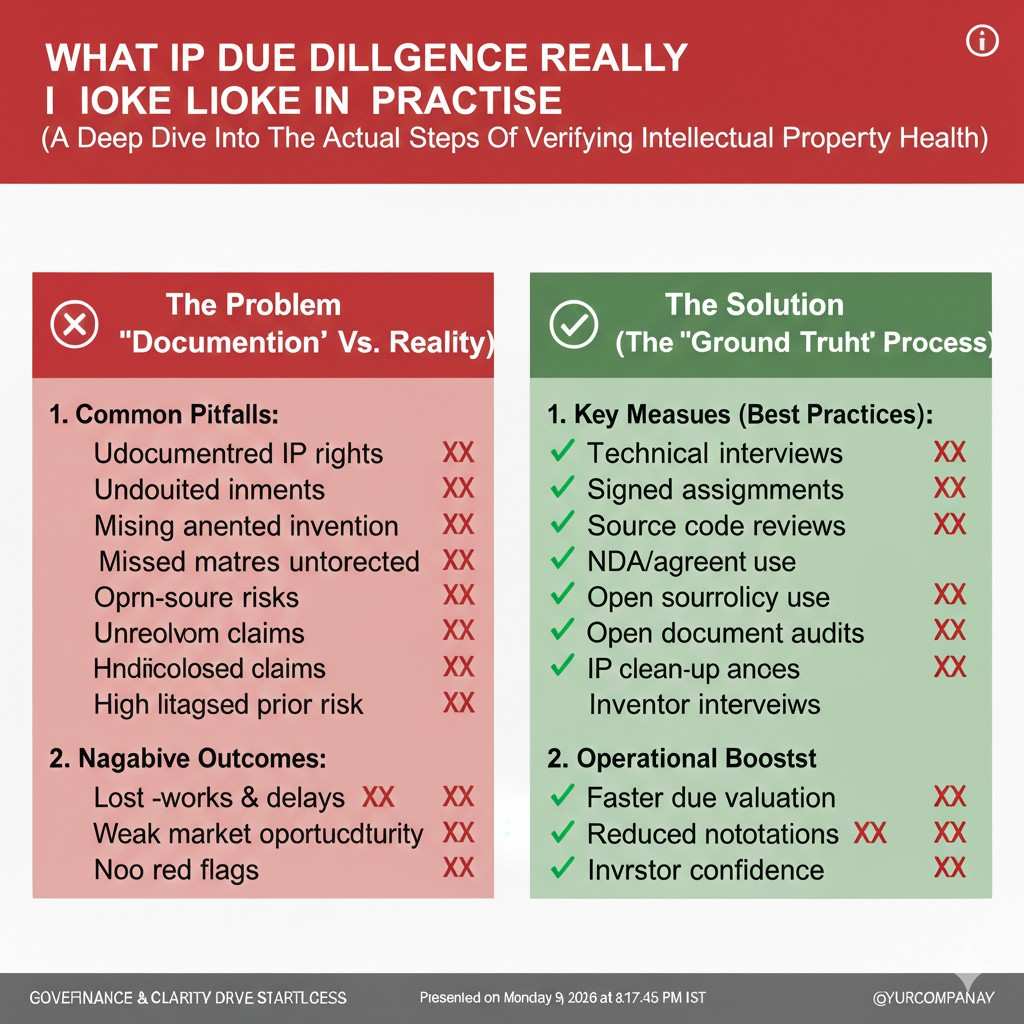
IP due diligence does not begin when lawyers send a checklist.
It often starts the moment an investor reads your pitch or an acquirer opens your data room. They are already forming opinions about how serious you are based on how you talk about ownership, protection, and risk.
If your answers feel vague, defensive, or confused, alarms go off long before formal diligence begins.
This is why IP due diligence feels sudden to founders but familiar to investors. They have seen the same mistakes many times before, and they know where to look first.
The real goal behind all the questions
Investors and acquirers are not trying to trap you.
They are trying to reduce regret.
No one wants to invest millions, or acquire a company, only to learn later that the core tech belongs to a former employer, a contractor, or an open-source license with sharp edges.
IP due diligence is their way of asking, “If this goes wrong, where could it break?”
Your job is to show them it won’t.
The First Thing They Ask: “Do You Own What You Built?”
Ownership is the foundation of everything else
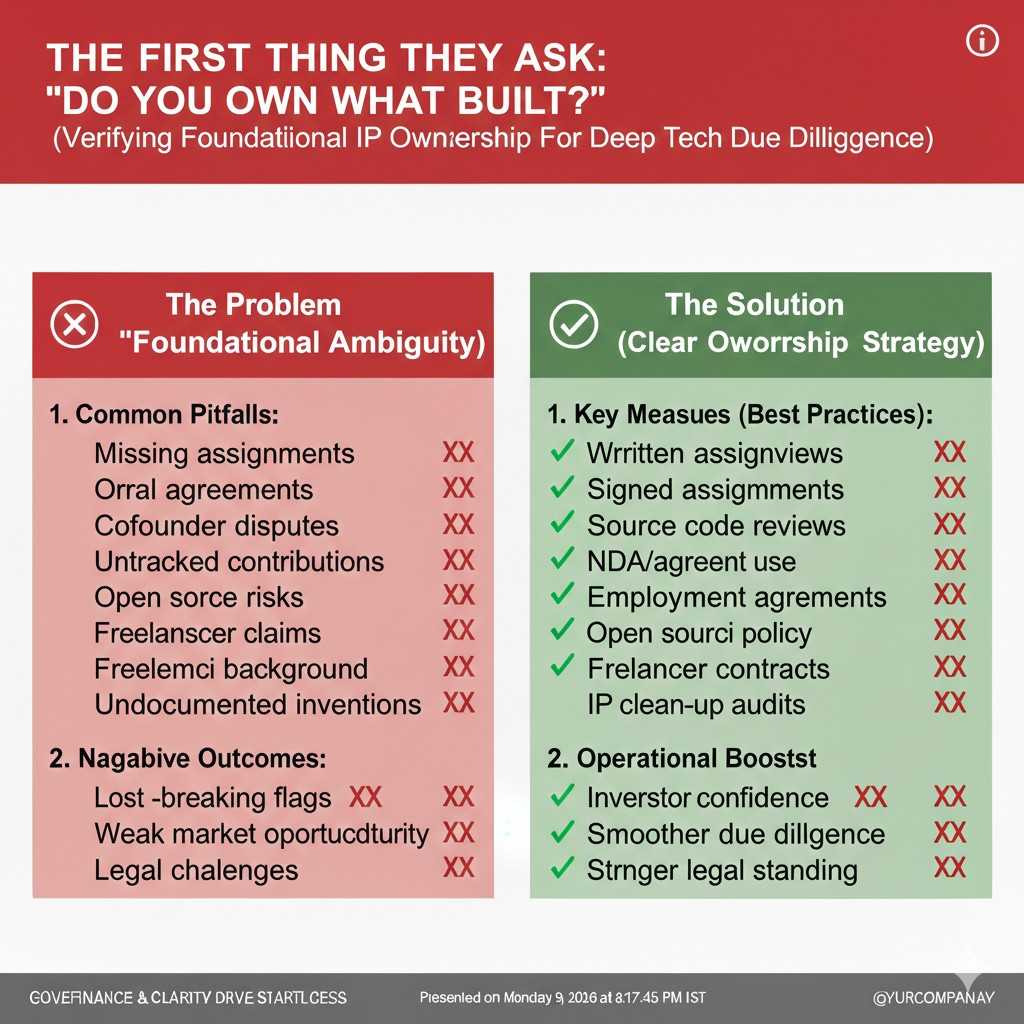
Before patents, before code quality, before market size, the first question is always ownership.
If you do not clearly own your technology, nothing else matters. Not your traction. Not your growth. Not your vision.
Ownership answers one basic concern: can this company legally sell, license, or defend what it claims to sell?
If the answer is unclear, the deal slows down immediately.
Founder IP assignment is non-negotiable
Investors will look closely at whether every founder has signed clear IP assignment agreements.
This matters more than founders realize.
If even one founder did not properly assign their work to the company, that person may still personally own part of the core technology. That creates leverage, risk, and sometimes lawsuits later.
This is one of the most common early-stage problems, especially in companies that moved fast and skipped legal basics.
Past jobs create hidden risks
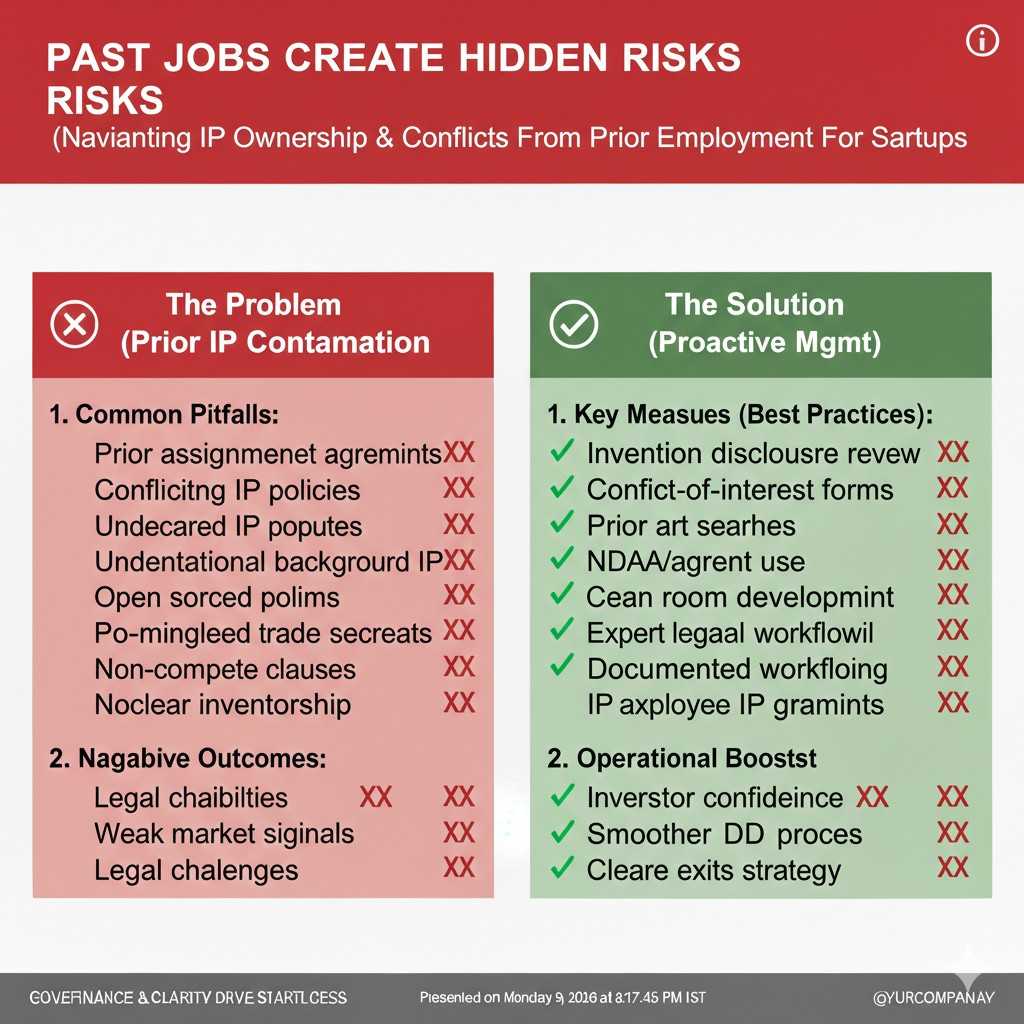
Another quiet concern is where the original idea came from.
If founders built early versions while employed somewhere else, investors will want proof that no prior employer has a claim.
This is especially sensitive in AI, robotics, and deep tech, where employment contracts are often strict.
A clean story here builds trust. A fuzzy story creates fear.
Tran.vc spends time on this exact issue early, helping founders map what was built, when, and under what terms, so there are no surprises later. If this is something you want help with, you can apply anytime at https://www.tran.vc/apply-now-form/.
How They Examine Your Code and Technical Assets
Code is IP, not just engineering output
Many founders think IP only means patents.
Investors do not.
They see your source code, models, data pipelines, and system designs as core IP. They want to know who wrote it, how it was created, and under what agreements.
This matters even more in AI companies, where the “secret sauce” is often not visible in a demo.
Contractors and freelancers are a common weak spot
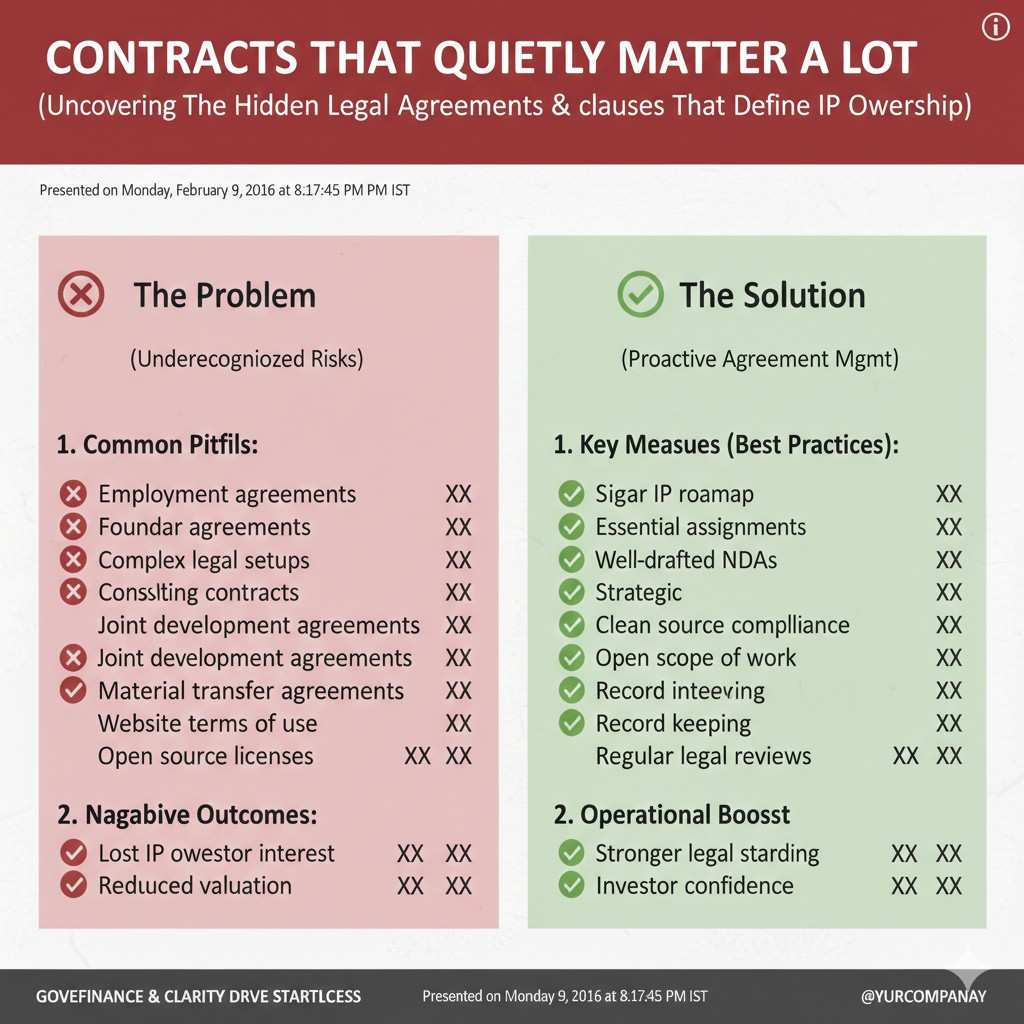
One of the fastest ways to lose investor confidence is unclear contractor ownership.
If contractors wrote code without proper assignment agreements, they may still legally own it. Paying them does not change that.
During diligence, investors will check whether every contractor signed agreements that transfer all rights to the company.
If you cannot show this clearly, you will likely be asked to fix it before money moves.
Internal process signals maturity
Investors also look at how you manage your code.
You do not need enterprise systems, but you do need discipline.
Clear repositories, documented access, and reasonable controls show that the company treats its IP like an asset, not a side effect.
This signals maturity, even at a very early stage.
Patents: What They Actually Look For
Patents are about alignment, not volume
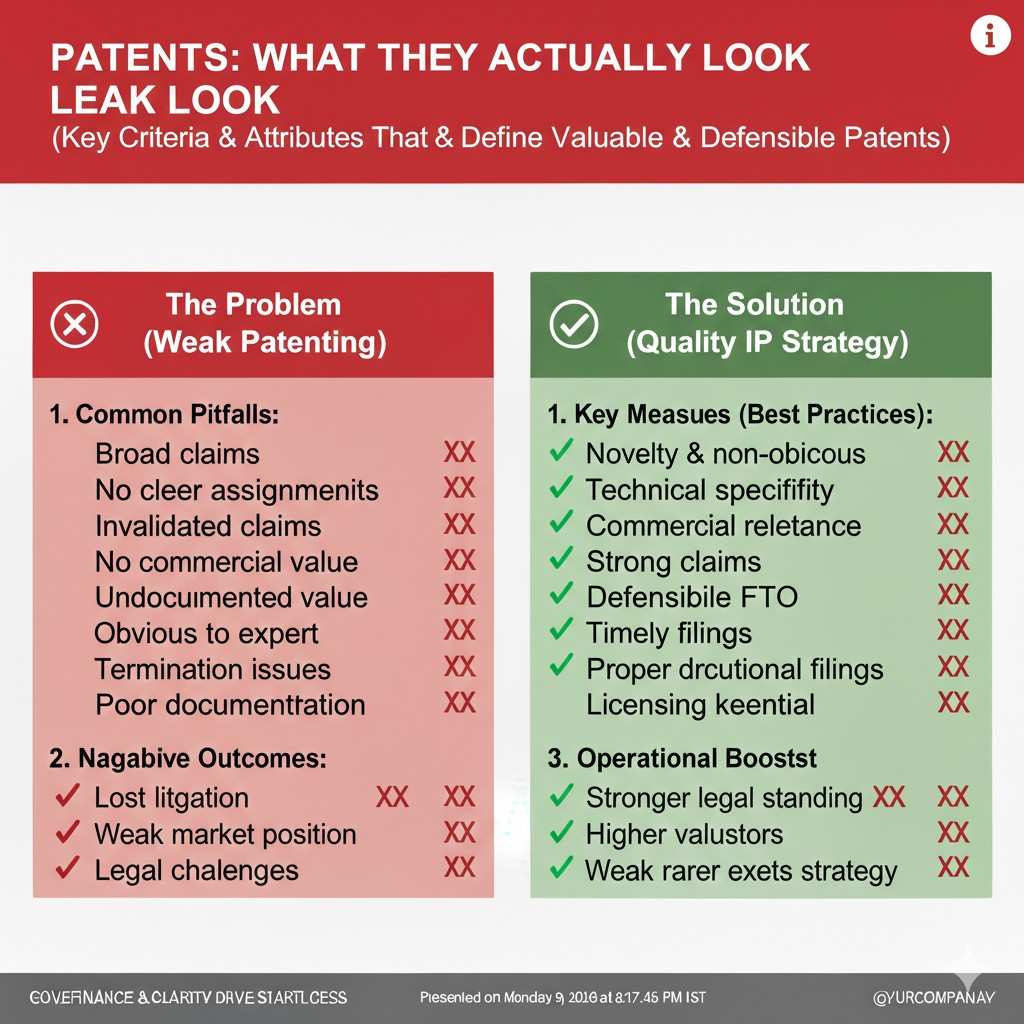
Many founders think more patents equals more value.
That is rarely true.
Investors care far more about whether your patents match your product and roadmap. A single well-placed patent that protects a real advantage is more valuable than ten that sit on the shelf.
During due diligence, they will look at whether your filings reflect what the company actually does today and plans to do next.
Timing matters more than founders realize
Another key question is when patents were filed.
Late filings can create problems, especially if the product was already public.
Investors will look at whether filings were made early enough to protect core ideas and whether public disclosures were handled carefully.
This is an area where early guidance makes a big difference. Fixing timing mistakes later is often expensive or impossible.
Tran.vc’s model is built around this exact problem: helping founders file smart, early, and aligned patents before momentum creates risk. You can explore that support by applying here: https://www.tran.vc/apply-now-form/.
Provisional patents are not the finish line
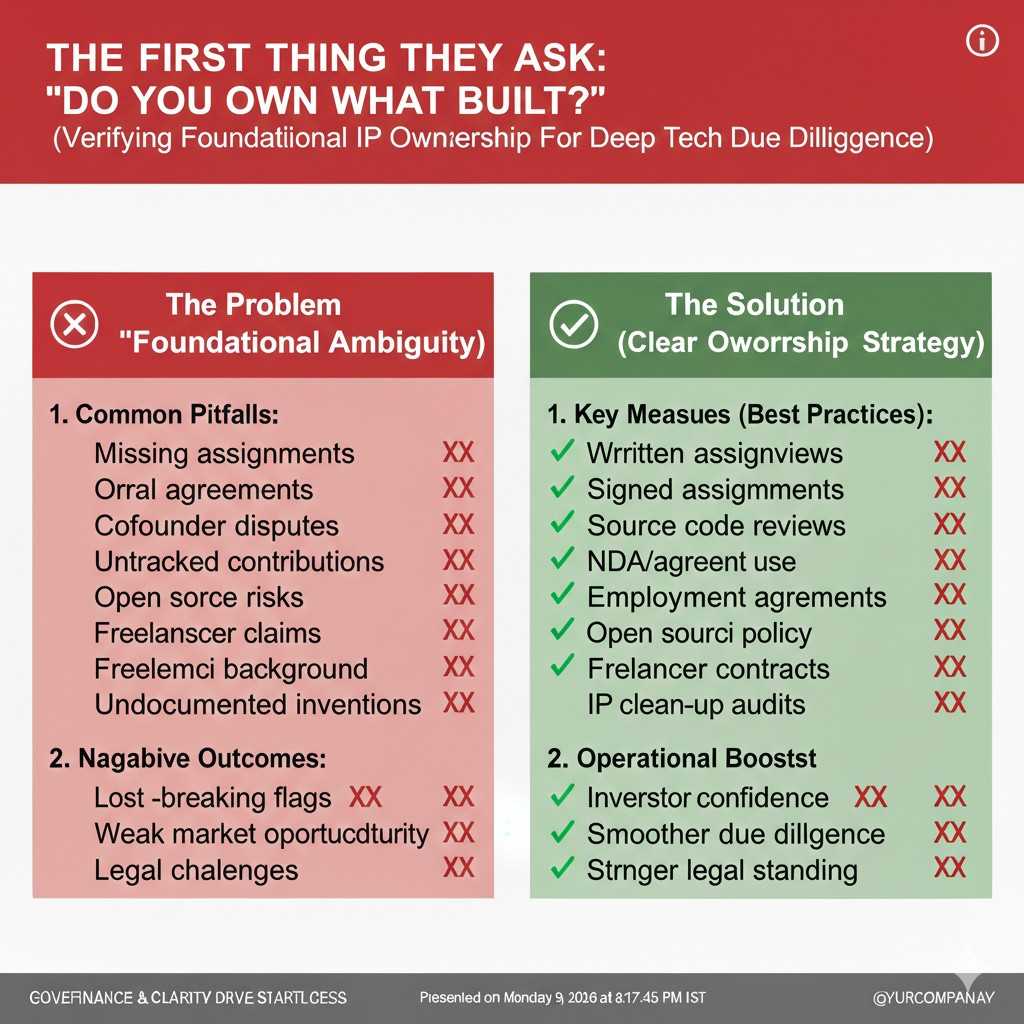
Some founders feel safe once a provisional patent is filed.
Investors do not see it that way.
They want to know whether provisionals were written with care, whether they truly cover the invention, and whether there is a plan to convert them properly.
A weak provisional can create false confidence while offering little real protection.
Open Source: The Quiet Deal Killer
Open source is normal, but not careless use
Most modern startups use open-source software.
Investors expect this.
What they do not accept is careless use without understanding the licenses involved.
Some licenses can force you to open your own code or limit how you sell your product. That can kill acquisition deals or limit exit options.
Investors want clarity, not perfection
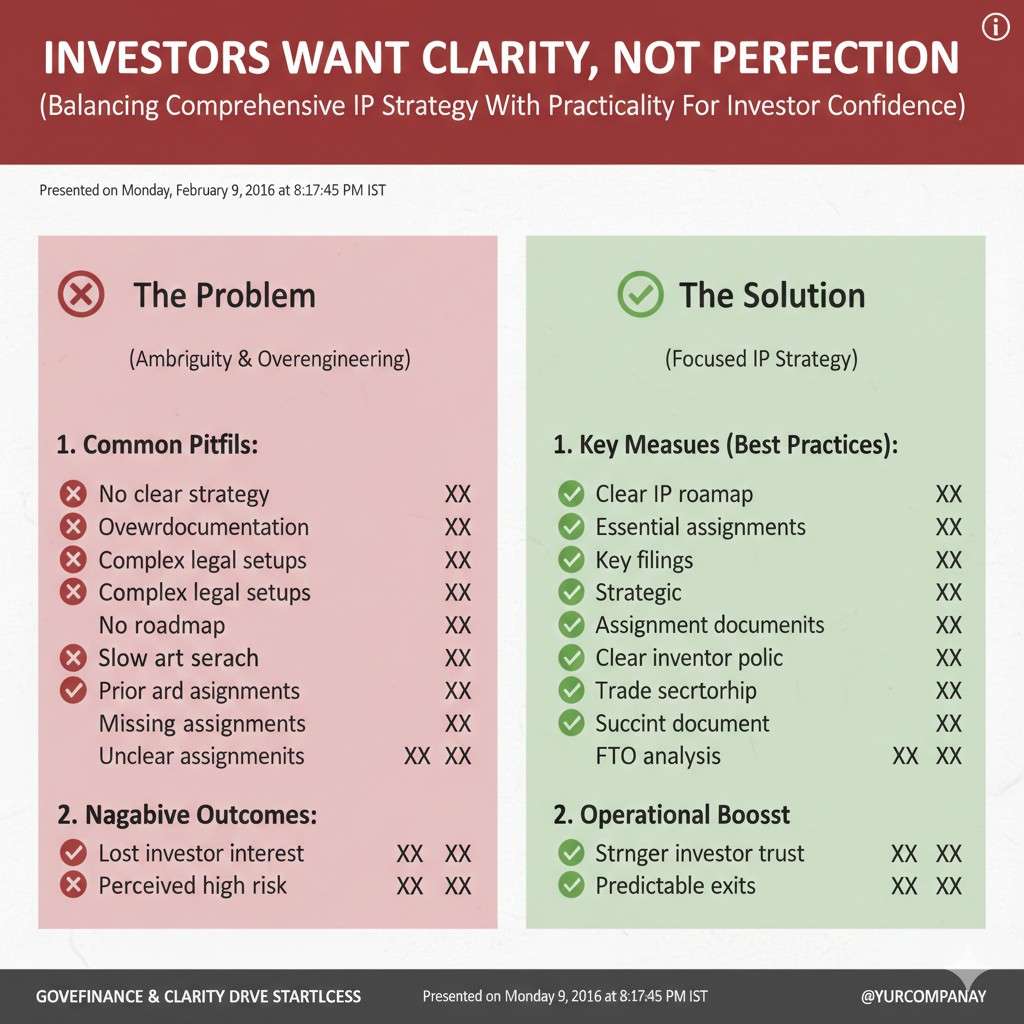
They are not looking for zero open-source usage.
They are looking for awareness.
If you can explain what you use, why you use it, and how you manage license risk, that builds confidence.
If you shrug and say, “Everyone uses it,” confidence drops fast.
Documentation reduces fear
Clear documentation of open-source components and licenses goes a long way.
It shows that the company takes responsibility for its technical stack.
This is another area where early structure saves painful cleanup later.
Contracts That Quietly Matter a Lot
NDAs are less important than people think
Founders often focus on NDAs.
Investors care far less.
They know NDAs do not protect IP the way people hope. They focus instead on ownership, assignment, and control.
NDAs are useful, but they are not the core of IP diligence.
Employment agreements carry real weight
Employment contracts matter deeply.
Investors will review whether employees assign inventions to the company and whether there are clear confidentiality obligations.
These agreements are a quiet backbone of IP ownership. Without them, your IP position weakens.
Customer and partner agreements can expose risk
Sometimes risk hides in customer or partner contracts.
If agreements promise rights you cannot give, or restrict how you use your own technology, investors will notice.
They want to ensure your business model is not boxed in by early deals.
How Investors Judge Your IP Story as a Whole
Consistency builds trust
One of the biggest signals investors look for is consistency.
Your pitch, your documents, your answers, and your filings should tell the same story.
When things line up, trust grows quickly.
When they do not, diligence slows down.
Confidence without defensiveness matters
You do not need perfect IP.
You need honest IP.
Investors respond well to founders who can say, “Here is what we have, here is what we are fixing, and here is our plan.”
Defensiveness or overconfidence creates doubt.
Tran.vc works closely with founders to shape this story early, so it feels calm and credible under pressure. If you want help building that foundation, you can apply anytime at https://www.tran.vc/apply-now-form/.
Common IP Red Flags That Slow or Kill Deals
Red flags are about risk, not bad intent
Most IP problems do not come from founders trying to cut corners.
They come from moving fast, trusting people, and assuming things will work out later. Investors know this. They are not judging effort. They are judging exposure.
A red flag simply means something that could create a legal or financial mess after money changes hands.
When enough red flags stack up, the deal either slows down or quietly disappears.
Unclear ownership creates instant friction
One of the fastest deal killers is unclear ownership of core technology.
If investors cannot tell, with confidence, that the company owns its code, models, or inventions, they pause. They may ask for fixes before closing. Some will walk away.
This often shows up when early work was done before the company was formed or when founders built things across multiple entities.
The fix is usually possible, but it takes time, and time kills momentum.
Missing or weak agreements raise doubts
Another red flag is missing paperwork.
No founder IP assignments. No contractor agreements. No employee invention clauses.
Even if everyone involved is friendly and supportive, investors cannot rely on goodwill. They rely on documents.
Weak or missing agreements suggest the company has not treated its IP as a real asset. That signals immaturity, even if the tech is strong.
Patents that do not match the product
Investors often see patents that sound impressive but protect the wrong thing.
This happens when filings are rushed, outsourced cheaply, or written without a clear product strategy.
If the patent talks about one idea and the product does another, the patent does not help much.
This mismatch makes investors question whether the company understands its own edge.
Open-source surprises late in diligence
Open-source issues often appear late, which makes them especially painful.
An investor may be ready to move forward when a lawyer flags a license that creates obligations the company cannot meet.
At that point, options are limited.
Late surprises like this damage trust, even if the issue can be fixed.
How Acquirers Think Differently Than Investors
Acquirers imagine life after the deal
Investors think about growth and return.
Acquirers think about integration and risk.
They imagine what happens after the acquisition closes. Who owns what. What could break. What could trigger a lawsuit.
This makes acquirers even more sensitive to IP gaps than investors.
Clean ownership matters more than ambition
An acquirer does not care how bold your vision was.
They care whether your IP can be safely absorbed into their company.
If there is uncertainty around ownership, they may lower the price, delay the deal, or walk away entirely.
Even strong revenue cannot always offset IP risk.
Overlapping IP creates special scrutiny
Acquirers also look at overlap.
If your technology touches areas they already operate in, they want to be very sure there are no third-party claims.
This is especially true in robotics and AI, where patents can overlap in subtle ways.
A clear, well-documented IP position makes these conversations easier and faster.
How Smart Founders Prepare Long Before Diligence
Preparation is not about creating binders
Good preparation does not mean drowning in documents.
It means knowing where your IP comes from, how it is protected, and where the risks are.
Founders who prepare early can answer questions calmly instead of scrambling under pressure.
This alone can change how investors perceive the company.
Simple tracking makes a big difference
You do not need complex systems.
A simple record of who built what, when it was built, and under what agreement can prevent many problems.
This applies to code, inventions, data, and designs.
Clarity beats complexity every time.
Fixing issues early is cheaper and cleaner
Most IP problems are fixable early.
Assignments can be signed. Contracts can be updated. Patent strategy can be refined.
Waiting makes everything harder.
Once investors are involved, fixes feel reactive. When acquirers are involved, fixes may be impossible.
This is why Tran.vc focuses on early IP work, before pressure sets in. They help founders build clean foundations from the start, using up to $50,000 in in-kind patenting and IP services. You can apply anytime at https://www.tran.vc/apply-now-form/.
The Questions Investors Rarely Ask Directly
They judge how you think, not just what you show
Some of the most important diligence happens between the lines.
Investors notice how founders talk about IP. Do they understand tradeoffs? Do they take responsibility? Do they respect the risk?
These signals matter as much as documents.
A thoughtful answer can outweigh a small gap. A careless answer can magnify a small issue.
They look for intention and awareness
No one expects perfection.
They expect intention.
Founders who can explain why they made certain choices, and what they plan to do next, feel safer to back.
This applies to patents, open source, and contracts alike.
Calm confidence builds credibility
When founders panic or get defensive, investors worry.
When founders stay calm, explain clearly, and acknowledge risks, trust grows.
This is part of your IP story, even though it is never written down.
Turning IP Due Diligence Into an Advantage
Strong IP can speed up deals
When your IP house is in order, diligence moves faster.
Fewer questions. Fewer follow-ups. Fewer delays.
This can make the difference between closing a round and missing a window.
It can also strengthen your position in negotiations.
IP clarity supports valuation
Investors price risk.
When IP risk is low and well-managed, valuation discussions are smoother.
You may not get a premium just for having patents, but you avoid discounts caused by uncertainty.
That alone is powerful.
Confidence attracts better partners
Good IP hygiene attracts better investors and acquirers.
They prefer founders who think long-term and build responsibly.
This often leads to better relationships, not just better terms.
Tran.vc’s entire approach is built around helping founders reach this position early, without giving up control or chasing money too soon. If you want to build with that mindset, you can apply anytime at https://www.tran.vc/apply-now-form/.
What a “Good” IP Due Diligence Package Looks Like
It feels simple, not impressive
A strong IP due diligence package does not try to show off.
It feels calm, clear, and easy to understand. Investors can find what they need without digging or guessing. That ease creates confidence right away.
When documents are clean and organized, it signals that the company respects its own work and the people reviewing it.
It tells one clear story
Every part of your IP package should point to the same core idea.
What you built, why it matters, and why the company owns it.
When patents, contracts, and explanations all align, diligence becomes a confirmation exercise instead of an investigation.
That shift alone can save weeks.
It highlights strength without hiding risk
Good packages do not pretend everything is perfect.
They acknowledge gaps and explain how those gaps are being handled.
This honesty builds trust and reduces the fear of hidden problems.
How Investors Review Your IP Materials
They skim first, then zoom in
Investors usually start at a high level.
They want to understand the shape of your IP before reading details. If the overview makes sense, they will dive deeper.
If the overview feels messy, they may never reach the details.
This is why summaries matter more than founders expect.