
Most startups treat inventions like air: everywhere, but never captured.
That is a costly habit.
If you are building in AI, robotics, or deep tech, your best ideas often show up in the middle of messy work. A quick change to a model. A new way to tune a sensor. A clever data pipeline. A safer robot motion plan. A faster edge deploy trick. These are not “nice to have” notes. These can be the core of a patent, or the reason an investor takes you seriously, or the moat that keeps a larger team from copying you later.
An invention disclosure process is simply a calm, repeatable way to catch those ideas while they are fresh. It is how you turn “we did something smart” into “we can prove we did something new, and we own it.”
The good news: you do not need a big legal team. You do not need long forms. You do not need to slow down building. You just need a simple path that makes it easy for engineers to share what they built, and easy for someone on your team (or a partner like Tran.vc) to review it and decide what to do next.
That is what this guide is about.
It will show you how to set up an invention disclosure process inside a startup so your inventions do not vanish into Slack threads, Git commits, or someone’s memory. It will also help you avoid the common traps that quietly kill patent value, like talking too early in public, missing who invented what, or waiting until after a demo to “write it down.”
If you want to build real leverage with IP, Tran.vc helps technical founders do this the right way from day one, with up to $50,000 of in-kind patent and IP services—so you build assets, not just features. You can apply anytime here: https://www.tran.vc/apply-now-form/
Why Startups Need an Invention Disclosure Process
Your best inventions do not feel like “inventions” at first
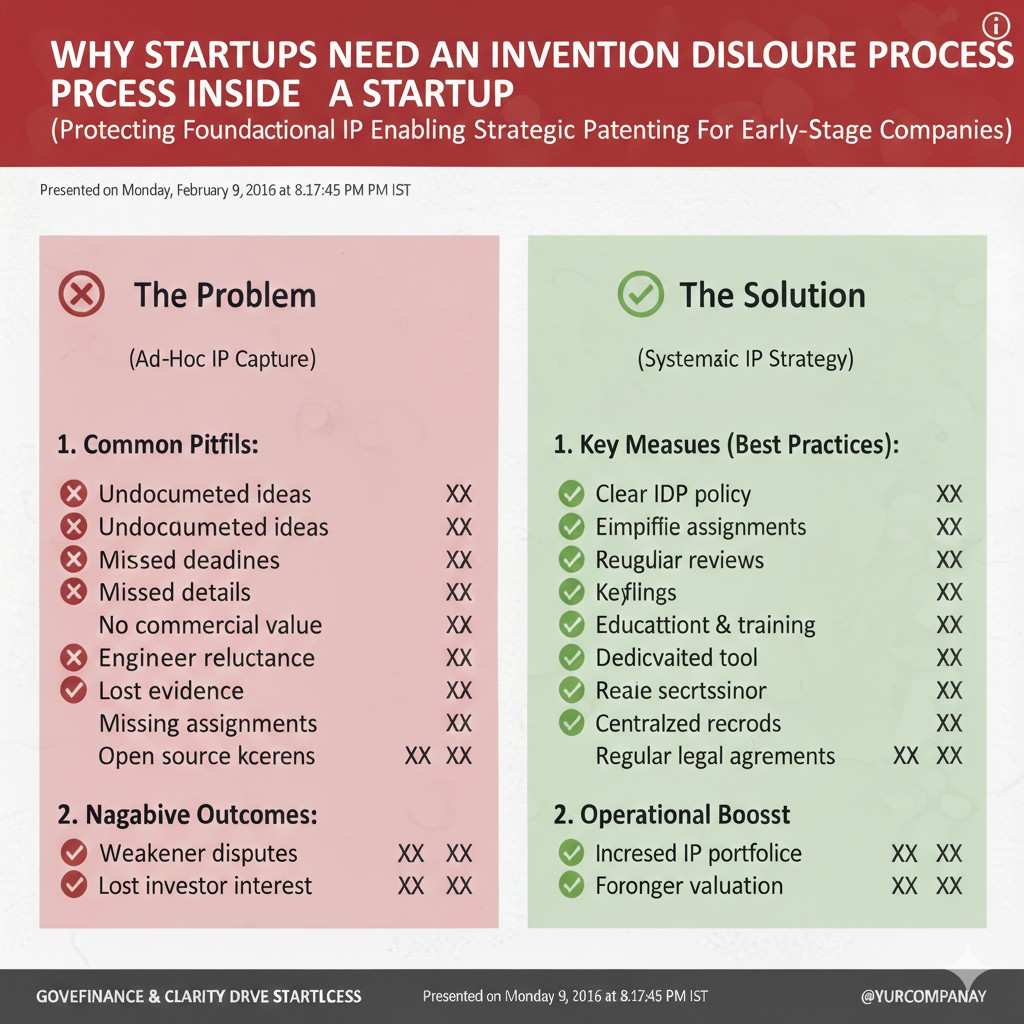
In a startup, the most valuable ideas rarely arrive with a drum roll. They show up as a small change that makes the system work when it used to fail. Or a new way to cut compute cost without losing quality. Or a tweak that makes the robot move smoother and safer. Because the work is fast, the team moves on right away, and the moment passes.
A disclosure process is how you slow down just enough to capture what matters, without slowing the company down. It gives you a reliable way to spot what is new, record it clearly, and decide if it should become a patent asset.
IP is not paperwork, it is leverage
When investors look at deep tech, they are not only asking “Does it work?” They also ask “Can others copy it?” Strong IP gives you a better answer. It can help you raise with more control, negotiate partnerships with confidence, and defend your position when a bigger player shows interest.
A disclosure process is the starting line for that leverage. It turns scattered technical progress into a clean trail of proof that your team built something unique, and that you treated it like an asset.
Speed without capture creates expensive rewrites
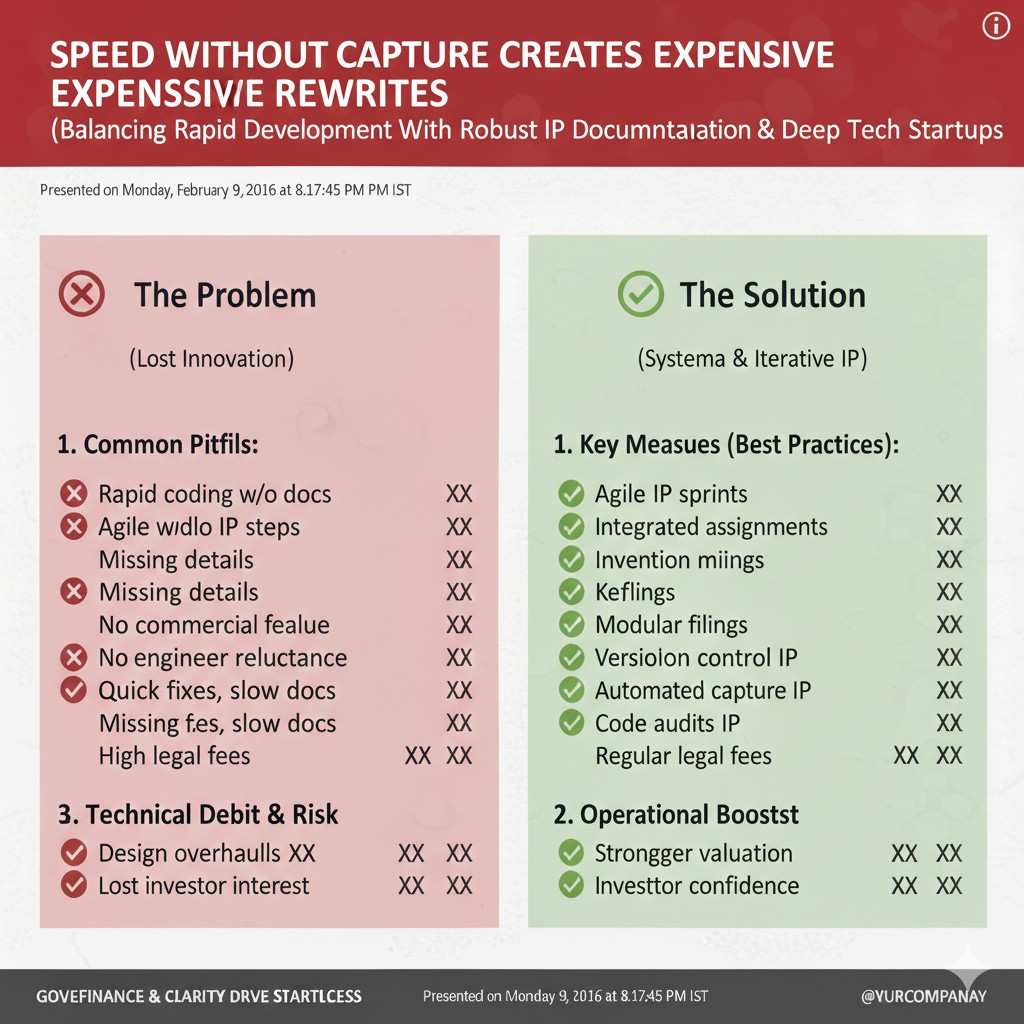
Many founders wait until a big milestone to think about patents. By then, key details are forgotten, people have left, and the clean story is hard to rebuild. Worse, the team may have shared parts of the idea publicly during demos, posts, or pitch decks, which can reduce patent options in many places.
A simple disclosure process prevents that scramble. You capture ideas while the details are fresh, then make smart choices early about what to keep quiet, what to file, and what to hold for later.
A disclosure process also avoids team conflict
Startups can get tense when credit is unclear. Who invented what? Who should be listed? Who did the key step? A clear process reduces that risk because the team records contributions close to the moment the work happened.
This is not only about fairness. It is also about legal strength. Clean inventor records make filings smoother and reduce the chance of problems later.
If you want a team to help you set this up the right way, Tran.vc works with technical founders to build an IP system early, including invention capture and patent strategy, as part of up to $50,000 in in-kind IP services. You can apply anytime here: https://www.tran.vc/apply-now-form/
What an Invention Disclosure Is
Think of it as a “source of truth” for a new idea
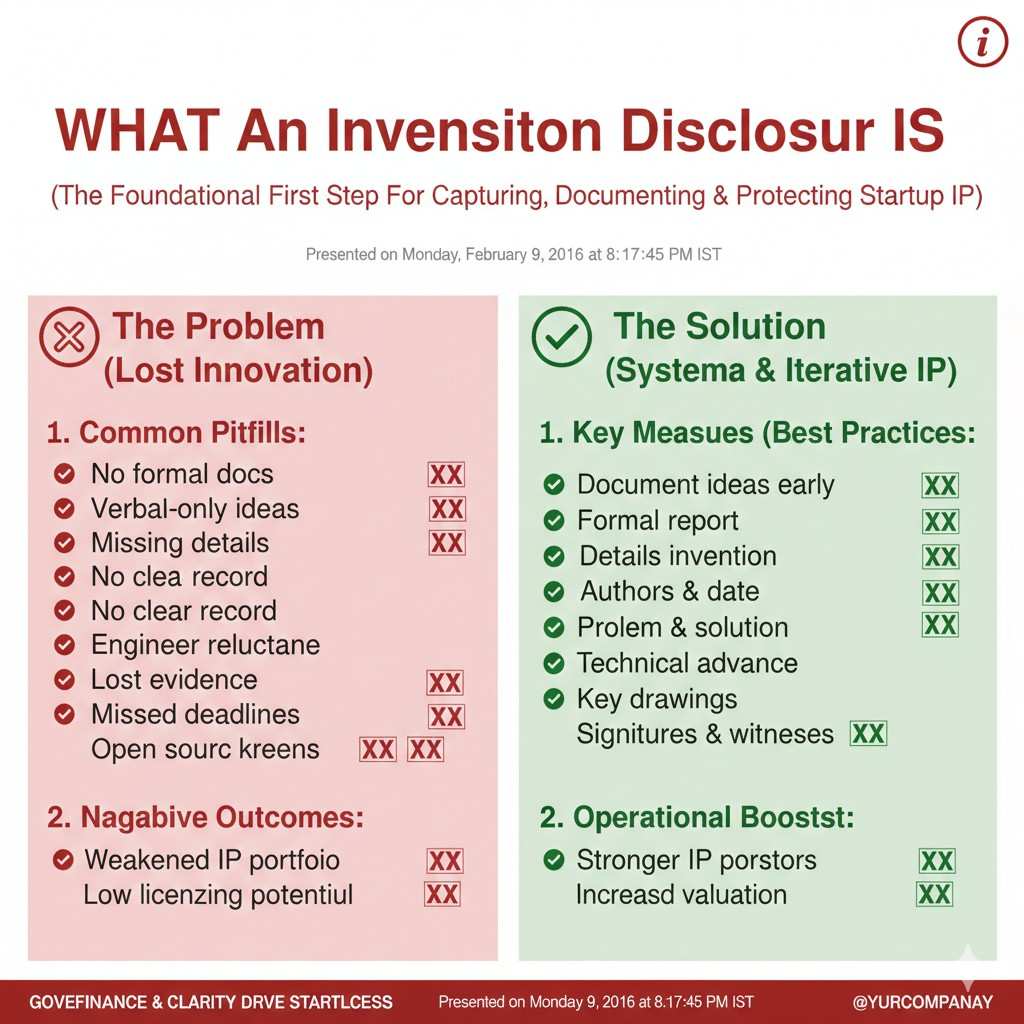
An invention disclosure is a short written record of a technical idea that may be patentable. It explains the problem, the new approach, how it works, and why it is different from common methods. It also names the people involved and roughly when the idea was made.
It is not a patent application. It is a bridge between engineering work and patent work. It gives your team and your patent partner enough clarity to decide whether to file, what to file, and how to describe it in a strong way.
It captures the “why” and the “how,” not just the result
Code can show what you did, but it does not always show why it matters. A good disclosure explains what was hard about the problem, what other solutions failed, and what new insight made this approach work. That story is often the difference between a weak filing and a strong one.
When you write it down early, you can explain the reasoning in plain words, while it is still fresh in your mind.
It protects you from losing details later
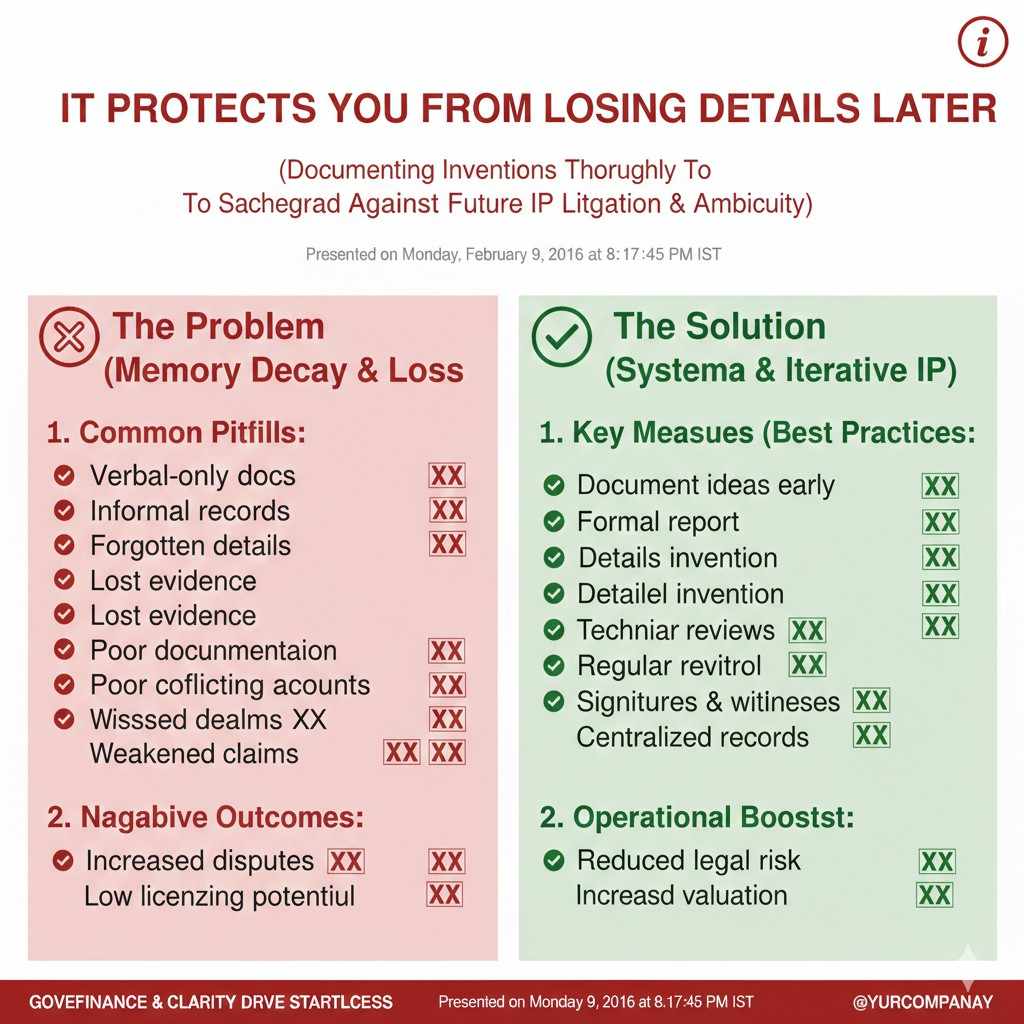
Many technical inventions have small but critical steps. If those steps are not captured, your patent partner may have to guess, and guessing leads to narrow claims or missing pieces. An invention disclosure reduces that risk by getting the details straight from the people who built it.
It also gives you a record you can look back on months later, when you are preparing for diligence, a partnership, or a new round.
It is a habit, not a document
The real value is not the form. The value is the behavior. When your team has a simple habit of “capture the idea, then decide,” you build an invention pipeline. That pipeline becomes part of your company engine, like shipping, testing, and customer feedback.
This is how deep tech startups quietly build moats while everyone else is only shipping features.
If you want an invention pipeline that investors respect, Tran.vc can help you set it up and run it, with hands-on support from patent pros and startup veterans. Apply anytime here: https://www.tran.vc/apply-now-form/
The Core Principles of a Startup-Friendly Process
Keep it simple enough that engineers will use it
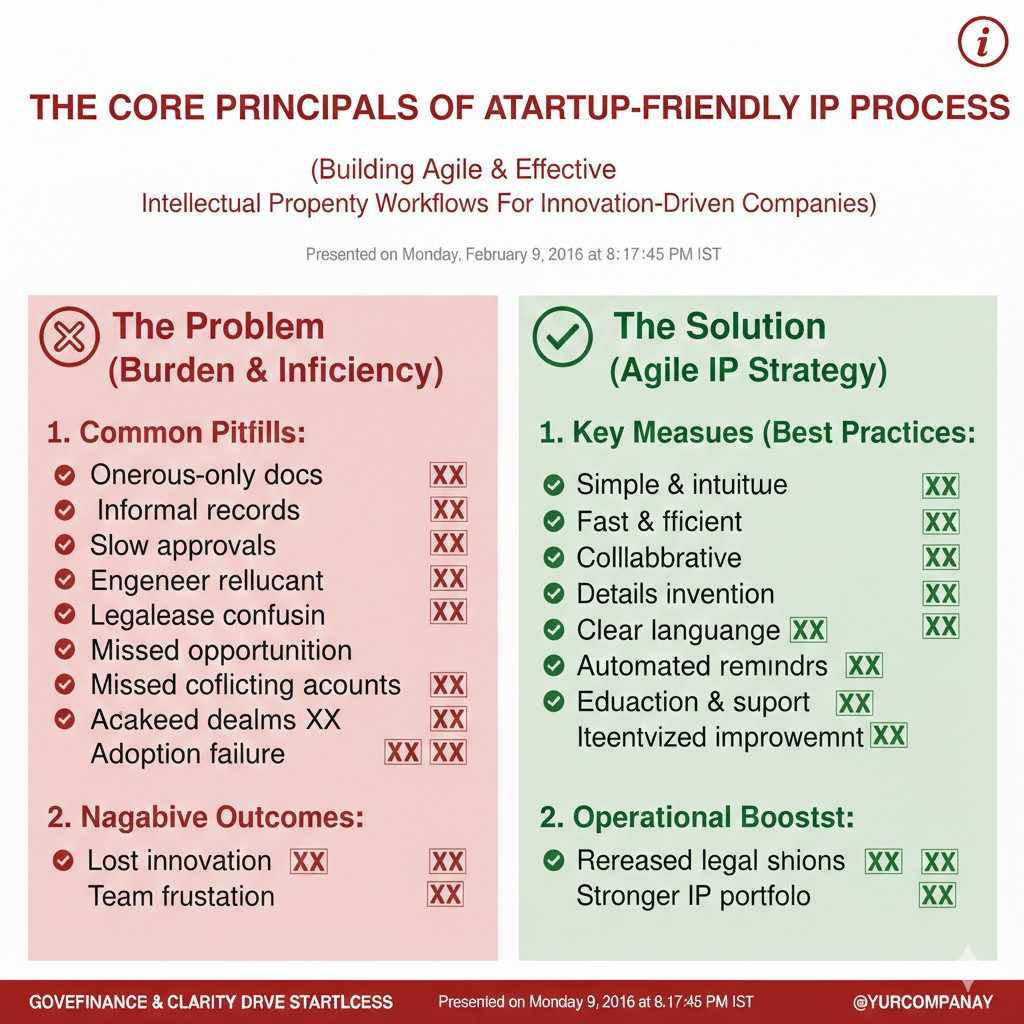
If the process feels like a legal chore, it will be ignored. The right process feels like a short technical memo. It should take less than 30 minutes to write a first version, and it should not require perfect language.
The goal is capture, not polish. The polish can come later, when you decide the idea is worth filing.
Make it routine, not urgent
The best invention capture happens before a deadline, not the night before a filing. You want a steady rhythm that makes disclosures normal. When it becomes normal, people stop overthinking it. They share more. You see patterns. You start spotting what is truly unique across the product.
A process that only happens in emergencies becomes a process that fails.
Separate capture from decisions
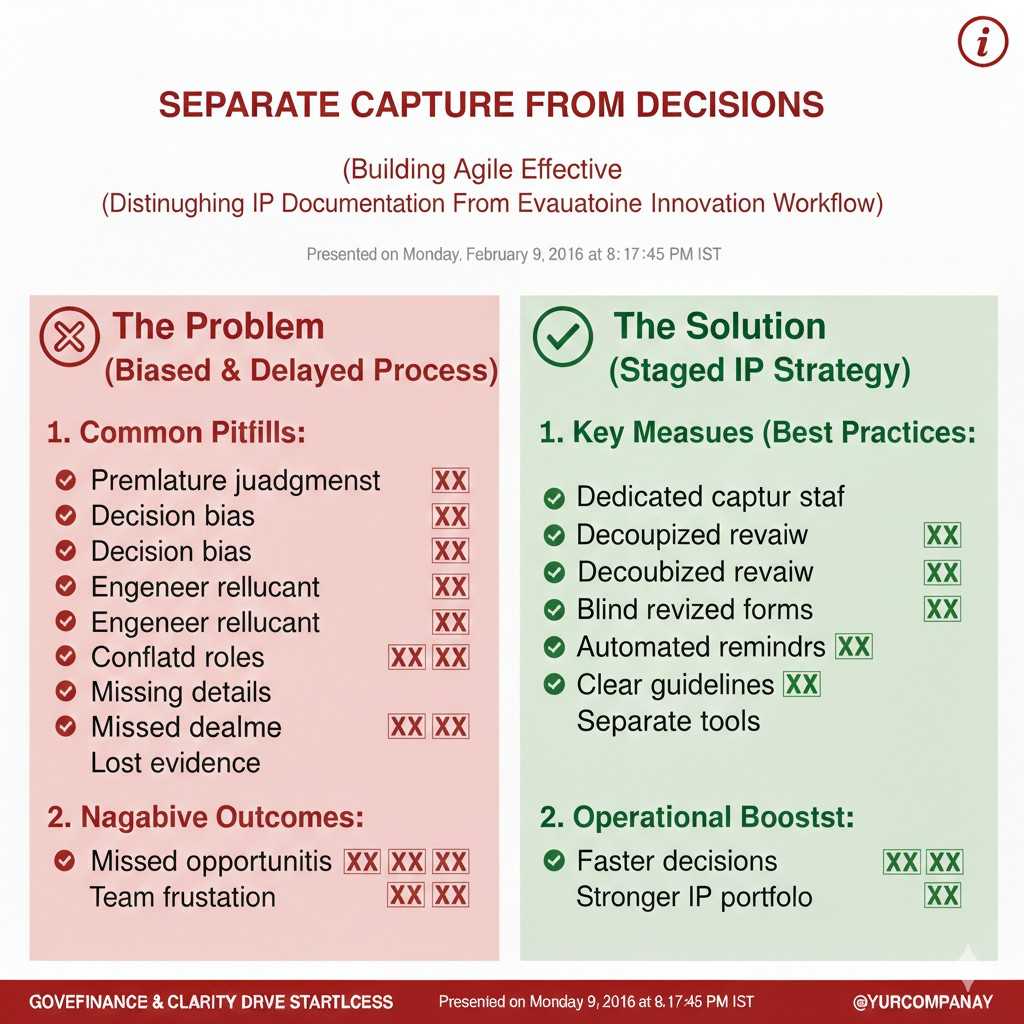
A common mistake is forcing a “yes or no patent” decision at the same time as capture. That pressure makes people avoid writing disclosures. Instead, treat capture as a lightweight first step.
First you capture the idea. Then someone reviews it. Then you decide whether to file now, hold it, or drop it. This keeps the system moving without fear.
Tie it to business goals without killing creativity
You do not want people only writing disclosures for “big” ideas. Some of the most valuable patents come from small enabling steps that make the larger system possible. At the same time, you do want alignment with your product path and market.
A good process guides people to explain how the idea connects to performance, cost, safety, reliability, or user outcomes. That keeps disclosures grounded in real value.
If you want help defining the right filters so you file on what matters, Tran.vc can guide that strategy and handle filings with experienced patent support. Apply anytime here: https://www.tran.vc/apply-now-form/
Who Owns the Process Inside the Startup
The founder sets the tone
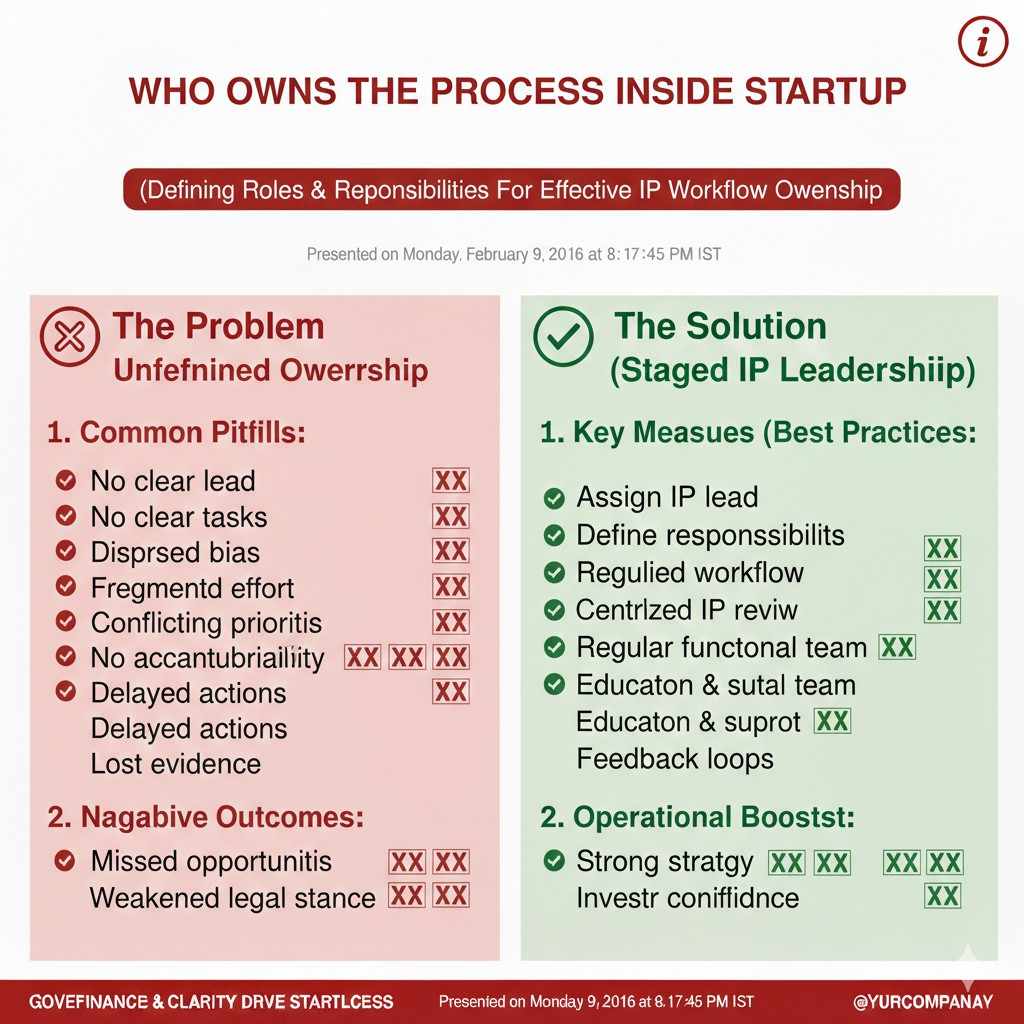
In most startups, nothing becomes a habit unless the founder treats it as important. If you want invention capture to work, you must show that it matters. You do that by asking about inventions in reviews, praising good disclosures, and making time for regular check-ins.
This does not mean turning everyone into a lawyer. It means treating inventions as first-class outputs of engineering work.
One person should act as the “IP lead,” even part-time
You do not need a full-time hire. You do need a clear owner. This person keeps the process running, answers simple questions, and makes sure disclosures get reviewed. In many startups, this is the CTO, a senior engineer, or a founder who likes systems.
The IP lead also helps connect inventions to roadmap priorities, so the company builds a coherent patent story over time.
Patent counsel or an IP partner shapes filings and strategy
Your internal process should feed a patent partner, not replace one. A good patent partner helps you refine disclosures into strong filings, checks for prior art, and helps decide the right timing. They also help you avoid risky public disclosures.
Tran.vc is built for this early stage. They do not just tell you to “file patents.” They help you build the habit and the strategy, then turn the right ideas into real assets. Apply anytime here: https://www.tran.vc/apply-now-form/
Engineers are the source, not the bottleneck
The disclosure process must respect how engineers work. They should not need to fight the system. The process should feel like a clean way to share what they built, while they still remember the key insights.
When engineers feel the process protects their work and gives fair credit, they participate more, and the quality improves fast.
The Best Time to Capture an Invention
Capture when something moves from “idea” to “working”
The best moment is often when the team has a working version, even if it is rough. At that point, you can explain what changed, why it works, and what alternatives you tried. You also have enough detail to describe the steps and the system.
If you wait until the product is polished, the invention can get buried under layers of improvements.
Capture before any public sharing
Public sharing includes more than press releases. It can include conference talks, blog posts, open demos, public GitHub commits, and even some investor decks that get widely circulated. Once something is public, your options may shrink in many countries, and timing becomes stressful.
A good process makes it easy to flag inventions early, so you can choose whether to file before you share.
Capture when a key technical decision is made
Sometimes the invention is not the final model or the final hardware. Sometimes it is the decision that makes the system possible, like a specific way to compress a network for edge use, or a control loop structure that avoids jitter, or a training method that reduces data needs.
These are exactly the ideas that get forgotten because they look like “just engineering.” They are also often the ideas that competitors struggle to recreate.
Capture when you see repeatable value
If a solution is used again and again across features, that is a strong signal. Repeatable value usually means a general method, and general methods often make strong patents. Your process should help people notice these patterns.
Designing a Disclosure Process That People Will Actually Use
Start with the real goal: easy capture, not perfect writing
If your process depends on perfect wording, it will fail. In a startup, people are tired, focused, and moving fast. Your job is to make disclosure feel like a normal part of building, not a side quest.
The best process is the one that gets used every week. That means it must be simple, short, and forgiving. You can always refine a disclosure later with your patent partner. What you cannot do later is recover the exact moment of insight, the options you tried, and the small detail that made it work.
Put the process where work already happens
A disclosure process works when it lives in the same tools your team uses daily. If your engineers live in Notion, keep it there. If they live in Google Docs, do it there. If they live in Linear or Jira, make disclosure a ticket type. If they live in Slack, create a short “capture” prompt that links to the template.
When you force a new tool, you create friction. When you embed the habit inside existing tools, you create momentum.
Build a two-step flow so nobody feels trapped
A lot of teams fail because they try to jump from “idea” straight into “patent decision.” That feels heavy. A better flow is: first capture, then review.
Capture is the light step anyone can do. Review is where the company decides what to do next. This separation removes fear and makes disclosures more frequent, which is exactly what you want.
Keep the “what happens next” very clear
Most engineers do not mind writing a short memo if they know it will not vanish into a void. If nothing happens after they submit, they stop doing it.
So you need a simple promise: every disclosure gets a response within a set time, even if the answer is “hold for later” or “not a fit.” A predictable response is what makes people trust the process.
If you want Tran.vc to help you set this up and keep it moving, that is part of how they support founders with up to $50,000 of in-kind IP and patent services. Apply anytime here: https://www.tran.vc/apply-now-form/
The Startup Disclosure Template
The template must read like a short technical note
A good disclosure template feels like a calm explanation from an engineer to another engineer. It should invite clear thinking, not legal language.
The best templates are structured, but not long. They guide the writer so they do not miss key points. At the same time, they do not overwhelm the writer with too many sections.
The first section: name the invention in plain words
The title should be something a new teammate could understand. Not “System and method for distributed X.” Instead, something like “Self-calibrating sensor fusion for low-light navigation” or “Fast model update without full retraining.”
This plain title helps you later when you are searching old disclosures. It also helps your patent partner see what the idea is about in one glance.
The second section: explain the problem like you are teaching it
This part is where you describe what was hard. What failed before. What pain you were trying to remove. This matters because patents are not only about what you built, but why it is different and useful.
For AI, the problem might be unstable outputs, costly training, data limits, or edge compute constraints. For robotics, the problem might be safety, control stability, drift, latency, or reliability under messy conditions. Write it in simple terms so anyone can follow.
The third section: describe your solution at a high level
Here you explain the “big idea” without diving into every detail. Think of it as the story you would tell in a design review. What is the core insight? What is the new approach? What does it change compared to normal methods?
This high-level section is important because it helps your patent partner shape the broad concept first, before narrowing into details.
The fourth section: explain how it works, step by step
This is where many disclosures become weak, because people assume the code speaks for itself. Code is useful, but a patent needs a clear description of steps and components.
Explain the flow. What goes in. What happens. What comes out. If it is a system, name the parts and how they connect. If it is a method, describe the sequence. If there are special cases, mention them.
Try to include the part that made the approach actually succeed. Many inventions have one small key step that is easy to forget.
The fifth section: what makes it new
This section is not about bragging. It is about contrast. What do others normally do? Why is your approach not obvious? What does it avoid? What does it improve?
You do not need to do a full research survey. You only need to describe what a skilled engineer would likely try first, and why your approach is different.
The sixth section: what proof you have
This can be very simple. Maybe you have a benchmark improvement, a reduction in compute cost, a stability gain, or a field test result. Maybe you have an internal demo.
Do not worry if it is early. Early proof is still proof, and it helps show practical value.
The seventh section: who invented it and who contributed
This section matters more than most founders realize. Patents require correct inventors. Inventorship has a specific meaning, and mistakes here can cause legal issues later.
In your process, keep it simple: list everyone who contributed to the idea, and describe what they did in plain words. Your patent partner can sort out final inventorship during drafting, but your record should capture the real story.
The eighth section: dates and public sharing risk
Add the rough date the idea was first formed and the date it was first tested. Then add a note about whether it has been shared outside the company, or whether any public sharing is planned soon.
This section protects you. It helps your team avoid accidental public disclosure before filing.
The ninth section: attach helpful items, but do not overload it
Links to Git commits, diagrams, experiment notes, or a short video can help. But do not turn the disclosure into a file dump. The main value is the explanation in words.
A disclosure should stand on its own even if the code changes later.
If you want, I can also include a ready-to-copy template you can paste into Notion or Google Docs. Tran.vc often helps founders create this exact template and tune it to their product so it stays lightweight and useful. Apply anytime here: https://www.tran.vc/apply-now-form/
How to Run the Weekly or Biweekly “Invention Review”
The review meeting should be short and boring
This is one of those systems where “boring” is a sign of health. You do not want long debates every time. You want a steady rhythm that keeps the pipeline moving.
A good review is often 20 to 30 minutes, once a week or once every two weeks. The goal is not to write patents in the meeting. The goal is to decide what happens next for each disclosure.
The review needs a fixed structure
Pick a small set of questions and use them every time. When the questions are predictable, people answer them in the disclosure itself, and the process gets smoother.
You want to answer: what is the invention, why it matters, what is the urgency, and what is the next step. If those are answered, you can move quickly without missing important issues.
Look for three types of inventions
In startups, disclosures often fall into a few patterns. Some inventions are core platform ideas that will stay with the company for years. Some are enabling methods that make the platform practical, like speedups, safety features, or reliability improvements. Others are specific product features that may matter less long-term but can still be worth protecting if they are unique.
By recognizing these patterns, you stop treating every idea the same. You start building a balanced portfolio that fits your stage.
Decide the next step in simple language
Your next step options should be plain and consistent. Most startups need a small set of outcomes: file soon, hold and watch, combine with another idea, or drop.
When you keep outcomes consistent, your team learns what “good disclosure” looks like. They learn how decisions are made. That learning makes the next disclosures better.
Track each decision like you track product work
A disclosure without tracking is like a bug report without a status. It gets lost.
Create a simple tracker with a status field and an owner. Make sure every disclosure moves forward, even if the final move is “not now.” This is how you build trust in the process.
Tran.vc can support founders here in a very hands-on way. They help you run this review rhythm, shape what to file, and turn the best disclosures into filings through their in-kind IP investment model. Apply anytime here: https://www.tran.vc/apply-now-form/
What to File Now Versus What to Hold
Treat urgency as a real factor, not a feeling
Some ideas should be filed quickly because you will share them soon, or because they are close to launch, or because partners will see them. Other ideas can be held because they are internal, changing fast, or not yet clearly tied to the product path.
Your review process should make urgency explicit. “We plan to show this at a demo day in six weeks” is a clear urgency signal. “We might talk about it someday” is not.
File when the idea has a stable core
Many startups worry they need a finished product before they can file. In practice, you often file when the core concept is stable enough to describe clearly, even if details will evolve.
If you wait for perfect stability, you may miss the best filing window. If you file too early without clarity, you may end up with a narrow or confusing story. Your process should help you find the middle.
Hold when the idea is still searching for its final shape
If the team is still exploring, it may be better to keep capturing disclosures while holding off on filing. That way you do not lock yourself into an early version.
Holding does not mean ignoring. It means watching for a moment when the idea becomes clear and valuable enough to justify filing.
Combine when several small ideas form one strong story
Sometimes the strongest patent is not one disclosure, but a set of related disclosures that together describe a complete system. This is common in robotics and AI stacks where the value comes from how pieces work together.
Your review process should notice when ideas connect. That is how you build filings that feel like real platform assets, not random one-off features.