
Open source is everywhere in deep tech. If you build robotics, AI, sensors, edge compute, or anything “hard + smart,” you are almost surely using open source code, open models, open data sets, open firmware, open drivers, or open tools.
That is good news. Open source helps small teams move fast.
But it also comes with hidden tripwires.
Not the kind that blow up your product on day one. The kind that sit quietly in your stack, then show up later—during a seed round, a big customer security review, or an acquisition. That is when someone asks a simple question:
“Can you prove you have the right to ship this?”
If the honest answer is “we think so,” you are now in a risk zone.
This is what founders often miss: open source problems are not “legal problems.” They are business problems. They can slow deals, scare buyers, and weaken your leverage right when you need it most.
This article is about avoiding those license landmines in a calm, practical way—without turning your startup into a paperwork factory. It is written for builders, not lawyers. And it is written for deep tech teams who want to build real defensible IP while still using open source wisely.
If you want Tran.vc to help you build that defensible foundation—patent strategy, filings, and strong IP habits early—you can apply any time here: https://www.tran.vc/apply-now-form/
Open Source and Deep Tech IP: How to Avoid License Landmines
Why this matters more in robotics and AI
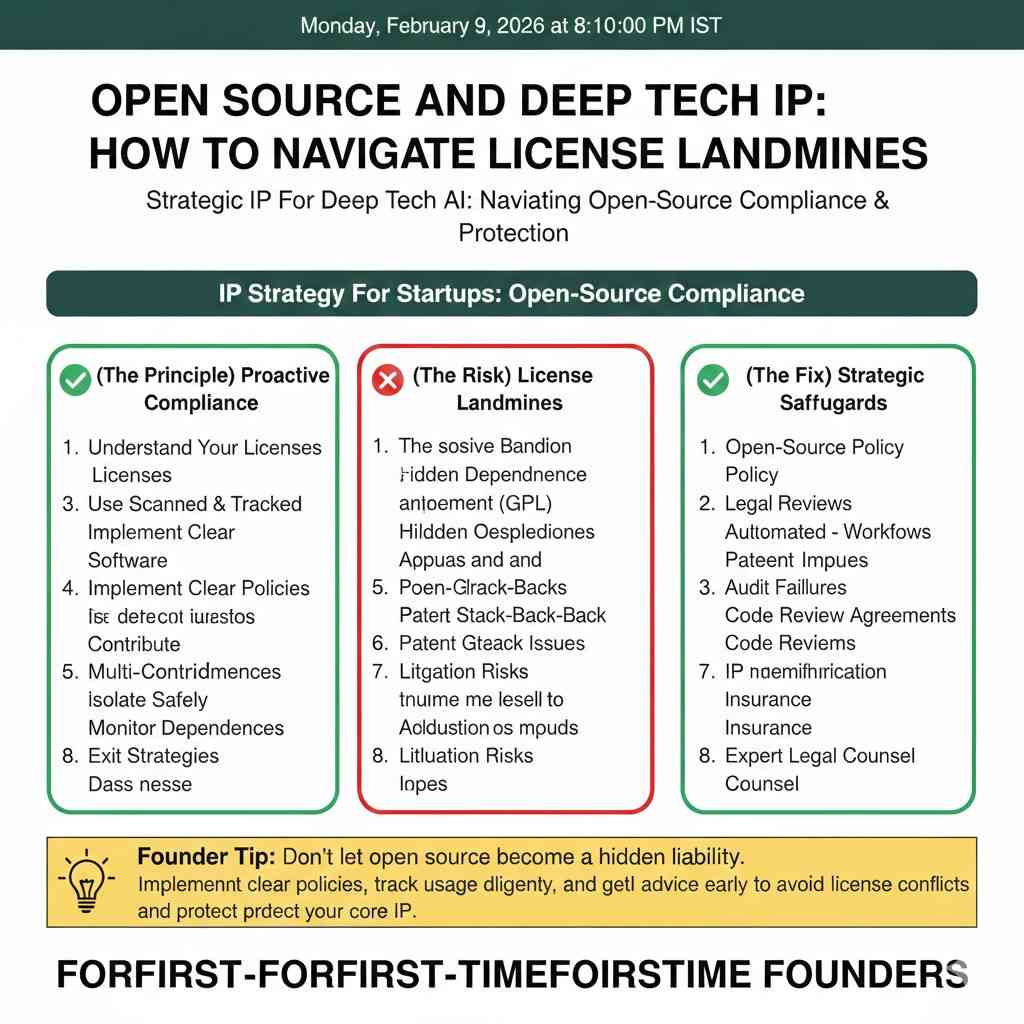
Deep tech teams build stacks that are wide and layered. A robot is not just “an app.” It is firmware, drivers, safety logic, motion control, perception, mapping, planning, and a cloud layer for updates and logs. AI products add models, data pipelines, and training code on top.
Each layer can pull in open source from many places. One tiny library for a sensor can carry a license you never noticed. One “helpful” snippet from a forum can come with terms you did not follow. These issues rarely show up when you are hacking together a demo.
They show up later when you ship hardware, sign enterprise deals, or raise a serious round. That is when open source stops being a “dev convenience” and becomes a question of ownership and rights.
If you want to build a strong IP base from day one, Tran.vc helps founders do it early, while choices are still easy to fix. You can apply any time here: https://www.tran.vc/apply-now-form/
A quick definition of “license landmines”
A landmine is not always a lawsuit. Most of the time, the harm is slower and quieter. You get stuck in long due diligence calls. A buyer asks for proof you can distribute your firmware. A customer wants to see a full list of third-party software.
If you cannot answer fast, trust drops. If you do answer but it is messy, the other side will ask for a discount, more warranties, or more control. That is how open source becomes leverage against you.
The goal is not to avoid open source. The goal is to use it with clear rules, so you keep control of what you build and how you ship it.
The simple promise you want to keep
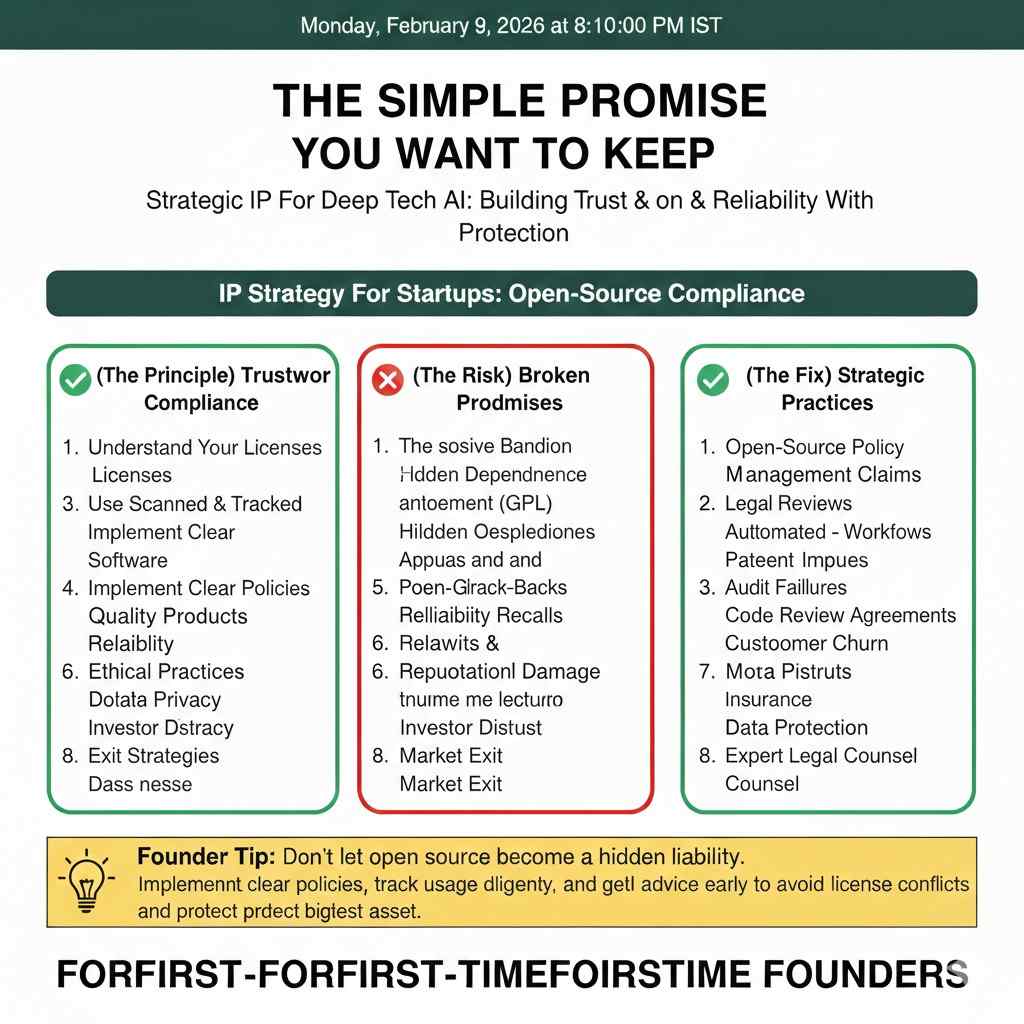
Every deep tech startup needs to be able to say this with confidence: “We know what we use, we follow the terms, and we own our core.”
That sentence sounds basic, but it is powerful. It tells investors and customers that you have discipline. It tells acquirers that your product will not drag legal risk into their company.
You do not need a huge process to get there. You need a few habits that make license risk visible early, when it is cheap to fix.
How open source risk actually happens
The most common path: “it was just a dependency”
Most teams do not wake up and decide to violate a license. It happens when someone adds a package, a model, or a repo to hit a deadline. A week later, five more packages depend on that one.
After a few months, the dependency is “everywhere.” Then removing it is painful. That is why the best time to check a license is before the dependency becomes part of your core.
This is also why founders should care, even if they do not write code every day. The risk is not in one line of code. The risk is in the invisible spread across your product.
Copy-paste is a bigger problem than people admit
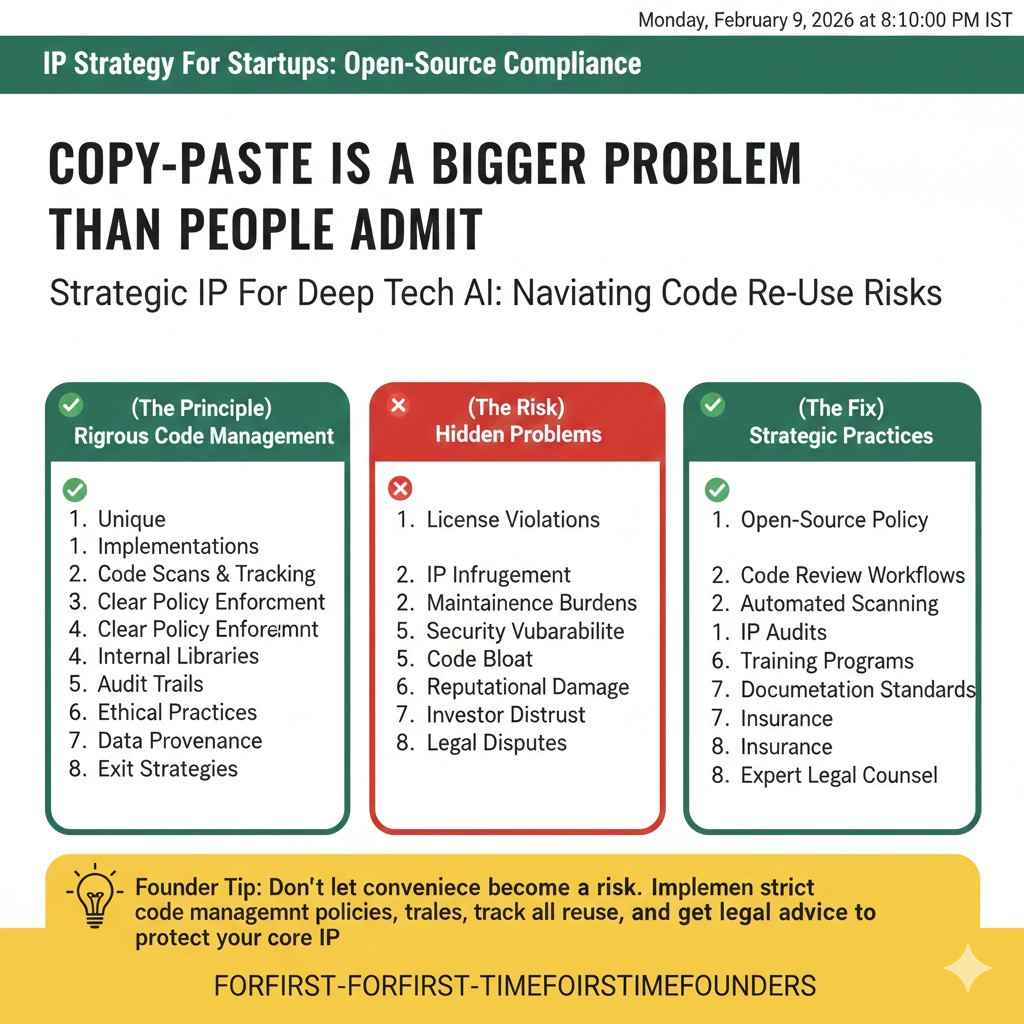
In robotics and AI, teams often borrow small chunks of code. A calibration routine. A control trick. A ROS node from a blog. A GPU kernel from a GitHub gist. It feels harmless because it is small.
But rights do not shrink just because the snippet is short. If you do not know the source and the terms, you cannot prove you are allowed to ship it. That is a real issue when your code runs in safety paths, or when it becomes part of an SDK.
Even worse, copy-paste spreads without a clear record. You lose the trail, and later you cannot rebuild it.
“Open” does not always mean “free to use”
Some “open” things are not open source at all. Many models and data sets come with custom terms that restrict commercial use, training, or distribution. Some allow research use only. Some forbid certain fields.
Teams often treat model licenses like code licenses, but they are not the same. A model license can limit how you offer your product, what you can fine-tune, or what you must share.
If your product depends on a model you cannot legally ship, that is not just a license problem. That is a business model problem.
The licenses that cause the most trouble
Permissive licenses: low friction, still not “no rules”
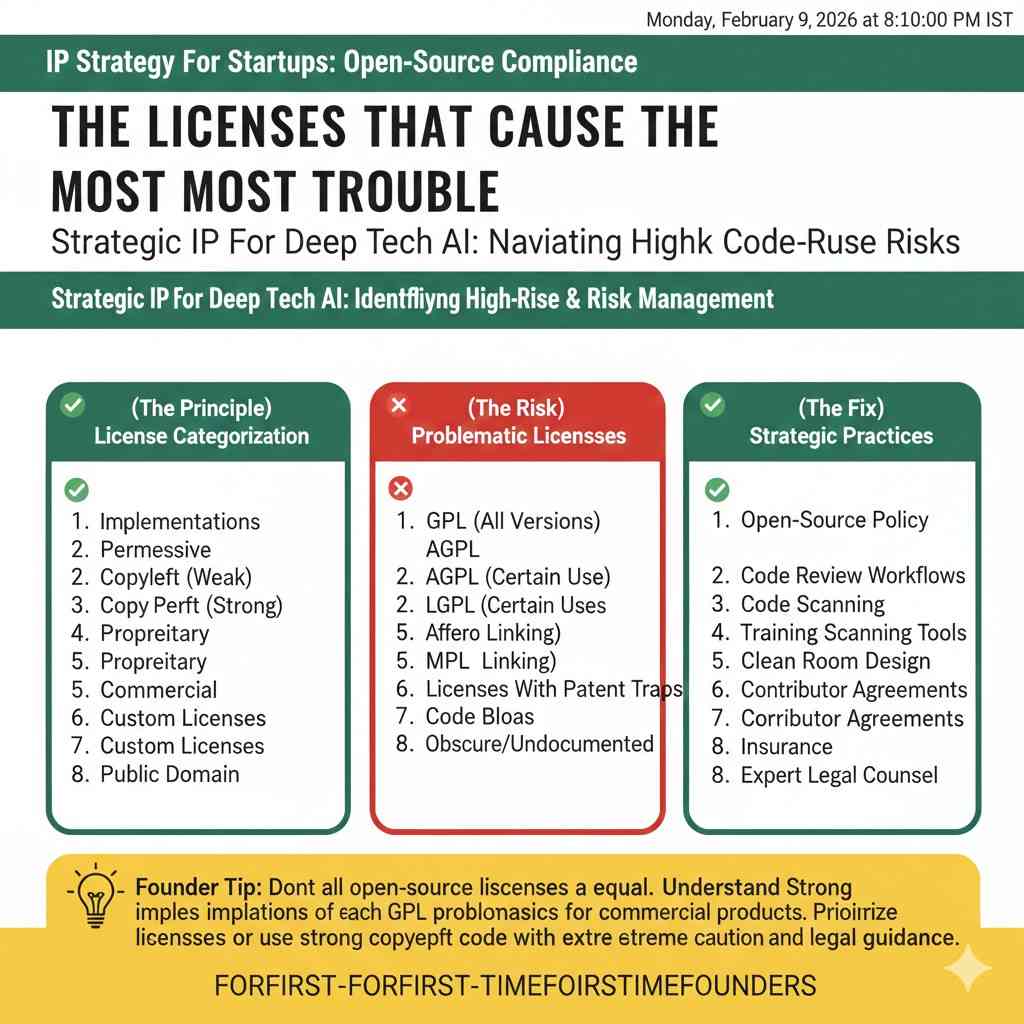
Permissive licenses like MIT, BSD, and Apache are widely used because they are easy to work with. They usually allow commercial use and do not force you to open your own source code.
But “easy” does not mean “ignore.” These licenses still require things like keeping copyright notices, including license text, and in some cases handling patent terms correctly.
Apache 2.0 is a good example. It has clear patent language, which many companies like. But it also has requirements around notices. If you ship firmware or a device image, you need a clean way to include the right notices.
That is not hard, but it must be planned.
Copyleft licenses: powerful, but can pull your code into the open
Copyleft licenses like GPL and AGPL are the ones people fear, and for a reason. The core idea is simple: if you distribute a program that is a derivative work of GPL code, you may have to share your source code under the same terms.
Where teams get stuck is not the concept. It is the details. What counts as “derivative” in your setup? If your device ships with a GPL component, are you linking to it, bundling it, or talking to it over a boundary?
In robotics, this can show up in middleware and drivers. In AI, it can show up in tools, serving layers, or code used in training pipelines that later get shipped.
AGPL is another big one because it extends the idea to network use. If you offer a service over the network and it includes AGPL code, you can be required to offer source to users of that service.
This can be fine for some businesses. But for many deep tech startups trying to protect their edge, it is a serious mismatch.
LGPL: the “middle” license that still needs care
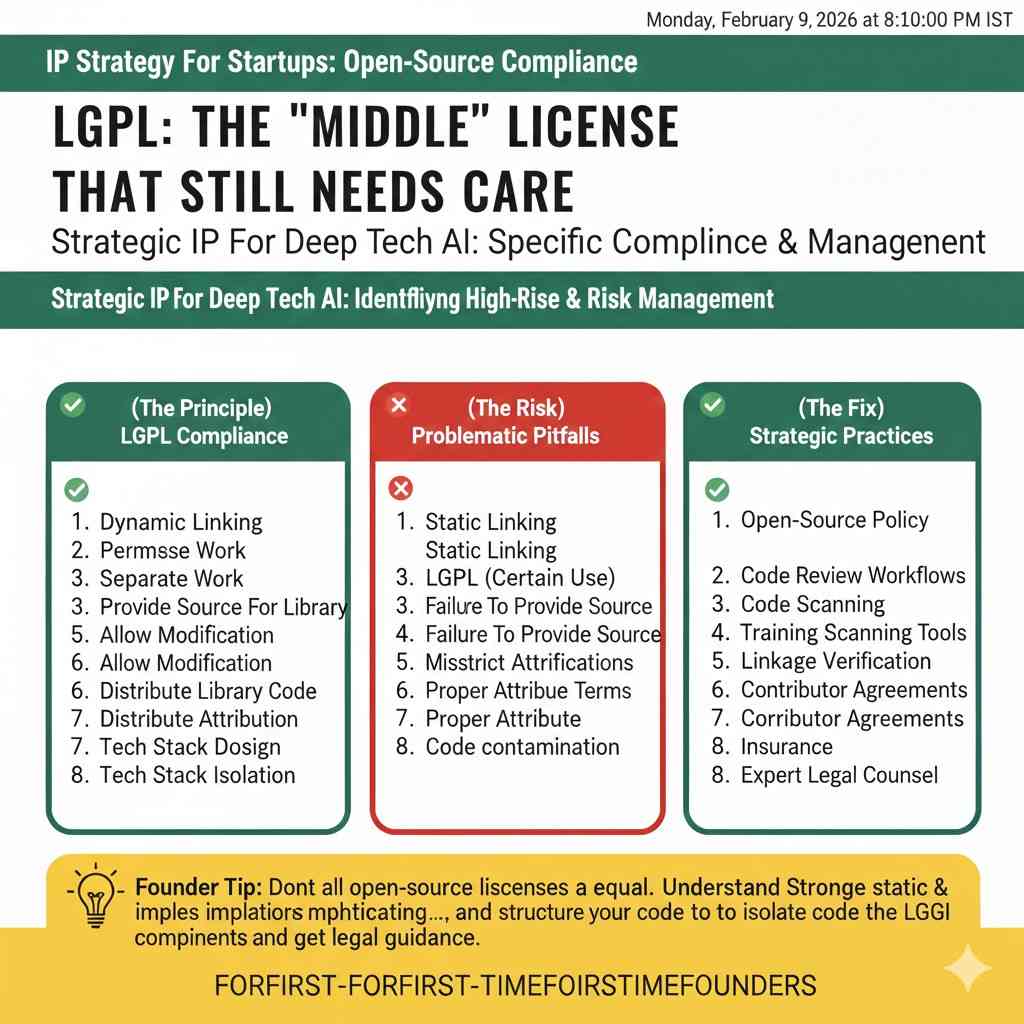
LGPL is often described as “GPL but softer.” It is meant to allow use of a library without forcing the entire program to be open, as long as you meet certain conditions.
In practice, it still needs careful handling, especially in embedded settings. If you statically link, or if users cannot replace the library, you may trigger obligations you did not expect.
Many founders only learn this during a customer audit. That is a bad time to learn it.
The hidden landmines unique to deep tech
Firmware and devices make distribution unavoidable
In software-only products, you might avoid “distribution” by running code on your own servers. In devices, you distribute by default. The firmware ships. The image ships. The SDK ships. The updater ships.
That means license duties show up more often. You need a repeatable way to ship notices, provide required source if needed, and document what is inside your images.
If you do not set this up early, it becomes a scramble each time you release a new build.
Safety and certification make changes harder later
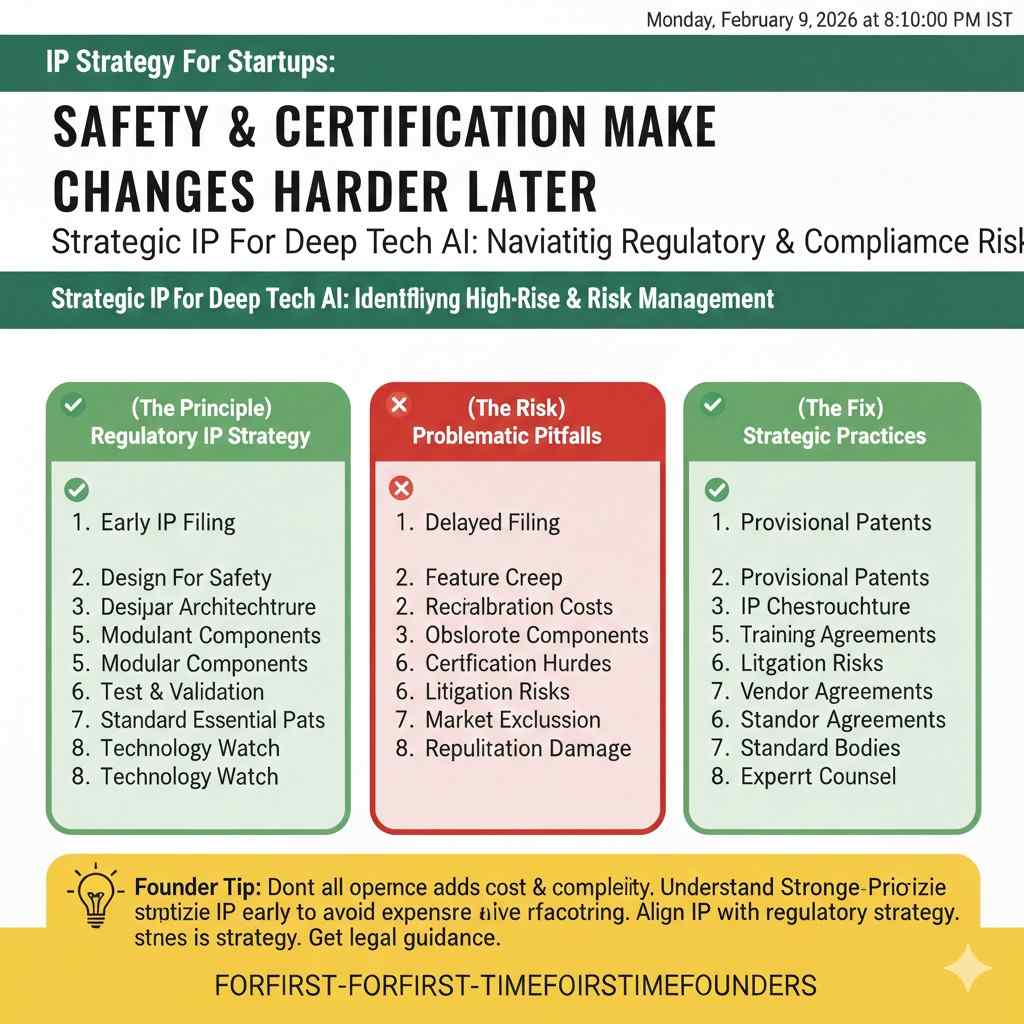
Robotics and medical or industrial devices face safety testing and sometimes certification. Once you are locked into a component that is part of a safety chain, swapping it out is not like changing a UI library.
If you later discover that component is under a license that conflicts with how you ship, you might be forced to choose between legal risk and re-testing cost.
That is why the “check first” habit matters more in deep tech than in many SaaS companies.
Training data can be a trap you cannot unwind
AI teams often gather data from many sources. Some are open. Some are “public.” Some are shared informally by partners. Each source can have terms, even if they are not written clearly.
If you train on data you do not have rights to use, the problem is not just the data. The problem is the model you trained. You cannot easily untrain it. You may be forced to rebuild.
This is one of the most expensive types of landmines because it touches your core asset.
The core principle: decide what must stay yours
Your “moat code” should not be hostage to a license
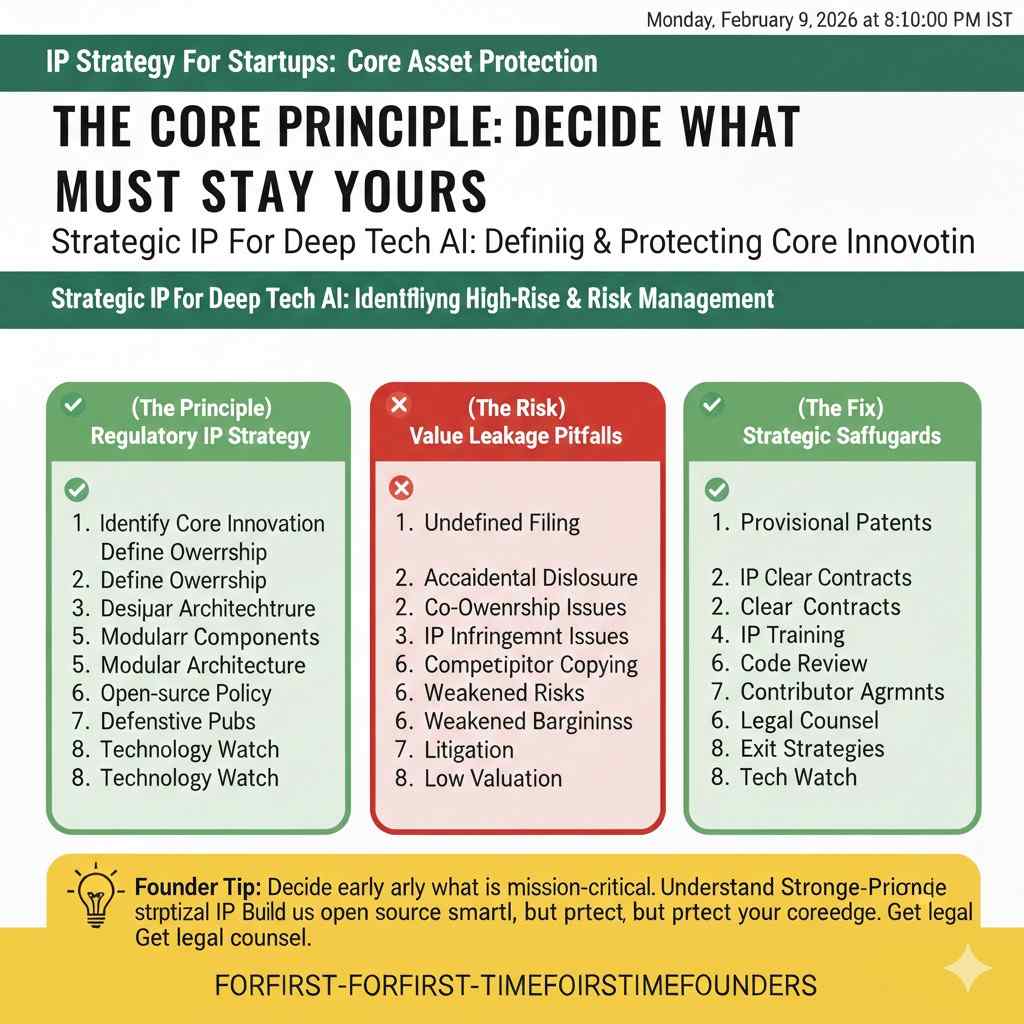
Every deep tech startup has a small set of things that make it special. Maybe it is your control logic. Maybe it is your perception stack. Maybe it is your model architecture and training method. Maybe it is how you fuse sensors.
That core should be yours in a clean way. You can still use open source around it, but you do not want your core to be forced open by a licensing mismatch.
This is not about being secretive. It is about being able to choose. Choice is power when you raise money, sell to enterprise, or negotiate partnerships.
Separate the “platform” from the “product” early
A practical way to protect your core is to design clean boundaries. Put open source components in places where their obligations are easy to meet and do not spill into your proprietary parts.
For example, if you use an open source tool for build, testing, or internal research, that might be low risk because you are not shipping it. But if you use a copyleft library in the part you distribute to customers, that is higher risk.
The structure of your system can reduce license risk. This is engineering, not only legal work.
Use patents to protect what licenses cannot
Open source compliance is about permission to use and distribute. It does not automatically give you a moat. And it does not stop a competitor from copying what you build if your advantage is not protected.
This is where deep tech IP strategy matters. Patents can protect novel methods, system designs, and key technical moves, even if parts of your stack are built with open source tools.
Tran.vc focuses on helping technical founders turn real engineering into real assets early. If you want that kind of support, you can apply any time here: https://www.tran.vc/apply-now-form/
The practical system that keeps you safe without slowing you down
Start with one rule: “no unknown licenses”
The simplest policy that works is this: nothing enters the product without a known license. Not “probably MIT.” Not “it’s on GitHub so it’s fine.” Known and recorded.
This does not mean every engineer becomes a lawyer. It means you treat licenses like security. If you would not ship unknown code from an unknown source, you should not ship unknown terms either.
When this rule becomes normal, most problems disappear before they start.
Build a “bill of materials” that is always current
A software bill of materials is just a list of what you use. Dependencies, versions, licenses, and where they came from. In deep tech, you want this for device images, cloud services, and even model artifacts.
You do not need perfection on day one. You need a living document that improves every week. The key is that it stays current, not that it is pretty.
When someone asks, “What is inside this build?” you can answer in minutes, not weeks.
Put compliance into the release process, not into random meetings
The best way to keep this light is to attach it to release. Every time you ship a new version, you refresh the list and confirm obligations are met.
This turns a scary “audit” into a normal part of shipping. It also makes founders feel calm when a customer asks for proof.
The founders who win are not the ones with the most paperwork. They are the ones who can show control.
Open Source and Deep Tech IP: How to Avoid License Landmines
Turning this into a habit, not a one-time cleanup
Most teams treat licenses like a chore they will “fix later.” Later is when your product is bigger, your code is tangled, and your customer list is real. That is the worst moment to discover you cannot prove your rights.
The better path is to make license safety feel like normal hygiene. Not heavy. Not scary. Just a few repeatable moves that happen while you build.
When you do this well, something surprising happens: you move faster. You stop arguing about “is this okay?” every time. You already know the answer because you built a system that makes it obvious.
A note on Tran.vc and why IP discipline matters early
Tran.vc works with deep tech founders before the seed round, when choices are still flexible. We help you protect what is truly yours and avoid problems that weaken leverage later.
That includes patent strategy and filings, but it also includes the habits that keep your IP clean. Strong IP is not only a document you file. It is also how you build and ship.
If you want that help, you can apply any time here: https://www.tran.vc/apply-now-form/
License landmines in the real world
What an investor or buyer is actually worried about
When investors ask about open source, they are rarely trying to play “gotcha.” They are trying to protect the future value of the company.
They worry about three simple things. First, that you might be forced to open core code. Second, that you might be blocked from shipping to customers. Third, that you might face a surprise claim that slows a deal.
If you can show that you track what you use and follow the rules, most investors relax quickly. The risk becomes “managed,” not “unknown.” That shift changes the tone of every conversation.
How one dependency becomes a company-wide risk
It often starts with something small. A single library that saves two weeks. Or a driver that makes a sensor work. Or an open source component that looks “industry standard.”
Then the team builds around it. They optimize for it. They write wrappers. They create internal tools that assume it exists. Now removing it would be painful and slow.
This is why “we can swap it later” is usually not true. In deep tech, the cost of swapping grows fast because it touches hardware, performance, safety, and test setups.
The landmine is often not code
Founders tend to focus on code licenses, but deep tech uses many assets that come with terms.
Models can carry rules about commercial use and sharing. Data sets can limit how you can train or what you must disclose. CAD files, PCB layouts, and reference designs can have restrictions. Even documentation can be licensed in ways that surprise teams.
The right mindset is simple: if you did not create it, it probably has terms. Your job is to know those terms before you bet the company on them.
The most dangerous misunderstandings
“We didn’t modify it, so we’re safe”
Whether this is safe depends on the license and how you use the software. Some duties trigger when you distribute, even if you did not change anything.
In devices, distribution is common. If you ship a binary on a robot, you are distributing. If you ship an SDK, you are distributing. If you ship an image file that includes open source, you are distributing.
So the question is not only “did we modify it?” The question is “are we shipping it, and what does the license require when we do?”
“It’s only used internally” becomes false fast
Many startups start with internal tooling. Training scripts, test harnesses, build tools, and data prep code. That feels safe because it is not shipped.
But deep tech products often evolve. A demo tool becomes a customer tool. A training pipeline becomes part of a managed service. A test harness becomes part of a field diagnostic kit.
If you used a license that becomes a problem once you provide access to customers, you can get caught in a quiet trap. That is why it helps to treat “internal only” as a temporary state, not a promise.
“Our code is proprietary, so it’s fine”
Your code being proprietary does not automatically protect you if your product has obligations from open source.
If a license requires you to provide notices, you must provide them. If it requires you to share source under certain conditions, you must plan for that or avoid that component. If a license blocks a certain type of use, you must respect it.
A company can have strong proprietary tech and still be out of compliance. And non-compliance is a risk even if nobody has complained yet, because diligence will surface it.