
Most computer vision founders wait too long to think about patents.
Not because they do not care. But because vision work feels “too math-y” or “too model-y” to patent. Or they assume it will never hold up once a patent examiner asks hard questions. Or they think: “We will do patents after we get traction.”
Here is the problem. In computer vision, the moat is often in the small choices you made that others will copy fast once you show results. The way you clean input frames. The way you cut noise from motion. The way you fuse depth with RGB. The way you choose what to track, when to track it, and how you decide the answer is “good enough” to act.
Those choices can be patented. But only if you write the claims in a way that fits how the real system works, and only if you explain the invention in a way that survives the “So what?” questions.
This article is about that: patent claims for computer vision that actually hold up.
And if you are building in robotics, AI, or vision-heavy software, Tran.vc can help you lock this down early. Tran.vc invests up to $50,000 in in-kind patent and IP services so you can build defensible IP without giving up control or rushing into a priced round. You can apply anytime here: https://www.tran.vc/apply-now-form/
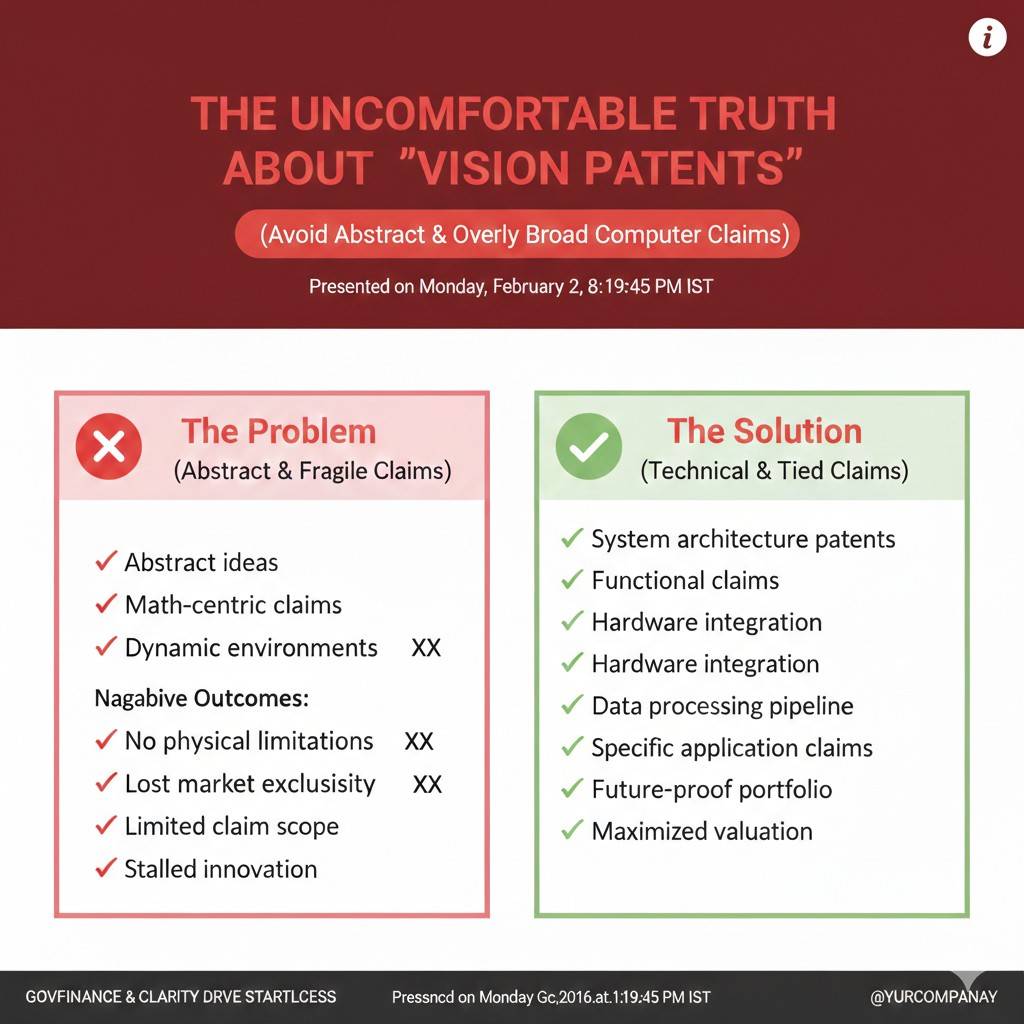
The uncomfortable truth about “vision patents”
Let’s be direct.
Many “computer vision patents” fail for the same reasons:
They claim the model, not the method.
They describe a goal, not a solution.
They use big words to hide a missing step.
They pretend the hard part is “running a neural network,” when that is not the hard part anymore.
Examiners have seen “detect an object in an image using a trained model” a thousand times. If your claim is basically that, it will get hit with prior art fast. Even if your product is great.
Strong computer vision claims do something else. They claim a specific technical way to get the result, usually tied to a real pain in the pipeline.
Examples of real pains that can support real claims:
Your camera feed is messy.
Lighting shifts ruin your scores.
Motion blur breaks edges.
Depth sensors are noisy at the edges of objects.
People occlude each other.
Robots move, so the background moves too.
You need the answer in 30 ms, not 300 ms.
You cannot store video for privacy reasons.
You must run on-device with low power.
Your training labels are weak, but you still need stable output.
If your invention solves one of these in a “this is how we do it” way, you may have something claimable.
Now the key: the claim has to be written around the solving steps, not around the marketing statement.
What “claims that hold up” really means
When founders say “hold up,” they usually mean three things:
One: the examiner does not kill the claim in the first round.
Two: a competitor cannot dodge it by changing one small thing.
Three: if you ever have to enforce it, the claim is clear enough to map to real code.
So the goal is not to write the broadest claim possible on day one. The goal is to write a claim set that is both defensible and useful.
That usually means you do not write only one claim “to rule them all.” You write a clean core claim that is anchored in your technical steps, and then you build support around it in the spec so you can adjust later.
I know you asked to keep lists to a minimum, so I will keep this simple: a strong vision patent is built from a tight story.
The story goes like this:
There is a real technical problem.
There is a real technical reason the usual ways fail.
You do a specific sequence of steps that changes the system behavior.
That change gives a measurable technical benefit.
If your draft does not clearly show those four things, your claims will be weak no matter how smart your model is.
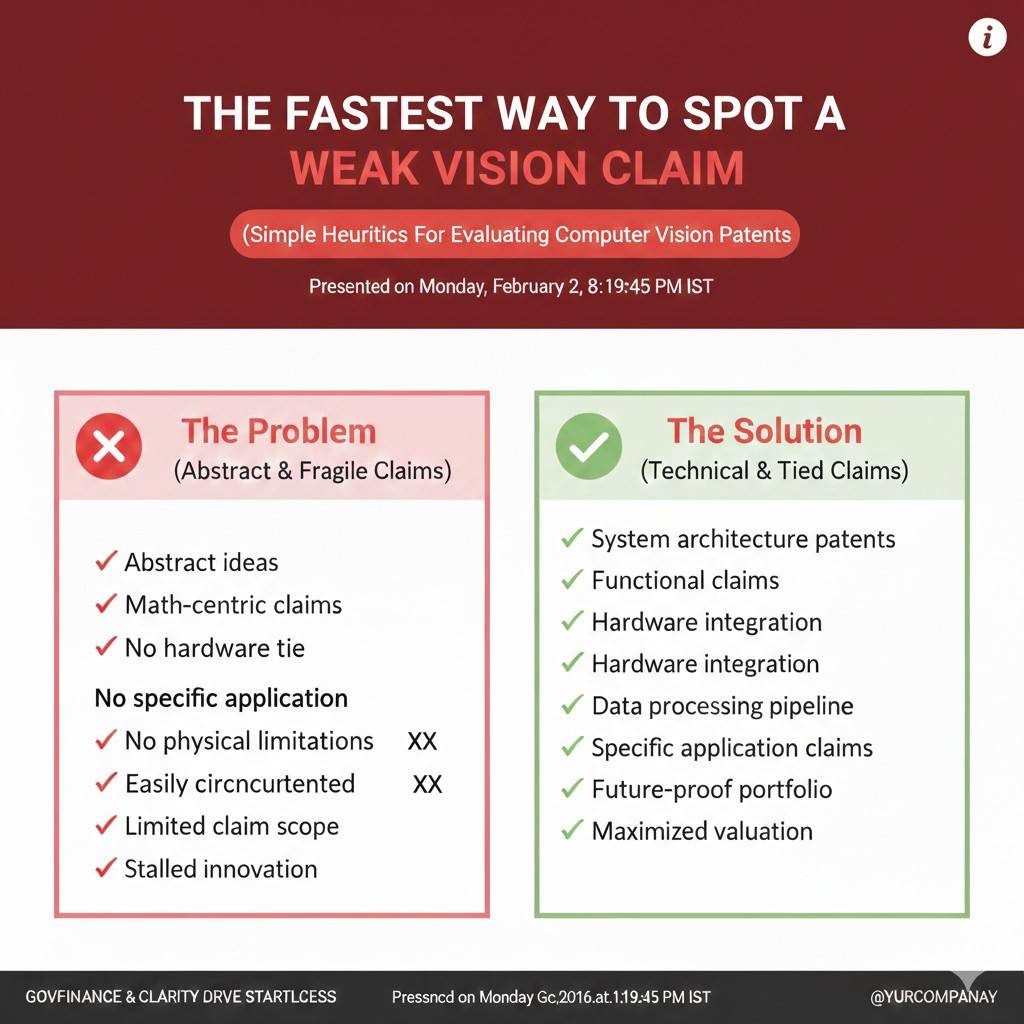
The fastest way to spot a weak vision claim
Here is a test you can do in one minute.
Take the main claim you want. Now remove every sentence that is not a step. If what is left is basically:
“Receive image data, run a model, output a label,”
then it is not a vision invention claim. It is a generic software claim, and it will be treated that way.
What you want left is more like:
“Receive frames, choose candidate regions using a rule tied to motion, normalize those regions using a specific transform, run inference only on those regions, then merge results across frames using a stability rule.”
That is a method. It is something a competitor can copy. And that is why it has value.
The real “unit” of invention in computer vision
In practice, most patentable CV inventions are not “a model.” They are one of these:
A better pipeline step.
A better signal you create before inference.
A better way to decide what the model should look at.
A better way to merge results over time.
A better way to handle uncertainty.
A better way to use sensors together.
A better way to train using limited labels.
A better way to run within compute limits.
Notice what is missing: “we used a CNN” or “we used a transformer.”
Those may appear in the description, but they are rarely the invention.
So when you think about your own product, do not ask, “Can I patent my model?”
Ask, “What did we build because the normal way did not work?”
That is where your claims live.
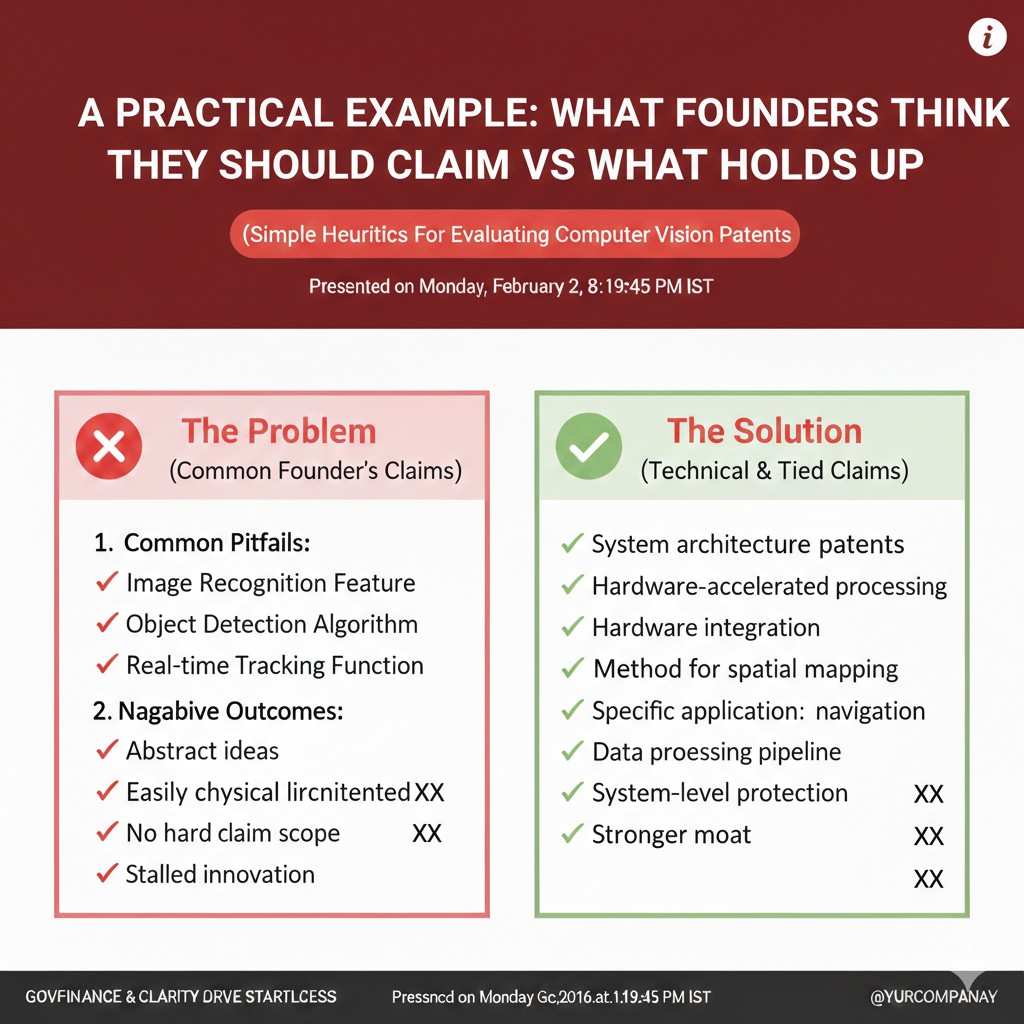
A practical example: what founders think they should claim vs what holds up
Imagine you built a vision system for warehouse robots that detects pallets and estimates their pose so a robot can pick them safely. You trained a model. It works great.
The weak claim impulse is:
“A method comprising: receiving an image, applying a neural network to detect a pallet, and outputting a pose.”
That sounds fine until you realize 50 papers do that.
The stronger direction is usually buried in what you did to make it stable:
Maybe you used depth only near edges.
Maybe you used a two-stage crop that locks to the fork pocket area.
Maybe you fused detections across multiple frames while the robot is moving.
Maybe you used a confidence map to decide when to slow the robot.
Maybe you used a calibration routine that runs during normal driving, so you do not need a special setup.
These are the parts that hold up, because they are not the generic “detect an object.” They are the technical trick that makes it real.
In a patent, you can still talk about “a neural network,” but the claim is not “a neural network.” The claim is “this chain of steps that makes the output reliable.”
How to talk about computer vision in a patent without sounding like a paper
Here is a simple rule that helps a lot:
Write like you are explaining it to an engineer who will implement it, not to a reviewer who will score it.
Patents are not judged on elegance. They are judged on whether the invention is new, non-obvious, and clearly described.
So instead of “we use a self-supervised contrastive representation,” you describe what you actually do:
You take two views of the same frame.
You apply a transform to one view.
You train an encoder to map both to similar vectors.
You use that encoder later to produce a feature map for detection.
That is plain, clear, and claim-friendly.
Also, do not hide your best step. Many founders write a patent like a blog post: they tease the secret and never say it. That is the opposite of what you want. The patent must teach.
The trick is: you teach enough to get the claim allowed, but you claim the parts that matter so competitors cannot do the same thing without risk.
This is exactly the type of work Tran.vc supports early. You focus on building. Tran.vc helps turn your technical choices into patent-ready assets with real patent attorneys behind the work. Apply anytime: https://www.tran.vc/apply-now-form/
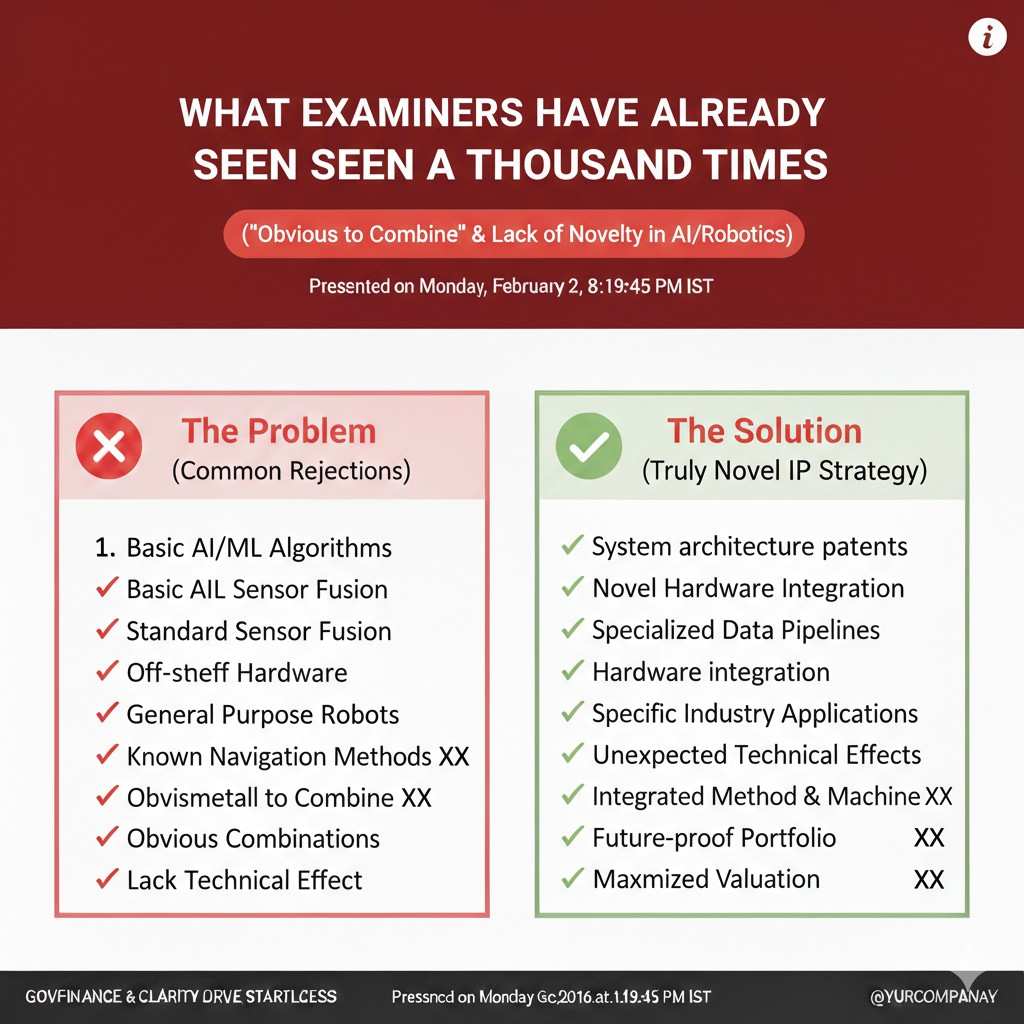
What examiners usually attack in computer vision applications
If you know what gets attacked, you can draft around it.
For CV patents, a few common attack angles show up again and again.
One is “this is abstract.”
In some places, software-heavy claims get pushed as abstract ideas unless tied to a concrete technical improvement. Vision can fall into that trap if you write it like “classify images.”
The fix is to anchor the invention to a technical system problem and a technical improvement. Things like reduced compute, improved stability under motion, reduced memory, fewer frames needed, better calibration, less sensor drift, fewer false triggers. These are not “business results.” They are technical results.
Another attack is “this is known.”
Vision is a crowded field. Examiners will find older patents and papers that sound close. If your claim is high level, you will look like the same thing.
The fix is to claim the specific combination and ordering of steps, and to make sure the spec explains why that combo matters.
Another attack is “you did not enable it.”
If you claim something broad but never explain how to do it, you can get pushed back. This happens when founders try to keep it vague.
The fix is to include enough detail: example flows, example parameter ranges, example thresholds, example model types, and multiple variations. Not as fluff, but as support.
A simple frame for building your first strong claim
When you draft your first “core” claim for a vision invention, think in this order:
What input do you take?
What do you do to the input before inference?
What do you do during inference that is different?
What do you do after inference to stabilize or act?
What output do you produce that is used in a real system?
The most important part is usually the “before” and “after.” That is where the unique system behavior comes from.
For example, “after inference” can include tracking across frames, filtering out unstable detections, merging sensor readings, or using uncertainty to trigger a second look.
If your invention is truly in training, then “before” might be how you create labels, how you create synthetic data, how you choose hard examples, or how you adapt to a new camera without manual work.
But even training inventions usually connect back to a runtime benefit. So do not forget to write that link.
One more note before we move on
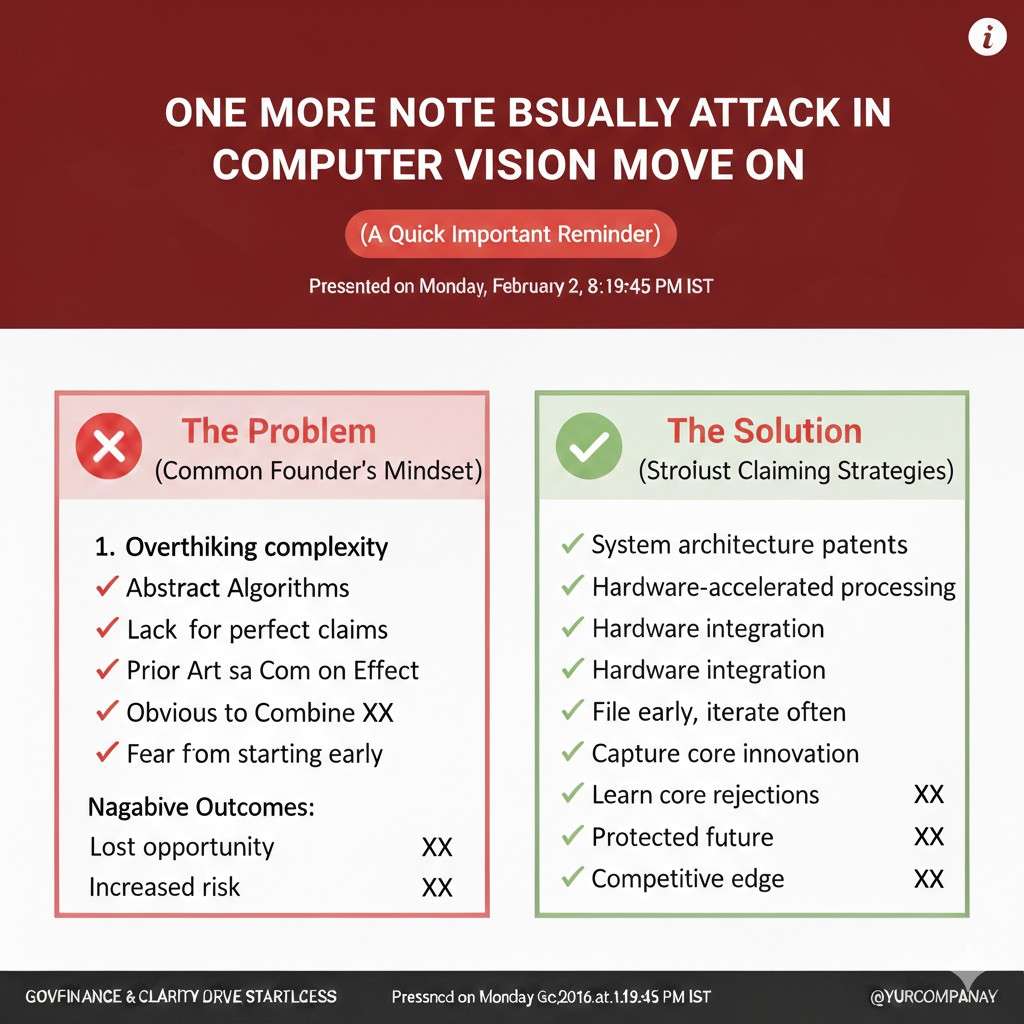
A blog post cannot replace legal advice. But it can make you dangerous in a good way. It can help you spot what is claimable, and it can help you talk to your patent team in a way that saves time and avoids weak filings.
If you want help turning your own CV pipeline into a real, enforceable claim set, Tran.vc is built for that stage. They invest up to $50,000 in in-kind patent and IP services, focused on deep tech, AI, and robotics. You can apply anytime: https://www.tran.vc/apply-now-form/
The uncomfortable truth about “vision patents”
Most filings fail for the same simple reason
A lot of computer vision patents try to claim the outcome instead of the method. They talk about “detecting,” “classifying,” or “understanding” an image, but they do not pin down the exact steps that make their system work in the real world. When the claim reads like a product brochure, it becomes easy to reject.
In vision, the core work is rarely the final label. The hard part is how you deal with messy input, shifting light, blur, camera drift, odd angles, and missing depth. If your patent does not show the exact way you handle those issues, it will look like every other generic AI filing.
What examiners have already seen a thousand times
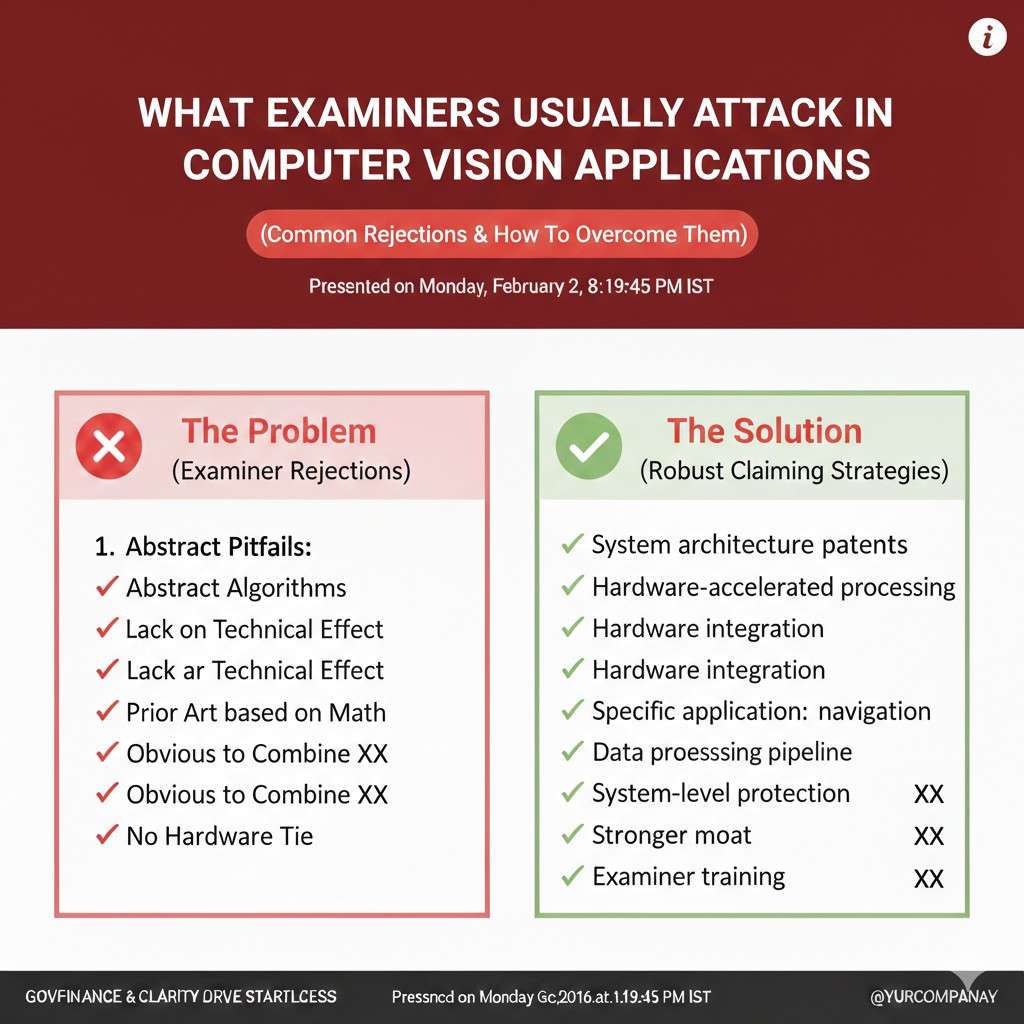
Examiners see endless claims that sound like “receive an image, run a neural network, output a result.” Even if your model is strong, the claim still looks routine. It gets compared to piles of older patents and research that do the same high-level thing.
To hold up, you need to claim what is different in your pipeline. That difference is usually a specific input treatment, a smart way to pick regions, a timing rule, or a fusion step that changes the system’s behavior.
The real invention is usually a small but critical choice
Founders often undervalue the “small choices” that made their product stable. The way you reject low-quality frames, the way you normalize depth edges, or the way you merge detections over time can be the real invention. Those choices are what competitors copy once you show results.
If the claim captures those steps clearly, the patent becomes a fence around how the system works, not just a flag planted on a vague idea.
Where computer vision patents actually get strength
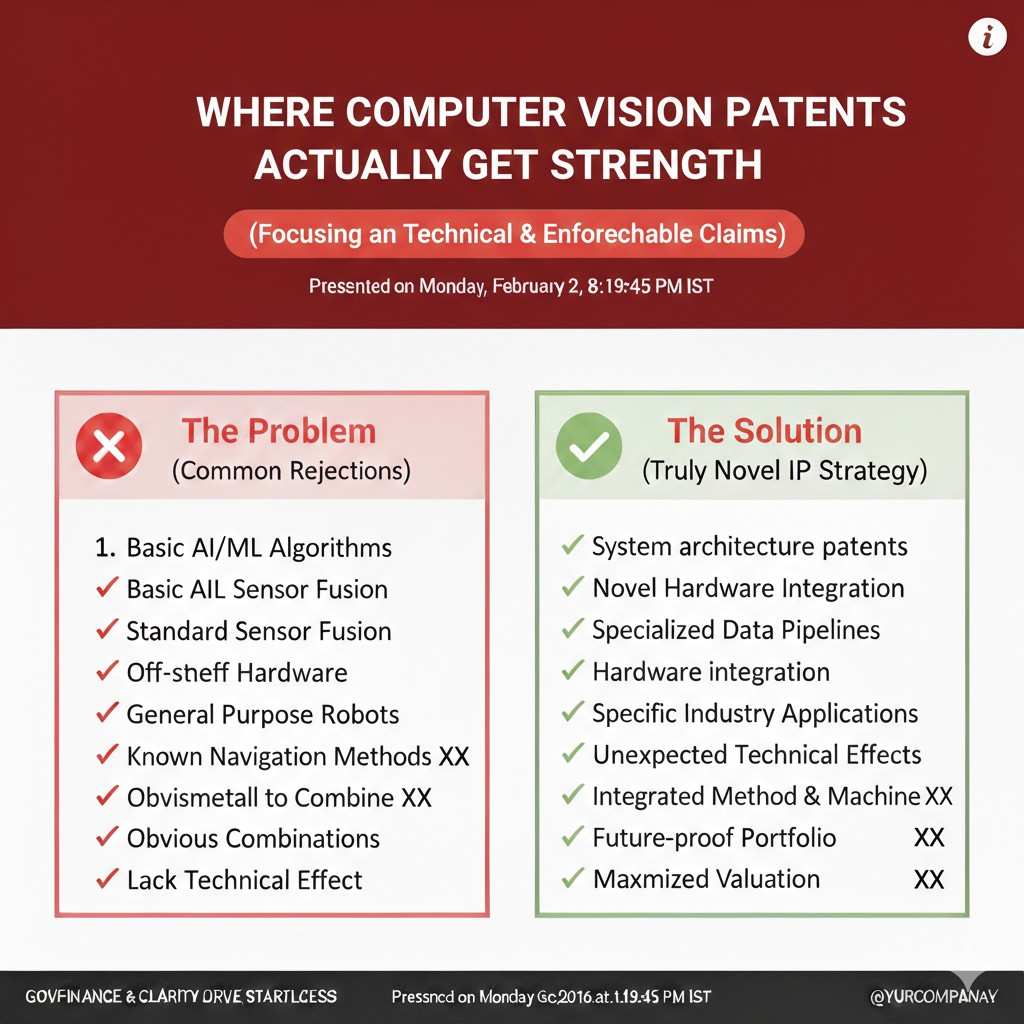
Strong claims tend to sit on technical friction points. This includes unstable lighting, motion blur, occlusion, sensor noise, and strict speed limits on edge devices. When the patent ties the invention to a clear technical issue and a clear technical fix, it becomes much harder to dismiss.
The more you can show a measurable technical gain, like fewer false triggers or lower compute load, the more “real” the invention looks during review.
What “claims that hold up” really means
It must survive the first round, not just sound impressive
A claim that “holds up” is one that can take a hit and still stand. That starts with getting past early rejections without having to shrink the claim into something useless. If your first claim is too broad and too vague, you often end up cornered into a narrow fallback.
The goal is not to write the widest claim on day one. The goal is to write a claim that is broad enough to matter and specific enough to defend.
It must be hard to dodge with a tiny change
A fragile claim is one a competitor can avoid by swapping one step, changing a threshold, or moving a module from pre-processing to post-processing. That happens when your claim only covers one exact implementation and does not describe variations.
A durable claim is supported by a description that includes multiple ways to do the same core idea. The claim can then be tuned during prosecution without losing the heart of the invention.
It must map cleanly to code and system behavior
If you ever need to point to infringement, you want to map claim steps to software behavior without stretching. That is why clear “do this, then do that” language matters. You are not trying to sound academic. You are trying to be unambiguous.
When the claim follows the actual pipeline order, it becomes easier to prove what the system does and why it falls under your protection.
It must show a technical improvement, not a business outcome
Vision patents get stronger when they tie to technical gains like lower latency, less memory use, fewer frames needed, improved robustness under blur, or reduced calibration drift. These are system-level improvements that show the invention is not just a generic “computer does a thing.”
When you frame the benefit in engineering terms, the claim has a better chance of being treated as a real technical contribution.
The fastest way to spot a weak vision claim
The “strip it down” test
Take the claim and remove everything that is not a step. If you are left with “receive image data, run a model, output a label,” then the claim is thin. It reads like a template, and examiners recognize templates fast.
A strong claim still has a story when stripped down. You can see the special pipeline actions and the system logic that made your product reliable.
A claim must describe action, not intention
Weak claims lean on words like “identify,” “analyze,” and “determine” without saying how. Those words describe intent. They do not describe the machinery of the invention. That is why they are easy to reject or narrow.
Strong claims name the operations. They show what is computed, what is compared, how data is transformed, and how outputs are stabilized or validated.
If it sounds like a feature request, it is not a claim
If your claim could be read as a customer wish, it is too high-level. “Detect defects in parts” is a wish. “Detect defects by generating a reflectance-normalized map and scoring edge-consistent anomalies across two viewing angles” is closer to a method.
The best claims read like an implementation plan, not a slogan.
The real “unit” of invention in computer vision
It is often the pipeline, not the model
Many founders want to patent the neural network itself, but the model choice alone is rarely new. What tends to be new is the way your system feeds the model and the way it uses model outputs over time. That is where the practical cleverness lives.
Your model may be the engine, but your data handling is the transmission. In patents, the transmission is often where you can make stronger, clearer claims.
The most claimable work happens before inference
Pre-processing is not “basic.” In vision systems, pre-processing can be the difference between stable detection and constant false alarms. Cropping logic, motion-based region selection, sensor alignment, and exposure normalization can all be claimable if done in a specific way.
If your pipeline makes the model’s job easier by creating a better input representation, you have a real technical hook for claims.
The most defensible work often happens after inference
Post-processing is where you turn raw detections into actions you can trust. Tracking across frames, rejecting jitter, fusing depth with RGB, and applying confidence gating are all areas where real inventions live.
If your system behaves in a special way when confidence drops or when occlusion rises, that behavior can be claimed as a technical method that improves reliability.
A practical example: what founders think they should claim vs what holds up
The “generic detector” claim is an easy target
If your system finds pallets, people, tumors, cracks, or faces, the generic claim will always look like prior work. It does not matter if your accuracy is higher. A patent is not a leaderboard. It is a description of a technical mechanism.
So the goal is to claim what made your system work where others fail, not the general idea of detection.
The stable system usually has one hidden trick
In robotics, a vision system must perform under motion, vibration, and shifting viewpoints. That stability often comes from a trick that is not obvious to outsiders. Maybe you use depth only near boundaries, or you compute pose from a subset of keypoints that remain visible.
If you name that trick and describe it as a repeatable method, you have something much closer to a strong claim.
The claim should follow the real runtime loop
A good claim can often be read as the runtime loop your software executes. It has inputs, transforms, inference, checks, and outputs. The more your claim resembles the real pipeline order, the easier it is to explain and defend.
This also helps you avoid claims that look like abstract “analysis” and instead look like concrete signal processing and system control.
How to talk about computer vision in a patent without sounding like a paper
Write for the engineer who has to build it
Patents should be clear, not poetic. If you use academic terms, you should still translate them into steps. That way, the invention is readable even for someone who has not read your research notes.
When you describe the “how,” you create support for claims that can be adjusted without losing the core invention.
Avoid hiding your best step
Many founders describe everything around the secret but never state it plainly. That is common in sales writing, but it harms a patent. A patent must teach enough for a skilled person to implement the invention.
The better approach is to explain the mechanism clearly, then claim it in a way that covers variations so competitors cannot copy it safely.
Use plain cause-and-effect language
A strong patent story shows cause and effect. “We transform frames this way, which reduces blur artifacts, which improves tracking stability.” This reads like engineering truth, not hype.
That is the tone that examiners and investors both trust, because it shows you understand the system deeply.
What examiners usually attack in computer vision applications
“This looks abstract” and how to reduce that risk
Software-heavy claims can be treated as abstract if they read like data labeling or general classification. Vision can fall into that trap when the claim is written at the level of “analyze images to decide a result.”
You reduce that risk by tying the claim to technical operations and technical improvements. It should feel like a signal-processing and control method, not a business rule.
“This is known” and why specificity matters
Computer vision is crowded, so examiners will find similar-sounding work quickly. If your claim is broad and vague, it will appear identical to many references. That forces you into narrowing amendments that may weaken the patent.
If your claim captures your unique ordering of steps and your unique checks, you create distance from prior art and keep negotiating room.
“You did not explain enough” and how to avoid it
If you claim a wide space but describe only one narrow example, you may get pushed on enablement. This is where detailed descriptions help. Not filler, but true variations that follow the same core idea.
When the spec shows multiple ways to do the same thing, you protect your claim set against both rejection and easy design-arounds.
A simple frame for building your first strong claim
Start with the real pipeline inputs and outputs
Every strong claim begins with clear inputs and clear outputs. In vision, the inputs might be frames, depth maps, IMU readings, or camera calibration data. The outputs might be pose, segmentation masks, tracks, or action triggers.
When inputs and outputs are concrete, the steps in between can be written as technical operations instead of vague “analysis.”
Make the key steps visible and ordered
If your invention is in the pre-processing, state those transforms clearly. If your invention is in multi-frame stability, state the temporal logic clearly. If your invention is in sensor fusion, state the alignment and weighting clearly.
Claims hold up when the core idea is captured as a sequence of operations that a competitor would need to copy to match your results.
Tie the invention to a technical gain
You do not need marketing language. You need engineering language. Reduced compute, improved robustness, fewer false positives, lower memory use, less drift, faster convergence, fewer calibration steps. These are the kinds of benefits that make the invention feel concrete.
That link between method and gain strengthens both patentability and the story you tell investors.