
You have an idea. It might be code, a model, a robot, a chip design, or a system no one else has built yet. You see the future clearly. But when it comes to funding, everything feels blurry.
Pre-seed funding is often the first outside support a startup receives. For first-time tech founders, it can feel confusing, risky, and full of noise. Who should you talk to? How much should you raise? What are investors really looking for? And how do you avoid giving up too much, too soon?
This is where many strong technical founders make early mistakes. Not because they lack skill, but because they move too fast without understanding how this stage truly works.
Pre-seed funding is not just about money. It is about leverage. It is about control. It is about building a strong base before you scale.
In this guide, we will walk through how pre-seed funding actually works, what investors expect, how deals are structured, what first-time founders often get wrong, and how to use this stage to build a real advantage.
If you are building in AI, robotics, deep tech, or advanced software, this is especially important. Because in these fields, your intellectual property matters more than your pitch deck.
Let’s begin.
What Pre-Seed Funding Really Means
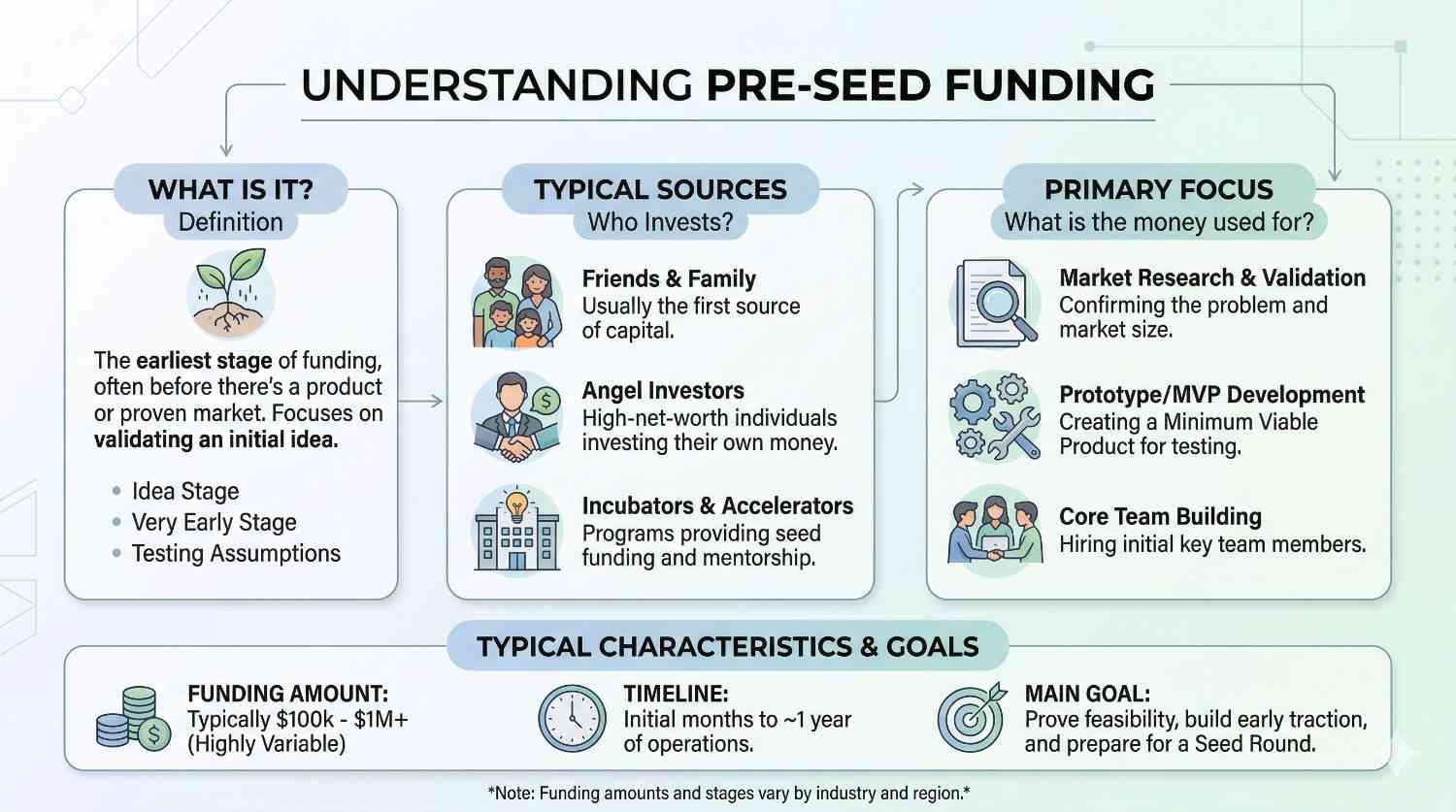
Pre-seed is the stage before seed funding. It is the earliest outside support most startups receive.
At this point, you usually have:
- A strong idea
- A technical insight
- Maybe a prototype
- Maybe early research
- A small founding team
You usually do not have:
- Product-market fit
- Real revenue
- A large team
- Strong traction
Pre-seed funding exists to help you move from idea to foundation. It gives you room to test, build, protect, and refine your core technology.
But here is what many first-time founders misunderstand.
Pre-seed is not meant to solve every problem. It is not meant to fund five years of research. It is not meant to scale a sales team. It is meant to reduce early risk.
Investors at this stage are betting on the team and the core insight. They are asking one simple question:
“Can this team build something defensible and real?”
Notice the word defensible. That word matters.
In AI and robotics especially, ideas can be copied quickly. Code can be forked. Models can be replicated. Hardware can be reverse engineered.
If your early work is not protected, you are building on sand.
That is why smart pre-seed funding is not only about capital. It is about building a moat from day one.
Who Invests at the Pre-Seed Stage
Pre-seed investors are different from later-stage venture capital firms.
At this stage, investors are often:
- Angel investors
- Small funds
- Operator-led funds
- Specialized early-stage firms
- Strategic partners
They take bigger risks. They invest smaller amounts. They spend more time with founders.
But not all pre-seed investors are equal.
Some simply write a check and wait. Others get deeply involved.
For first-time founders, the type of investor matters more than the amount of money.
If you raise from someone who does not understand your technical field, you may spend months explaining basic ideas instead of building.
If you raise from someone who only cares about fast growth, you may feel pressure to chase hype instead of building real value.
This is where alignment matters.
For example, Tran.vc focuses on helping deep tech and AI founders build real intellectual property before they raise larger rounds. Instead of just giving cash, they invest up to $50,000 in patent and IP services. That means experienced patent attorneys, strategic guidance, and real protection from day one.
That kind of support changes your trajectory.
Because when you walk into a seed round with filed patents, clear IP strategy, and protected innovation, you are not just another startup. You are an asset-backed company.
If you are building something technical and want that kind of foundation, you can apply anytime here:
https://www.tran.vc/apply-now-form/
How Pre-Seed Deals Are Structured
Now let’s talk about structure.
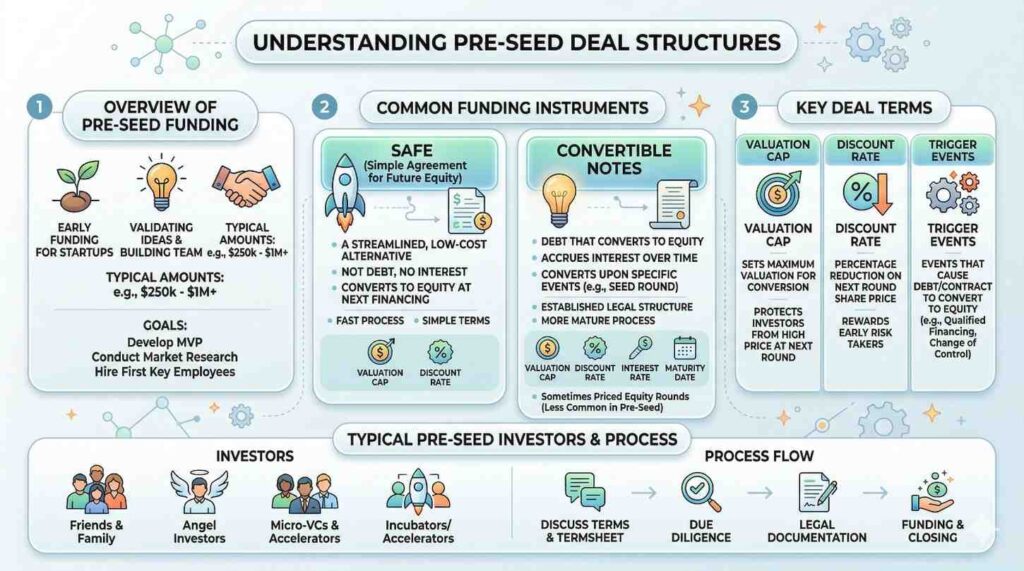
Most pre-seed funding is done through one of three methods:
- Equity rounds
- Convertible notes
- SAFEs
I will explain these in simple terms.
In an equity round, you sell a fixed percentage of your company at a set valuation. If someone invests $200,000 at a $2 million valuation, they might own 10 percent.
In a convertible note, the investor gives you money that later converts into equity during your next round. It often includes a discount or valuation cap.
A SAFE works in a similar way. It is a simple agreement that converts later, usually during a priced round.
For first-time founders, SAFEs and convertible notes are common at pre-seed. They are faster and involve less negotiation than priced equity rounds.
But here is what matters more than structure.
Ownership.
Every percentage point you give away early affects your long-term control. Many first-time founders give away too much at pre-seed because they are eager to close quickly.
If you sell 20 to 30 percent too early, future rounds become harder. You lose leverage. You may lose control of your board.
Pre-seed should be enough to reach your next strong milestone. Not enough to build a large organization.
A disciplined raise at this stage protects your future options.
This is why some firms, like Tran.vc, invest through in-kind IP services instead of large equity checks. The goal is not to push founders into over-raising. The goal is to strengthen the company’s foundation so that when you do raise capital, you do it from a position of strength.
Pre-seed should buy you clarity, proof, and protection.
Not vanity metrics.
What Investors Look for at Pre-Seed
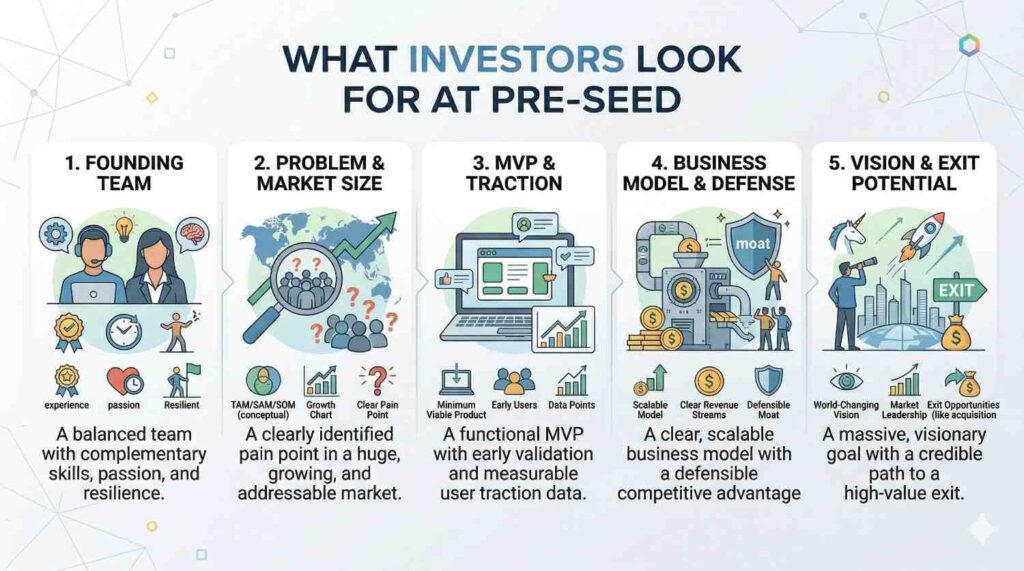
At this stage, investors are not looking for revenue charts. They are looking for signals.
They want to know:
- Is this team capable?
- Is the problem real?
- Is the solution differentiated?
- Can this become defensible?
Notice again the word defensible.
In AI, everyone has access to similar tools. In robotics, hardware can be copied. In software, features can be replicated quickly.
So investors ask: What makes this hard to copy?
This is where intellectual property becomes powerful.
If you can show that you have filed patents around your core algorithms, hardware designs, or technical methods, you signal seriousness. You show that you are not just building fast. You are building with intention.
IP also increases valuation. Investors see lower competitive risk. That can mean better terms for you.
Pre-seed funding is often the moment when founders decide whether to treat IP as an afterthought or as a core strategy.
The smart ones choose the second path.
If you are building something novel and want to turn it into protected assets before your seed round, you can start that process here:
https://www.tran.vc/apply-now-form/
The Biggest Mistakes First-Time Founders Make
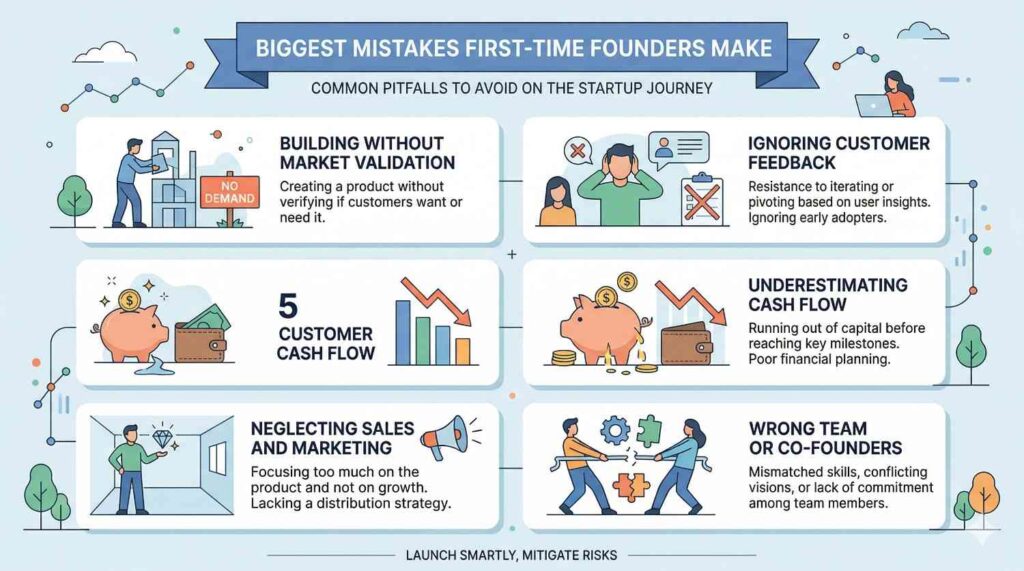
Let’s talk honestly about mistakes.
The first mistake is raising too much too early. It feels good to announce a large round. But high valuations create pressure. If you cannot grow into that valuation, the next round becomes painful.
The second mistake is ignoring IP. Many technical founders believe their code speaks for itself. It does not. Without protection, your innovation can be copied, sometimes by well-funded competitors.
The third mistake is choosing investors only for money. At pre-seed, guidance matters more than capital.
The fourth mistake is chasing trends. Today it may be generative AI. Tomorrow it may be robotics automation. If your company is built on hype instead of strong core insight, it will struggle when trends shift.
The fifth mistake is waiting too long to raise. If you wait until your runway is almost gone, you lose leverage. Investors can sense urgency. That weakens your position.
Pre-seed funding works best when it is planned, not reactive.
How to Prepare Before Raising Pre-Seed
Start With Clarity, Not Slides
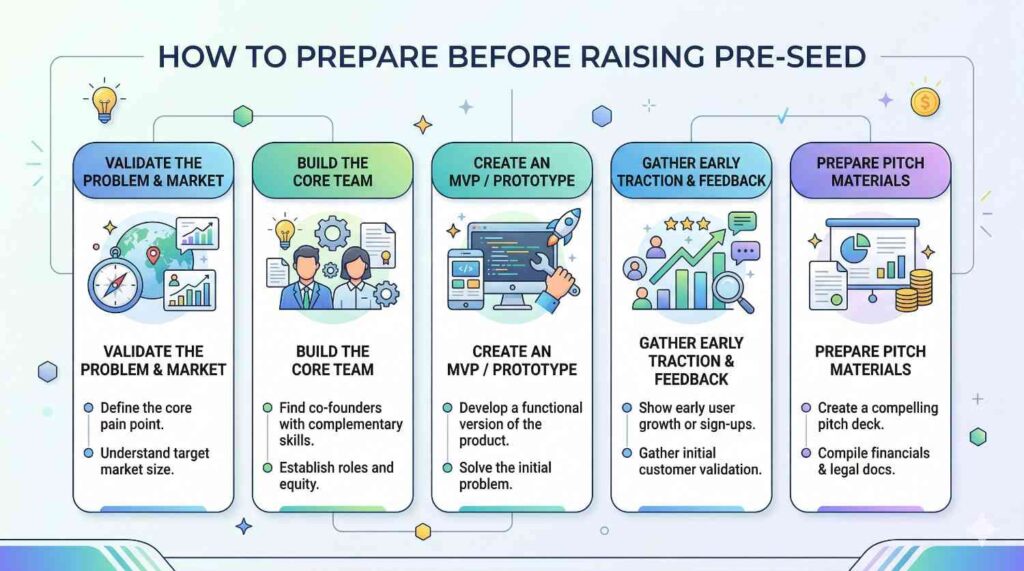
Before you speak to any investor, you need clarity.
Not a polished pitch deck. Not a viral demo video.
Clarity.
You should be able to explain your product in simple words.What problem does it solve? Who has this problem?Why is the current solution not good enough?If you cannot explain your idea clearly to a smart friend outside your field, you are not ready to raise.Confusion at this stage creates doubt later.
Investors at pre-seed are betting on your thinking.They want to see that you understand the space deeply.That you see something others have missed.Clarity builds trust. And trust builds leverage.
Define the Technical Edge
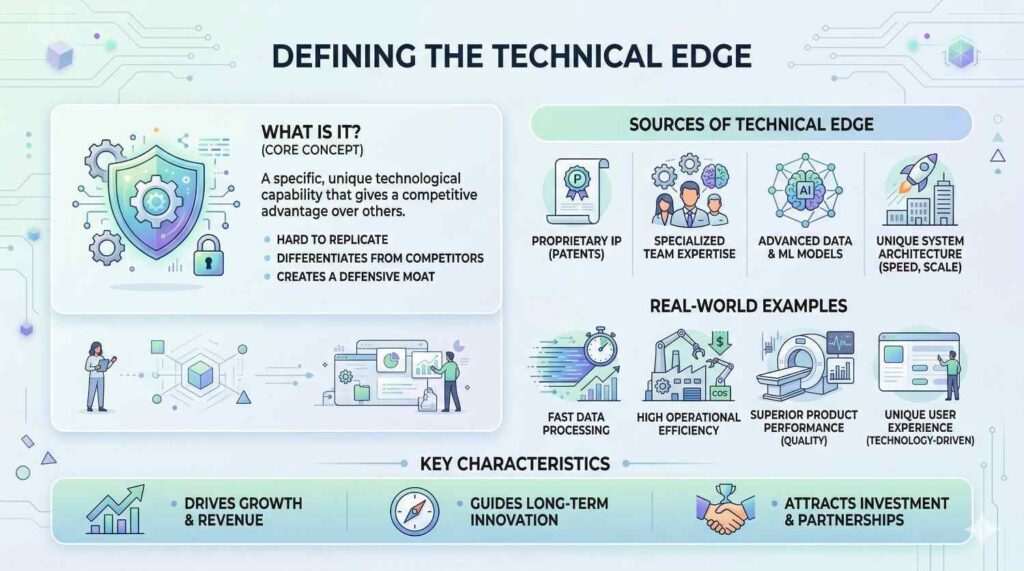
In AI, robotics, and deep tech, your edge is not marketing.
It is not branding. It is not speed alone.
Your edge is your technical insight.
You must be able to explain why your solution is hard to copy.
Is it a unique algorithm?
A new hardware design?
A new system architecture?
If your advantage can be replicated in six months by a larger company, investors will hesitate.
This is where intellectual property becomes critical.If you have already thought about patent strategy, freedom to operate, and core claims, you show maturity.You are not just building a product.You are building a protected asset.That difference changes how investors see you.
Build Proof, Even If It Is Early
You do not need revenue at pre-seed.
But you do need proof. Proof can be a working prototype.It can be lab results.It can be early pilot users.
What matters is that your idea is no longer just theoretical.
In robotics, that may mean a working system in a controlled environment.
In AI, it may mean benchmark performance that shows improvement over existing models. Investors want to see movement.
They want to see that you execute.Execution reduces risk.And reduced risk increases your bargaining power.
Get Your Cap Table Right
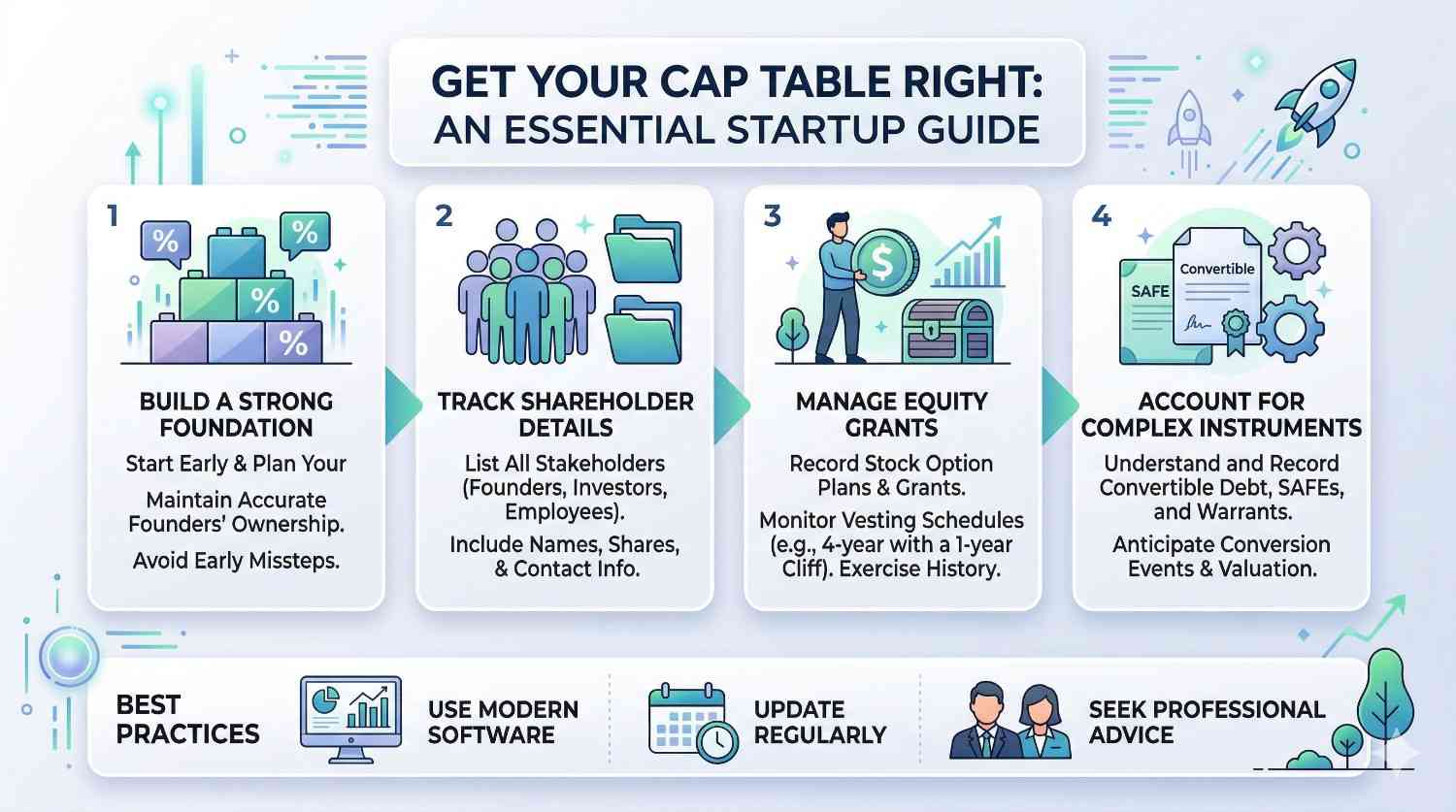
Before raising pre-seed, look at your ownership.
How much does each founder own?
Are there early advisors with equity?
A messy cap table scares investors.
Too many small shareholders create friction later.
At this stage, simplicity is power.
Keep founder ownership strong.
Protect your long-term control.
If you are not careful early, you may regret it during your seed or Series A round.
Pre-seed is about setting the board correctly before the game gets serious.
Build Relationships Before You Need Money
One common mistake first-time founders make is waiting until they need money to start talking to investors.
That puts you in a weak position.
Instead, begin conversations early.
Share progress updates.
Ask for feedback.
When investors see your journey over time, they gain confidence.
They see growth.
They see consistency.
Raising capital becomes easier when people have watched you build.
Pre-seed funding works best when it grows out of relationships, not cold outreach.
If you are building in AI, robotics, or advanced tech and want guidance before you even raise, you can apply to work with Tran.vc here:
https://www.tran.vc/apply-now-form/
How to Think About Valuation at Pre-Seed
Valuation Is Not a Trophy
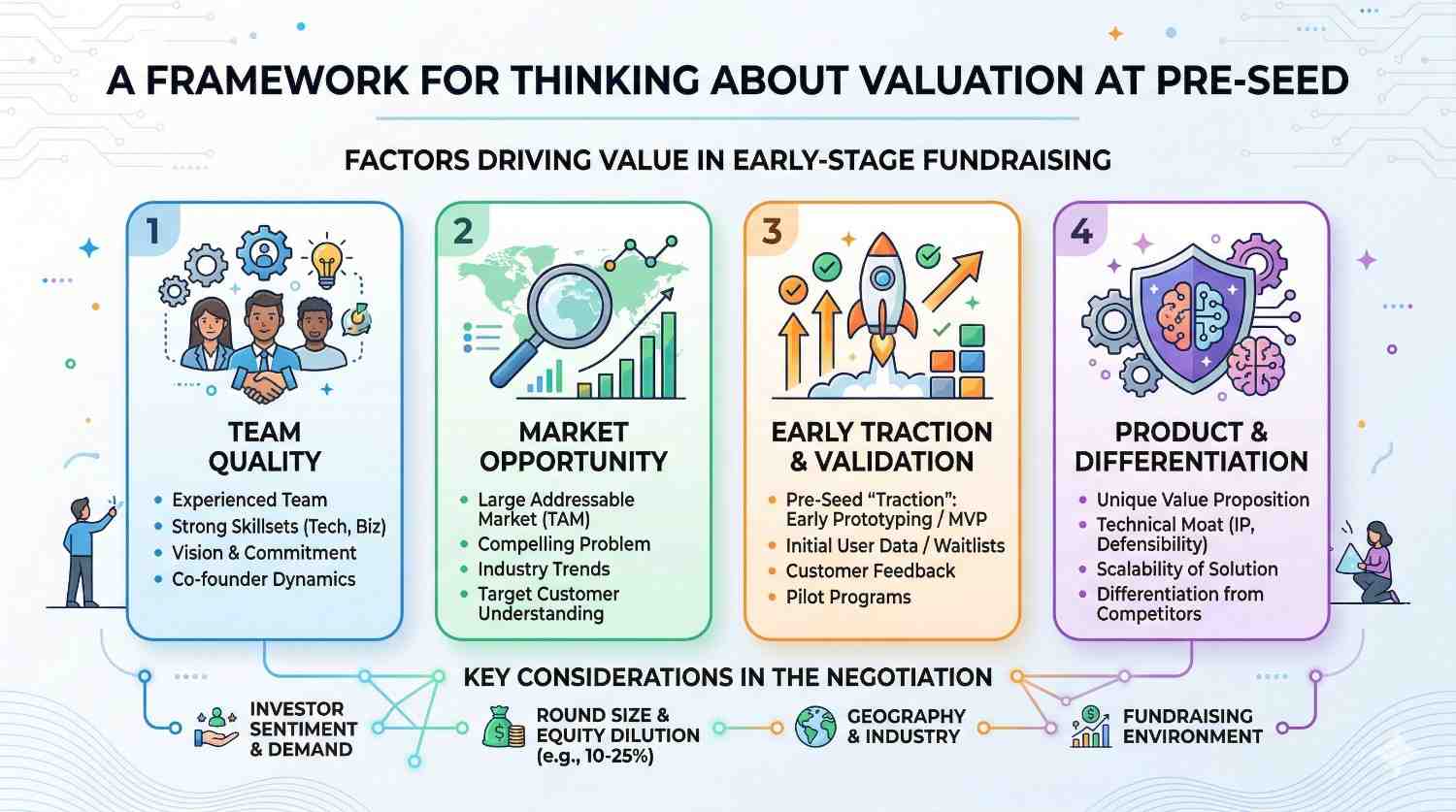
Many first-time founders chase high valuations.
It feels good to say your startup is worth five or ten million dollars.
But valuation at pre-seed is mostly a negotiation tool.
It is not proof of success.
If you raise at a valuation that is too high, your next round must justify it.
If you cannot show strong growth, investors may hesitate.
A reasonable valuation gives you room to grow.
It sets realistic expectations.
Think long term.
Protect your future fundraising path.
Ownership Compounds Over Time
At pre-seed, every percentage point matters more than you think.
If you give away 25 percent now, then 20 percent at seed, and more at Series A, your ownership can shrink quickly.
This affects control.
It affects decision-making.
It affects motivation.
Strong founders protect their equity early.
They raise only what they need to reach the next milestone.
They do not dilute heavily just to feel secure.Smart capital is better than large capital.
Milestones Drive Valuation
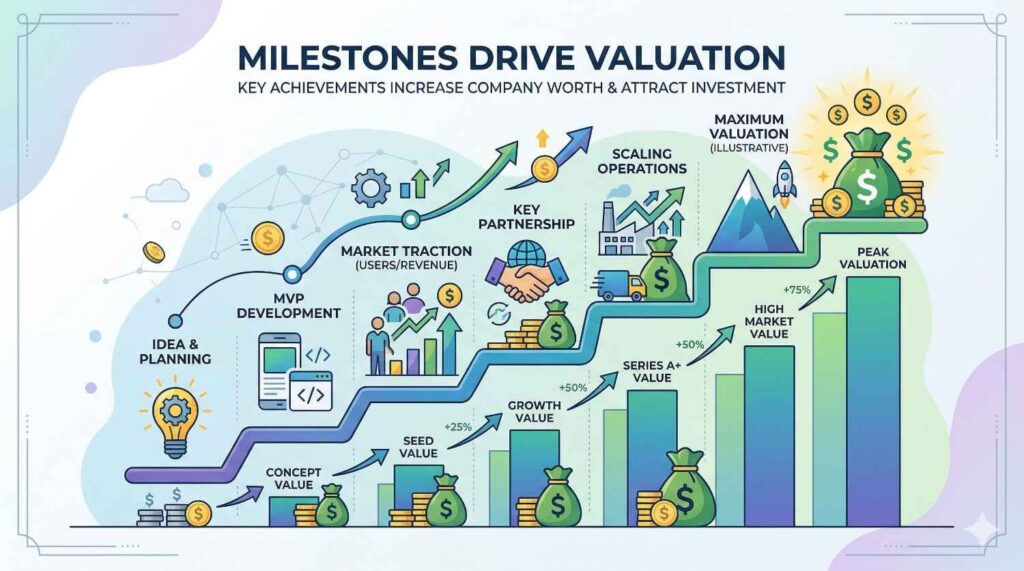
Investors do not pull numbers out of thin air.
They look at risk.
The less risk in your business, the higher the valuation.
If you have filed patents around your core technology, you reduce competitive risk.
If you have early pilot customers, you reduce market risk.
If your team has domain expertise, you reduce execution risk.
Each reduced risk increases your perceived value.
This is why building IP early is powerful.
It changes the story.
Instead of saying, “We have an idea,”
you say, “We have protected technology.”
That difference can impact terms significantly.
Use Pre-Seed to Strengthen, Not Inflate
Pre-seed should strengthen your foundation.
It should allow you to file patents.
Build prototypes.
Run experiments.
It should not be used to inflate your team or chase press.
When you focus on strengthening your core, your next round becomes easier.
Investors prefer disciplined founders.
They respect capital efficiency.
They know that careful builders often create lasting companies.
How to Build Leverage Before Your First Investor Meeting
Control the Narrative
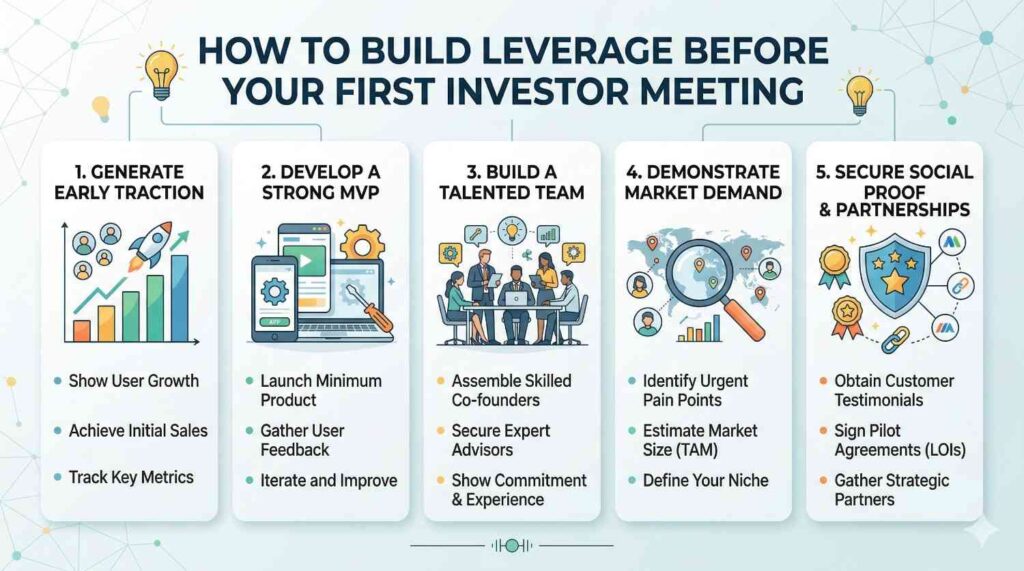
When you walk into an investor meeting, you are not asking for charity.
You are presenting an opportunity.
Leverage begins with how you position yourself.
If you frame your startup as early and uncertain, investors feel power.
If you frame it as focused, strategic, and protected, the dynamic shifts.
Talk about your long-term vision.
Explain your technical moat.
Show that you think years ahead.
Confidence, when backed by preparation, builds respect.
Show That You Do Not Desperately Need Capital
Nothing weakens a founder more than visible urgency.
If investors sense that you are running out of runway, they may slow the process.
They may negotiate harder.
Raise when you still have time.
Even six to nine months of runway gives you room to negotiate.
Leverage comes from options.
When you have options, you can choose better partners.
Demonstrate Strategic Thinking
Investors look for signals of strategic depth.
Have you thought about patent coverage in multiple markets?
Have you considered future licensing opportunities?
Have you analyzed competitors’ filings?
When you show this level of thinking, you stand out.
Many early founders focus only on building.
Few focus on protection and long-term defensibility.
That difference signals maturity.
Tran.vc helps founders think this way from the start.
They do not just file patents.
They help shape a smart IP roadmap.
If you want to build leverage before your seed round, you can apply here:
https://www.tran.vc/apply-now-form/
Build Scarcity Through Progress
When investors see consistent progress, interest grows.
Send short updates.
Share milestones.
Highlight breakthroughs.
Momentum creates scarcity.
If multiple investors show interest, your negotiating position strengthens.
Scarcity changes conversations.
Instead of convincing one investor, you choose between them.
That is how leverage works at pre-seed.
How IP Strategy Directly Impacts Fundraising Outcomes
IP Signals Seriousness
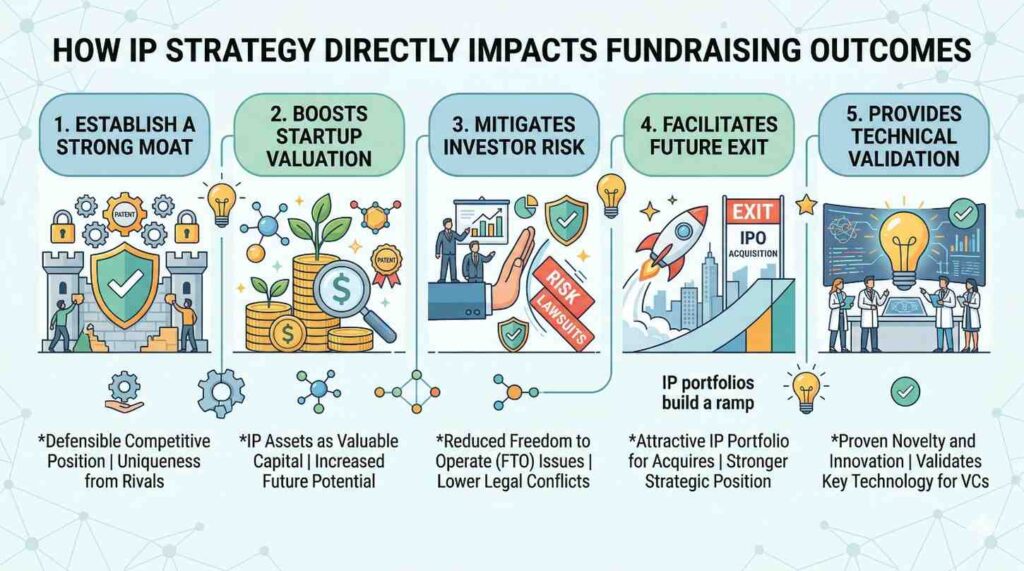
In deep tech, intellectual property is not optional.
It is foundational.
When investors see filed patents or a clear IP roadmap, they see commitment.
It tells them you plan to build a real company, not just a feature.
It shows you understand competitive risk.
That perception matters during early fundraising.
Patents Increase Strategic Value
Patents do more than block competitors.
They create optionality.
You can license technology.
You can form partnerships.
You can defend market share.
Investors value optionality.
It gives the company more paths to success.
When you walk into a seed round with protected technology, you command attention.
You are no longer just another startup in a crowded pitch day.
IP Strengthens Negotiation Power
During due diligence, investors examine risk.
If your core innovation is unprotected, they may push for lower valuation.
They may ask for more equity.
But if your IP is structured and defensible, you reduce that pressure.
You move from being a risky bet to a structured opportunity.
This changes the tone of negotiation.
It changes terms.
It changes outcomes.
Building a Moat Before Product-Market Fit
Many founders believe they should wait until product-market fit before thinking about IP.
That is often too late.
If your product gains traction without protection, competitors can move quickly.
Pre-seed is the ideal time to file around your core innovation.
You protect what matters before exposure grows.
Tran.vc focuses exactly on this stage.
They invest up to $50,000 in patent and IP services to help technical founders build defensible foundations early.
If you are serious about building a company that lasts, not just a startup that raises, you can apply here:
https://www.tran.vc/apply-now-form/