
Most founders think funding is about money.
It is not.
It is about what changes in you, in your company, and in the way people see you.
Pre-seed and seed funding may sound like two simple stages. But the shift between them is one of the biggest turning points in a startup’s life. What you focus on changes. What investors expect changes. What you must prove changes.
If you are building in AI, robotics, or deep tech, this shift is even more serious. Because your product is not just an app. It is code, models, hardware, systems, and often years of research. The stakes are higher. The cost of mistakes is higher. And the need to protect what you build is far greater.
This article will walk you through what really changes between pre-seed and seed. Not just in theory. But in real life. In how you build. How you talk to investors. How you protect your technology. And how you avoid losing control too early.
Let’s begin at the very start.
At the pre-seed stage, you are still proving that the problem matters. You are proving that you can build something that works. You are proving that you are the right team.
Most of the time, there is no revenue. Sometimes there is no finished product. You might have a prototype. You might have code. You might have a hardware demo that works in a lab but not yet in the field.
You are early. And that is okay.
Pre-seed investors know this. They invest in belief. They invest in the team. They invest in the vision. They invest in the potential of your technology.
But here is what many founders miss.
Pre-seed is not just about building fast. It is about building smart.
If you are creating a new AI model, a robotics system, a new algorithm, or a hardware-software stack, you are already creating intellectual property. Even if you do not call it that. Even if you have not filed a patent.
Your code is an asset.
Your models are assets.
Your system design is an asset.
At pre-seed, most founders are focused on speed. Ship the MVP. Talk to users. Get feedback. Raise the next round.
But very few stop and ask:
What are we building that no one else can copy?
What do we own?
What can we protect before we show the world?
This is where the real difference between pre-seed and seed begins.
At pre-seed, you still have time to design your moat.
At seed, investors expect to see it.
When you move from pre-seed to seed, the conversation shifts. Investors stop asking only, “Is this interesting?” They start asking, “Is this defensible?”
Defensible means this: if you succeed, can someone bigger copy you and crush you?
For AI and robotics founders, this question is brutal. Because in your space, large companies move fast. They have money. They have teams. They have distribution.
If your only edge is that you built it first, that is not enough.
At seed stage, investors want proof that you are not building on sand.
They want to see traction. That can mean pilots, early revenue, partnerships, or strong user growth. But they also want to see structure.
They want to see that your company is not just an experiment anymore. It is a real business forming.
This means your pitch changes.
At pre-seed, you sell the dream.
At seed, you sell the plan.
At pre-seed, you talk about what could be possible.
At seed, you show what is already working.
And here is something even more important.
At pre-seed, you can still change direction without much cost.
At seed, every decision becomes heavier.
Once you raise seed funding, you have a valuation. You have investor expectations. You have board pressure. You have growth targets.
You no longer have the same freedom to explore.
This is why how you build at pre-seed matters so much.
If you rush to raise seed without building a real moat, you may find yourself stuck. You will need to grow fast, but your foundation will be weak. Competitors can copy you. Investors may hesitate at Series A. You may need to give up more equity just to survive.
Many founders do not see this coming.
They think seed funding is a reward. A milestone. A badge of honor.
In truth, it is a commitment. It locks you into a path.
This is why pre-seed should not be treated as a small warm-up round. It is the stage where you design the bones of your company.
For deep tech founders, that includes patent strategy.
Some founders worry that patents slow them down. Or that they are only for big companies.
That is not true.
A smart patent strategy at pre-seed does not mean filing random paperwork. It means asking: what part of our system is truly novel? What is hard to reverse engineer? What is core to our future value?
When you do this early, you build leverage.
At seed stage, leverage changes everything.
Investors feel safer.
Your valuation can improve.
You negotiate from strength, not fear.
You are not just another AI startup. You are a company with protected technology.
This is exactly where many founders get it wrong. They chase funding before they build leverage.
They focus on pitch decks before protecting their inventions.
They talk about disruption but forget about defense.
At Tran.vc, we see this pattern often. Technical founders are brilliant at building. But they are rarely trained to think about IP strategy. They assume they can fix it later.
Later is expensive.
Later is messy.
Later often means someone else filed first.
The jump from pre-seed to seed is not just a bigger check. It is a change in power.
At pre-seed, you still control the story.
At seed, the market starts shaping it.
You begin to be compared. Benchmarked. Ranked. Measured.
Your metrics are no longer just internal goals. They become public signals to investors.
This is why founders need to think ahead.
If your goal is to raise a strong seed round, ask yourself today:
What proof will seed investors demand?
What numbers will they care about?
What risks will they question?
What makes us hard to copy?
When you answer these questions at pre-seed, you build differently.
You choose features with intention.
You document inventions carefully.
You structure your company cleanly.
You avoid messy cap tables.
You protect key algorithms before publishing papers or launching demos.
You raise seed not because you need money to survive, but because you are ready to scale.
That is a powerful difference.
The emotional shift is also real.
At pre-seed, you are scrappy. You are still proving yourself. You are pitching the future.
At seed, you become a leader of a growing team. People expect clarity. Investors expect updates. Hires expect stability.
Your role changes.
You spend less time just building and more time managing, selling, and planning.
If you are not ready for that shift, seed funding can feel overwhelming.
This is why the smartest founders treat pre-seed as training.
They use it to build systems, not just features.
They learn how to talk to customers.
They test pricing.
They refine their story.
They protect their core technology.
Then, when seed comes, they are not desperate.
They are prepared.
There is one more difference that few talk about.
Risk.
At pre-seed, risk is obvious. Everyone knows the company might fail. Expectations are lower.
At seed, risk becomes hidden. On the surface, you look validated. You raised money. You have traction.
But the risk of over-scaling becomes real.
If you hire too fast, spend too much, or expand before product-market fit, you can burn through your seed round quickly.
And raising the next round without strong IP or clear traction becomes very hard.
This is why funding stages are not just labels. They are responsibility levels.
Pre-seed is about discovery and foundation.
Seed is about validation and controlled growth.
If you treat seed like pre-seed, you move too loosely.
If you treat pre-seed like seed, you may move too slowly.
The key is understanding what truly changes.
How Investor Expectations Change
What Pre-Seed Investors Are Really Looking For
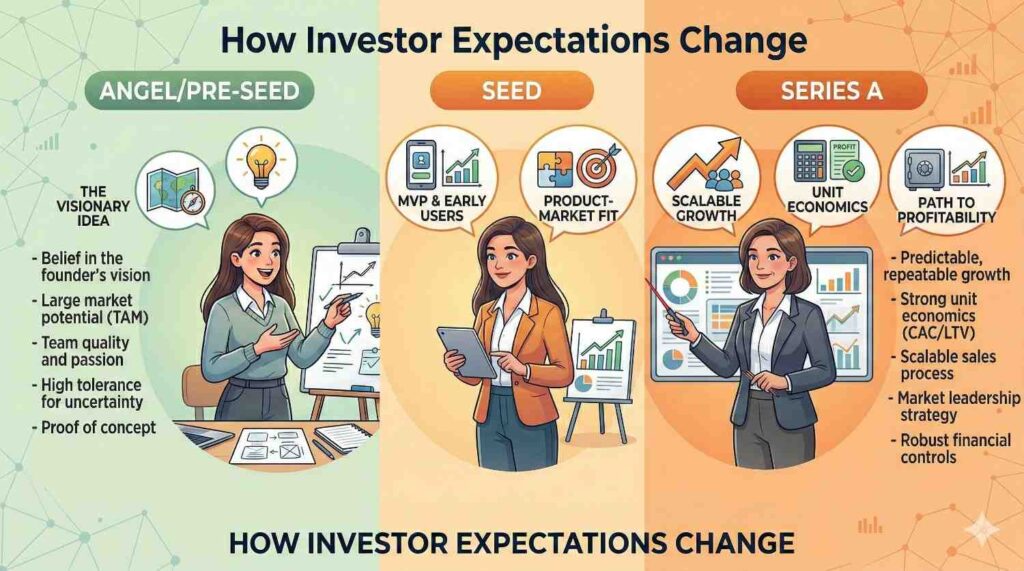
At the pre-seed stage, investors are not looking for perfection. They are not expecting strong revenue, large customer contracts, or polished operations. They are looking at you and your ability to solve a real problem in a unique way.
They want to understand how you think. They want to see how deeply you understand the problem space. If you are building in AI or robotics, they will test your technical clarity. They will ask why your approach is different and why it matters.
At this stage, belief plays a major role. Investors are betting on potential. They are betting on your ability to turn an idea into a working product. Your story carries weight because there is not yet enough data to speak for you.
But belief does not mean blind trust. Even at pre-seed, thoughtful investors want to see early signs of structure. They want to know that you are thinking about ownership, protection, and long-term value. This is especially true in deep tech.
If your startup is built on a new model, system design, hardware configuration, or algorithm, investors will quietly ask themselves one important question. Can this be copied easily?
If the answer is yes, your path forward becomes harder.
What Seed Investors Expect to See
By the time you reach seed, the tone of the conversation changes. Investors are no longer investing in just potential. They expect proof that something is working.
This proof does not always mean large revenue. It can mean paid pilots, letters of intent, growing usage, or strong retention. What matters is that real users are showing interest in your product.
Seed investors want to reduce uncertainty. They want to see signals that the market cares. They want to see that your product solves a problem in a way customers value.
At this stage, your technical advantage must be clearer. You need to show not only that your product works, but that it has a defensible edge. This is where many AI and robotics founders struggle.
A working demo is not enough. A good model is not enough. Investors want to know what stops a larger company from building the same thing with more resources.
If you cannot answer this clearly, your seed round may take longer. Or you may need to accept terms that give away more control than you planned.
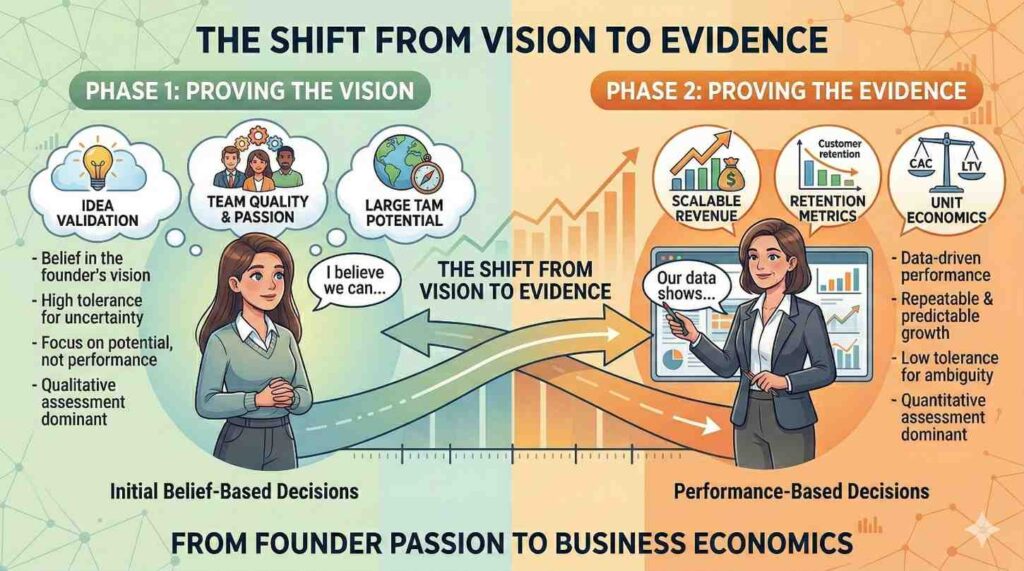
The Shift From Vision to Evidence
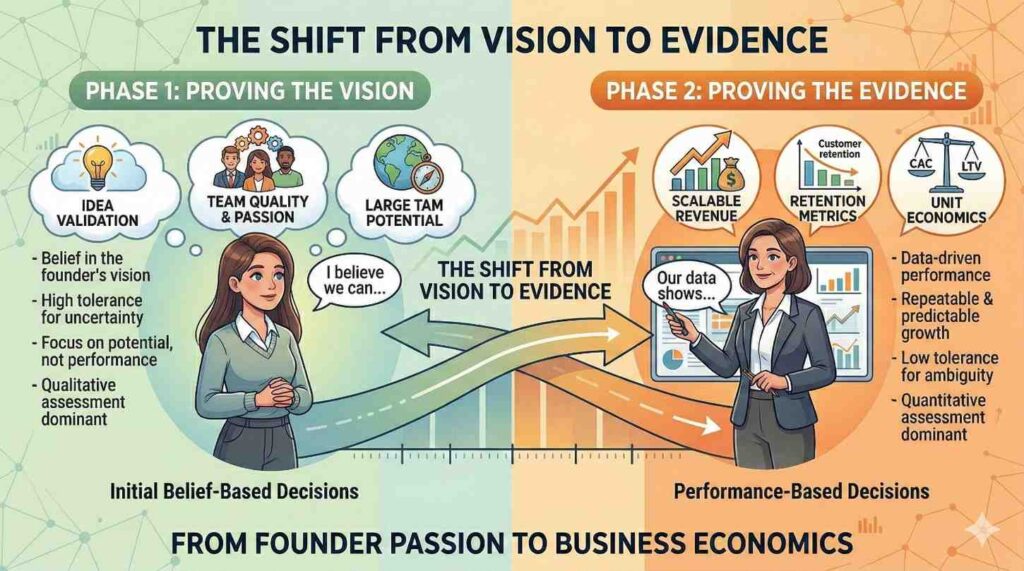
At pre-seed, your pitch focuses heavily on the future. You describe what the world looks like once your product is adopted. You paint a clear picture of transformation.
At seed, the focus moves toward evidence. You still speak about the future, but now you support it with data. You show traction. You show engagement. You show early results.
This shift requires discipline. It means you must track metrics early. It means you must measure what matters from day one.
If you wait until seed to think about metrics, you may discover gaps. You may realize you do not have clear data on user behavior or system performance. That creates friction during fundraising.
Smart founders prepare for seed while still at pre-seed. They build with future proof in mind.
How Your Role as a Founder Evolves
From Builder to Strategic Leader
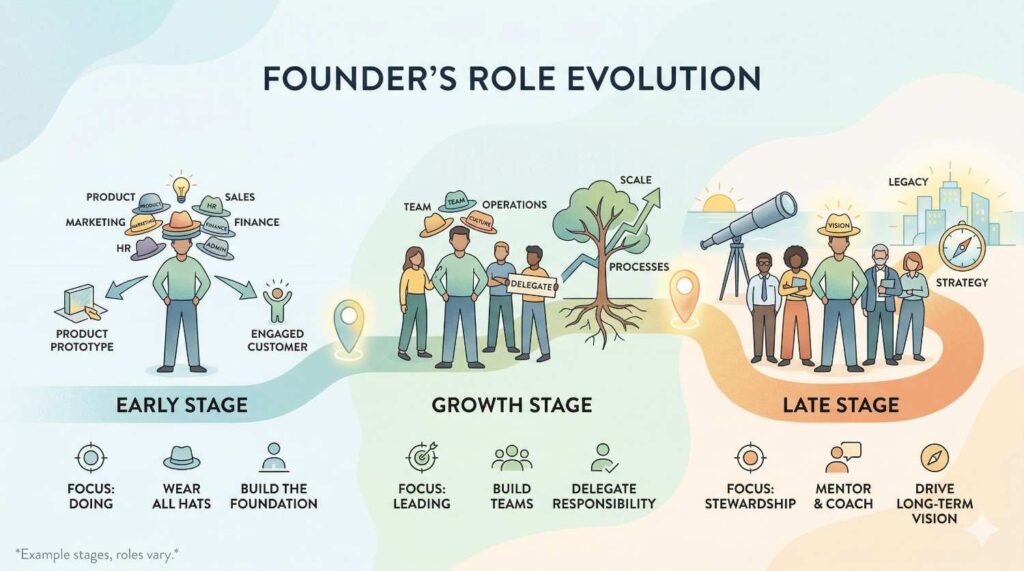
During pre-seed, most founders spend their time building. You are writing code, testing hardware, fixing bugs, and talking directly to early users. Your focus is product and problem solving.
As you move into seed, your responsibilities expand. You begin to lead a growing team. You make hiring decisions. You define processes. You manage investor relationships.
Your time shifts away from pure building. Instead, you focus on strategy and coordination. You think about where the company should be in eighteen months, not just next week.
This change can feel uncomfortable, especially for technical founders. You may miss the deep focus of building. But leadership becomes part of the job.
The earlier you prepare for this shift, the smoother your transition will be.
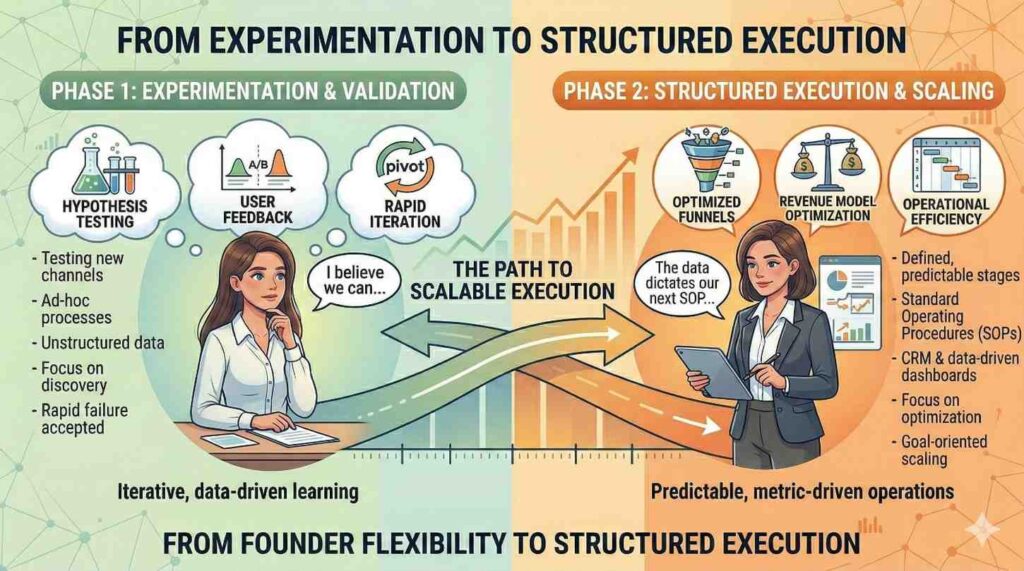
From Experimentation to Structured Execution
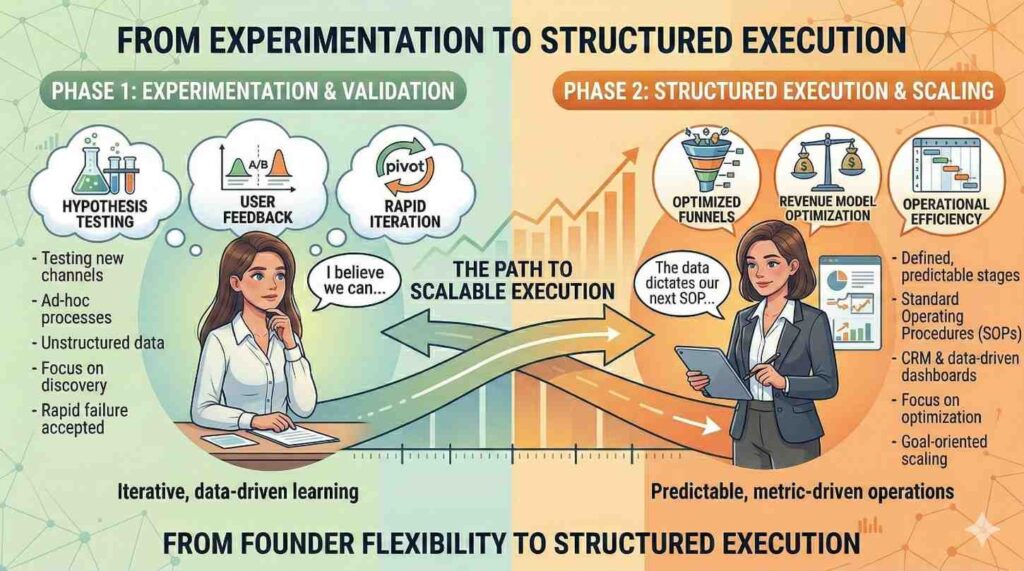
At pre-seed, experimentation is healthy. You are still validating assumptions. You may pivot your product direction based on feedback. The cost of change is lower.
Once you raise seed, your room for experimentation narrows. Investors expect forward momentum. They expect consistent progress toward defined milestones.
You cannot change direction every few months without raising concerns. That does not mean you stop learning. It means changes must be thoughtful and supported by data.
Structure becomes important. Roadmaps matter more. Hiring plans matter more. Communication becomes more formal.
Founders who treat seed like an extended experiment often burn through capital without building durable progress.
The Importance of Defensibility Between Rounds
Why Speed Alone Is Not Enough
Many founders believe that speed is the ultimate advantage. They think if they build fast enough, competitors will not catch up.
In AI and robotics, this belief can be risky. Large companies have resources that allow them to move quickly once they see opportunity. If your only edge is being early, it may not last.
True defensibility comes from ownership. It comes from building technology that is protected, difficult to replicate, and deeply integrated into your system.
This is why pre-seed is the right time to think about patents and intellectual property strategy. Not as a legal formality, but as a business tool.
When you understand what is unique in your technology, you can make better decisions about what to protect. You can file strategically instead of randomly.
How IP Strengthens Your Seed Position
When you enter seed conversations with filed patents or a clear IP roadmap, the tone changes. Investors see maturity. They see foresight.
They understand that you are not only building features, but also building assets. This can increase confidence in your long-term value.
In many cases, strong IP can improve valuation. It can reduce perceived risk. It can also help during partnerships or enterprise sales.
More importantly, it gives you leverage. You are not just asking for capital to survive. You are offering investors a stake in protected innovation.
That difference is powerful.
Avoiding the “Fix It Later” Trap
Some founders delay IP work because they believe it can be handled after traction. They focus fully on product and assume legal protection can wait.
The risk with this approach is timing. Public demos, conference talks, research publications, and product launches can limit your ability to file strong patents later.
If someone else files first, or if your disclosure becomes public without protection, you may lose valuable ground.
Fixing IP issues after seed is often expensive and complex. It may require rewriting claims or accepting weaker protection.
Addressing it early, during pre-seed, is usually simpler and more strategic.
Financial Pressure and Capital Strategy
The Psychology of Pre-Seed Capital
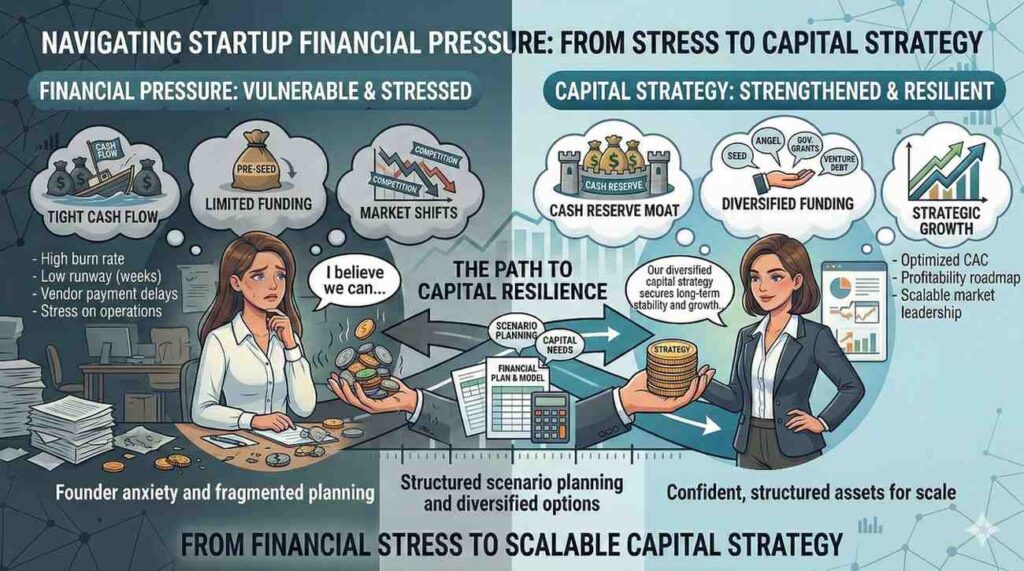
Pre-seed funding often feels like relief. It gives you breathing room. It allows you to focus on building without constant financial stress.
Because the amounts are smaller, expectations are more flexible. Investors understand the risk. They know the journey is uncertain.
This creates space for thoughtful development. If used wisely, pre-seed capital becomes a foundation builder.
However, if treated casually, it can disappear quickly without meaningful progress.
The Weight of Seed Funding
Seed rounds are larger. With larger checks come larger expectations. Investors want defined milestones and timelines.
Your burn rate becomes more important. Hiring decisions carry more impact. Every dollar should move you closer to product-market fit and scalable growth.
Raising seed too early can create pressure before you are ready. If your foundation is weak, scaling amplifies problems.
This is why many experienced founders focus on building leverage before raising significant capital. They aim to enter seed conversations from a position of strength.
Bridging the Gap the Smart Way
Designing Pre-Seed With Seed in Mind
The best founders do not treat funding stages as isolated events. They see them as connected steps in a larger plan.
At pre-seed, they ask themselves what story they want to tell at seed. They identify the metrics that will matter. They define the milestones they need to hit.
They build systems that allow them to track progress clearly. They protect core technology early. They clean up cap tables and legal structure before problems arise.
By the time they approach seed investors, they are not scrambling to prepare. They are presenting the natural next chapter of a well-structured journey.
This approach reduces stress. It improves negotiation power. It increases confidence on both sides of the table.
Pre-seed and seed are not just funding labels. They represent different levels of proof, responsibility, and structure.
Understanding this shift early allows you to build intentionally instead of reactively.
Valuation, Equity, and Control
Why Pre-Seed Valuation Is More Flexible
At the pre-seed stage, valuation is often more of a discussion than a fixed science. There is limited data, little or no revenue, and many unknowns. Because of this, investors rely on signals like team strength, market size, and technical insight.
This flexibility can work in your favor if you understand it well. You have more room to shape the narrative around your company’s future value. You can position your technology, your vision, and your early progress in a way that reflects long-term potential.
But flexibility can also lead to mistakes. Some founders accept lower valuations simply to close the round quickly. Others give away more equity than needed because they feel pressure to secure funding.
At this stage, every percentage of equity matters. What you give away now compounds over time. By the time you reach later rounds, small early decisions can lead to significant loss of control.
This is why pre-seed is not just about getting funded. It is about setting the foundation for ownership.
How Seed Valuation Becomes More Structured
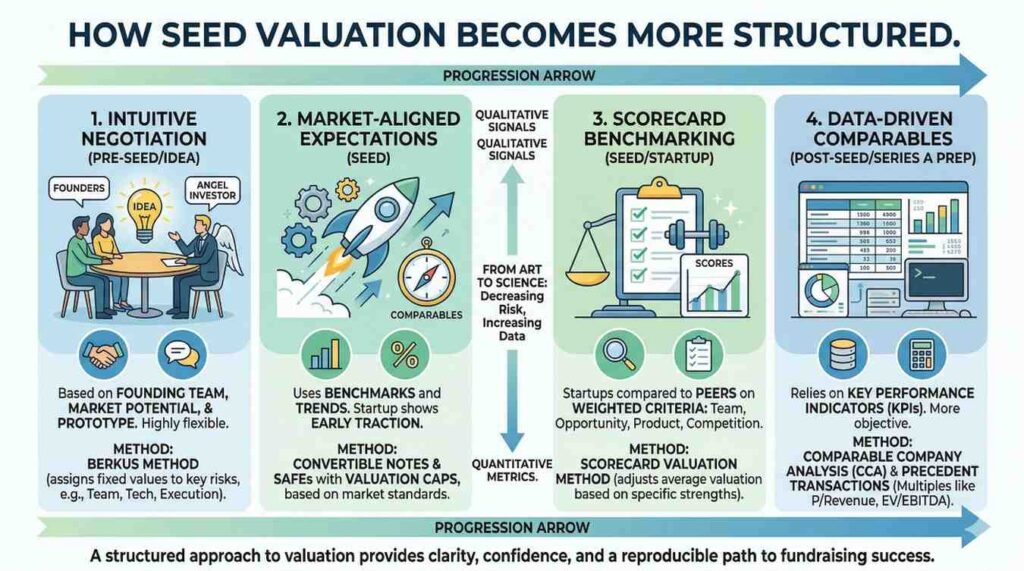
When you move into seed, valuation becomes more grounded in evidence. Investors look at your traction, your growth rate, and your market response.
They compare you with other startups at similar stages. They evaluate your progress against clear benchmarks. The story still matters, but now it must be supported by numbers.
If you have built strong momentum, your valuation can increase significantly from pre-seed. This is where early discipline pays off.
If your metrics are unclear or weak, investors may push for lower valuations or stricter terms. They may ask for more equity or additional control mechanisms.
This is why building leverage before seed is critical. Leverage comes from traction, clarity, and defensibility.
Protecting Your Equity Early
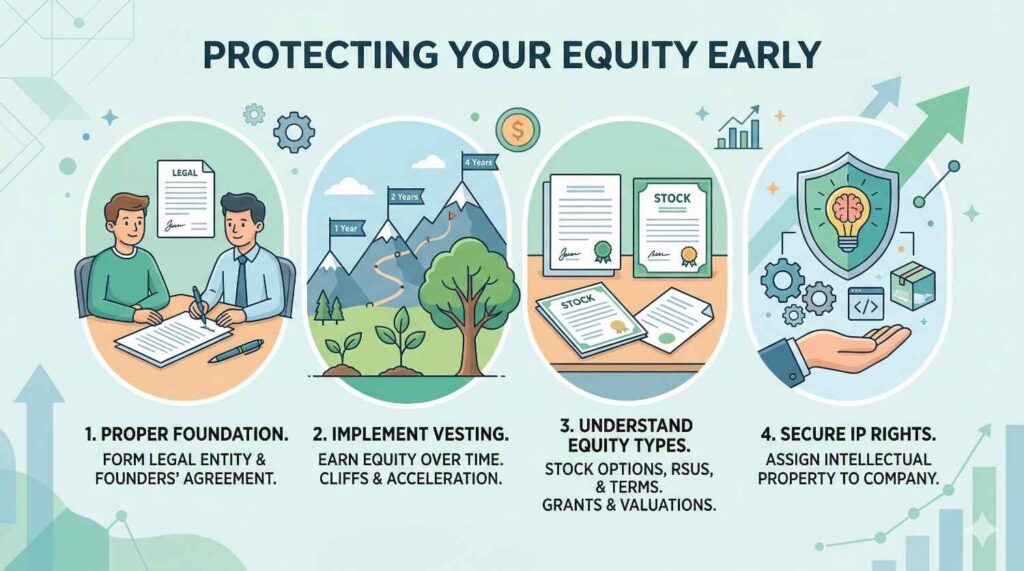
Many founders focus on valuation but overlook control. These two are connected, but they are not the same.
You can have a high valuation and still lose control if your terms are not structured well. Board seats, voting rights, and investor protections all shape how decisions are made in your company.
At pre-seed, you have more influence over these terms. Investors expect simpler structures. They are more open to founder-friendly agreements.
At seed, negotiations become more detailed. Terms become more complex. Investors seek safeguards for their capital.
If you enter seed without understanding these dynamics, you may agree to terms that limit your flexibility later.
The goal is not to avoid investors. The goal is to partner from a position of strength.
Raising With Leverage, Not Urgency
One of the biggest differences between strong founders and struggling ones is how they approach fundraising.
Founders who raise from urgency often accept the first reasonable offer. They focus on closing quickly because they need capital to survive.
Founders who raise with leverage create options. They build momentum before starting conversations. They show progress, demand, and clear direction.
Leverage changes the tone of every meeting. Investors compete instead of hesitate. Conversations become more balanced.
This is not about playing games. It is about preparation.
If you build your pre-seed phase with intention, you reduce the pressure at seed. You raise because you are ready to grow, not because you are running out of time.
Traction and What It Really Means
The Difference Between Activity and Real Progress
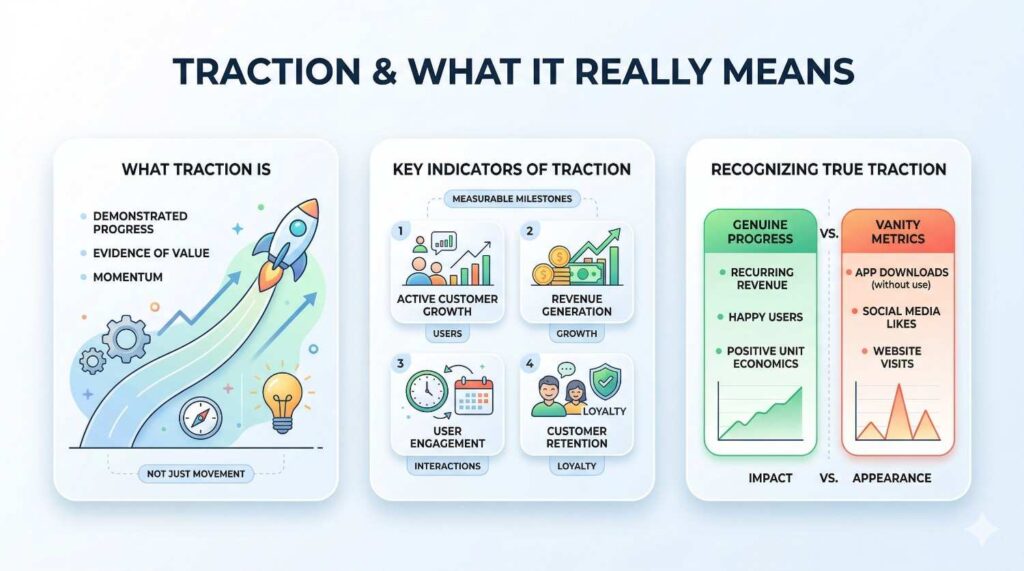
Many founders confuse activity with traction. They build features, run pilots, and sign up users, but they do not always measure meaningful outcomes.
At pre-seed, activity is expected. You are exploring. You are testing ideas. You are learning what works and what does not.
At seed, investors look for signals of real progress. They want to see that your product creates value for users.
This can show up in different ways. Customers returning to use your product again. Companies willing to pay. Partners willing to integrate your system.
What matters is consistency. One successful pilot is helpful. Multiple repeat engagements are stronger.
Building Traction in Deep Tech
For AI and robotics startups, traction can look different from traditional software companies. Development cycles may be longer. Integration may be more complex.
This does not mean you cannot show progress. It means you must define traction in a way that reflects your space.
Early pilots with clear results can be powerful. Demonstrating improved performance over existing solutions can be valuable. Securing partnerships with credible organizations adds weight.
The key is clarity. You must explain why your traction matters and how it connects to future scale.
Investors are not just looking for numbers. They are looking for signals of inevitability.
Preparing Your Story for Seed
By the time you approach seed investors, your traction should tell a clear story. It should show movement from idea to validation.
This story should be simple to understand. It should answer three basic questions.
What problem are you solving?
Why does it matter now?
What proof do you have that your solution works?
If your answers are unclear, your fundraising process becomes harder.
Strong founders refine this story early. They test it in conversations. They adjust based on feedback. They build clarity over time.
Building a Company That Lasts
Moving Beyond Short-Term Thinking
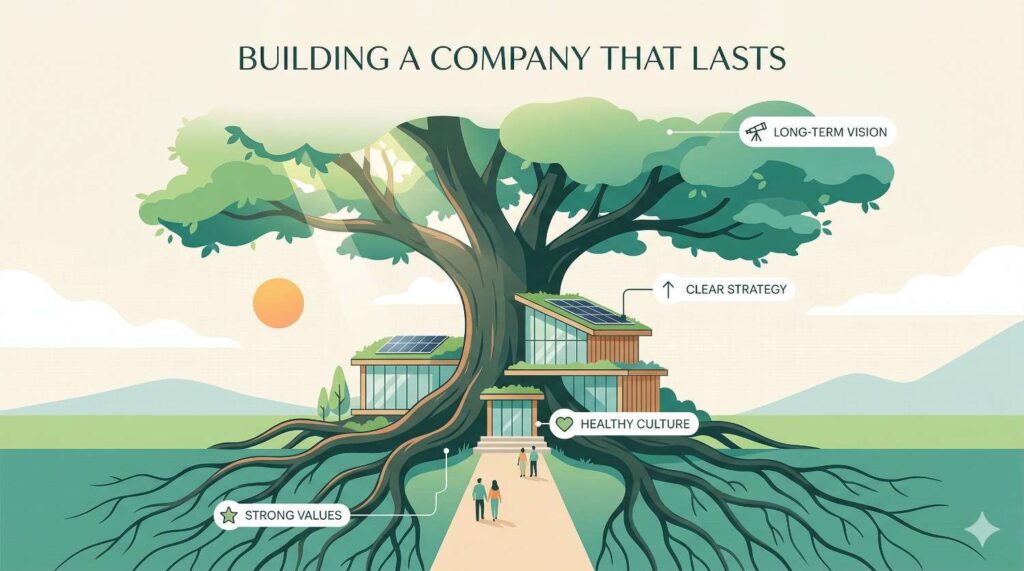
It is easy to focus only on the next round. Many founders build with the sole goal of raising seed, then Series A, and so on.
This approach can lead to fragile companies. Decisions are made to impress investors instead of building lasting value.
A stronger approach is to think in longer timelines. What are you building that will still matter in five years? What assets are you creating that increase in value over time?
This is where intellectual property plays a key role. It turns your technical work into long-term assets.
Why IP Changes the Game
When your technology is protected, your company becomes more than a set of features. It becomes a defensible system.
This affects how investors see you. It affects how competitors respond. It affects how partners engage with you.
IP is not just legal protection. It is strategic leverage.
At Tran.vc, this is where we focus deeply. We work with founders to identify what is truly unique in their technology. We help them protect it early, before it becomes difficult or expensive.
We invest up to $50,000 in in-kind IP and patent support because we believe this is one of the strongest foundations a startup can build.
If you are working on something meaningful in AI, robotics, or deep tech, this matters more than you think.
You can apply anytime here: https://www.tran.vc/apply-now-form/
Building With Intention From Day One
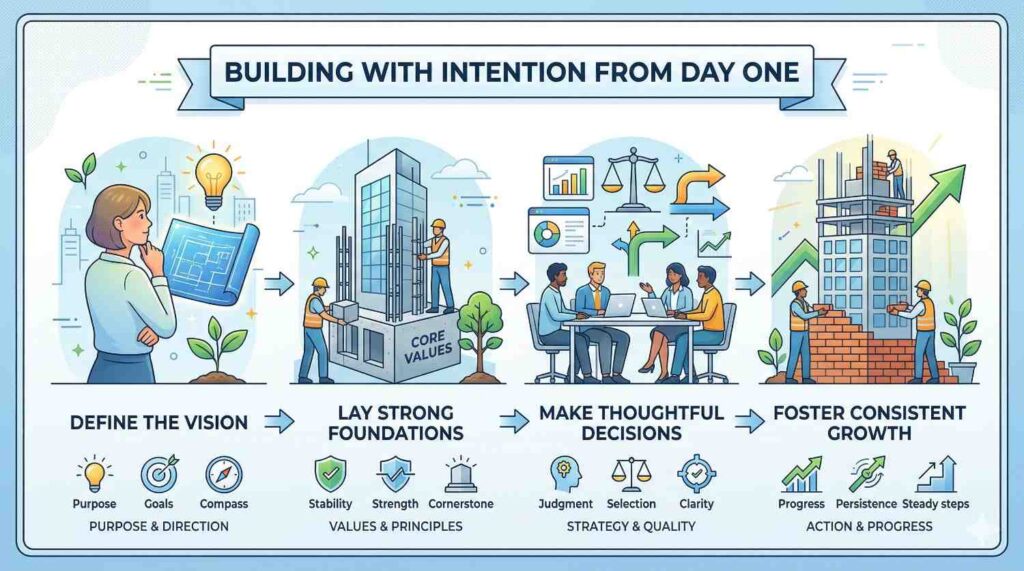
The transition from pre-seed to seed is not something that happens overnight. It is the result of many small decisions made early.
How you structure your company.
How you protect your technology.
How you measure progress.
How you tell your story.
All of these shape your path forward.
Founders who build with intention create stronger companies. They avoid unnecessary dilution. They maintain control. They attract better partners.
Most importantly, they build something that lasts.
If you are at the pre-seed stage today, this is your window. You have the flexibility to design your foundation.
Use it wisely.
If you want support in building a strong IP-backed company from the start, you can apply here: https://www.tran.vc/apply-now-form/