
Raising your first round of funding can feel like walking into a room where everyone has more power than you. You have the idea. You have the code. You have the drive. But you do not yet have revenue, traction, or leverage.
So investors ask for more equity.
And many founders say yes too quickly.
Pre-seed funding should not cost you control of your own company. It should not force you into bad terms. It should not make you feel small.
If you are building in AI, robotics, or deep tech, you have something more powerful than hype. You have intellectual property. You have real invention. And if you use it the right way, you can raise money without giving away too much of what you are building.
This guide will show you how to raise pre-seed funding with minimal dilution. Not with tricks. Not with buzzwords. But with strategy, structure, and smart moves that give you leverage from day one.
Let’s start at the core.
Pre-seed funding is not about money. It is about positioning.
Most founders think they need capital to build value. In reality, you need value to raise capital on good terms.
The earlier you are, the more investors price risk into your deal. No revenue? Higher risk. No product? Higher risk. No moat? Even higher risk.
And what do they ask for when they see risk? More equity.
So your job at pre-seed is simple. Reduce perceived risk before you raise.
This does not mean building a full product. It does not mean hitting massive traction. It means making it clear that your company is hard to copy and worth betting on.
If you are in robotics, AI, biotech, or advanced software, your biggest tool is not a slide deck. It is your intellectual property.
Most technical founders wait too long to think about patents. They think IP is something to handle after a seed round. Or after product-market fit. Or after revenue.
That is a mistake.
At the pre-seed stage, IP is not just protection. It is leverage.
When you file strong patents early, you send a clear signal. You are not just building features. You are building defensible assets. That changes how investors see you. It moves the conversation from “Can someone copy this?” to “How big can this get?”
And that shift matters when you are negotiating valuation.
Let’s talk about dilution in simple terms.
Dilution is what happens when you give away equity in exchange for money. If you sell 20 percent of your company in your first round, that 20 percent is gone forever. In future rounds, you will dilute again. If you start too high, you end up with very little left when it matters most.
Many founders lose control not because they raised too much money. They lost control because they raised too early, too cheaply, and without leverage.
Minimal dilution does not mean avoiding investors. It means being smart about when and how you bring them in.
There are three main levers you can use at pre-seed.
First, increase your perceived value before raising.
Second, reduce how much money you actually need.
Third, choose capital that gives more than cash.
Let’s break this down.
Increasing perceived value starts with clarity.
Investors fund simple stories. They want to understand what you are building, who it is for, and why it matters. If your pitch is complex, you look early. If your story is sharp, you look ready.
Clarity increases confidence. Confidence increases valuation.
But clarity alone is not enough in deep tech. You also need proof.
Proof does not always mean revenue. It can mean a working prototype. It can mean a signed letter of intent. It can mean early users testing your system. And most importantly for technical founders, it can mean filed patents.
When you have filed patents around your core algorithms or systems, you are no longer just an idea. You are an asset-backed company.
That makes a difference in negotiation.
Now let’s talk about reducing how much money you need.
Many founders raise based on fear. They think, “I need 18 months of runway.” So they calculate burn, add a buffer, and raise as much as possible.
But more money at pre-seed often means more dilution.
Instead, ask a sharper question.
What is the smallest amount of capital you need to reach your next major value milestone?
Not survival. Not comfort. Value.
For example, if filing core patents and building a functional prototype will allow you to raise a much stronger seed round, then your pre-seed goal is simple. Fund those steps.
If you can reach that milestone with $250,000 instead of $750,000, your dilution drops fast.
This is where non-cash support becomes powerful.
Some capital comes with services, expertise, and real hands-on work. That reduces your burn. It means you do not need to hire expensive consultants or law firms early.
For deep tech founders, patent work is one of the largest early costs. Filing strong patents can cost tens of thousands of dollars. If you pay for that in cash, your runway shrinks. You raise more. You dilute more.
But if you structure your pre-seed round to include in-kind IP services instead of pure cash, you protect both your runway and your cap table.
This is one reason firms like Tran.vc exist.
Tran.vc invests up to $50,000 worth of in-kind patent and IP services into AI, robotics, and deep tech startups. Instead of writing a small check and walking away, they help you build the legal foundation that increases your valuation in your next round.
That changes the math.
If your company files strategic patents before raising a large seed round, you walk into that round with stronger leverage. Investors see defensibility. They see intent. They see a moat forming early.
And that often leads to better terms.
Minimal dilution is not about being aggressive in negotiation. It is about building quiet power before you sit at the table.
Another key part of raising with minimal dilution is timing.
Many founders raise as soon as they can. The first investor who shows interest feels like a lifeline. But early capital is usually the most expensive equity you will ever sell.
If you can delay your raise by even three to six months and use that time to strengthen your IP, improve your product, or validate demand, your valuation can increase in a meaningful way.
Time, when used well, reduces dilution.
Of course, you cannot delay forever. But you can be strategic.
Before you start pitching, ask yourself:
Have I done everything possible to increase my leverage?
Have I protected what makes my product unique?
Have I reduced technical risk in the eyes of investors?
Have I built relationships with seed funds in advance?
If the answer is no, then rushing to raise will cost you.
There is also a mindset shift that matters.
At pre-seed, many founders feel like they are asking for a favor. That mindset leads to weak positioning.
You are not asking for charity. You are offering access to future value.
But future value only feels real when it is anchored to something concrete. In deep tech, that anchor is often intellectual property.
When investors know that key inventions are already being protected, they see commitment. They see barriers to entry. They see a founder who thinks long term.
And long-term thinkers get better terms.
There is another piece most founders ignore.
Investor selection affects dilution just as much as valuation.
Some investors push for large ownership early. Others are more aligned with long-term founder control. Some bring networks that increase your next round valuation. Others bring very little beyond cash.
If you choose an investor who helps you grow faster and smarter, your next round may happen at a much higher price. That means less dilution over the life of your company.
The cheapest capital is not always the one with the highest valuation. It is the one that increases your value the most before your next round.
This is why working with investors who understand deep tech, patents, and defensibility matters so much.
They know that a strong IP base is not just legal paperwork. It is strategic positioning.
They help you think about what to patent, when to file, and how to align your IP with your roadmap.
That guidance reduces mistakes. And mistakes at the pre-seed stage are expensive.
Now let’s zoom out.
Raising with minimal dilution is a game of leverage.
Leverage comes from scarcity.
If your technology is hard to replicate, you have scarcity.
If your expertise is rare, you have scarcity.
If your patents lock in your core methods, you have scarcity.
Scarcity drives demand. Demand drives better terms.
So instead of focusing only on how to pitch better, focus on how to make your company harder to ignore and harder to copy.
That is the foundation.
Over the next sections, we will go deeper into specific tactics. We will look at how to structure your round, how to use SAFEs wisely, how to think about valuation caps, how to approach angels versus funds, and how to build investor demand before you ever ask for money.
But remember this as we move forward.
The goal is not just to raise.
The goal is to raise on terms that let you build your company your way.
Build Leverage Before You Ask for Money
Why Leverage Changes Everything
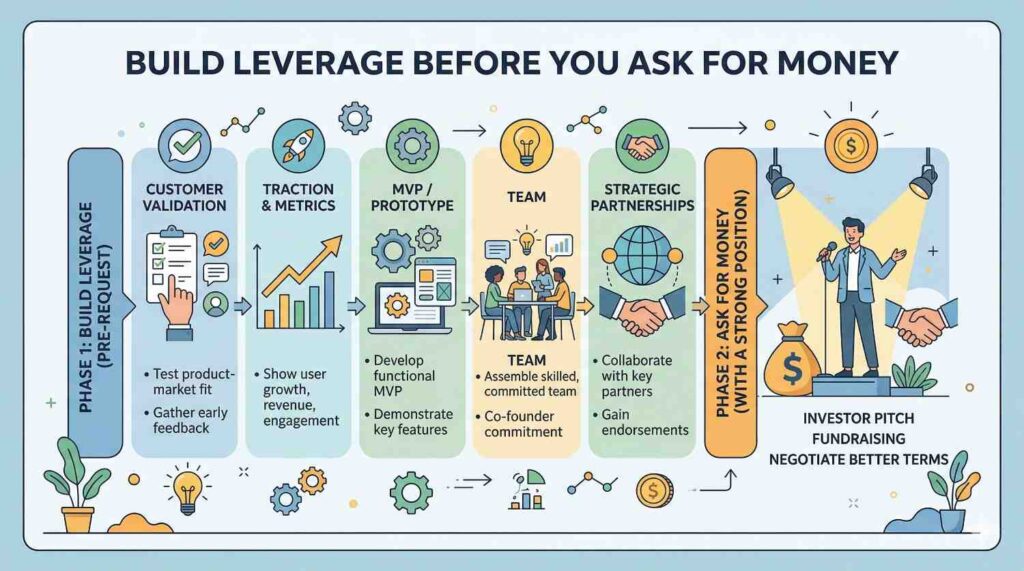
Leverage is the single most important factor in raising pre-seed funding with minimal dilution. When you have leverage, investors compete to get into your round. When you do not, you compete to get into their portfolio. That difference shapes your valuation, your terms, and your long-term control.
Leverage comes from strength. Strength can be technical progress, customer validation, strategic partnerships, or protected intellectual property. It does not require revenue, but it does require proof that what you are building is real and difficult to copy.
If you walk into a raise with only an idea, investors price in maximum risk. If you walk in with patents filed, a working prototype, and early signals from users, the risk looks lower. Lower risk leads to better terms. Better terms lead to less dilution.
This is not theory. It is how early-stage markets behave.
Intellectual Property as Early Power

In AI, robotics, and deep tech, intellectual property is not optional. It is the core of your value. Your algorithms, control systems, hardware design, data pipelines, and optimization methods are the heart of your company.
When these assets are not protected, investors see vulnerability. They wonder how easily a larger company could copy your work. They ask themselves if your advantage will disappear once you launch.
Filing strong patents early answers that concern before it is even raised. It shows that you are building a moat, not just a demo. It tells the market that you understand long-term strategy, not just short-term traction.
This shift in perception increases your negotiating power. You are no longer pitching an experiment. You are offering access to protected innovation.
Tran.vc focuses on this exact stage. Instead of pushing founders to raise fast and give up equity cheaply, they invest up to $50,000 in in-kind patent and IP services. That means you strengthen your foundation before chasing larger checks. If you want to build leverage before dilution, you can apply anytime at https://www.tran.vc/apply-now-form/.
Reduce Risk in the Investor’s Mind
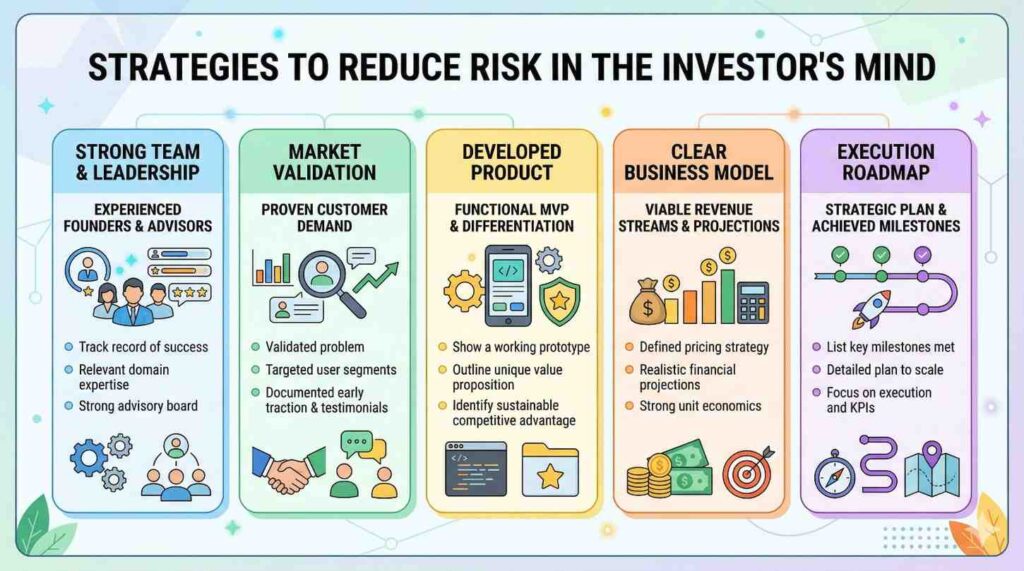
Investors think in terms of risk. At pre-seed, there is product risk, technical risk, market risk, and team risk. You cannot remove all of it, but you can reduce the most visible ones.
Technical risk can be lowered with working prototypes and documented performance. Market risk can be reduced with real conversations, letters of intent, or pilot agreements. Execution risk can be reduced by showing a clear roadmap and disciplined focus.
But defensibility risk is often ignored. If your solution can be replicated by a better-funded competitor, investors hesitate. When your core inventions are filed and structured properly, that hesitation fades.
Reducing risk increases your valuation even if your revenue is still zero. That is how leverage translates into minimal dilution.
Raise Only What Moves You Forward
Define the Right Milestone

Many founders raise based on fear. They want long runway and comfort. They calculate burn for eighteen months and try to secure as much capital as possible. While this feels safe, it often leads to unnecessary dilution.
Instead, define one clear milestone that will dramatically increase your valuation in the next round. This could be a patent portfolio filed around your core system. It could be a validated prototype deployed with early users. It could be technical proof that your model outperforms alternatives.
Once you define that milestone, calculate the smallest amount of capital required to reach it. This approach is disciplined. It prevents over-raising at low valuations.
When you raise less capital at pre-seed, you give away less equity. When you hit the milestone, you raise your seed round at a stronger valuation. Over time, this approach protects your ownership.
Replace Cash Burn with Strategic Support
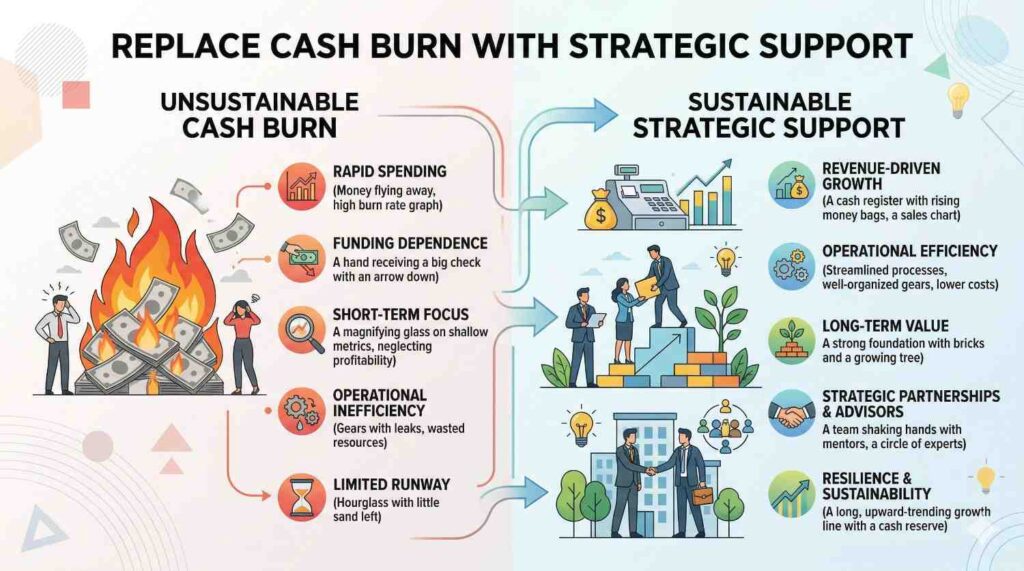
Cash is not the only resource that moves your company forward. Services, expertise, and network can reduce burn in powerful ways. If you can replace major early expenses with strategic support, you lower how much money you need to raise.
Patent work is one of the largest early costs for deep tech founders. Filing strong patents through traditional law firms can quickly drain your runway. That pushes you to raise more cash earlier than you should.
When an investor provides in-kind IP services instead of just cash, the equation changes. You preserve your runway while strengthening your moat. This dual benefit helps you reach your milestone without increasing dilution.
Tran.vc was built around this idea. They work directly with founders to design patent strategy, file key applications, and align IP with product plans. This hands-on model means your pre-seed capital works harder. If you are building in AI or robotics and want to protect what matters from day one, you can apply at https://www.tran.vc/apply-now-form/.
Focus on Value, Not Vanity

It is easy to get distracted by headlines about large pre-seed rounds. Big numbers look impressive, but they do not always reflect smart strategy. A larger round at a weak valuation can leave founders with less ownership and less flexibility.
Your goal is not to raise the biggest pre-seed. Your goal is to raise the most efficient pre-seed. Efficiency means every dollar moves you toward higher valuation and stronger positioning.
When you approach fundraising with this mindset, you make different decisions. You become selective about investors. You negotiate from preparation, not emotion. You understand that dilution compounds over time.
This discipline at the beginning often determines who controls the company years later.
Structure Your Round to Protect Ownership
Understand SAFEs and Valuation Caps
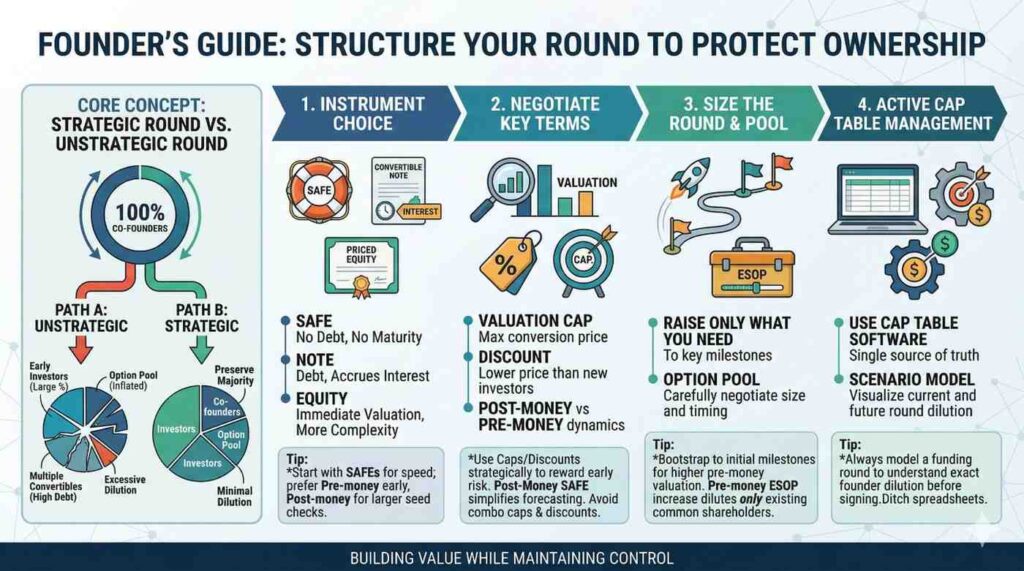
Many pre-seed rounds use SAFEs instead of priced equity. SAFEs are simple agreements that convert into equity during a future round. They are fast and common in early-stage deals.
However, simplicity does not mean safety for founders. The valuation cap you set today shapes how much ownership you give away later. If the cap is too low, you lock in heavy dilution even if your company grows quickly.
Before signing any SAFE, understand how different scenarios affect your ownership. Model what happens if you raise a seed round at various valuations. Look at how much equity converts and what remains for you and your team.
This exercise may feel technical, but it is essential. Small changes in caps and discounts can create large differences in long-term control.
Avoid Overcrowding Your Cap Table
At pre-seed, it can be tempting to accept small checks from many investors. While this increases your total capital, it also complicates your cap table. Too many small investors can slow down future rounds and create coordination challenges.
Instead, focus on a small group of aligned investors who bring more than money. Quality matters more than quantity. A clean cap table sends a signal of professionalism and makes future raises smoother.
Strategic investors who understand your technology and market can also introduce you to larger seed funds. That warm access often leads to stronger demand and better valuation.
When you choose investors carefully, you are not just raising capital. You are shaping the long-term structure of your company.
Negotiate from Preparation, Not Pressure

Negotiation at pre-seed is emotional. You may feel urgency if your runway is short. You may fear losing an interested investor. These emotions often lead to rushed decisions.
Preparation reduces pressure. If you build relationships months before you raise, you create optionality. If multiple investors are aware of your progress, you reduce dependence on any single one.
Start conversations early. Share updates on technical progress and IP filings. Keep potential investors warm. When you finally open your round, you will not be starting from zero.
This approach creates quiet competition. Even subtle investor interest from more than one party can improve terms. Competition increases valuation and reduces dilution without aggressive negotiation.
Raising with minimal dilution is rarely about dramatic tactics. It is about steady positioning and patient execution.
A Simple Step-by-Step Path to Raise with Minimal Dilution
Step One: Strengthen Your Core Before You Pitch
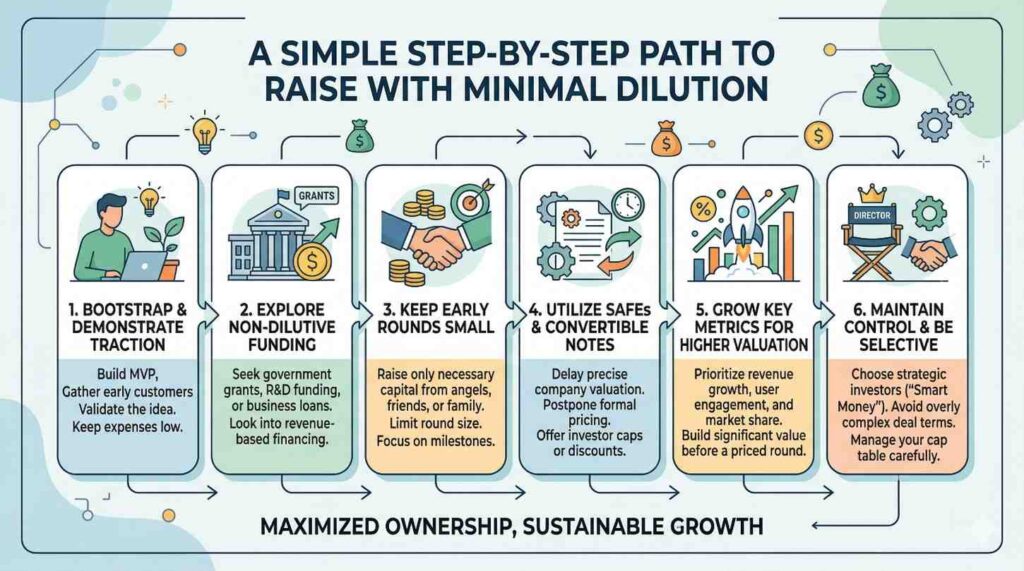
Before you even think about raising, focus on making your company stronger in quiet ways. This is where most of the real work happens. You refine your idea, build early versions of your product, and most importantly, protect what makes your work unique.
If you are building in AI or robotics, this is the stage where your intellectual property should begin to take shape. Filing early patents around your core systems gives you a strong base. It turns your work into something owned, not just built.
This step is often skipped because it does not feel urgent. But in reality, it is what sets up everything that follows. When you enter fundraising with protected innovation, your position changes completely.
Tran.vc was designed for this exact moment. They help you build your IP foundation before you raise big capital, so you walk in stronger. If you are at this stage, you can apply anytime at https://www.tran.vc/apply-now-form/.
Step Two: Define a Clear Value Milestone
Once your foundation is in place, decide what milestone will make your company significantly more valuable. This should not be vague. It should be specific and meaningful.
It could be a fully functional prototype that proves your system works. It could be a set of filed patents that protect your core methods. It could be early customer validation that shows real demand.
This milestone becomes your target. It gives direction to your efforts and clarity to your fundraising. Instead of raising for survival, you are raising to unlock value.
That shift changes how investors see your round.
Step Three: Raise Only What You Need
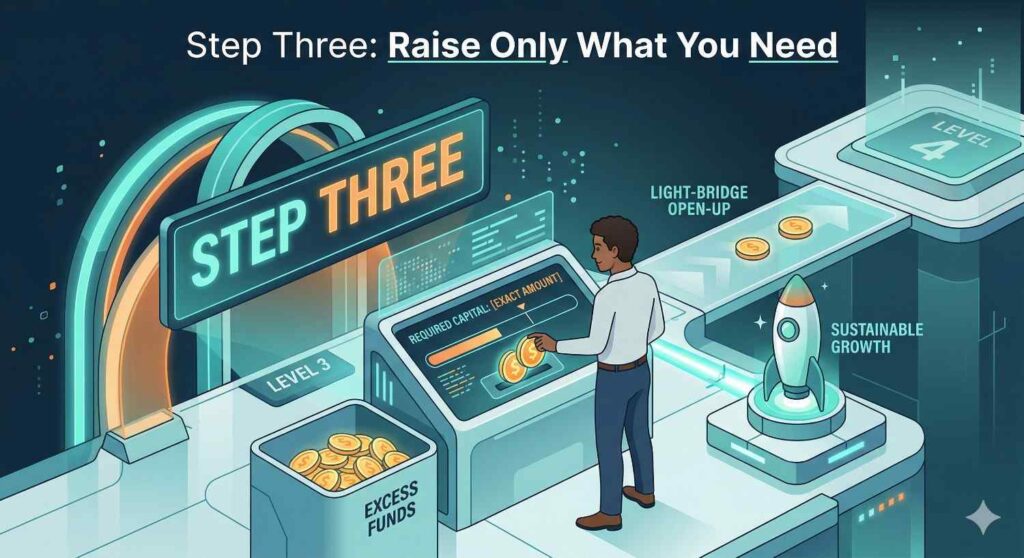
Now that your milestone is clear, calculate the minimum capital required to reach it. This requires honesty and discipline. It is easy to inflate this number out of fear, but that leads to unnecessary dilution.
By keeping your round focused and efficient, you protect your ownership. You also create a stronger story for your next raise, because you can clearly show what you achieved with limited resources.
Efficiency signals strength. It shows that you can build without waste.
Step Four: Build Investor Relationships Early

Do not wait until your round is open to start talking to investors. Begin months in advance. Share updates, insights, and progress.
These early conversations are not about asking for money. They are about building familiarity. When investors see your journey over time, they develop confidence in your execution.
By the time you raise, you are not a new opportunity. You are a known founder with a visible track record.
This familiarity often leads to faster decisions and better terms.
Step Five: Open Your Round with Momentum
When you finally open your round, aim to create momentum quickly. This does not mean rushing. It means being prepared.
Have your story clear. Have your data ready. Have your IP and technical progress well explained. When early interest turns into initial commitments, momentum builds.
Momentum attracts more investors. It creates energy around your round. This energy often improves your negotiating position without direct confrontation.
Strong openings lead to strong closes.
Step Six: Choose Partners Carefully
As interest comes in, stay selective. Not every investor is right for your company. Look for alignment, not just capital.
Choose investors who understand your space, respect your vision, and add value beyond money. These partners will support your growth and help you raise your next round at better terms.
This is where long-term thinking matters most. The right partners reduce dilution over time, not just in this round.
Common Mistakes That Increase Dilution
Raising Too Early Without Preparation
One of the most common mistakes is raising before building any real leverage. When founders rush into fundraising with only an idea, they accept lower valuations because they have little to negotiate with.
This early dilution compounds over time. What feels like a small concession in the beginning often becomes significant later.
Taking a few extra months to strengthen your position can make a meaningful difference.
Ignoring Intellectual Property
Many technical founders underestimate the importance of early IP. They focus only on building and delay protection.
This creates risk in the eyes of investors. Without IP, your advantage feels temporary. That perception lowers your valuation.
Filing patents early is not just legal work. It is strategic positioning. It shows that you are building something defensible.
Tran.vc exists to help you do exactly that. They work with you to turn your technical work into defensible assets, so you can raise with confidence and keep more of what you build.
You do not have to give up control to get started. You can build leverage first, then raise on your terms.
If you are ready to take that path, apply here: https://www.tran.vc/apply-now-form/