
Founders often believe that raising a pre-seed round is about having a big idea and a polished pitch deck. In reality, angels and micro VCs look for something much deeper. They want signs that a small team can turn a fragile idea into a real company. At the pre-seed stage, there is usually no revenue, very little traction, and often just a rough product. That means investors rely on signals. They look for proof that the founders understand their market, that the technology is real, and that the team can build something others cannot easily copy.
This early stage is where many technical founders struggle. Engineers are often brilliant at building systems, but they are not always shown what investors truly look for. Many teams spend months improving their demo while ignoring the deeper questions investors quietly ask during every conversation.
Is the problem real?
Is the technology defensible?
Can this team build something unique?
Will this company survive when competitors arrive?
These questions shape almost every pre-seed investment decision.
Angels and micro VCs play a special role in the startup world. They invest earlier than traditional venture capital firms. They take bigger risks. They often write smaller checks. But their decisions can change the future of a young company. The right early investor can open doors, guide strategy, and help a team move faster than they ever thought possible.
Yet these investors are also careful. They see hundreds of early ideas every year. Most are interesting. Only a few are investable.
What separates the few from the many is rarely just the idea itself. It is the combination of the team, the technology, the market, and the long-term advantage the startup can build.
This is where many founders misunderstand the pre-seed stage. They assume investors are betting only on the people. In truth, strong investors are looking for something more balanced. They want people who can build. They want technology that matters. They want early signs that the company can create a moat.
For technical founders in fields like AI, robotics, and deep tech, this matters even more. These industries move fast. New ideas appear every week. If a company cannot protect its invention or build a strong position early, competitors can catch up quickly.
That is why smart early investors care deeply about intellectual property. They want to know whether the startup is building something that can be protected. Patents, algorithms, hardware designs, and proprietary systems can all create strong barriers. These barriers turn a fragile early startup into a serious long-term company.
At Tran.vc, this belief sits at the center of everything we do. Instead of simply writing checks and waiting, we work closely with technical founders to turn their inventions into protected assets. Through up to $50,000 in in-kind patent strategy and IP services, we help startups build the kind of foundation that angels and micro VCs want to see.
This approach helps founders raise capital from a position of strength rather than desperation. When your technology is protected and your strategy is clear, investor conversations change. You are no longer just pitching an idea. You are presenting a company that owns something valuable.
If you are building a deep tech, AI, or robotics startup, you can apply anytime here:
https://www.tran.vc/apply-now-form/
In this guide, we will walk through what angels and micro VCs truly look for in pre-seed deals. Not the surface-level advice repeated across startup blogs, but the deeper signals that experienced investors pay attention to. You will learn how they evaluate founders, how they think about risk, and how strong intellectual property can dramatically improve your chances of raising capital.
Understanding these signals can change how you build your company from day one.
And when you build with these signals in mind, investors start to notice.
How Angels and Micro VCs Actually Think About Pre-Seed Investments
Early Investors Are Not Buying Traction
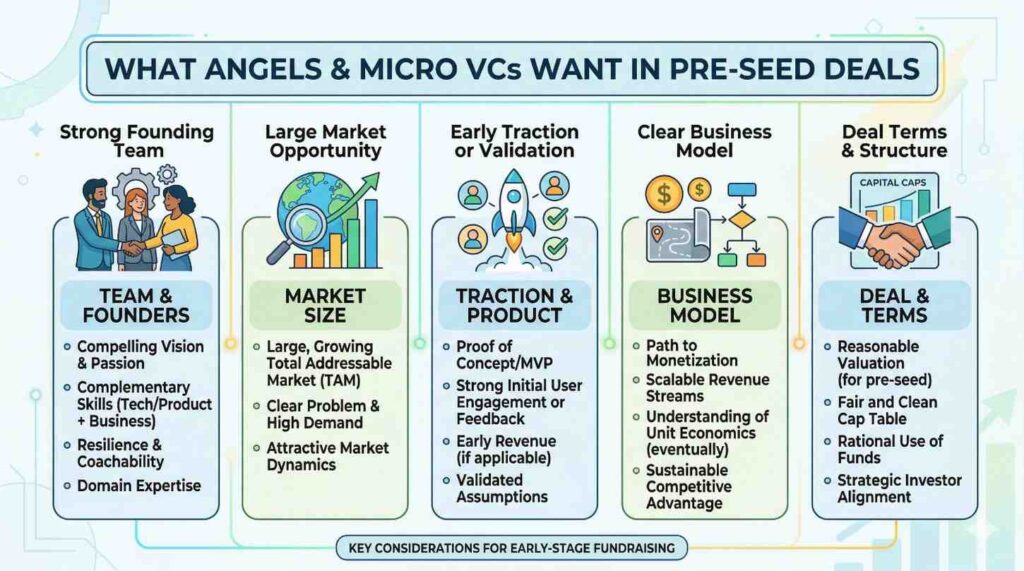
At the pre-seed stage, angels and micro VCs are not expecting strong revenue numbers or massive user growth. Most investors already know that early startups are still experimenting. They understand that the product may still be rough and the market fit is not fully proven yet.
What they are truly evaluating is potential. They want to see signals that a small idea can grow into a real company. These signals come from the founders, the technology, and the way the team thinks about building a long-term advantage.
Many founders believe traction is the only thing investors care about. In reality, traction is often just one small signal. A few early users or pilots can help, but it is rarely the deciding factor for a pre-seed investment.
Instead, angels and micro VCs try to answer a deeper question. They want to know if this team is capable of building something important before the rest of the world notices.
Investors Look for Signals of Serious Builders
Early investors meet many founders who are excited about their ideas. Excitement alone does not convince them. What stands out is a founder who has already taken meaningful steps toward building something real.
This may show up in different ways. A technical founder might have built a working prototype late at night after their day job. Another team might have spent months studying a difficult industry problem before writing their first line of code.
These small signals matter more than founders realize. They show that the team is not just exploring an idea. They are committed to solving a problem that genuinely matters.
Angels often describe this quality as “founder pull.” It is the sense that the founders are being pulled toward the problem rather than casually exploring it. Investors trust founders who feel deeply connected to what they are building.
Why Early Investors Spend So Much Time Evaluating Founders
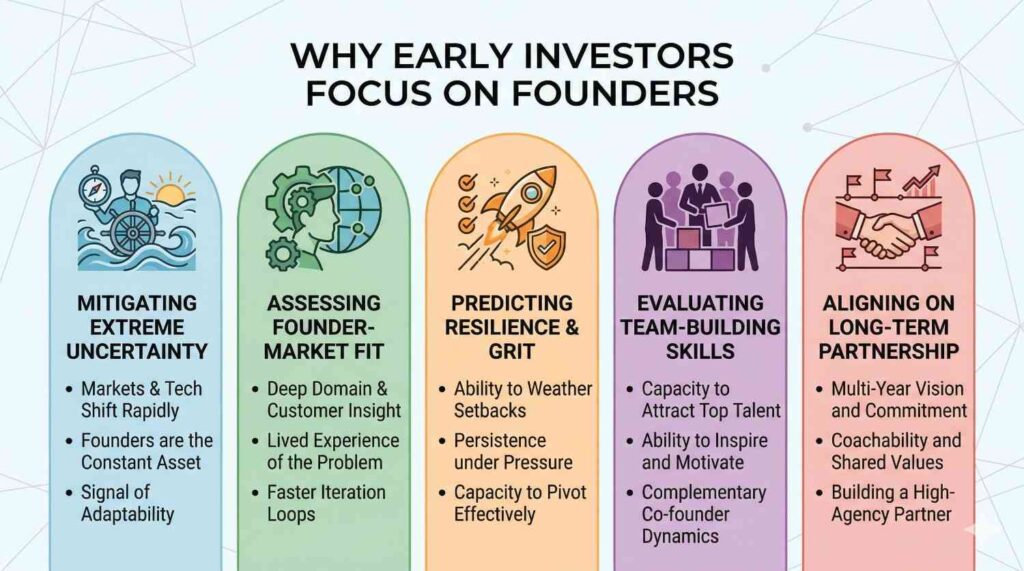
At the pre-seed stage, most of the future company still exists inside the founders’ minds. The product will change. The strategy will shift. The market may even evolve over time.
Because of this uncertainty, investors focus heavily on the people behind the company. They are trying to understand how the founders think, how they make decisions, and how they handle difficult problems.
A strong founder does not pretend to have all the answers. Instead, they show clear thinking and the ability to learn quickly. Investors notice when a founder can explain complex technology in simple language. They also notice when a founder openly admits what they still need to figure out.
This level of honesty creates trust. And trust plays a very large role in early investment decisions.
The Quiet Question Behind Every Investor Meeting
During every pre-seed conversation, there is a silent question running through the investor’s mind. They may not say it directly, but it influences how they interpret everything the founders share.
The question is simple. Can this team turn uncertainty into progress?
Startups are full of unknowns. Markets change, products break, and competitors appear without warning. Angels and micro VCs know this reality very well.
They invest in founders who demonstrate calm problem-solving under uncertainty. When founders can clearly explain what they know, what they believe, and what they are testing next, investors start to gain confidence in the team.
This type of clarity is rare. But when investors see it, they remember it.
Building a Strong Foundation Before Raising Capital
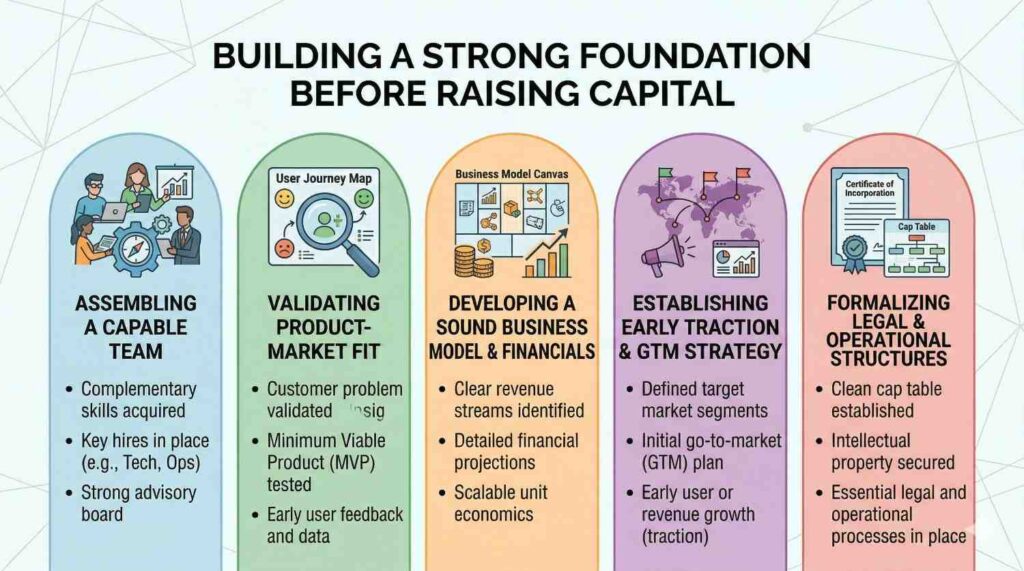
One common mistake many technical founders make is trying to raise funding before building a solid foundation. They spend weeks preparing pitch decks and investor lists while their core strategy is still unclear.
This approach often leads to frustrating investor meetings. Investors ask questions about the technology, the competitive landscape, or the long-term advantage of the startup. When founders struggle to answer these questions, the conversation quickly loses momentum.
The better approach is to spend time strengthening the company before beginning the fundraising process. This includes sharpening the product vision, understanding the market deeply, and protecting the core technology where possible.
Strong intellectual property can play an important role here. When investors see that a startup is actively protecting its technology through patents or strategic filings, it signals seriousness and long-term thinking.
This is one of the reasons Tran.vc focuses so heavily on IP strategy for technical founders. Through up to $50,000 in in-kind patent services, we help early-stage teams transform their inventions into protected assets.
When investors review a startup that already has a thoughtful IP strategy, the conversation immediately becomes more serious. The company no longer looks like a fragile idea. It begins to look like a business that can defend its innovation.
If you are building in AI, robotics, or deep technology, you can apply to work with Tran.vc here:
https://www.tran.vc/apply-now-form/
The Founder Qualities Angels and Micro VCs Pay Attention To
Curiosity That Goes Beyond the Obvious
One of the strongest signals early investors look for is genuine curiosity. Founders who ask deep questions about their industry tend to discover insights that others miss.
This curiosity often shows up during the earliest research stages of a startup. The founder may spend months talking with potential users, exploring industry reports, or testing early prototypes with small groups.
Investors notice when founders have developed a deep understanding of the problem they are solving. This type of insight cannot be rushed. It comes from time spent studying the market and observing how real users behave.
Curious founders also tend to adapt faster. When new information appears, they are comfortable adjusting their assumptions. This flexibility allows them to move through uncertainty with greater confidence.
Technical Depth That Creates Real Advantages
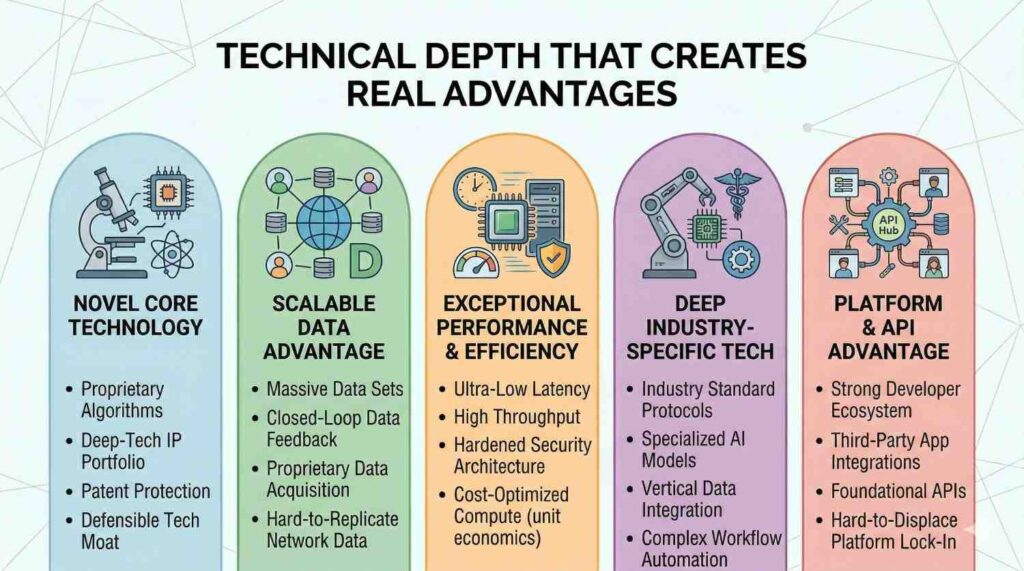
For startups building in fields like artificial intelligence, robotics, and advanced software systems, technical depth is extremely important.
Angels and micro VCs want to know whether the founding team truly understands the technology they are building. A shallow understanding often leads to fragile products that competitors can quickly replicate.
On the other hand, founders with deep technical knowledge can develop solutions that are much harder to copy. They understand the underlying systems, the architecture, and the hidden challenges that others may overlook.
This depth becomes especially powerful when combined with a strong intellectual property strategy. When a startup protects its key inventions early, it creates barriers that discourage competitors from entering the space.
Tran.vc was built around this idea. Instead of waiting until later stages, we help founders build IP protection from the very beginning. This early protection can significantly strengthen investor confidence during pre-seed fundraising.
If you are building something technically complex and want to protect your innovation early, you can apply here:
https://www.tran.vc/apply-now-form/
Clear Thinking During Uncertainty
Many founders try to impress investors by sounding extremely confident about every aspect of their business. Ironically, this can sometimes create the opposite effect.
Experienced investors understand that early startups face many unknowns. When a founder claims to have everything perfectly figured out, it can signal a lack of awareness.
What investors truly appreciate is structured thinking. They want founders who can clearly explain what they know, what they are still testing, and what their next steps will be.
For example, a founder might say that they believe a specific industry segment will adopt their technology first. They may not have complete proof yet, but they have strong reasons for their belief and a plan to test it.
This type of thinking shows maturity. It demonstrates that the founder is capable of learning quickly and making informed decisions as the company evolves.
Persistence That Goes Beyond Short-Term Motivation
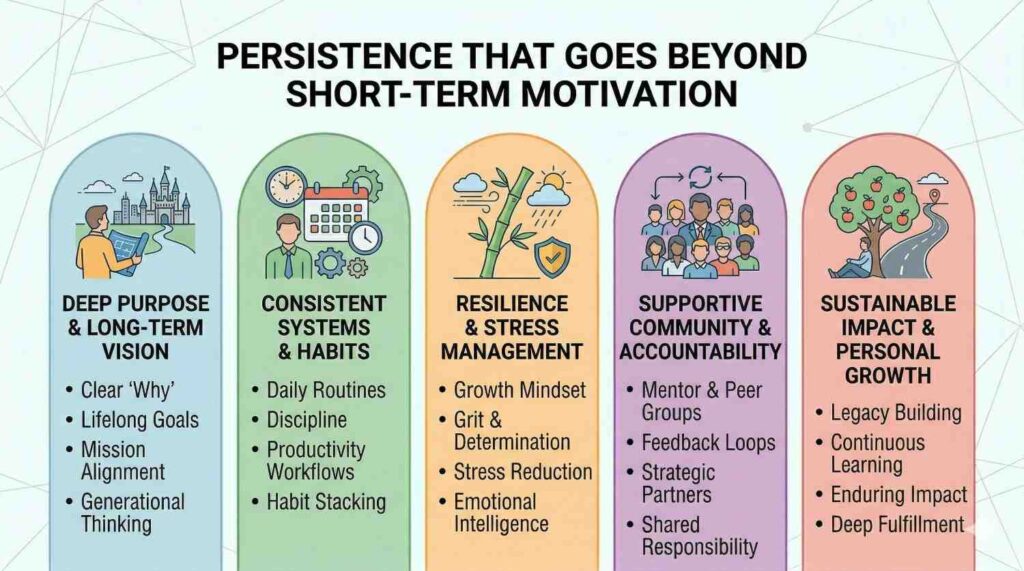
Startups rarely follow a smooth path. Even promising companies face unexpected delays, technical challenges, and moments of doubt.
Angels and micro VCs look for founders who are prepared for this reality. They want teams that can stay focused during difficult periods.
Persistence does not mean stubbornly ignoring feedback. Instead, it means continuing to move forward while learning from each challenge.
Founders who demonstrate long-term commitment stand out during investor conversations. Investors can often sense when someone is building a company because they truly care about the problem.
That sense of purpose often becomes a powerful advantage during the difficult early years of a startup.
The Technology Signal That Makes Investors Pay Attention
Why Investors Study the Technology More Than Founders Expect

In deep tech startups, the technology itself often becomes the center of the investment decision. Angels and micro VCs want to understand what is actually being built beneath the surface. A flashy demo may look impressive, but experienced investors always try to see what lies underneath.
They usually ask simple but important questions. What makes this technology different? Why could another team not build the same thing in a few months? What hidden work has already been done that gives this startup an advantage?
These questions are not meant to challenge the founder personally. Investors simply want to know whether the innovation is real and meaningful.
Many early founders focus heavily on explaining features. They walk through the interface, the dashboard, or the user flow. While this can help investors understand the product, it rarely shows the deeper innovation.
Investors are more interested in the core engine behind the product. They want to understand the algorithms, the hardware architecture, the training models, or the system design that powers the solution.
When founders can explain this clearly, investors start to see that the startup may hold something valuable.
The Difference Between a Feature and a Breakthrough
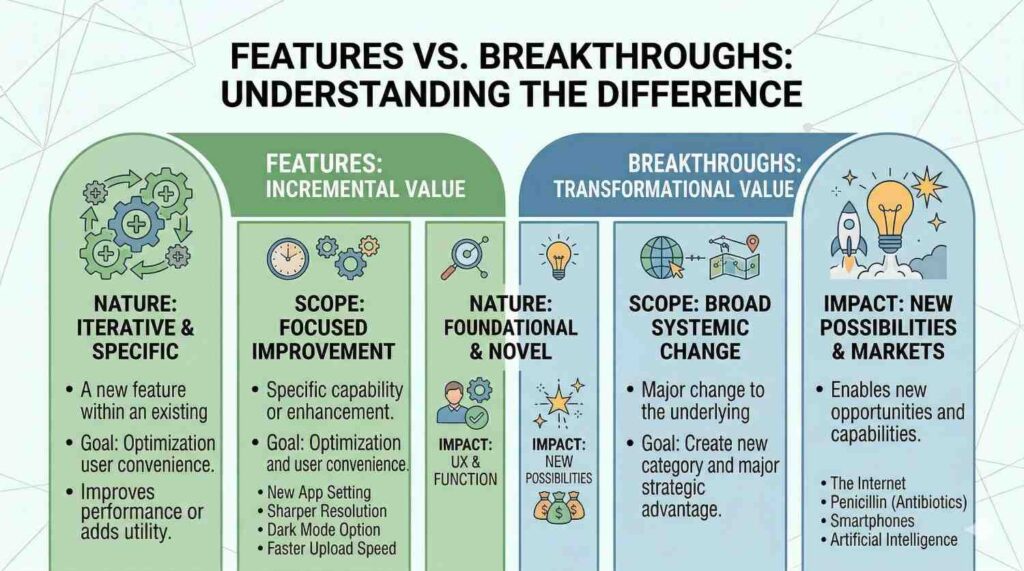
One of the most common mistakes early founders make is confusing features with real innovation. A feature can be useful, but it is often easy to copy. A breakthrough, on the other hand, usually requires deep technical work.
For example, adding a chatbot interface to an application may look exciting. But if the underlying technology relies entirely on public APIs, competitors can build something similar very quickly.
Investors are always trying to understand where the true innovation sits. Is it in the model architecture? Is it in a new training method? Is it in the way hardware and software interact?
When the innovation lives deep within the system, the company becomes much harder to replicate.
This is why founders should spend time thinking about what part of their technology actually creates the long-term advantage. Once that becomes clear, they can focus on protecting it and building around it.
Why Defensibility Matters So Early
Some founders believe defensibility only becomes important after a company grows larger. In reality, many investors look for defensibility even at the earliest stage.
The reason is simple. Investors want to know whether the company can still win when competitors eventually appear.
In fast-moving sectors like artificial intelligence and robotics, new startups launch every week. Large companies also enter promising markets quickly once they see traction.
If a startup does not have a defensible advantage, it can easily be pushed aside by a better funded competitor.
Defensibility can come from several sources. Deep technical expertise can create one layer of protection. Unique data pipelines can create another. Intellectual property protection can strengthen the position even further.
Together, these elements begin to form what investors call a moat.
Intellectual Property as a Serious Signal
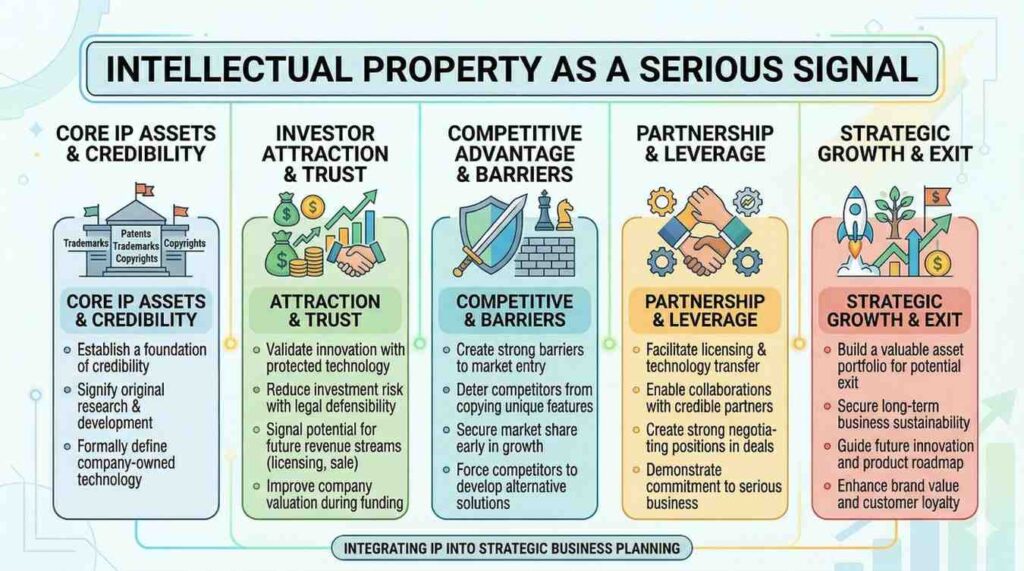
Many founders assume patents are only useful for large companies. In reality, early intellectual property strategy can become a powerful signal during pre-seed fundraising.
When angels and micro VCs see that a startup has already begun protecting its core inventions, it shows discipline. It tells investors that the founders are thinking about the long-term value of their technology.
It also changes the competitive picture. If the startup owns the core technical approach, competitors cannot easily replicate the same solution without facing legal risk.
This does not mean every startup must file dozens of patents immediately. What matters more is having a thoughtful strategy around the core innovations that matter most.
This is exactly where many technical founders benefit from experienced guidance.
Tran.vc works closely with early-stage teams to identify the inventions inside their technology stack. Through up to $50,000 in in-kind patent and IP services, we help founders convert their innovations into real assets that investors recognize.
When a startup enters investor conversations with protected technology and a clear IP roadmap, it creates a very different impression.
The company no longer looks like a fragile idea. It begins to look like a defensible business.
If you are building something technically unique, you can apply to work with Tran.vc here:
https://www.tran.vc/apply-now-form/
The Hidden Advantage of Building an IP Strategy Early

Early intellectual property strategy offers benefits beyond investor signaling. It also helps founders understand the true value of what they are building.
During the patent strategy process, founders often discover aspects of their technology they had not fully recognized before. They begin to see where their strongest innovations live and how those innovations can shape the future of the company.
This clarity can influence product decisions, technical architecture, and even long-term market strategy.
Instead of simply building features, the team begins building assets.
Over time, these assets become extremely valuable. They attract stronger investors, discourage competitors, and create long-term leverage for the company.
Many successful deep tech startups began building this protection much earlier than people realize.
Market Understanding That Makes Investors Trust the Founder
Investors Want to See Evidence of Real Problems
A great piece of technology does not automatically create a successful company. The technology must solve a meaningful problem that people or businesses truly care about.
Angels and micro VCs pay close attention to how founders describe the problem they are solving. They listen for signs that the founders have spent real time understanding the people affected by the issue.
When founders speak from firsthand experience, their explanations feel grounded. They can describe the daily frustrations that users face and the limitations of existing solutions.
This level of detail builds credibility.
Investors quickly notice when a founder is repeating generic market statistics instead of describing real observations. Numbers can support a story, but they rarely replace genuine understanding.
The strongest founders combine both. They know the data, but they also understand the human side of the problem.
Clear Market Insight Builds Investor Confidence

When founders deeply understand their market, they are able to make stronger strategic decisions. They know which customer segment to focus on first and which opportunities can wait until later.
This clarity matters a lot to early investors.
Pre-seed investors know that resources are limited. A small team cannot pursue every opportunity at once. The founders must focus their energy on the most promising path.
When a founder explains their market entry strategy clearly, investors gain confidence that the team is thinking carefully about growth.
This does not mean the strategy will never change. Markets evolve and startups often pivot. What matters is that the founder shows thoughtful reasoning behind the current plan.
Why Narrow Focus Often Wins Early
Many early founders try to present a very large market opportunity. They want to show investors that their startup could become a billion-dollar company.
While market size does matter, experienced angels often prefer founders who begin with a narrow focus.
Starting with a specific problem and a clear group of early users makes the initial product much easier to build. It allows the startup to gather feedback quickly and improve the technology faster.
Once the solution proves valuable for one group of users, the company can expand to additional markets over time.
Investors understand this process very well. They often trust founders more when the early strategy feels focused and practical.
A narrow starting point does not limit the future. Instead, it creates a strong foundation for growth.
The Story Investors Want to Believe

Every startup tells a story. This story explains why the company exists and why the technology matters.
Angels and micro VCs listen carefully to how founders tell this story. They want to see whether the narrative feels logical and grounded in reality.
A strong story connects three elements clearly. It explains the problem, the innovation, and the reason this particular team is able to solve it.
When these elements align naturally, the company begins to feel inevitable. Investors start to imagine how the startup could grow over time.
This is the moment when early interest begins to turn into serious investment conversations.
If you are building in AI, robotics, or deep tech, you can apply anytime here: