
Most technical founders believe that building a strong product is enough to raise funding.
They spend months, sometimes years, writing code, testing models, designing hardware, and solving deep technical problems. The work is real. The innovation is real. The progress is real.
But when it comes time to raise money, something surprising happens.
Investors do not immediately see the value the founder sees.
This gap is one of the biggest reasons founders struggle during pre-seed fundraising. The founder understands the technology deeply. The investor does not yet have that context.
Without clear communication, the investor only sees complexity instead of opportunity.
This is why many brilliant technical founders fail to raise money even though their work is strong. It is not because their idea is weak. It is because the story around the technology has not yet been shaped in a way investors understand.
Pre-seed fundraising is not just about invention. It is about translation.
You are translating deep technical work into a clear story about the future.
Why Investors Cannot Evaluate Raw Technology Alone
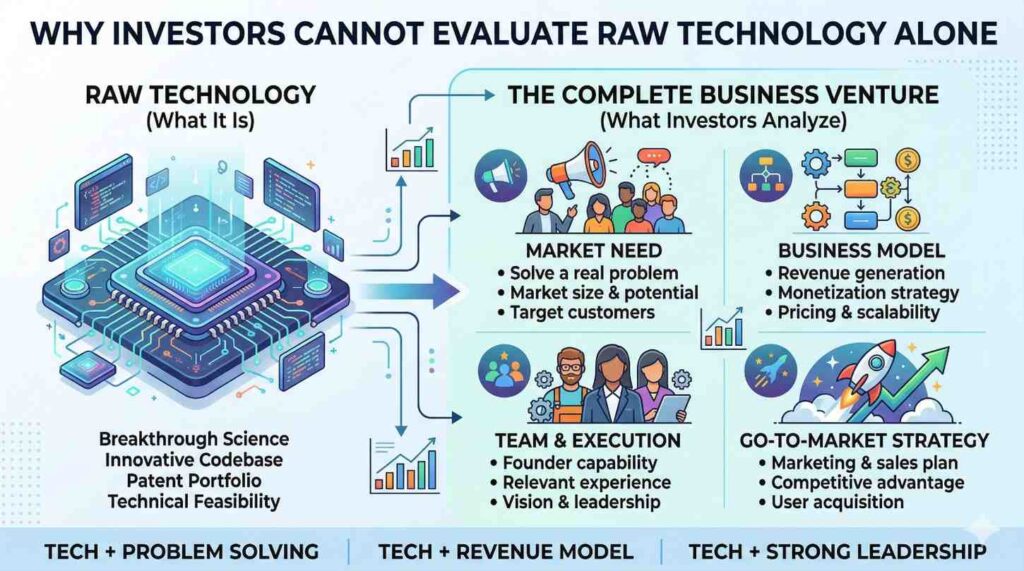
At the pre-seed stage, investors are not evaluating revenue. Most startups have none.
They are not evaluating traction either. In deep tech, traction often comes much later.
Instead, investors are trying to answer a very simple question.
Could this become a valuable company?
To answer that question, they look for signals.
They look for signs that the founder understands the problem deeply. They look for signs that the technology is unique. They look for signals that the work cannot be easily copied.
If those signals are not visible, the investor becomes cautious.
From the investor’s perspective, early stage investing is full of uncertainty. The more risk they see, the more likely they are to pass.
This is why the best founders learn to show their work in ways that reduce uncertainty.
Clear thinking reduces risk.
Strong intellectual property reduces risk.
A focused vision reduces risk.
When those signals are present, investors begin to pay attention.
The Network Myth That Holds Founders Back
One of the most common myths in the startup world is that connections are required to raise money.
This belief spreads quickly among founders who are new to fundraising. They hear stories about warm introductions, private investor circles, and exclusive venture capital networks.
Soon it begins to feel like an impossible game.
If you do not know the right people, you assume you cannot even start.
But this belief hides an important truth.
Investors constantly search for strong founders outside their network.
They read research papers.
They follow technical communities.
They track emerging technologies.
They are always looking for people building something that matters.
The reason connections help is simple. They create visibility.
But visibility can be created in many ways.
A clear technical breakthrough creates visibility.
A strong intellectual property position creates visibility.
A compelling story about a new market creates visibility.
When founders understand this, the entire fundraising process becomes less intimidating.
You do not need to begin with a large network.
You only need to begin with something real.
And then you need to learn how to show it clearly.
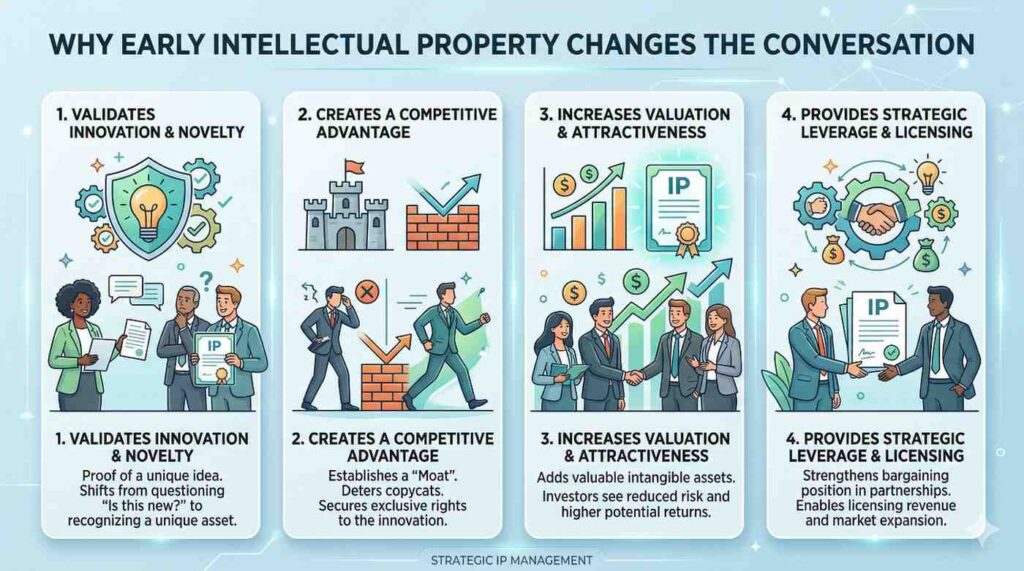
Why Early Intellectual Property Changes the Conversation
One of the most overlooked tools in early fundraising is intellectual property.
Many founders assume patents are something companies worry about later. They think protection only matters after they have funding.
But the opposite is often true.
Strong intellectual property early in the life of a startup can completely change how investors view the company.
When an investor sees a startup with protected technology, they immediately see something important.
They see a barrier.
A protected invention signals that the company is not just experimenting. It signals that the founder understands the long-term value of what they are building.
In deep tech, this matters even more.
AI models can be replicated.
Software features can be copied.
Hardware designs can be reverse engineered.
But protected intellectual property creates distance between you and competitors.
It shows that the founder is building something durable.
This is exactly why Tran.vc works closely with early stage technical teams.
Instead of simply investing cash, Tran.vc invests up to $50,000 worth of patent strategy, filings, and IP services to help founders build companies that are defensible from day one.
This approach helps founders turn raw technology into assets that investors take seriously.
If you are building something in AI, robotics, or deep tech, you can apply anytime here:
Why Investors Look for Defensibility Early
At first glance, pre-seed investing might seem like a bet on ideas.
But experienced investors know something important.
Ideas change.
Markets evolve.
Products shift.
Technology improves.
The thing that matters most is whether the company can maintain an advantage as it grows.
This is why investors look for defensibility even in the earliest stages.
They want to see signs that the founder understands how to build a moat around the company.
Sometimes that moat comes from proprietary data.
Sometimes it comes from deep expertise.
And often, especially in technical fields, it comes from intellectual property.
When founders start building that moat early, the entire company becomes stronger.
Instead of chasing attention, the company becomes something investors want to discover.
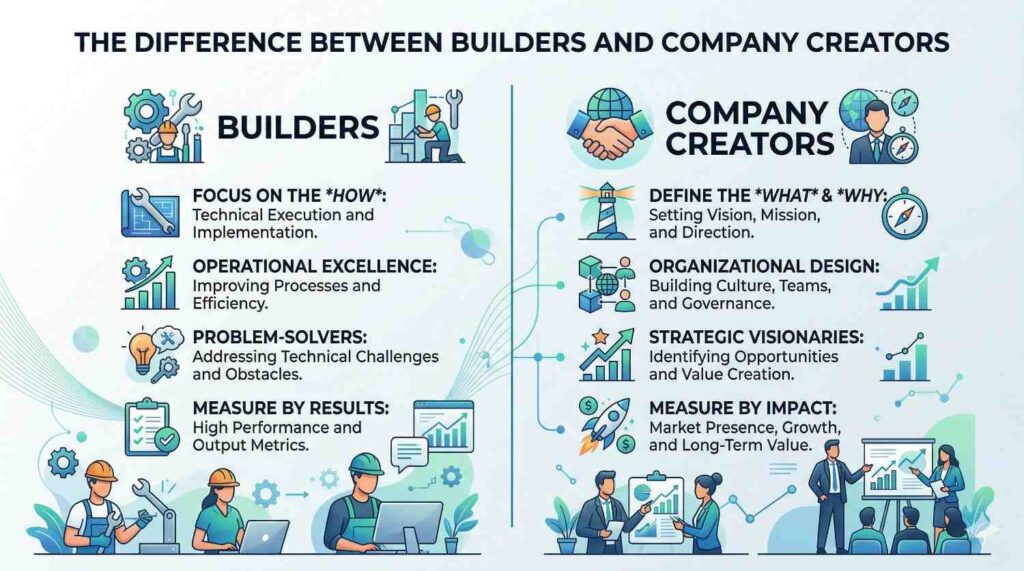
The Difference Between Builders and Company Creators
There is a subtle but powerful shift that happens when founders prepare to raise funding.
They move from being builders to becoming company creators.
Builders focus on solving technical problems. They spend most of their time improving code, refining systems, and testing ideas.
Company creators think about the long-term structure around that work.
They ask different questions.
How will this technology stay ahead of competitors?
How can we protect what we build?
How will investors see the future value of this work?
These questions do not slow innovation. They strengthen it.
When founders begin thinking this way, their work becomes more than just a project.
It becomes the foundation of a company that can grow, attract funding, and survive competition.
This shift is one of the most important steps in raising pre-seed funding successfully.
Why Clarity Is the Most Underrated Fundraising Skill
Many founders believe fundraising is about persuasion.
They think success comes from convincing investors through clever presentations or polished pitch decks.
In reality, the most powerful fundraising skill is clarity.
Investors meet hundreds of founders every year.
The founders who stand out are not always the most charismatic. They are the ones who explain complex ideas in ways that are simple and clear.
When an investor understands the opportunity quickly, curiosity grows.
When curiosity grows, deeper conversations follow.
Clarity creates momentum.
This is why strong founders spend time refining how they explain their work.
They remove unnecessary complexity.
They focus on the problem first.
They explain why their solution changes the game.
A clear story makes it easier for investors to believe in the future you are building.
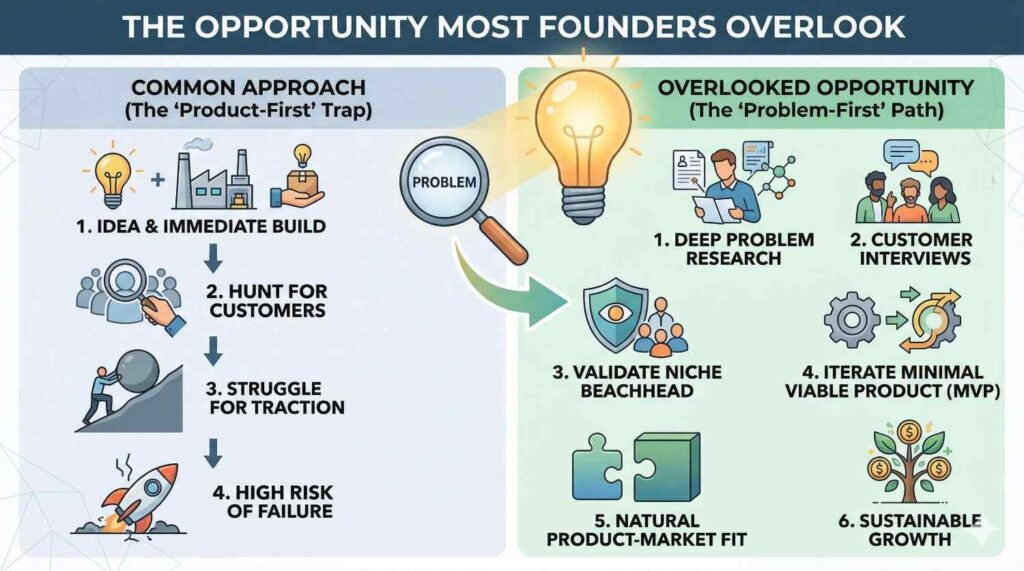
The Opportunity Most Founders Overlook
Many founders think their lack of connections is a disadvantage.
In some ways it is.
But it also creates a surprising advantage.
Founders without large networks often spend more time building real technology instead of chasing attention.
They focus on substance rather than perception.
When that work is combined with strong intellectual property and a clear story, it becomes extremely powerful.
Investors recognize genuine technical depth.
They recognize founders who are solving meaningful problems.
When those signals are visible, networks become far less important.
This is why many successful startups start far from traditional venture capital circles.
Strong ideas travel.
And when they do, investors notice.
For founders building deep technology, the key is making sure your work is protected, clear, and positioned correctly before you begin raising.
Tran.vc was created to help founders do exactly that.
By helping technical teams build strong intellectual property foundations early, Tran.vc helps startups raise with confidence instead of desperation.
If you are building something ambitious and want to protect your technology before raising, you can apply anytime here:
How Investors Actually Find Pre-Seed Startups Without Introductions
Investors Spend Most of Their Time Searching
Many founders imagine venture capital as a closed circle where deals only happen through introductions.
In reality, most early-stage investors spend a large part of their time searching for new founders. The reason is simple. The best startups rarely appear through perfect introductions.
Great founders often come from research labs, small developer communities, or industries that investors are only beginning to understand.
Because of this, investors constantly scan the landscape looking for signals. They read technical blogs, follow GitHub projects, attend niche conferences, and track new technologies emerging from universities and startups.
When something interesting appears, they reach out.
This means founders without connections are not invisible. They simply need to place their work where it can be discovered.
Visibility does not come from networking alone. It often comes from showing your work in places where curious investors are already looking.
The Internet Has Replaced the Old Gatekeepers
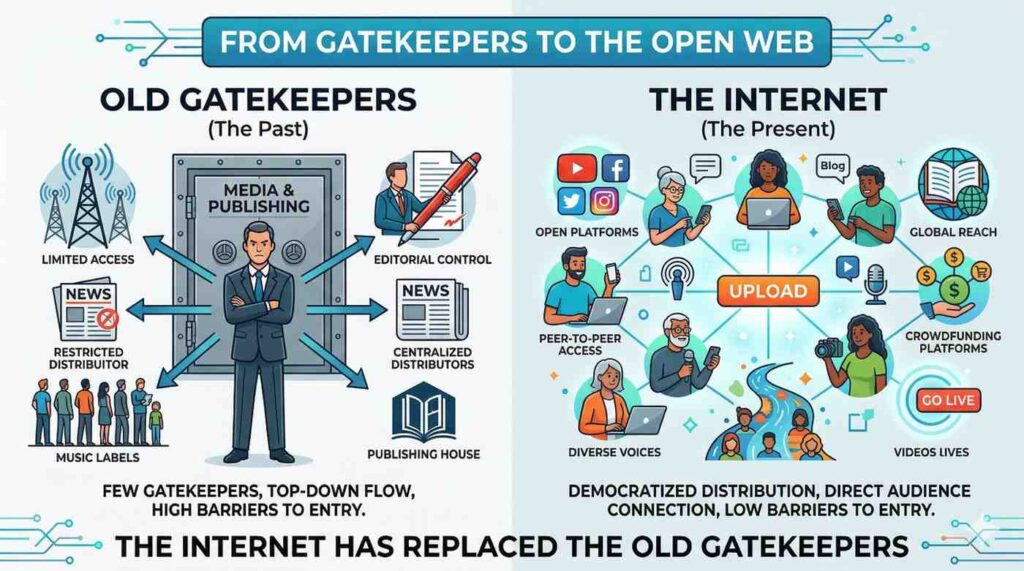
Twenty years ago, fundraising required heavy reliance on introductions. Venture capital firms were harder to reach, and information moved slowly.
Today the environment is very different.
Investors actively follow platforms like Twitter, LinkedIn, GitHub, Substack, and technical forums. These places allow founders to share progress openly.
A developer posting breakthroughs in a machine learning model can attract attention quickly. A robotics founder documenting a prototype can spark curiosity among investors who follow the field.
When investors discover these signals, they often initiate contact themselves.
This shift has quietly changed how pre-seed funding works. Instead of waiting for permission to enter investor networks, founders can create their own visibility by sharing meaningful progress.
The key is authenticity.
Investors are not impressed by hype. They are interested in genuine technical work that shows momentum.
Why Technical Depth Attracts the Right Investors
Founders sometimes believe they must simplify their work so much that the technical depth disappears.
That approach can backfire.
While investors appreciate clarity, many early-stage investors specifically look for companies with deep technical advantages. They want to see evidence that the founder understands something others do not.
When founders share thoughtful insights about their work, it sends a strong signal.
It shows intellectual ownership of the problem. It shows that the founder is not just copying an existing idea but pushing the field forward.
For example, a robotics founder explaining a new control system in simple terms can attract attention from investors who specialize in robotics.
An AI founder writing about a new architecture can attract researchers and investors who follow machine learning closely.
These signals build credibility long before a fundraising conversation begins.
The Quiet Power of Building in Public
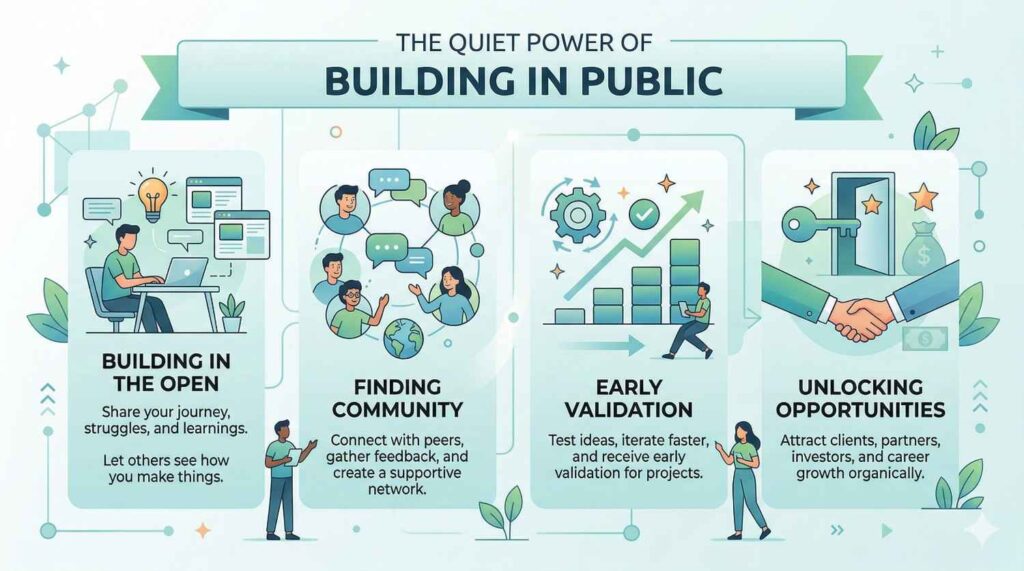
One of the most effective ways to attract early investors is by building in public.
This does not mean sharing confidential details. Instead, it means sharing the journey of building something meaningful.
Founders who share thoughtful updates about their progress gradually create a following. That following often includes engineers, researchers, and investors.
Over time, the founder becomes associated with a specific problem or technology area.
When investors see consistent progress, curiosity grows naturally.
They begin to watch the founder’s progress more closely. Eventually, many reach out to learn more.
This approach does something important. It flips the fundraising dynamic.
Instead of constantly asking for introductions, the founder creates an environment where investors become interested first.
Why Intellectual Property Makes Discovery More Powerful
When investors discover a startup, they quickly ask an important question.
Can this company defend what it is building?
If the answer is unclear, the opportunity feels risky. Investors worry that competitors could copy the idea quickly.
But when the technology is protected through intellectual property, the conversation changes.
A patent application signals that the founder is thinking beyond the prototype. It shows that the work may become a long-term asset.
For deep tech startups, this signal is extremely powerful.
It suggests the company is not only innovative but also strategic about protecting its advantage.
This is why many investors become more confident when they see early intellectual property activity.
Tran.vc helps founders create this advantage early.
Instead of waiting until after funding, Tran.vc invests up to $50,000 worth of patent strategy and IP services to help founders turn technical breakthroughs into protected assets.
This approach helps founders enter fundraising conversations with far greater credibility.
If you are building in AI, robotics, or other deep technology fields, you can apply anytime here:
The Real Goal Is Curiosity
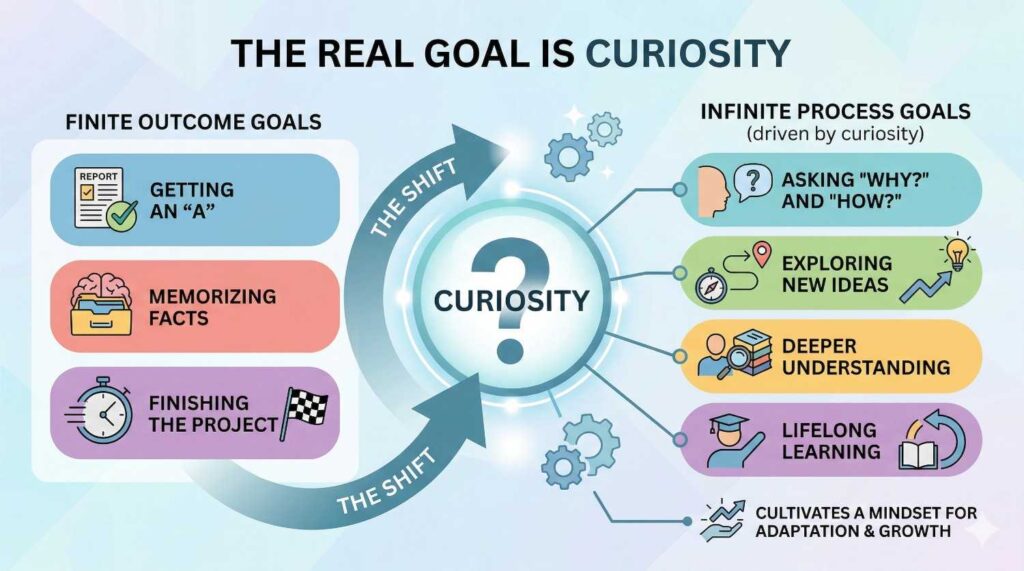
Founders often assume they must convince investors immediately.
In reality, the first goal is much simpler.
You only need to spark curiosity.
When an investor becomes curious, they want to learn more. They ask questions. They request meetings. They explore the problem you are solving.
Curiosity opens the door to deeper conversations.
This is why founders should focus less on selling and more on showing meaningful progress.
When your work demonstrates real innovation, curiosity emerges naturally.
And once curiosity exists, introductions and connections begin to matter far less.
Why Investors Respect Founders Who Start Without Connections
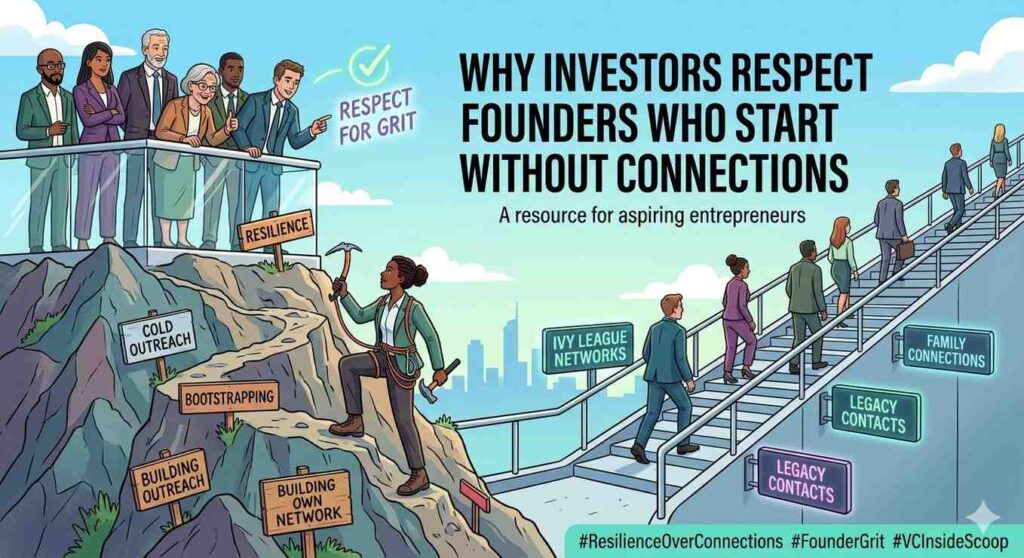
There is an interesting pattern many investors notice.
Founders who start without strong networks often develop unusual resilience.
They learn to explain their ideas clearly because they cannot rely on introductions.
They build credibility through their work rather than reputation.
They move forward because they believe deeply in the problem they are solving.
Investors recognize this mindset quickly.
A founder who pushes forward without early support often becomes the type of leader who can handle the difficult years ahead.
And building a startup is always difficult.
For investors, resilience can be as important as the technology itself.
The Transition From Discovery to Conversation

Once an investor becomes interested, the relationship usually moves to a conversation.
At this stage, the investor begins evaluating the founder more closely.
They want to understand the technical insight behind the idea. They want to see the founder’s long-term vision. They want to understand the potential market.
This conversation is where many founders feel pressure.
They worry about saying the perfect thing. They worry about presenting a flawless pitch.
But the best conversations rarely feel like pitches.
They feel like thoughtful discussions between people who are curious about a problem.
Investors want to understand how the founder thinks.
They want to see how deeply the founder understands the problem and how clearly they see the path forward.
When founders focus on clarity and honesty, these conversations become far easier.
Why Preparation Matters Before the First Investor Meeting
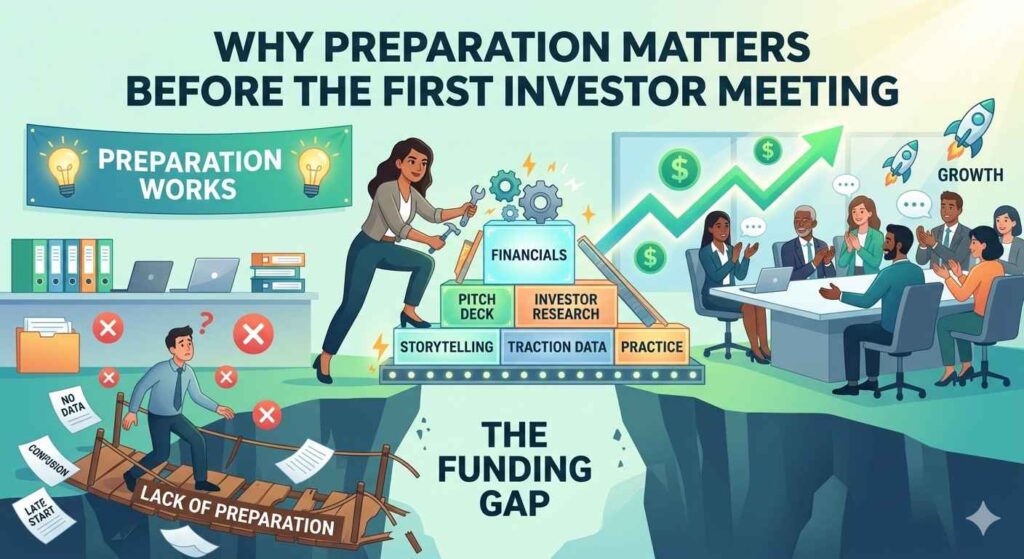
Even though discovery can happen organically, preparation is still critical.
Before speaking with investors, founders should think carefully about how their technology fits into a larger opportunity.
They should understand the problem they are solving in simple terms.
They should also understand why their solution is difficult for others to replicate.
This is where intellectual property often becomes part of the story.
A protected technology shows that the founder has already begun building a defensible company.
It signals long-term thinking.
It signals seriousness.
And it reassures investors that the startup is not just experimenting but building something that could become valuable.
Tran.vc was created specifically to help founders prepare for this moment.
By helping technical teams develop strong patent strategies early, Tran.vc helps startups enter investor conversations with confidence and credibility.
If you are building something ambitious and want to protect your innovation before raising, you can apply anytime here:
What Investors Really Want to See at the Pre-Seed Stage
The Founder’s Understanding of the Problem

At the earliest stage, investors often focus more on the founder than the product.
They want to understand how deeply the founder understands the problem they are solving.
A strong founder can explain why the problem exists, why current solutions fail, and why now is the right time for a new approach.
This depth of understanding is difficult to fake.
It usually comes from years of working in the field or from deep personal curiosity about the technology.
When founders explain the problem clearly, investors begin to see the opportunity more easily.
Clarity builds trust.
And trust is the foundation of early stage investment.
Evidence That the Technology Is Different

Investors also look for signs that the technology is not simply a small improvement on existing solutions.
They want to see evidence that the approach is fundamentally different or significantly better.
This does not require a finished product.
But it does require thoughtful reasoning about why the technology works.
For example, an AI founder may show how a new model architecture reduces computation costs. A robotics founder may demonstrate a new sensing approach that improves precision.
These insights signal that the founder has discovered something valuable.
And when that discovery can be protected through intellectual property, the opportunity becomes even more compelling.
Signals That the Founder Thinks Long Term
Early stage investors care about long-term thinking.
They want to know that the founder is not simply chasing trends but building something durable.
This mindset appears in many ways.
It appears when founders talk about how their technology will evolve over the next decade.
It appears when they discuss how they will build barriers against competitors.
And it appears when they begin protecting their innovation early through patents and intellectual property.
These signals suggest the founder is building a company, not just a project.
Why Defensibility Often Determines Investor Confidence
At the pre-seed stage, investors cannot rely on revenue metrics or market share.
Instead, they evaluate potential.
One of the strongest indicators of potential is defensibility.
Defensibility means the startup can maintain an advantage as it grows.
In deep tech companies, defensibility often comes from protected intellectual property combined with deep technical expertise.
When investors see this combination, their confidence increases.
They see a path toward a company that can lead a category rather than compete in a crowded field.
This is why building intellectual property early can change the entire fundraising trajectory.
Tran.vc focuses heavily on helping founders build these defensible foundations.
Through strategic patent guidance and filings, Tran.vc helps startups transform early innovation into protected technology assets.
If you are building something new in robotics, AI, or deep tech, you can apply anytime here: