
Starting a company alone can feel both exciting and heavy. You have the idea. You see the future clearly. But when it comes to raising money, many investors still expect to see a team. They worry that one person cannot build everything.
That belief stops many solo founders before they even begin.
The truth is very different.
Many strong companies started with one founder who moved fast, built something real, and showed clear proof that the idea mattered. Investors do not fund teams because they like teams. They fund teams because they want to reduce risk. If a solo founder can reduce that risk in other ways, funding becomes possible.
Pre-seed funding is the stage where this happens. It is the first outside support a founder receives before the company grows into a full startup. At this stage, investors are not looking for large revenue numbers. They are looking for signs of clarity, ownership, and the ability to build something defensible.
For solo founders working on deep technology like AI, robotics, or complex software systems, one factor matters even more than usual. That factor is intellectual property.
A strong patent strategy can turn a simple early idea into a powerful asset. It shows investors that your technology is not just code that can be copied tomorrow. It becomes something that can be protected, licensed, and scaled.
This is where many solo founders make a critical mistake. They chase money before they build leverage.
They spend months trying to convince investors while their technology remains unprotected and their story is still forming.
Smart founders take a different path.
They build proof first. They create technical depth. They secure early intellectual property. Then they approach investors with strength instead of urgency.
This approach changes the entire funding conversation.
Instead of asking investors for belief, you show them something real.
At Tran.vc, this is exactly where the journey begins. Rather than simply writing checks and stepping away, Tran.vc works closely with technical founders to help them transform raw ideas into protected, investable technology. The firm invests up to $50,000 in the form of patent services, IP strategy, and expert guidance from experienced patent attorneys and startup operators.
The goal is simple. Help founders build a moat before the world even knows the castle exists.
For solo founders, this kind of support can change everything. It replaces uncertainty with structure. It turns early technical work into long-term business assets. And it makes the pre-seed funding journey far more realistic.
If you are building something bold in AI, robotics, or deep technology, you can apply to work with Tran.vc anytime here:
https://www.tran.vc/apply-now-form/
In this guide, we will walk through the real process of raising pre-seed funding as a solo founder. Not the polished version you see on social media, but the practical steps that actually move founders forward.
You will learn how investors think at the earliest stage, how to build credibility without a large team, how to create a strong technical moat, and how to approach funding in a way that gives you control instead of pressure.
Raising money as a solo founder is not easy.
But when done the right way, it can become one of the strongest advantages you have.
How to Raise Pre-Seed Funding as a Solo Founder
The Reality of Raising Money Alone
Raising funding as a solo founder often feels harder than it should be. Most startup advice is written for teams. Pitch decks usually show two or three founders standing together. Investors are used to seeing shared responsibility and different skill sets working side by side.
When you are building alone, the story looks different.
You are the one writing the code. You are the one shaping the product. You are also the one thinking about the market, the business model, and the long-term vision of the company.
For many investors, this creates an early question.
They are not only evaluating the idea. They are evaluating whether one person can carry the company through the first difficult years.
This is why solo founders must approach pre-seed funding with a different strategy. Instead of trying to look like a small team, the goal is to show that the company has strong foundations that do not depend on headcount.
The strongest signal a solo founder can show is ownership of valuable technology.
When the technology is unique and protected, the company already has something investors care about. This shifts the focus away from how many people are on the team and toward what the founder is actually building.
That shift is powerful.
It changes the entire funding conversation.
Why Pre-Seed Funding Exists
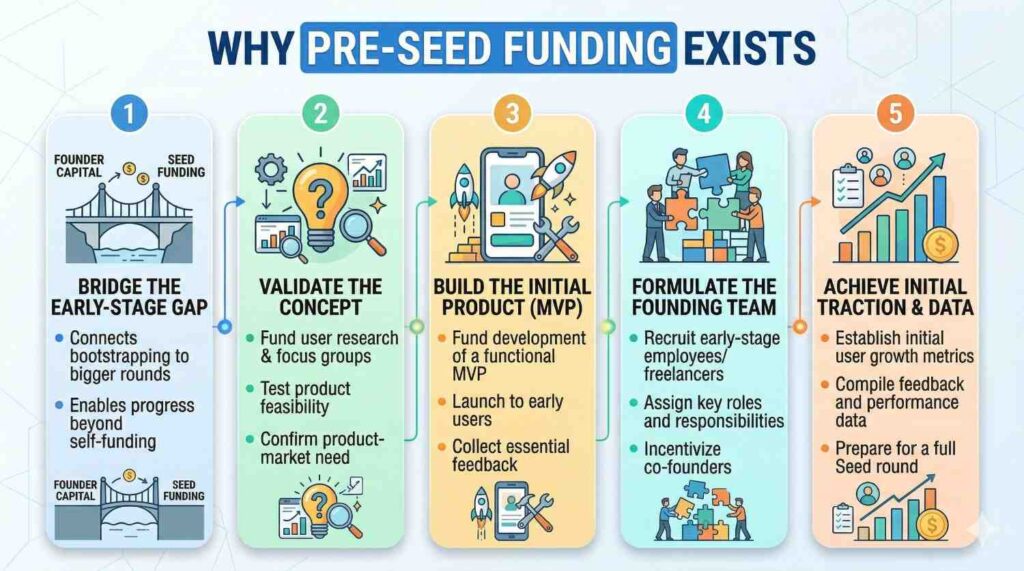
Pre-seed funding exists to help very early companies take their first real step. At this stage, the company usually has an idea, some early development work, and a clear vision of the problem it wants to solve.
Revenue is rare at this point.
Large teams are also rare.
Investors at the pre-seed stage are looking for signals that the founder understands the problem deeply and has the ability to build something meaningful.
For solo founders, these signals become even more important.
You must show that the idea is not just interesting but also technically credible. You must show that you understand the space you are entering and that your technology has room to grow into a real company.
This is where intellectual property begins to matter.
When your innovation can be protected through patents, it shows investors that your work is not easily copied. It also creates a long-term asset that increases the value of the company.
This is why many experienced investors encourage founders to think about IP early.
At Tran.vc, helping founders create this kind of protection is a core part of the process. Instead of waiting until later funding rounds, the firm works with technical founders from the very beginning to build a clear patent strategy around their technology.
This support allows founders to turn early experiments into protected innovations that investors can understand and value.
If you are building something in AI, robotics, or advanced software systems, you can apply to work with Tran.vc anytime here:
The Advantage Solo Founders Often Overlook

Many solo founders believe they are at a disadvantage during fundraising. In reality, they often have a hidden advantage that teams do not.
Decision speed.
When you are building alone, there is no delay in moving forward. You do not need alignment meetings or long internal debates. You can test an idea, change direction, or ship a feature quickly.
Investors value this speed more than many founders realize.
A solo founder who moves quickly and builds real technology can reach important milestones faster than a larger early team. This progress becomes proof that the founder knows how to execute.
Execution is one of the most powerful signals in early-stage investing.
If a founder consistently turns ideas into working systems, investors start to trust that more progress will follow.
This is especially true in deep technology sectors.
In areas like robotics or artificial intelligence, technical depth matters more than marketing noise. Investors want to see real work being done.
A solo founder who shows technical progress and protects that progress through patents can build strong credibility even before raising capital.
That credibility is what opens the door to pre-seed funding.
How Investors Evaluate Solo Founders at the Pre-Seed Stage
Investors Are Looking for Risk Reduction
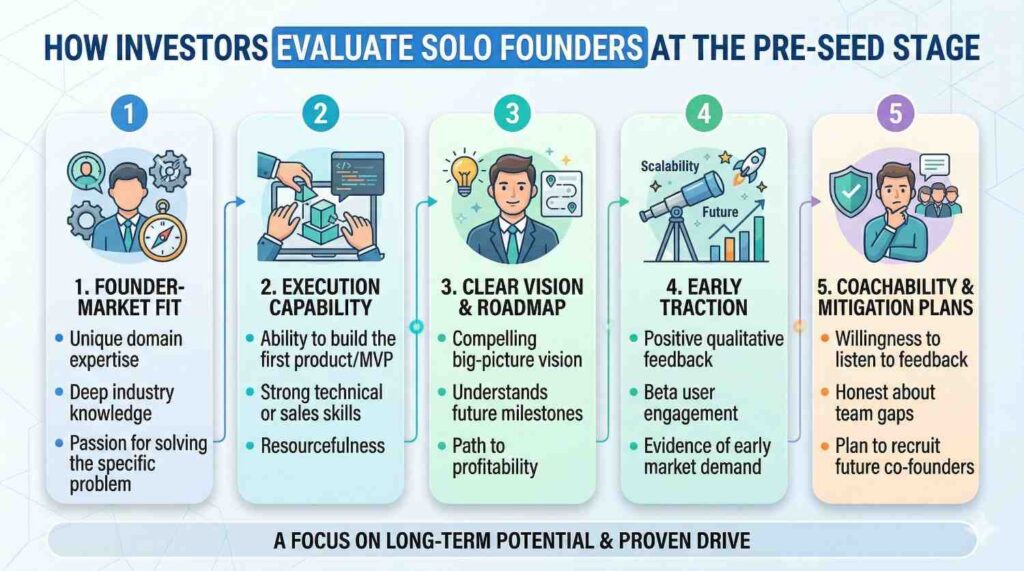
When investors evaluate a solo founder, they are not simply judging the person. They are trying to understand risk.
Startups fail often. Early investors know this very well. Their job is to find founders who reduce risk in meaningful ways.
Teams reduce risk because different people can cover different responsibilities. A technical founder can build the product while a business-focused founder talks to customers.
But a solo founder can reduce risk in other ways.
One way is through deep technical knowledge. When a founder clearly understands the technology they are building, investors feel more confident that the company will not rely on outside contractors or temporary solutions.
Another way is through intellectual property.
Patents show that the innovation behind the company is not just an idea. It becomes a protected system that competitors cannot easily replicate.
This type of protection changes how investors evaluate the opportunity.
Instead of asking whether someone else could build the same thing next year, they begin asking how large the opportunity could become.
Clarity of Vision Matters More for Solo Founders

When investors meet a team, they expect the vision of the company to be shared among several people. For a solo founder, the vision must be even clearer.
Investors want to understand three simple things.
First, what problem exists in the world that truly needs solving.
Second, why this founder is the right person to solve it.
Third, how the technology behind the solution creates long-term value.
A founder who communicates these ideas clearly builds immediate trust.
Clarity does not mean complicated explanations. In fact, the opposite is usually better.
If a founder can describe the problem and the solution in simple language, investors quickly understand the importance of the work.
This ability is especially important in deep technology fields where the details can easily become overwhelming.
The best founders explain complex systems in ways that anyone can follow.
Early Proof Is More Powerful Than Promises
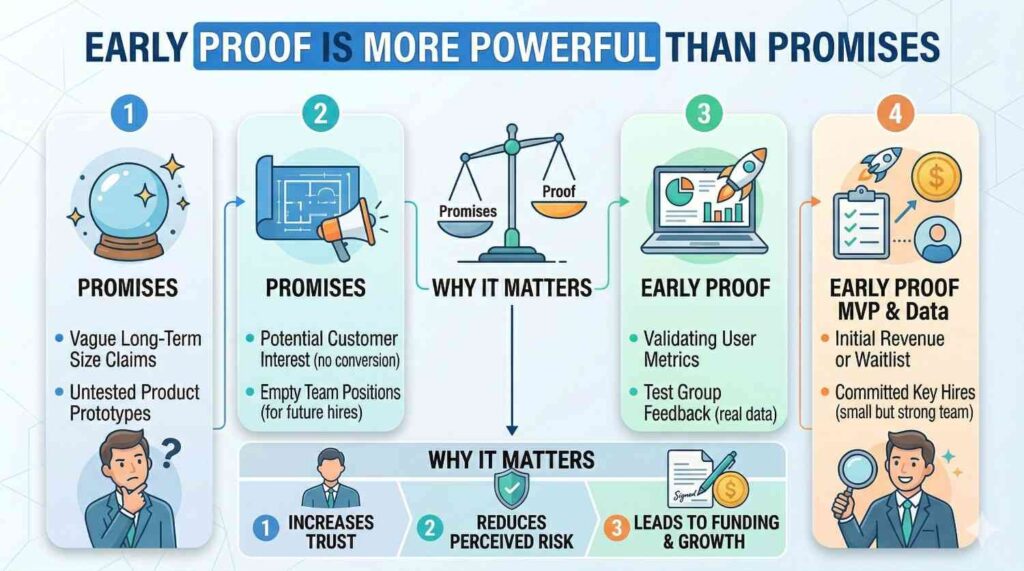
Investors hear thousands of startup ideas every year. Many of those ideas sound promising in theory.
What investors rarely see is early proof.
Proof can take many forms. It might be a prototype. It might be a small working model of the technology. It might even be an early patent filing that demonstrates the uniqueness of the idea.
For solo founders, this kind of proof is extremely valuable.
It shows that progress is already happening without a large team or large budget.
This is one reason why many technical founders work with partners like Tran.vc before raising outside capital. By building a strong patent strategy and documenting the technical innovation early, founders create tangible proof of their work.
That proof becomes a powerful signal during fundraising conversations.
Investors begin to see the company not just as an idea but as an emerging asset.
When that shift happens, the conversation changes completely.
Instead of asking whether the company might work someday, investors start asking how they can be part of its growth.
If you are currently building something innovative and want to turn your technology into protected intellectual property, you can apply to Tran.vc here:
Working with experienced patent strategists early can help transform your technical progress into long-term business value.
How Solo Founders Build Investor Confidence Without a Team
Demonstrating Progress Through Consistent Building
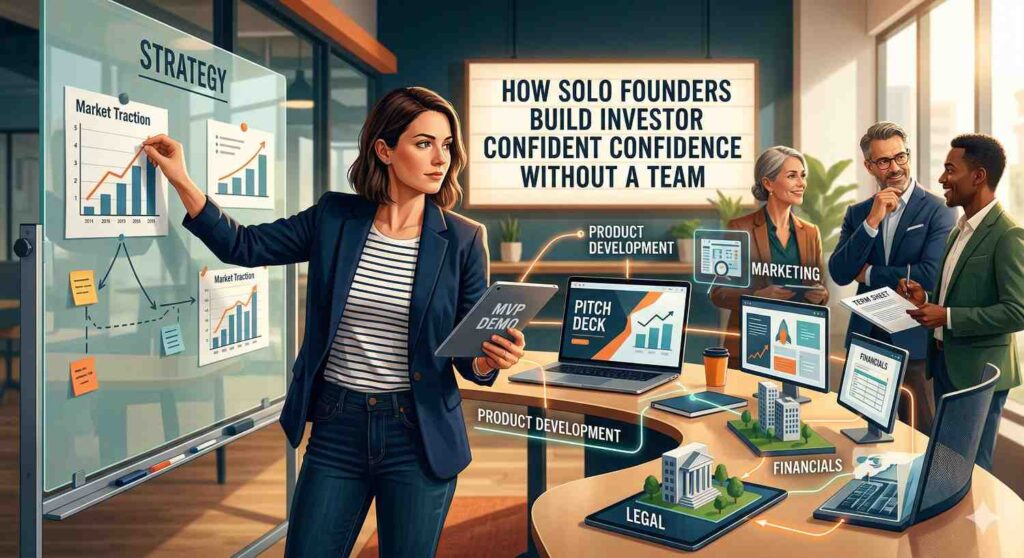
One of the biggest concerns investors have about solo founders is execution capacity. They wonder whether one person can truly move the company forward fast enough.
The best way to answer that concern is not through explanations. It is through visible progress.
When investors see steady development, they begin to feel more confident. This progress can appear in many forms. A prototype becomes more refined. A technical concept evolves into a working system. Small improvements slowly shape the early version of a real product.
Each step shows that the founder is not waiting for permission to move forward.
Instead of focusing only on fundraising, strong solo founders focus on building. They treat development as the primary signal of seriousness.
Investors notice this behavior quickly.
When they see that the founder has already done months of work independently, they understand that the company will continue moving even before large funding arrives.
This type of momentum often matters more than a polished presentation.
A working system speaks louder than slides.
Turning Technical Work Into Real Assets
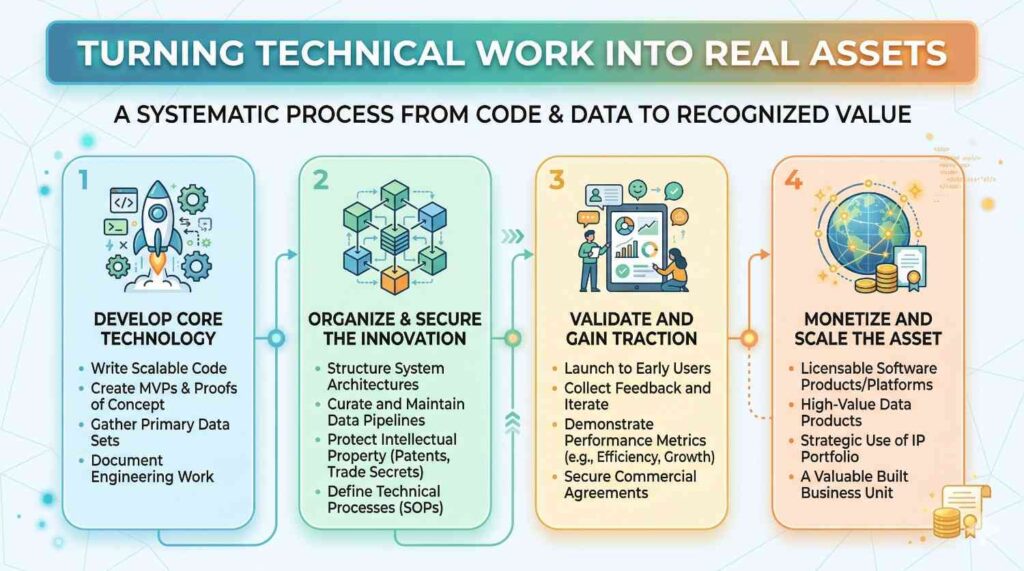
Many solo founders spend long hours writing code, experimenting with models, or designing complex systems. While this work is important, it often stays invisible to investors.
The challenge is that technical progress alone does not always translate into investor confidence.
Investors need to see that the work being done has long-term value.
This is where intellectual property becomes extremely powerful. When a technical breakthrough is documented and protected through patents, the work becomes more than development effort. It becomes an asset owned by the company.
That asset can shape the company’s future.
It can protect the technology from competitors. It can attract strategic partners. It can also increase the valuation of the company during future funding rounds.
Many experienced founders treat patents as part of their early business strategy rather than a legal formality.
Instead of waiting until later stages, they begin shaping their patent portfolio while the technology is still evolving.
Tran.vc was built specifically to support founders during this early stage. The firm invests up to $50,000 in patent services and IP strategy to help deep tech founders turn raw innovation into protected technology.
For solo founders working in AI, robotics, or advanced software, this support can provide a strong foundation before raising capital.
You can apply anytime here:
Building intellectual property early gives solo founders something very valuable during fundraising conversations.
It gives them leverage.
Communicating Technical Ideas Clearly
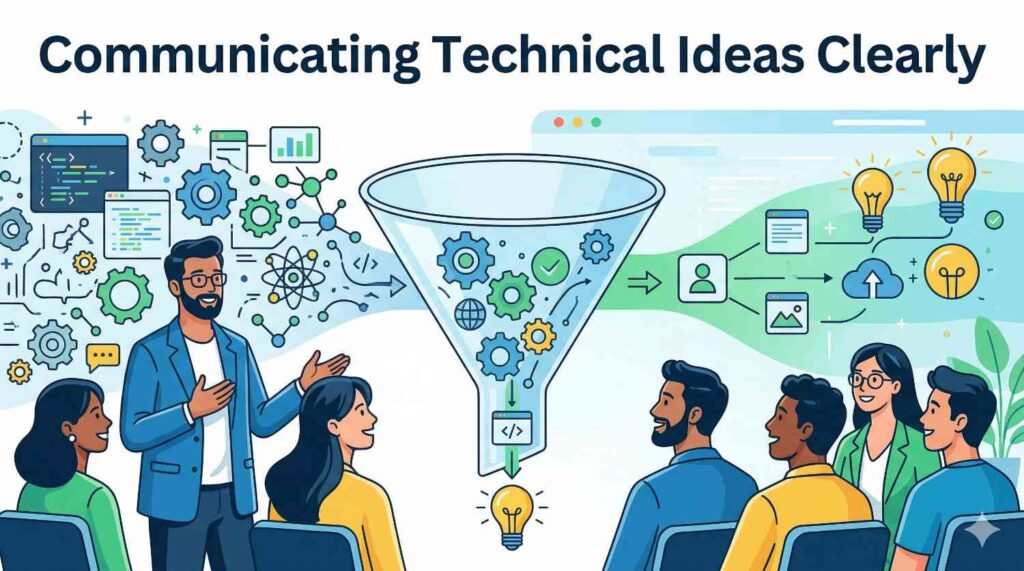
Technical founders often focus deeply on the systems they are building. This focus is essential, but it can sometimes create a communication gap when speaking with investors.
Investors do not always have the same technical background.
They want to understand the core innovation without needing to study the architecture in detail. The founders who succeed at fundraising are the ones who translate complexity into clear explanations.
Clarity does not mean oversimplifying the work.
It means focusing on the outcome of the technology rather than every internal component. A founder should be able to explain the problem, the solution, and the impact in language that anyone can follow.
When this happens, investors quickly grasp the importance of the innovation.
They begin to imagine the company’s future.
For solo founders, this ability becomes even more important. Since there is no team member handling the pitch, the founder must communicate both the technical depth and the business vision.
This combination builds trust.
Investors start to see not only a strong engineer but also a potential company builder.
Showing Commitment Through Long-Term Thinking
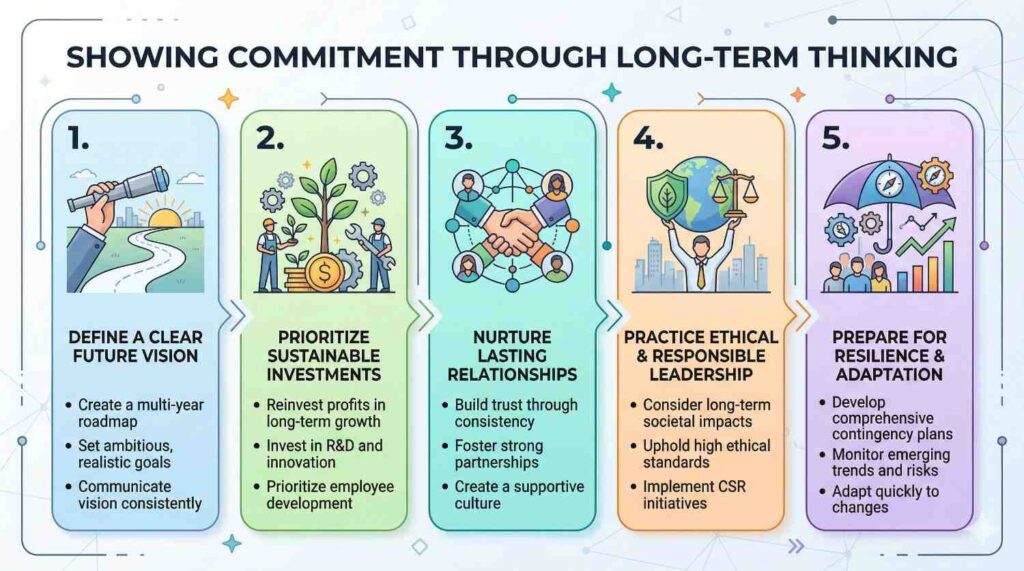
Investors pay close attention to how founders think about the future.
A founder who is only focused on raising the next round of funding appears reactive. A founder who is building long-term assets appears strategic.
Solo founders can demonstrate this mindset through the decisions they make early.
Protecting intellectual property is one example.
Designing technology that can scale is another.
Taking time to understand the real market problem also signals maturity. When a founder clearly understands the industry they are entering, investors feel more confident that the company will not lose direction later.
Long-term thinking shows that the founder is not chasing trends.
They are building something durable.
This mindset is one of the reasons Tran.vc works closely with founders from the earliest stages. Instead of encouraging rapid fundraising without preparation, the focus is on building strong foundations that support future growth.
By helping founders develop patent strategies and defensible technology, Tran.vc ensures that the company begins its journey with real structural advantages.
If you are building a deep technology startup and want to strengthen your company’s foundation before raising capital, you can apply here:
For many solo founders, this early support becomes the turning point that transforms an idea into a fundable company.
Building Leverage Before You Start Fundraising
Why Fundraising Should Not Be the First Step
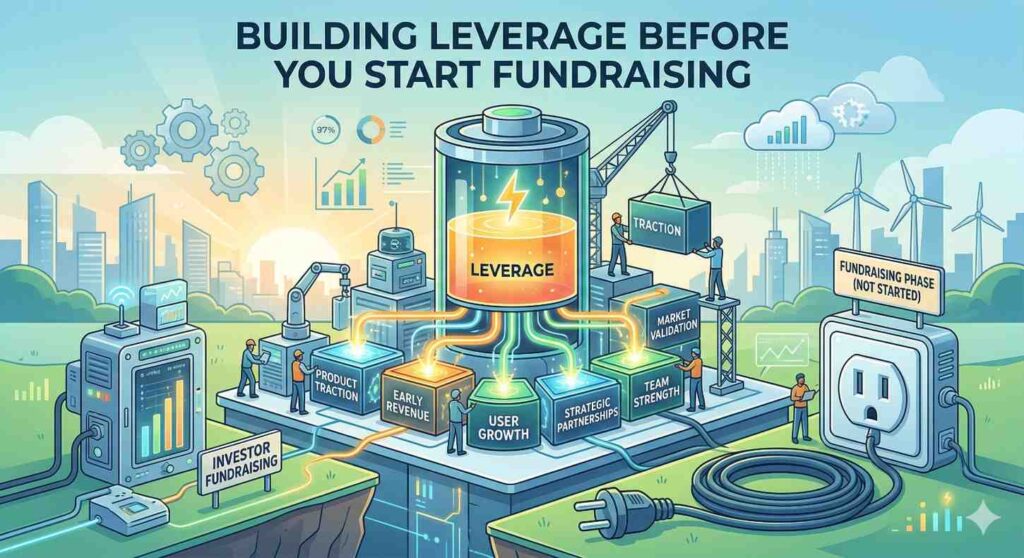
Many founders believe that the first step in building a startup is raising money. They spend months preparing pitch decks and reaching out to investors before the technology has matured.
This approach often leads to frustration.
Investors rarely commit capital when the company is still too early. The conversations become polite but unproductive.
A more effective strategy is to build leverage before fundraising begins.
Leverage means creating conditions where investors want to participate rather than needing to be convinced.
For solo founders, leverage comes from visible progress, unique technology, and early intellectual property protection.
When these elements are present, fundraising becomes much easier.
Instead of explaining potential, founders can demonstrate real momentum.
Creating Early Proof of Innovation
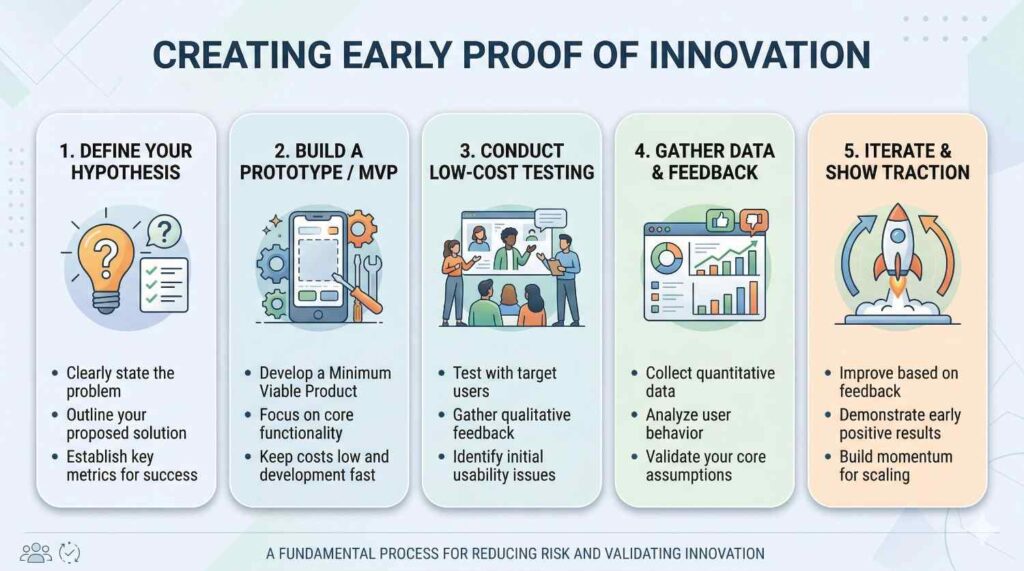
Innovation becomes powerful when it can be demonstrated.
Even a small working model can change how investors view a startup. A simple prototype shows that the idea is technically possible.
For deep technology companies, this proof is extremely valuable.
Artificial intelligence systems, robotics platforms, and advanced software architectures often require significant development work. When a solo founder can demonstrate early functionality, it shows that the foundation already exists.
This early proof does not need to be perfect.
It simply needs to show that the core idea works.
Once this proof exists, the next step is protecting it.
Filing patents around the innovation ensures that the technology remains tied to the company that created it.
This protection sends a strong message to investors.
The founder is not only building technology but also building a defensible business.
How Solo Founders Actually Find Pre-Seed Investors
Understanding Where Pre-Seed Investors Spend Time
Many solo founders assume that investors are difficult to reach. In reality, most early-stage investors are actively looking for new opportunities.
The problem is not access.
The problem is approach.
Pre-seed investors spend time in specific places. They follow technical communities, read research updates, track emerging startups, and stay close to founder networks. They are often more accessible than later-stage investors, but they respond only when something truly stands out.
For a solo founder, this means one important shift.
Instead of asking, “Where can I find investors?” the better question is, “How can I become visible in the right places?”
Visibility comes from sharing real work.
When you consistently show what you are building, whether through technical updates, small demos, or thoughtful insights, you begin to appear on the radar of the right people.
Investors are drawn to founders who are already in motion.
They pay attention to builders.
Why Cold Outreach Often Fails
Cold emails and messages are a common starting point for many founders. While they can work, they often fail because they focus too much on asking and not enough on showing.
A typical message asks for time, attention, or funding without offering clear proof of value.
Investors receive many such messages every day.
To stand out, the approach must be different.
A strong outreach message does not begin with a request. It begins with something real.
It might reference a specific technical breakthrough. It might highlight a unique insight about the market. It might point to a working prototype or a patent filing that demonstrates originality.
When the message is grounded in real progress, it becomes easier for investors to engage.
They are not being asked to imagine potential.
They are being shown something concrete.
Building Warm Paths Instead of Cold Starts
The most effective fundraising conversations rarely begin as cold interactions.
They begin through warm paths.
A warm path does not always mean a direct introduction. It often starts with familiarity.
When investors have already seen your work, read your updates, or heard about your progress from others, the first conversation feels different.
There is already a level of trust.
For solo founders, building these warm paths requires consistency.
Sharing progress regularly creates a track record.
Engaging with technical communities builds visibility.
Connecting with other founders creates opportunities for introductions.
Over time, these small actions create a network around your work.
When you finally reach out to investors, you are no longer unknown.
You are recognized.
Structuring Your First Investor Conversations
The first conversation with an investor is not about closing a deal.
It is about opening a relationship.
Many solo founders approach these conversations with pressure. They feel the need to impress quickly or secure immediate interest.
This pressure often makes the conversation less effective.
A better approach is to focus on clarity and honesty.
Explain what you are building.
Show what you have already achieved.
Share where you are heading next.
When this is done clearly, the conversation becomes natural.
Investors begin to ask questions.
Those questions are important.
They show what the investor is trying to understand and what concerns they may have.
For a solo founder, these early conversations are also a learning process.
They reveal how others see your company.
They help refine your story.
They highlight areas that may need stronger proof or clearer explanation.
Over time, each conversation improves the next one.
Turning Interest Into Commitment
Investor interest does not always turn into immediate funding.
Often, it builds gradually.
An investor may follow your progress for weeks or months before making a decision. During this time, consistent updates become very important.
When investors see continued progress, their confidence grows.
Each update reinforces the belief that the company is moving forward.
For solo founders, this consistency becomes a major advantage.
It shows discipline.
It shows commitment.
It shows that progress does not depend on external pressure.
When combined with protected intellectual property, this consistency becomes even more powerful.
Investors begin to see both momentum and defensibility.
This combination often leads to stronger interest and faster decisions.
Tran.vc supports founders in building this kind of momentum from the very beginning. By helping founders develop clear IP strategies and protect their core innovations, the firm ensures that each step forward adds long-term value.
This makes every update more meaningful.
If you are preparing to raise pre-seed funding and want to strengthen your position before speaking with investors, you can apply here: