
Ten paying customers can tell a big story. They show that someone felt a real pain, tried your product, and chose to spend money—again. At this stage, you do not need a thousand logos. You need clear proof that value lands fast, returns often, and is hard to replace. Ten checks, tied to real outcomes, can do that.
This guide shows how to read those first ten accounts the right way. You’ll learn what their behavior says about fit, price, trust, and your moat—and how to turn simple signals into a strong pitch. We’ll keep every step plain and practical so you can use it this week.
If you want a partner to help protect your edge while you sharpen these signals, Tran.vc invests up to $50,000 in in-kind patent and IP services for AI, robotics, and deep tech teams. Apply anytime at https://www.tran.vc/apply-now-form/.
1) What the First Ten Dollars Really Mean
A paid account is not just a logo. It is a choice made by a person with a job to do. When ten of those people pay, you have a pattern, not a fluke. That pattern answers a simple question: does your product turn scary moments into safe wins fast enough that someone will stake their name on it? If yes, the next steps get easier. If not yet, those same ten accounts will tell you where to sand and where to double down.
Look past the invoice and listen for the reason the buyer said yes. The reason is usually small and sharp. It might be a changeover that always runs long. It might be a report that takes a day each week. If the same reason shows up across the ten, you found your wedge. That wedge is your story. Keep your roadmap, pricing, and sales steps aimed at that one job until it hums.
Treat each paying account like a lab that teaches you at speed. Write the scene that made them pay in one short line. Keep those lines in one place. When you read them together, you will see the shared pain, the shared clock, and the shared words buyers use. Those words belong in your deck, your site, and your product UI—because they came from the field, not from you.
2) How They Found You Says How You Will Grow
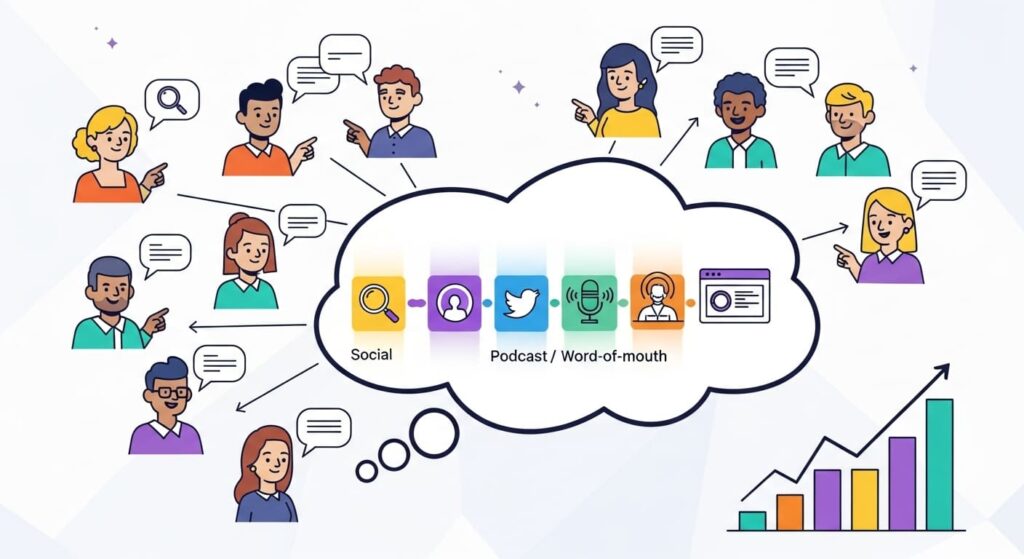
Acquisition paths reveal fit. If eight of the ten came from warm intros, you have trust but not reach yet. If several came from partners, you have a channel shape forming. If a few arrived from a single article or talk, you have a message that travels. Do not judge the path; read it. It tells you where to spend the next hour.
Map the first touch, the first real meeting, and the moment the deal moved. The move is often a security answer, a short pilot plan, or a small safety proof. When you name the move, you can build it into your default play. Then your next ten buyers walk the same smooth path—fewer stalls, fewer calls, same calm close.
Keep your ask simple for the source that works. If partner intros convert, arm that partner with one page, one clip, and one success line. If founder talks convert, book two more and bring the same scene. Growth at ten accounts is not about scale hacks. It is about repeating the exact steps that already worked, with less friction each time.
3) Time to First Value Is Your Real Onboarding Metric
Ten payers give you ten clocks. The interval from kickoff to first real win is a number you can change fast. That number tells you if your promise shows up in the wild, not just in the lab. When it drops, everything else improves—support load, renewals, referrals, even price.
Write the first win in plain words so there is no debate. It might be the first safe robot move on a real line. It might be the first model result a tech lead trusts. Then time it. Do not guess. Use logs or a short checklist with timestamps. If five accounts saw a win in under a day and five took a week, ask what the fast group had that the slow group lacked. The answer is usually a preset, a data sample, or a simple guardrail.
Move value to the front. Preload the common case. Add a dry run so fear does not slow the first click. Save state so the second win is faster than the first. When you trim an hour for a new account, write it down and tell the next prospect. Speed is a signal that makes people relax. Relaxed buyers say yes.
4) What Repeat Use Says About Habit
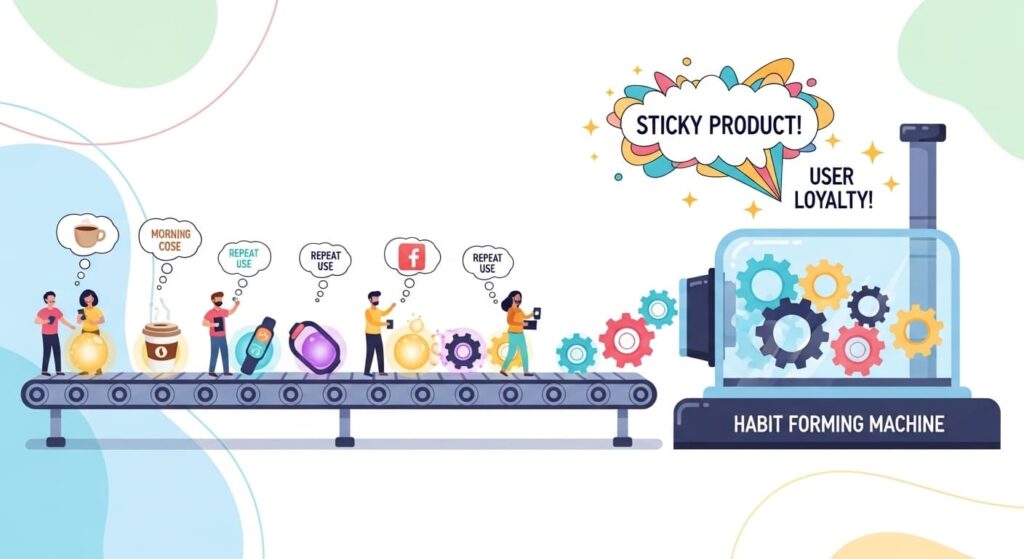
A paid first run is good. A paid second run is fit beginning to form. Watch how many of the ten come back without a nudge. Watch when they return and what they repeat. The pattern will show you which parts of your product feel like ritual and which feel like work.
Save the settings that led to the first win. Land the user where they left off. Offer one click to run the same job with fresh inputs. Small memory builds large habit. If a team returns every Monday morning, design for Monday. If they come back after an alarm, make the alarm clear, rare, and useful.
Ask each account what would make them return twice as often. Many will tell you a small thing: a clearer confidence flag, a faster export, a safer stop. These fixes look tiny on a board. They are big in a plant. Ship them and watch the curve. When week-four activity rises, you did the right work.
5) Expansion Inside the Account Is the Quiet Yes
Ten payers can whisper the size of your first land-and-expand path. Count how many added a second seat, a second line, or a second module within thirty to sixty days. The number might be small now. What matters is why expansion happened where it did. The “why” is your playbook.
Expansion often follows a proof note that a manager can forward. Write that note for them. One image. One number. One sentence in their language. If your system is safe by design, say where the guardrail stopped a bad move. If your system saves time, say how many minutes in a week. The easier you make the forward, the faster the second wedge arrives.
Ask for the next small step while the win is warm. Do not jump from one line to the whole factory. Pitch “line two under the same guardrail” with a clear date and owner. Tiny steps stack. Big asks stall. Stacked steps look like momentum to the outside world—and they keep your team inside the truth.
6) Price Tells a Story About Value and Risk

Ten checks draw a price map. Look at who paid what, how fast they approved, and which words they used when they said yes. If a certain role approves the same fee in days, that is your anchor. If a different role pushes back with the same concern, that is your blocker to address next.
Tie price to one outcome the buyer feels. Minutes saved per week. False rejects cut at target speed. Safe resumes after drift. Make your unit match their world: per line, per device, per run, or per team. When your unit and their pain line up, the talk is short and calm.
Raise with care, not drama. If four new buyers said yes fast, try a small increase on the next two while keeping scope the same. If pushback comes, ask which part feels heavy: the unit, the scope, or the number. Adjust only one at a time and note the effect. Over a month, your price will settle into a shape that holds.
7) Sales Cycle: What Shortens the Clock
Each paid account teaches you which steps add weeks and which steps remove them. Write the dates for first call, proof start, security review, and invoice. Now circle the long gap. Fix that gap for the next deal.
Security often adds days. Bring a clear one-pager that states what you collect, where it lives, and how you guard it. Legal often adds days. Bring a tiny pilot order for a narrow scope. Risk often adds days. Bring a dry run that shows safe results under hard bounds. Your ten customers already walked this path. Make the path shorter for the next ten.
When a fix cuts time, say it out loud in your updates. “Pilot order cut median days to first dollar from 49 to 28.” This line reads like control. Control is what investors look for when the logo list is still small.
8) Onboarding: Where People Trip and How You Remove It

Ten customers will stumble in the same places. Data import. Device pairing. Role permissions. Write down the three stalls you saw most. Then kill one each sprint with a preset, a clearer label, or a smarter default.
Offer a two-call path: a first-win call and a second-win call. Record the clicks, then remove as many as you can with product. When you remove touches, write the before and after. “Second win now takes five minutes, not twenty.” Small numbers like this feel huge in a day on the floor.
As stalls fade, your support inbox will change shape. Track the drop. Fewer “how do I start” tickets is a non-revenue signal that your engine works. Put that signal on a slide. It travels well.
9) Reference Power: Who Will Speak For You
At ten accounts, one or two will be proud to share a short note or take a quiet call. That note is gold. A live voice is platinum. Find the buyers who are eager, not just willing. Make it easy for them to help by giving them a crisp scene and a number to mention.
Keep reference asks small. Two lines over two weeks for a guarded pilot is easier to endorse than a broad promise. When a reference pays off, thank them in a way that fits their world. Respect grows. More doors open.
Collect raw quotes in their exact words. Place one on your site and one in your deck. Real words, short and plain, stick in minds. They also anchor your claims when numbers are still early.
10) What Ten Accounts Say About Your Moat

If a single method keeps showing up in your wins—an input trick that makes setup fast, a guardrail that prevents harm, a data recipe that finds hard cases—write it down as steps. If those steps are new and useful, protect them. Your first ten customers just told you what to file.
Claims around the loop that buyers trust are worth more than claims around a shiny feature. File where the habit lives: how you detect, decide, and act under messy inputs. When that loop is yours by law and by practice, copycats will lag even if they see your surface.
If you want help turning those loops into assets you own, Tran.vc can work with you. We invest up to $50,000 in in-kind patent and IP services so your early wins become a moat, not just a story. Apply anytime at https://www.tran.vc/apply-now-form/.
11) Patterns You Can Trust From a Tiny Base
Ten paying customers are enough to see shapes. You will notice the same pain appear in different places. You will notice the same moment when the room goes quiet and trust rises. Do not chase outliers. Follow the shape. When the same stall shows up five times, it is real. When the same fix shortens the path three times, it is a lever.
Write the shared pattern in one sentence you can say out loud. Keep the words your customers use. If they say “re-teach,” do not say “recalibration.” If they say “batch,” do not say “lot.” Speak like they do and your team will design like they do. When your product, your talk track, and your proof notes use the same words, sales cycles shrink because the buyer does not have to translate.
Treat patterns as bets you will place next sprint. You are not trying to be clever. You are trying to be consistent. Consistency is what turns ten into twenty without chaos. Consistency is also what gives you the calm tone that wins partner meetings. If you want help turning the pattern into a tight IP story, Tran.vc can do that with you. Apply at https://www.tran.vc/apply-now-form/.
12) Churn Signals That Save the Next Ten
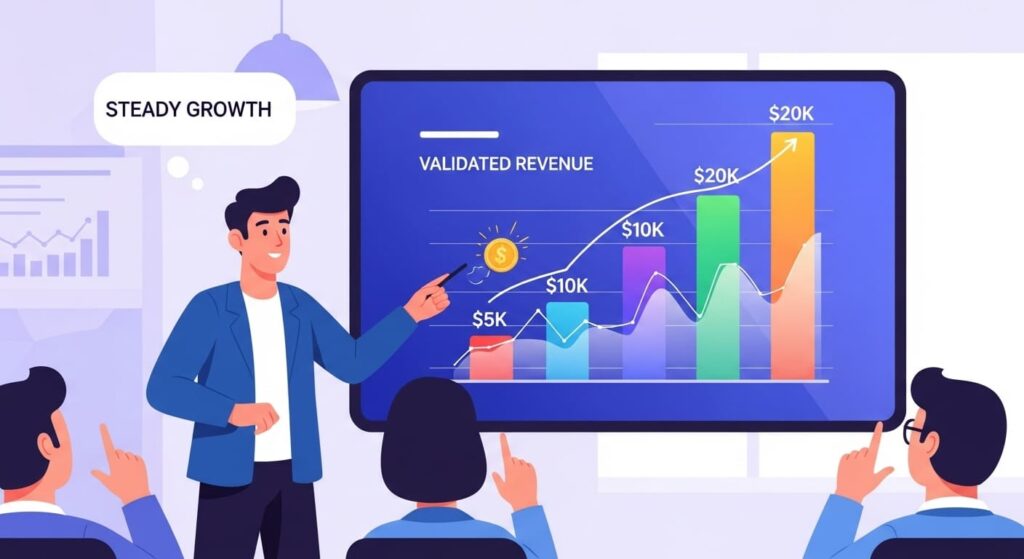
Some of the ten will wobble. A few may leave. That hurts, but it teaches. Go to the last session before the drop. Name the exact step where trust failed. It is rarely the press release reason. It is usually a small moment: a scary button, a missing preset, a silent error, a slow screen. Fix that moment before you push for more signups.
Add one guardrail that makes the same mistake hard to repeat. A dry run before live action. A clear confidence badge. A soft stop on bad inputs. Guardrails sound small, but they change behavior. People come back when they feel safe. Safety also shows up in renewals, which matters when your base is tiny and every logo counts.
Close the loop with anyone who left. Ask for ten minutes. Promise no pitch. Ask about the last day they tried and what blocked them. Thank them and end on time. When your fix ships, send one screenshot. Some will return. Even if they do not, the call gives you words you can fix, and the note shows class. Class travels.
13) Support Tickets as a Product Map
Your next roadmap is hiding in your inbox. Ten paying accounts will send a small set of repeated questions. Count them by cause, not by volume. A hundred messages about logins may come from one bad week. Five messages about “what does this score mean” will show up every Monday. The Monday problem is your real problem.
Answer once in product. If people ask “what changed,” add a tiny change log with dates inside the app. If they ask “is this safe,” add a confidence cue and a one-click dry run. If they ask “how do I repeat yesterday,” land them on last good settings. Each answer removes a reason to write you. Each removed message is a minute saved and a habit formed.
Tell your customers when you fixed the thing they asked for. Do not bury it in a newsletter. Send a short note with an image and the date. This tiny rhythm builds loyalty. Loyalty shows up in expansion. Expansion shows up on your slide. The chain is quiet and powerful.
14) A Price You Can Defend With One Page

Ten deals will give you a price you can say without a speech. Anchor it to one outcome. Keep the unit close to the job. Quote the same way each time. The room learns your shape and stops haggling because the story is clear and fair.
Write a one-page offer anyone can forward. It should name the job, the guardrail, the one metric you will move, the time box, and the fee. Keep the numbers simple. Keep the tone plain. The goal is not to impress. The goal is to make the buyer look smart when they send it up. Smart buyers bring friends. Friends become customers.
Raise gently as proof stacks. Do not leap. If you are honest about scope and steady about outcomes, people will meet you. If they push back, ask which part feels heavy. Scope, unit, or amount. Adjust one, not all. Record the effect. In a month, you will have a price that fits your wedge and moves fast.
15) Reference Architecture That Others Can Copy
At ten customers, you can draw the simplest, safest way to deploy your product. Draw it once. Use the real boxes buyers use. Put the guardrails and the data paths where they belong. Keep it boring. Boring sells, because boring means no nasty surprises.
Add two notes on the diagram. The first should say what you never store. The second should say how a human can step in fast. These two lines reduce fear more than long docs. Fear is the silent killer of early deals. Remove fear and deals move.
Turn the drawing into a repeatable kit. A short setup guide. A preset that matches the most common case. A sample scene that proves value without risk. Your next ten customers should feel like they are following a well-lit path. The path is your product, as much as the code is.
16) Partner Leverage Without Losing Control
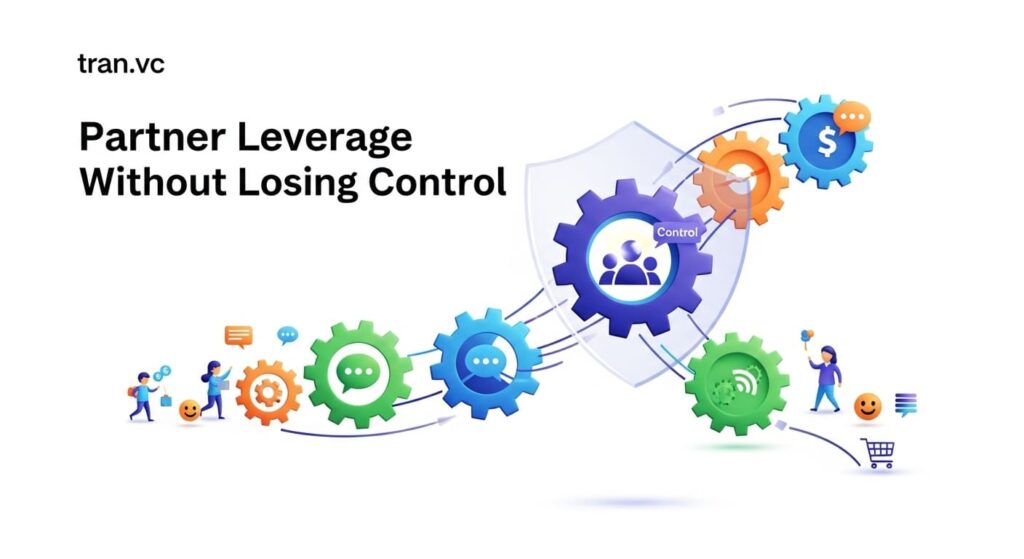
A good partner can act like ten warm intros. But only if you set the shape. Ask for one very specific intro: one line, one use case, one guardrail. Bring the proof asset that matches. Run a short call together. If the call feels smooth and the site fits, set a two-week window and a tiny scope. Keep ownership of the core method and the black box that makes it work.
Teach the partner the same simple words your customers used. Give them a script that names the job, the scene, and the number. Give them a short safety page. Make it easy for them to look good with their client. When they look good, they return. When they return, your cost of sales falls, and your speed rises.
Protect your edge in writing. Share outcomes, not internals. If the joint flow relies on a novel guardrail or planner, file a provisional before you scale the program. Your partner will still win. But the method that makes both of you look good will stay yours. Tran.vc can help design terms and file the right claims while you grow. Apply at https://www.tran.vc/apply-now-form/.
17) A Small Data Room Buyers Actually Read
Ten paying accounts are enough to build a tidy folder that speeds yes. Keep it tight. Include a one-page architecture note, a safety page, three short clips of real scenes, and two case notes with before-and-after numbers. Add your one-page offer and your tiny pilot order. Put dates on everything.
Name files so they can be found. Scene-Glare-03.mp4 beats Demo_final_v7.mov. Buyers forward files. Clean names win forwards. Clean forwards win time. Time wins deals. Do the small things. They add up.
Refresh the folder once a month. Replace one clip with a fresher one. Add one new quote. Delete one stale doc. A small, living room reads like a team in control. Control is better than charisma at this stage.
18) Monthly Notes That Move the Next Check

Send a single-screen update to your list. Use the same frame each month. Share activation rate and time to first win. Share week-four return. Share median days to first dollar if you sell pilots. Add one line on the change you shipped and the lift you saw. Add one ask tied to your wedge. That is all.
Put dates on every number and every change. Dates make the note feel like a lab log, not a pitch. People trust logs. Trust turns into replies. Replies turn into calls. Calls turn into checks. Keep the cadence, even when news is thin. Thin months still teach. They teach you to ship small and steady.
When a unique method moved a number, write that in one quiet line. “Glare-safe preset cut false rejects; provisional filed.” This is how you link traction to moat without sounding like a lawyer. It is also how you raise on better terms later, because your edge is now an asset, not just a story.
19) Turning Ten Into Twenty Without Losing Your Soul
Do not widen yet. Go deeper. Stay with the role and the scene that paid. Remove one more step. Add one more guardrail. Tighten your one-page offer. Keep the same words on your site, in your product, and in your deck. You will look bigger because you will feel clearer.
Hire slowly and for the wedge. A generalist who can run a shadow, edit a preset, and write a clean recap is worth more now than a specialist who needs a team to move. Your next ten customers need hands, not hierarchy. Hands make proof. Proof makes price. Price funds hires.
When the wedge is smooth and the tail holds, then add the next scene. Not a new market. A neighbor. Your ten customers will tell you which neighbor wants you next. They will also open the door. When they do, bring the same playbook. It already works.
20) What Ten Customers Say in Your Deck

Your slides should feel like the ten accounts walked into the room and spoke. Put three short quotes in their raw words. Place one small chart that shows activation rising with two dated labels. Place one cohort curve with a calm tail. Place one tiny line that shows days to first dollar falling after a one-page order. Close with a two-week guarded pilot offer and a date. That is enough.
Keep definitions on the slide in tiny type. Keep one real screen. Keep the tone low. Decks that whisper truth beat decks that shout promise. You will stand out because you respect the room’s time and show your own.
Tie the best lift to the method you filed. If the method is the reason people pay and stay, owning it by law and by habit puts you in a different category. You are not just growing; you are building something that lasts. Tran.vc exists to help founders like you make that leap. We invest up to $50,000 in in-kind IP work so your edge is clear and defensible from day one.
21) Evidence of Product Velocity the Market Can Feel
Your first ten customers feel your speed long before they read your roadmap. They notice when a small fix ships the same week they asked for it. They notice when the second run is faster than the first without a call to support. That feeling is a signal. It tells buyers that your team moves, and that the product will keep getting better after they sign.
Show this with dated notes tied to outcomes. “Jan 6: added dry run → first win same day.” “Jan 13: saved presets → second win in five minutes.” Keep the notes short and real. Use their words when possible. Dates and before/after lines turn motion into proof. Proof reduces fear. Less fear shortens cycles and raises price.
Protect the move that caused the biggest jump. If a new planner held up under glare, write the steps as a method and file. If a data recipe found hard cases with less labeling, do the same. Velocity plus claims is rare at pre-seed. It says you ship fast and lock in the edge. Tran.vc helps you choose what to file and does the work in-kind. Apply at https://www.tran.vc/apply-now-form/.
22) Support Load That Falls While Use Grows

Ten paying customers create support noise. Track it with care. The signal you want is simple: do tickets per active account fall as runs go up? If yes, you are converting help into product. That slope hints at future margin and scale. Investors notice because it means you can grow without adding people too fast.
Tag tickets by cause. Import, pairing, trust, performance. Ship one small change for the top cause each sprint. Measure the drop. Share one line with a chart in your update: “Trust tickets down 68% after confidence cue.” This makes your work visible and ties it to a metric that matters.
Turn the best fix into a guided step or preset. If that step is new and useful, capture it as a method. Support-driven methods are often protectable because they encode field wisdom, not just code tricks. File early. You will thank yourself when a bigger competitor tries to copy your flow later.
Conclusion: The Story Ten Paying Customers Tell
Ten paying customers can speak louder than a glossy logo wall. They say your product lands value fast, earns repeat use, and grows inside the account without a fight. They show where time shrinks, where fear fades, and where a small fix becomes a habit. If the same method keeps making wins repeat, that method is your moat. Capture it. Protect it. Show it next to your numbers in calm words.
Keep your path narrow. Repeat the scene that paid. Remove one more step. Add one more guardrail. Save one more minute. Send one dated update with the new dot on the same chart. Ask for one more look-alike intro. This is how ten become twenty without noise. This is how you raise with leverage, not hope.
If you want a partner to help you lock in the engine behind these wins, Tran.vc invests up to $50,000 in in-kind patent and IP services for AI, robotics, and deep tech teams. We roll up our sleeves to design your IP plan, file clean claims, and shape a fundable story with proof from the field. If that is your next step, apply now at https://www.tran.vc/apply-now-form/.