
Building a startup is hard. Money is tight. Time is tighter. Most founders hear one message: bootstrap until you can’t. Cut costs. Do more with less. Hold your breath and hope the market says yes. That path can work. But it often slows you down, leaves your core ideas unprotected, and makes your first round feel like a rescue, not a win.
There is another way. We call it seed-strapping. It’s simple: instead of chasing cash first, you lock in your edge first. You turn your code, models, and methods into IP that is real, defensible, and ready for investor due diligence. You build a moat while you build the product. You stay lean, but you don’t stay exposed. With Tran.vc, that means up to $50,000 in in-kind patent and IP services from real patent attorneys and operator-founders who know the early grind. It’s not hype. It’s work. And it changes the conversation when you finally raise.
This article shows the clear difference between seed-strapping and bootstrapping, when to use each, and how to blend both to grow faster with less risk. If you’re a technical founder in AI, robotics, or deep tech, this guide will feel like a map. And if you’re ready to move now, you can apply anytime at https://www.tran.vc/apply-now-form/.
Seed-Strapping vs Bootstrapping: Clear Definitions
What bootstrapping really means day to day
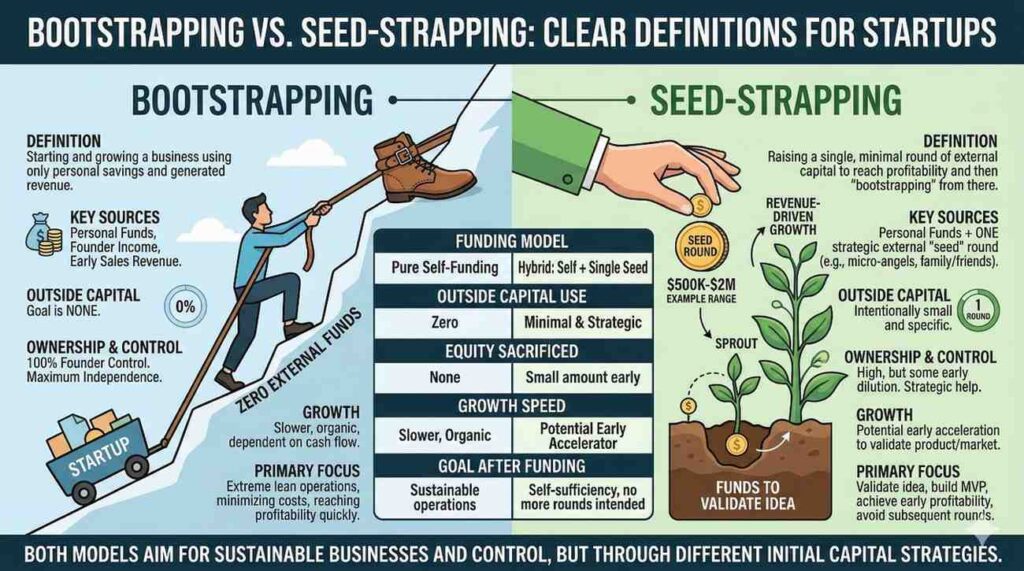
Bootstrapping means you fund the company from your own pocket and early sales. You move slow and spend only on what keeps the lights on. You delay hires, hold off on legal work, and cut tools that seem “nice to have.” It builds grit, but it can also keep you in survival mode for too long.
What seed-strapping changes from the start
Seed-strapping keeps the lean mindset, but adds one big move at the start: you turn your tech into protected IP while you build. You file the right patents, map the claims to your roadmap, and make sure core ideas are locked down. You still run a tight ship, but you do not leave your edge exposed while you try to find fit.
Why the difference matters for deep tech
In AI, robotics, and hard tech, speed is not the only risk. Copycats are real. Fast followers can clone features in weeks. If you wait to protect what matters, you may lose the ground you earned. Seed-strapping builds a moat early, so each sprint adds value that others cannot take.
Where Tran.vc fits in this picture
Tran.vc invests up to $50,000 as in-kind patent and IP services. You work with real patent attorneys and operator-founders who have filed, scaled, and exited. You do not give up control, and you do not need to chase cash just to “look fundable.” You build real assets that investors respect from day one. If this is what you need, you can apply anytime at https://www.tran.vc/apply-now-form/.
When Bootstrapping Works Best
Simple products with fast sales cycles
If your product is simple, sales cycles are short, and the space is crowded, classic bootstrapping can shine. You can test, ship, and sell without heavy research or long lead times. Your risk is not theft; your risk is building the wrong thing. Staying lean until you find traction can be the smart move.
Markets where speed beats protection
Some markets change so fast that patents add less value. Trends move, buyers move, and you win by staying close to users and shipping weekly. In these cases, focus on design, brand, and customer love. That can be a moat too, even if it is softer than claims in a patent.
Teams still exploring core insight
If you do not yet know what your core invention is, it can be wise to hold off. Explore the space, talk to users, and build quick demos. When your key insight is clear, seed-strapping can enter with focus. Filing too early without a plan can lead to broad claims that do not help you later.
Cash rules and time is short
If you have very little runway and need revenue this month, bootstrapping’s focus on quick wins can be vital. Close a few customers, get cash in, and buy time. Then consider seed-strapping once you have a clearer view of what must be protected for the long run.
When Seed-Strapping Is the Better Path
You have a real technical edge
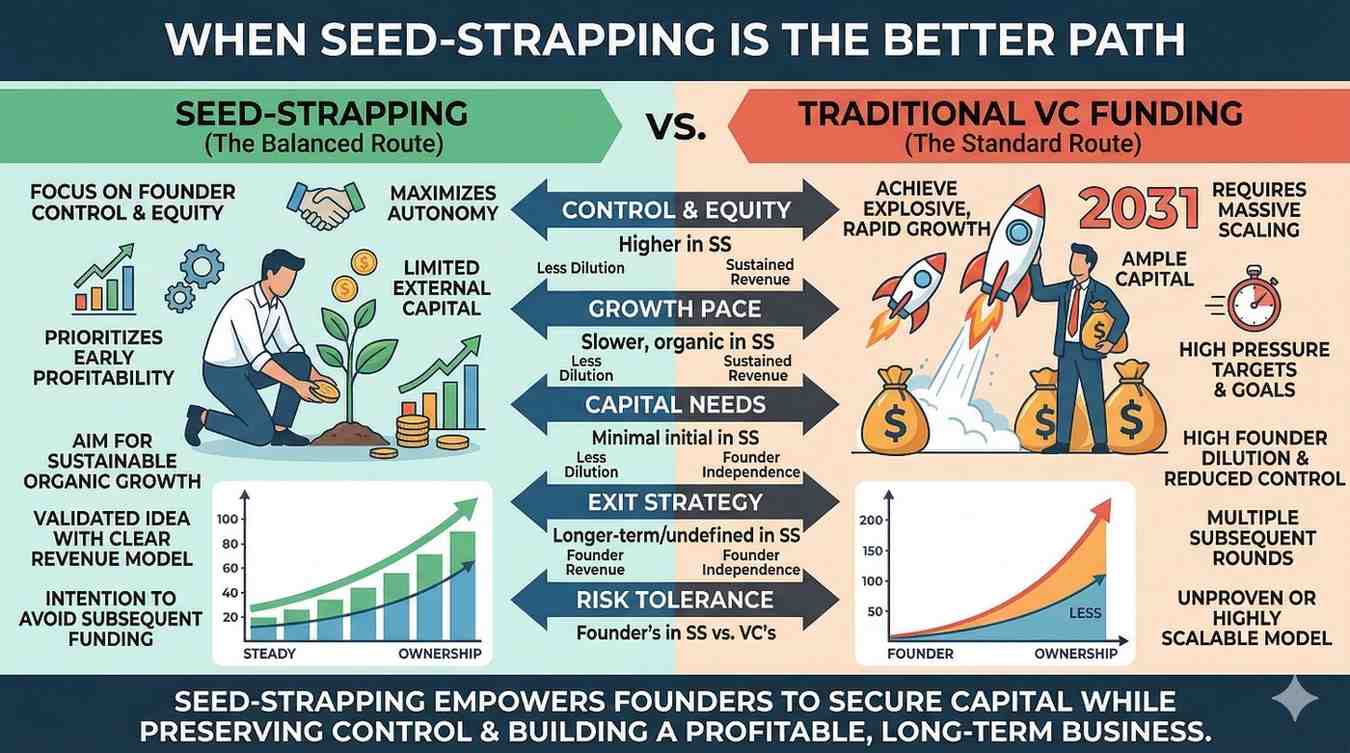
If your value lives in models, control loops, or unique data methods, you have more to lose to copycats. Seed-strapping helps you define the edge and protect it before you show too much. You enter sales with a stronger story and fewer fears about leaks.
Your buyers care about durability
Enterprise buyers ask hard questions. They want to know you will be around and that your tech will stand. IP filings ease those doubts. They tell a buyer that your core is defensible, not just a clever demo. This can cut sales friction and raise close rates.
You plan to raise from top funds
Seed investors look for edge and speed. Patents and clear claims show that your edge is real, not just words. When you sit down to raise, you do not sell hope; you show assets. That can change price, terms, and the kind of partners you attract. Ready to build this into your plan? Apply anytime at https://www.tran.vc/apply-now-form/.
Your roadmap depends on safe disclosure
To sell and partner, you must demo. To demo, you must share. Seed-strapping lets you share without fear. You disclose after filings, not before. You control the timing, and your team can speak freely with customers and press while staying protected.
How Seed-Strapping Works Step by Step
Map your invention to the market
Start by writing the plain-language story of what makes your tech different. Skip buzzwords. Describe the input, the method, and the output. Tie each step to a clear user win. This map shapes claims that matter in real use, not just on paper.
Turn methods into claimable pieces
Break the method into parts that stand alone. For AI, this could be a training trick, a data pipeline, or a novel loss term. For robotics, it might be a sensing stack, a control law, or a safety loop. Each part becomes a candidate claim that others cannot copy without risk.
Stage filings to match the roadmap
Do not file one giant thing and stop. Plan a chain of filings that match your next three to six quarters. Lead with the most central claim, then layer in continuations as you ship. This creates a living moat that grows as the product grows.
Align patents with sales and fundraising
Work backwards from key meetings. If you have a big pilot or a fund pitch in eight weeks, file first. Then you can demo and disclose with confidence. Your data room now has filings, not just slides. That proof lowers doubt and speeds decisions.
What Bootstrapping Misses That Seed-Strapping Solves
The hidden tax of rework and fear
Teams that skip IP early often self-censor. They avoid sharing details with customers, partners, and even hires. This slows learning and causes rework later when you must redo docs and code to fit rushed filings. Seed-strapping removes that drag by setting rules and claims up front.
The “me too” trap in crowded spaces
When you launch without a moat, fast followers can mirror your pitch. They can claim the same value and undercut price. With protected claims, copycats feel risk. They hold back or play in a different lane. This keeps your price and your story strong.
The weak hand in first rounds
Raising with no assets forces you to sell vision only. That can lead to lower terms or long diligence. Filing early gives you a stronger hand. You still sell vision, but it rests on a base investors can test. That can speed the process and lift valuation.
The cost of leaking before you’re ready
Public posts, talks, and open demos can count as disclosure. If you share before you file, you may lose rights in key markets. Seed-strapping sets a safe order: file, then share. That simple change protects your upside without slowing your launch.
Building an IP Moat Without Slowing Product
Keep the language simple and grounded
Great patents read like clear engineering notes. They describe what the system does and why it helps the user. Avoid vague words and hype. Clear language makes stronger claims and keeps your filings useful to sales and support later.
Tie each claim to a real user win
A claim that does not map to a user win is weak. Show how your method cuts cost, raises speed, or boosts accuracy in a way others cannot. When claims match wins, your team can sell them, and your buyers can feel them.
Use continuations to stay ahead
As you learn, you will find new edges. Keep filing continuations that build on the first asset. This keeps the moat fresh and aligned with the product. It also makes your portfolio harder to design around for would-be clones.
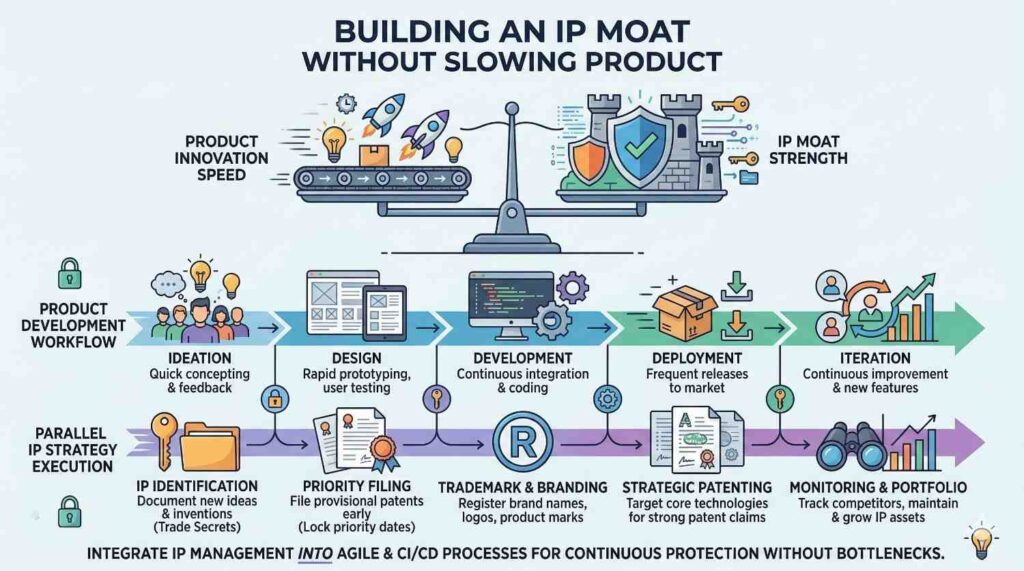
Make IP part of sprint planning
Add IP checkpoints to your sprint reviews. When a feature touches a core method, flag it. Decide if the change needs a new filing or an update. This habit keeps protection close to the build, not a side task that gets ignored.
The Fundraising Impact of Seed-Strapping
Stronger story, stronger terms
When you show filings tied to real features, investors see more than a deck. They see assets that raise switching costs and signal team quality. This can lift valuation and improve terms because risk looks lower and upside looks protected.
Cleaner diligence with less back and forth
Diligence often stalls on questions about edge and defensibility. With seed-strapping, you hand over filings, dates, and claim maps. The review moves faster, and your answers are simple and firm. Speed here can be the difference between a quick close and a long wait.
Better match with the right partners
Not all funds value IP the same way. Showing a smart, staged IP plan helps you attract partners who understand deep tech. Those partners bring better intros, sharper questions, and longer patience. That fit matters more than it seems on day one.
A path to later rounds that compounds
A solid IP base makes later rounds smoother. You arrive with a growing portfolio that tracks product growth. Each round builds on the last, and your moat compounds. That compounding is how deep tech wins over time. If this is your path, apply at https://www.tran.vc/apply-now-form/ and we’ll help you set it up.
The Founder’s Mindset: From Scarcity to Strategy
Stop thinking survival, start thinking leverage
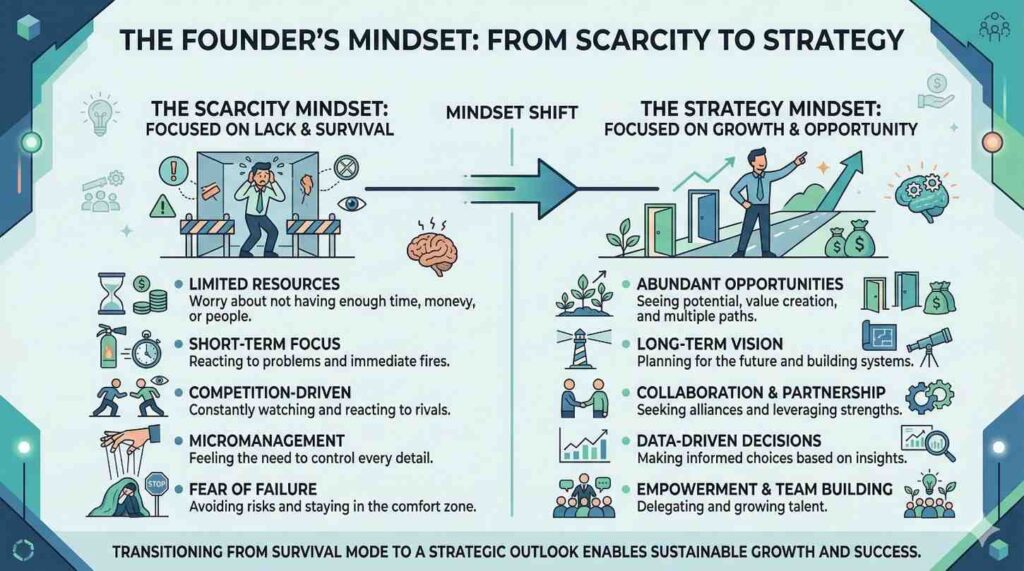
Bootstrapping teaches survival. You stretch every dollar and delay every hire. That discipline helps, but when it becomes your entire mindset, it limits you. You start to measure success only by how long you can last, not by how fast you can grow. Seed-strapping shifts that lens. It’s about using what you already have—your code, algorithms, data, or designs—as leverage. You don’t need to wait for investors to believe in your idea before you make it valuable. You make it valuable now by turning it into intellectual property. Once that’s done, every meeting, demo, or pitch becomes stronger. You’re no longer asking for help; you’re showing an asset.
Play offense, not defense
When founders bootstrap, most energy goes into keeping things alive—covering costs, staying afloat, and keeping options open. It’s defensive. Seed-strapping flips that. You use IP filings as a move to go on offense. Each claim is like planting a flag on the map of your market. You mark your territory early. Competitors who come later will have to move around you, not through you. It’s a mental shift from reacting to leading. You stop asking, “How do I survive?” and start asking, “How do I own this space?” That’s the kind of posture that attracts investors, partners, and top hires.
Build confidence in your story
A founder with no protection often hides details in meetings. They pitch vaguely and hope the investor “gets it.” That lack of confidence shows. When you’ve protected your invention, you can speak clearly. You can show the data, explain the model, and walk through the logic without fear. Investors lean in instead of leaning back. Confidence comes from clarity and control—and seed-strapping gives you both. Once you’ve locked in your moat, your story sells itself because it’s real, not rehearsed.
Make the company investable from the start
Investors look for signals. They want to know a team understands risk and moves smart. When they see early patents and IP filings, it signals you’re serious about the long game. It says you’re not just building a product—you’re building a company with assets. That signal alone can move you from “too early” to “ready for seed.” And since Tran.vc’s investment comes in the form of in-kind IP services, you can get there before your first raise. You keep control, you gain leverage, and you move faster without giving up equity. Apply anytime at https://www.tran.vc/apply-now-form/.
Why Seed-Strapping Fits Deep Tech and AI
Invention-heavy startups need early protection
AI and robotics startups often depend on a few hard-won technical insights. These insights take months or years of research and trial. If a competitor replicates your method, you can’t just “move faster.” You lose your edge. In these fields, patents and IP are not optional—they are the backbone of defensibility. Seed-strapping gives technical teams a way to file smart, targeted patents early, before they even raise. It’s protection that matches the rhythm of innovation.
Protect data-driven advantages
AI companies don’t just build models—they build data ecosystems. That includes pipelines, cleaning methods, and feature engineering tricks that define performance. These are easy to copy once seen. By turning them into formal IP assets, you make your data pipeline part of your moat. Investors love that because it’s a kind of “invisible infrastructure” that competitors can’t access. You turn what seems like process work into something ownable and valuable.
Robotics founders face longer build cycles
Robotics startups face unique funding challenges. Hardware cycles are long, testing is slow, and capital needs come early. Bootstrapping often means years of delay. Seed-strapping changes that story. It helps robotics founders turn control systems, motion planning, and hardware-software integration work into protected inventions. You can then raise based on filed IP, not just a prototype. It gives you talking points and protection while your physical product catches up.
The market rewards defensible innovation
In deep tech, “defensibility” is a buzzword—but few founders can prove it. Investors want to know if your innovation is truly defensible, not just hard to copy. A smart IP portfolio answers that question without words. It’s proof on paper. Seed-strapping builds that proof early so your next investor conversation starts at a higher level. You’re not explaining “what you do”; you’re explaining “what you own.”
How Seed-Strapping Balances Speed and Stability
The old myth: patents slow you down
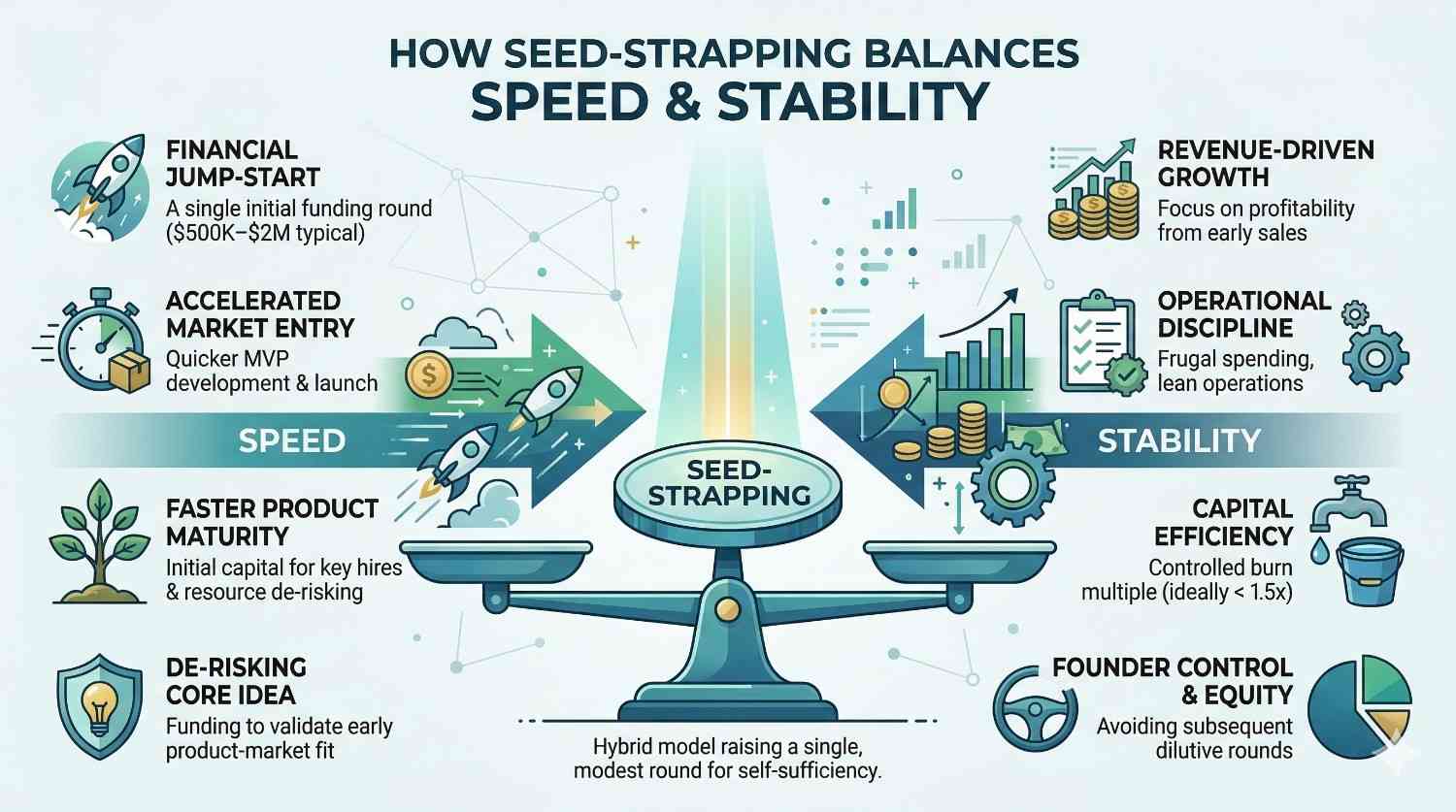
Many founders avoid patents because they think it will drag down product velocity. They fear legal red tape and slow progress. In truth, a well-structured seed-strapping plan fits around your product sprints. You don’t stop building; you capture the innovation as you go. At Tran.vc, founders work directly with patent experts who think like builders. You talk in engineering language, not legal jargon. That means you can keep coding, shipping, and testing while the filings move in parallel.
Filing smart, not filing everything
Seed-strapping doesn’t mean filing a patent for every idea. It’s about precision. You file where it counts—where your advantage lives and where others might copy first. By focusing on the “core algorithmic heart” of your solution, you protect the parts that drive differentiation. The rest can stay fast and flexible. You create structure without stiffness.
Keep protection close to the code
Every build cycle produces potential IP. A clever algorithm tweak, a unique architecture, or an optimization that changes cost—these are moments worth locking in. The trick is to spot them before they get lost in commits or code merges. Seed-strapping makes this a habit. When your engineers finish a big sprint, they tag any breakthrough worth reviewing for IP protection. That rhythm keeps your moat alive and evolving.
Turn stability into speed
When you know your core is safe, you move faster. You can share code with partners, collaborate openly, and pitch without paranoia. That openness accelerates validation, feedback, and deals. Stability and speed are not opposites—they feed each other. Seed-strapping creates stability that enables bolder moves.
The Emotional Side of Founding: Fear vs Focus
The quiet stress of being unprotected
Founders rarely talk about it, but the fear of being copied is real. It keeps you from sharing ideas, slows your outreach, and limits your team’s confidence. That fear eats energy you could spend building. When you seed-strap, that fear fades. You don’t wonder if your next meeting will cost you your edge. You know it won’t.
Turning anxiety into calm control
Once your IP is filed, every pitch and meeting feels lighter. You walk in knowing you can discuss what matters. You can show technical depth without losing ownership. That sense of calm translates into how others see you—composed, credible, and ready. Investors pick up on that. Calm founders make strong bets.
Founders who protect early sleep better
When the foundation of your company is an invention, protection gives you peace of mind. It’s not about fear—it’s about focus. You can go all-in on growth knowing your base is secure. That mental freedom is one of the biggest, hidden benefits of seed-strapping. It doesn’t just protect your code; it protects your clarity.
Confidence attracts better people
Top talent joins teams that feel solid. When candidates see your company has patents and a clear IP plan, they see a real future. They know their work will build on something lasting, not a fragile experiment. That confidence builds culture—and culture builds companies.
How to Move from Bootstrapping to Seed-Strapping
Step one: shift how you see investment
When you bootstrap, every dollar feels like oxygen. You protect it, stretch it, and fear losing it. But not all investment is cash. Sometimes, the right kind of help is worth more than a check. Seed-strapping reframes early funding as in-kind leverage—you receive expert IP work and protection upfront, not just money in a bank. That work doesn’t drain your cash, and it doesn’t take your equity. It builds your foundation while keeping ownership in your hands. Tran.vc does exactly this—up to $50,000 worth of patenting and IP strategy from people who have done it before.
Step two: identify what’s actually worth protecting
Many founders think everything they build deserves a patent. That’s not true. You need to identify what part of your product creates real differentiation. It’s usually not the full product—it’s the unique way you achieve an outcome. It could be how your algorithm learns, how your robot senses motion, or how your model adapts to feedback. That piece—the one that others can’t easily copy—is your IP gold. Seed-strapping starts by finding it. You look at your product from the outside, as a competitor would, and protect the part that gives you a lasting edge.
Step three: align protection with your roadmap
Your roadmap is not static. Every few months, your tech evolves. Seed-strapping aligns IP work with that motion. You don’t file once and stop. You plan filings around key releases, new modules, and major updates. That way, your protection grows as your product grows. It’s like building a fence one section at a time, always keeping your lead covered. The best IP strategies evolve with your sprints, not against them.
Step four: build storytelling into your filings
Each patent or IP asset should connect directly to your story as a company. When an investor or customer looks at it, they should immediately understand why it matters. This means writing patents that read like narratives—how your tech solves something others couldn’t, how your method is new, and why it works better. That’s what makes a patent valuable. It’s not just the legal claim—it’s the clarity behind it. Tran.vc works with founders to shape this story as part of their IP portfolio, so every filing supports the bigger vision.
Step five: use your filings as fundraising tools
When you seed-strap, your filings aren’t just legal shields—they’re proof points. You can include them in your pitch decks, due diligence packages, and investor meetings. They show traction even before you hit major revenue. They prove you’re building something defensible, not just experimental. The result? You raise from a position of strength, not need. Investors love seeing founders who’ve protected their invention early—it signals discipline, foresight, and seriousness.
If you want to make that move, you can apply at https://www.tran.vc/apply-now-form/ and start building your IP foundation before your next round.
The Long-Term Payoff of Seed-Strapping
You own more for longer
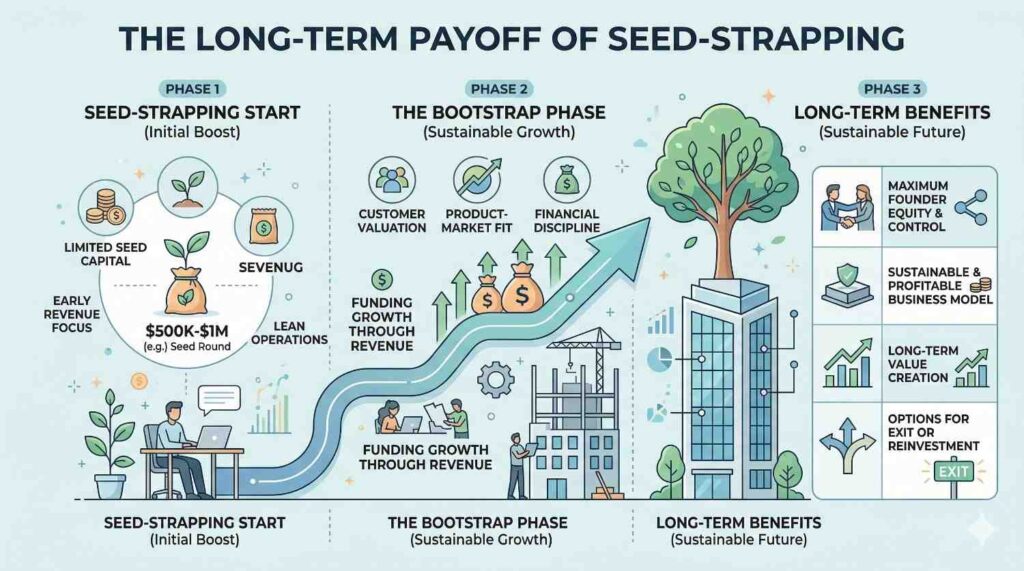
Every time you raise money, you give away equity. The earlier you raise, the more you give up. Seed-strapping delays that trade-off by giving you an asset—IP—that adds value without taking shares. When you finally do raise, your valuation is higher because you’ve already proven defensibility. That means you give away less for the same check. Over time, this difference can define how much control you keep. Founders who seed-strap tend to stay in charge longer and exit stronger.
Your valuation compounds, not just grows
Valuation is not just a number—it’s a story investors believe. Each patent and IP claim adds to that story. It shows growth in more than revenue; it shows growth in depth and moat. When you build this kind of layered value, your company compounds in worth even before profit. It’s how technical startups punch above their weight in early rounds. Investors don’t just see traction—they see a fortress forming.
Your company becomes harder to copy and easier to trust
The best founders build products that inspire imitation. That’s the problem—success invites copycats. IP protection turns that from a risk into a moat. Competitors have to think twice before mimicking your method. At the same time, partners, customers, and investors see your company as more stable. They trust you because you’ve taken steps to secure your invention. That trust converts into better deals, longer partnerships, and smoother negotiations.
You can exit on your terms
When you build with strong IP, your exit options multiply. Acquirers pay premiums for companies with clear, well-structured patents. They’re not just buying code—they’re buying ownership of an idea that’s protected by law. That’s why early IP work pays off many times over at acquisition. It gives you leverage to negotiate better terms and ensures your hard work doesn’t get undervalued.
You create lasting value beyond funding
Bootstrapping often builds a product. Seed-strapping builds a company. There’s a difference. A product can fade, but IP lasts. It outlives the first version, the early team, and even the initial market. It becomes a transferable, ownable piece of your legacy. It’s what lets your company evolve over years, not just months.
Why Tran.vc Believes in Seed-Strapping
Founders need more than money—they need protection
Most early-stage investors write a check and wait for updates. Tran.vc does the opposite. Instead of giving you cash and leaving, they roll up their sleeves and help you turn your work into real IP assets. This investment—up to $50,000 in patenting and IP services—is designed to give founders what money alone can’t: a defendable base to build on. When you start with IP, you start from strength.
Built by founders, not just financiers
Tran.vc isn’t a typical firm. It’s run by people who’ve built and sold their own tech companies. They’ve filed patents, fought off competitors, and raised rounds from the ground up. They know the trade-offs founders face because they’ve lived them. That’s why they built this model—to help other technical founders avoid losing too much too early.
Focused on AI, robotics, and deep tech
Tran.vc focuses on startups where ideas matter as much as code. AI, robotics, and deep tech need more than marketing—they need defense. This is where seed-strapping works best. Tran.vc brings deep expertise from patent attorneys and industry veterans who know how to structure filings that matter. You don’t just get paperwork; you get a moat.
Raising with leverage, not desperation
When you finally raise your seed round, you shouldn’t be begging for survival. You should be negotiating from a place of leverage. Seed-strapping helps you do that. You’ve already proven your edge, you’ve already protected it, and you’ve already shown you know how to grow smart. That kind of posture changes every investor conversation.
If that’s the kind of company you want to build—protected, powerful, and founder-led—you can start today at https://www.tran.vc/apply-now-form/.
The Bottom Line
Bootstrapping builds survival. Seed-strapping builds strength.
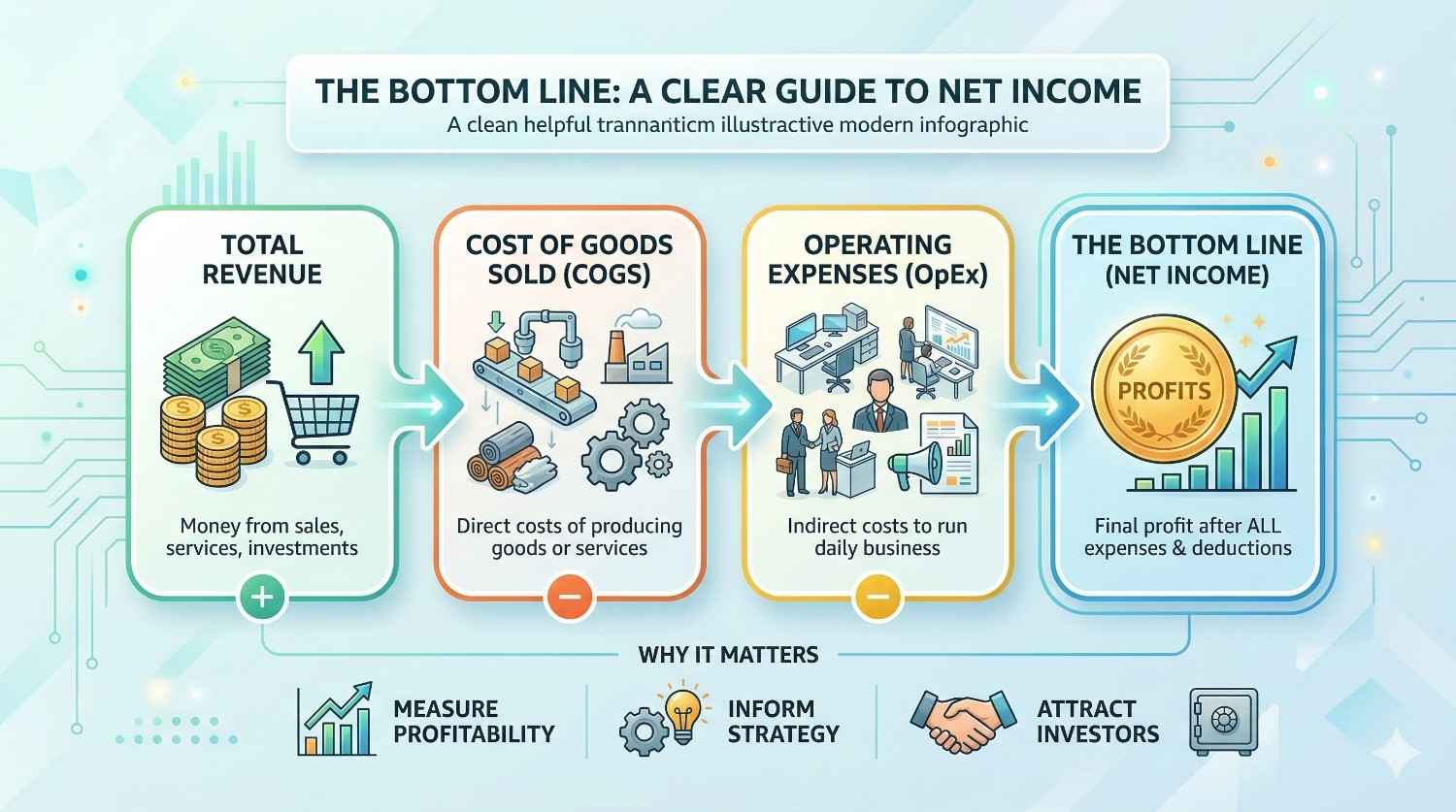
Both paths require discipline, courage, and focus. But only one prepares you to scale with protection, not fear. Bootstrapping is about staying alive until something works. Seed-strapping is about building value from the very first line of code. You don’t just run lean—you run smart. You don’t just test fast—you protect what works.
The future favors founders who think early
The startups that win tomorrow aren’t just the ones that raise fast—they’re the ones that build moats early. They turn technical brilliance into durable advantage. They show investors, customers, and competitors that they’re not guessing. They’re planning.
Tran.vc helps you start that journey right
You don’t need to give up control or chase VC money too soon. You can build with intention, protect your edge, and set your company up for long-term success. Seed-strapping makes that possible—and Tran.vc exists to help founders do exactly that.
If you’re ready to seed-strap your startup, apply now at https://www.tran.vc/apply-now-form/. It’s the first step to building a company investors notice—and competitors can’t copy.