
Most founders think leverage comes after the seed round.
You raise money. You hire. You grow. Then you finally feel like you have some power in the room.
But in reality, the strongest founders flip that story.
They build leverage before the seed round. They walk into investor meetings with proof, with a plan, and with real assets that are hard to copy. They are not asking for permission. They are choosing partners.
For deep tech, AI, and robotics startups, that leverage does not come from a pitch deck alone. It comes from the work you do early: the code you write, the data you collect, the patents you file, and the system you build around all of that.
That is where Tran.vc lives.
Tran.vc invests up to $50,000 in in-kind patent and IP services to help you turn your early tech into real, defensible assets. The goal is simple: help you walk into your full seed round with leverage, not panic.
If you already know you want that kind of help, you can apply anytime at:
https://www.tran.vc/apply-now-form/
Why Building Leverage Before a Full Seed Round Matters
Investors Fund Momentum, Not Just Potential
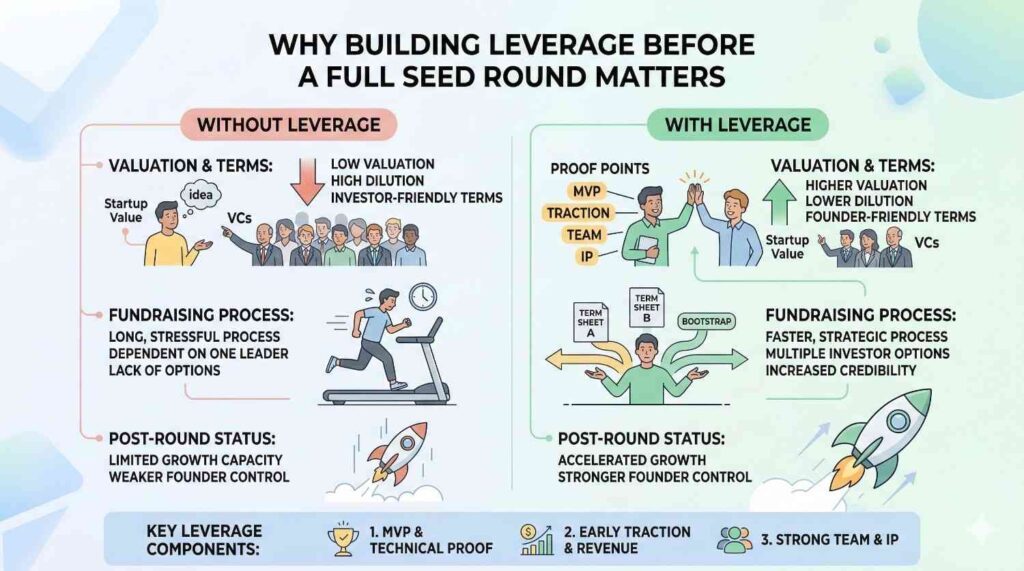
When you meet an investor, they are not only judging your idea.
They are quietly asking a few simple questions in their head. Is this founder already moving? Is this company hard to stop? If I do not invest now, will it cost me more later?
That feeling of “I should not miss this” is what leverage looks like in the room.
For a deep tech, AI, or robotics startup, momentum is not only about revenue. It can be real progress in research, working systems, strong test data, customer pilots, or clear IP steps. When you show that you are already turning your work into assets, investors see less risk and more upside.
If you want support in doing this early, you can apply anytime at:
https://www.tran.vc/apply-now-form/
Leverage Is About Options, Not Ego
Leverage is not about walking into a meeting and acting powerful. It is about having options, even if every investor says no today.
If you have only a slide deck and an idea, you have very few paths. You can pitch more. You can wait. You can hope. That is not leverage. That is a stall.
If you have a working prototype, a clear IP plan, some patent work started, and even a few serious customer talks, your life is very different. You can keep building. You can raise a small round on better terms. You can choose slower money or faster money. You can delay the full seed until your story is stronger.
This is what Tran.vc tries to unlock. By investing up to $50,000 in in-kind patent and IP services, they help you build assets that give you choices, not just one path. With strong IP, you can move ahead even when cash is tight, because you are building something that gains value over time.
If that is the kind of leverage you want, you can start here:
https://www.tran.vc/apply-now-form/
Founders Need Leverage Even More
Why Deep Tech Founders Need Leverage Even More
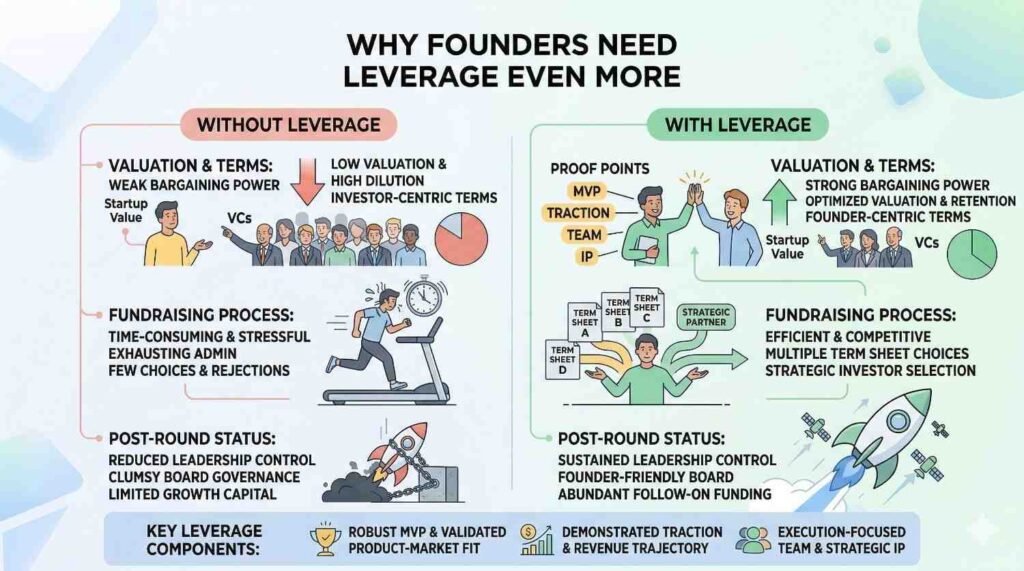
If you build a simple app, you can ship fast, test with users, and pivot with speed. In deep tech, AI, or robotics, your work is often heavy, slow, and complex. You cannot “just pivot” your way out of physics or core algorithms.
That means you face more risk up front. Hardware is expensive. Training data is slow. Experiments take time. You may spend months before you can show anything a general investor understands.
Leverage fills that gap.
When your tech is hard to copy and backed by a real IP plan, investors can wait longer for the usual metrics. They see that, even if the go-to-market path shifts, the core engine has lasting value.
Tran.vc was built for founders in that exact spot. You have real tech. You have early proof. But you do not yet have the patents, the IP story, or the investor-ready narrative around it. They step in there, so you are not forced to raise too soon on weak terms.
What “Leverage” Really Looks Like for Deep Tech Startups
Proof That Your Tech Actually Works
One kind of leverage is technical proof. Not theory. Not a promise. Real, working proof.
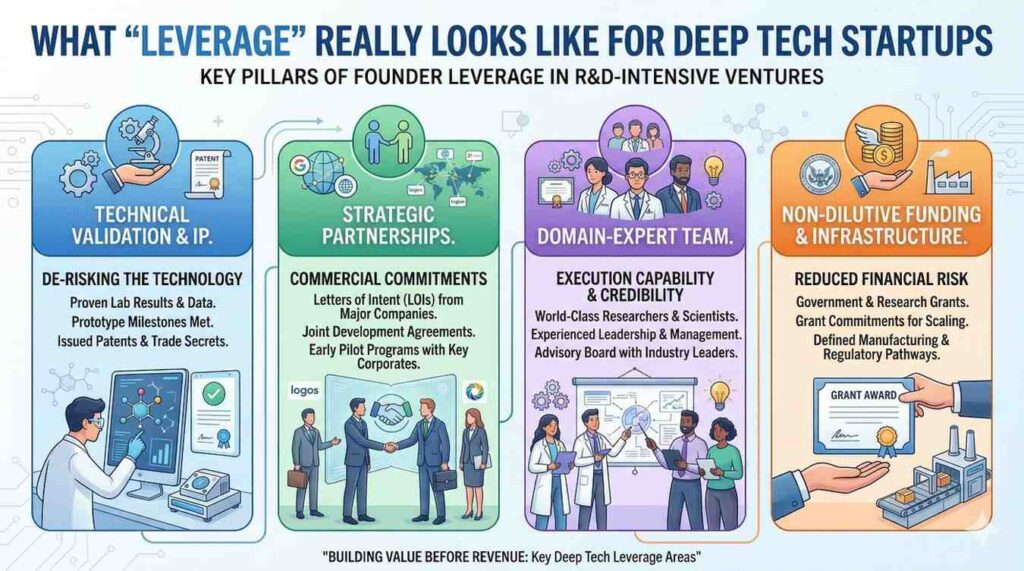
For AI, this might be a model that beats a clear baseline on a known task. For robotics, it might be a system that runs in the real world, not just in a perfect lab. For other tech, it might be a key process or method that gives better results in a way you can show on a simple plot or table.
You do not need a full product for this stage. You need a sharp, simple way to show: “This works, and here is how we know.” When this is clear, investors do not have to guess if the tech is real. That lowers risk and raises your leverage.
Even better is when that proof connects to some form of IP. If your method is new and useful, it might be patentable. Tran.vc helps you figure that out early, so your proof is not just a nice demo, but the start of a protected asset.
IP as a Real Asset, Not Just a Buzzword
Many founders talk about patents in a loose way. They say “we will file later” or “we have a unique algorithm” and leave it at that. Investors have heard this story many times.
What stands out is when you can say something more concrete. For example, that you have done prior art searches. That you know which parts of your stack are likely protectable. That you have a draft or filed patent, with claims that line up with your market story.
This is the difference between IP as a word on a slide and IP as a real piece of leverage.
When an investor hears that you have made progress with serious patent counsel, they see a few things. They see that your work is likely new. They see that you respect risk. They also see that you are building something that can keep its edge as you grow.
Tran.vc focuses on this exact step. Their in-kind investment is not about paying your cloud bill. It is about taking what is special in your code, models, hardware, and methods, and turning that into a structured IP plan. That way, when you do raise a full seed round, you are selling shares in a company that owns real, defensible assets.
You can begin that shift here:
https://www.tran.vc/apply-now-form/
Early Signals That Someone Cares
Another form of leverage is early demand, even if it is not yet revenue.
This can be a design partner who shares real data with you. It can be a pilot with a small robotics fleet. It can be a lab that runs your model on their system. It can even be a letter of intent that says, “if you can reach these metrics, we are willing to pay.”
These signals are small, but they tell a big story. They say that you are not building in a void. Someone in the real world has a pain that you might solve.
Paired with IP, this is powerful. Now you are not just a research project. You are a potential business with tech that is both proven and protected. Investors take that seriously. They understand that, if they do not act soon, another fund might step in once your pilots turn into contracts.
Good leverage stacks. Technical proof, IP progress, and early demand all build on each other. The more of these you have in place before a full seed round, the more calm and clear you will feel in every investor talk.
Step 1 – Turn Your Tech Into an Asset, Not Just a Demo
Map What Is Truly New in Your Work
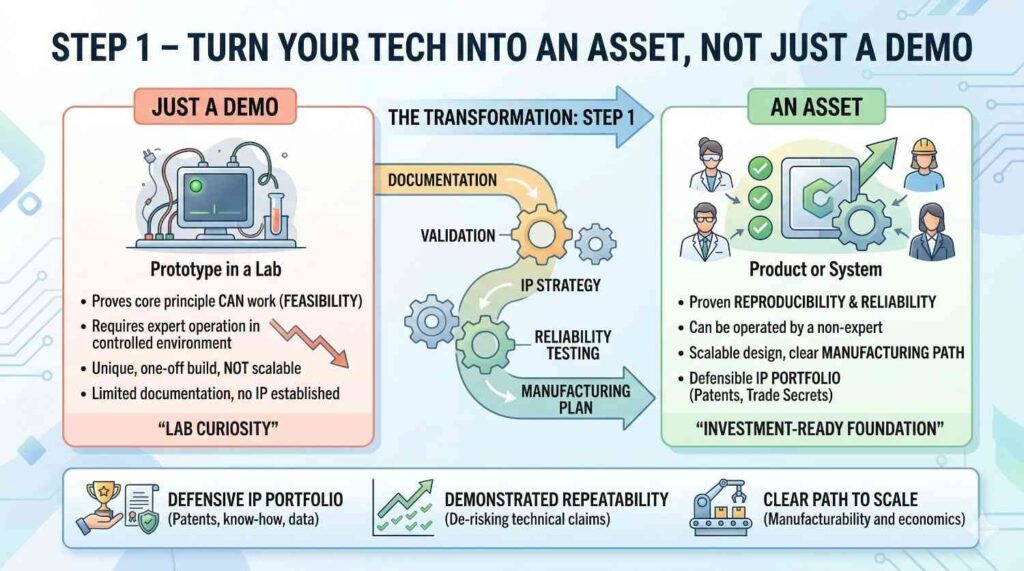
Every strong IP plan starts with a simple step. You sit down and list what is actually new in your work. Not what is hard. Not what took a long time. What is new, useful, and not obvious to a skilled person in your field.
This sounds simple, but it forces a shift. You move your focus from features and user flows to core methods and structures. You ask questions like: How are we processing data in a new way? What is special about how our robot senses its world? How do we combine models or sensors in a way others do not?
Once you write this down, you begin to see patterns. You see that some parts of your stack are likely standard and not worth protecting. You also see a few areas that feel sharp and rare. Those rare parts are your first candidates for IP.
Tran.vc helps founders walk through this mapping process in a structured way. They look at your system, your architecture, your training pipeline, your hardware, and your user flow, and help you pick out what is likely protectable. This makes the next steps much more clear and less random.
If you want that kind of outside view, you can apply here:
https://www.tran.vc/apply-now-form/
Translate Code and Diagrams Into Patentable Ideas
Founders often live in code, models, and diagrams. Patent attorneys live in claims, prior art, and legal language. The gap between those worlds can feel wide, and that is where many teams get stuck.
The key is to translate, not just send over a repo and hope for the best.
You take your system and explain it in simple blocks. Input, process, output. You describe what changes from one stage to the next, and why that change is better than older ways. You sketch how your method could be used in more than one setting, not just your first product.
With that, a good patent team can spot where to place the legal fence. They can decide which parts should be in the core claims and which should be backup. They can also guide you on what to keep as trade secrets instead of patents.
Tran.vc works with real patent attorneys who know startups and deep tech. They are used to this translation step. Their goal is not to drown you in legal terms, but to pull the key ideas out of your work and shape them into strong filings that fit your long-term plan.
This is part of how they invest. Their $50,000 in in-kind services is time, thought, and real legal work that a typical pre-seed team would struggle to pay for in cash.
Build an IP Story, Not Just a Stack of Filings
Many founders treat patents as a box to tick. File one. File another. Mention the number in the pitch. Hope it sounds strong.
Investors are smarter than that. They care less about the count and more about the story. They want to see how your IP lines up with your tech road map and your market.
A strong IP story might look like this. Your first filing covers the core method that makes your system work. The second covers a key extension that unlocks new use cases. The third covers a smart way of deploying or training that gives you speed or cost edge.
Together, these form a shield. They make it hard for a rival to copy your best ideas without running into your claims. They also give you options later, such as licensing or spin-outs, if your main product goes in a new direction.
Tran.vc works with you to shape this kind of story from day one. They help you avoid random filings that look good on paper but do not support your real moat. Instead, they focus on a small number of strong steps that support how you want to grow and raise.
By the time you walk into a full seed round, you are not saying, “we might think about patents.” You are saying, “here is how our IP backs our tech, our market, and our next 18 months.” That is leverage.
Step 2 – Build Early Commercial Proof Without Losing Focus
Show the Market You Understand Their Pain
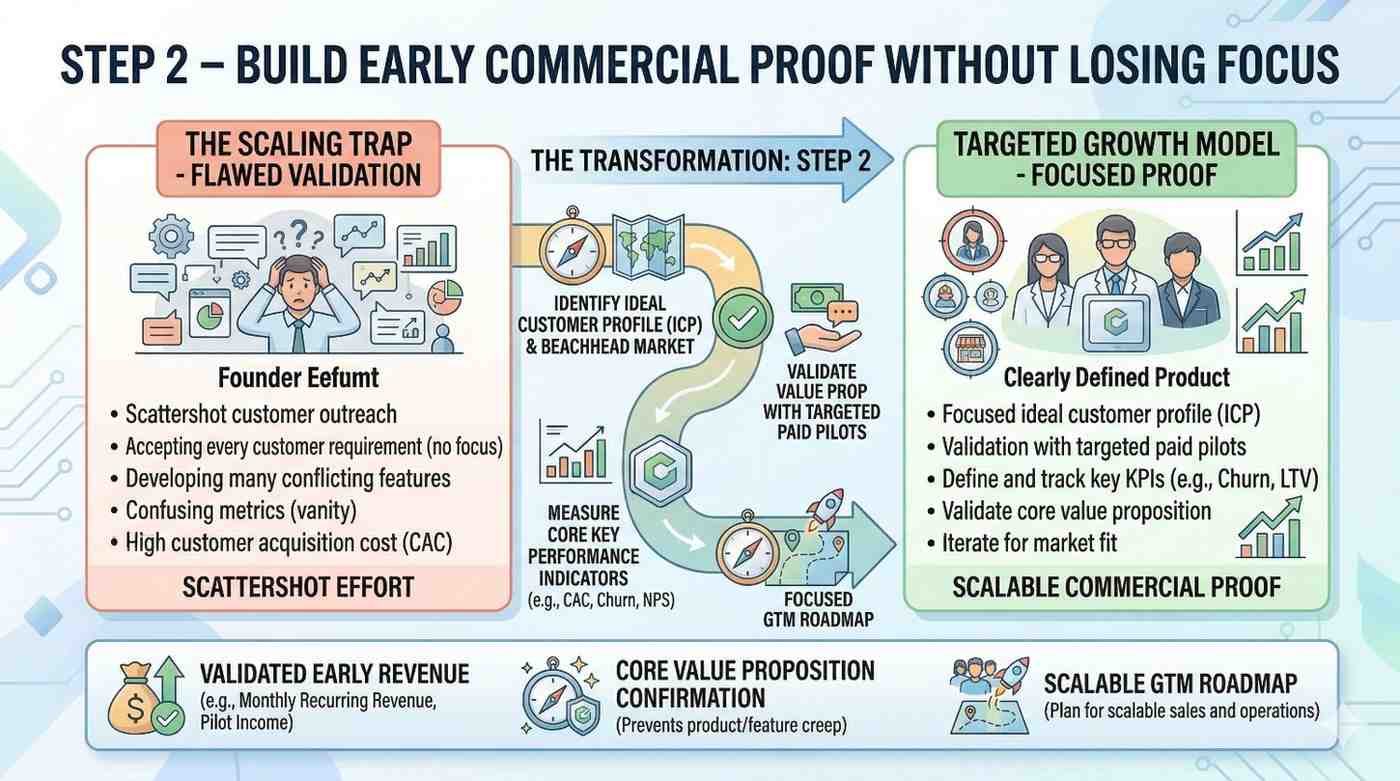
Before a full seed round, you do not need a polished product. You do not need a full sales pipeline. You only need clear signs that you understand a real problem and that someone out there agrees with you.
This begins with simple conversations. Not surveys. Not broad market reports. Honest conversations with people who feel the pain your product aims to solve. When you speak with them, your goal is not to pitch. Your goal is to listen. You want to uncover what slows them down, what wastes time, what costs money, and what they try to fix on their own today.
These early talks often reveal small details that change your direction. They show you what matters and what does not. They help you shape your first tests in a way that makes sense for real users, not just for your internal plan.
When you walk into a seed meeting and say, “We spoke with ten operators who told us the same pain point in the same words,” you gain trust fast. Investors see that you are building something grounded in reality, not in theory.
If you want help shaping these early steps while protecting your IP, you can apply anytime at:
https://www.tran.vc/apply-now-form/
Use Pilots to Reveal What Is Working
A pilot does not need to be huge. It does not need to serve thousands of users. All it needs to do is show that your system can create value for even one or two real partners.
For an AI startup, this might be running your model on a set of real data from a partner, showing improvement over their current workflow. For a robotics team, this could be running a small test in a controlled area, showing that your system reduces human workload or reduces error.
What matters is clarity. You want to show that the world outside your lab behaves in a way that supports your idea. You want to show that the system holds up when faced with noise, randomness, or unexpected inputs. Even a simple result like “We reduced task time by thirty percent in one real test” tells a very strong story about your direction.
When you pair that with IP steps already in motion, your leverage grows. Investors know that you are not just testing ideas. You are building a protected engine that can scale.
Turn Small Wins Into a Sharp Narrative
Founders often think small wins are too small to mention. They want to wait for a major contract or a huge test before they talk about traction. But early traction is not about size. It is about learning and clarity.
If you had a pilot with one user that taught you something new, that is traction. If you ran a test that validated a key part of your system, that is traction. If someone reached out asking to try your product after hearing about it from a friend, that is traction.
The key is how you talk about it. You want to show how each small step changed your understanding, sharpened your approach, or confirmed your edge. Investors love seeing a founder who learns fast, adjusts with intention, and keeps moving without waiting for perfect conditions.
Tran.vc helps founders turn these small steps into a clear, simple story that feels natural. When you speak about your work with honesty and clarity, you build more trust than any polished chart can.
Step 3 – Shape a Fundraising Plan That Gives You Power
Do Not Rush Into the Full Seed Round
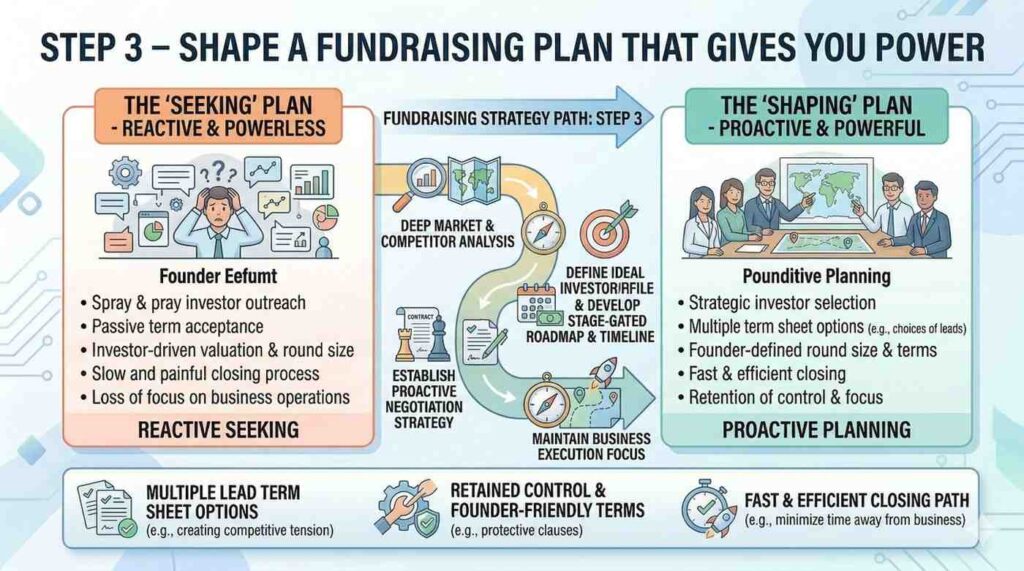
Many founders feel pressure to raise early. They see other teams posting about rounds on social media. They fear falling behind. But raising too soon often means giving away too much, losing control, and accepting terms you do not want.
Your goal is not to raise fast. Your goal is to raise from a position of strength.
Strength comes from having something real: working tech, early demand, and a protected core. When you have these things in place, you do not fear rejection, because you know you can keep building with or without outside money.
This is the heart of leverage. The investor does not feel like they are taking a huge gamble. They feel like they are joining something that is already moving forward. That shift alone can improve your terms, your ownership, and the choices you have later.
If you want help getting to this point before you raise, you can apply here:
https://www.tran.vc/apply-now-form/
Break the Fundraising Plan Into Small, Safe Steps
Instead of trying to raise a full seed round right away, think in stages.
You build some proof. You shape your IP. You test with one or two partners. Then you decide if you want to raise something small or wait longer.
This approach gives you freedom. It lets you learn first, rather than selling a vision you have not yet tested. It lets you keep more ownership because you raise when your value is higher. It also gives you the chance to choose investors who respect your pace, rather than the ones who push you into fast cycles.
When every step is small and safe, you can take risks in your work without taking risks in your structure. That balance is rare in early-stage startups, and it is one reason founders who work with Tran.vc often feel calmer and more confident.
Tell a Story That Is Clear, Not Complicated
A good fundraising story is not long or complex. It is simple. You explain the problem. You show the proof. You point to the IP that protects your approach. You describe the early signals that someone cares. You outline what the next year will look like.
The simpler this story is, the easier it is for an investor to say yes.
If your story is too technical, they might fear the unknown. If your story is too vague, they might fear the risk. You want the middle point: a clean, calm explanation of what you built, why it matters, and why you will win.
Tran.vc helps founders shape this story without losing their truth. They help you strip out the noise and highlight the sharp pieces. That way, when you speak with investors, you sound like someone who knows exactly where they are going.
Step 4 – Build a Moat Before Product-Market Fit
Protect the Parts That Make You Different
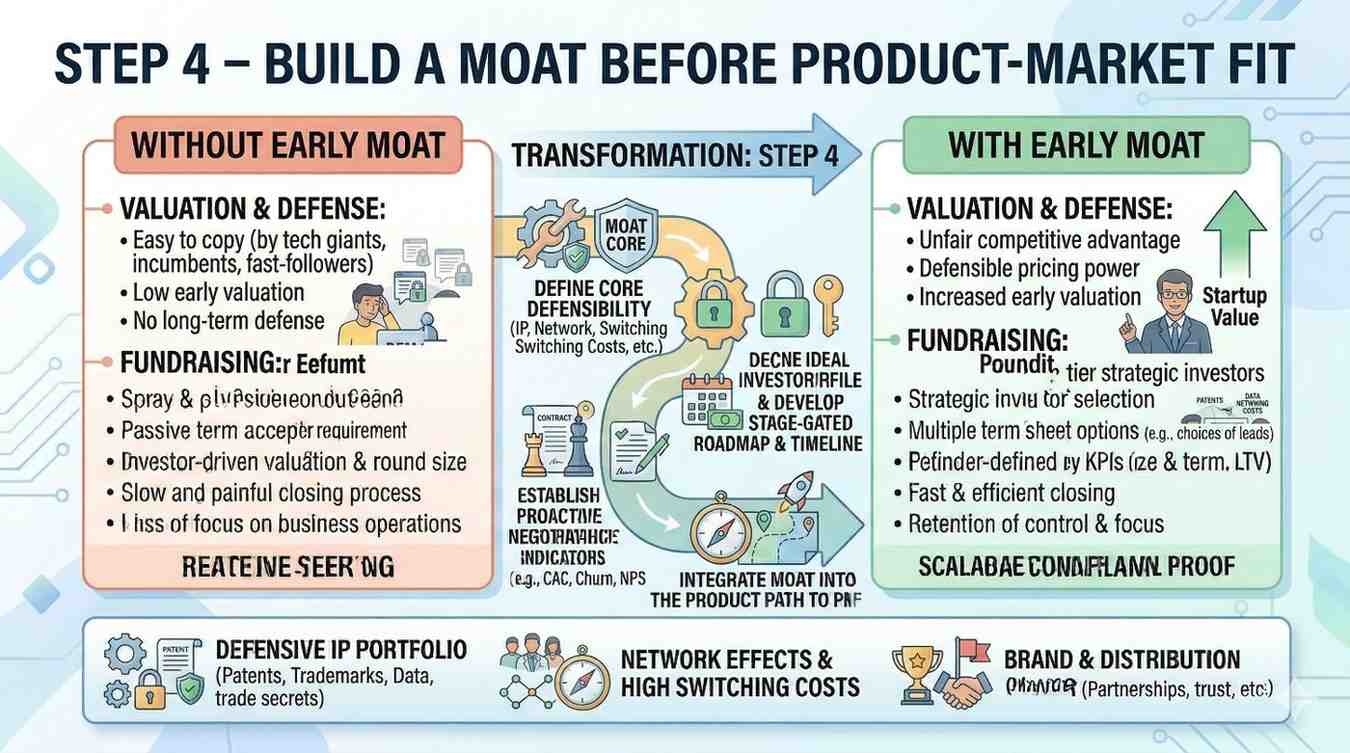
A real moat is something others cannot copy quickly. For deep tech and AI teams, this often comes from how you process data, how your model works, how your hardware interacts with the world, or how your system learns.
You want to protect these things early. If you wait until after the seed round, you may find that someone else has filed a similar patent, published a similar method, or entered the same niche with more money. Once that happens, your story becomes harder to defend.
When you take small steps early—mapping your new ideas, drafting filings, and shaping your IP—you create a shield around your work. You give investors a reason to believe you can keep your edge even when the market gets crowded.
Tran.vc helps founders build that shield without burning time or money. Their in-kind support gives you access to real patent experts before you even raise. That alone can change your entire path.
Use Automation to Move Faster With Fewer People
While you are building your IP and early traction, you must also move fast. But most early teams do not have a full staff. They cannot hire large teams yet. This is where smart automation becomes vital.
You want to automate anything that slows you down. That might be data cleaning, simple model tests, hardware logs, or user onboarding for a pilot. When you automate the small pieces, you free yourself to focus on the sharp, high-value work—your core engine.
Investors respect teams who can move fast with few people. It tells them you are resourceful. It shows that you can scale without burning cash. And it gives you even more leverage when you finally choose to raise.
Build a System That Will Scale Once Demand Arrives
Many teams focus only on the first version of their product. But smart teams plan for the moment when demand increases. They think ahead. They design their pipeline, their robotics stack, or their training system so that it can handle more load without falling apart.
You do not need to build for scale too early. But you can build with clarity. You can design your setup in a way that allows you to grow without rewriting everything.
This kind of thinking signals maturity. It shows that you understand the full journey, not just the early part. Investors often lean toward founders who think long term, even at the earliest stages.
If you want a partner who helps you build both the moat and the long-term base, you can apply anytime at:
https://www.tran.vc/apply-now-form/