
Most founders hear “product-market fit” and think it means one thing: “People are buying.”
In deep tech, that idea is too small.
If you’re building robotics, AI infrastructure, new chips, new sensors, biotech tooling, or hard science software, you can sell early and still be far from real fit. You can also struggle to sell for a while and still be very close. Deep tech plays by different rules because the “market” is often not ready, not educated, and not set up to adopt what you built.
So the real meaning of product-market fit in deep tech is not just demand. It’s adoption that keeps happening even when you stop pushing. It’s when your product becomes part of someone’s workflow, budget, and plan for the future.
It’s also when your company stops feeling like you’re dragging a boulder uphill alone.
And that’s what this article is about: what fit really looks like in deep tech, how to spot it, how to get it faster, and how to avoid the common traps that waste years.
One more thing up front: in deep tech, IP is not a side task. It is often the reason you can win at all. If you are building something that can be copied, a bigger team will copy it. If you are building something that takes time and science to copy, your patents and IP strategy help you keep the lead.
That’s why Tran.vc exists. We back technical founders with up to $50,000 in in-kind patent and IP services, so you can build a real moat early—before the hype, before the seed round, and before a competitor sees what you’re doing. If you want help with that, you can apply anytime here: https://www.tran.vc/apply-now-form/
Product-Market Fit in Deep Tech Starts With One Narrow “Job”
Why “a big market” is not your first goal
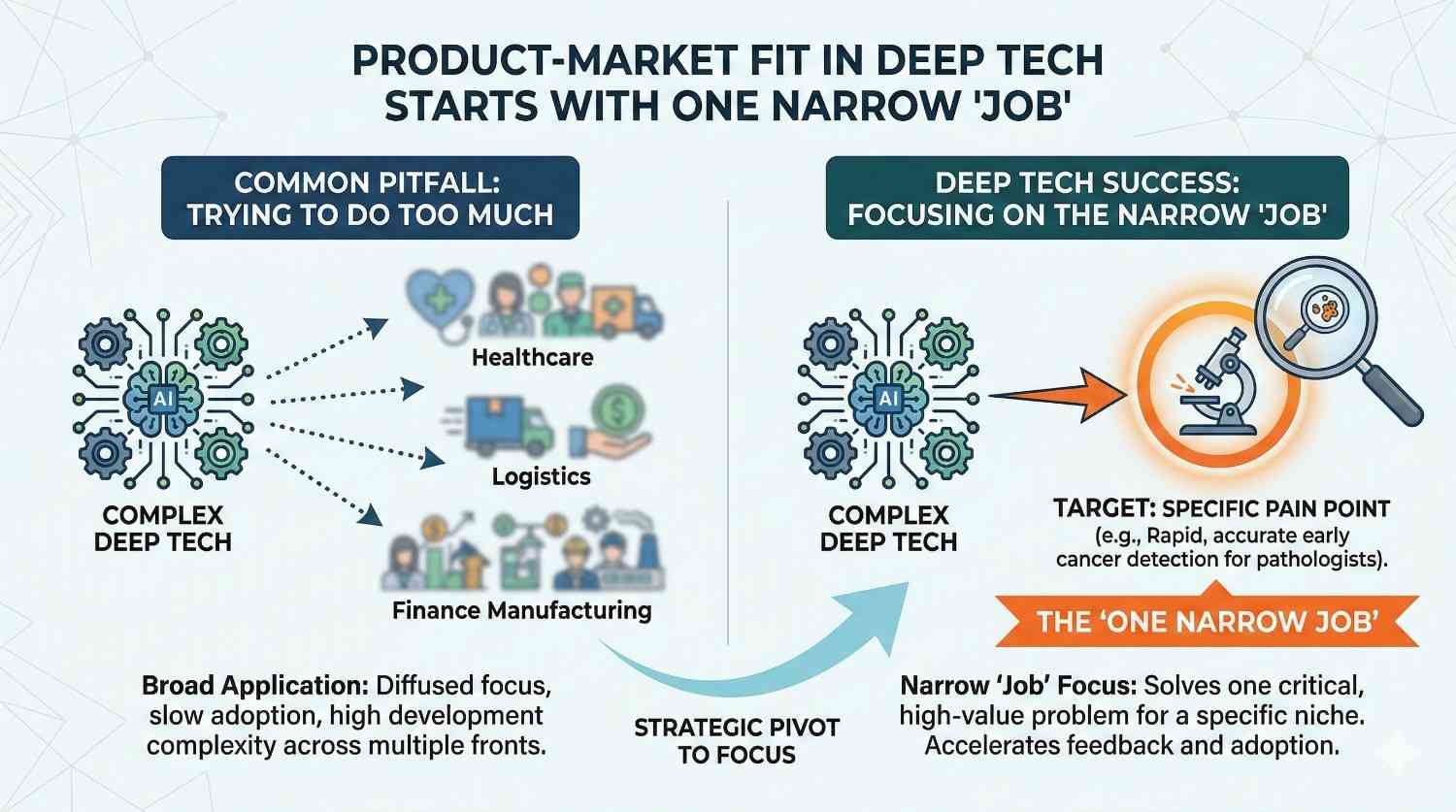
In deep tech, the fastest way to lose time is to aim wide too early. When you say your product is for “manufacturing” or “healthcare” or “logistics,” you are not being ambitious. You are being unclear.
A market is not a logo list. It is a repeating job that happens every day. Product-market fit starts when you can name that job in plain words, and show that your product does it better than the old way.
What a “job” really means in deep tech
A job is not “use AI to improve X.” A job is something like: “Catch defects on this one line before they ship.” Or: “Cut robot pick time on these bins without breaking safety rules.”
If you can’t point to a job that already has time, pain, and money tied to it, you will keep meeting people who say “cool” but never buy. Deep tech does not live on excitement. It lives on relief.
How to choose the first job without guessing
Pick a job where the current way is costly, slow, or risky. Then look for a place where the workflow is stable enough that you can repeat it.
The goal is not to build the final company on day one. The goal is to build the first strong proof that your solution can live in the real world and get renewed.
If you want help choosing a first job and turning it into an IP-backed wedge, you can apply anytime at https://www.tran.vc/apply-now-form/
The Four Fits You Need Before You Claim Product-Market Fit
Reality fit comes before customer fit
Reality fit means the product works when you are not there. It works with the customer’s messy inputs, odd habits, and odd limits.
If your product breaks the moment someone changes a setting, or the moment the lighting shifts, or the moment the data has gaps, you do not have fit. You have a demo.
The best founders treat reality fit as a product feature, not an engineering detail. They build for rough days, not perfect days.
User fit is about trust, not just usability
Deep tech users are not only learning a tool. They are taking a risk with their name, their time, and sometimes their safety.
User fit shows up when the user says, “I trust what this is telling me.” That trust comes from clear outputs, clear limits, and clear actions.
If your system is a black box, users will test it forever. If your system explains itself in simple terms, they will adopt it sooner.
Business fit is the part that breaks most deep tech teams
Business fit means the buying process works. The customer can approve it, pay for it, and justify it again next quarter.
This is where many deep tech startups get stuck. They prove the tech. They run pilots. They still do not build a repeatable sale.
If your deal needs a special champion every time, you are not seeing fit yet. You are seeing effort.
Delivery fit is what turns one win into a company
Delivery fit means you can ship, install, support, and maintain the product without burning your team.
If every deployment feels like a new science project, you will not scale. Your early customers may love you, but your company will stall under its own weight.
Delivery fit is why deep tech founders must treat packaging, onboarding, and support as part of the core product.
The Strongest Signal of Real Fit: Budget, Not Praise
Praise is cheap and pilots are noisy
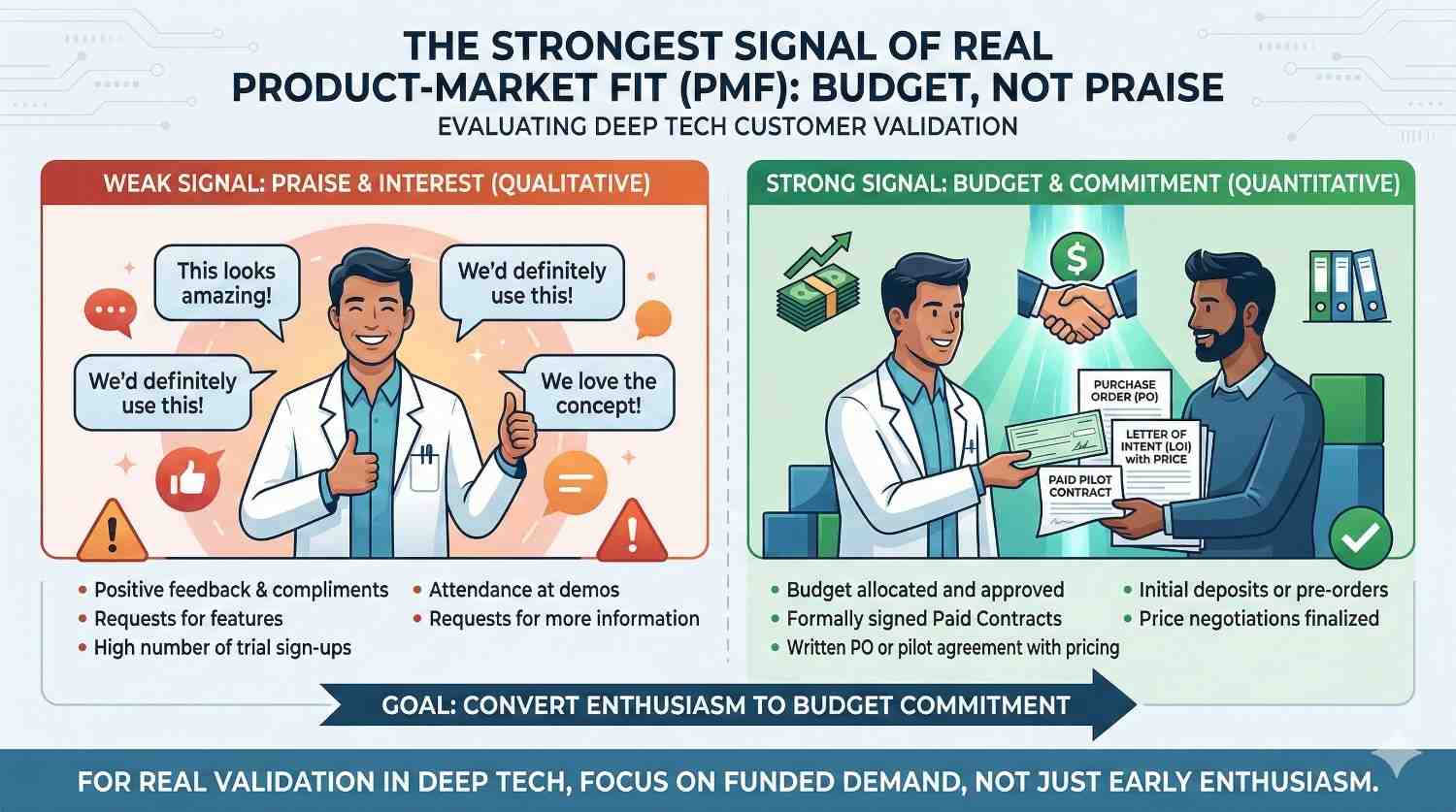
Many teams confuse kind words with fit. “This is amazing” is not a signal. It is a reaction.
Pilots can also be misleading. A pilot may exist because the customer wants to learn, not because they want to adopt. Learning is not a contract. Learning is not a budget.
Fit starts to show when the buyer plans for you. When they put you in the spreadsheet. When they make space for you without you begging.
The budget test you can run early
Ask a simple question at the end of a pilot: “If this works, where will the money come from?”
Listen carefully to the answer. If you hear, “We’ll figure it out,” you are not at fit. If you hear, “It comes from this line item,” you are closer.
A deep tech founder’s job is not to win pilots. It is to move from “trial money” to “operating money.”
Why renewals matter more than first deals
First deals are often driven by curiosity or one leader’s push. Renewals are driven by value that stays true over time.
In deep tech, renewals are a better proof than press. A renewal says the product survived real work, not just a test window.
If you want to build fit that investors respect, show renewals, expansions, and planned budget. That story lands much harder than “we’re in talks.”
If you want Tran.vc to help you build a strong moat while you chase these renewals, apply anytime at https://www.tran.vc/apply-now-form/
The Deep Tech Fit Trap: Custom Work That Feels Like Progress
Why custom work is tempting
In early deep tech, customers will ask for changes. Many of those changes are real needs. Some are just preference.
Custom work feels good because it creates motion. The customer stays engaged. Your team stays busy. The roadmap looks “customer-driven.”
But too much custom work can hide the truth: you may not have a product yet. You may have a service team wearing a product costume.
How to tell if custom work is helping or hurting
Custom work helps when it reveals a pattern you can reuse. It hurts when it creates a one-off path that no other customer will pay for.
A simple test is to ask: “Will the next customer need this too?” If you cannot name at least two more customers who will need the same change, be careful.
The goal is not to refuse every request. The goal is to protect your ability to scale.
A better way to handle requests without saying “no”
When a customer asks for a feature, you can respond with: “What decision will this help you make?” or “What failure does this prevent?” or “What is the cost today when this is missing?”
Those questions pull the request back to the real job. Often the customer will describe the real pain, and you’ll find a simpler solution than the feature they asked for.
This is how you build a product that fits a market, not just one account.
The Real Meaning of “Market” in Deep Tech: Adoption Inside a System
Your product must fit the system, not just the buyer
Deep tech products live inside existing systems: machines, data tools, safety rules, unions, audit trails, and long vendor reviews.
So “the market” is not only people who want your outcome. It is people who can adopt your method inside their limits.
That’s why deep tech fit is often about integration and proof. Not because buyers love complexity, but because they fear breakage.
The two adoption fears you must remove
Most teams fear two things: “Will this fail and make me look bad?” and “Will this create more work for my team?”
If your product reduces both fears, adoption speeds up. If it increases either fear, adoption slows down, even if the value is real.
This is why the best deep tech founders design for calm. Clear setup. Clear monitoring. Clear rollback. Clear ownership.
Why IP matters more when adoption takes time
When adoption is slow, copying risk rises. A larger company can watch you educate the market and then jump in.
If your advantage is real engineering, you should protect it. Patents and strong IP strategy help you hold the ground you spent time earning.
Tran.vc exists to do that work with you, early, as in-kind support worth up to $50,000. You can apply anytime at https://www.tran.vc/apply-now-form/
The Difference Between “It Works” and “It Fits”
Technical success is not the same as daily use
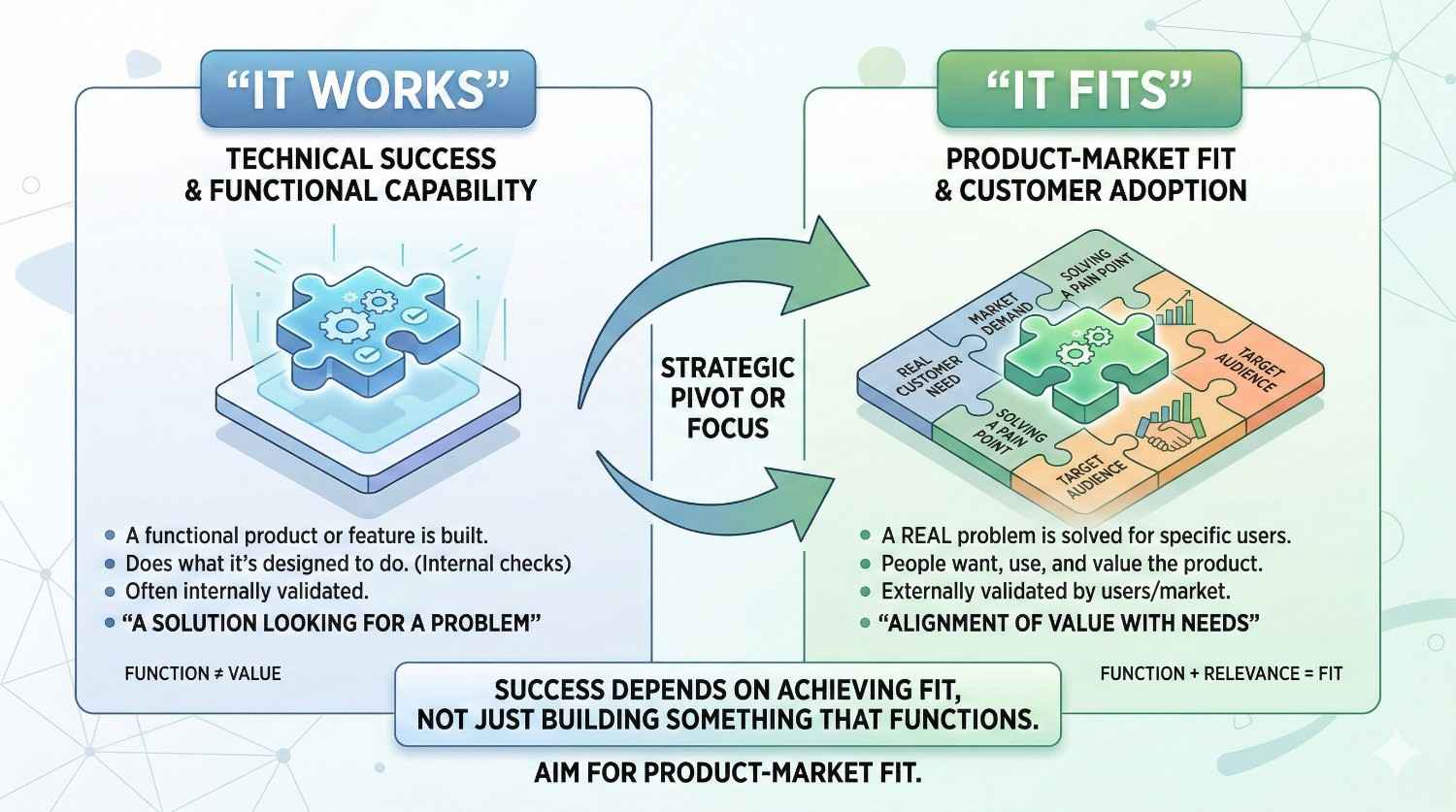
A deep tech product can pass every test and still fail in the field. This is not because the tech is bad. It is because the real world does not care about your model score or lab result.
In real settings, people are rushed. Tools are old. Data is messy. Schedules change. A shift lead may not want a new process. If your product demands perfect inputs or perfect behavior, the customer will fall back to the old way.
Fit shows up when your product works with normal habits, not ideal ones. The more your product feels like “business as usual,” the faster it becomes part of the day.
Workflow fit is a hidden make-or-break point
Many deep tech teams focus on performance first. That is fair, because without performance you have nothing. But once the performance is “good enough,” the main battle becomes workflow.
Workflow fit means your product matches the steps people already take. It also means the product reduces steps, not adds them. In factories, hospitals, labs, and warehouses, extra steps feel like extra risk.
If your product needs a person to open three tools, export a file, run a script, and then read a chart, it may never stick. If it gives a clear output in the tool they already use, it has a chance to spread.
Trust fit matters more than precision
Deep tech founders often try to win with “best accuracy.” But buyers often choose “most dependable.” A system that is slightly less precise but always stable can beat a system that is perfect one day and strange the next.
Trust fit comes from steady behavior and clear limits. When the system is unsure, it should say so. When the system changes, it should explain why. When a user asks, “Can I rely on this?” your product should answer without a long meeting.
Over time, trust becomes habit, and habit becomes renewals. That is the chain you want.
The Deep Tech Buyer Is Not One Person
The user, the buyer, and the blocker are often different
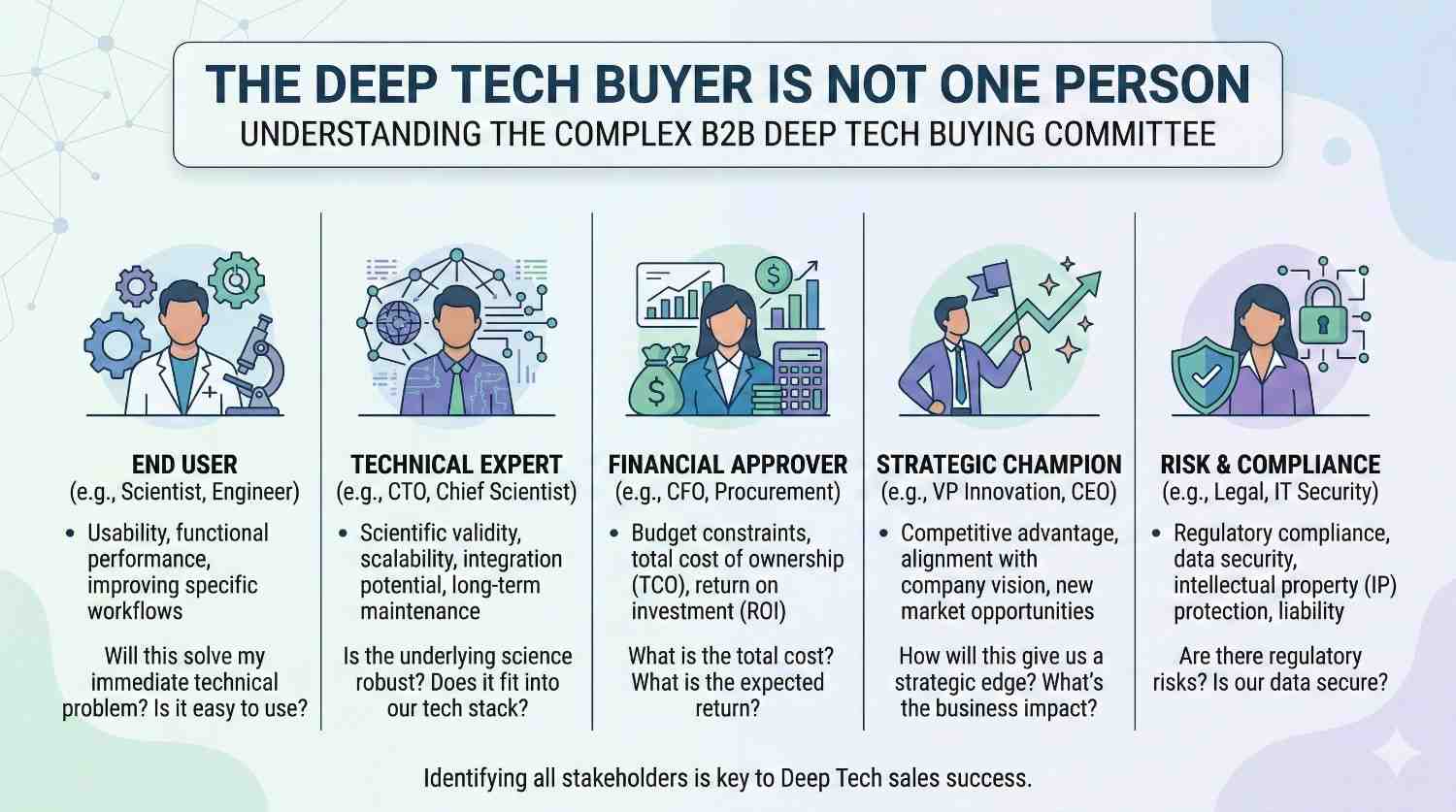
In deep tech, the user may love your product, but the buyer may not care. The buyer may like your product, but the blocker may stop the deal. If you treat “the customer” as one person, you will get surprised late.
A user asks, “Will this make my job easier?” A buyer asks, “Will this reduce cost or risk?” A blocker asks, “Will this break our rules or add work?”
Your product needs answers for all three, but it must do it in very simple terms. Clear words win faster than clever slides.
The strongest way to sell is to reduce fear
Most deep tech purchases are fear-driven. The buyer fears downtime, safety issues, audits, and project blame. They also fear being stuck with a vendor who cannot support the system.
When you speak only about features, you leave fear untouched. When you speak about failure modes, support plans, and what happens on day two, fear goes down.
This is not about being negative. It is about being real. Deep tech buyers trust founders who can name risks without hiding.
The “internal champion” is not a strategy by itself
Many teams rely on one champion. That champion can open doors, but they cannot carry the whole deal forever. Champions get busy, move roles, or lose budget.
Real fit shows up when the deal can survive without one hero. When multiple people inside the account can explain the value in their own words, you are closer to fit.
A practical move is to help your champion teach others. Give simple internal notes they can forward. Give short “what changed” updates. Give clear proof in numbers that match the buyer’s goals.
The Metrics That Matter More Than Vanity
Deep tech fit is about pull, not noise
Mentions, demo requests, and pilot calls can be exciting. But these are top-of-funnel signals, and they are easy to inflate without real adoption.
Pull is when the customer pushes you. They chase timelines. They ask for more capacity. They want to roll out to a second site. They ask for a longer contract because they do not want to restart the buying process.
If you are still the one pushing every step, you may be early. That is fine. But do not confuse push with pull.
Expansion is often the cleanest proof
In deep tech, one site can be a test. A second site is a signal. A third site is a pattern.
Expansion matters because it proves the product can repeat inside the same company. It also proves your delivery is not a one-time miracle.
To increase expansion chances, design your first install like it will be copied. Document the setup. Make the data pipeline clear. Train more than one person. Build simple checks that show the system is healthy.
Sales cycle length is not always a problem
Deep tech has long cycles. That alone is not a red flag. The red flag is when the cycle is long and still unclear.
If the next step is always fuzzy, the deal will drag. If the steps are clear but slow, you can plan and improve.
A helpful habit is to map the buying steps after every loss and every win. Not with a big spreadsheet. Just simple notes about what slowed it down, who needed to approve, and what proof moved the deal.
Over time, you will see where your product does not fit the process yet.
The Role of IP in Real Product-Market Fit
In deep tech, fit creates copy risk
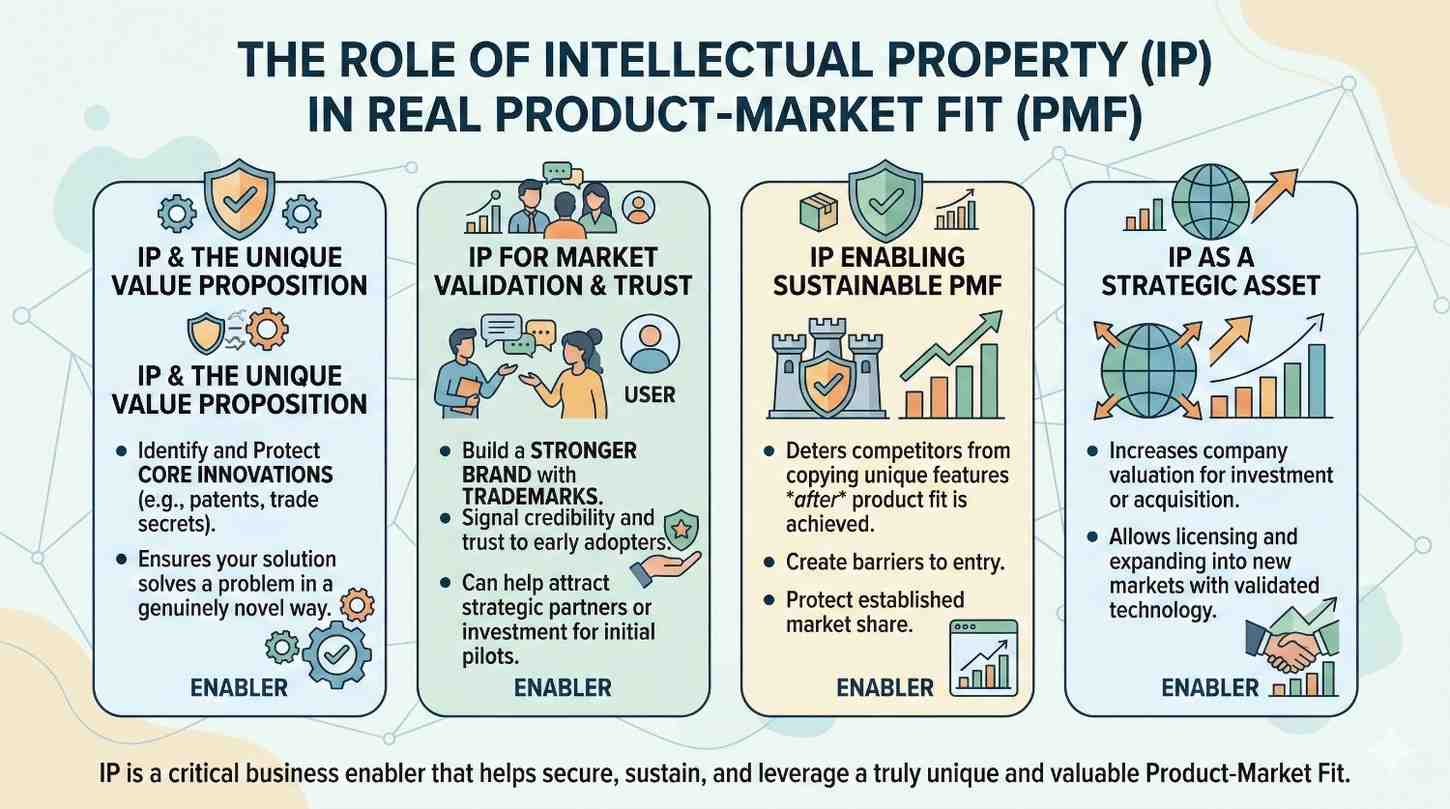
When you start to get real traction, others notice. In deep tech, this can mean large companies, well-funded startups, or even your customer building an internal version.
If your value is easy to copy, you can lose the market you helped create. That is why IP is tied to fit. When you are close to fit, you should be locking in what makes you different.
This is not only about patents as trophies. It is about protecting the core methods, systems, and designs that create your edge.
Good IP makes selling easier, not harder
A strong patent story can reduce buyer fear. It shows you are building something real, not a shallow add-on. It also tells the buyer you are less likely to disappear, because you own valuable assets.
It can also help in partnerships. If a large company wants to work with you, strong IP gives you leverage. You are not only a vendor. You are a holder of key know-how.
How Tran.vc supports fit with patents and strategy
Tran.vc invests up to $50,000 in in-kind patenting and IP services so technical founders can protect what matters early, while staying focused on building the product.
That means you do not have to wait until after a seed round to act. You can build your moat as you learn what the market truly wants, and as you shape the product around repeatable adoption.
If you are building robotics, AI, or deep tech and want to make your progress defendable, apply anytime at https://www.tran.vc/apply-now-form/
How to Get to Real Fit Faster Without Burning Years
Stop proving everything and start proving the next thing
Deep tech teams often try to prove too much at once. They want the tech to be perfect, the product to be polished, the sales story to be broad, and the pricing to be final.
That is a long path. Real fit usually comes faster when you focus on the single next proof that removes the biggest doubt in the deal.
If customers are saying, “We don’t trust the output,” then the next proof is not a new feature. It is clear validation, clear limits, and clear reporting. If customers are saying, “This will be hard to deploy,” the next proof is not better accuracy. It is a simpler install and fewer moving parts.
You do not need to win every objection. You need to win the one that blocks adoption.
Treat “pilot” as a product, not as a favor
A pilot is not just a trial. In deep tech, it is the first version of your delivery system. It is where most companies either build repeatability or build chaos.
A good pilot has a tight scope, a clear success bar, and clear ownership. It has a start date and an end date. It has a plan for what happens if it works, and what happens if it does not.
When a pilot has no end, it becomes a slow drain. The customer keeps learning, you keep supporting, and nobody decides. This feels safe to the buyer because they avoid commitment. It feels dangerous to you because you burn time.
If you hear, “Let’s just keep it running,” your job is to turn that into a paid rollout or a clear stop.
Put the success bar in the customer’s words
A deep tech mistake is to define success with your metric. You may care about precision, latency, and throughput. The customer may care about missed defects, downtime, and injuries.
Fit comes sooner when your pilot goal is expressed in the customer’s own language. Then when the pilot ends, the decision is easier. It is no longer “did the model improve?” It is “did we reduce scrap by X?” or “did we cut pick time by Y?”
This also helps the champion sell internally. People inside the company can repeat the result without needing your slide deck.
Making the Market Feel “Ready” When It Isn’t
Deep tech markets often need education, but not lectures
Many deep tech founders think they must educate the market with long explanations. That usually fails because buyers are busy and do not want homework.
The better approach is to teach through small, useful moments. Show the customer one clear insight about their problem. Show one clear risk they did not see. Show one clear cost that is hiding in plain sight.
When buyers learn something that helps them today, they listen. When they feel you are “pitching,” they shut down.
Education should feel like help, not like persuasion.
Create a “before and after” that is easy to believe
Buyers want change, but they fear regret. If your promise feels too big, they will doubt it even if it is true.
So you want a before-and-after story that feels grounded. The “before” should be specific and familiar. The “after” should be measurable and tied to a job they already understand.
In deep tech, simple proof often beats grand vision. A modest improvement with strong evidence can open a budget faster than a massive claim with weak evidence.
Reduce switching cost even if your product is better
Many deep tech teams assume that if they are better, customers will switch. In real life, switching is painful.
So you want to lower the cost of trying you. Make the first install small. Make data access clear. Make training short. Make support responsive. Make rollback easy.
When the buyer feels safe, they move faster. Safety is speed.
Pricing and Packaging: The Quiet Driver of Fit
Fit gets stuck when pricing does not match value
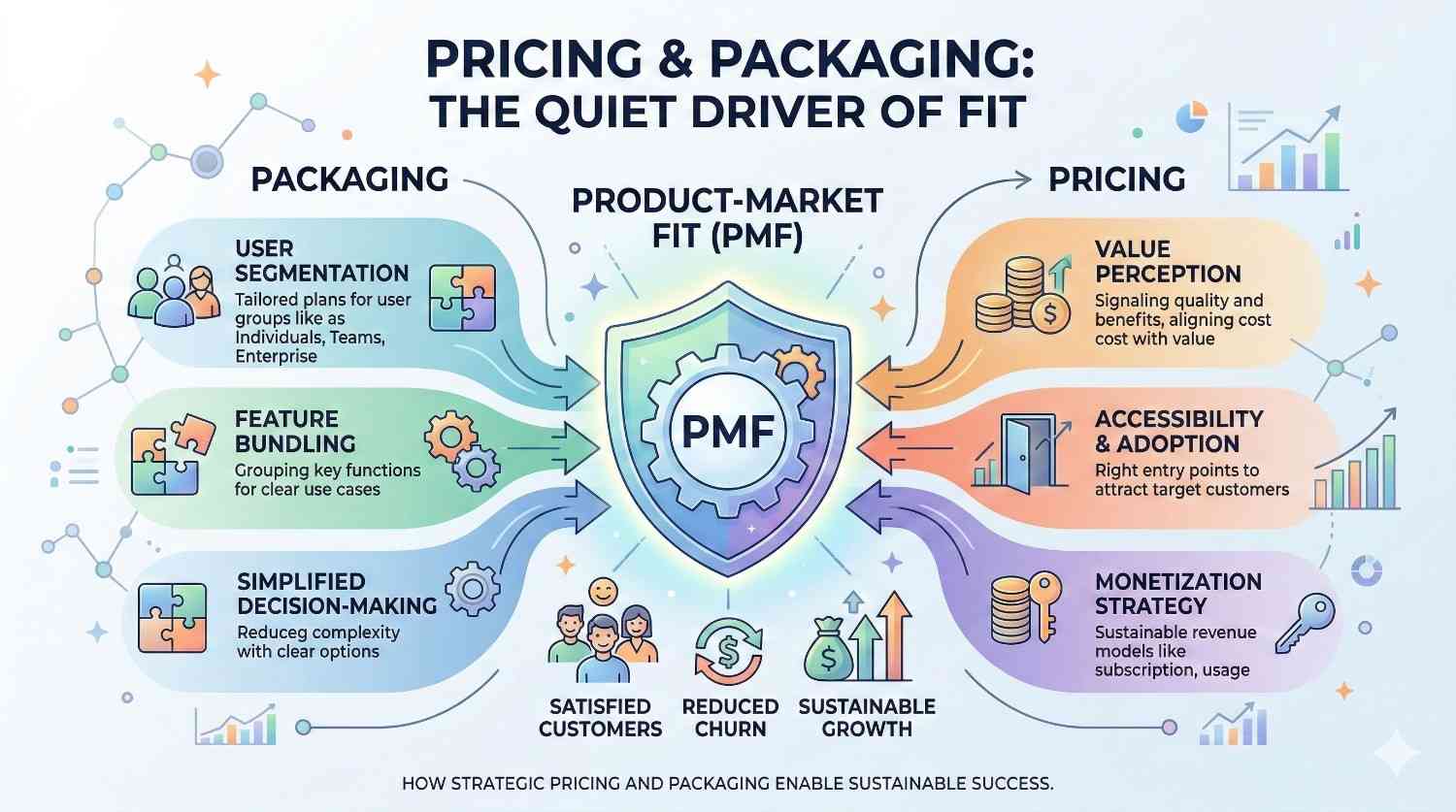
Deep tech products often create value in a different place than where they live.
For example, a vision system may live on a line, but the value shows up in fewer returns and fewer warranty claims. A robotics tool may live in one site, but the value shows up in labor stability and faster throughput across the network.
If you price in a way that ignores where value shows up, buyers may say, “We like it, but we can’t justify it.”
Your pricing needs to match the buyer’s mental model of value. It should also match how budgets are approved in that company.
The simplest packaging wins early
Deep tech founders sometimes overcomplicate packaging because they want to be fair. They add tiers, add add-ons, add usage units, add many contract terms.
Early on, simpler usually wins. One clear offer, one clear scope, one clear outcome. You can refine later as you learn what the market truly pays for.
A clear offer also reduces time in legal and procurement. Less confusion means fewer calls and fewer delays.
Use “paid pilots” carefully, but do not fear them
In deep tech, asking for payment early is not rude. It is a signal that the work has value, and that the customer must take it seriously.
A paid pilot works best when it is structured as a limited rollout with a decision baked in. The customer pays, you deliver, you measure, and then you either expand or stop.
Free pilots can work too, but they often attract the wrong behavior. If the customer has no cost, they may not prioritize. If you have no cost recovery, you may take on pilots you should not.
The goal is not to squeeze the customer. The goal is to make the trial real enough that a real decision happens.
Turning Early Learning Into a Defendable Moat
Fit is fragile when your advantage is only “we built it first”
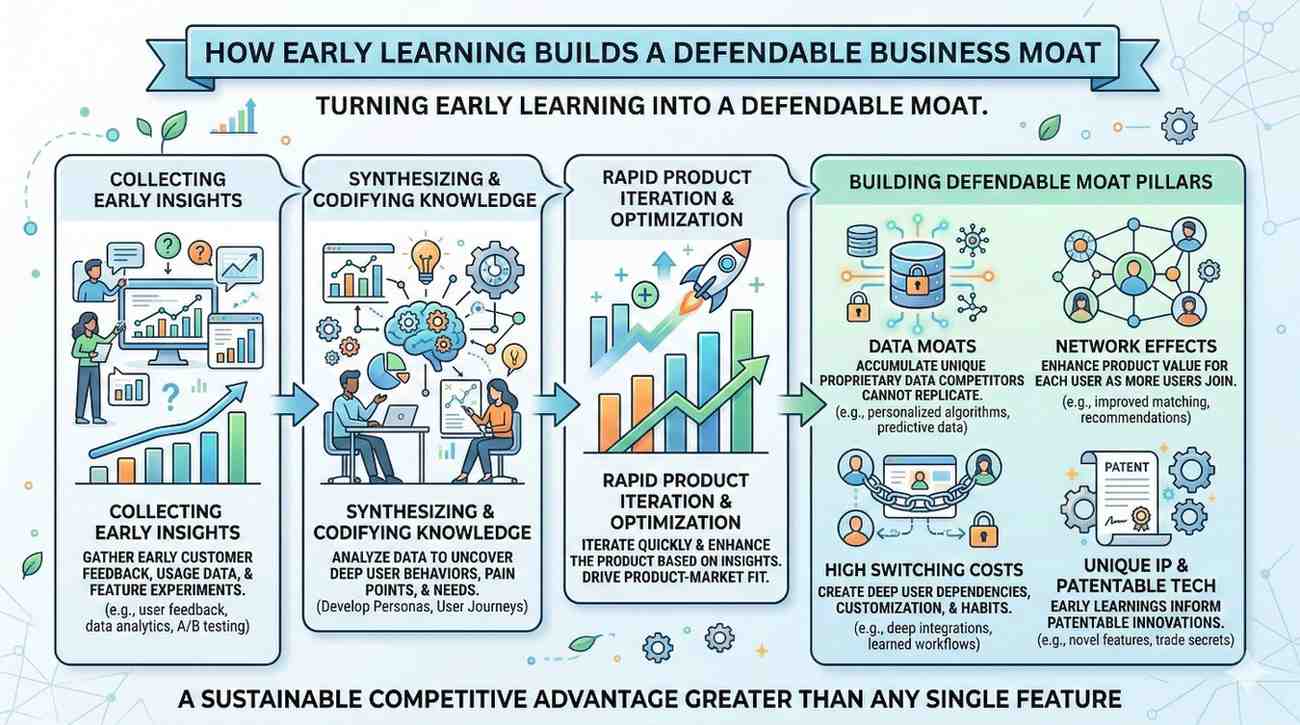
Being first helps, but it does not last. If your only edge is a head start, others can catch you as soon as the market becomes clear.
A moat in deep tech often comes from unique methods, unique system design, unique data handling, unique training pipelines, or unique hardware-software coupling.
These are the parts you should protect, because they are the parts that are hardest to rebuild.
Patents are most useful when they match the product you can sell
The best patents are not random ideas. They are tied to what customers actually adopt.
That’s why IP strategy should move with your product learning. As you narrow the job and find what truly creates value, you can capture the core inventions that power that value.
This is also why doing patents early can be a smart move. You can file around the core technical approach before the market sees it, and before competitors take notes.
How Tran.vc helps founders protect what they are building
Tran.vc supports deep tech founders with up to $50,000 in in-kind patent and IP services so you can lock in your edge while you move toward fit.
The goal is simple: turn your work into assets that investors respect and competitors cannot easily copy.
If you are building AI, robotics, or other deep tech and want to make your progress more defendable, apply anytime at https://www.tran.vc/apply-now-form/