
Most founders do not fail because they cannot build. They fail because they build the wrong thing for too long.
A design partner is one of the cleanest ways to avoid that trap.
A design partner is not a “beta user.” It is not a friend who says “cool idea.” It is not a logo for your deck. A real design partner is a real customer who has a real problem, agrees to work closely with you, and helps shape the product before it is fully done. In return, they get early access, influence, and a better fit to their needs.
If you are building robotics, AI, or any deep tech product, design partners matter even more. Your product is often hard to explain in a slide. The value shows up in the field, in the workflow, in the messy parts. That is where design partners help. They pull your product into real life before you waste months polishing the wrong path.
This article is about using design partners to validate product-market fit the practical way. Not theory. Not vague “talk to users.” The goal is to help you walk away with clear proof that your product solves a painful problem, and that people will pay for it.
Before we go further: if you are building AI, robotics, or deep tech and you want to protect what you are learning as you go, Tran.vc can help. We invest up to $50,000 in-kind in patent and IP services so you can turn your technical edge into assets early, while you validate demand. You can apply any time here: https://www.tran.vc/apply-now-form/
Using Design Partners to Validate Product-Market Fit
What “design partner” really means (and what it does not)
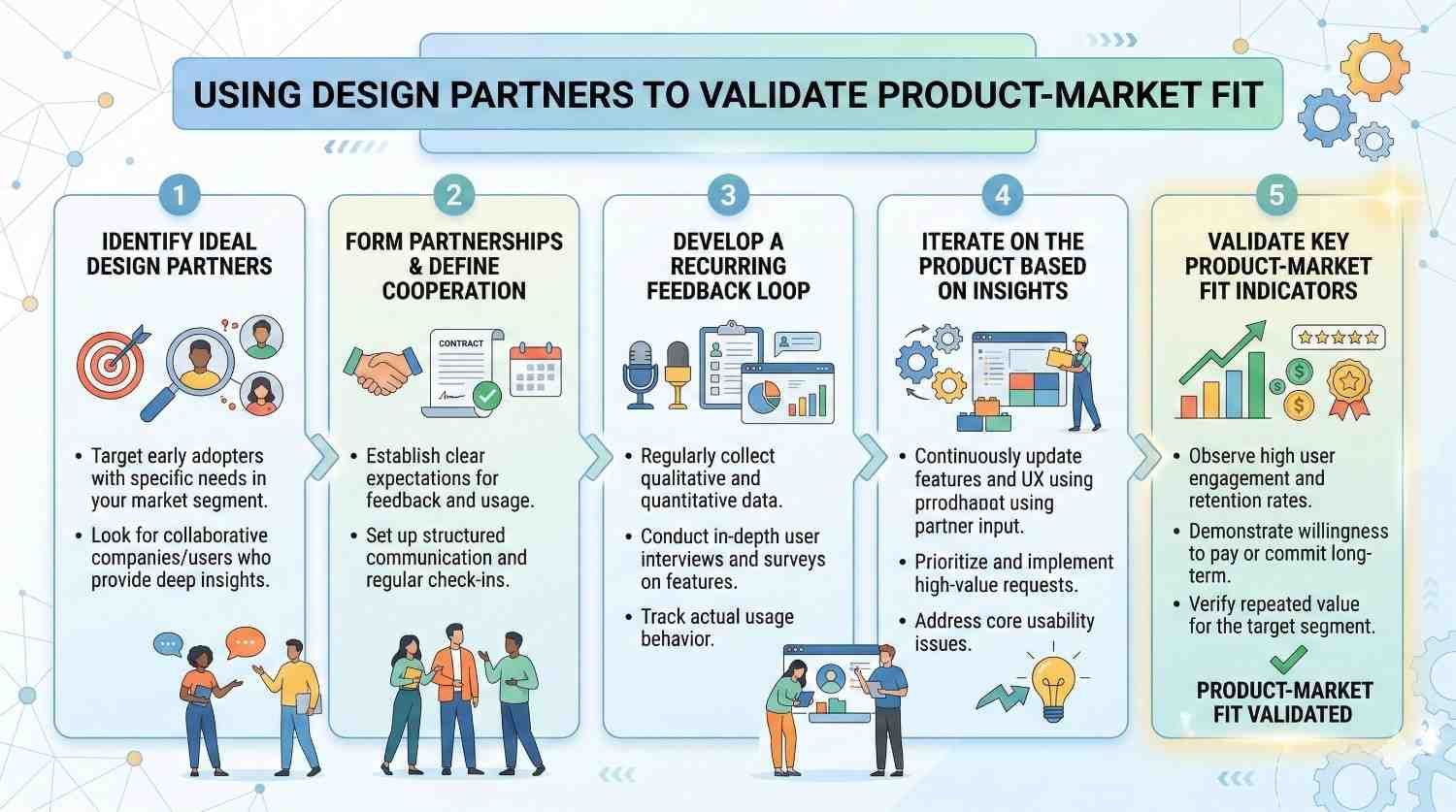
A design partner is a customer who helps you build the product with you, not after you. They are close enough to feel the problem every week, and serious enough to put time on the calendar. They give you real feedback while the product is still changing, and you commit to listening, adjusting, and shipping improvements fast.
This is different from a beta user. Beta users often show up late, click around, and then vanish. A design partner stays engaged because the pain is real and the outcome matters to them. They want the problem solved badly enough to work through rough edges, because the reward is worth it.
It is also different from a paid pilot that is only about delivery. A pilot can be useful, but it often turns into a services job where the founder says yes to everything. A design partnership is not you “doing custom work.” It is a structured way to learn what the market truly needs, then turn that learning into a product that scales.
Why design partners are the fastest path to clarity
Product-market fit is not a feeling. It is the moment your product delivers clear value, and customers pull it from you. Design partners help you reach that moment faster because they reduce guessing. They show you the real workflow, the real blockers, and the real “this is what we would pay for” line.
When founders do not use design partners, they often build from assumptions. They assume the buyer is one person. They assume the problem is urgent. They assume one feature is the key. They assume the data is easy to get. Each wrong assumption costs weeks.
Design partners turn those unknowns into answers. They let you test your value in a real setting, with real rules, real budgets, real security needs, and real outcomes. That is where the truth lives.
The biggest myth: “We need product-market fit before we talk to customers”
Some technical teams wait because they want to look polished. They want the demo to be perfect. They want the model to be accurate. They want the robot to run without errors. That seems smart, but it is often the reason the company drifts.
Design partners do not require perfection. They require honesty and structure. You can start with a narrow slice of the workflow. You can start with a manual back end. You can start with a small deployment. What matters is learning, not cosmetics.
If you are in robotics or AI, the first version might be messy. That is fine. What is not fine is being messy in silence. Design partners keep the mess pointed in the right direction.
A quick note on IP while you validate
When you work closely with customers, you will uncover sharp insights. You will find what really works, what is hard to copy, and where the true moat lives. Those learnings can become patents and defensible IP if you capture them early.
Tran.vc helps founders do exactly that while they validate demand. We invest up to $50,000 in-kind in patent and IP services so the work you are doing with design partners turns into assets investors respect. If that is useful, you can apply any time here: https://www.tran.vc/apply-now-form/
Choosing the right design partners
Start with a clear “who” before you chase “how many”
A common mistake is trying to recruit too many design partners too fast. The better move is to pick a very clear customer type first. Not “manufacturing” or “healthcare” or “logistics.” Pick a specific job role in a specific setting with a specific pain.
For example, a warehouse manager who loses money due to picking errors is different from a supply chain director who cares about forecasting. A lab manager who needs faster inspection is different from a quality lead who needs audit-ready reports. Even if the industry is the same, the buying logic can be very different.
When you pick a clear “who,” you can ask better questions and spot patterns faster. Design partners work best when they share the same kind of pain, because you can build one product line, not five custom projects.
Look for pain you can measure, not pain they can only describe
A design partner should have a problem with visible cost. It can be money, time, risk, safety, scrap, churn, downtime, missed SLA, or lost deals. If the cost is fuzzy, the project will become a “nice to have,” and nice-to-haves die the moment budgets tighten.
Ask simple questions early. What happens when this goes wrong? How often does it happen? Who gets blamed? What do they do today to fix it? How much time does that take? What does it cost when it fails?
You are not trying to corner them. You are trying to see if the pain has weight. Heavy pain creates urgency. Urgency creates fast feedback. Fast feedback creates product-market fit.
The best design partners have a champion and an owner
You want two people on the inside. One person who wants the solution and pushes it forward, and another person who owns the workflow where the product will live. Sometimes it is the same person, but often it is not.
A champion is the internal driver. They book meetings, respond to questions, and help unblock access. An owner is the person who will live with the tool daily, and who will tell you what breaks, what slows them down, and what would make this product a must-have.
If you only have a champion, you might get meetings but no real usage. If you only have an owner, you might get feedback but no internal momentum. Both together is the sweet spot.
Avoid “innovation theater” partners
Some companies love to talk about innovation. They host demo days. They run accelerators. They take dozens of meetings. They are friendly, but nothing ships. This can drain months from early teams, especially in enterprise and industrial markets.
A strong design partner is willing to set a timeline, share real data, and define what “success” means. They are willing to put their name on a small internal decision. They may still move slowly, but they move with intent.
One simple sign is how they treat next steps. If every call ends with “send us a deck,” that is not a design partnership. If calls end with “let’s set up access to the system” or “let’s pick a test line” or “let’s introduce you to the operator,” you are closer.
Structuring the partnership so it drives product-market fit
Set expectations in writing, even if it is a simple one-pager
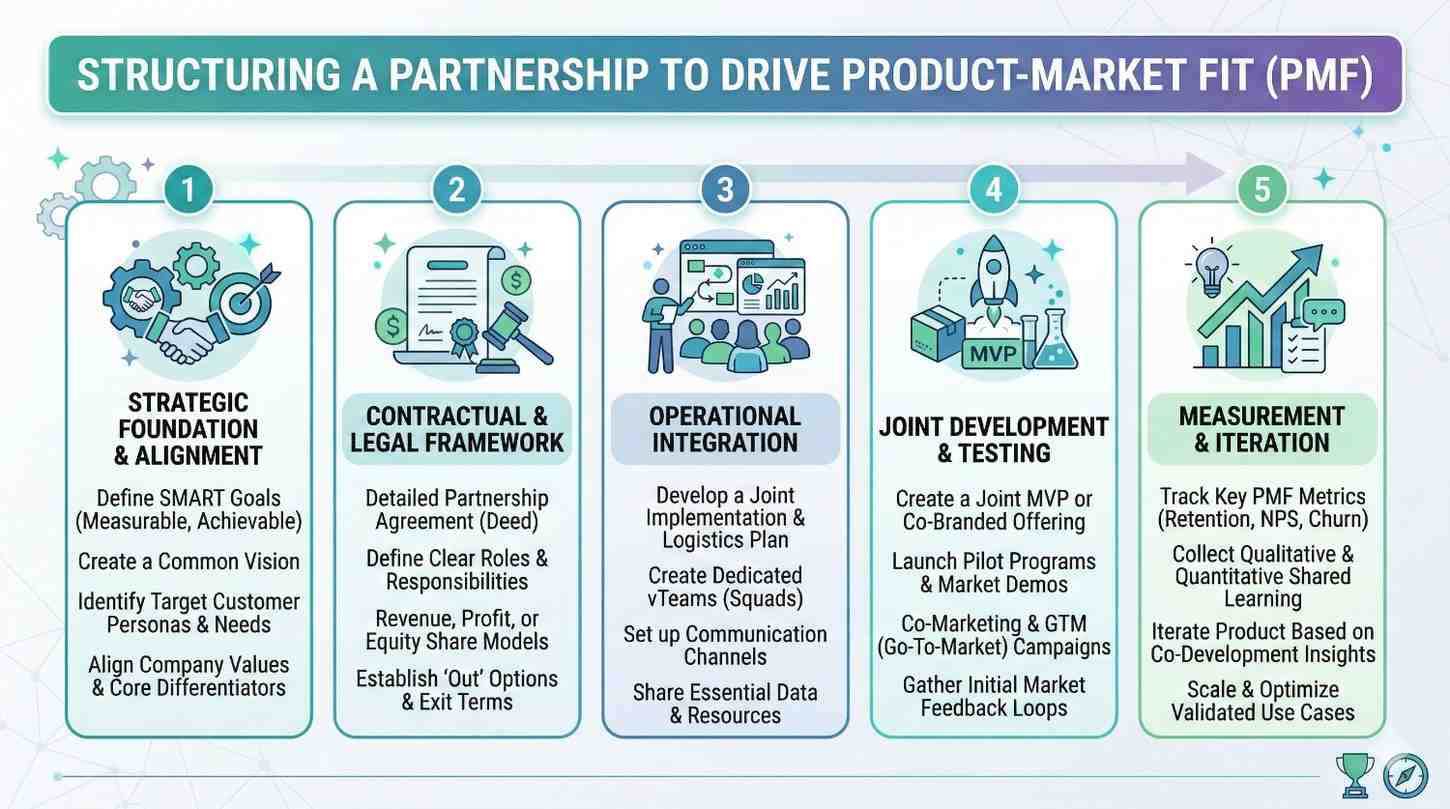
A design partnership should not be a loose handshake. It does not need to be heavy legal work, but it should be written down. This protects both sides and keeps the work real.
The one-pager should cover what problem you are solving, what you will deliver in the first phase, what they will provide, and how often you will meet. It should also cover who owns the data, how privacy works, and what happens if the project ends early.
Most founders skip this because they want to move fast. But writing it down makes things faster, not slower. It prevents confusion, and it gives you a shared “truth” when priorities shift.
Define the smallest “test” that can prove value
Design partners do not want a science project. They want progress. You should define a very small test that can show clear value in weeks, not quarters.
For AI, that might be one narrow prediction with a clear outcome. For robotics, that might be one task in one environment with a simple success metric. For a platform, that might be one workflow where you remove a painful manual step.
The purpose of the first test is not to “finish the product.” The purpose is to answer one question: does this create meaningful value in their world? If the answer is yes, you expand. If the answer is no, you adjust fast.
Put a meeting rhythm in place that forces honesty
Without a rhythm, design partnerships fade. The founder gets busy building. The partner gets busy with their job. Then two months pass and nobody knows what happened.
A simple rhythm is a weekly or biweekly check-in, plus a shared doc where you track what was learned, what shipped, and what is blocked. Each meeting should end with one clear decision and one clear next step. Not ten.
The goal is to keep truth flowing. You want the partner to feel safe saying, “This is not working,” because that saves you time. If they only say polite things, you will miss the signal until it is too late.
Decide pricing posture early, even if you do not charge yet
Many founders avoid money talk because they fear losing the relationship. But money is part of product-market fit. If you never test willingness to pay, you will confuse interest with demand.
You do not need a perfect pricing model in week one. But you should have a pricing posture. For example, you might say, “This is a design partnership. We are not charging for phase one, but if we hit the success metric, phase two is paid.” That sets a serious tone.
If they refuse any path to paid, that is a signal. Sometimes it is fine, but often it means the pain is not urgent or the buyer is not real. Design partners should lead to revenue, not just learning.
Running the first 30 days like a professional
Week one should be about the workflow, not your product
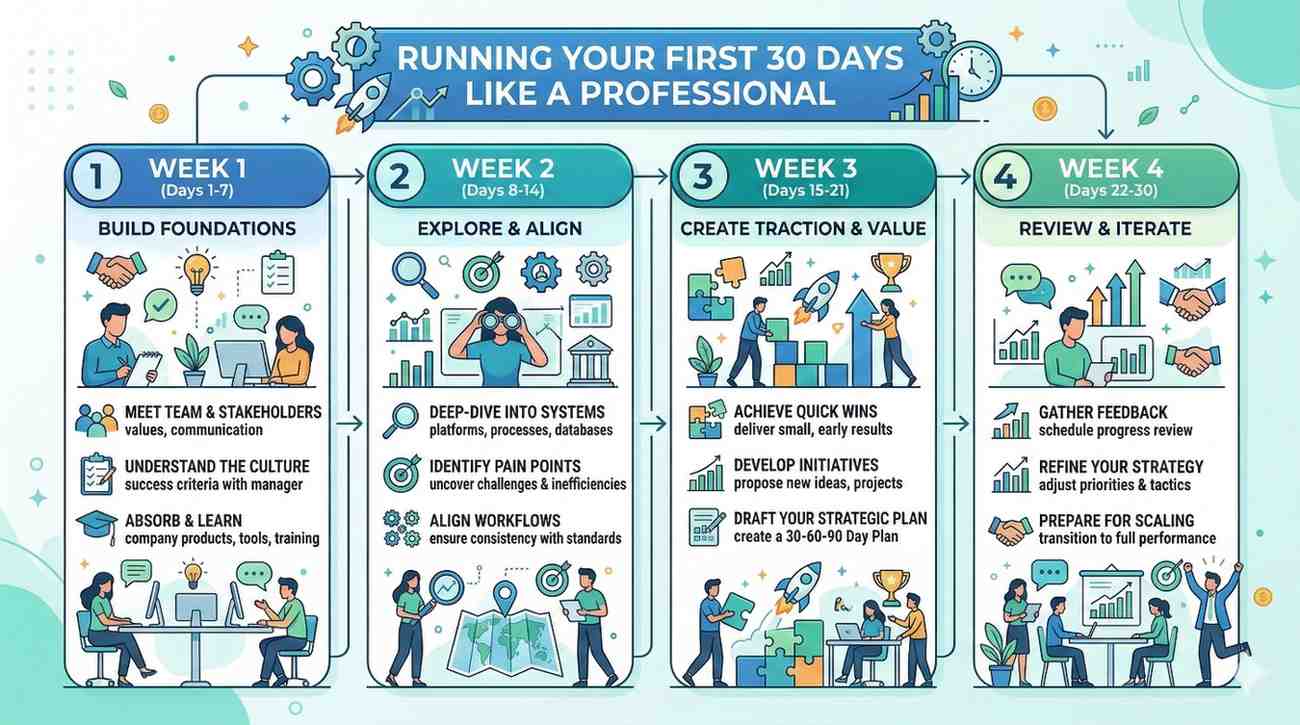
Founders love to talk about what they built. But week one should be mostly about how the partner works today. You are trying to see the real steps, the handoffs, the tools, and the hidden rules.
Ask them to walk you through a recent case. What triggered the work? Who touched it first? What tool did they use? What decision did they make? What went wrong? What did they do next? Where did they copy and paste data? Where did they wait?
When you map the workflow, you find the leverage points. You also find the risk points, like compliance needs, safety limits, and change-control. This is where deep tech projects often break if you ignore them.
Week two should produce a “thin” version that can be used
The second week should push you to something usable, even if it is not elegant. A thin version might be a script, a dashboard, a manual process with a clear output, or a robot run with tight limits.
The point is to get into real usage, because usage creates sharp feedback. Opinions are soft. Usage is hard. If they use it, you learn where it fits. If they avoid it, you learn why.
Do not wait for the perfect model, the perfect UI, or the full automation. In many early AI products, a human-in-the-loop is fine if the outcome is strong. In robotics, tight supervision is fine if the task value is proven.
Week three should focus on outcomes and friction
By week three, you should be watching for two things at the same time. First, did you create the promised outcome? Second, what friction did it create?
Sometimes the product works, but it is painful to deploy. Data access is hard. Integration is heavy. Safety review is slow. The operator hates the interface. Those frictions can kill the deal later, even if the core value is real.
This is where you make smart tradeoffs. You might decide to narrow the product scope to avoid integrations. You might decide to target a different user role. You might decide to make deployment easier even if it reduces features.
The goal is to shape a product that can sell repeatedly, not just once.
Week four should end with a decision, not “let’s keep talking”
At the end of the first month, you should push for a clear decision. That decision can be to expand, to pause, or to stop. All three are useful.
If you expand, define phase two with a paid path and a timeline. If you pause, define what must change to restart. If you stop, capture the lessons and move on quickly.
Design partners are not meant to last forever in the “design” phase. The win is turning learning into a repeatable offer, and turning at least one partner into a real paying customer.
Asking the right questions without turning it into an interview
Get them to show you, not tell you
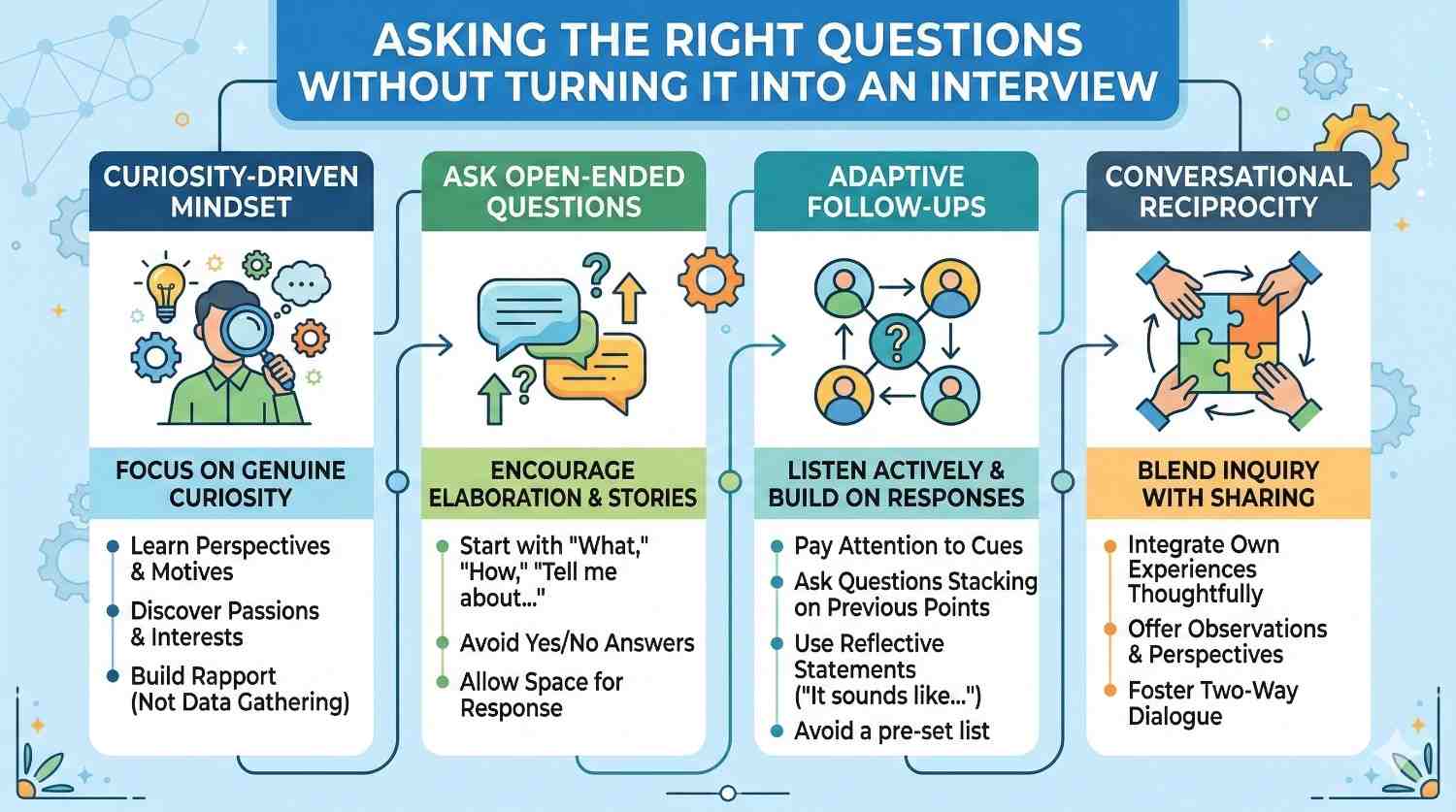
Many partners will describe their pain in a neat way that sounds logical, but it will not match reality. The fastest way to see the truth is to ask them to walk you through what they did yesterday, or the last time the problem happened.
When they show you their screen, their notes, their handoffs, and their workarounds, you see what matters. You see what they actually measure. You see which steps they never mention because they are used to them. You also see where your product could fit without forcing them to change everything.
This matters because product-market fit is often about fitting into the day-to-day. If your tool requires a new habit, a new approval step, or a new data feed, you need to know that early. Design partners can help you find the lowest-friction path.
Separate “pain” from “preference”
Founders often confuse preferences with pain. A preference is “I wish it looked like this” or “it would be nice if it had that.” Pain is “this costs me time every day,” or “we lose money when this fails,” or “this creates risk we cannot accept.”
In design partner calls, listen for the language of cost. Do they talk about delays, missed deadlines, rework, or escalations? Do they mention stress, safety, audits, customer complaints, or downtime? Those are signals that the problem has weight.
When someone gives you a feature request, you should ask what it would change in their world. If nothing changes, the request is likely a preference. If it removes a recurring headache, it is closer to pain.
Find the “moment of value” in their workflow
Every good product has a moment where the user feels the payoff. It might be a decision made faster, an error caught earlier, a task done with fewer steps, or a report created without a fight.
Your job with a design partner is to locate that moment and design around it. Many teams build too far from the payoff. They build tools that prepare data, organize tasks, or create dashboards, but they never deliver the moment that makes the buyer say, “I need this.”
Ask questions that help you find that moment. When do they feel stuck today? When do they feel relief? When do they celebrate a win? When do they get yelled at? Those moments point to where your product must deliver value.
How to avoid becoming a custom services shop
Treat every request like a clue, not an order
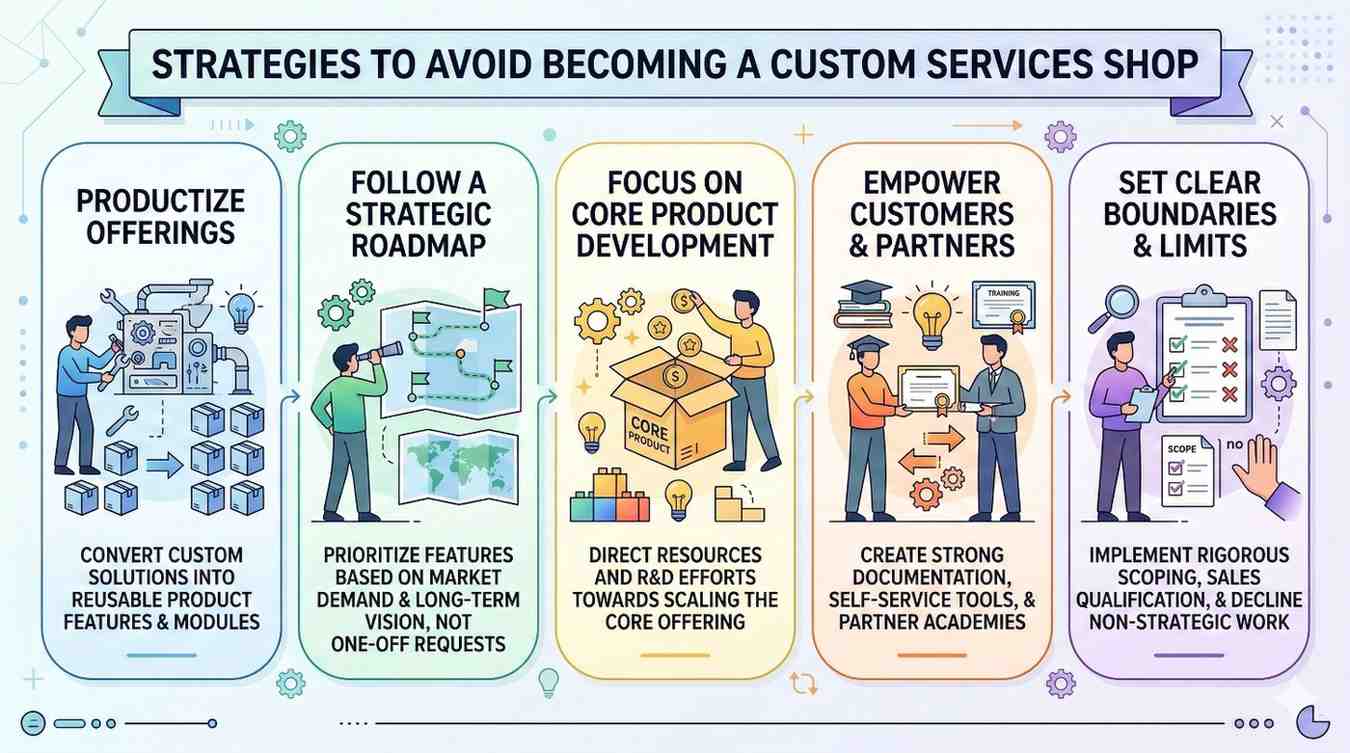
Design partners will ask for many things. Some requests are valid, but many are shaped by what they already know. If you build every request, you become a contractor with a complicated backlog.
The right stance is respectful, but firm. When a request comes in, treat it like a clue about the real goal. Ask what outcome they want. Ask what breaks today. Ask what they tried before. Then decide if the request fits the product direction.
This is where founders need discipline. A design partner should help you find a scalable product shape, not pull you into a one-off build. If you cannot say no, you will not find product-market fit. You will find exhaustion.
Keep one “core promise” and measure everything against it
A simple way to stay out of services work is to define one core promise. For example, “We cut inspection time by half without losing accuracy,” or “We reduce robot downtime by catching faults earlier,” or “We help teams route work with fewer errors.”
When feature ideas show up, you compare them to the promise. If the feature makes the promise stronger, it goes in. If it does not, it waits. This keeps the product coherent.
Design partners respect clarity. In fact, they often prefer it. They do not want you to build a messy tool that does everything. They want you to solve the painful part well.
Use “configuration” as your friend and “custom code” as your enemy
Many early teams think customization is the same as flexibility. It is not. Custom code is expensive, fragile, and hard to maintain. Configuration is cheaper and can still feel personal to the customer.
As you learn from design partners, aim to turn special cases into settings, rules, templates, or data mapping. This lets you support different environments without rewriting your product each time.
In robotics, the same idea applies. You cannot rebuild the system for every site. You need a deployment approach that can adapt, with limits. Design partners can teach you what must be flexible and what can stay fixed.
Decide upfront what you will not do
A quiet way to get trapped is saying yes to “just one more thing,” then another, then another. The partnership becomes endless. The product never stabilizes. Sales never starts.
You can prevent this with a simple boundary. For example, “We will support these two integrations in phase one, and nothing else,” or “We will handle this one task first, and we will not expand scope until success is proven.”
Boundaries are not rude. They are part of being a serious company. They also protect your design partner, because it keeps the project moving toward an outcome.
Turning design partner work into proof of product-market fit
Track evidence like you are building a case
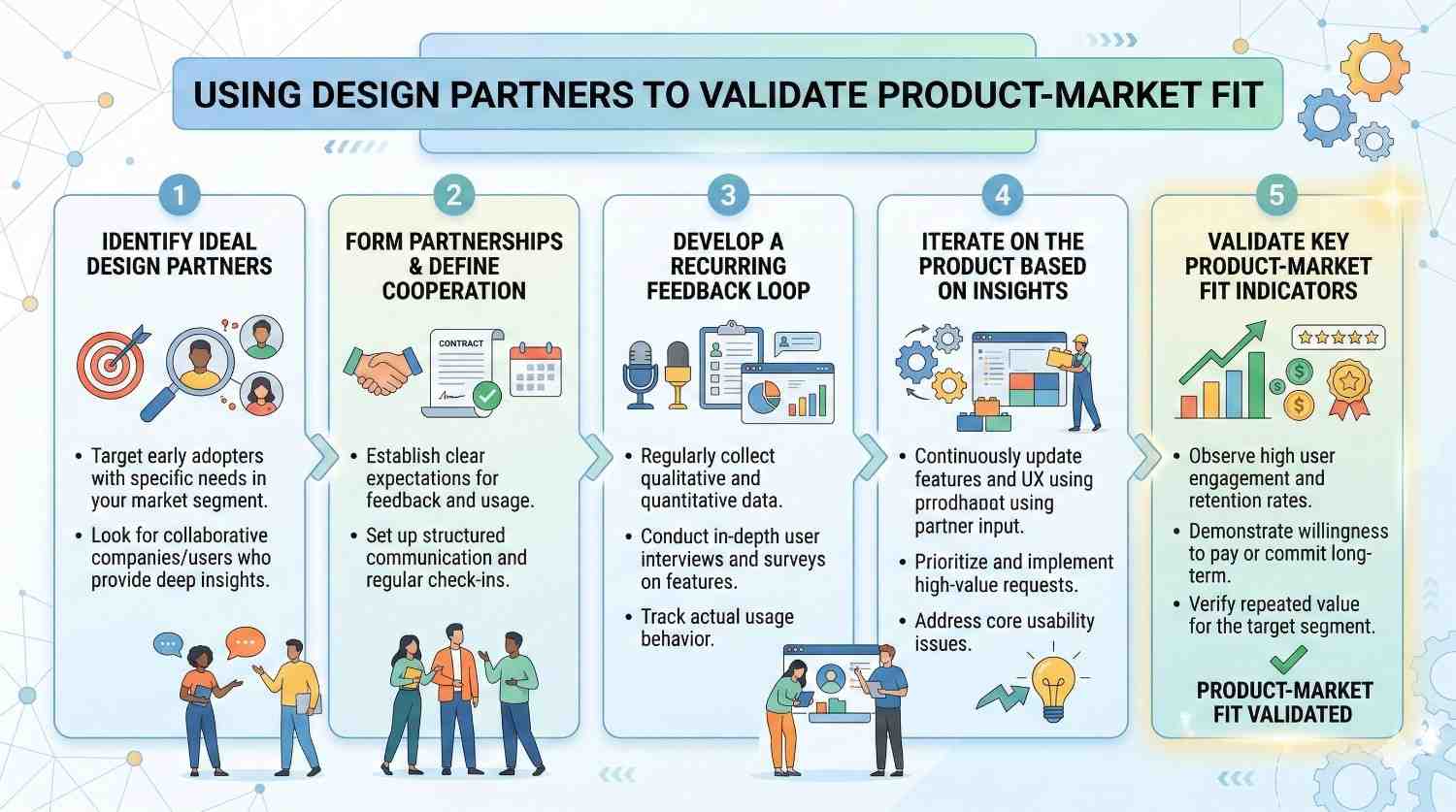
Product-market fit proof is not just a story. It is a set of facts you can point to. Design partners are your best source of those facts, but only if you capture them.
From the start, track baseline numbers. How long does the task take today? What is the error rate? How much downtime happens? How many hours are spent on manual steps? How often does the issue happen?
Then track the same numbers after your tool is used. Even small improvements matter, as long as they are real and repeatable. Over time, you will build a clear before-and-after picture.
This is not only for investors. It is for sales. Buyers trust proof more than promises.
Get quotes that describe outcomes, not compliments
Compliments are nice, but they do not sell. A quote like “this is amazing” is weak. A quote like “this saved our team four hours a week and reduced rework” is strong.
When you hear an outcome statement, ask if you can write it down and use it. Many partners will agree if you keep it anonymous, or if you wait until later to name them.
Do not pressure them. Just keep collecting truthful language that reflects real value. The words your design partners use often become the best copy for your site and your pitch.
Use “commitments” as your strongest signal
The clearest sign of product-market fit is a commitment. This can be a paid phase two, a signed letter of intent, a security review that they initiate, internal time they allocate, or a plan to deploy to more sites.
Time is also a commitment. If a busy operator shows up every week and pushes you to improve, that is a signal. If a manager introduces you to procurement, that is a signal. If they connect you to another team because they want this to spread, that is a signal.
Design partners who only talk, but never commit time, data, or internal steps, are not showing fit. They may still be useful learning, but you should not mistake interest for traction.
Common failure modes and how to prevent them
Picking partners who are too large too early
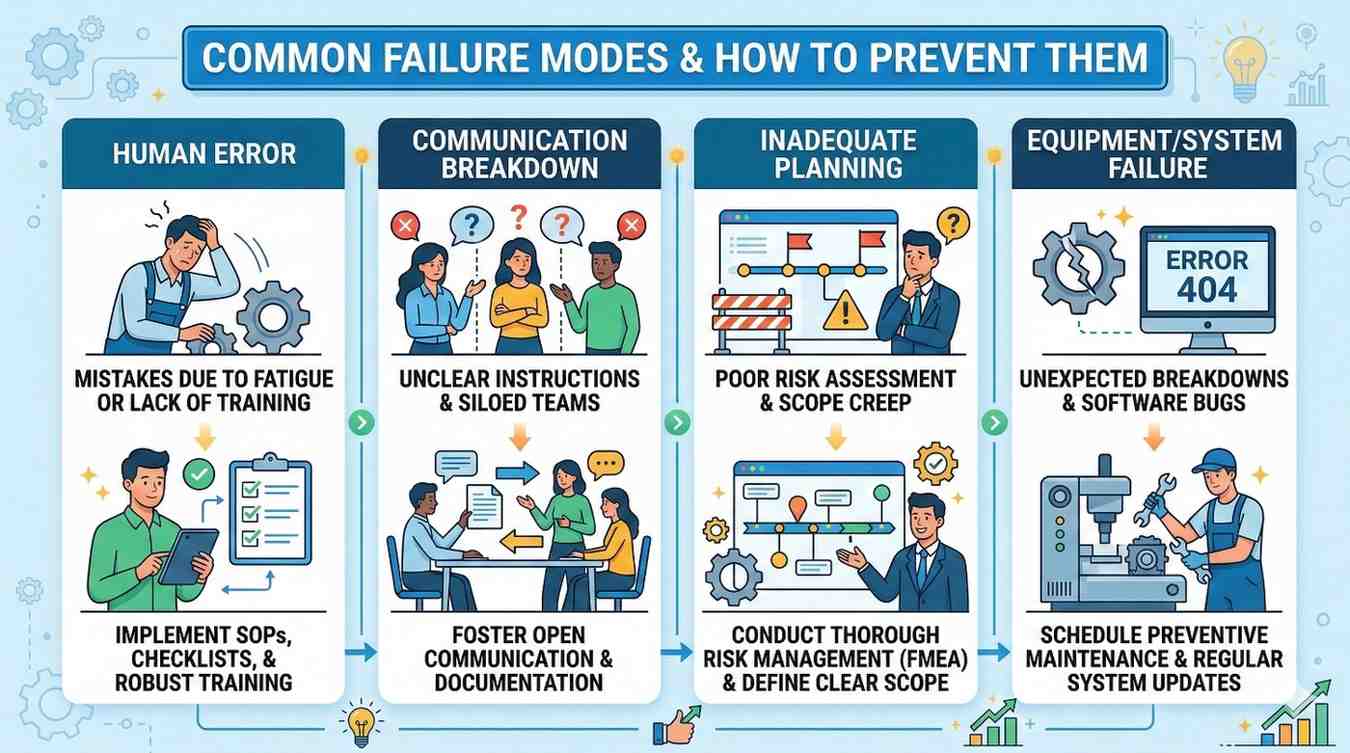
Big brands feel safe. Founders want the logo. But large companies often move slowly, and they may not be willing to change any workflow for a small vendor.
A smaller or mid-sized partner can be better in the early phase. They often feel the pain more directly, decide faster, and give you cleaner feedback. They can help you reach a strong product shape, then you can take that shape upmarket later.
If you do choose a large partner, be honest with yourself about timeline. Protect your runway and your focus.
Letting the partner define the success metric
If you let the partner define success without your input, you might end up with a metric that does not prove value. For example, they may pick something easy to measure but not tied to a buying decision.
You should propose a success metric that ties to cost, time, risk, or revenue. It should be meaningful and realistic. It should also be something you can measure without months of debate.
A good success metric makes phase two obvious. It makes the paid step feel like a rational next move, not a leap of faith.
Forgetting to protect what you are learning
Design partner work can surface unique methods, system designs, data approaches, and novel workflows. If you do not capture and protect these insights, you may lose a chance to build a real moat.
This is where Tran.vc can help founders move with speed while staying protected. We invest up to $50,000 in-kind in patent and IP services so your early technical edge does not stay only in your head or in a Git repo. If you want help shaping an IP plan while you validate with design partners, apply any time here: https://www.tran.vc/apply-now-form/