
Most deep tech founders do the hard part first.
They build real tech. Not a landing page. Not a “concept.” Real code. Real models. Real robots. Real lab work.
Then something strange happens.
They treat IP like paperwork. Like a “later” task. Like something to do after the product is done, after traction, after a seed round.
That one delay can cost you years.
Because in deep tech, your advantage is not your brand. It is not your marketing. It is not your pricing page.
Your advantage is what you built and what others cannot copy.
That is IP.
And for deep tech, IP is not a “nice to have.” It is the base layer.
If you are building AI, robotics, sensors, chips, bio, energy, or any hard science product… you are not just shipping software. You are creating new methods. New systems. New ways to do work. That is the stuff patents were made for.
You do not need IP because you want to sue people.
You need IP because you want options.
Options to raise. Options to partner. Options to sell. Options to hire. Options to survive the moment a bigger player notices you.
Tran.vc exists for this exact early moment. We invest up to $50,000 in in-kind patent and IP services for deep tech founders, so you can build a moat while you build the product. You can apply anytime here: https://www.tran.vc/apply-now-form/
What “IP” really means for a founder
IP is not only patents
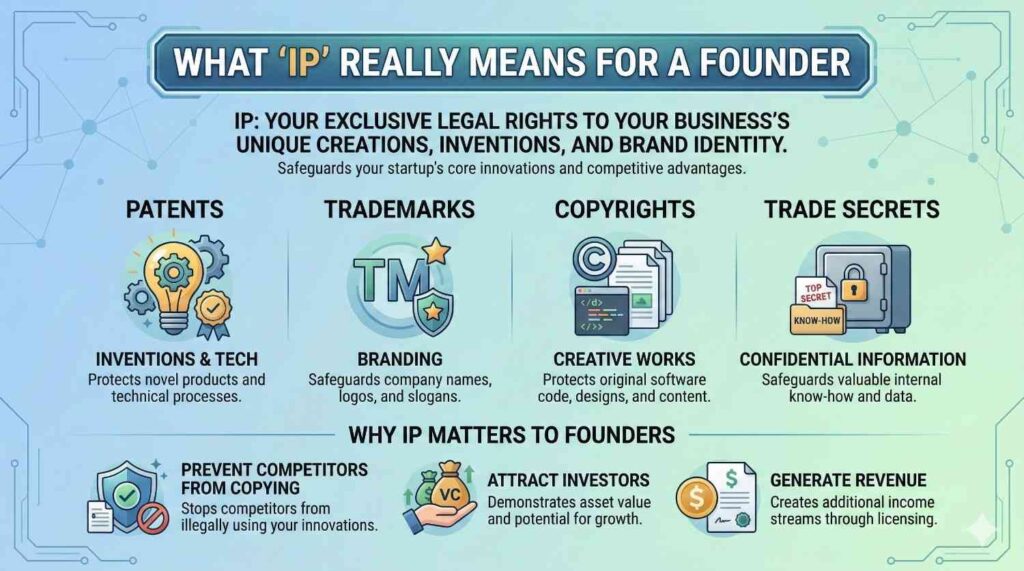
When founders hear “IP,” many think only of patents. Patents are a big part, but they are not the whole picture. IP is the full set of rights that help you control what you create. It includes patents, but it also includes trade secrets, copyright, trademarks, contracts, and assignment agreements.
In deep tech, the real goal is control. Control over what you built, how it can be used, and who can build something too close without paying a price. The tool you use depends on what you built, how fast the field moves, and what needs to be shared to sell the product.
Patents are powerful when you need to disclose details to partners, customers, or regulators. They are also helpful when your work is easy to reverse engineer. Trade secrets can be strong when the value is in a hidden process or in know-how that never needs to be shown.
IP is also about clean ownership
Ownership problems can kill a company quietly. Many early teams have messy edges. A founder wrote code at a prior job. A contractor built a key module without proper assignment. A friend helped with the model and now believes they “own part of it.”
These issues may not show up in product development. They show up during fundraising, partnerships, and acquisitions. That is when legal teams start asking hard questions. If you cannot answer cleanly, deals slow down or die.
A strong IP foundation is not only about blocking competitors. It is also about proving, clearly and fast, that the company owns its core work. Clean ownership makes everything easier later.
If you are unsure whether your ownership and IP basics are tight, Tran.vc can help you sort it early with real patent support. Apply anytime at https://www.tran.vc/apply-now-form/
Why deep tech startups must start with IP early
The first months are when the best ideas appear
The earliest phase is messy, but it is also creative. You try approaches that later become the “secret sauce.” You test structures, data flows, reward functions, sensor fusions, compression tricks, and control strategies. Many of these ideas feel small in the moment, but they become big later.
If you wait until product-market fit to think about IP, you may miss the best inventions. You might still file, but the most valuable pieces may already be public through papers, talks, demos, blog posts, GitHub, or customer decks. In many places, public disclosure can weaken or destroy patent options.
Early does not mean rushing to file everything. Early means capturing what is new as it happens. It means writing it down, time-stamping it, and deciding what should become a patent, what should stay secret, and what should be shared.
Fundraising gets easier when you can explain your moat
Investors are not only buying your story. They are buying your odds. Deep tech is risky. So investors look for proof that the team can build something hard and keep it defensible. If your only defense is “we are fast,” you will face tougher questions.
Good IP does not replace execution, but it supports it. It shows that the company can create new methods, not just glue pieces together. It also shows that you can protect what you build, which lowers the risk that a better-funded team can copy and outspend you.
This matters even more in robotics and AI, where large players can move quickly once they see a market. A strong IP position helps you negotiate, partner, and raise from a position of strength.
Partnerships often require disclosure
Deep tech teams often need partners early. Hardware suppliers, data providers, labs, channel partners, and enterprise customers may ask for technical detail before they commit. Even a pilot program can require deep discussions.
Without an IP plan, these discussions can be risky. You may overshare to win the deal, and later realize you gave away the key idea. Or you may undershare and lose the deal because the partner cannot evaluate the system.
A clear IP plan helps you share the right things in the right way. It helps you decide what to file first, what to keep internal, and how to structure contracts so you do not lose ownership when you collaborate.
If you are entering partner talks and want to protect your leverage, Tran.vc can guide the IP strategy and filings. Apply anytime at https://www.tran.vc/apply-now-form/
The most common mistake: treating IP like a “later” task
“We’ll do it after we raise” is usually backward
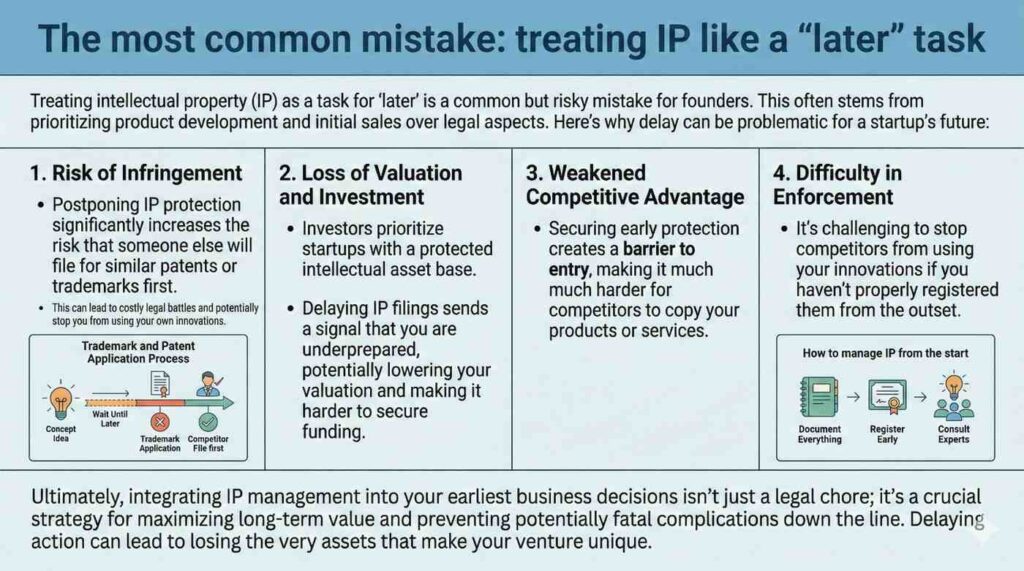
Many founders believe they need funding before they can afford IP. That belief makes sense, but it creates a trap. If you wait until after you raise, you may discover that investors want to see IP progress before writing a check. Now you are stuck in a loop.
It is also common that once you raise, your calendar gets worse, not better. You are hiring, selling, and shipping. IP becomes another task that keeps slipping. Meanwhile, the risk grows because you are showing more and more of your system to the world.
A better approach is to treat IP like product. You do not “finish” it once. You build it over time. You start small with the core inventions, then expand as the product evolves.
Filing too late can cost you options
Once you disclose an invention publicly, patent options can change. The details depend on where you file and what was disclosed, but the risk is real. A slide deck shown to the wrong audience can become a problem. A blog post can become prior art. A public demo can narrow what you can claim.
This is why early planning matters. You do not need to hide forever. You just need to file or protect before you tell the world the most valuable parts. That timing can be the difference between owning a strong position and owning nothing defensible.
How to spot real IP inside your deep tech work
Inventions rarely look like inventions at first
Most founders imagine patents as big breakthroughs. A new algorithm. A new robot design. A never-seen-before system. In reality, many strong patents start as small engineering choices that solve a painful problem.
It might be a way you stabilize a model with less data. It might be how your robot handles failure states. It might be how your system switches modes when inputs change. These ideas feel obvious once they work, but they were not obvious before you built them.
The mistake many teams make is ignoring these details. They focus only on the final product and miss the inventions hidden inside the process. IP thinking trains you to notice what is new in how you solve problems, not just what the product does.
AI and robotics are full of protectable “how”
In AI, value often lives in training flows, data handling, feedback loops, and system structure. Two models may look similar from the outside, yet behave very differently because of how they are trained, tuned, or combined with other systems.
In robotics, the “how” is everywhere. Control strategies, sensor fusion, calibration steps, recovery behaviors, and safety mechanisms are often unique. Even small improvements can matter, especially when they reduce cost, power use, or failure rates.
These are not marketing features. They are engineering decisions. That is exactly why they are easy to miss and easy to copy if they are not protected.
The question to ask your team every week
A simple habit can change everything. Once a week, ask a short question: “What did we solve this week that we had not seen before?” Do not ask for polished answers. Ask for rough notes.
This question surfaces ideas early. It helps you catch inventions while they are fresh. It also builds a culture where engineers see their work as valuable IP, not just tasks on a sprint board.
Tran.vc works with founders to turn these raw insights into real protection. You do not need to be a patent expert. You just need to notice what is new. If you want help building this muscle, apply anytime at https://www.tran.vc/apply-now-form/
What to document before you think about filing
Writing is your first layer of defense
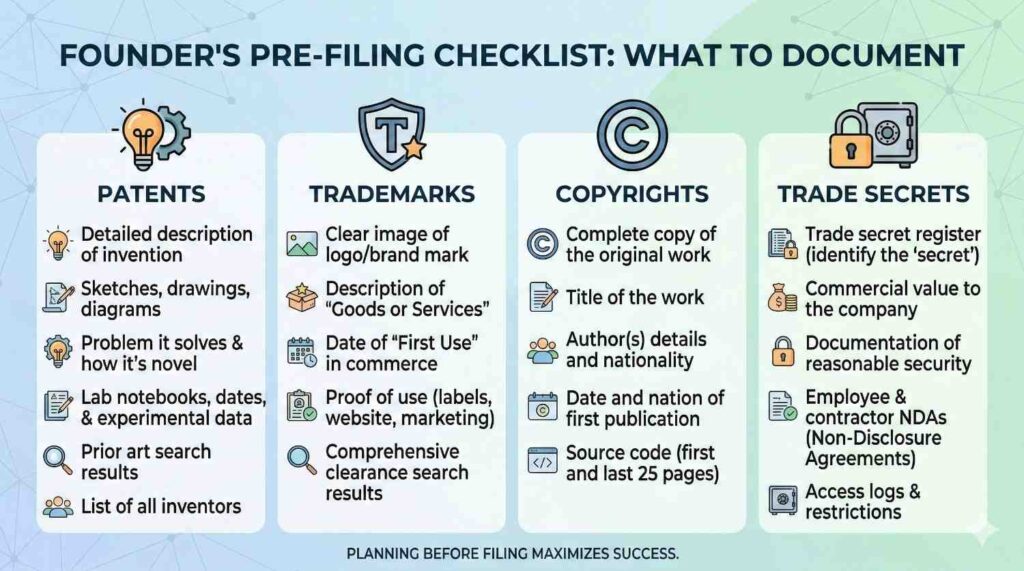
Before patents, there is documentation. Not heavy process. Just clear notes. When you write down what you built, why it is different, and what problem it solves, you create a record. This record helps in many ways later.
It helps patent attorneys understand your work faster. It helps prove timelines if questions come up. It also helps your own team remember why a decision was made, which matters as the company grows.
Good documentation is not long. It is clear. A few pages explaining the system, the alternatives you tried, and why this approach works can be enough to capture the core idea.
Diagrams matter more than perfect text
Deep tech is visual. Systems, flows, states, and loops are easier to understand when drawn. Simple diagrams can reveal structure that text alone hides. They also help identify what is truly new.
Many strong patents start from a whiteboard sketch. The goal is not beauty. The goal is clarity. If someone can look at the diagram and understand what is happening, you are already halfway to protecting it.
Keep private notes private
One common mistake is mixing internal notes with public tools. Internal design docs should not live in places where they can be shared by accident. Be careful with public repos, shared drives, and open forums.
This is not about secrecy for secrecy’s sake. It is about control. You can always choose to share later. You cannot undo a disclosure once it is out.
How IP supports fundraising without slowing you down
Investors look for intent, not perfection
Early-stage investors do not expect a massive patent portfolio. What they want to see is intent and direction. They want to know that you understand what is valuable and that you are taking steps to protect it.
Even one or two well-thought-out filings can change the tone of a conversation. It shows that the company is serious about building a moat, not just a demo. It also signals maturity, which matters when risk is high.
IP helps you tell a clearer story
When you can explain your IP, you often explain your business better. You are forced to articulate what is unique, what is hard to copy, and why it matters. This clarity helps in pitches, demos, and partner talks.
It also helps you say no. When you know what is core, you are less likely to give it away in exchange for short-term wins. That discipline protects the company long-term.
Leverage comes from ownership
Ownership creates leverage. Leverage helps you raise on better terms, partner without fear, and grow without panic. IP is not the only source of leverage, but in deep tech, it is one of the strongest.
Tran.vc’s model is built around this idea. We invest up to $50,000 in in-kind patent and IP services so founders can build leverage early, without giving up equity too soon. If this approach fits your goals, apply anytime at https://www.tran.vc/apply-now-form/
Common IP traps that hurt deep tech startups
Contractor and advisor ownership issues
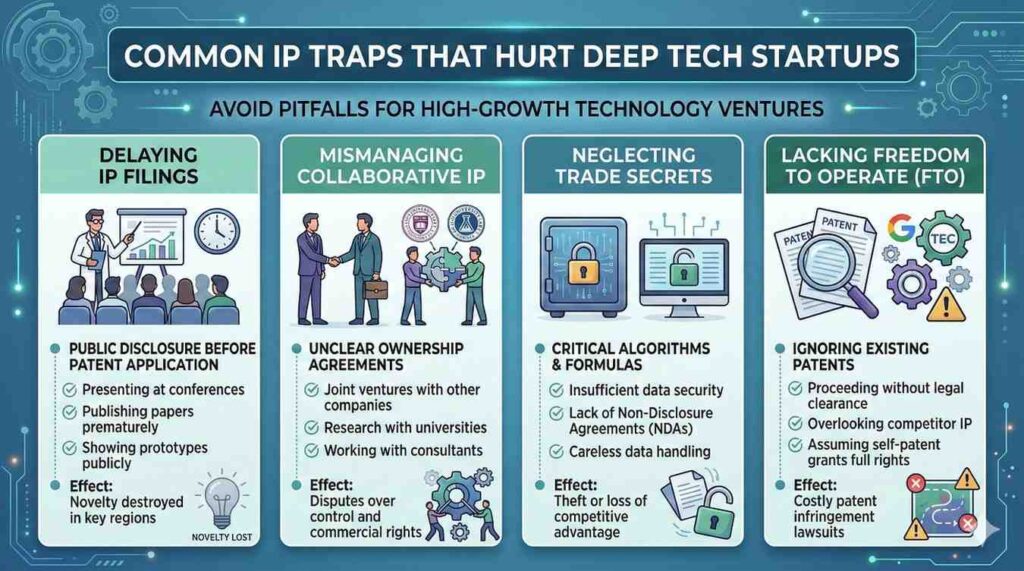
Many startups rely on contractors, advisors, or part-time contributors early. This is normal. The risk comes when ownership is not clear. Without proper agreements, the company may not fully own what was built.
This problem often stays hidden until diligence. Then it becomes urgent and expensive to fix. In some cases, it cannot be fixed cleanly at all. Early clarity is much cheaper than late cleanup.
Open source without a plan
Open source can be powerful, but it must be used with care. Mixing licenses, copying code without understanding terms, or open sourcing core logic too early can limit future options.
This does not mean avoiding open source. It means using it with intent. Know what you rely on, what you modify, and what you give back. An IP-aware approach helps you avoid surprises later.
Talking too much, too soon
Founders are often told to “talk to everyone.” That advice is useful, but dangerous if taken without filters. Sharing high-level vision is safe. Sharing deep implementation details without protection is risky.
An IP plan gives you a map. It tells you what can be shared freely and what should stay protected until the right moment.
How to think about patents in AI and robotics without slowing development
Patents should follow your build rhythm
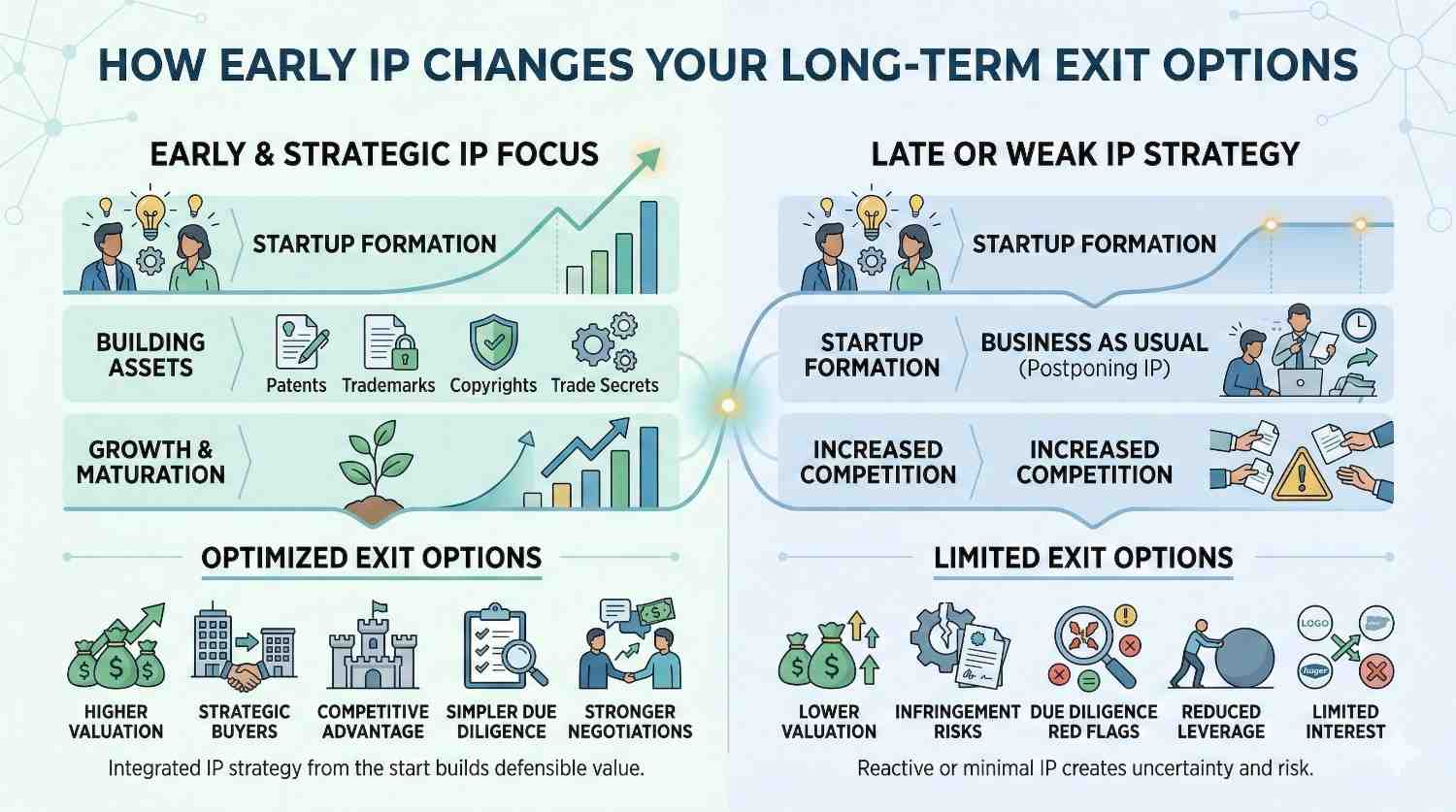
Many teams fear patents because they imagine weeks of distractions. In a well-run process, patents do not interrupt product work. They follow it. The team builds, the invention is captured, and the filing work happens in a structured way with minimal founder time.
The key is timing. You do not want to start a patent process when your team is in the middle of a critical release. You also do not want to wait until the invention is already baked into a public demo. The best window is often right after a breakthrough, while the details are clear and before the idea spreads outside the company.
This is why having a repeatable workflow matters. When the process is simple, founders stop seeing IP as a “project” and start seeing it as a normal part of building deep tech.
In AI, the patentable parts are often the system choices
AI founders sometimes assume algorithms are not patentable or that patents only apply to pure math. In practice, patents in AI often focus on how the system is built and used in the real world.
That includes how data is collected, cleaned, labeled, and validated. It includes how models are trained, updated, and monitored. It includes how outputs are checked for safety, reliability, and drift. It includes how multiple models work together and how decisions are made when confidence is low.
These system choices are valuable because they are tied to performance, cost, and reliability. They are also tied to real business outcomes. When framed properly, they can form strong protection.
In robotics, patents often live in edge cases and reliability
Robotics is full of moments where the “happy path” is not the hard part. The hard part is what happens when the sensor is noisy, the surface is slick, the object is deformed, or the environment changes in ways you did not expect.
If your team has figured out how to handle these edge cases in a repeatable way, that is likely valuable IP. The same is true for calibration flows, safety shutdown systems, self-check routines, and recovery behaviors.
A robot that performs well only in a controlled lab is not a product. The methods that make it work in the real world are often the core inventions worth protecting.
Patents and trade secrets are not enemies
Some founders treat this like a single choice: patent or secret. In real companies, it is often both. You patent what you must reveal or what can be reverse engineered. You keep secret what can stay hidden and what would be hard for a rival to recreate without your internal know-how.
The goal is not to file everything. The goal is to protect the right things with the right tools. That is a strategy decision, not a legal detail.
Tran.vc helps founders make these decisions with clear thinking and real patent support. If you want a plan that fits your build pace, apply anytime at https://www.tran.vc/apply-now-form/
What “starting with IP” looks like in practice
Step one is mapping what you are actually building
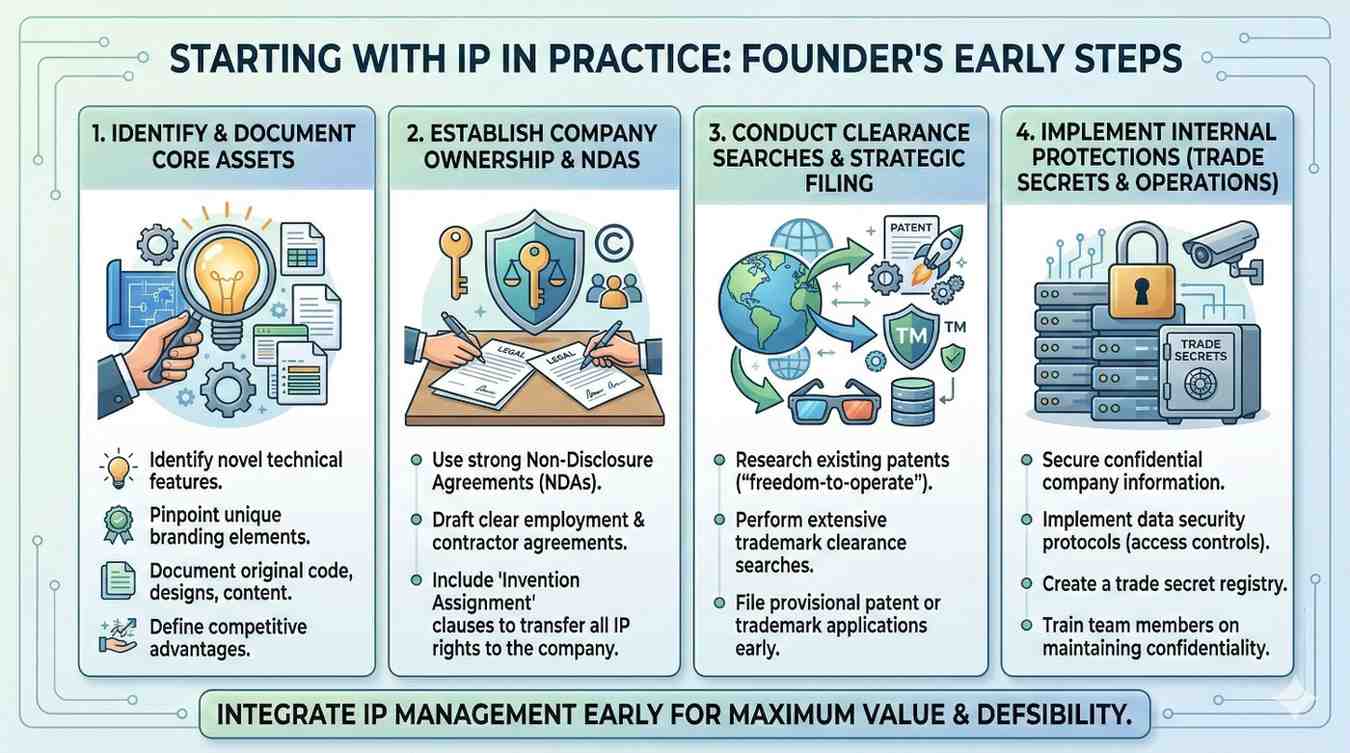
The first practical move is to map the system. Not in marketing terms, but in engineering terms. What are the major modules? What are the flows? Where does data enter and leave? Where are decisions made? What parts are new versus standard?
This mapping makes your IP visible. It also makes gaps visible. Many teams think their advantage is in one place, then realize it is spread across three or four connected ideas.
When you can see the system clearly, you can decide what should be protected first. Usually it is the part that gives you performance, cost advantage, safety, or a unique workflow that others will want to copy.
Step two is choosing a “core wedge” to protect first
Deep tech startups often have many inventions. Filing on all of them at once is not realistic. The better approach is to pick a core wedge.
A core wedge is the piece that, if protected, makes everything else harder to copy. It might be your training method. It might be a control loop. It might be a safety system. It might be a unique way of using sensors to solve a common task.
Protecting the core wedge first creates early leverage. It also gives you a base for later filings that build outward as the product evolves.
Step three is building a habit of capture
The best IP portfolios are not built in a rush. They are built through steady capture. The team keeps short invention notes, basic diagrams, and a clear record of experiments and decisions. Over time, patterns appear.
Once you have this habit, filing becomes easier. You are not trying to remember what happened six months ago. You are simply turning existing notes into a structured application.
This is also where founders save time. When capture is part of the build process, the attorney work becomes more efficient because the raw materials are already there.
Step four is aligning IP with your go-to-market
Protection should match how you sell. If you sell to enterprise, your buyers may want confidence that you own what you ship. If you sell into regulated spaces, you may need to share more technical detail with auditors and partners. If you sell hardware, competitors may be able to reverse engineer parts of your design.
Your IP choices should reflect these realities. A strong plan is not generic. It is tailored to your market path.
How Tran.vc’s in-kind IP investment supports founders
You get real IP work, not advice in a vacuum
Many founders have heard high-level IP advice that sounds nice but does not change anything. “File patents.” “Protect your moat.” “Talk to a lawyer.” That is not enough when you are shipping fast and juggling everything.
Tran.vc is built to be hands-on. We invest up to $50,000 in in-kind patenting and IP services so founders can move from “we should do IP” to “we are doing IP” without pausing the company.
This is not about dropping a template in your inbox. It is about working through what you built, what is new, and what to protect first, then executing filings with experienced support.
It is designed for pre-seed reality
Pre-seed founders are resource-constrained. Time is tight. Cash is precious. The team is small. That is why Tran.vc’s model matters: it is not only money. It is deep work done early, when it has the highest impact.
When the foundation is strong, later fundraising becomes smoother. Partner talks get safer. Diligence becomes easier. Most importantly, you keep more control because you are not forced to raise too early just to afford basic protection.
If you want to explore this path, apply anytime at https://www.tran.vc/apply-now-form/
How early IP changes your long-term exit options
Acquirers pay for certainty
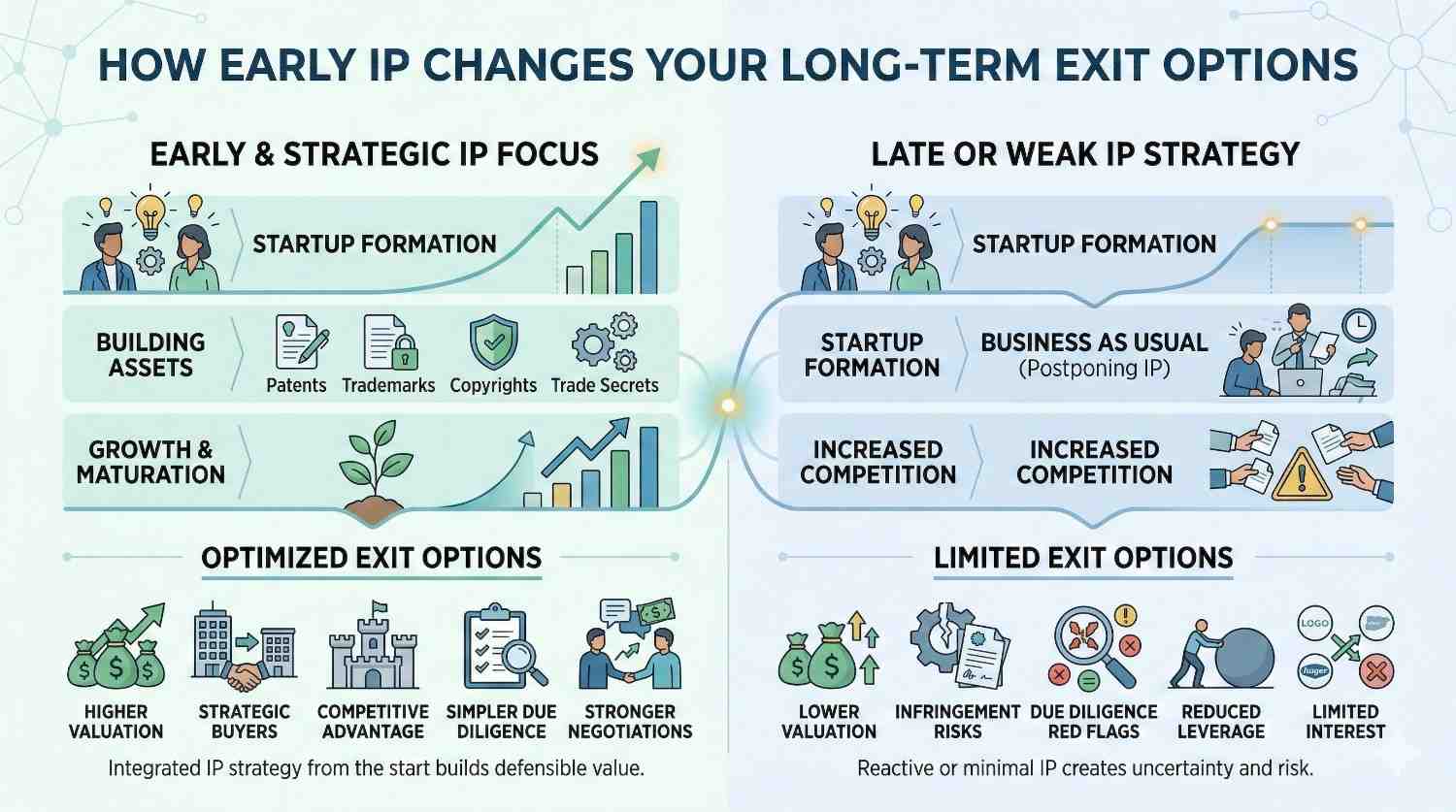
When a company buys a deep tech startup, they are buying more than revenue. They are buying capabilities, know-how, and future advantage. The buyer’s legal team will look for certainty: does the startup own what it claims to own, and can that ownership be defended?
Strong IP does not guarantee a deal, but weak IP can create doubt. Doubt lowers price, slows timelines, or kills acquisitions entirely. Early IP work can prevent painful surprises later.
IP helps you partner without losing control
Some deep tech startups win through partnerships rather than direct sales. That can be powerful, but it also increases exposure. The more you collaborate, the more you share. If your protection is weak, partners may become competitors.
A clear IP position creates safer collaboration. It helps you structure agreements with confidence. It also allows you to say yes to opportunities without fearing that you are giving away the core.