
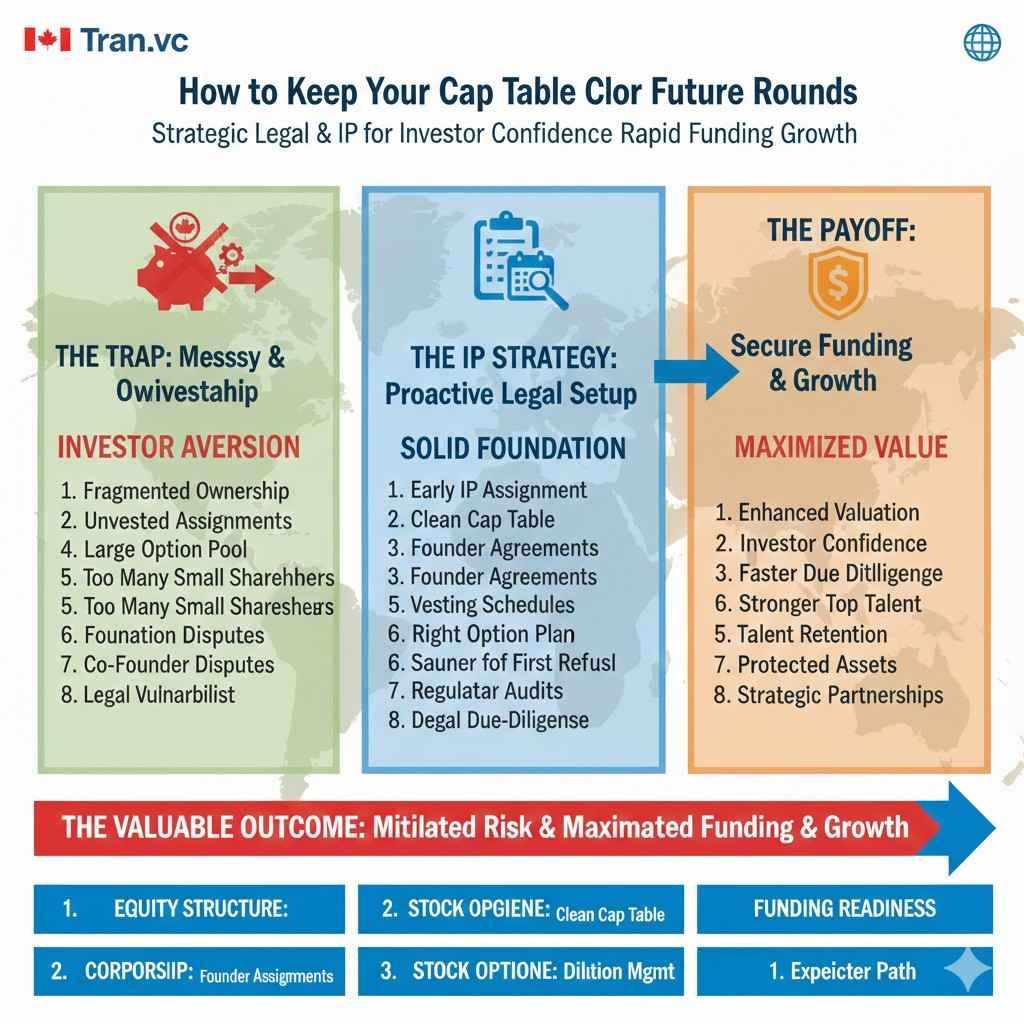
A clean cap table is one of those quiet things that decides how easy your next round will be.
Most founders only notice it when something breaks. A new investor asks for your ownership file. Your lawyer starts pulling threads. And suddenly you are stuck explaining why five different people “kind of” own the same thing, why an early advisor has a huge chunk for “helping with vibes,” or why a friend-of-a-friend has a weird note with no clear terms.
If you build in robotics, AI, or deep tech, this matters even more. Your next round may include careful seed funds, strategic investors, or customers who invest. They move slower, they ask more questions, and they do not like surprises. A messy cap table does not just look sloppy. It can change how they price the round, how long diligence takes, and whether they walk away.
At Tran.vc, we see this pattern a lot: strong builders, real tech, early traction, but the cap table was treated like a casual spreadsheet. The good news is you can avoid most of the pain with a few simple habits from the start—and you can fix many issues before they become fatal.
This guide is about keeping your cap table clean so future rounds feel simple, not stressful. I will keep it plain, direct, and useful. No fancy talk.
And if you want expert help building a real moat early—especially around patents and IP—Tran.vc can support you with up to $50,000 in in-kind patent and IP services so you raise with more leverage later. You can apply anytime here: https://www.tran.vc/apply-now-form/
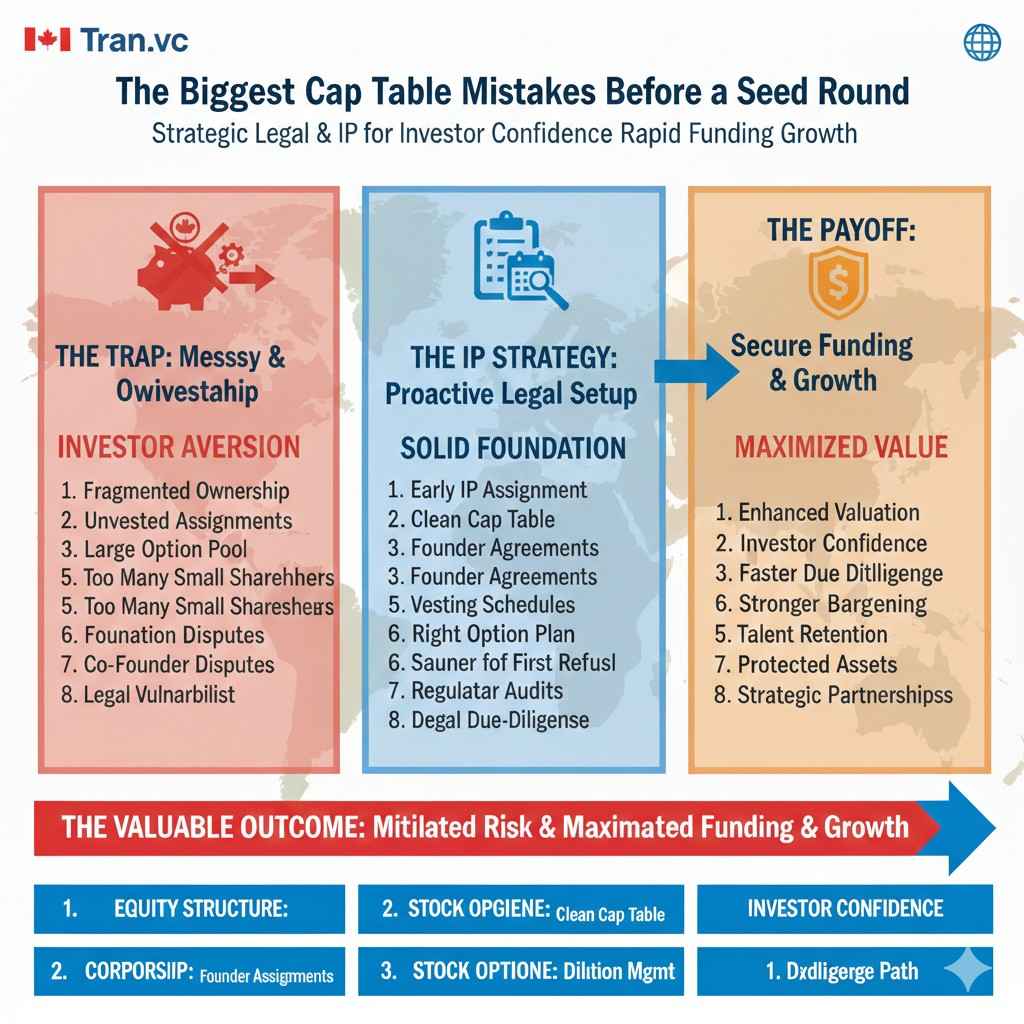
The Biggest Cap Table Mistakes Before a Seed Round
Giving away equity too early because it feels “cheap”
Early on, equity feels like pretend money. You look at 10% and think, “That’s fine, we’ll be huge later.” But that is the point. If you become huge later, that 10% becomes very real.
This mistake usually happens in small moments. A friend helps you hire one engineer. A mentor reviews your pitch deck. A senior person takes a few calls and says kind things. You feel grateful, and equity feels like the easiest way to say thank you.
A clean cap table comes from delaying equity until the value is clear. If someone will be important for months or years, equity can fit. If their help is short, pay cash if you can, or keep it as a favor both ways without ownership attached.
Handshake deals that never become real paperwork
A handshake deal is not a deal. It is a future argument with a date missing. Investors do not fear friendly founders. They fear unclear promises that can turn into legal claims.
Many cap tables get messy because founders promise “we’ll sort it out later.” Later becomes a rush. People remember the promise differently. Someone forwards an email. Now you are negotiating while raising, which is the worst time to do it.
Clean founders write things down while the relationship is good. Not to be cold, but to be fair. A simple written agreement protects both sides and keeps your ownership story tidy.
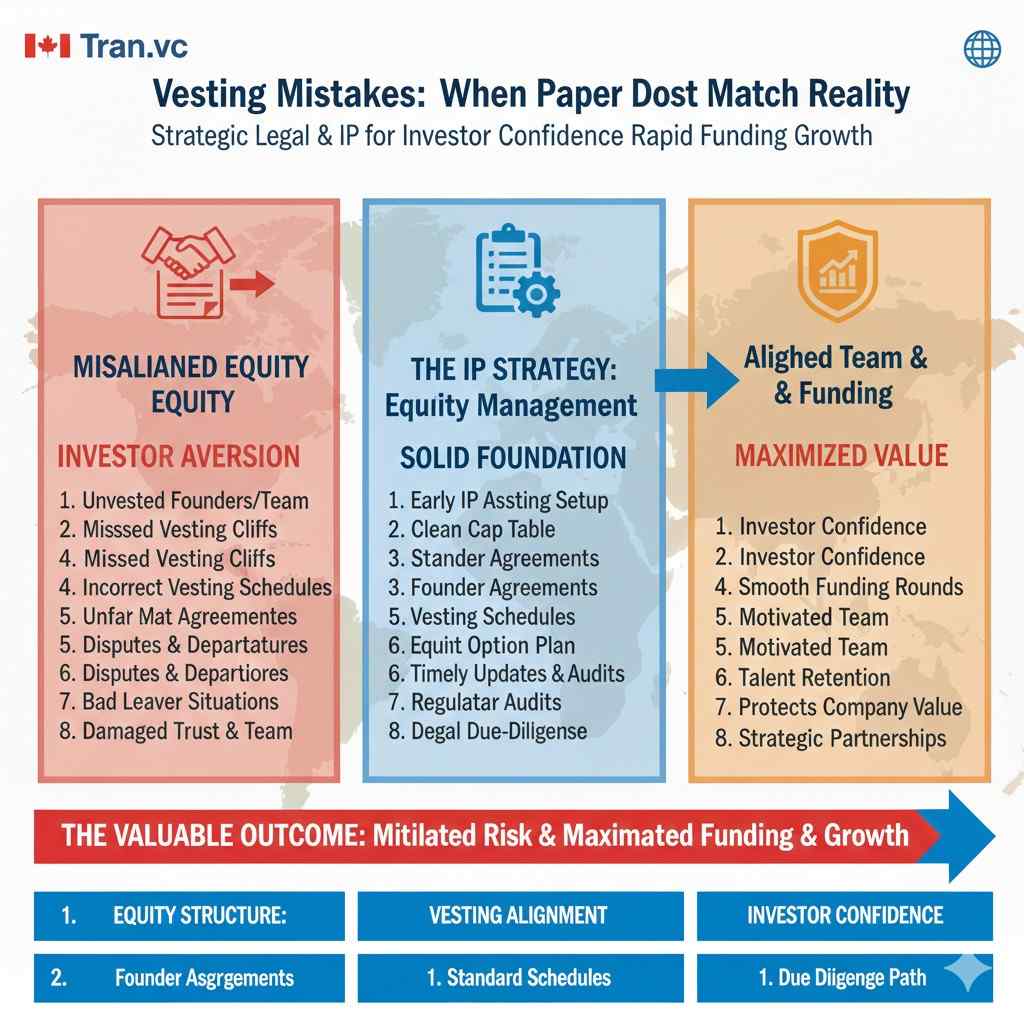
No vesting, or vesting that does not match reality
If equity does not vest, it can turn into dead weight fast. A co-founder leaves. An early employee quits. An advisor disappears. Yet the shares stay with them forever. That can block future rounds because new investors hate paying for work that never happened.
Vesting should match time and effort. If someone is expected to contribute over years, they should earn their equity over years. This removes drama when life happens and people move on.
A clean cap table is not the one where nobody leaves. It is the one where, if someone leaves, the company can still move forward without being trapped by old decisions.
Too many different SAFE or note terms
Founders often raise early money in small chunks. That can be fine. The risk starts when every check comes with different terms. One SAFE has a cap, another has a discount, a third has a side letter, and someone else has special rights.
When the priced round arrives, you now have a puzzle. Your lawyer must model conversions. The lead investor will ask hard questions. If the answers take weeks, momentum dies.
A clean approach is boring and powerful: standardize. Use one set of terms for a period of time. If terms must change, keep it rare and document it clearly so conversion math is easy to explain.
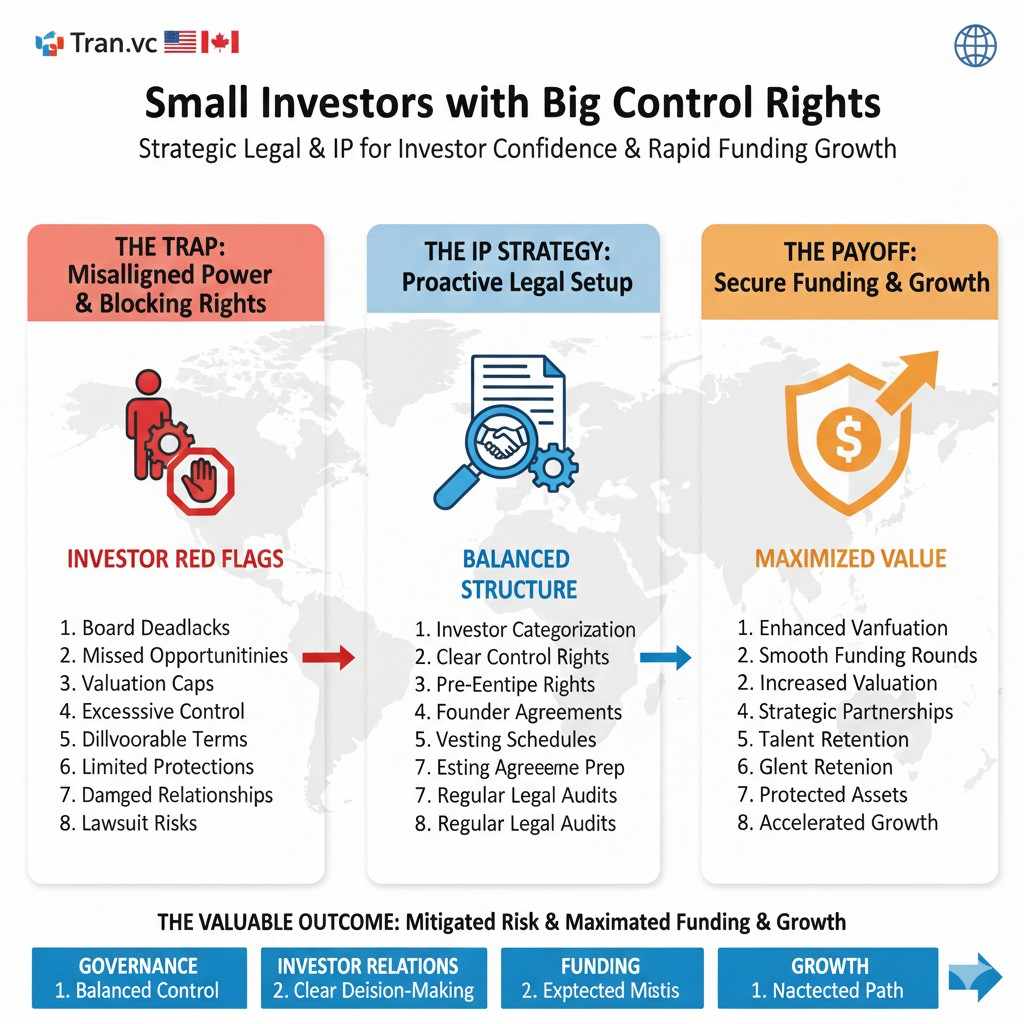
Small investors with big control rights
Control rights are not “nice to have” details. They can change your company’s future. Early investors sometimes ask for rights that do not match the size of their check, like board seats or special veto powers.
Founders say yes because the money feels urgent. Later, a serious lead investor arrives and says, “We cannot invest with that governance.” Now you must renegotiate with the early investor under pressure.
A clean cap table keeps early rounds simple. Money should buy ownership, not a set of levers that make future rounds harder. You can still respect early supporters without giving them power that blocks the company.
How to Structure Founder Equity So Investors Trust It
Build a split that is easy to explain in one minute
Investors do not need an equal split. They need a split that makes sense. If they ask why the ownership is what it is, you should be able to explain it calmly without sounding defensive.
A defendable split usually lines up with real risk and real load. Who left their job first? Who took the biggest pay cut? Who built the core system that makes the company special? Who is carrying hiring, sales, and fundraising?
When the split reflects reality, it signals maturity. When it looks random, it signals future conflict. Clean cap tables start with founder decisions that feel stable.
Use vesting even if you “trust each other”
Trust is not the problem. Time is the problem. People get sick. Families change. Jobs appear. Burnout happens. Even strong teams can split for reasons that have nothing to do with betrayal.
Vesting is a simple way to keep things fair in the real world. It protects the founders who stay, and it keeps the person who leaves from feeling robbed, because the rules were set from the start.
When investors see founder vesting done right, they relax. They know the company will not be stuck if the team changes. That confidence matters more than many founders realize.
Avoid hidden founder promises that create future claims
Sometimes a founder says, “If we raise, I’ll give you more.” Or “When we hit revenue, we’ll adjust.” These statements feel supportive, but they create confusion later.
If the company grows, those casual promises can turn into pressure. If the company struggles, they can turn into resentment. Either way, they weaken trust. Investors see this as a risk because it means the real ownership picture is not final.
A clean cap table comes from clarity. If you plan to adjust equity later, document the conditions properly and make sure everyone understands the timeline and the trigger.
How Advisor Equity Gets Messy and How to Keep It Clean
Only give advisor equity when the job is clear
The best advisor relationships are specific. You know what the advisor will do, when they will do it, and what a good outcome looks like. The worst relationships are vague, where “advice” means anything and nothing.
If you give equity before the role is clear, you often pay for potential, not results. Many founders later realize the advisor was not truly needed, or the fit was not right.
A clean way is to define the work in simple words. If the advisor cannot describe how they will help, you should not be giving equity yet.
Make advisor equity earnable, not guaranteed
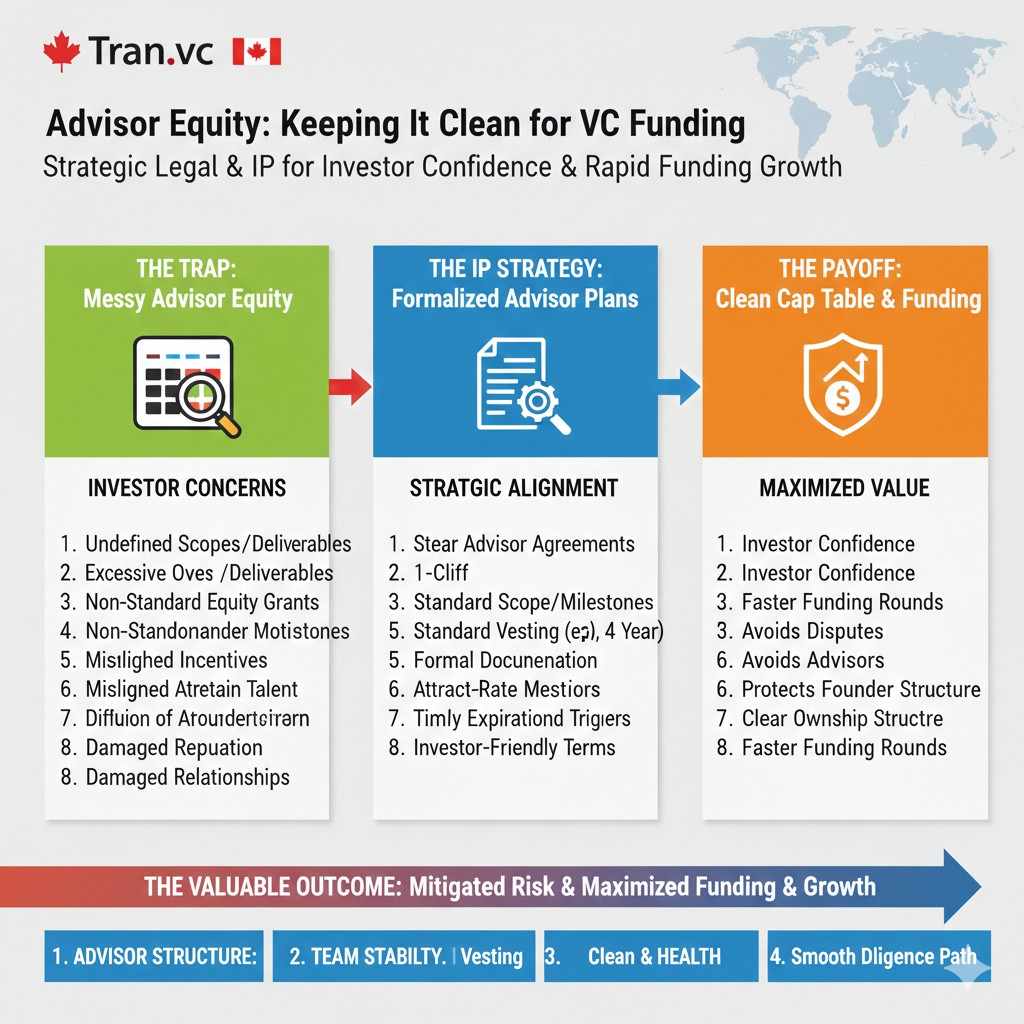
Advisors often drift. Not because they are bad people, but because they have busy lives. If they get equity upfront, there is no natural reason for them to stay engaged.
When advisor equity vests over time, the relationship stays healthy. They earn the upside by showing up. You also get a built-in way to end the relationship without conflict if it is not working.
Investors like this structure because it prevents dead equity and shows you value accountability.
Keep advisor grants modest and consistent
Advisor equity is usually smaller than founders think. The mistake is giving away a large percentage for light involvement, then being unable to motivate truly key hires later because you already spent too much.
If your advisor grants are all over the place, it suggests you made emotional decisions. Investors worry that you will keep making those choices in future rounds.
A clean cap table is steady. It reflects a pattern of careful, repeatable decisions, not one-off gifts based on excitement in the moment.
Employee Equity and the Option Pool Without Regret
Use options for team members instead of random share grants
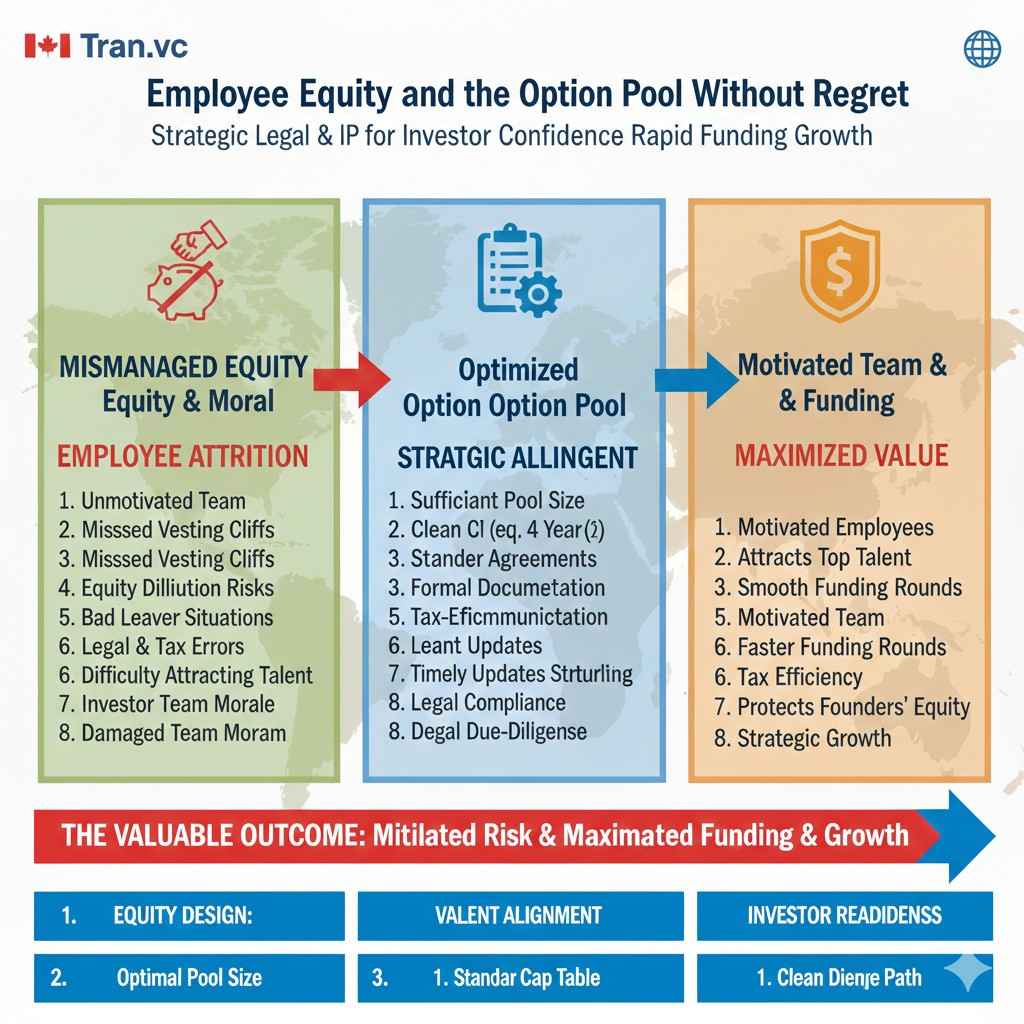
Employees usually should get options, not direct shares handed informally. Options create a cleaner structure. They are easier to manage at scale, and they align better with standard startup practice.
When founders give shares directly, they often create tax issues and messy paperwork. They also risk giving ownership to someone who may not stay long, without a clear earning path.
Options, when set up properly, give you control and clarity. That clarity makes future fundraising smoother because investors are used to reviewing this structure.
Size the option pool around a real hiring plan
Founders sometimes set a very large pool “just in case.” The problem is that this dilutes you before you need it. It also signals that you do not have a tight plan for hiring and milestones.
A cleaner way is to connect the pool to the next stage of growth. Think about the exact roles needed to reach the next fundable step. Build the pool to cover that, not a dream version of the team.
If you need more later, you can expand later. But early dilution is hard to undo, and it affects how much flexibility you have when negotiating future rounds.
Keep your grants explainable and fair
Equity offers are not only numbers. They are stories. A team member wants to know why their grant is what it is. A future investor wants to know your logic too.
If grants are inconsistent, you risk internal frustration and external doubt. If your early hires feel treated unfairly, you will spend more equity later fixing morale problems.
Clean cap tables come from calm, repeatable logic. You do not need a complex formula, but you do need a clear standard you can explain.
Cleaning Up Early Investor Money So It Does Not Scare Off a Lead
Keep instruments simple and minimize variations
Small checks often arrive at different times. That is normal. The messy part is when each check arrives with different terms. Then your cap table becomes a math problem right when you need speed.
A clean way is to standardize terms over a window of time. If you raise on a SAFE, use one SAFE template with one core set of terms. Track every signed document in one place, with clear totals.
When a lead investor asks questions, you can answer quickly. That speed can be the difference between closing a round and losing it.
Avoid side letters unless you truly need them
Side letters often start as “tiny extras.” An investor asks for special updates, a special right to invest later, or some other benefit. Founders agree because it feels small and polite.
Later, those side letters create complexity. One investor has special rights, another feels left out, and a new lead investor wonders what else is hidden.
A clean cap table keeps rights consistent. If you must add a side letter, document it clearly and keep the number of exceptions very low.
Do not let early money shape your governance
Governance terms can become landmines. If an early investor has control rights that are not standard for their check size, future investors may insist you remove them.
Removing rights later is harder than refusing them early. Early investors have leverage because you already took their money. You may have to buy them out or renegotiate under stress.
Clean cap tables protect future flexibility. Early rounds should be simple, with terms that do not block the company from growing into a larger financing.
Cap Table Hygiene You Can Run Every Month Without Stress
Treat ownership like a living system, not a one-time task
Most founders think about the cap table only when raising money. That gap is where problems grow quietly. A clean cap table comes from light, regular attention, not from panic cleanups before diligence.
Once a month, take time to look at ownership with fresh eyes. Ask whether anything has changed, even slightly. New promises, new hires, new advisors, or new money all affect the picture. When you treat ownership as ongoing work, nothing gets lost.
Keep one source of truth and protect it
Confusion usually starts when there are multiple versions of the cap table. One spreadsheet says one thing, a legal folder says another, and someone’s memory says something else. Investors quickly sense this mismatch.
Choose one system and stick to it. Every change should flow through that system, backed by signed documents. When questions come up, you do not debate what is real. You open the file and show it. That calm clarity builds trust fast.
Close the gap between promises and paperwork
Many messes come from the time gap between “we agreed” and “we signed.” During that gap, people interpret things differently. Months later, those differences turn into tension.
A clean habit is to shorten that gap as much as possible. When you agree on equity, follow through quickly with documentation. Not weeks later. Not after a funding milestone. Clean founders close loops while everyone is still aligned.
Watch for silent dilution before it becomes loud
Some dilution does not feel real until later. SAFEs convert. Option pools expand. New grants stack up. Suddenly, the founders realize they own much less than expected.
Monthly reviews help you spot this early. You see how future conversion might look. You understand how much room you still have. That awareness helps you negotiate from a place of control instead of surprise.
How to Fix a Messy Cap Table Before Diligence Starts
Cleanups are possible if you start early enough
Many founders believe that once the cap table is messy, it is permanent. That is not true. Most issues can be fixed if you act before a lead investor sets a timeline.
The worst moment to fix problems is when a term sheet is already in motion. Everyone is watching. Emotions are high. Early investors suddenly have leverage. The best moment is months before you raise, when you still have time to move calmly.
Start by mapping the real situation, not the hoped-for one
The first step is honesty. List every promise, agreement, email, and expectation tied to ownership. Even if it feels awkward. Especially if it feels awkward.
This step is not about blame. It is about clarity. You cannot clean what you refuse to see. Once everything is visible, patterns appear. Some issues will be small. Some will matter more. But now you are in control again.
Have direct conversations while relationships are still good
Most cleanups involve conversations. Many founders avoid them because they fear conflict. In reality, conflict grows when silence drags on.
When you talk early, you can frame the conversation around the company’s future. You explain that you are preparing for growth and investment, and that clarity helps everyone. Many people are more reasonable than founders expect, especially when approached with respect.
Use structure to replace vague arrangements
If someone has equity without vesting, you can often restructure it into a vesting schedule going forward. If an advisor’s role is unclear, you can redefine it or bring it to a close cleanly.
Investors do not expect perfection. They expect effort and logic. When they see that you identified issues and fixed them before diligence, it builds confidence instead of raising red flags.
Why IP Strategy Quietly Supports a Cleaner Cap Table
Strong IP reduces pressure to give away equity
Founders often give away equity because they feel weak. They need help, money, or credibility, and equity feels like the only lever. Strong IP changes that balance.
When your core technology is protected, you have leverage. You can say no more easily. You can be selective about partners and investors. That selectivity keeps your ownership focused and clean.
Patents help justify founder ownership over time
In deep tech, value is often created before revenue. Investors look for signals that early ownership is earned. A thoughtful IP strategy shows that founders are building long-term assets, not just short-term demos.
This makes founder ownership feel more defensible in later rounds. Instead of questions about why founders still own a large share, investors see a clear link between ownership and protected innovation.
Clean IP and clean equity tell the same story
A messy cap table and weak IP send the same signal: decisions were rushed. A clean cap table and strong IP send the opposite signal: the team builds with intention.
That is why Tran.vc focuses on IP-first foundations for robotics, AI, and deep tech startups. By investing up to $50,000 in in-kind patent and IP services, we help founders build assets early so they do not have to trade ownership for short-term relief later.
If you want to raise future rounds with more control and less stress, you can apply anytime here: https://www.tran.vc/apply-now-form/