
Most founders like SAFEs because they feel simple. You sign a few pages, you get money in the bank, you keep building. No board fights. No price fight. No long lawyer war.
But “simple” can hide sharp edges.
A post-money SAFE is one of those edges.
If you are building AI, robotics, or deep tech, you often need time and patience to reach real revenue. That means you may raise more than one SAFE before a priced round. If those SAFEs are post-money and you do not model them early, you can wake up one day and realize you sold far more of your company than you meant to.
This is not theory. It happens to strong teams all the time.
At Tran.vc, we work with technical founders who want to build real moats early—especially with patents and IP—so they can raise with leverage, not panic. If you want help building an IP plan that investors respect (and competitors cannot copy), you can apply anytime here: https://www.tran.vc/apply-now-form/
Now let’s get into the traps.
What a post-money SAFE really means (in plain words)
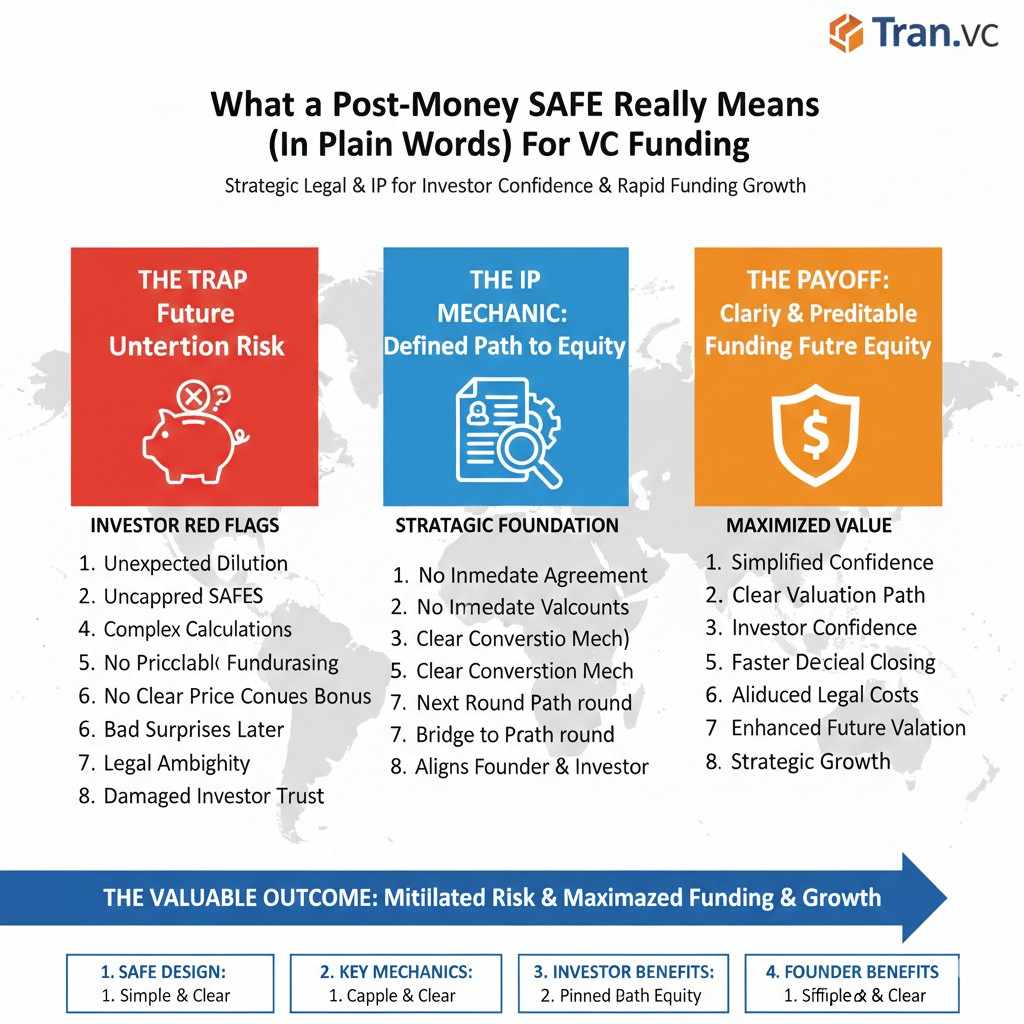
A SAFE is a promise. The investor gives you money today. Later, when you raise a priced round, that SAFE turns into shares.
With a post-money SAFE, the investor’s ownership is measured against the company’s value after their SAFE money is counted (the “post” number). This sounds fair and clean. The problem is what happens when you sell more than one post-money SAFE.
Here is the key idea:
With post-money SAFEs, each SAFE can “lock in” a percent of the company based on the cap, and that percent does not shrink just because you sell another SAFE later.
So if you do not control the total amount you raise on post-money SAFEs, you can stack up locked-in ownership promises like pancakes. Then, at the priced round, founders feel the weight all at once.
Many founders think: “I raised $1M on SAFEs at a $10M cap. That’s about 10%.” But with post-money SAFEs, if you raise multiple SAFEs at similar caps, each one can keep carving out its own slice.
That is the first trap: the math does not behave like your gut thinks it does.
And you do not need to be “bad at math” to get hit. You just need to be moving fast, raising in pieces, and not running a full dilution model.
Trap #1: The “cap feels like valuation” mistake
A lot of founders hear “valuation cap” and think it means “my company is worth this right now.”
It does not.
A cap is a ceiling price for the SAFE investor’s conversion later. It is a protection for the investor, not a statement of your current value.
The trap is emotional. The cap number feels like a badge. “We got a $20M cap.” It sounds like you “are” a $20M company.
But when you raise post-money SAFEs, the cap works more like this:
- If you raise at a $20M cap and sell enough SAFE paper, you may be promising away a big percent of the company before you have priced shares.
- Then when you finally do a priced round, the new investor wants their percent too.
- Then you set aside an option pool for hiring.
- Then you realize your own percent is smaller than you can accept.
You do not want to discover that after the term sheet is signed.
How to avoid it: treat the cap like a conversion tool, not a trophy. Every time someone offers you a cap, translate it into ownership impact. Ask: “If I raise X dollars on this cap, what percent did I just promise away?”
If you are not doing that, you are raising blind.
Trap #2: Stacking post-money SAFEs without a hard limit
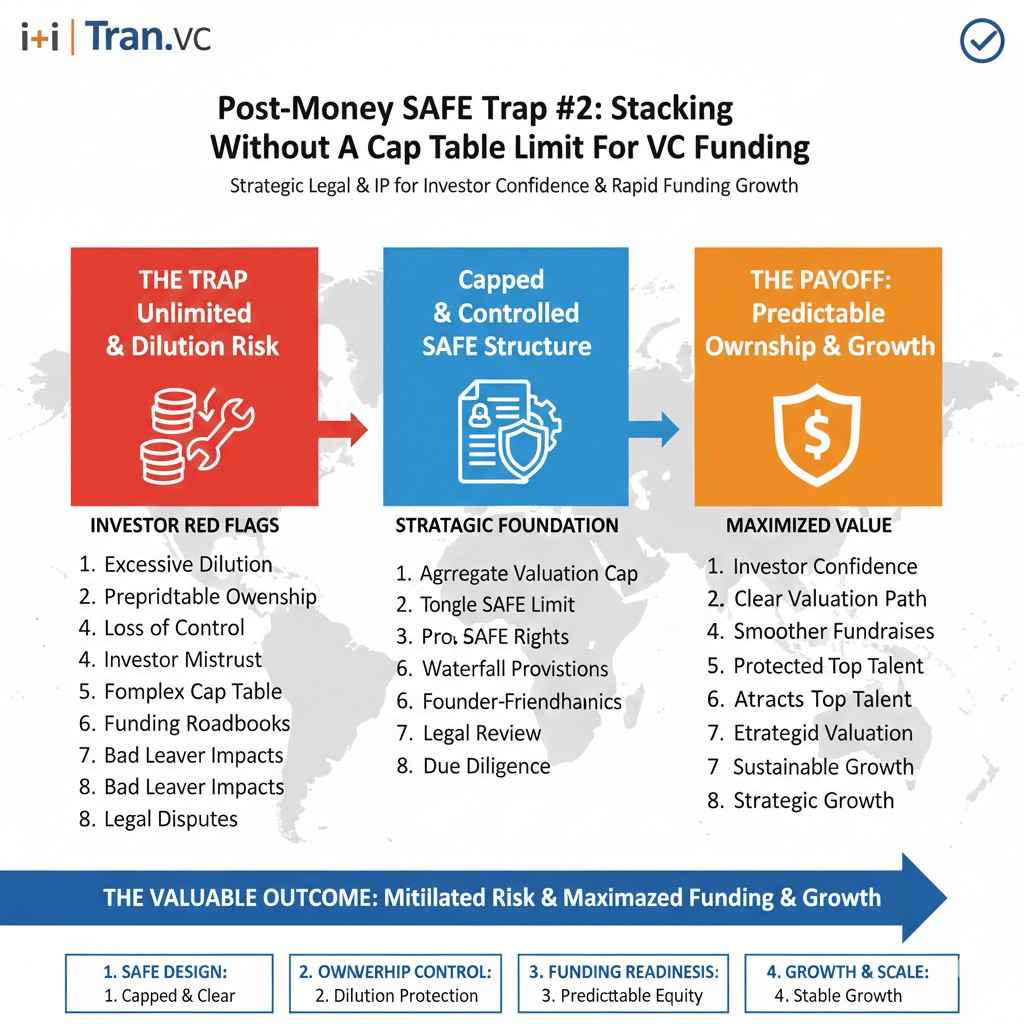
This is the most common post-money SAFE blow-up.
Founders raise in chunks. Maybe $250k now. Then $500k two months later. Then another $400k when a big customer pilot drags on. Each SAFE might be “reasonable” alone. Together, they can be lethal.
What makes it worse is that many founders assume the later SAFE “just dilutes everyone a bit.” But with post-money SAFEs, the earlier SAFE holders often keep their slice.
So who pays the bill for the extra SAFE you sell later?
Usually: you and your future option pool.
This is why people say post-money SAFEs are “more investor friendly.” It is not because they are evil. It is because the math is clearer for them and riskier for you if you do not cap the total.
How to avoid it: set a total SAFE target and treat it like a wall. If your plan is to raise $1.5M on SAFEs total, do not “just add another $500k” without reworking the entire dilution picture.
A simple habit helps: every time you consider another SAFE, pause and run a full “after conversion” table. You are not being slow. You are protecting your future.
And if you want a team that helps you build real leverage early—patents, IP strategy, and clean fundraising structure—apply here anytime: https://www.tran.vc/apply-now-form/
Trap #3: The option pool surprise
Even if you model SAFE dilution, you may forget the option pool. That is a quiet trap because it often shows up late, right when you think you are done negotiating.
A priced round term sheet often says: “Create an option pool of X% before the financing.” Those words matter.
“Before the financing” usually means the pool comes out of the existing owners, not the new investor. So founders and early holders take the hit.
Now add post-money SAFEs. Those SAFEs convert, and then the pool is created, and then the new money comes in. Depending on the order and the terms, the pool can hurt more than expected.
Here is how it feels in real life:
You think you are giving up, say, 20% in the Seed round. But after SAFE conversion + option pool expansion, you gave up 30%+.
That gap can change your life.
How to avoid it: do not talk about a round without talking about hiring. If you plan to hire 6 engineers and a sales lead in the next 18 months, you will need a pool. Face it early. Model it early. Negotiate it early.
Also, keep your pool plan tied to real roles. Not “we might hire a lot.” Real roles, real timing, real ranges.
Trap #4: “Most favored nation” clauses that backfire
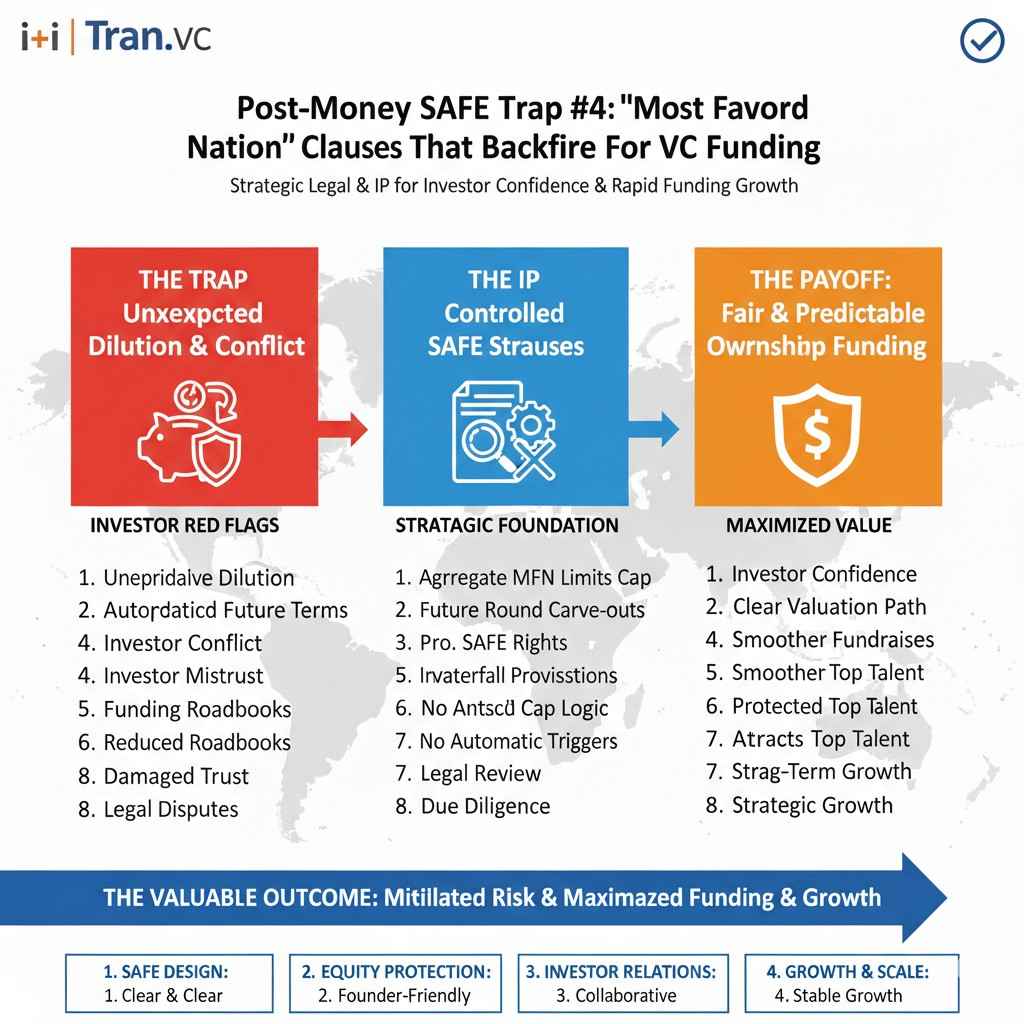
Some SAFEs include a “most favored nation” (MFN) clause. In plain words, it can mean: if you later give someone better terms, earlier investors can choose those better terms too.
MFN sounds fair. It can also turn into a landmine.
Because “better terms” is not always just a higher cap. It might be a discount, a side letter, a pro rata right, or other tweaks. If you are not careful, one small concession to close a late SAFE can echo backward and upgrade earlier SAFEs too.
Now your raise is not just “one more SAFE.” It is “one more SAFE plus improved terms for several older SAFEs.”
How to avoid it: be very cautious with MFN language. If you already have MFNs out there, do not casually change terms later. If you must offer a special deal to one investor, consider doing it in a way that does not trigger MFN, or be ready for the cost.
This is a place where a short legal review can save you a huge amount of equity. It is worth it.
Trap #5: Discounts and caps mixing in confusing ways
Many SAFEs have both a valuation cap and a discount. The investor gets the better of the two.
Founders often nod and move on. But when you stack multiple SAFEs with different caps and discounts, conversion becomes messy. The mess itself becomes the trap.
Why? Because when conversion math is messy, you stop checking it. You stop explaining it cleanly. And then a new lead investor finds “weirdness” and uses it to demand more control or better pricing.
Also, the more complex it is, the more likely you accidentally promise a better deal than you meant to.
How to avoid it: keep your SAFE stack clean. If you can, standardize terms across the round. If someone demands special terms, make sure you understand the full conversion effect and how it changes the story for your next priced round.
If you cannot explain your cap table in simple words, you will not like how a sharp investor explains it.
Trap #6: Pro rata rights that look small but grow big
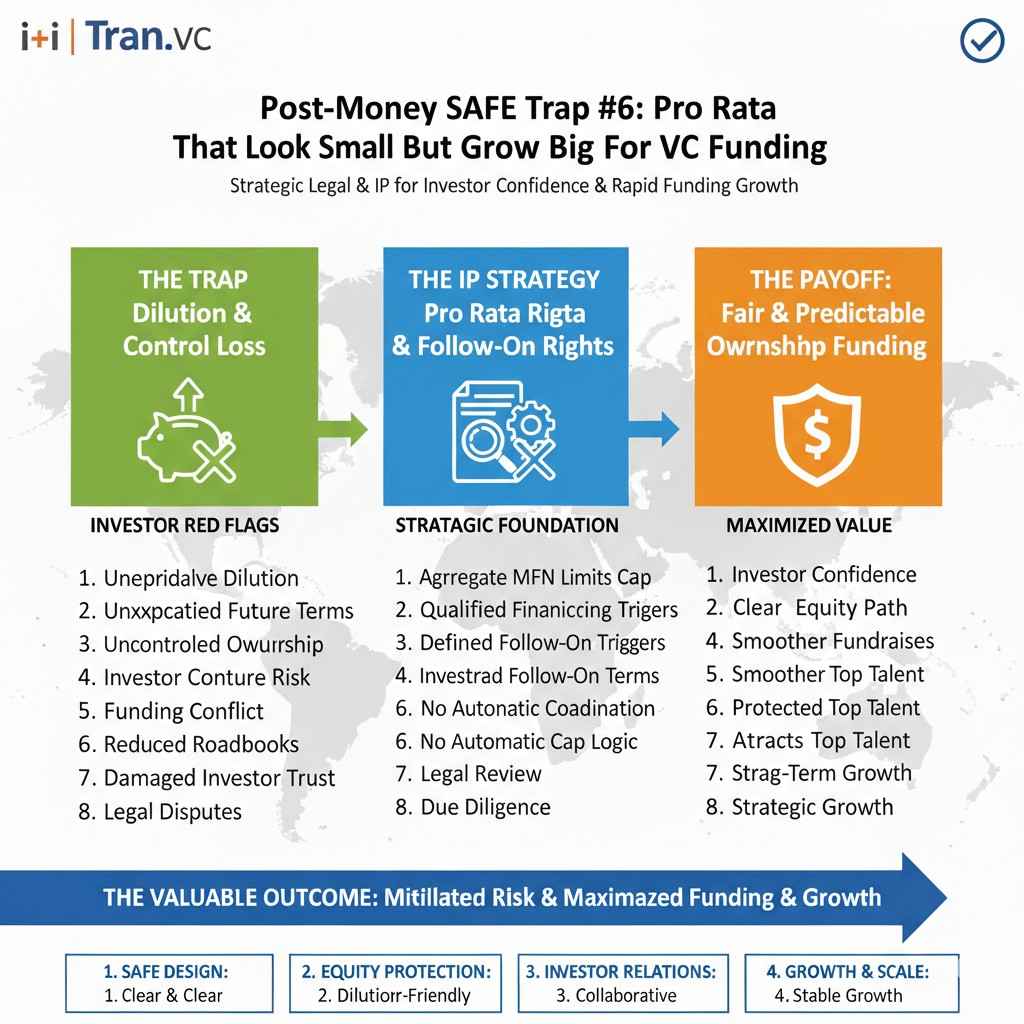
Some SAFE investors ask for pro rata rights. In simple terms: they want the right to keep buying in later rounds so they keep their percent.
This is not always bad. Sometimes it is normal.
The trap is when too many small investors have pro rata rights, and you do not track the total “reserved” capacity. Later, when you raise a priced round, you think you have room for a strong new lead. Then you realize a big slice is already spoken for by pro rata.
Now you are stuck. Either you cut out new investors you wanted, or you break promises to old investors, or you squeeze founders harder.
How to avoid it: treat pro rata like real allocation you must plan for. Keep it limited. Track it carefully. If you give it, know why you are giving it. “Because they asked” is not a good reason.
Trap #7: The “we’ll clean it up later” story
Founders say this when they have many SAFEs, side letters, and random terms.
“We’ll clean it up when we do the Seed round.”
But later is when you have less power, not more. Later is when you need the money. Later is when a new investor can say, “This is messy. Fix it, or we walk.”
Cleaning up later can mean:
- renegotiating with many people,
- paying legal fees,
- offering extra sweeteners,
- delaying the round,
- or accepting a worse term sheet.
How to avoid it: keep it clean as you go. It is cheaper to do the right thing early than to fix chaos later.
And this is where Tran.vc is different from most “capital only” groups. We focus on foundations. Patents. IP. Clean strategy. Clean structure. If you want to build a real moat while keeping your company fundable, apply anytime: https://www.tran.vc/apply-now-form/
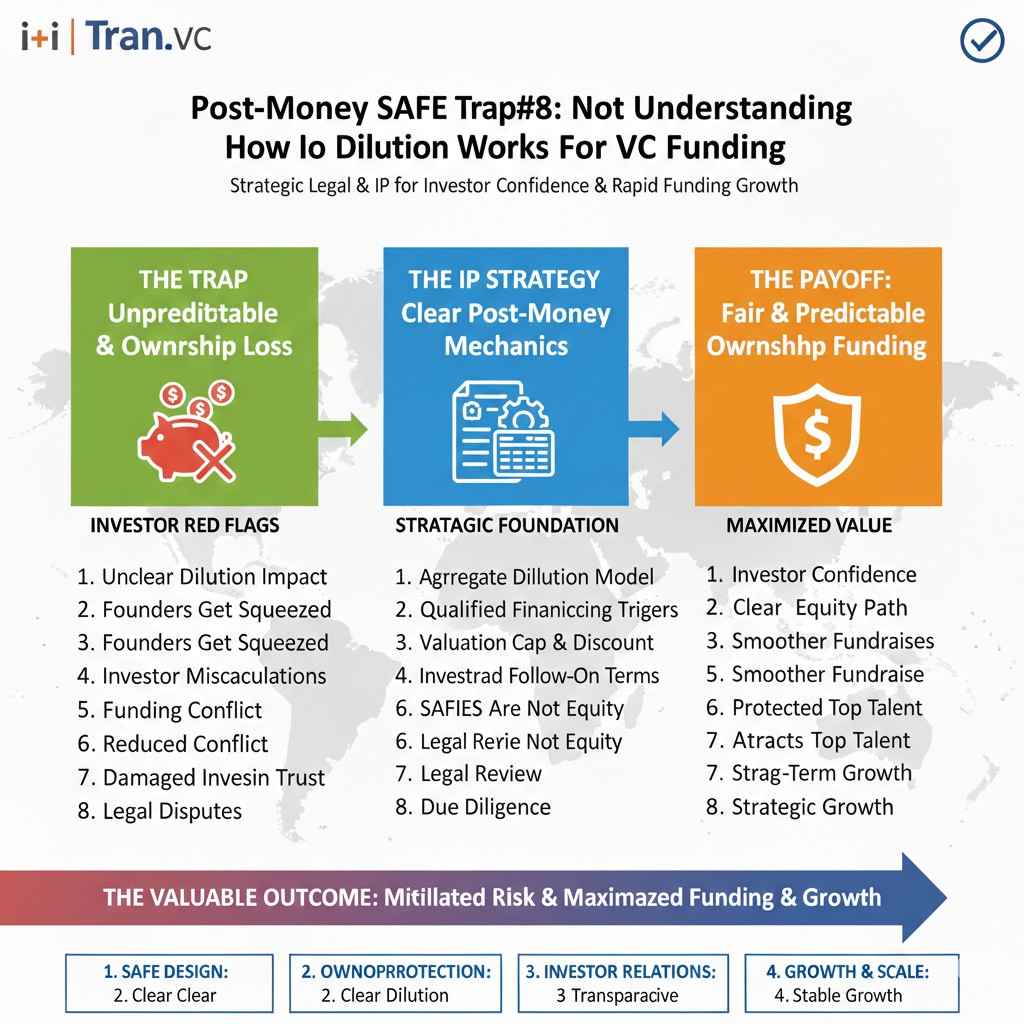
Trap #8: Not understanding how “post-money” changes who gets diluted
Here is a plain way to see it:
With post-money SAFEs, the SAFE investor’s percent is often effectively set based on the cap and their check size. If you sell more SAFEs later, the earlier SAFE investor might not get diluted much by those later SAFEs. So the burden shifts.
That burden lands mostly on:
- founders,
- the employee pool,
- and sometimes the new priced-round investor (who will push back hard).
So even if you feel like you are “sharing dilution” fairly across investors, you may not be.
How to avoid it: do not guess. Model it. And model it in a way that shows founders’ final ownership after: SAFE conversions, new money, and option pool.
If your model only shows one step, it is not enough.
Trap #9: “Side letters” that quietly rewrite the deal
Early investors sometimes ask for side letters. They might ask for:
- information rights,
- the right to invest in the next round,
- or special notices.
Again, not always bad. The trap is when side letters pile up and you do not track them.
Then later, you have 12 different “special” promises floating around. You forget one. Someone gets mad. Trust breaks. Deals slow down. Or a new investor does diligence and says, “This is too risky.”
How to avoid it: keep a single source of truth. Every promise in writing goes into one tracked folder and one simple summary. If you cannot summarize the rights you granted in one page, you have too many.
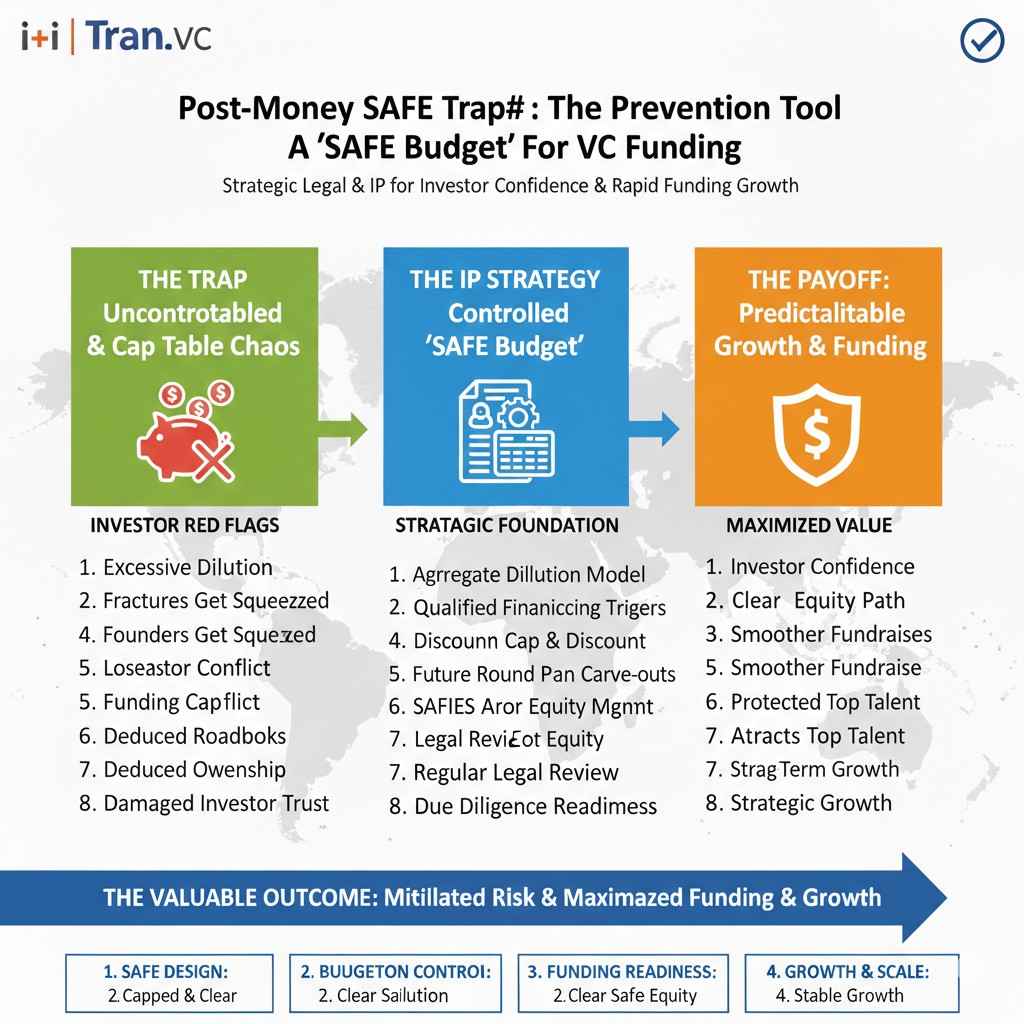
The most important prevention tool: a “SAFE budget”
If you do only one thing after reading this, do this:
Create a SAFE budget. In simple words, it is a rule that says:
“We will not sell more than X% of the company through SAFEs.”
Not “we will raise X dollars.” Dollars are tempting. Percent is real.
Once you decide the percent, you can back into dollars based on your cap and likely round size. If you must raise more, you do not just sell more paper. You reconsider the plan: higher cap, priced round sooner, milestone-based raise, or alternative financing.
A SAFE budget turns a fast fundraising sprint into a controlled build.
It protects your future self.
Post-money SAFE traps and how to avoid them
Why this topic matters more than most founders think
SAFEs feel fast and clean. You sign, you wire, you build. That speed is real, and it can be helpful when you need runway and focus.
But speed can also hide risk. A post-money SAFE can change your ownership story in ways that only show up later, when you are trying to close a priced round.
If you are building AI, robotics, or deep tech, timelines are often longer. You may raise more than one SAFE before you raise a priced round. That is where the traps start.
Tran.vc works with technical founders who want to build leverage early with patents and IP, so fundraising feels like a choice, not a rescue. If you want support with strong IP strategy and clean early-stage structure, you can apply anytime at: https://www.tran.vc/apply-now-form/
The simple definition founders should keep in mind
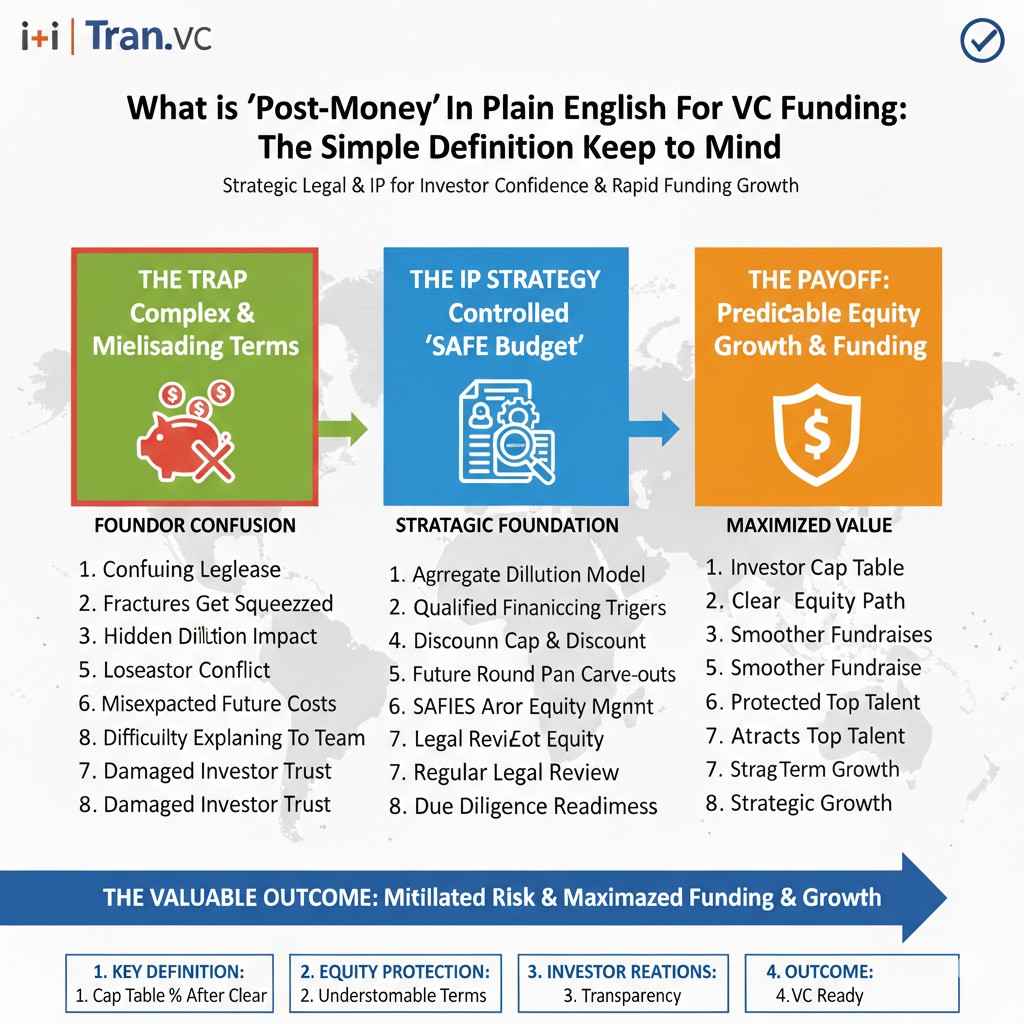
A SAFE is a promise that turns into shares later. The investor gives you money now, and converts when you raise a priced round.
A post-money SAFE measures the investor’s stake using a “post” number. In plain words, it often locks in a slice of ownership based on the cap and the check size.
That locking effect is what creates many of the surprises. The SAFE may look like a small step today, but it can become a big jump in dilution later.
The pattern behind most SAFE blow-ups
Most blow-ups happen when SAFEs stack. A founder raises in small chunks and assumes each new SAFE dilutes everyone evenly.
With post-money SAFEs, earlier SAFE holders may not shrink much when later SAFEs are added. That means the extra dilution usually lands on founders and the employee pool.
If you do not model the whole picture early, you can lose far more ownership than you planned.
Trap #1: Treating the valuation cap like your company’s value
Why the cap feels like a badge
Founders often hear a cap and feel proud. “We got a $20M cap” sounds like the market stamped a value on your company.
That is not what the cap is. A cap is mainly a conversion tool that helps the SAFE investor get a better price later, if your priced round is higher.
If you treat the cap like a real valuation today, you may raise more than you should on terms that quietly cost you too much.
What the cap really does during conversion
At conversion, the SAFE investor typically converts at the better deal between a discount or a cap. The cap sets a ceiling on the price they will pay per share.
The bigger issue is not the cap itself. The issue is how much money you raise under that cap, and how many other promises you stack on top of it.
When founders do not translate cap numbers into ownership outcomes, they raise blind.
How to avoid the cap-as-valuation mistake
Before you sign, convert the cap into a rough ownership impact. Ask, “If I raise X dollars at this cap, what slice did I just promise away?”
Do that every time you add another SAFE. The goal is not perfect math. The goal is to avoid walking into dilution you did not choose.
If you want help building a fundraising plan that stays clean and investor-ready, while also building a patent-backed moat, you can apply at: https://www.tran.vc/apply-now-form/
Trap #2: Stacking post-money SAFEs without a clear limit
Why founders raise in pieces
Most SAFE rounds do not happen in one clean close. You might raise $200k from friends of the company, then $400k from angels, then $600k when the build takes longer than planned.
Each check feels reasonable. Each SAFE looks “small enough.” The problem is what happens when you add them up under post-money terms.
A stack of post-money SAFEs can lock in more ownership than you expect, because each SAFE may preserve its slice instead of shrinking when new SAFEs come in.
Where the hidden dilution really lands
When earlier SAFE holders keep their slice, someone has to absorb the extra. In many cases, that “someone” is the founding team and the future employee option pool.
This is why founders sometimes reach the priced round and feel shocked. They think they sold 10–15% through SAFEs, but the real number comes out much higher.
That surprise can weaken your position in the priced round, because the new investor also wants a meaningful percent.
How to avoid stacking damage
Set a hard ceiling before you start. Think in percent, not dollars. Decide how much of the company you are willing to sell through SAFEs in total.
Then treat that ceiling like a wall. If you need more money, do not automatically add another SAFE. Rework the plan, and consider changing the structure or moving to a priced round sooner.
Trap #3: The option pool surprise that shows up late
Why the option pool is not just a hiring detail
Founders often treat the option pool like an HR topic. In reality, it is a cap table topic that can change your ownership more than you expect.
A priced round often requires you to “refresh” or “expand” the option pool before the financing. That wording matters because it usually means existing holders take the dilution.
If your SAFEs convert and then the pool expands, founders can take a double hit that was not obvious when you were signing SAFEs.
How option pool math piles onto SAFE math
A Seed investor may say, “We want a 10% pool available after the round.” To make that true, the pool may need to be larger before the round closes.
That pool creation can come out of founders, not out of the investor’s check. When the SAFE stack is already heavy, the pool expansion can push founder ownership below a comfort level.
This is not rare. It is one of the most common reasons founders feel regret right after a big fundraising moment.
How to plan for the pool without guessing
Tie your pool plan to real roles you expect to hire. Think about the next 12–18 months and name the positions you need.
When you know the roles, you can estimate the pool size with more honesty. Then you can model the pool early, instead of being forced into a rushed pool decision at term sheet time.
Trap #4: Most favored nation clauses that quietly expand promises
Why MFN sounds fair at first
An MFN clause can sound like a simple promise of fairness. If you later give someone better SAFE terms, earlier investors can choose those better terms too.
The danger is that “better terms” is not always obvious. It can include small tweaks you did not think were meaningful at the time.
If you offer a late investor a special cap, discount, or right, you may accidentally upgrade earlier SAFEs as well.
How MFN triggers cause messy outcomes
One concession late in the raise can echo backward. You might think you are closing one last SAFE, but the MFN turns it into a rewrite of several older SAFEs.
That can increase dilution. It can also increase complexity, which makes future diligence harder.
Complexity is not just annoying. Complexity reduces trust, because it signals that the round was not managed with control.
How to reduce MFN risk
Be careful about offering “one-off” terms when MFNs exist. If you must change terms, model the impact as if multiple investors will claim the upgrade.
Also keep your documents organized and consistent. If you cannot clearly explain which SAFEs have MFN and what it covers, it is time to simplify before you raise more.
Trap #5: Mixing caps and discounts until conversion becomes chaos
Why having both seems harmless
Many SAFEs include both a valuation cap and a discount. The investor typically gets whichever gives the better deal at conversion.
That can be fine. The trouble starts when you have several SAFEs with different caps, different discounts, and different signing dates.
Then conversion becomes a puzzle. And when conversion becomes a puzzle, founders stop tracking it closely.
How messy conversion hurts your next round
When a new lead investor looks at your cap table, they want clarity. They want to see clean terms and predictable outcomes.
If your SAFE stack requires long explanations, a sharp investor may use that uncertainty to demand extra protections. Or they may simply walk away because the deal feels risky.
Even if the economics are acceptable, the confusion itself can kill momentum.
How to keep terms clean
If possible, standardize SAFE terms during a raise. Keep the same cap and discount for most checks, so conversion remains easy to explain.
If someone pushes hard for special terms, think carefully about whether the check is worth the future complexity. The most expensive money is often the money that makes the next round harder.
Trap #6: Pro rata rights that look small but grow large
Why pro rata can be reasonable
Some investors want the right to invest in later rounds to keep their ownership from shrinking too much. That is called pro rata.
In some cases, it is normal. The risk is giving pro rata too broadly, especially to many small investors.
Too many pro rata promises can limit how much room you have for new investors later.
How pro rata can block a strong new lead
When you raise a Seed round, your lead investor often wants a meaningful allocation. But if a big portion of the round is already “reserved” for pro rata, you may not be able to give the lead what they want.
That forces you into awkward choices. You either disappoint earlier investors, or you shrink the lead’s allocation, or you raise more than you planned.
Each option can weaken your negotiating position.
How to keep pro rata under control
Be selective. Give pro rata only when it truly helps your company, not just because someone asked.
Track every pro rata promise in one place, and model how much of a future round it could consume. If the total starts to feel heavy, tighten terms before it becomes a real constraint.
Trap #7: “We will clean it up later” is usually the worst plan
Why later feels easier in the moment
When you are building fast, paperwork feels like a distraction. It is tempting to say, “We will clean it up at the priced round.”
But later is when you have less leverage. Later is when the company needs the cash and cannot afford delays.
If your documents are messy, a new investor can force you to fix them as a condition to closing. That can cost time, money, and goodwill.
What “cleaning it up” can actually mean
Cleaning up can mean renegotiating terms with many people. It can mean paying legal fees you did not budget for.
It can also mean giving extra benefits to investors just to get signatures. Even if everyone is friendly, coordinating many parties is slow.
Founders often underestimate how stressful this becomes right when they need speed the most.
How to stay clean as you go
Keep your SAFE terms consistent. Avoid side deals. Track every signed document in a tight system.
Most importantly, do not raise “one more SAFE” without updating your full dilution picture. The goal is not perfection. The goal is control.
Trap #8: Not understanding who gets diluted in a post-money SAFE stack
The simple ownership truth
With post-money SAFEs, the investor’s slice can be more fixed than founders expect, based on the cap and the check size.
If you sell new SAFEs later, earlier SAFE holders may not get diluted much by those later SAFEs. The extra dilution often falls on founders and the option pool.
That is why stacking post-money SAFEs feels fine at first, then painful later.
Why this becomes a priced-round negotiation issue
A new priced-round investor wants a certain percent for their check. If your SAFE stack already claimed a large portion, the new investor may push the price down or ask for stronger terms.
This is not personal. It is math. They need the return potential to match their risk.
When founders enter that negotiation with an over-promised cap table, they have fewer good options.
How to protect founder ownership early
Do not rely on intuition. Use a simple cap table model that shows the “after conversion” view.
Model: all SAFEs converting, the option pool expansion, and the new money coming in. That is the real picture you are heading toward.
Trap #9: Side letters that quietly rewrite your round
Why side letters are common
Some investors ask for extra rights in side letters, like updates, access to financials, or special participation rights.
Individually, these may not seem dangerous. The issue is volume and inconsistency.
When you have many side letters, you increase the chance you forget a promise or create conflicting obligations.
How side letters create diligence risk
During diligence, a lead investor will review your documents. If they see many unique side letters, they may worry that there are hidden liabilities.
They may also worry you will spend time managing investor demands instead of building the product.
Even if the rights are mild, the presence of many custom documents can make the company look less organized than it truly is.
How to prevent side letter creep
Keep exceptions rare. If you grant special rights, record them in one master summary so you always know what you promised.
If the summary becomes hard to read, that is a signal to stop adding new variations. The simplest structure is often the most fundable.
The best prevention tool: a SAFE budget that forces discipline
Why you should budget in percent, not dollars
Founders often set a target like “raise $1M on SAFEs.” That is not enough, because the ownership cost depends on the cap, discounts, and the size of your future round.
A better approach is to set a maximum percent you are willing to sell through SAFEs in total.
That single rule prevents accidental over-raising. It also forces you to think about the priced round sooner, which is often healthier.
How the SAFE budget protects your future options
When you have a budget, you can say no with confidence. You can choose better investors instead of taking money out of fear.
You also reduce the chance that the Seed round becomes a rescue mission to fix earlier decisions.
A clean cap table and a clear IP story often lead to better terms, because investors see less risk and more defensibility.
Where Tran.vc fits into this picture
Tran.vc helps technical founders build patent-backed moats early, while keeping fundraising clean and simple.
If you want help shaping an IP plan that supports a strong cap table and future rounds, you can apply anytime at: https://www.tran.vc/apply-now-form