
Most founders wait too long to think about the option pool.
They raise a round, the investor says, “We need a bigger pool,” and suddenly the pool gets added in a way that quietly takes more from the founders than it should. Not because anyone is evil. Because option pools are one of the easiest parts of a term sheet to “adjust” without it feeling like a price change.
If you want to keep control longer, and still hire the people you need, you must treat your option pool like a strategy, not a checkbox.
And if you want help building real leverage before your next round—especially if you’re building AI, robotics, or deep tech—Tran.vc can help you protect what matters early with up to $50,000 in in-kind patent and IP services. You can apply anytime here: https://www.tran.vc/apply-now-form/
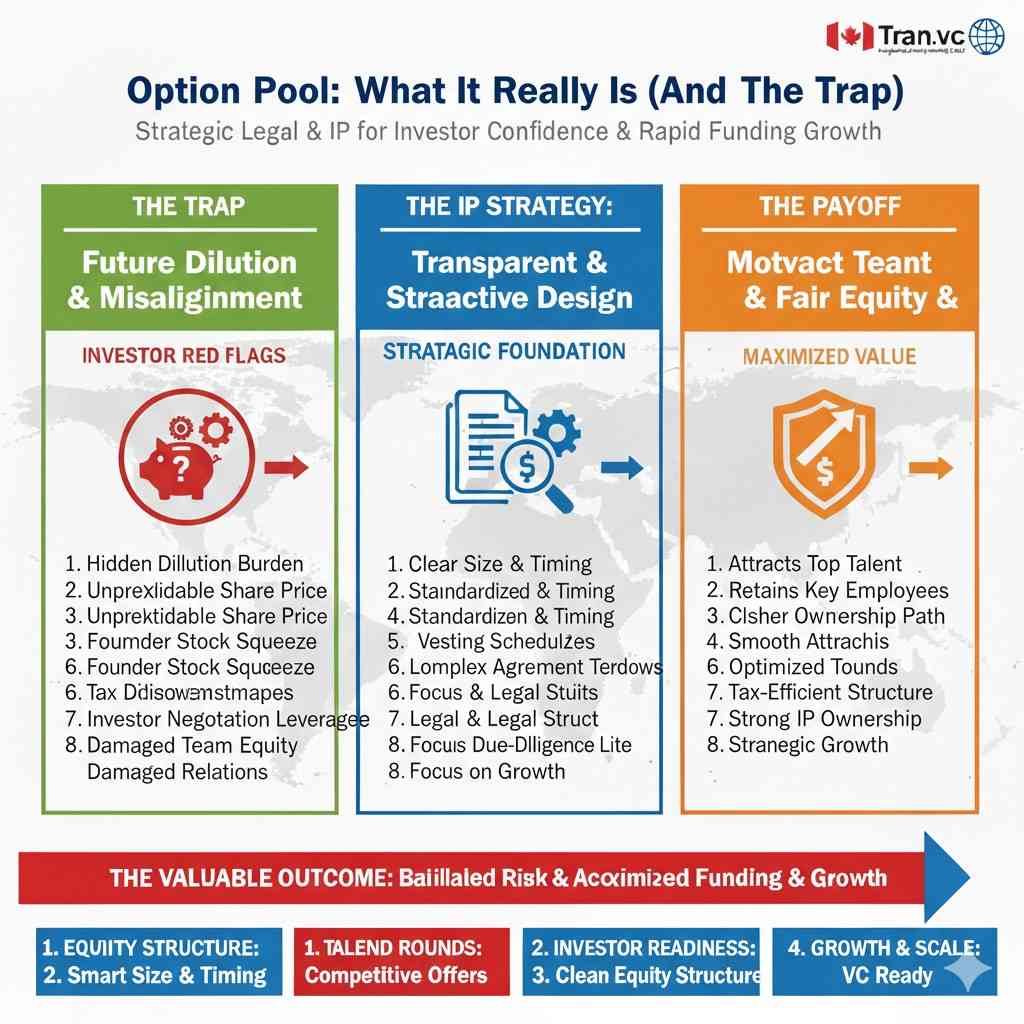
What an option pool really is (and why it becomes a trap)
An option pool is a set of shares reserved for future team grants. It is there so you can hire without renegotiating the cap table every time you add a key person. That’s the clean story.
The hidden story is where the pool comes from.
When a new investor says, “We want a 10–15% option pool,” what they often mean is: “We want it created before we invest.” That timing matters. A lot.
Because if the pool is created before the investment, the dilution mostly hits the existing holders—usually the founders. If it’s created after the investment, dilution is shared more evenly, including by the new investor.
This is why two term sheets with the same valuation can lead to very different outcomes.
Founders focus on headline valuation and money in. Investors focus on ownership out. The option pool is one of the easiest levers to move ownership without touching the valuation number.
So your job is not to “avoid” an option pool. Your job is to build one that is real, sized for your plan, and negotiated like a grown-up.
The one question that decides if you get squeezed
Here is the question you should ask early, even before you see a term sheet:
“Is the option pool counted pre-money or post-money?”
That one line changes the math and the power.
If it’s pre-money, it usually means: you create or “top up” the pool before the investment closes. That reduces the founder’s percent first. Then the investor buys into the company.
If it’s post-money, the investor shares the dilution from creating the pool, because it’s created after their money is in.
You do not need to argue from emotion. You argue from logic: “We want a pool that matches our hiring plan, and we want the cost of it shared fairly.”
Some investors will push back. Many will not, if you have a clear plan and can show the pool is not a random number.
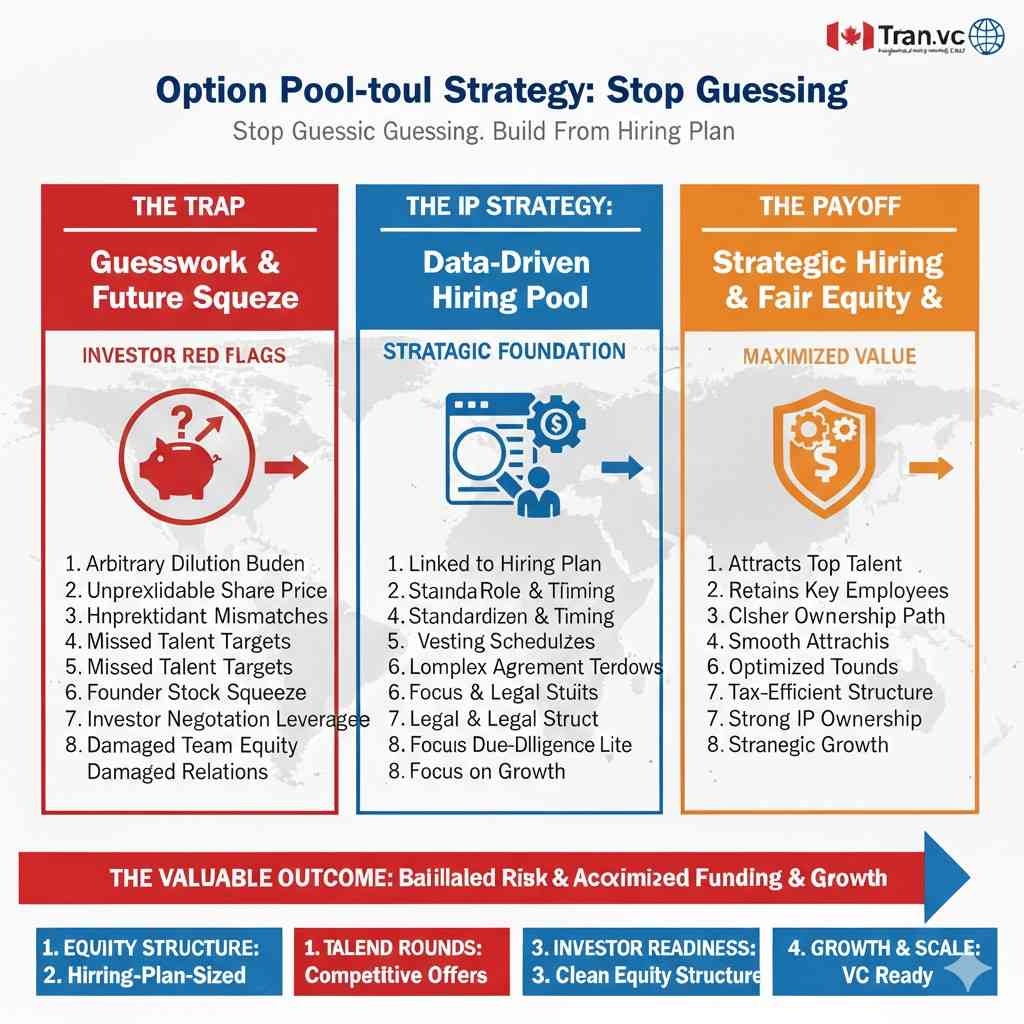
Stop guessing. Build the pool from your hiring plan
Most founders pick a pool size because they heard a number. Ten percent. Fifteen percent. “Standard.”
But “standard” is a story people tell when they do not want to explain the details.
The right pool size comes from one thing: your expected hires before the next round, plus a safety buffer that is honest.
Think about the next 12–18 months, not your whole company dream.
Ask yourself: Who must we hire to hit the next milestone that makes the next round easy?
If you are pre-seed, your goal is often a working product, early customer pull, and proof your tech works outside the lab.
If you are seed, your goal is repeatable sales motion, a real pipeline, and a product that does not break.
Now translate that into roles. Not ten roles. Just the few that truly change the outcome.
In deep tech, robotics, and AI, hiring is expensive in equity terms because the talent is scarce, and the work is hard. A senior robotics engineer, a strong ML lead, a product leader who can translate messy customer needs into a roadmap—these are not “nice to have.”
The pool must match reality.
Here is the key move: instead of saying “we need 15%,” you say something like:
“We plan to hire 1 senior engineer, 1 product-minded builder, and 1 go-to-market lead before the next round. Based on market grants at our stage and risk, we estimate X% total. We want to size the pool to that plan, not a random number.”
When you do this, you shift the conversation from “investor preference” to “company needs.”
And when you talk like a planner, you get treated like one.
Option pool is not just “how much.” It’s also “who gets it.”
A pool can be huge and still useless if it is spent wrong.
Founders often make two mistakes:
First, they give too much equity too early because they are scared they will not be able to hire. They hand out big grants to people who are not proven yet, or to advisors who will not do real work.
Second, they give too little to the people who truly carry the risk. Then those people leave, or never join, or they join but act like contractors because they do not feel ownership.
You need a calm rule: equity should match risk and impact.
Risk is about what someone gives up to join you. Impact is about whether the company changes if they do not do the job well.
A founder-level hire is rare. Do not treat every new person like a cofounder. But also do not treat key early leaders like replaceable parts. People can smell that.
If you want an option pool that lasts until your next round, you must spend it with intent.
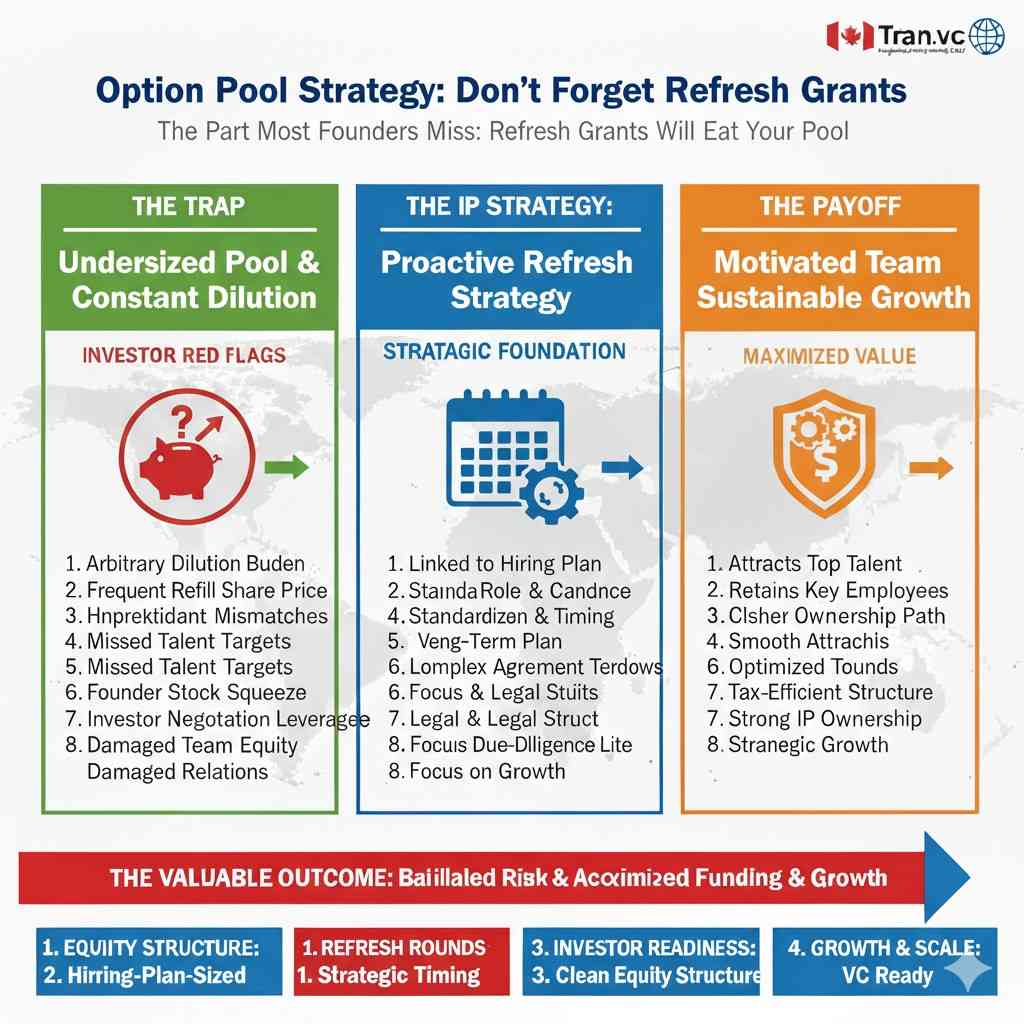
The part most founders miss: refresh grants will eat your pool
You might think your pool is only for new hires.
But the pool also gets used for refresh grants—extra equity you give to key people to keep them motivated after time passes or after dilution.
Why does this matter?
Because after a priced round, early team members often feel their percent shrink, even if their number of shares stays the same. They start to ask: “Is it still worth it?”
If you plan to keep your best people, assume you will give refresh grants to at least a few key team members before the next raise. If you pretend you won’t, your pool math is fantasy.
This is also where strong IP can help you. When you have real patents filed and a clear moat, you often raise from a stronger place. That can reduce the pressure to “buy” talent with oversized equity because you can offer a clearer story of why the company will win.
Tran.vc exists for this exact moment: help technical founders turn inventions into assets investors trust, so you can hire and raise with leverage, not panic. If that’s what you need, apply here: https://www.tran.vc/apply-now-form/
How option pool pressure shows up in term sheets
Let’s make this practical.
The option pool becomes a problem when these things happen:
You are excited about the round, the valuation looks good, and then the investor says, “We need you to increase the option pool to 15%.”
If you do not already have that pool, you are now being asked to create it. And if it’s pre-money, it comes out of your hide.
This can cut founder ownership more than the round itself.
And the worst part: it often happens late, when you are emotionally committed and running out of time.
So the best time to handle option pool strategy is before you are in a hurry.
Here are the moves that keep you safe:
You build a hiring plan tied to milestones.
You estimate grants for those hires using real market context.
You set an option pool that fits the plan, not “standard.”
You communicate this plan early in the raise, so it is not a surprise later.
Then, when an investor asks for a big pool, you can respond calmly:
“We already built the pool to match our next 18 months of hiring. If you want it bigger, let’s walk through which hires you think we missed, and why.”
That is a very different conversation than, “Uh… okay.”
A simple way to sanity-check your pool size
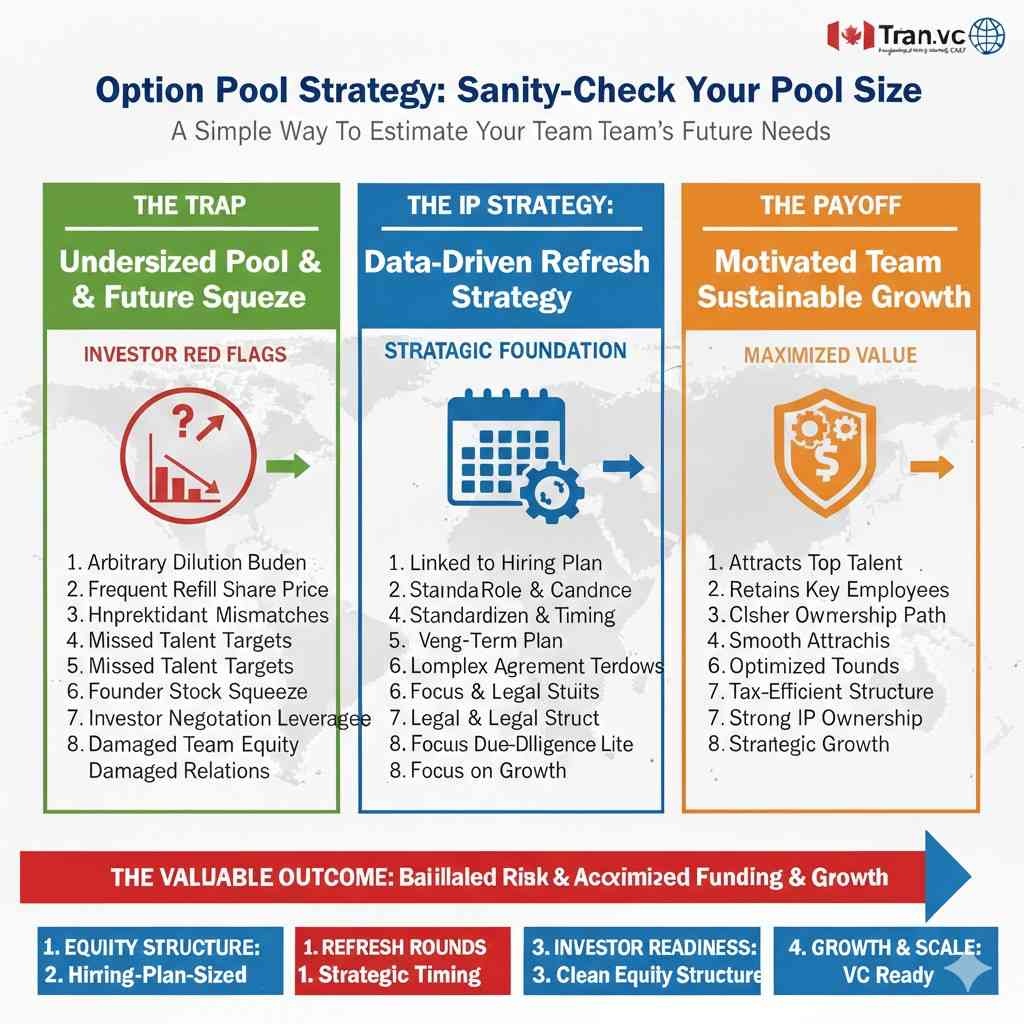
You do not need fancy models. You need a simple check that keeps you honest.
Ask:
If we reserve this pool now, will we still have enough to hire the next two “make or break” people?
If the answer is no, your pool is too small.
If the answer is yes and you still have a lot left over, your pool may be too big. A giant unused pool is not “free.” It is dilution that happened for no reason.
Another check:
If we had to replace our top engineer or head of product tomorrow, would we have enough equity left to attract a strong replacement?
This is not fear. It is planning.
The deeper truth: option pools are about negotiating power
Everything in fundraising is a power game dressed up as finance.
When founders have little leverage, the option pool becomes larger, pre-money, and sometimes paired with other terms that quietly shift control.
When founders have leverage, the pool is sized to the plan, and investors are more flexible on timing.
So how do you get leverage before your next round?
You show progress that is hard to fake.
In deep tech, progress is not just “users.” It’s proof your tech works, proof it can be built into a product, proof customers care, and proof competitors cannot copy it easily.
That last part is where IP changes the conversation. Strong patents and a clear IP strategy do not replace execution. But they can reduce perceived risk. Less risk often means better terms.
Tran.vc’s model is built around this: invest up to $50,000 in in-kind patenting and IP services so technical founders can build a moat early—before the next round makes it more expensive and more political. If you want to explore that, apply here: https://www.tran.vc/apply-now-form/
One more point: your pool should match your stage, not your ego
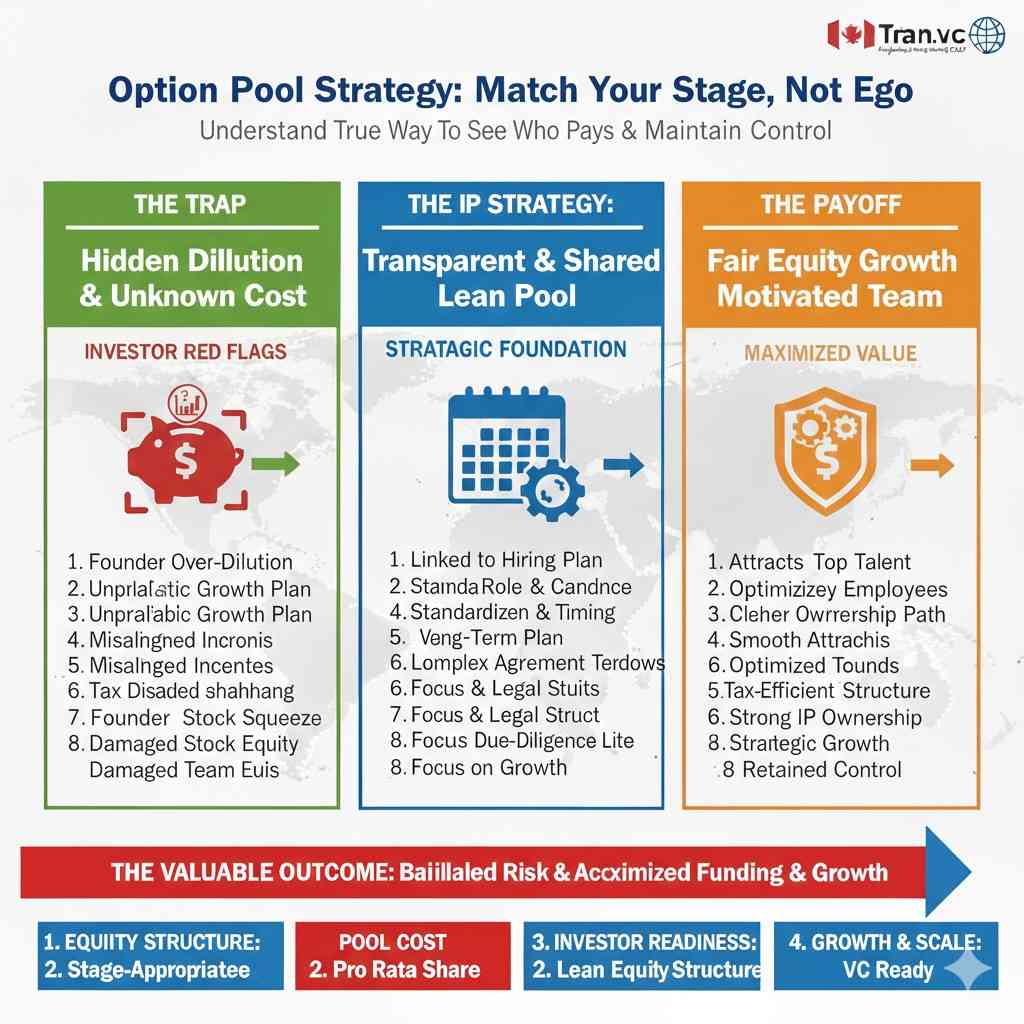
If you are very early, your team is small, and your plan is simple, a massive pool can be a sign you are trying to hire your way out of uncertainty.
If you are not sure what you need, you try to reserve equity “just in case.”
But “just in case” costs you real ownership today.
A better approach is to be honest about what you know now, reserve enough for the hires you will actually make, and accept that later you may expand the pool when you have better information—ideally post-money, or at least with a clear reason.
This keeps you from paying for optionality you will never use.
The Real Math Behind the Option Pool
Pre-money and post-money are not small details
When someone says “we need a bigger option pool,” they are not talking about feelings. They are talking about ownership.
The main issue is not the pool size by itself. The real issue is when the pool is created. If the pool is created before the investor puts money in, the cost mostly comes out of the founder side.
If the pool is created after the investment, the investor shares the dilution. The same pool can feel “fine” or “painful” depending on this one timing point.
A simple way to see who pays
Think of the company like a pie. A pre-money pool means you cut out a slice for future hires first, before the new investor buys their slice.
So the founder slice shrinks first, and then the investor buys in. The investor still gets the percent they want, and you carry more of the pool cost.
A post-money pool means everyone gets diluted together. It is closer to “shared cost,” even if the investor still gets their target ownership.
Why investors push for pre-money pools
Investors want clean ownership targets. A pre-money pool helps them hit that target without raising the valuation number.
This is why it shows up so often in term sheets. It is a lever that changes the outcome while keeping the headline numbers looking the same.
Your goal is not to fight. Your goal is to make the pool match your hiring plan and make the cost fair.
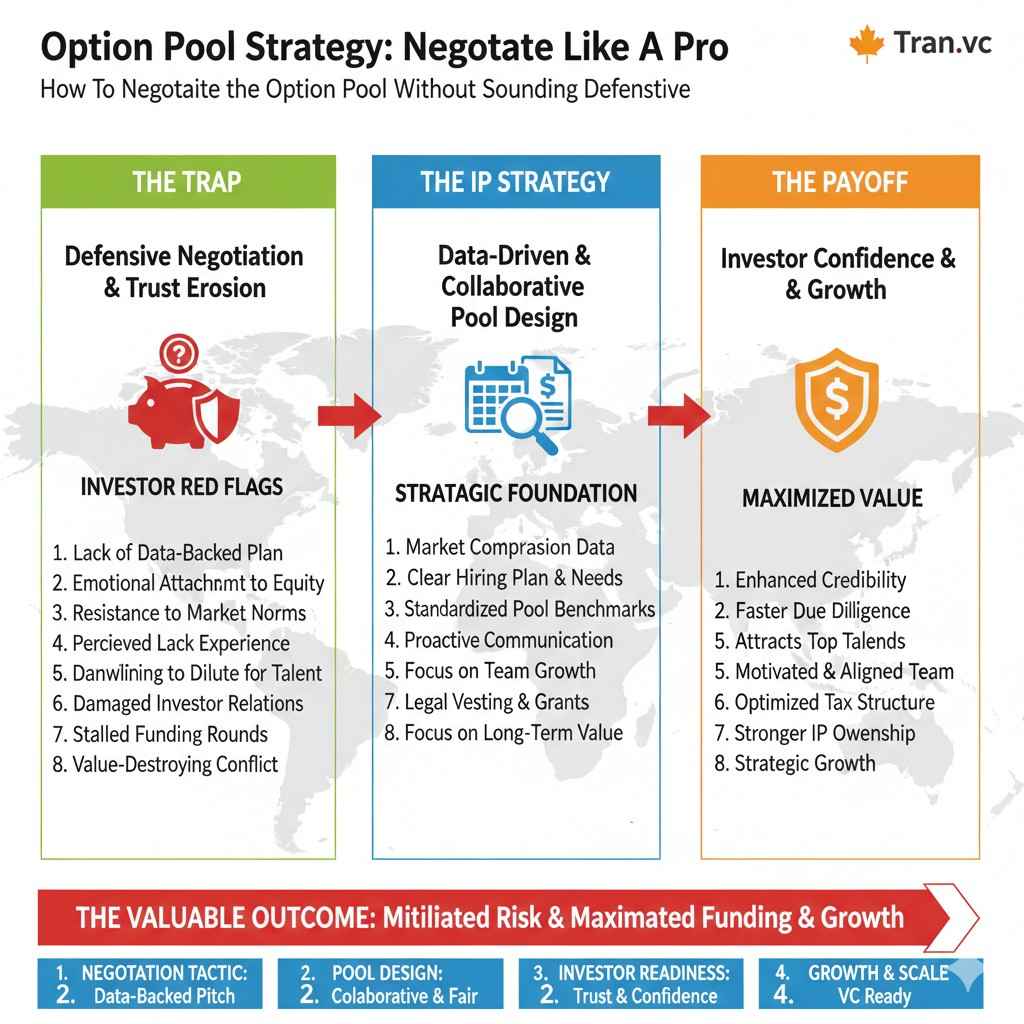
How to Negotiate the Option Pool Without Sounding Defensive
Start the pool conversation before the term sheet
Founders often wait until the term sheet arrives. That is when the leverage is lowest, because you are already emotionally committed.
A stronger move is to bring up the pool early in the raise. You can explain your hiring plan and the pool size you believe supports it.
This frames the pool as a company planning topic, not a last-minute investor demand.
Use “plan talk,” not “price talk”
When you argue about pool percent directly, the discussion can feel like you are arguing about money.
Instead, talk about outcomes. Explain the hires you need to reach the next milestone, and how the option pool supports those hires.
When you speak in this way, you sound like a CEO protecting the business, not a founder protecting ego.
Push back by asking for specifics
If an investor says they want a larger pool, your best response is calm and specific.
You can say you already sized the pool to cover the roles needed before the next round. Then ask which roles they think are missing.
This forces the discussion into real hiring needs. It also helps you avoid agreeing to a pool built on fear.
The “Top-Up” Trick and How to Handle It
What “top-up” means in plain terms
A top-up is when you already have some options reserved, but the investor wants you to increase the pool back to a target number.
For example, you might have 6% left in the pool, and the investor says they want 12% available after the financing.
That means you must create more options. If that top-up happens pre-money, it reduces existing holders first.
Why top-ups show up late
Top-ups often appear late because it is easier to push them through when founders are tired and close to closing.
It can also happen because the investor assumes you have no hiring plan. If you do not present one, they will use a standard pool number.
This is not always bad intent. It is often just habit. But habit still costs you real ownership.
How to negotiate the top-up in a clean way
A strong approach is to agree on the pool based on your next milestone, not based on a generic percent.
If the investor wants a top-up, you can offer a compromise: keep the pool aligned to the hiring plan now, and revisit expansion later when you are closer to the next round.
You can also negotiate that part of the top-up is created post-money. Even small shifts in timing can protect meaningful founder ownership.
Building the Pool From Real Hiring Needs
Tie every option to a milestone
Your pool should fund hiring that drives the next round. That means the pool is not “for hiring.” It is for reaching a specific business point.
If you are pre-seed, the milestone may be a working system and early proof with real users or customers. If you are seed, it may be repeatable revenue and clear growth.
When you connect the pool to milestones, your pool becomes a strategy tool, not a guess.
Decide what “must hire” really means
Founders often list too many hires because they want safety. Safety feels good, but it can become expensive.
A better move is to name only the hires that truly change outcomes. In AI and robotics, that often means one or two technical leaders and one person who can turn customer needs into a product path.
When you focus on “must hire,” your pool stays strong and usable. You avoid wasting it on roles you may never need.
Include refresh grants in your plan
Many pools fail because founders forget refresh grants.
A refresh grant is extra equity you give to keep a key person engaged after a year or two, especially after dilution. This is common in startups, even if people do not talk about it.
If you ignore refresh grants, your pool may look fine today but feel empty when you need it most.
How to Set Grant Sizes Without Guessing
Equity should match risk and impact
The right grant is not about what feels generous. It is about what the person is giving up and how much the company depends on them.
If someone is leaving a safe job and taking on real risk, that matters. If the company cannot hit its next milestone without them, that matters too.
When you align equity with risk and impact, your grants feel fair and your pool lasts longer.
Avoid treating every early hire like a cofounder
Some founders hand out large grants because they are scared they cannot hire.
This can backfire because you may end up overpaying in equity for a person who does not deliver. It also creates uneven fairness, because later hires may do more work for less equity.
A cleaner approach is to give a strong but reasonable grant, and use performance and time as the real test. Equity is earned through commitment and results.
Use vesting terms as your safety net
Vesting is not a legal trick. It is a fairness system.
If someone joins and stays, they earn their equity over time. If they leave early, they do not take the full grant with them.
This protects the pool from being drained by people who do not truly commit. It also keeps long-term team members feeling respected.
Protecting Founder Ownership While Still Hiring Well
The pool is only one part of the hiring story
Equity matters, but it is not the only reason great people join.
Great early team members join because they believe the problem is real, the product can win, and the founders are serious. Equity supports that story, but it does not replace it.
If you are only using equity to hire, you will spend more than you need.
Strong IP can reduce hiring pressure
In deep tech, people want to know the work will matter and the company can defend itself.
If your core inventions are protected, your story becomes stronger. You can attract talent with a clearer future because the company looks harder to copy.
Tran.vc helps founders build that early strength by investing up to $50,000 in in-kind patent and IP services. If you want to build that leverage before your next round, you can apply here: https://www.tran.vc/apply-now-form/
When you have leverage, you can negotiate fairly
A founder with leverage can say “we already built a pool that supports the plan.”
A founder without leverage is often forced to accept whatever pool size the investor demands.
So the best option pool strategy is not only math. It is also building the kind of progress and protection that makes investors compete for you.