
Most founders think naming is a “later” problem. Investors do not. Not because they love logos or clever words, but because a name touches everything: trust, legal risk, the ability to hire, the ability to sell, and the ability to defend what you build. A weak name can slow deals, create confusion, and even trigger a costly rebrand right when momentum matters most. A strong name, paired with clean domain and brand checks, quietly removes friction from every future step.
This article will walk through the exact checks investors expect you to have done (or to do fast) before they take you seriously. No fluff. Just the real-world steps that keep you out of trouble and help you move faster with more confidence—especially if you are building deep tech, AI, or robotics, where your credibility and defensibility matter a lot.
And if you want expert help building a strong IP foundation from day one, you can apply to Tran.vc anytime here: https://www.tran.vc/apply-now-form/
Domain, Brand, and Naming Checks Investors Expect
Why Investors Care So Much About a “Simple” Name
A name looks small on paper, but it carries risk. Investors have seen deals slow down because a startup picked a name that was already in use, too close to another brand, or tied to a messy domain situation. When that happens, the company loses time, money, and focus. In early-stage work, those losses hurt more than people expect.
Investors also know that naming problems rarely stay contained. A weak name can create sales friction, support issues, hiring confusion, and poor word-of-mouth. Even if your product is excellent, a confusing name makes it harder for people to remember you and trust you. That is why investors often ask naming questions earlier than founders think is “normal.”
For deep tech, the bar is even higher. If you are in AI or robotics, you are not only selling software. You are selling confidence. Your name and domain need to feel stable, clear, and professional, because buyers and partners want to believe you will still be here in five years.
If you want help building that early foundation the right way, Tran.vc supports technical teams with in-kind patent and IP services worth up to $50,000. You can apply here anytime: https://www.tran.vc/apply-now-form/
What “Naming Checks” Really Mean in an Investor’s Head
When an investor says, “Did you check the name?” they do not mean, “Did you ask your friends if it sounds cool?” They mean a set of quick, practical checks that reduce risk and protect future options. These checks cover domains, trademarks, social handles, and confusion with existing companies.
They also mean you have thought about how the name will travel. Will it work in a sales email? Can a customer spell it after hearing it once? Will it still make sense if you move from one niche to another? Investors like names that do not trap you in a corner.
Most importantly, naming checks show how you operate. If you skip basic diligence on something as visible as a name, investors wonder what else you skipped in your product, security, or IP. Doing these checks well sends a quiet signal that you are careful, fast, and serious.
The Standard Investors Use, Even If They Don’t Say It Out Loud

There is an unspoken standard in many investor meetings. They do not need the name to be perfect. They need it to be “clean enough” so it will not cause problems. That means no obvious conflicts, no high risk of legal trouble, and no major confusion in the market.
If the name is not clean, investors start thinking about hidden costs. They picture legal fees, lost time, customer confusion, and a stressful rebrand. Even if they like you, they will price that risk into the deal, or they will delay until you fix it.
This is why it helps to treat naming like a small product launch. You do not need months of debate. You need a clear process, quick checks, and a decision that you can defend.
Domain Checks Investors Expect
The Domain Is Not “Marketing,” It Is Infrastructure
A domain is not just a website address. It becomes the backbone of your email, your customer trust, and your brand memory. When a buyer sees your domain, they decide in seconds if you look real. Investors know that, and they look at your domain as a trust signal.
If your domain feels off—too long, hard to spell, or using a strange extension—it adds friction. Friction is the enemy at seed stage. You want everything around you to feel easy and stable, even while your product is still evolving.
A strong domain also prevents problems later. The day you start hiring, fundraising, or selling to larger companies, email credibility matters. A clean domain reduces the chance of your emails getting ignored or flagged.
What “Good Domain Fit” Looks Like in Real Life

Investors usually expect you to own the .com if it is reasonable. They know it is not always possible, but they want to see that you tried and that you made a smart choice. If the .com is owned by an active company in your space, forcing it can be risky and expensive.
A good domain fit is simple and easy to say. If you can say it once on a call and the other person can type it without asking again, you are in a good place. If people keep asking, “Wait, how do you spell that?” you are creating small losses all day long.
They also look at whether the domain matches the company name. If your company is called one thing but your domain is another, it can look like you settled. Settling is not fatal, but it raises questions about brand strength and long-term clarity.
The Hidden Risk: Confusion With Nearby Domains
One of the most common problems is being too close to an existing domain. This creates confusion, support issues, and sometimes legal headaches. Even if you are not trying to copy, customers can still mix you up with someone else.
Investors dislike this because confusion is expensive. Your future customers may land on the wrong site, send email to the wrong place, or assume you are related to another company. That kind of mess grows as you grow.
A simple check is to look at close variations of your domain and see who owns them. If many of them belong to a company in your space, you should pause and rethink. You do not want to spend years living in someone else’s shadow.
Domain History: When a “Clean” Name Has a Dirty Past
Some domains have baggage. They may have been used for spam, scams, or low-quality sites in the past. That history can affect email delivery and search trust. Investors may not always ask about this directly, but experienced ones notice if your domain has odd issues.
If you buy a previously owned domain, it is smart to look at what it used to be. Even a quick check can save you weeks of confusion later when your emails do not land and your site struggles to gain traction.
A clean past is not always required, but you want to know what you are inheriting. If there is a problem, it may still be fixable, but you should not be surprised by it after you start selling.
Why Tran.vc Founders Treat Domain Choices Like Early Defense
For AI and robotics startups, the domain is part of your credibility story. You are often selling to technical buyers, enterprise teams, or partners who do not take risks easily. A strong, clear domain helps you look stable before you have a long public track record.
Tran.vc helps founders build defensible foundations early, including the IP strategy that supports your brand long-term. If you are building something you want to protect and scale, you can apply here: https://www.tran.vc/apply-now-form/
Brand Checks Investors Expect
Branding Is Not Just Design, It Is Clarity
When investors say “brand,” they are not only talking about colors and fonts. They are talking about whether your company is easy to understand and easy to trust. They want to see that your name matches what you do, without boxing you in.
A brand check is really a clarity check. If a stranger sees your name and hears a one-line description, can they remember you later? Can they tell someone else what you do without getting it wrong? Investors value that kind of clarity because it makes growth cheaper.
Clarity also protects you when you pivot. Many startups shift focus. If your name is too specific, you may need a rename during a pivot, which creates more cost and distraction. Investors prefer names that can stretch.
The “Say It Out Loud” Test That Saves You Pain
A lot of naming mistakes show up the moment you say the name on a call. If it sounds like another company, or it is hard to pronounce, or it invites jokes, it will slowly chip away at your seriousness.
Investors often run this test without telling you. They say your company name once, then watch how it lands in the room. If people stumble, ask for repeats, or mishear it, that is a signal.
This is not about being fancy. It is about being smooth. A smooth name makes it easier to get introductions, book meetings, and close deals.
Market Confusion: The Fastest Way to Lose Trust
Brand confusion is when your name feels like it belongs to someone else. Sometimes it is because of a similar name. Sometimes it is because the name is too generic and forgettable.
Investors want you to avoid both. A too-similar name creates legal and sales risk. A too-generic name makes it hard for anyone to remember you, which means you have to spend more money on marketing later just to stay visible.
A strong name should feel like it belongs to you. It should be distinct enough that when someone hears it, they can find you again without digging through pages of search results.
The Practical Check: Search Results Should Point to You
This is a simple test many investors do in seconds. They type your name into a search engine and look at what comes up. If the results are crowded with other companies, or unrelated content, it creates friction.
If your name is unique enough that you show up quickly, you win small points. It signals you can own your space. If the name is buried under others, you might still succeed, but you will fight an uphill battle on discovery and brand recall.
Naming Checks Investors Expect
Naming Is a Risk Question, Not a Creative One
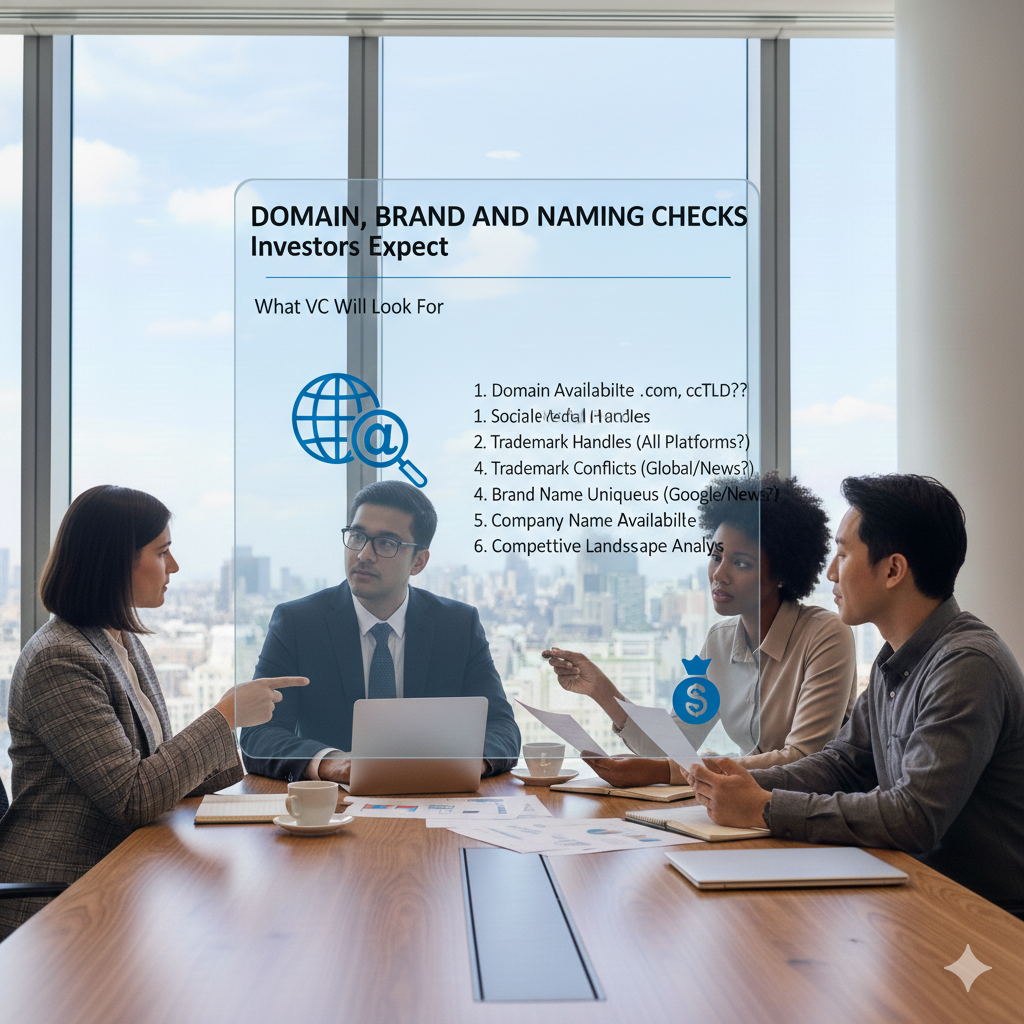
Founders often treat naming like a creative exercise. Investors treat it like a risk review. They are not asking if the name is clever. They are asking if the name can survive growth without causing legal, brand, or trust problems.
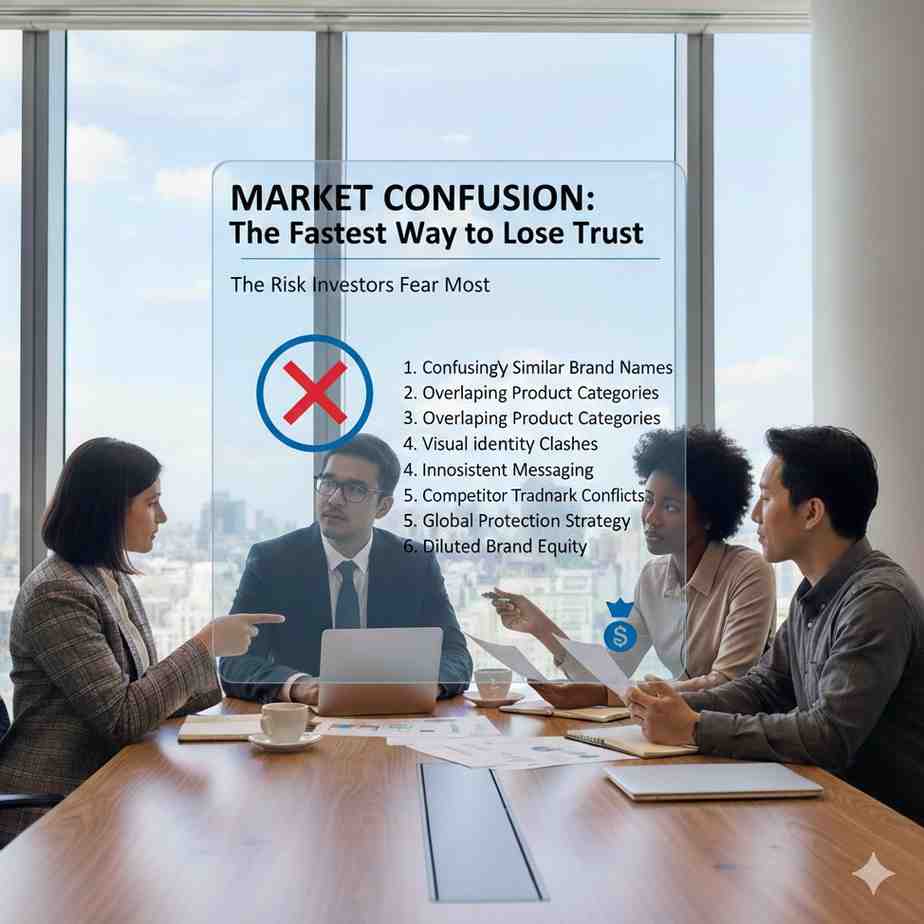

A name sits at the center of your company. It touches contracts, patents, sales decks, hiring, and investor updates. If that name becomes a problem later, fixing it is painful and expensive. Investors have seen this happen many times, which is why they care early.
For AI and robotics startups, naming risk is even more serious. These companies often operate in regulated spaces, sell to large buyers, or rely on long-term trust. A name that feels unstable or risky can quietly slow everything down.
The Trademark Question Investors Are Really Asking
When an investor asks about your name, what they often mean is, “Are you going to get sued or blocked later?” They do not expect you to have everything filed on day one, but they do expect you to understand the landscape.
A basic trademark check is not about perfection. It is about avoiding obvious conflicts. If another company in your field already uses a very similar name, that is a red flag. Even if they are small, they may still cause trouble later.
Investors know trademark fights are expensive and distracting. A founder who ignores this risk looks careless. A founder who understands it and has a plan looks thoughtful and prepared.
Why “No One Has Complained Yet” Is Not a Strategy
Many founders say, “We’ve been using the name for months and no one has complained.” Investors hear that as luck, not safety. Most trademark issues show up when you start to win.
The moment you raise money, get press, or land bigger customers, you become visible. That visibility attracts attention, including from companies that think you are too close to their name. Investors want to know you will not be forced into a rushed rename at that moment.
A good name is not one that avoids trouble today. It is one that avoids trouble when things are going well.
Similar Names in Different Spaces Still Matter
Some founders assume that if another company is in a different industry, the name is safe. That is not always true. Investors know that lines between industries blur, especially in AI and software.
A robotics company today may move into software platforms tomorrow. An AI tool for one niche may expand into others. If your name overlaps with a company that could reasonably be seen as related, that is a risk.
Investors prefer names that give you room to grow without stepping on someone else’s territory. That flexibility adds long-term value.
The Cost of Renaming Is Higher Than Most Founders Expect
Renaming is not just changing a logo. It means updating legal documents, customer contracts, marketing material, and internal systems. It also means rebuilding trust and recognition from scratch.
Investors have seen companies lose momentum during renames. Deals pause. Customers get confused. Teams get distracted. Even when the rename is successful, it often costs more than founders planned.
This is why investors would rather see you slow down slightly now than scramble later. A solid name upfront is cheaper than a rushed fix during growth.
Social and Digital Presence Checks
Handle Availability Signals Maturity
Investors often look at social handles even if your company is not active on social media. They are not judging your posting habits. They are checking consistency and foresight.
If your company name is taken across major platforms by unrelated accounts, it creates confusion. Even if you do not plan to use those platforms now, someone else controlling your name can cause issues later.
Owning your name consistently across platforms signals that you think ahead. It shows you understand how brands live online, not just in pitch decks.
Inconsistent Names Create Small but Constant Friction
If your website uses one name, your email another, and your social presence a third, it slowly erodes trust. Investors notice this because they imagine future customers feeling the same confusion.
Consistency makes everything easier. It helps with word-of-mouth, search, and credibility. Inconsistent naming forces you to explain yourself more often, which wastes time and energy.
A clean digital footprint does not require perfection. It requires intention. Investors want to see that intention clearly.
Why Investors Care Even If You Are “Stealth”
Some founders believe digital checks do not matter because they are still in stealth. Investors know stealth does not last forever. What you set up now becomes the base you build on later.
Fixing digital issues early is easier than fixing them once customers, partners, and press are involved. Investors prefer founders who quietly prepare for visibility instead of reacting to it.
This is especially true for deep tech startups, where trust takes longer to earn. Every small signal helps.
Naming and IP: Where Investors Get Very Serious
Names and Patents Are More Connected Than Founders Think
Many founders separate naming from IP strategy. Investors do not. They see both as parts of the same defense system. Your name becomes the label attached to your inventions, filings, and future value.
If your name is weak or risky, it can complicate filings and enforcement later. If your name is strong and clean, it supports the story that your technology is thoughtful and defensible.
This is one reason Tran.vc focuses on IP from the very beginning. Naming decisions made early can either support or undermine your long-term protection strategy.
Why Deep Tech Names Need Extra Care
AI and robotics companies often work on technology that is hard to explain quickly. The name helps anchor understanding. A confusing or misleading name makes that explanation harder.
Investors also know that deep tech companies are more likely to file patents, license technology, or get acquired. In all those cases, naming clarity matters. Buyers and partners want clean assets, not tangled branding.
A strong name helps your technology stand on its own, without raising unnecessary questions during diligence.
The Silent Test: “Would This Survive Diligence?”
During serious diligence, everything gets reviewed. Names, domains, trademarks, and brand risks all come under scrutiny. Investors often run this test mentally long before formal diligence starts.
If they sense your name will cause problems later, they may hesitate now. Even if they like the team and technology, they do not want surprises.
Founders who understand this and prepare early stand out. They feel safer to back.
How Strong Naming Signals Strong Execution
Investors Read Naming Choices as Decision-Making Signals
Investors do not just judge the name itself. They judge how you chose it. Did you rush? Did you overthink? Did you ignore obvious risks? Or did you make a clear, reasonable decision and move forward?
Good naming decisions suggest good product decisions. They show balance between speed and care. That balance matters a lot at early stages.
A name does not need to be perfect. It needs to be defensible, flexible, and thoughtfully chosen.
Confidence Without Ego Is What Investors Look For
Founders sometimes get attached to names emotionally. Investors prefer founders who can explain their choice calmly and logically, without defensiveness.
If you can say, “Here’s why we chose it, here’s what we checked, and here’s how it supports our future,” you build confidence. That confidence transfers to how investors feel about your execution overall.
This is not about being right. It is about being prepared.