
A co-founder leaving can feel like the floor moved under your feet. Even if you saw it coming, it still hits hard. Your calendar gets messy. Your team gets nervous. Your product plan suddenly has holes in it. And if you handle it in a rushed way, you can create legal and trust problems that last for years.
The good news is this: a co-founder exit can be clean. It can be calm. It can even make the company stronger. But that only happens when you treat the exit like a real business event, not a personal fight.
This guide walks you through how to do that—step by step, in plain words, with real actions you can take right away. And since Tran.vc works with technical founders who are building real moats through patents and IP, we will also cover the part most teams miss: how to protect the inventions and IP when a founder leaves.
If you want hands-on help building a strong IP plan from day one (so exits do not turn into disasters), you can apply any time here: https://www.tran.vc/apply-now-form/
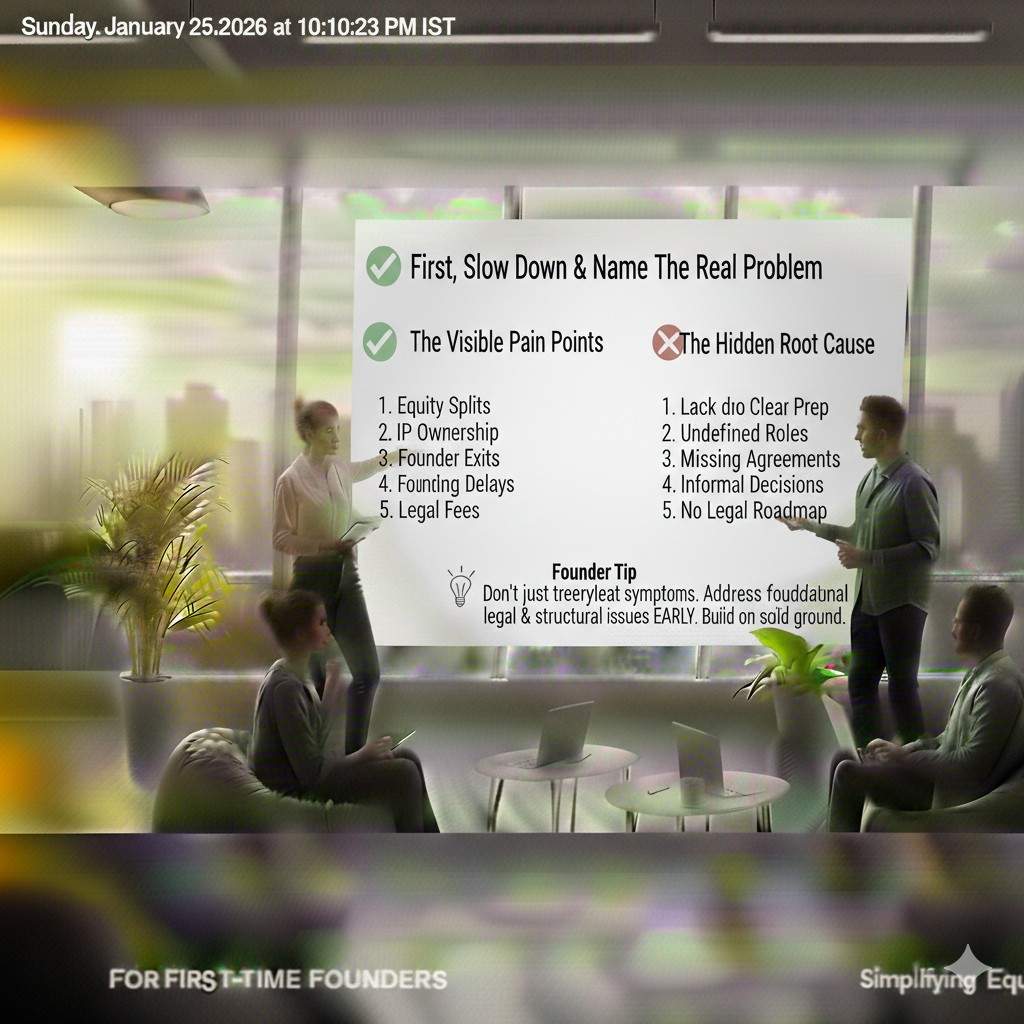
First, slow down and name the real problem
When a co-founder says they want to leave, most founders do one of two things.
They either try to talk them out of it right away, or they get angry and start planning a “clean cut” on the spot.
Both paths can lead to mistakes.
Before you do anything, take a breath and name what is actually happening. A co-founder exit can mean very different things:
Sometimes the person is burned out and needs a break. Sometimes they want a different role. Sometimes they are not happy with the pace. Sometimes there is conflict. Sometimes life changes, like a family issue or health issue. Sometimes the company changed, and their skills are no longer a fit. And yes, sometimes they are simply done.
Why does the “why” matter? Because it shapes the best next steps. If they are leaving due to burnout, you may be able to shift work and keep them involved part-time. If they are leaving due to conflict, you need a clear plan to reduce risk. If they are leaving due to role mismatch, you might keep them as an advisor with a fair deal.
Clean exits start with clear truth. Not blame. Not stories. Not “they are disloyal.” Just the facts.
Here is a simple way to get to the truth without turning it into a debate.
Ask them to describe three things:
What they want next for their life
What they feel is not working right now
What they would want the relationship to look like after they leave
Listen and take notes. Do not argue. You can disagree later. Right now your job is to gather facts.
This is also the moment where you should separate feelings from actions. You are allowed to feel hurt. You are allowed to feel angry. You are allowed to feel scared. But your company needs you to act with care.
A clean exit is not about being “nice.” It is about being smart.
Treat the exit like a business deal, not a breakup
Co-founder relationships are personal. You build together. You suffer together. You win small battles together. So when someone leaves, it can feel like betrayal, even when it is not.
But here is the shift that helps.
A co-founder exit is a business change. Your job is to protect the company, protect the team, protect the product, and protect the cap table. The goal is not to punish anyone. The goal is to reduce risk and keep momentum.
The best way to do that is to move the exit into a structured path.
You want three things:
A clear timeline
A clear transfer of work and access
A clear written agreement
If you get those three, you will avoid most future problems.
And you want to do this fast enough to stop uncertainty, but not so fast that you skip key steps. “Fast and sloppy” is what creates lawsuits later.
Check your documents before you talk numbers
Founders often start the exit talk with equity. That is usually a mistake.
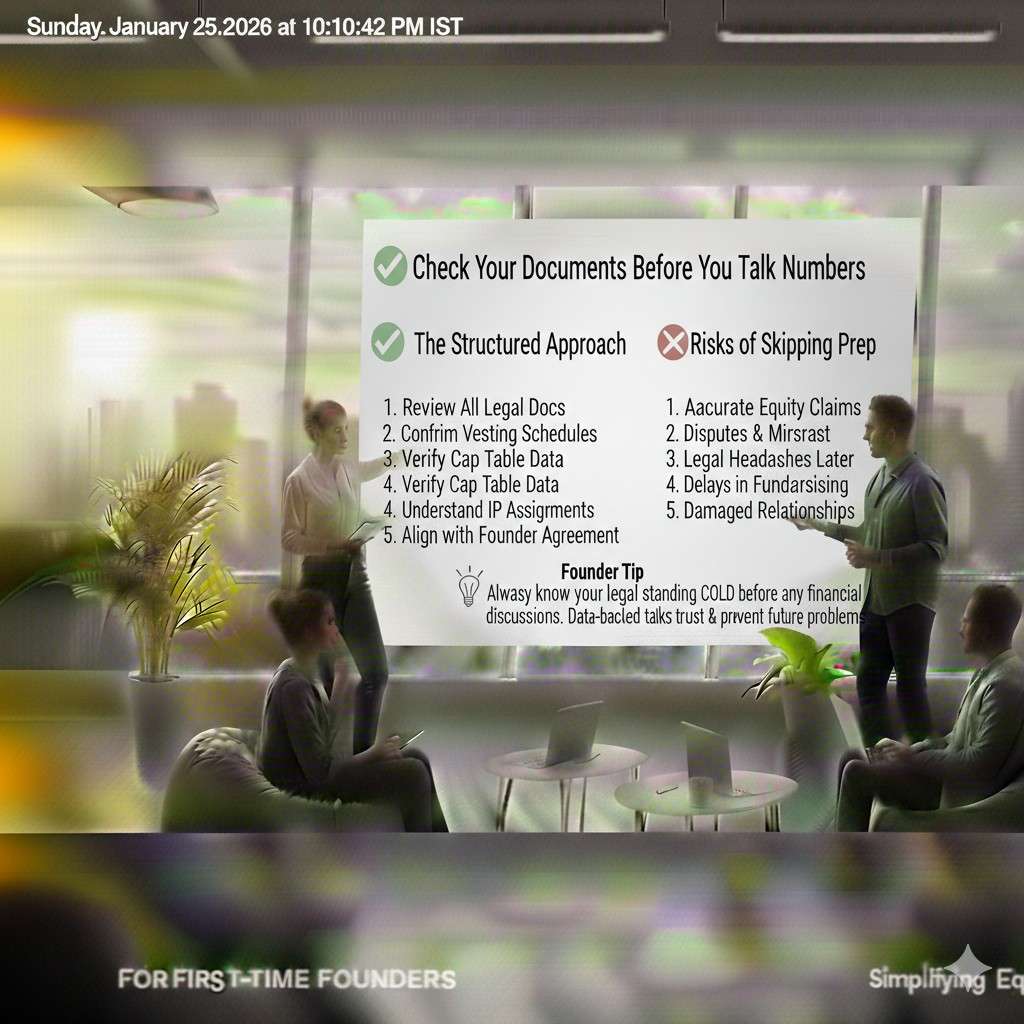
Before you negotiate anything, you need to know what is already signed. Many exits go bad because someone tries to “do the fair thing” but does not know what the contracts already say.
You are looking for these items:
Founder stock purchase agreement (or any founder equity agreement)
Vesting schedule and start date
Cliff terms
Any acceleration terms (single trigger, double trigger)
IP assignment agreement
Employment agreement (if any)
Advisory agreement (if any)
Board consents and stock option plan terms (if they have options too)
Any side letters or emails that changed terms
If you do not have these in one folder, create that folder today.
Why this matters is simple. If the paperwork says the shares vest over four years with a one-year cliff, then the “fair” answer is not based on feelings. It is based on the signed deal. That deal exists to protect both sides.
If you are missing basic founder documents, you are not alone. Many early teams start with a handshake. That is common, but it becomes dangerous during exits.
This is one reason Tran.vc pushes founders to build real IP and real structure early. When the core assets are protected and the founder agreements are clear, exits are less scary. If you want that kind of foundation, you can apply here: https://www.tran.vc/apply-now-form/
Understand vesting in simple terms, then apply it calmly
Vesting is one of the cleanest tools you have. It is also one of the most emotional topics.
So let us keep it simple.
Vesting means a founder earns their equity over time. If they leave early, they keep only what they earned. The rest returns to the company.
If your co-founder has not hit the cliff yet, they may keep zero founder shares. If they are past the cliff, they keep what vested so far. If they are close to the end of vesting, they keep most of it.
The “clean” approach is to follow the vesting terms you already agreed to.
Where things get messy is when founders try to re-write vesting in the moment, based on guilt or anger. That is when you see extreme outcomes like:
A leaving founder keeping too much equity, which blocks future hiring and future funding
A leaving founder being stripped unfairly, which leads to legal threats and reputation damage
So what should you do?
Start with the signed vesting schedule as the default.
Then ask one question: is there a strong reason to adjust?
A strong reason is not “I feel bad.” A strong reason is something like:
They worked full-time for a long time and took real risk
They built a core part of the product that still drives value
They are leaving on good terms and will support transition
They will stay involved in a real way as an advisor
They are crucial to relationships you must keep
Even then, adjustments should be modest and clear. Not vague promises. Not “we will make it right later.”
Clean exits use simple deals that can be written in plain language.
Decide what “clean” means for your company
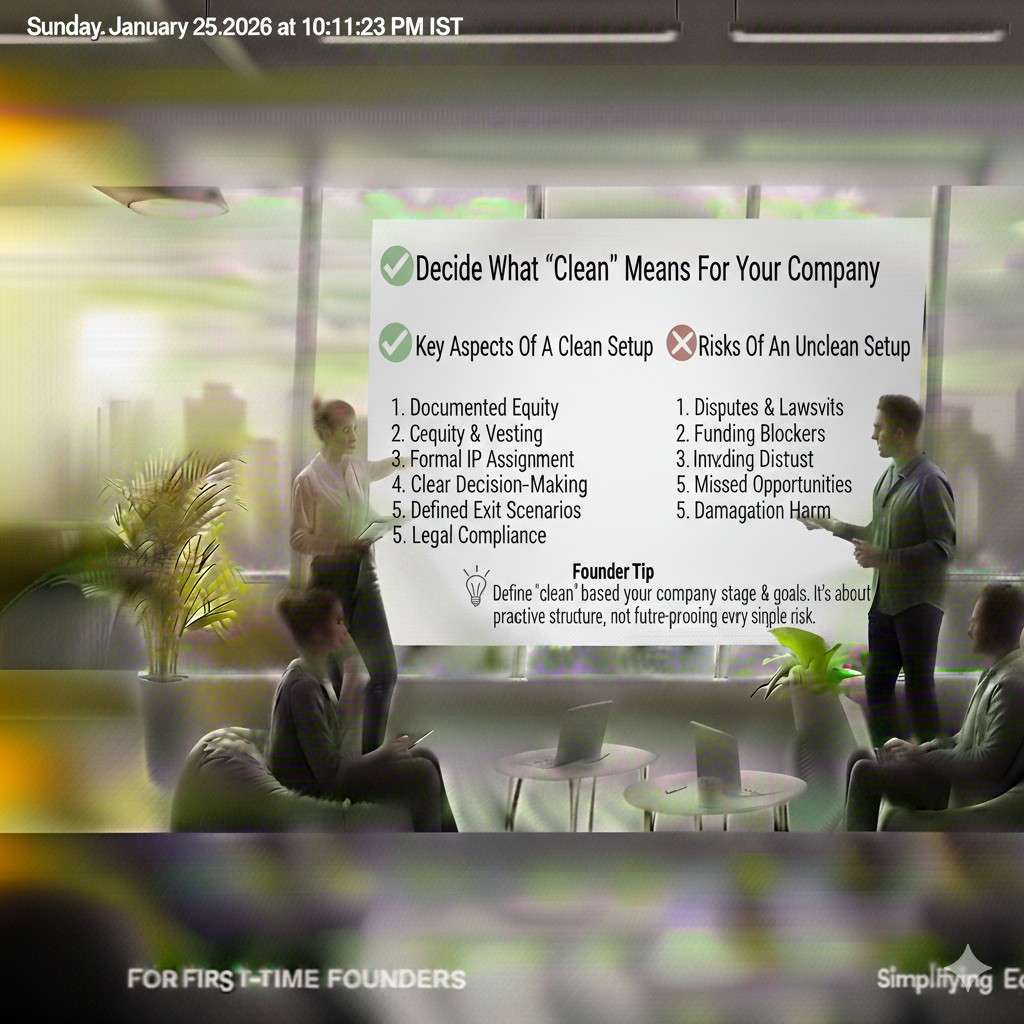
A clean exit is not the same for every startup.
Some startups want a full break. No ongoing role. No calls. No advisory title. Just a clean separation.
Other startups want a softer exit. The co-founder becomes an advisor. They help with hiring their replacement. They stay close to the tech. They may keep some equity for ongoing support.
Both can be clean.
What is not clean is being unclear.
So decide what outcome you want before you go deep into terms.
Ask yourself:
Will we need their help after they leave?
Do we trust them with the product roadmap?
Do we trust them with customer relationships?
Do we trust them with investor talks?
Will the team feel stable if they stay around?
Is it safer for the company if they step away fully?
This is not about pride. It is about stability.
Sometimes keeping a leaving founder “half in” is worse than them leaving. Because it keeps the team stuck in limbo.
Other times, forcing a sharp break creates fear and rumors, when a calm advisor role would reduce stress.
Pick the path that lowers risk, not the path that feels best in the moment.
Plan the timeline: exit date, handoff date, announcement date
Now let us talk tactics.
You want a timeline with three dates:
The date the decision is final
The date handoff is done
The date the company announces the change
In a perfect world, the announcement happens after the handoff is already solid. But sometimes you need to share earlier to stop rumors.
If the co-founder is in a key role like CTO, the handoff matters even more.
A clean handoff includes:
Where code lives and how it is organized
What is in progress and what is blocked
What technical debt is hidden
What vendor accounts exist
What cloud access exists
What keys, tokens, and certs exist
What customer promises were made
What product decisions were made and why
This is not about “getting back at them” by making them document everything. This is about keeping the company alive.
Set a short, respectful handoff period. Two to four weeks is common. Sometimes shorter, sometimes longer. But pick a date. Without a date, handoff becomes endless.
And make the handoff visible. Ask for a short written handoff note in a shared doc, updated every few days. Not a huge list. Just clear notes.
Lock down access without acting like a villain
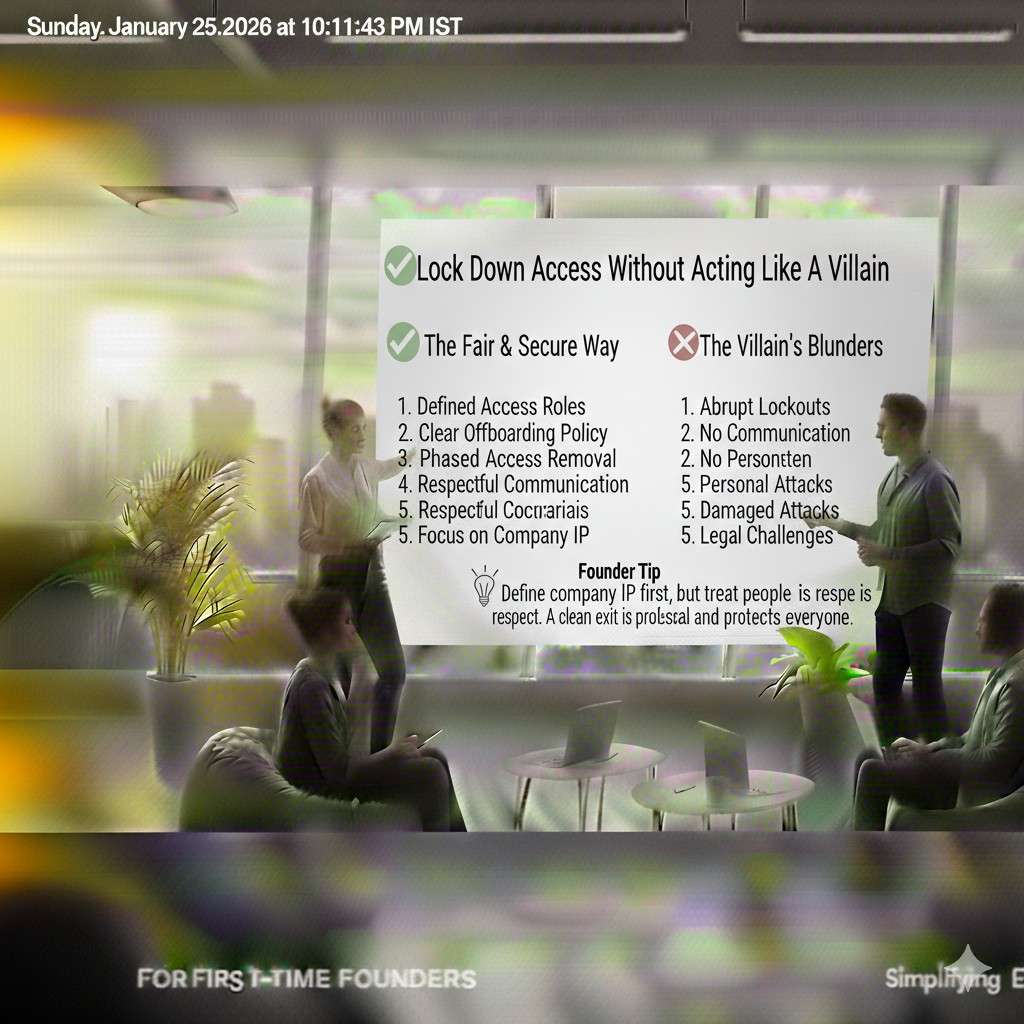
Security is a big part of a clean exit. But you must do it in the right way.
If you cut access too early, it can feel like an attack. If you cut access too late, you risk data loss or misuse. The right move is controlled and documented.
Here is a smart way to do it:
During the handoff period, keep access as needed, but reduce “admin” rights where possible.
The moment the exit is official, remove access to core systems, rotate keys, and update passwords.
Document the changes so you can prove what happened later.
Systems to review:
Email and Google Workspace / Microsoft accounts
GitHub or GitLab
Cloud providers like AWS, GCP, Azure
Domain registrar and DNS
Payment systems like Stripe
Customer support tools
CRM tools
Analytics tools
Password managers
Bank access and finance tools
Investor data room
Signing tools and legal docs
If that feels like a lot, it is. That is why many startups get hurt. They do not even know what accounts exist.
A clean exit is a chance to fix that.
Do it quietly and professionally. No dramatic messages. No public “we had to revoke access.” Just do the work.
The IP question: who owns what when a founder leaves?
This is the part that can make or break a deep tech company.
If you are building AI, robotics, or any hard tech, your IP is often your main asset. Code can be rewritten. But the core methods, designs, and inventions are what investors and buyers care about.
When a founder exits, you must be clear on these points:
Did they assign all inventions to the company?
Did they build anything before the company existed?
Did they use any prior employer IP?
Did they contribute to patentable ideas that are not filed yet?
Did they take data, models, weights, or training sets with them?
Do they have any personal repos or notes that contain core ideas?
A clean exit does not ignore this. It handles it in writing.
If you have a proper IP assignment agreement signed from day one, this gets easier. If you do not, it gets risky fast.
One of the most painful stories in startups is when a founder leaves and later claims they own the core algorithm, or that the company cannot file patents without them, or that they never assigned their inventions.
Even if you “win” that fight later, it can kill fundraising in the meantime.
So what do you do?
You make IP part of the exit process.
You confirm all prior inventions that relate to the company have been assigned.
You capture a list of inventions and features they worked on.
You confirm any invention disclosures needed for future patents.
You confirm they will cooperate with patent filings after they leave, if needed.
That last point matters. Patent work often takes time. If you file after they leave, you may still need their signature or help, depending on the situation and jurisdiction.
This is a big reason Tran.vc focuses on building IP early and doing it the right way, with real patent attorneys and strategy. If you want to protect your inventions so exits do not become IP threats, apply here: https://www.tran.vc/apply-now-form/
Do not “wing it” on the cap table

The cap table is not just a spreadsheet. It is your future hiring plan and future funding plan.
A co-founder leaving with a large stake can create these problems:
New investors worry about control and motivation
New hires worry the equity pool is too small
You have less room to reward the next technical leader
You may need to do painful reshuffles later
So you need to look at the cap table with a clear head.
If the co-founder’s equity is unvested, the company should usually repurchase it (based on the agreement). That equity often goes back into a pool to support hiring and retention.
If the equity is vested, they usually keep it, unless you negotiate a buyback.
Buybacks can be useful, but they must be handled carefully. Do not casually promise to “buy them out later.” That can turn into a huge financial burden.
If you do negotiate a buyback, make sure the terms are realistic. Many early startups do not have cash. You may need a long payment plan, or a structured option, or a partial buyback.
Clean exits do not create impossible future promises.
Decide how you will talk about it internally
Your team will feel it before you announce it. People notice tone changes. Meetings shift. Decisions slow down.
If you stay silent too long, you create a rumor engine. That engine will fill the gap with worst-case stories.
So plan the internal message early.
A clean internal message has three parts:
A simple statement of the change
A clear plan for what happens next
A calm tone that shows leadership
It does not include drama. It does not include details of conflict. It does not include blame.
Even if the exit was painful, your team does not need the play-by-play. They need stability.
Also, do not pretend it is not a big deal. People hate fake cheer. You can be honest without oversharing.
Something like:
“X is leaving. We thank them for the work they did. Here is the plan for coverage. Here is what stays the same.”
Then open space for questions. If you avoid questions, people will go to Slack DMs and create their own answers.
Decide how you will talk about it externally
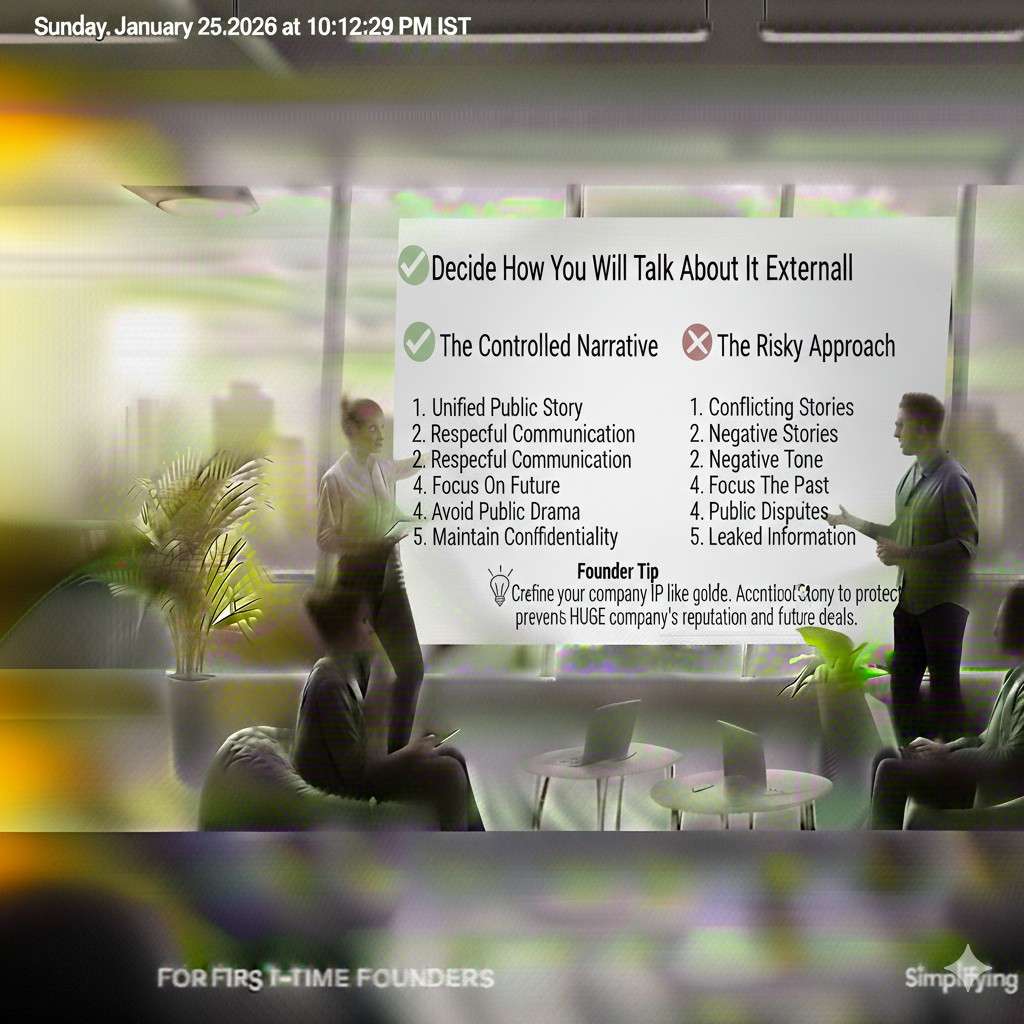
External messaging matters for customers, partners, and investors.
If your co-founder had a public role, people will ask. If you raise money later, investors will ask too. Even if no one asks, the story can leak.
A clean external message is short and forward-looking.
Do not oversell. Do not trash the person. Do not say “mutual decision” if it was not. Just keep it simple:
“X has decided to step away. We are grateful for their contribution. The company is moving forward with [brief direction].”
If you are worried about trust, you can add:
“Product delivery and customer support remain unchanged.”
If you have customers who were close to that co-founder, reach out directly to them before you post anything public. One calm phone call can prevent a lot of doubt.
If the exit is messy, protect the company without pouring fuel on it
Sometimes exits are not friendly.
Maybe the co-founder is angry. Maybe they feel pushed out. Maybe they are making threats. Maybe they want more equity. Maybe they are already talking to your team or your customers.
You still want a clean outcome, but you must shift into risk control mode.
Here is what matters most.
Keep communication in writing after key calls.
Do not argue in Slack.
Do not let the team get pulled into sides.
Do not share legal threats widely.
Avoid public fights.
If there are threats around IP, customers, or data, you should talk to a lawyer quickly. Not because you want war, but because you want clarity.
Also, do not try to “win” by embarrassing them. Public attacks can harm you more than them. Investors do not like founder drama. Customers do not like instability.
Your goal is to end it and move forward.
How to negotiate fairly without losing the company
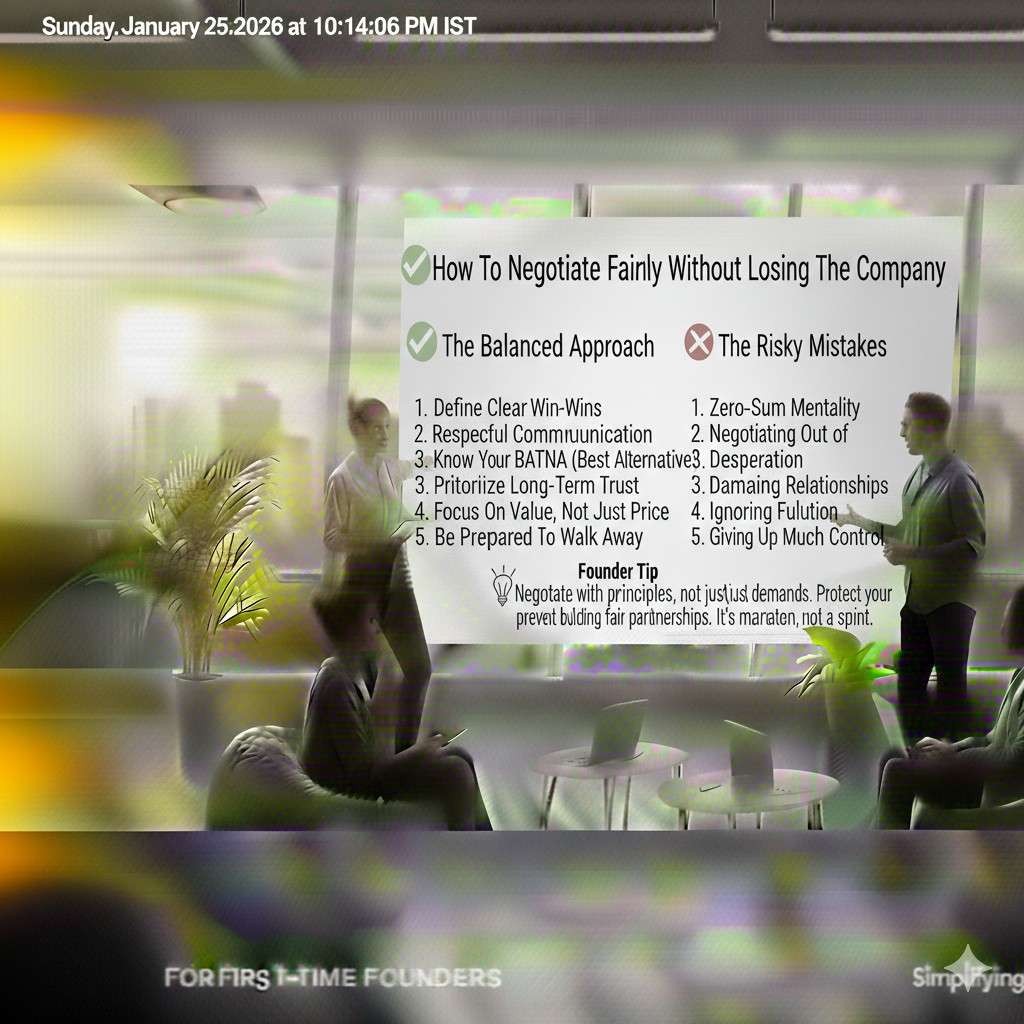
Negotiation is where many founders freeze.
They think: “If I offer too little, I am unfair. If I offer too much, I hurt the company.”
The best way through this is to separate two ideas.
One is what they legally have. The other is what you may offer to make the exit smoother.
Start with the legal baseline: vesting, agreements, and IP ownership.
Then consider “exit sweeteners” only if they reduce risk and protect momentum.
Examples of sweeteners that sometimes make sense:
A small advisory equity grant tied to real time help
A modest acceleration of vesting when the departure is for a good reason and transition is strong
A consulting contract for a short period to finish a key piece of work
A partial buyback so the cap table is healthier
But each sweetener must be tied to something measurable.
If they get advisory equity, define advisory duties.
If they get acceleration, define cooperation on patents and handoff.
If they get consulting pay, define deliverables.
No vague deals. Vague deals are future conflict.
Also, avoid emotional trading like:
“You can keep more equity if you promise not to start a competitor.”
Non-compete rules vary by place and can be hard to enforce. Focus on what you can control: IP assignment, confidentiality, and proper invention documentation.
Protect the product roadmap after the exit
A founder exit often breaks the roadmap in hidden ways.
Work that looked “almost done” might only be “almost demo-ready.”
A model might run only on one person’s setup.
A robotics build might rely on undocumented calibration steps.
A critical system might be held together by scripts no one else understands.
So after the exit, do a roadmap reset.
This is not a giant planning session. It is a reality check.
Ask:
What are the next two outcomes the company must deliver?
What is the simplest path to deliver them?
What do we need to pause or drop to stay focused?
If the exiting founder owned a key area, do not pretend you can keep the same pace. Adjust in public. Your team will trust you more if you tell the truth.
Handle the team with care, especially the people who were closest to them
When a co-founder leaves, other people might follow. Not always, but it happens.
The highest risk group is the people who reported to them or worked closest with them. They may feel unsure. They may feel loyal to that co-founder. They may fear instability.
So you should have direct one-on-one talks with these people soon after the internal announcement.
Your goal is not to “sell” them. Your goal is to listen and remove fear.
Ask:
What are you worried about?
What do you need to do your job well?
What should we fix right now?
Then act on at least one thing quickly. Even a small fix builds confidence.
Also, be careful about letting the departing founder recruit people away during the transition. You cannot control feelings, but you can control policy. Make sure your team knows what is okay and what is not, in a calm way.
Make a clean “paper trail” so the exit stays clean later
A co-founder exit is not finished when they walk out the door.
It is finished when everything is documented.
This is what you want in the file:
A signed separation agreement or founder repurchase agreement
A clear statement of what equity they keep and what returns to the company
A confidentiality reminder (often already in agreements, but restate it)
An IP confirmation or re-assignment if needed
A plan for future cooperation on patent filings, if needed
A record of returned equipment
A record that access was removed and keys were rotated
A short handoff summary
When this file exists, you can fundraise later without panic. You can answer investor questions calmly. You can hire replacements without hidden problems.
And if the founder later changes their story, you have proof of what was agreed.
What to do if the co-founder is an inventor on key patents
This is very common in deep tech.
If you are filing patents, and that co-founder is a true inventor, their name may need to be on the patent. Inventorship is a legal concept, not a “reward.” You cannot remove someone from inventorship just because they left.
So the clean approach is:
Make sure the company owns the rights through assignment.
Make sure the exiting founder agrees to cooperate with filing steps, even after leaving.
This is often handled in the separation agreement. It can include a simple clause that they will sign needed papers, within reason, and that the company can act if they do not respond.
This is not about control. It is about preventing your patent strategy from getting stuck.
If you want to build your patent plan early so founder changes do not put your moat at risk, Tran.vc can help. Apply any time here: https://www.tran.vc/apply-now-form/
If you are staying founders: how to rebuild trust after the exit
After a co-founder leaves, the founders who remain often become overly cautious. They stop debating. They avoid conflict. They try to “keep peace” at all costs.
That sounds nice, but it can slow you down.
Clean exits are not only legal. They are emotional and cultural too.
So do this with your remaining leadership:
Have one honest meeting about what happened, focused on lessons, not blame.
Agree on how decisions will be made now.
Agree on how conflict will be handled now.
If you do not do this, the same pattern can repeat. Not with the same person, but with the same style of problems.
Hiring the replacement: do not rush, but do not wait forever
If the exiting founder held a core role, you will feel pressure to hire fast.
But hiring fast can create a new kind of pain. You can bring in a senior person who does not fit, and then you have two leadership problems instead of one.
At the same time, waiting too long can stall delivery.
A good middle path is:
Use a short-term bridge, like a trusted contractor, advisor, or interim leader, while you search for the right long-term hire.
This works well in robotics and AI because you often need specialized skills. A bridge role can keep progress moving without forcing you into a bad long-term choice.
Also, when you hire, be ready for investor questions about why the co-founder left. The best answer is calm and simple. No drama. No blame. Just truth and forward motion.
Avoid the most common mistake: trying to “look fine” instead of being stable
Many founders focus on optics.
They worry about how it looks to investors. They worry about LinkedIn. They worry about rumors.
But the real priority is stability.
If you focus on stable delivery, stable team morale, and stable IP ownership, the optics will follow.
Investors understand co-founder changes. What scares them is chaos.
Customers also understand change. What scares them is missed deadlines and silence.
So do not put energy into fake perfection. Put energy into clear action.
A simple way to test if the exit is truly clean
Here is a simple test.
Imagine it is 18 months from now. You are raising a seed round or a Series A. A partner asks:
“Tell me about the co-founder who left. What do they own? Any disputes? Any IP issues?”
If you can answer in two calm minutes, with documents ready, the exit is clean.
If you feel your stomach drop, the exit is not clean yet.
The goal is not to erase the story. The goal is to remove uncertainty.
Where Tran.vc fits in when founder exits happen
Tran.vc works with technical founders building AI, robotics, and other deep tech. In these companies, the real value is often the invention itself: the method, the design, the system, the model approach, the way the robot moves, the way the data flows.
When founder roles change, that value must stay protected.
Tran.vc invests up to $50,000 in in-kind patent and IP services so founders can:
Lock down invention ownership early
Build a strong patent plan that matches the product
Create real assets investors respect
Reduce risk when teams change
If you are building something hard to copy, you should not wait until after a problem to get your IP in order.
You can apply any time here: https://www.tran.vc/apply-now-form/
Closing: clean exits are leadership, not luck
A co-founder exit is one of the hardest moments in a startup. But it does not have to break the company.
The clean path is not magic. It is simple, disciplined work.
You get clear on why the exit is happening.
You follow the signed agreements.
You document the handoff.
You secure access.
You protect IP.
You communicate calmly.
You put everything in writing.
Then you move forward.
If you do that, you will not only survive the exit. You will earn trust from your team, your customers, and your future investors.
And if you want support building a company that is strong enough to handle hard moments—especially around patents and defensible IP—Tran.vc is here.
Apply any time: https://www.tran.vc/apply-now-form/