
Most founders think fundraising starts when you open a pitch deck.
It doesn’t.
Fundraising starts weeks earlier, when you set your company up so an investor can say “yes” fast, without fear, and without doing mental gymnastics to understand what you do.
This article is your setup checklist. Not the fluffy kind. The kind that saves you months, keeps you out of bad deals, and helps you raise from a place of strength.
And if you’re building in AI, robotics, or deep tech, there’s one setup step that changes everything: protecting your core work before it leaks. That’s exactly what Tran.vc helps with. We invest up to $50,000 in in-kind patent and IP services so technical founders can build real assets early, without giving up control too soon.
If you want help with the IP piece (and the strategy around it), apply anytime here: https://www.tran.vc/apply-now-form/
1) Know what you are really selling
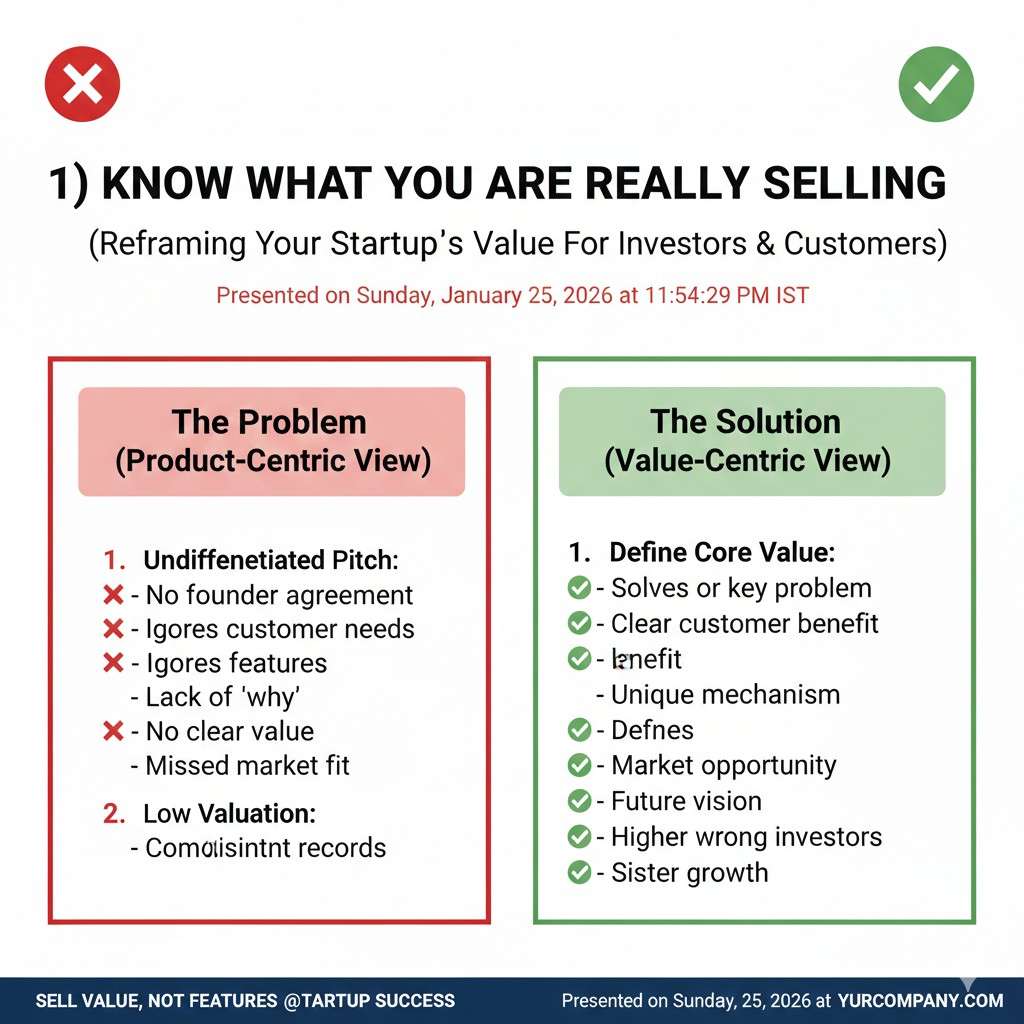
Here is a quiet truth: investors don’t buy your product. They buy your future.
They are asking one big question, even if they don’t say it out loud:
“Will this become a large, valuable company?”
Your job before raising is to make that answer easy.
So start with a simple exercise. Try to say, in one clean sentence:
- who you help
- what pain you remove
- how you remove it
- why you can do it better than anyone else
If you can’t say it in one sentence, you are not ready to sell it.
This is not about being clever. It’s about being clear.
Clarity does two things. It keeps your pitch tight. And it forces you to pick a real problem instead of a cool idea.
If you are in AI or robotics, it’s tempting to lead with the tech. Resist that urge. Tech is not the hook. Pain is the hook.
A strong example sounds like this:
“We help warehouse teams move goods faster by using robot arms that learn new items in minutes instead of weeks.”
That sentence tells an investor what you are doing without needing ten slides.
When your sentence is clean, every other setup step becomes easier.
And if you want Tran.vc to help you shape this into an IP-backed story investors trust, apply anytime: https://www.tran.vc/apply-now-form/
2) Pick a market that can pay you soon
A market can be exciting and still be a bad place to start.
Before raising, you need to show that money can move.
That means you should know:
- who signs the check
- what makes them say “yes”
- what makes them delay
- what budget they use
- what they are replacing
Many founders skip this and talk to “users” who love the idea but cannot buy. Investors see this fast. It feels like motion, but it is not progress.
So do this instead.
Talk to people who can approve spend. If you can’t reach the top buyer, talk to the person who owns the pain and can pull a budget line.
Then listen for two signals.
First, they describe the pain in their own words, without you feeding it to them.
Second, they tell you what it costs them today. That could be time, money, lost sales, safety risk, missed deadlines, or high error rates. Anything measurable.
You are not trying to win them yet. You are trying to learn the buying path.
In AI and robotics, buying paths can be slow. That does not mean you should avoid them. It means you should start with a slice of the market where the first deal is realistic.
A good first slice looks like this:
- urgent pain
- simple install
- low risk to try
- clear owner
- short approval chain
Even if your long-term vision is huge, your first entry point must be simple enough to close.
When you can explain your first paying wedge, investors relax.
3) Build a proof that matters, not a demo that looks nice
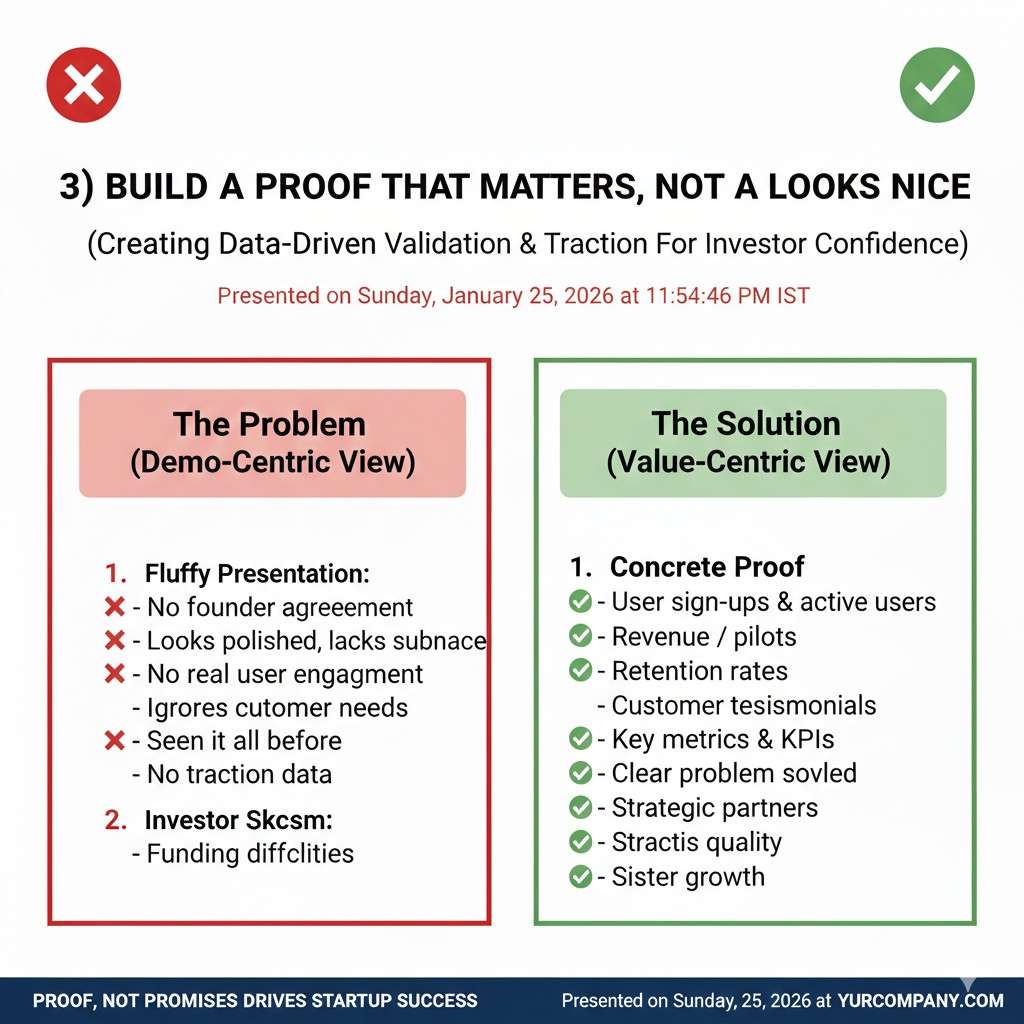
A pretty demo is fun. A proof is valuable.
A proof is something that reduces doubt.
Before raising, you want proof in one of these forms:
- the thing works in the real setting
- the customer is willing to pay
- you can deliver it again
- you can keep improving it
Proof is not “we trained a model.” Proof is “we trained a model and it hit the target in a messy real environment.”
Proof is not “we made a robot pick up objects.” Proof is “we made it pick up objects fast enough and with low mistakes for a real shift.”
Investors do not need perfection. They need direction. They need to believe the risk is getting smaller.
So pick one measurable outcome and aim for it hard.
For example:
If you are building a vision system, your proof might be accuracy in bad lighting, on cheap cameras, with real noise.
If you are building a robotics stack, your proof might be cycle time, grasp success, or downtime.
If you are building AI for workflows, your proof might be time saved per task, lower error rates, or reduced training time for staff.
Make the proof simple. Make it repeatable. Make it honest.
This proof becomes the center of your story.
4) Set up your company so diligence is painless
Diligence is where many rounds die.
Not because the company is bad. Because the company is messy.
Before raising, you want your basics clean so investors feel safe.
This is the boring part. It also matters more than most founders think.
Start with your corporate setup.
Make sure your company structure is correct for where you plan to raise. Make sure your cap table is accurate. Make sure your founder equity is clear. Make sure you can show who owns what.
If you have early contributors, advisors, or friends who “helped a bit,” get their status clean. Investors don’t like surprises.
Also make sure you can show basic ownership of the work. That includes signed agreements with anyone who wrote code, designed hardware, trained data, or built anything that matters.
If you do not have these in place, it can become a last-minute fire. And last-minute fires reduce leverage.
You don’t want to be forced into a bad term just because you’re rushing.
5) Protect your core idea before you talk too much
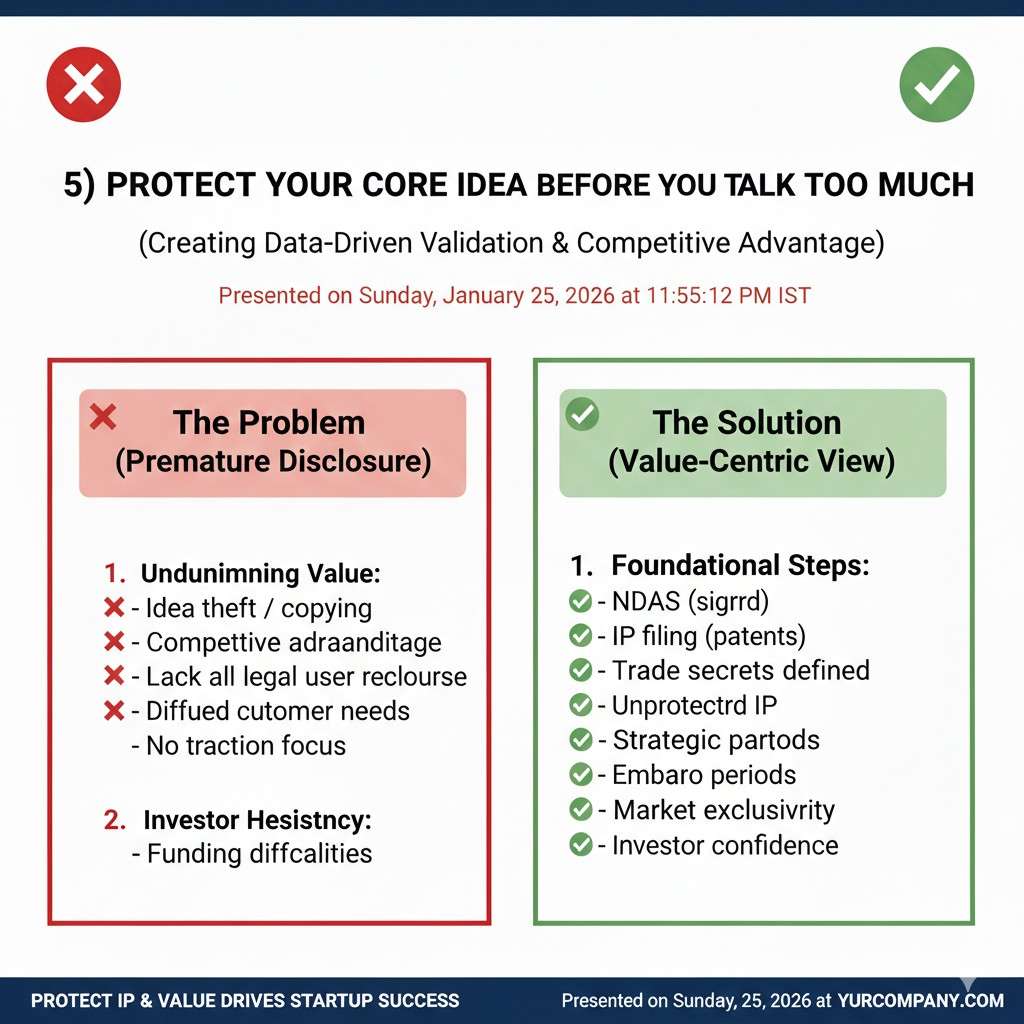
In deep tech, you can lose value without even noticing.
You can explain your method to ten people, and one person can rebuild it faster than you think. Or a big company can “learn” from your early talks and move quietly.
Even worse, you can damage your own patent options by sharing too much too soon, in the wrong way.
This is why IP is not a “later” thing.
It is a pre-raise thing.
But here’s the key: IP is not just patents. IP is a strategy.
It is knowing what to file, what to keep secret, what to publish, what to show in demos, and what to keep behind the curtain.
When you do this well, your pitch changes.
Instead of “we have a cool approach,” you can say:
“This is our method. This is what we own. This is what others cannot copy without risk.”
That one shift makes investors lean in.
Tran.vc exists for this step.
We invest up to $50,000 in in-kind patent and IP services, so you can build a moat early without burning cash or giving up control.
If you want help turning your tech into a real asset investors respect, apply here: https://www.tran.vc/apply-now-form/
6) Know what is truly unique in your system
Many founders say, “Our product is unique.”
Then an investor asks, “What part is hard to copy?”
And the room gets quiet.
Before raising, you should be able to point to the unique parts like you are pointing to parts on a machine.
This might be:
- a training method
- a data pipeline
- a control loop
- a system design that reduces cost
- a way to adapt fast in the field
- a hardware and software combo that others can’t match
- a safety method that makes deployment possible
Then you should know what makes each part defensible.
Defensible does not always mean “nobody can do it.” It means “it will be expensive, slow, or risky for them to catch up.”
Sometimes defensibility is a patent.
Sometimes it’s a secret that is hard to reverse.
Sometimes it’s data you can get and they can’t.
Sometimes it’s a deep workflow tie-in.
Sometimes it’s the team’s know-how plus a repeatable process.
You don’t need to claim you are the only ones who can do it. You need to show you have a head start that can last.
That head start is what investors fund.
7) Write your “why now” in plain words
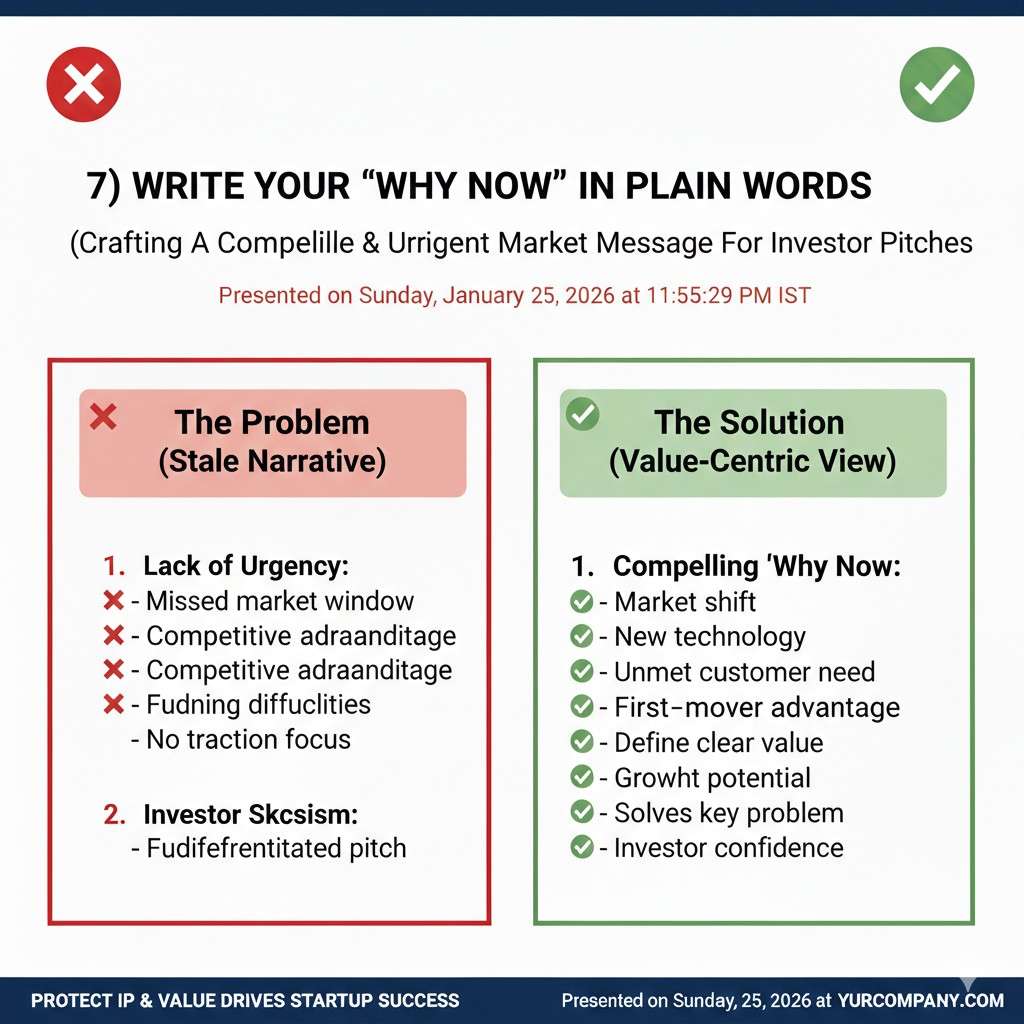
Investors need a reason to believe this is the right moment.
Not because you want to raise. Because the world is ready.
A strong “why now” is not hype. It is a real change.
In AI and robotics, strong “why now” reasons often include:
- hardware got cheaper
- compute became available
- new tools lowered build time
- rules changed
- labor pressure increased
- customers are desperate for automation
- old methods broke at scale
Your job is to connect the change to the buying moment.
Not “AI is hot.”
More like:
“Two years ago, this cost too much to run. Now it runs on-device for a fraction of the cost, which makes large rollouts possible.”
Or:
“Staffing is unstable, so operations teams are actively replacing manual steps with automation that works today.”
Say it like you are explaining it to a smart friend. No big words. No drama.
8) Build a simple plan for your next 12 weeks
A common mistake is showing a two-year roadmap.
Investors don’t fund roadmaps. They fund near-term execution that reduces risk.
Before raising, you should have a clear plan for the next 12 weeks after the check hits.
Not a long list. A clean plan with a few outcomes.
It should answer:
- what you will build
- what proof it will create
- what customer step it will unlock
- what metric will move
This does two things.
It shows you are focused.
And it tells investors what their money will do.
If you can’t describe what the next 12 weeks will produce, you are not ready to raise. Because raising is not a trophy. It is fuel. Fuel needs a direction.
9) Decide your funding story before investors decide it for you
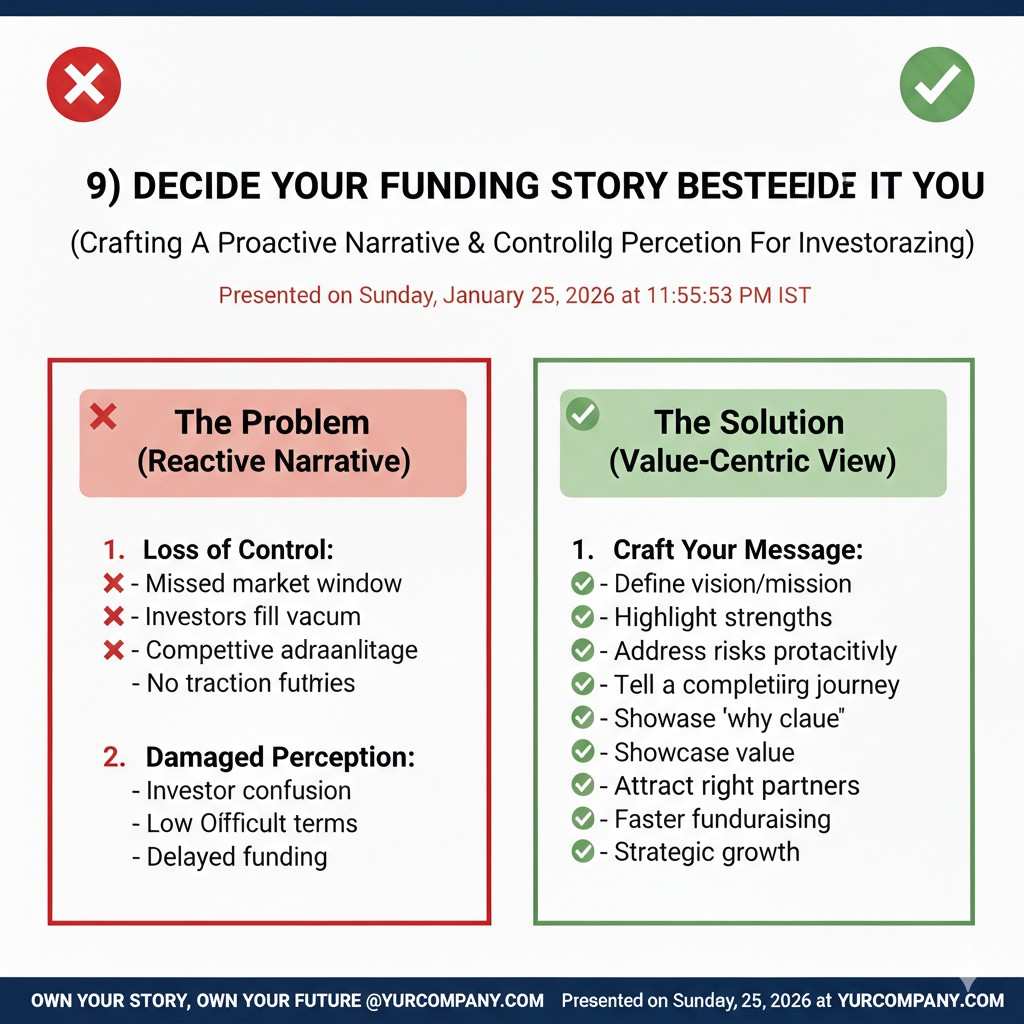
If you don’t frame your round, investors will frame it for you.
Before raising, decide what kind of round you are doing and why.
Are you raising to finish a working product and get your first paying customers?
Are you raising to scale a sales motion that already works?
Are you raising to go from lab proof to field proof?
These are very different stories. Each one brings different questions.
If you claim you are scaling when you are still proving the core tech, you will lose trust fast.
If you claim you are proving the core tech when you already have repeat sales, you will look small.
Match the story to the truth.
A clean story sounds like:
“We have a working system and early pilots. This round gets us to paid rollouts with repeat results.”
That tells investors exactly what success looks like.
10) Set your metrics before the pitch
Metrics should not be made up the week you send your deck.
Before raising, decide what you will measure, and measure it the same way every time.
If you are in software, metrics might be usage, retention, conversion, cost to serve, or time saved.
If you are in robotics, metrics might be throughput, success rate, uptime, unit economics, or install time.
If you are in AI, metrics might be quality, drift, latency, cost per run, or human time saved.
Pick the ones that matter to your buyer.
Then track them like you respect them.
Investors don’t expect perfect charts at pre-seed. They do expect that you know what matters and you’re watching it.
Also, avoid vanity metrics. “We had many meetings” is not a metric. “Three buyers asked for pricing” is closer. “Two signed pilots with clear success targets” is even better.
11) Make your pricing make sense
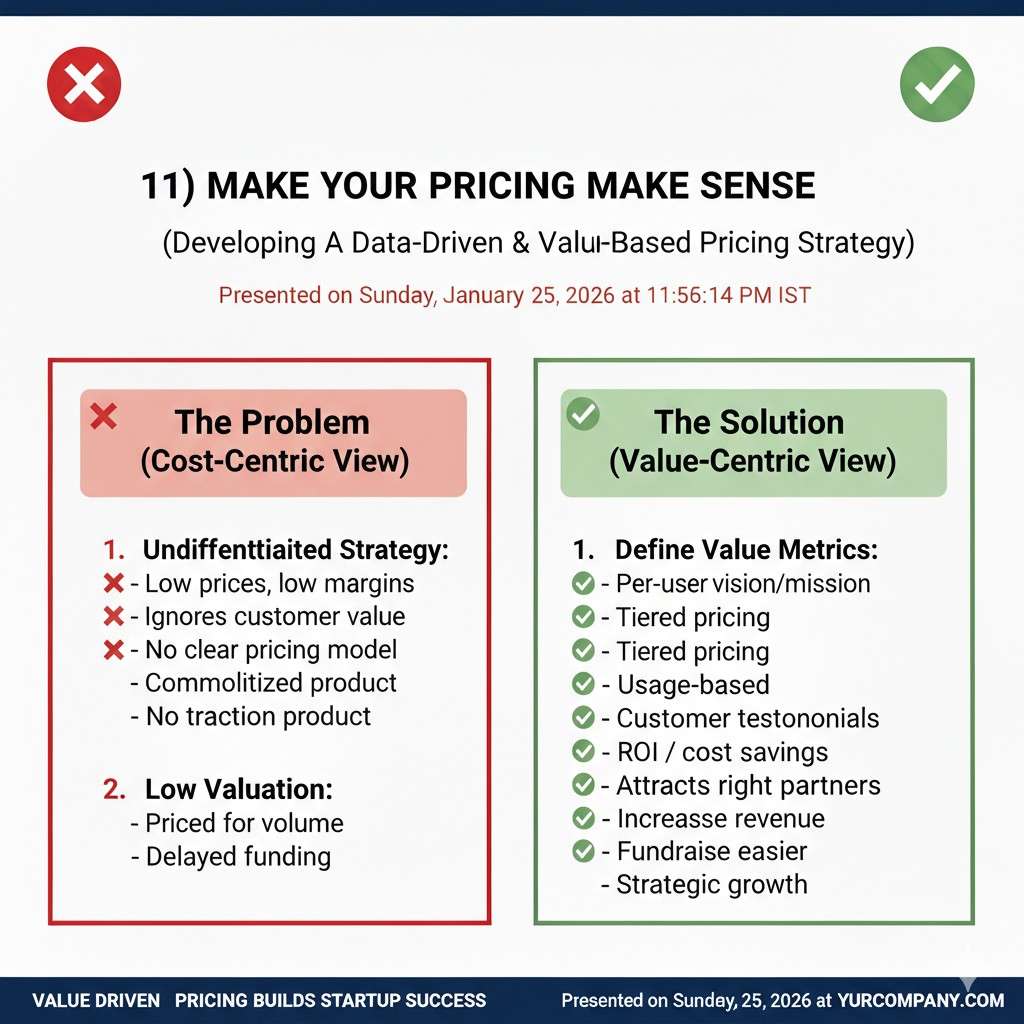
Many founders avoid pricing because it feels scary.
But investors will ask.
And buyers will ask sooner than you think.
Pricing does not need to be final. It needs to be reasonable.
A good early pricing approach ties to value.
If you save a factory $200,000 a year, pricing at $10,000 a month may be fine.
If you cut errors that cause returns, price near the cost of the problem.
If you replace a manual role, price near the loaded cost of that role, while leaving the buyer with a clear win.
For robotics, think in terms of:
- cost per hour
- cost per unit moved
- cost per site
- payback period
For AI workflow tools, think:
- cost per seat
- cost per task
- cost per outcome
Then pressure test it in calls. Don’t ask, “Would you pay?” Ask, “How do you buy this today?” and “What budget would cover this?”
When pricing aligns with buyer logic, the sales path shortens.
12) Turn your deck into a decision tool
A deck is not a brochure. It is a decision tool.
Its job is to move an investor from “maybe” to “let’s talk” to “let’s move.”
That means your deck should be easy to skim.
It should answer the big doubts fast:
- What is the problem?
- Why now?
- What is your solution?
- Why are you the team to do it?
- What proof do you have?
- Who will buy it and how?
- How big can it get?
- What do you need and what happens next?
If the investor has to work hard to understand you, they won’t. They have too many deals.
Keep your words simple. Keep your slides clean. One idea per slide.
And please do not hide the hard parts. If deployment is hard, show how you reduce deployment pain. If data is hard, show how you get it. If regulation matters, show the path.
Confidence comes from honesty plus a plan.
13) Write your one-page “diligence folder” summary
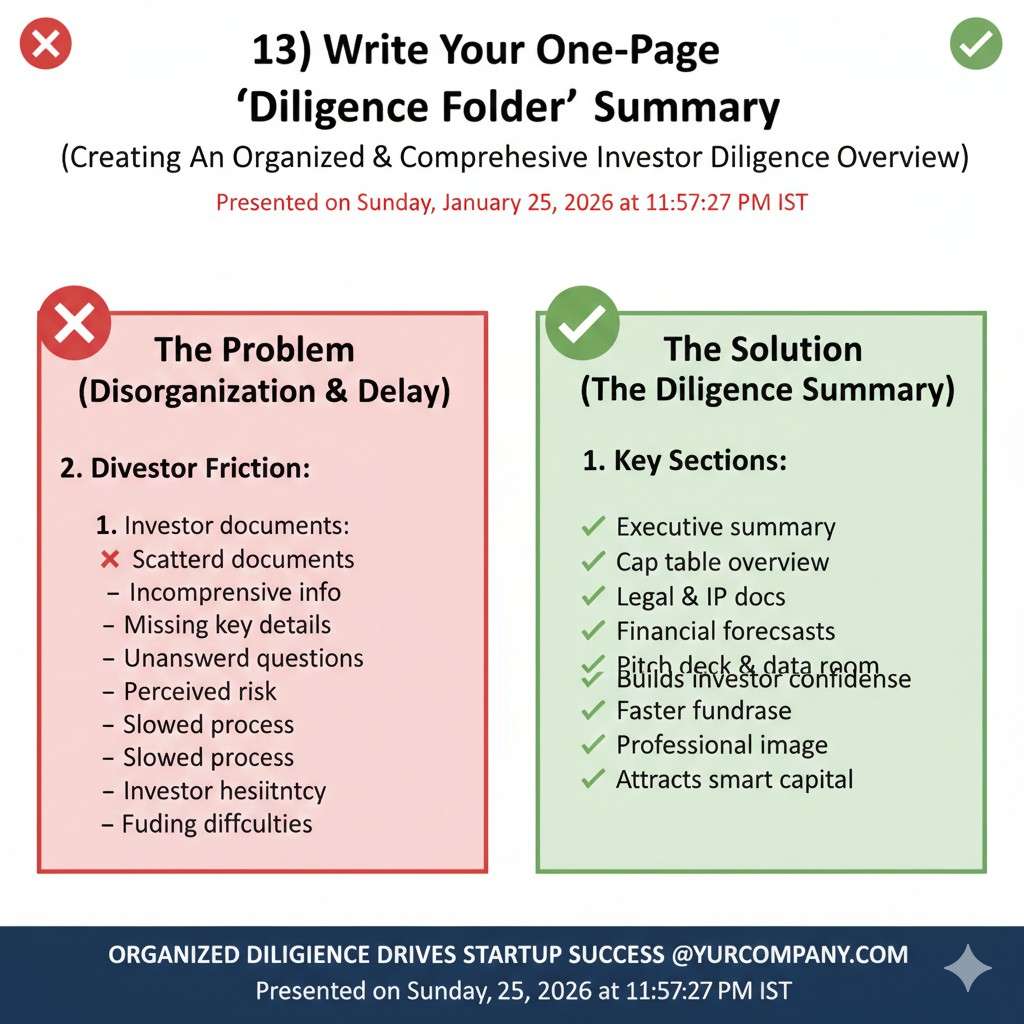
Before you raise, make it easy for an investor to do next steps.
Create a simple folder with:
- your deck
- a short memo or overview
- your demo video
- your traction notes
- your cap table snapshot
- your incorporation basics
- your IP plan summary (more on that in a moment)
You don’t need to share everything at once. But you should be ready.
Speed matters.
The founder who responds cleanly looks strong. The founder who scrambles looks risky.
14) Treat IP like a product, not paperwork
Let’s talk about IP the right way.
Most founders think patents are forms you fill out.
That mindset is why they either avoid patents or do them badly.
In reality, a strong patent plan is a product decision.
It shapes what you build first. It shapes what you reveal. It shapes how you talk to customers. It shapes how you defend your edge.
It also shapes how investors value you.
For AI and robotics, IP can cover more than “a robot.” It can cover:
- system methods
- training methods
- data handling
- control approaches
- hardware-software coordination
- safety methods
- ways to reduce compute or power
- ways to make models adapt fast
A good IP plan maps to your roadmap.
It protects what matters first, then expands as you grow.
This is exactly why Tran.vc invests in IP services as part of the seed-strapping approach. You can build leverage early, before you raise big, and without giving away a big chunk of your company just to pay lawyers later.
If you want Tran.vc to help you build an IP-backed foundation before your raise, apply here: https://www.tran.vc/apply-now-form/
15) Build your investor list like a builder, not a gambler
Random outreach wastes time.
Before raising, build your investor list with intent.
You want investors who:
- invest at your stage
- understand your space
- can move in your timeline
- have funded similar paths
- can help with hiring, sales, or next capital
Then you want to approach them in a smart order.
Start with investors who can give real feedback and who are less likely to lead. Use those talks to sharpen your pitch.
Then move to the investors most likely to lead once your story is sharp.
This is not manipulation. It’s good process.
Also, don’t treat a “no” like a dead end. A “no” today can become a “yes” later if you show progress.
Keep a simple update system. Every few weeks, send a short note with one or two real wins.
16) Prepare answers for the questions you will get every time
Every investor asks similar questions.
If you prepare now, you won’t stumble later.
You will get asked:
“How is this different from what exists?”
So be ready to explain the difference in plain words. Then show proof.
You will get asked:
“What stops a bigger team from copying this?”
This is where IP strategy and defensibility matter. Don’t hand-wave. Show your moat plan.
You will get asked:
“How will you sell it?”
Be ready to explain the first wedge, the first buyer, and the first path to paid.
You will get asked:
“What are the main risks?”
Don’t pretend there are none. Name them and show how you reduce them.
You will get asked:
“What will you do with the money?”
Be ready with the next 12-week plan.
When you answer these smoothly, investors feel you are in control.
17) Decide what “good terms” means to you before you get pressure
Founders often negotiate when they are tired and stressed.
That’s when bad deals happen.
Before raising, decide:
- what valuation range you can accept
- what ownership you want to keep
- what control items matter most
- what rights you will not give away early
You don’t need to be rigid. You do need to know your red lines.
This is part of raising with leverage, not desperation.
Tran.vc’s whole model fits that idea. Build assets early. Protect what matters. Raise when you’re strong. Keep control longer.
If that matches how you want to build, apply here: https://www.tran.vc/apply-now-form/
18) Build your “trust signals” on purpose
At pre-seed, trust is a large part of the decision.
Trust does not come from fancy branding. It comes from signals.
Signals like:
- you can explain your product simply
- you show real proof, even if small
- you know the buyer and the buying path
- you respond fast and clearly
- your story matches your stage
- your company paperwork is clean
- your IP plan is serious
- you learn quickly and adjust
Founders who have these signals raise faster.
Not because they are lucky. Because they reduce investor fear.
19) The final check: are you raising because you should, or because you’re stuck?
This one is personal, but it matters.
Some founders raise because they need speed.
Some raise because they feel stuck.
If you are stuck, money doesn’t fix the root cause. It just buys time.
Before you raise, ask:
“What is the one thing that is blocking progress?”
If it’s lack of clarity, fix the story.
If it’s lack of proof, pick one proof and drive it.
If it’s lack of customer pull, talk to buyers and change the wedge.
If it’s lack of defensibility, build the IP plan now.
If it’s team gaps, recruit advisors or early hires with clear roles.
Raising works best when you already have momentum and you need fuel.
How Tran.vc fits into this checklist
If you are building AI, robotics, or deep tech, your edge is often inside your methods and systems.
That edge is easy to lose if you wait too long.
Tran.vc helps founders lock that edge into real assets early, with up to $50,000 in in-kind patenting and IP services. Not just filings, but strategy, guidance, and work that fits your product and your raise.
This can change how investors see you.
It can also change how you negotiate.
You don’t have to chase VC money too soon. You can seed-strap. You can build leverage. You can raise when you’re ready.
If you want to explore this path, apply here: https://www.tran.vc/apply-now-form/
Closing thoughts
Raising money is not about having the loudest story.
It is about being the safest “yes” in a stack of risky bets.
When your setup is clean, your proof is real, your market is clear, and your defensibility is planned, fundraising stops feeling like begging.
It becomes a process.
And you stay in control.
If you want help building an IP-backed foundation before you raise, Tran.vc is built for that.
Apply anytime: https://www.tran.vc/apply-now-form/