
Most product teams move fast. They ship, they test, they fix, they ship again. That speed is a strength. But it can also hide something costly: the team may be building real invention every week and not capturing it.
An IP-first mindset is simply the habit of noticing what your team is inventing, writing it down in a usable way, and protecting it before the market copies it. It is not a legal exercise that slows work down. Done well, it is a product habit that makes your roadmap stronger and your company harder to copy.
If you are building in AI, robotics, deep tech, or any system where your edge comes from how you solve hard problems, IP is not “extra.” It is part of the product. The earlier you treat it that way, the more leverage you earn later, especially when you raise money or face a fast follower.
Tran.vc helps technical founders build this habit early by investing up to $50,000 in in-kind patent and IP services, so you can turn what you are already building into real assets investors respect. If you want help putting an IP-first workflow into your product process, you can apply anytime at https://www.tran.vc/apply-now-form/
Creating an IP-First Mindset Across Product Teams
Why “IP-First” is a Product Habit, Not a Legal Task
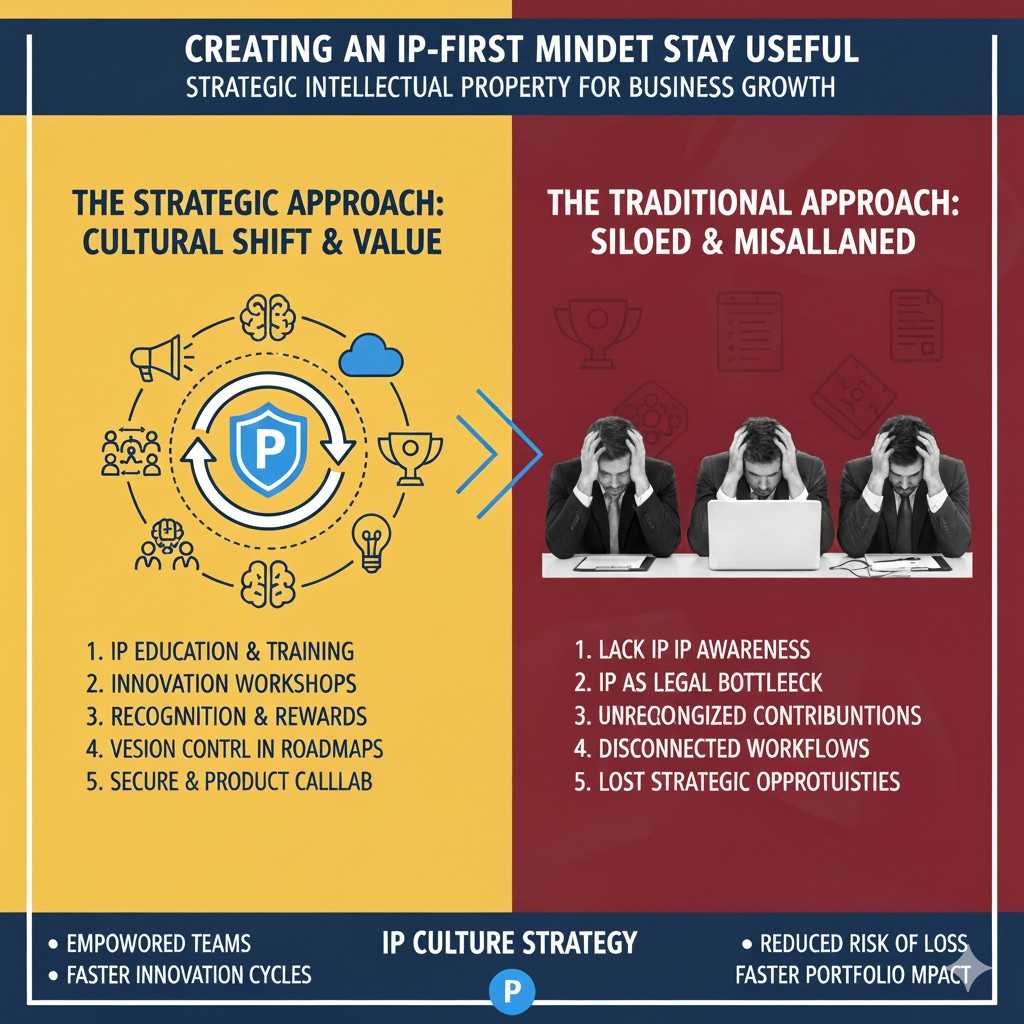
Most teams think patents live in a separate world. The product team builds. The legal team files. The founder signs. Then everyone goes back to shipping.
That split sounds clean, but it creates a leak. The leak is not in effort. It is in timing. By the time someone asks, “Did we invent anything here?” the team has already moved on, details are fuzzy, and key choices are forgotten.
An IP-first mindset closes that leak. It turns invention capture into a normal part of how work gets done. The goal is not to add meetings or slow engineers down. The goal is to make sure the work you are already doing becomes an asset you can defend.
When this becomes a product habit, it stops feeling scary. It becomes as normal as writing a spec, opening a pull request, or recording a demo. It is just another way to protect what the team earned through hard problem solving.
What Counts as “Invention” Inside a Product Team
Many builders assume invention means a new robot shape or a new chip design. Sometimes it does. But in modern AI and robotics, invention often sits inside the “how,” not the “what.”
If your team found a new way to reduce error, speed up inference, cut compute cost, improve grasp success, reduce drift, handle edge cases, or make a system stable in messy real life, that can be invention. If your team made a workflow that turns noisy inputs into usable outputs, that can be invention.
Even a clever way of combining known parts can be invention if the combo solves a real technical problem in a new way. Product teams do this every day. They stitch sensors, models, control loops, data flows, and user actions into one working system.
The simple rule is this: if you had to try three approaches and only one worked, pay attention. That “why this worked” story is often where patent value lives. It is not just the final feature. It is the method that makes the feature possible.
The Cost of Waiting Until “Later”
Teams often tell themselves they will handle IP after product-market fit. Or after the next hire. Or after the seed round. The problem is that “later” usually means “after the story is already out.”
Once you show customers, partners, or investors what you built, the window to file can get tighter. The team may also publish posts, ship docs, show videos, present at meetups, or share notebooks. All of that can create risk if you have not planned your filing path.
Waiting also makes filing harder. Patents are not just ideas. They are details. They need clear steps, clear parts, and clear reasons. If you try to recreate that from memory six months later, you will miss key pieces.
The second cost is strategic. If you raise money without a clear IP story, you lose leverage. You may still raise, but you often accept terms you do not like. Strong IP does not replace traction, but it can change how investors see your risk.
How Tran.vc Fits Into This Picture
An IP-first mindset is easier when you have real support. Founders and product leads do not have spare hours to learn patent rules, manage filings, and run a company at the same time.
Tran.vc invests up to $50,000 in in-kind IP and patent services to help technical teams build protectable foundations early. That means practical patent strategy, attorney guidance, and filings that match how your product actually works.
You do not need to be “ready” to start thinking this way. If you are building real tech, you likely already have invention worth capturing. If you want a clear, founder-friendly way to do it, you can apply anytime at https://www.tran.vc/apply-now-form/
From “We Build Features” to “We Build Defensible Systems”
The Difference Between Features and Moats
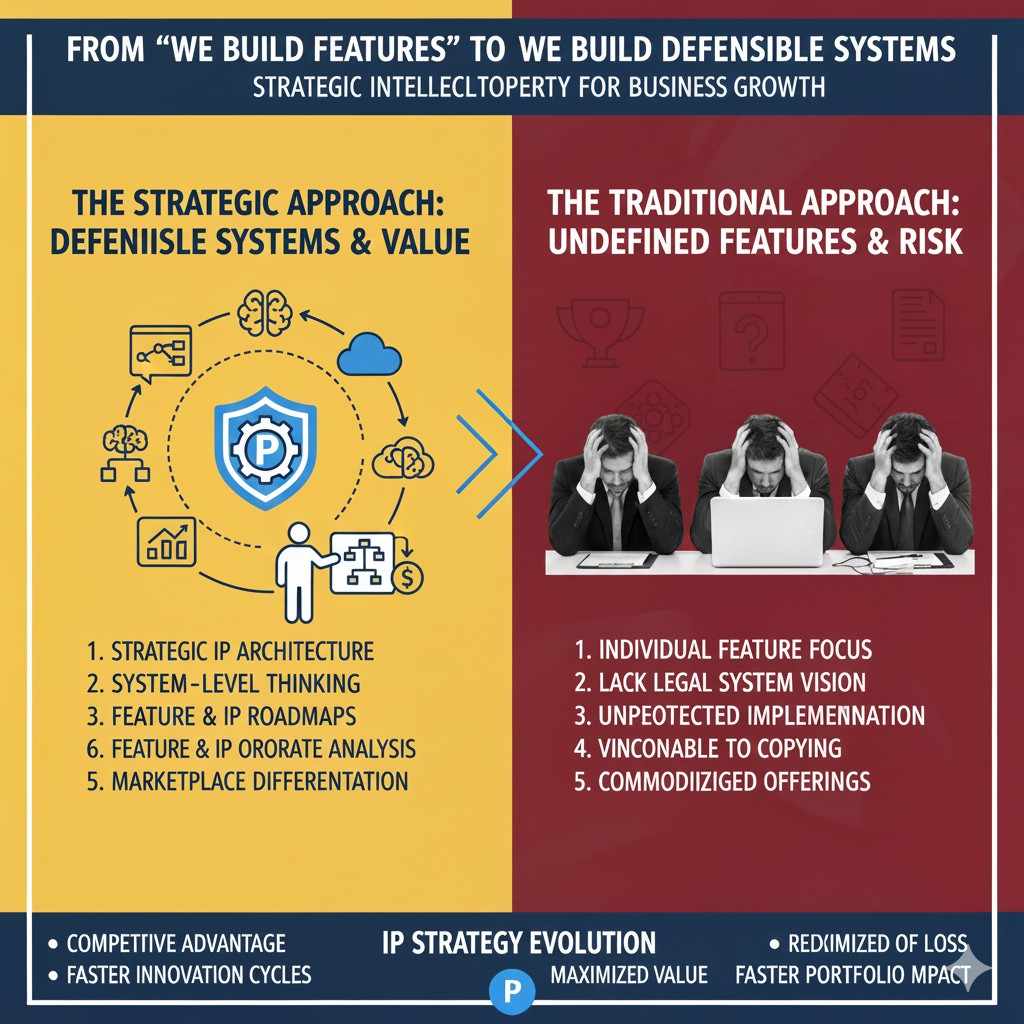
A feature is what the user sees. A moat is why you can keep winning even when others copy what the user sees. Many teams confuse the two because early customers praise features.
In deep tech, the moat is often hidden. It can be the data pipeline that makes the model reliable. It can be the control logic that makes the robot safe. It can be the way you handle bad inputs without breaking.
If you only describe your company through visible features, you tell the world what to copy. If you describe your company through defensible methods, you tell investors why you will stay ahead. This is where an IP-first mindset becomes a growth tool, not just protection.
The key shift is to treat engineering choices as strategic assets. The team should not only ask, “Does it work?” They should also ask, “Is the way we made it work unique, and can we protect it?”
Where Product Teams Accidentally Create IP Every Week
Product teams create new methods during normal work. A model fails in the field, so the team adds a fallback path that uses a different signal. A robot slips, so the team changes the grip logic and timing. A user churns, so the team designs a new onboarding flow that reduces failure states.
These are not “small tweaks.” In competitive markets, these choices decide who wins. They also create patterns that can be claimed if captured correctly.
The problem is that teams treat these decisions as temporary. They live in Slack threads, short commits, and quick calls. Then they vanish. An IP-first culture makes sure the “why” does not vanish.
The Skill of Spotting the “Claimable” Part
Not everything is patentable, and you do not want to waste time chasing every idea. The goal is to spot the work that has three signs.
First, it solves a hard technical problem that others also face. Second, it required real experimentation to get right. Third, it is part of a system that your product depends on.
When you see those signs, you do not need to decide on the spot whether it becomes a patent. You only need to capture it well. Good capture keeps your options open.
This is the biggest mindset change: do not debate. Document. Then let a patent professional help you decide what to file and how to frame it.
Why “IP-First” Helps Teams Move Faster
This may sound backward, but strong IP habits can reduce rework. When teams document key technical decisions, they create a record of what was tried, what failed, and what finally worked.
That record makes onboarding faster. It makes debugging easier. It makes future refactors safer because the team understands which parts are fragile and which parts are flexible.
Even if you never filed a patent, the habit of clear invention notes improves product execution. Filing is the extra benefit that turns execution into defense.
A Simple Way to Start Without Changing Your Whole Process
You do not need a full program on day one. You need one small repeatable step that happens when real invention occurs.
For many teams, the best moment is right after a breakthrough. The bug is fixed. The demo works. The field test passes. That is when the details are fresh and the story is clear.
At that moment, you create a short invention note. Not a legal doc. Just a structured technical story that explains the problem, the old approaches, the new method, and why the new method is better.
If you want Tran.vc’s help building this into your workflow in a clean way, apply anytime at https://www.tran.vc/apply-now-form/
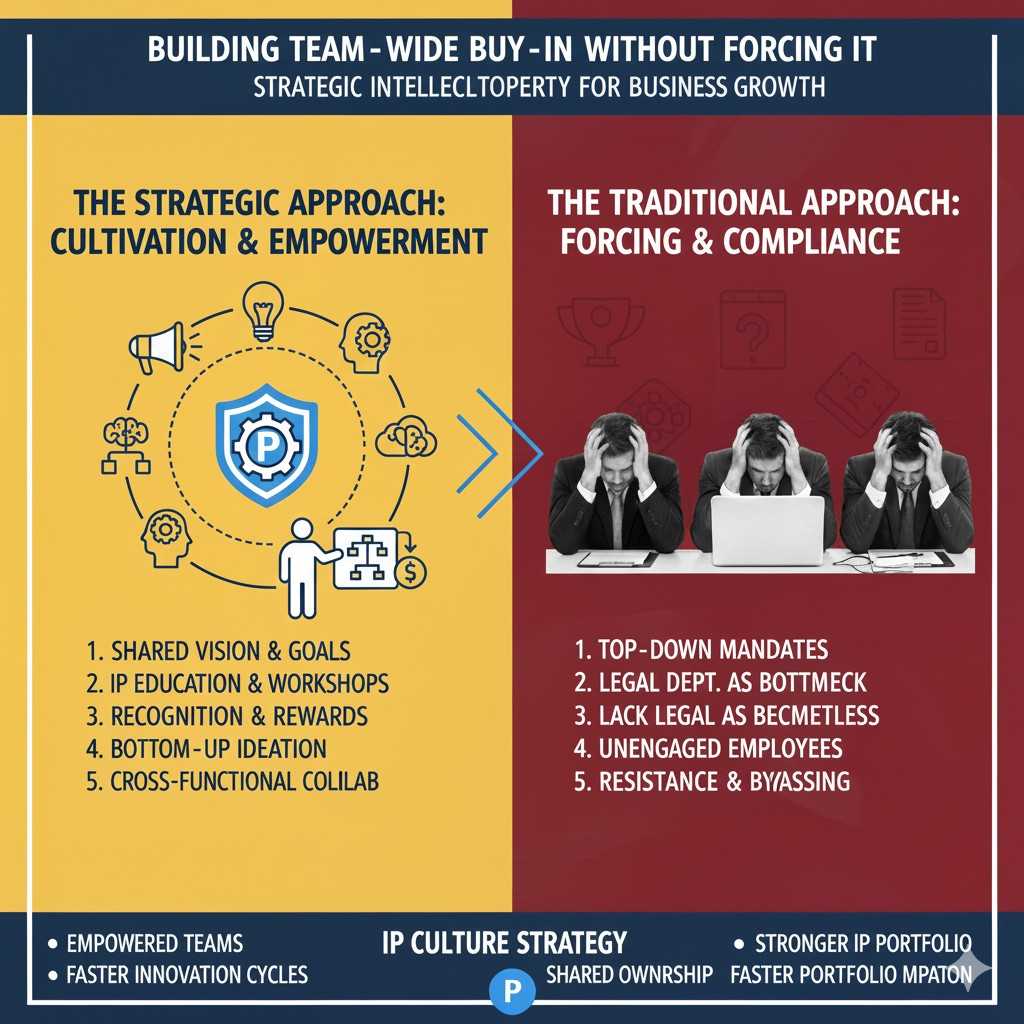
Building Team-Wide Buy-In Without Forcing It
Why Engineers Resist IP Work
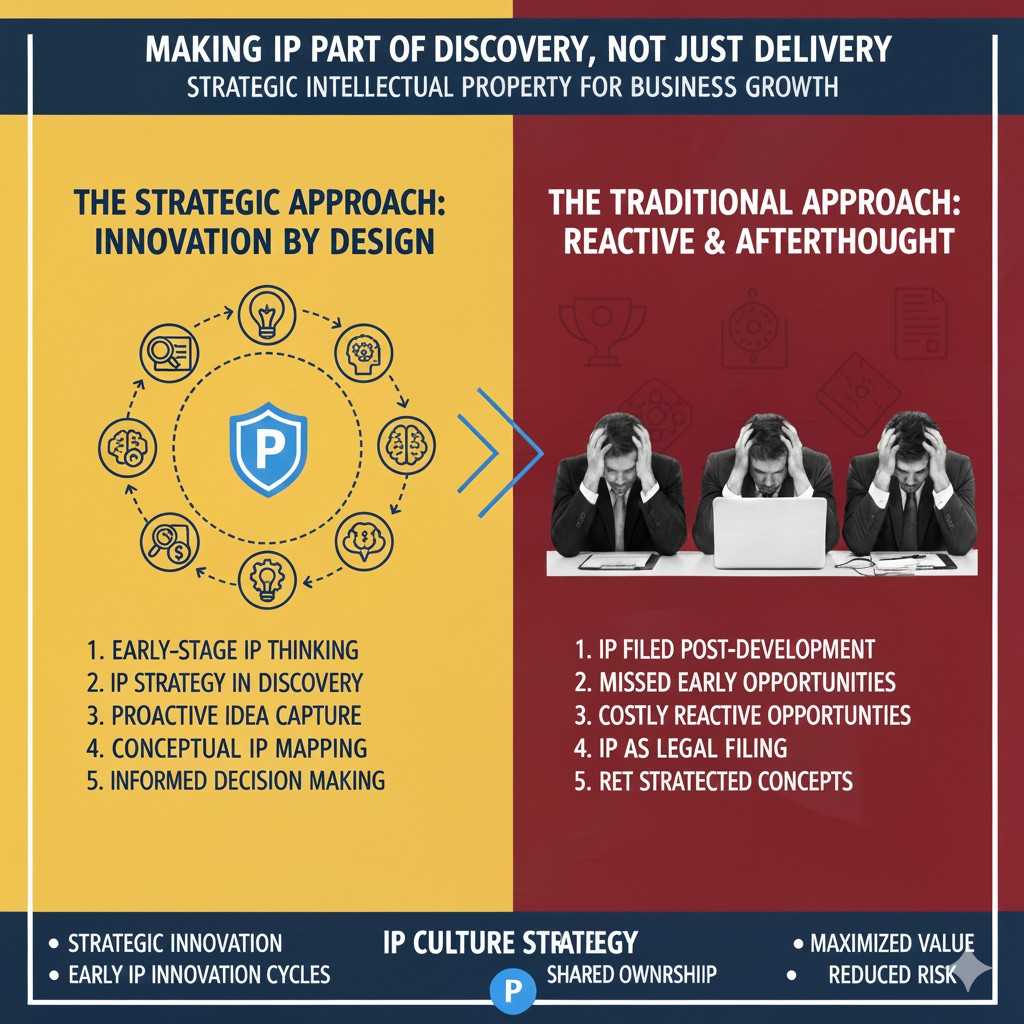
Most engineers do not resist IP because they hate protection. They resist it because they have seen it done poorly.
Poor IP work feels like paperwork. It shows up late. It asks vague questions. It interrupts sprint goals. It creates long calls where nobody is sure what is needed.
An IP-first mindset fixes this by changing who owns the habit. The product team owns the capture step. Attorneys own the legal step. Nobody does the other person’s job.
The engineer’s job is to explain the method in plain technical language. The attorney’s job is to translate that into a filing that stands up under review.
Why Product Managers Are the Best “IP Translators”
PMs often sit at the center of the story. They know the user pain. They know the roadmap. They know which parts of the system are truly different.
That makes them great at spotting what matters. They can turn a messy set of commits into a clear narrative: “We had problem X. We tried A and B. Only C worked. C changed outcome Y.”
When PMs lead invention capture, engineers feel less burdened. Engineers can add technical detail, but PMs can hold the structure.
This also helps with strategy. PMs can see which inventions map to future product lines, which makes the patent plan more aligned with the business.
How Leadership Sets the Tone
Teams copy what leaders reward. If leaders only reward shipping, teams will ship and forget to capture. If leaders reward shipping plus protecting, teams will do both.
This does not require big speeches. It requires small signals. Leaders can ask in reviews, “Did we create any new method here?” Leaders can praise good invention notes. Leaders can treat patents as a team win, not a founder trophy.
The most powerful signal is time. If leadership gives teams a small amount of time for capture after major technical wins, the habit sticks. If capture always gets pushed to nights and weekends, the habit dies.
Avoiding the “Patent Everything” Trap
An IP-first culture is not a patent-max culture. Filing on every small change can waste money and attention. It can also create weak filings that do not help you later.
The goal is to be selective but consistent. Capture broadly. File strategically. That balance keeps the team focused while still protecting the core methods that create your edge.
A good IP partner helps you choose what is worth filing and how to build a portfolio that supports future fundraising and future product expansion.
Making It Feel Fair Across Roles
If patents only credit one person, teams can get quiet. People stop sharing. They keep ideas to themselves. That is the opposite of what you want.
A healthy approach is to recognize invention as a team outcome. Many inventions happen because one person wrote code, another tested in the field, and another found the edge case.
When you capture invention notes, list all key contributors early. Make it normal. That transparency builds trust and makes teams more willing to participate.
If you want a partner that can help you set this up in a founder-friendly way, you can apply anytime at https://www.tran.vc/apply-now-form/
Creating an IP-First Mindset Across Product Teams
Turning “Invention Capture” Into a Weekly Rhythm
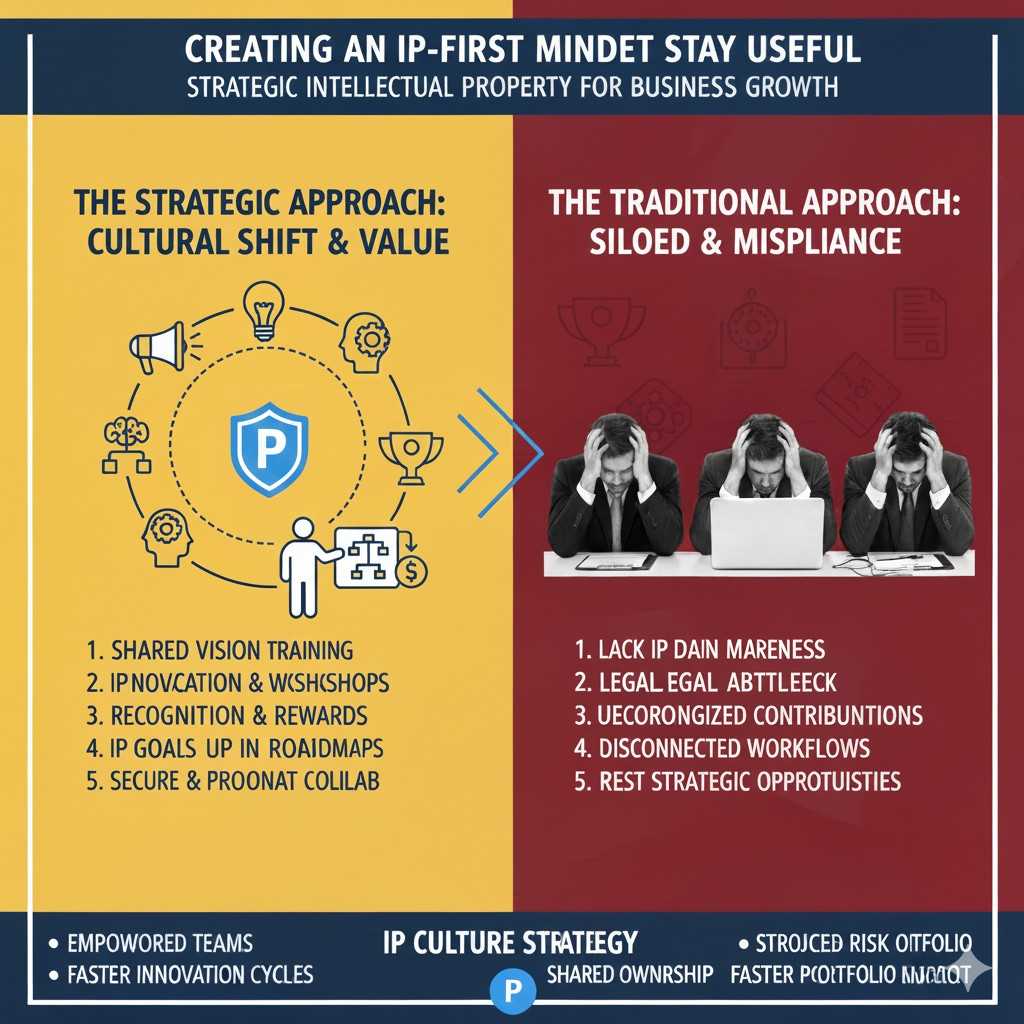
The easiest way to make IP real is to stop treating it like a special event. Special events get delayed. A simple rhythm gets done, even during busy weeks.
A good rhythm is tied to how product work already happens. Every team has moments where they review what shipped, what broke, and what they learned. That same moment can also include a short check for new technical methods.
This is not a long meeting. It can be a ten minute habit inside a normal review. The team simply asks, “Did we solve a problem in a new way this week?” If the answer is yes, someone opens an invention note and captures it while the details are still fresh.
Over time, this rhythm builds a library of your company’s unique methods. That library becomes the raw material for patents, but it also becomes a record of why your system works when others fail.
What an Invention Note Should Look Like in Plain Words
Many teams get stuck because they think they need to write like a lawyer. They do not. They should write like builders who want another builder to understand the method.
The note should start with the problem, stated in simple terms. Not “optimize performance,” but “robot drops objects when the surface is dusty,” or “model fails when the camera is backlit,” or “latency spikes during peak traffic and breaks the user flow.”
Then it should explain what the team tried before. This part matters because it shows the gap. If the old approaches were obvious and they failed, the new approach becomes more valuable.
After that, the note should explain what finally worked. It should include the steps and the parts. It should explain what data goes in, what happens inside, and what comes out. It should also explain what makes this method different from the older attempts.
The last part should describe the result in a measurable way. Even if the numbers are rough, it helps. “Grasp success improved from 62% to 84% in mixed lighting,” or “inference cost dropped by half with the same accuracy,” or “false alarms fell by a third in real field logs.”
When this is written in clear plain language, a patent attorney can do their job faster. You are not doing legal work. You are giving a clean technical story.
Where to Store Notes So They Don’t Get Lost
Teams often store invention details in scattered places. A doc here, a Slack thread there, a half-written message to a founder. That scattering is how value disappears.
Pick one home for invention notes. It can be a simple folder, a workspace page, or a dedicated ticket type in your tracker. The tool matters less than the habit of using it every time.
The key is to make it easy to find later. When you are preparing for a filing, you want to search by product area, by date, by component, and by who worked on it.
If you want this to feel like normal product work, connect the note to the work that created it. Link the PR, link the experiment, link the test results. That way you do not have to recreate the story later.
How to Decide Who Writes the First Draft
A common mistake is to assign invention notes only to engineers. Engineers can write them well, but they also carry heavy delivery load. If notes feel like extra work, they will slide.
The best approach is to share the load based on who has the clearest view of the story. Often that is the product manager or the tech lead. Sometimes it is the engineer who ran the experiment. Sometimes it is the field ops person who saw the failure in real use.
What matters is speed and clarity. The first draft does not need perfect wording. It needs the truth of what happened, captured quickly.
A good pattern is for the person closest to the problem to write the first version, then one other teammate adds missing detail. This keeps the note accurate and avoids the “telephone game” effect where the story changes over time.
The Quiet Power of “Before and After” Thinking
An IP-first team learns to tell “before and after” stories. Before: the system failed in a certain condition. After: the system works because we changed a method in a specific way.
This way of thinking makes invention easier to spot. Many technical breakthroughs feel small in the moment. But when you compare the old system to the new system, the difference becomes clear.
Before and after stories also help when you talk to investors. Investors are not impressed by complex code. They are impressed by repeatable advantage. A clear “before and after” story shows that advantage in a way that is easy to trust.
This is one reason IP work can support fundraising. It gives you a clean way to explain what you built that others cannot quickly copy.
How Tran.vc Helps Teams Build This Rhythm Early
Many teams want to do this but do not know how to make it stick. They do not want another process. They want a lightweight system that fits their pace.
Tran.vc works with technical founders to build that system and then turn the best invention notes into filings that match the business. This is part of the in-kind investment of up to $50,000 in patent and IP services.
It is not about flooding the world with patents. It is about protecting the handful of methods that truly create your edge, while keeping the team moving fast.
If you want help setting up a simple invention capture rhythm and turning it into real protection, you can apply anytime at https://www.tran.vc/apply-now-form/
Making IP Part of Discovery, Not Just Delivery
Why IP Starts Earlier Than Most Teams Think
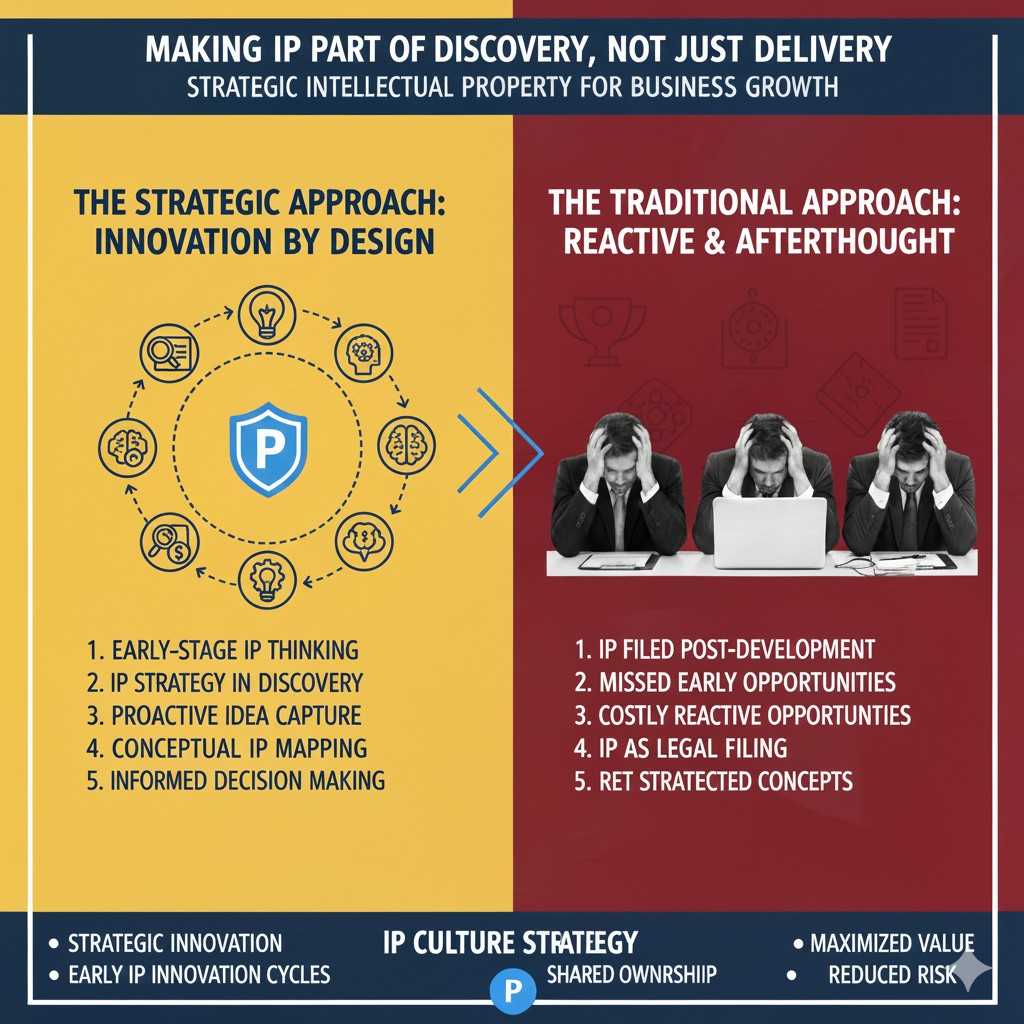
Most teams associate IP with something polished. They think it begins when a feature is complete, tested, and ready to ship.
In reality, invention often happens earlier, during discovery. Discovery is where you learn what users need, but it is also where you learn what the world makes hard. You run tests, you hit constraints, you build quick prototypes to see what is possible.
Those prototypes can contain the seed of a valuable method. Even if the prototype never ships, the approach you used to solve a technical barrier might be worth protecting.
When IP is treated as part of discovery, you capture the earliest, clearest version of the invention. That early capture is often easier than trying to reconstruct it after many iterations.
Spotting “Hidden IP” in User Research and Field Tests
Deep tech teams often learn the most in the field. The lab is clean. The real world is not. Robots see glare, dust, vibration, odd shapes, and people who do not follow instructions. AI systems meet messy data, strange phrasing, missing context, and changing behavior.
When teams respond to these real-world conditions, they create unique methods. They build new filters, new safety checks, new ways to detect failure before it happens. They design new interaction flows that reduce risk.
These fixes can look like normal iteration, but they often represent hard-earned invention. Your competitors will face the same messy reality. If you protect the method that makes you resilient, you protect something truly valuable.
A simple tactic is to add one question at the end of every field test debrief: “What did reality break today, and how did we adapt?” That answer is often a strong invention candidate.
Using Experiment Logs as Patent Fuel
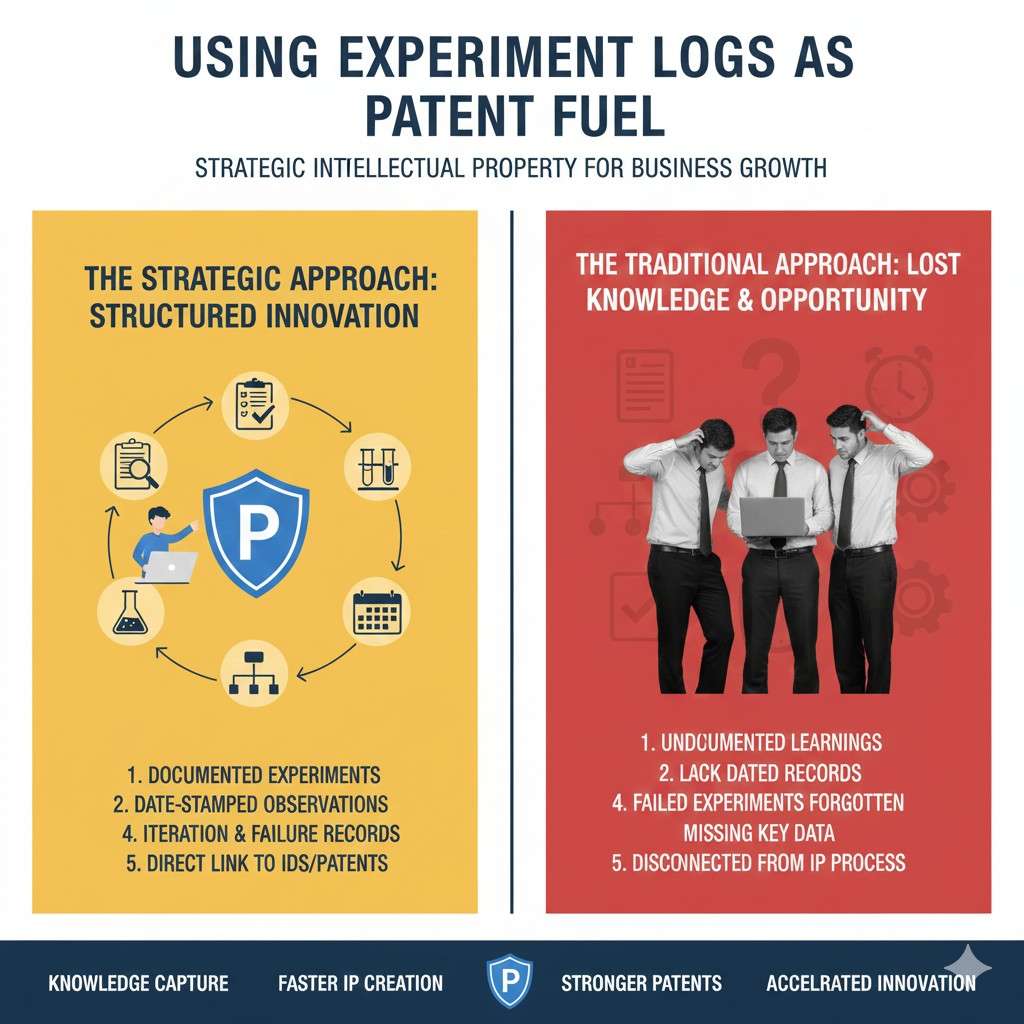
Many technical teams already keep experiment logs, even if they are informal. They track model versions, parameter changes, sensor settings, environment conditions, and outcomes.
Those logs can become the backbone of strong invention notes. A good patent story is easier to tell when you can show the path of trials and errors that led to a working method.
The best part is that you do not need to create new work. You simply need to make the logs readable and link them to the invention note. If the log is in a notebook, link it. If it is in a tracker, attach it. If it is in a repo, reference the commit.
This reduces friction and builds a paper trail that supports both patent work and team learning.
How to Keep Discovery Private Without Killing Momentum
Teams sometimes fear that “thinking about IP” means they must stop sharing. That is not the goal. You can still sell, recruit, and talk to customers.
The goal is to be intentional about what you reveal before you file. In practical terms, it means you should avoid publishing the core method in public content until you have a plan.
You can talk about outcomes without exposing the steps. You can talk about the problem and the impact without showing the full system design. You can demo value while keeping the deeper mechanics behind the curtain.
This is not about being secretive. It is about protecting what makes you special. Once you file, you can decide how open to be. Before you file, you should assume every public detail may travel far.
Building an “IP Lens” Into Product Decision Making
An IP-first mindset is not only about capturing inventions. It also shapes choices.
When teams see two options with similar cost and timeline, the IP lens asks an extra question: “Which option creates a stronger defendable method?” Sometimes the more defendable method is also the more robust method. Often, it is the one that took more creativity.
This lens can guide architecture. It can guide how you integrate models. It can guide how you collect data. It can guide how you build safety constraints and reliability layers.
Over time, this creates a product that is not only better, but harder to copy. That is the true point.
A Clear Next Step If You Want to Do This the Right Way
If your team is already building, you already have moments of invention. The only question is whether you are capturing them and protecting them with good timing.
Tran.vc was built to help technical founders do exactly this early, without losing speed. The in-kind investment of up to $50,000 in patent and IP services is designed to fit the reality of pre-seed teams.
If you want to build an IP-first mindset across your product team and turn your technical edge into real assets, you can apply anytime at https://www.tran.vc/apply-now-form/