
A VC round can move fast. One day you are sending a deck. The next day, an investor asks for your data room link “by tonight.” If your files are messy, missing, or hard to trust, the deal slows down. If your files are clean, clear, and easy to scan, you look like a team that executes.
A data room is not just a folder of documents. It is your proof. It shows how you build, how you sell, how you spend, and how you protect what you are making. It also reduces fear. And in a VC round, fear is expensive.
In this guide, I’ll walk you through how to set up a data room that helps you raise faster, answer questions with confidence, and avoid the painful back-and-forth that kills momentum. I’ll keep it simple, practical, and very hands-on.
If you want help building real IP value before you raise (so your data room shows a true moat), you can apply anytime at https://www.tran.vc/apply-now-form/
What a VC really wants from your data room
A VC is doing one main job: deciding if your company is a safe bet for their fund. They will not say it that way. They will talk about vision, market size, and team. But under the surface they are checking risk.
Your data room helps them answer a few basic questions.
First, “Is this real?” Are customers real? Is the product real? Is the team real? Are the numbers honest?
Second, “Is this business getting stronger?” Do metrics improve? Does pipeline grow? Does retention hold? Is the product getting used?
Third, “Can this team handle pressure?” A clean data room is a signal that you can run a tight process.
And fourth, “Can they defend what they build?” This is where IP matters. If you are in AI, robotics, or deep tech, investors worry about copycats. If your data room shows clear IP strategy and filings, that fear drops.
This is one reason Tran.vc exists. We invest up to $50,000 as in-kind patent and IP services so founders can walk into a VC round with real protection, not just hope. You can apply anytime at https://www.tran.vc/apply-now-form/
The mindset: your data room is a story, not a dump
Many founders treat the data room like a storage bin. They throw in every doc they can find and hope the investor “figures it out.” That usually backfires.
Instead, think like this: your data room is a guided tour.
It should answer the most common investor questions in the order they tend to ask them. It should let them move from high level to detail without getting lost. It should make it hard to misread your business.
A strong data room has three traits:
It is easy to navigate. Investors can find what they need without asking you.
It is consistent. Numbers match across files. Dates match. Names match. If you say one thing in the deck and another thing in a spreadsheet, trust drops fast.
It is current. Old docs are fine if they are labeled clearly, but the main folder should show the latest view of the business.
Pick the simplest tool and lock down access
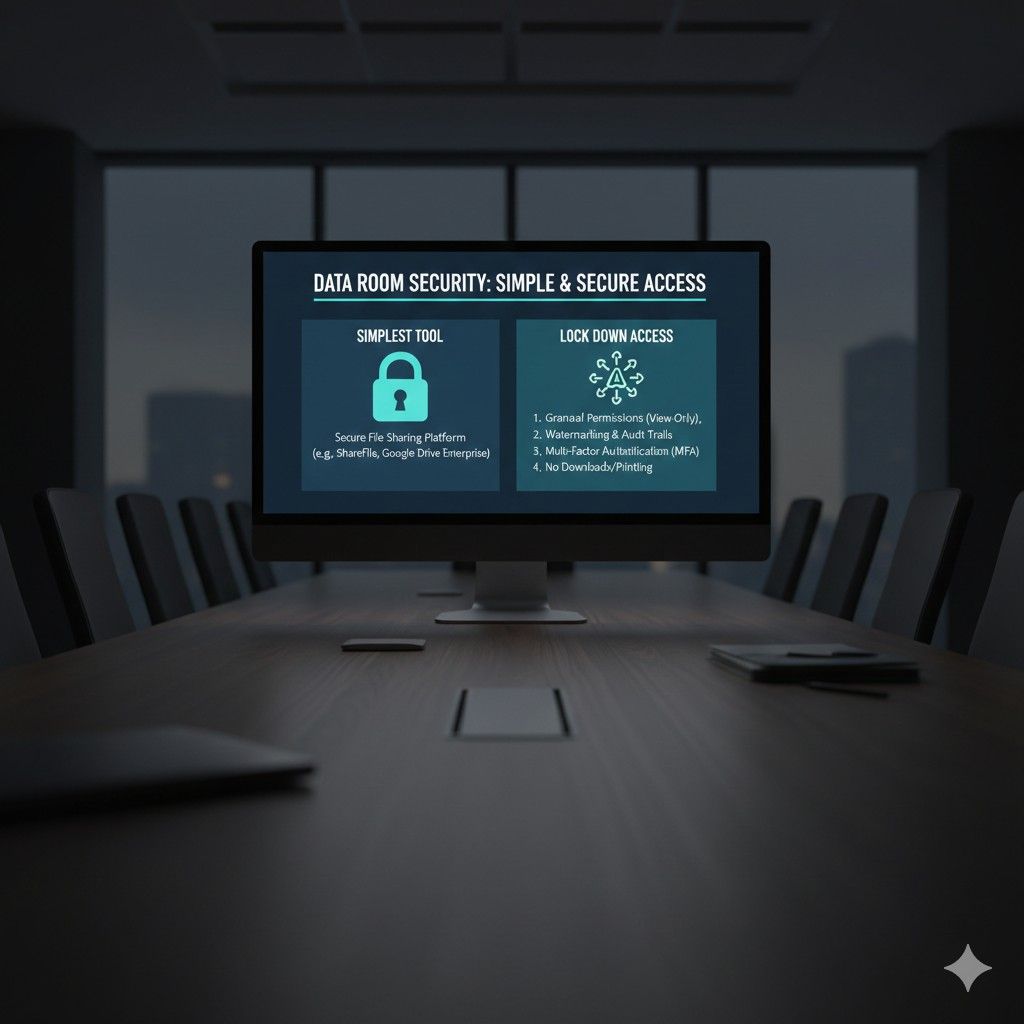
You do not need fancy software in the early days. Most VC rounds work fine with Google Drive, Dropbox, or Box.
What matters is control. You need to know who has access, what they can do, and what changes were made.
Here is what “good control” looks like in plain terms:
You share view-only links, not edit links.
You avoid letting people download unless needed. Some investors will ask. Many will not. If you can keep download off, do it.
You keep one “master” data room, not ten versions.
You keep a log of who got access and when.
You use a clean naming style so files sort in the right order.
Also, do not share your data room the moment someone asks. Not because you are hiding things, but because access is part of your process. A clean way is: first call, then send, then track.
Build the structure before you add documents
This is the step most founders skip. They start uploading right away. Then the room turns into chaos.
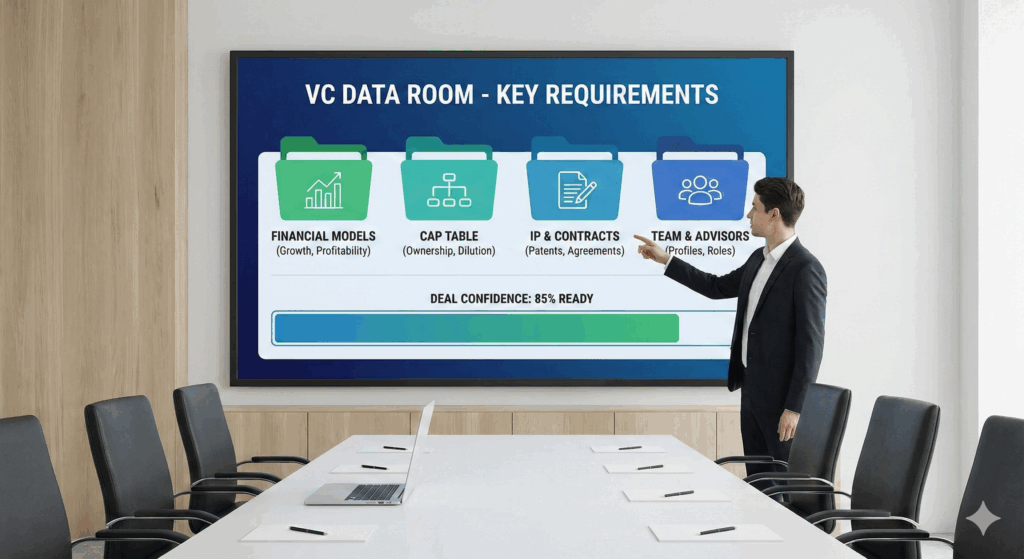
Build the skeleton first. Your folders should reflect how investors think. A simple structure works best, especially for a first VC round.
In plain words, investors want:
Your company basics (who you are and what you sell)
Your product and tech proof
Your traction and customers
Your go-to-market and marketing
Your financials
Your legal and IP
Your team and hiring
Your fundraising terms and cap table
That is it. Do not overbuild it. Do not add “Misc” folders. “Misc” becomes a graveyard.
Even if you only have a few files today, the structure should be ready for growth. Investors feel calmer when they see order.
Start with a one-page “Read Me” that guides them
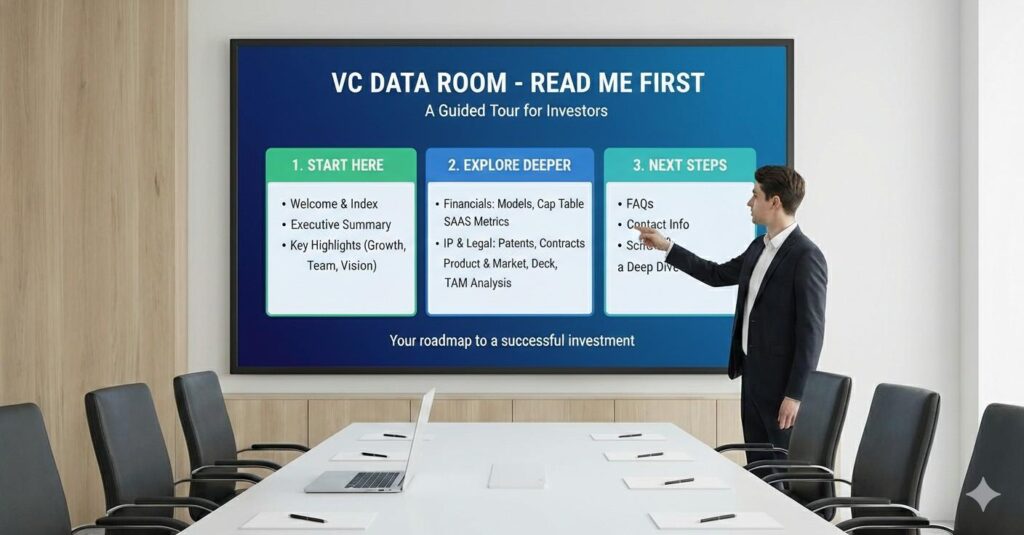
Add a simple document at the top called “00 – Read Me – Start Here.”
This one page can save you hours. It tells investors what they are looking at, where to find things, and what is new.
Write it like a human. Not like a lawyer.
It can say:
What stage you are at.
What round you are raising.
What the key metrics are.
Where the most important files sit.
Who to email for questions.
It should also note if any numbers are preliminary. Investors do not mind preliminary numbers. They mind surprises.
This “Read Me” is also where you can highlight your IP work in a calm, clear way. For example, you can point them to your patent strategy summary, your filing status, and any key assignments. If you are working with Tran.vc, you can say you have active IP support and a clear filing plan.
If you want that kind of IP foundation before you go deep into a VC round, apply anytime at https://www.tran.vc/apply-now-form/
Company basics: make it easy to verify the facts
This section should help an investor confirm the basics without asking you on a call.
Include your incorporation docs, but also include a short, simple company summary.
Investors will often check:
When you formed the company.
Where it is formed.
Who the founders are.
Who owns what.
Whether there are weird side agreements.
If you are a Delaware C-Corp, this is routine. If you are not, it can raise questions. Either way, clarity helps.
This is also a good place to put a short “timeline” doc if you have one. Not a long history, just key milestones. Product launch, first revenue, key hires, major pivots. It helps investors understand your path.
Product and tech: show proof without oversharing
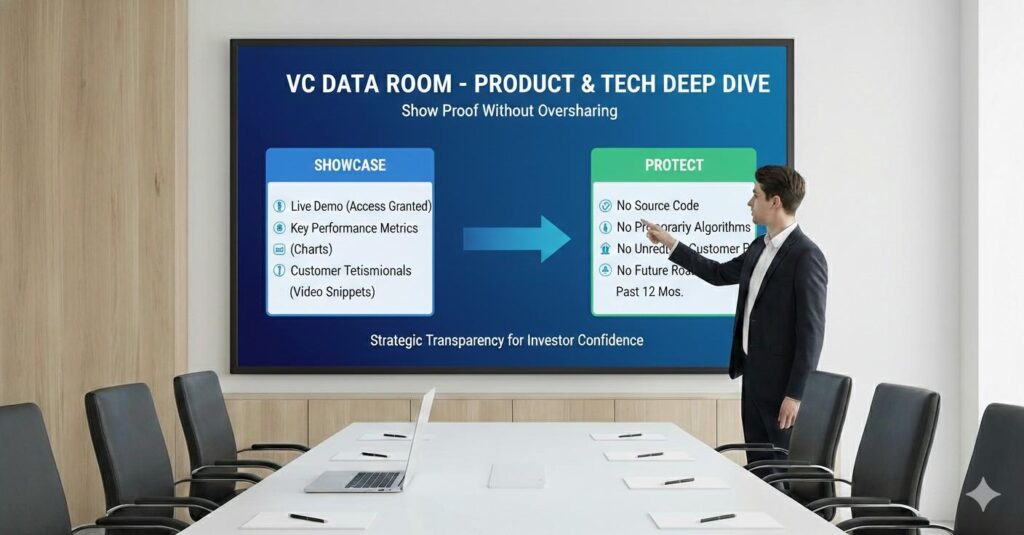
This is the hardest part for deep tech founders. You want to prove you are real, but you do not want to hand your secrets to a stranger.
The goal is to show enough to build trust, not to publish your playbook.
A strong product and tech folder can include:
A product overview that goes one layer deeper than the deck.
A demo video link, if you have one.
Architecture diagrams at a high level.
Bench test results or validation reports, if relevant.
Security basics, if you handle sensitive data.
If you are building robotics, include safety testing notes if you have them. Even early notes help. They show you take real-world risk seriously.
If you are building AI, include model performance summaries, how you test drift, and what data you use. You do not need to share raw data. You can share how you think.
If you are building something that can be patented, this is where investors start to wonder, “Are they protecting it?” So make sure the legal/IP folder is strong and easy to find, not buried.
Tran.vc is built around this exact moment. We help you turn real inventions into filed assets, so you can show proof of defensibility in your data room without giving away the crown jewels. Apply anytime at https://www.tran.vc/apply-now-form/
Traction and customers: reduce doubt with clean evidence
Many founders say, “We have traction,” but then can’t prove it fast. Your data room should make proof easy.
If you have revenue, show it clearly. If you do not have revenue, show usage, pilots, waitlists, or signed LOIs. The key is to avoid vague claims.
Include customer proof in a way that respects privacy. You can redact names if needed, but keep the document believable. If everything is blacked out, it looks fake even if it is real.
Good examples here are:
Signed contracts with key terms visible.
Invoices, if you have them.
Pilot scopes.
Emails that confirm intent, with sensitive parts removed.
A simple churn or retention view.
A top customers list with industry type, deal size range, and status.
Investors will also want to know if any one customer is “too big.” If 80% of revenue comes from one account, that is risk. You do not need to hide it. You need to explain it.
Go-to-market: show the machine, not the dream
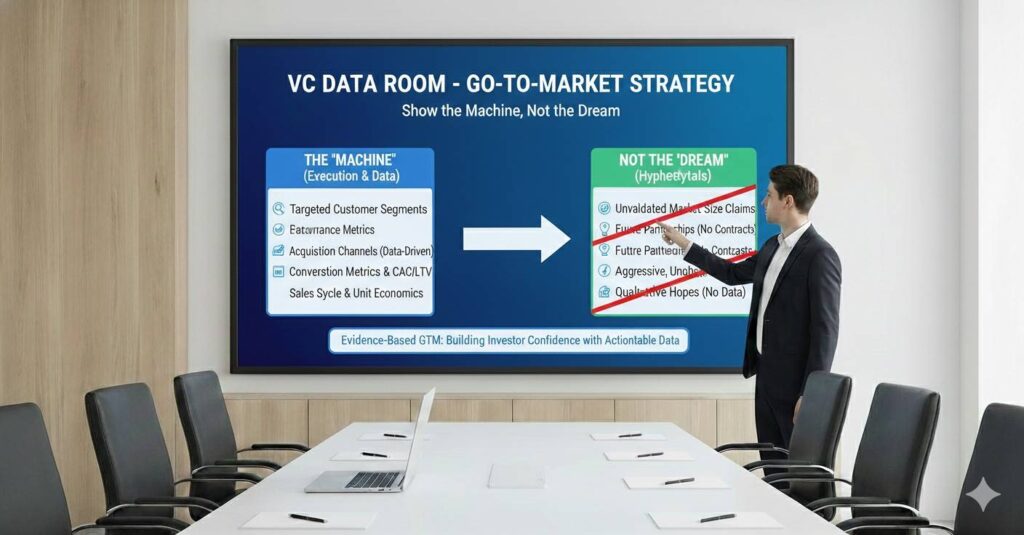
This folder is where you show you have a repeatable way to grow. Even if you are early, show your approach.
Include your pricing logic, not just your prices. Explain why you charge what you charge. Explain what drives expansion. Explain sales cycle length based on what you have seen.
If you have a pipeline, show it. Not a messy CRM export. A clean view of stages, values, and dates.
If you run marketing, show what works. Traffic, sign-ups, conversion. If nothing works yet, say what you tried and what you learned. Honest learning is better than polished fiction.
A VC round goes smoother when the investor feels you are not guessing. They want to see you run tests, track results, and adjust fast.
Financials: make them simple, consistent, and defensible
Founders often fear the financial folder. They think it must be “perfect.” It does not. It must be clear.
At minimum, include:
A monthly P&L, even if basic.
Cash in bank.
Burn rate.
A simple forecast.
If you have revenue, include revenue by month and by customer.
If you have debt, list it.
If you have grants, list them and their terms.
And here is the big rule: the numbers in your data room must match the numbers you say on calls. If your deck says one thing and your P&L says another, the investor will assume the worst.
Also, avoid “magic.” If your forecast jumps 10x in six months, add a short note that explains the key assumptions. Investors do not hate ambitious forecasts. They hate forecasts that look like fantasy with no logic.
Legal and IP: where deep tech deals are won or lost
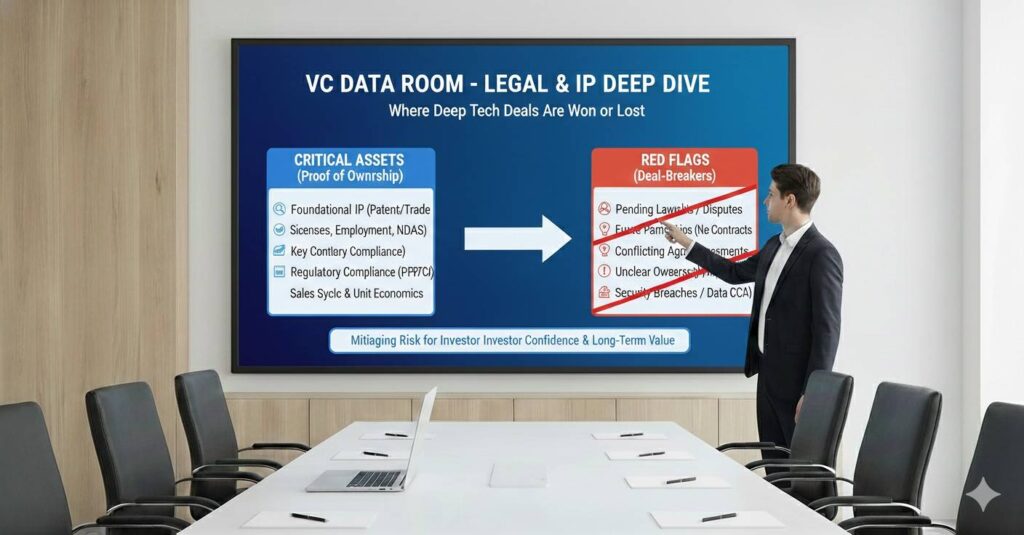
This is where many AI and robotics rounds get stuck. Not because founders did something wrong, but because the paperwork is incomplete.
Investors want to know:
Does the company own the work?
Do founders have side projects that might conflict?
Did contractors sign IP assignments?
Are there open source risks?
Are patents filed or planned?
If you have not organized this, it becomes a flood of emails with your lawyer, your contractors, and your past self. It slows the round and drains your energy.
The most common issue is simple: the invention exists, but the assignments do not. A founder built a core system before incorporation. Or a contractor wrote key code without proper assignment. Or a research partner has unclear rights.
You can fix these, but it is better to fix them before the round heats up.
This is exactly what Tran.vc helps with. We invest up to $50,000 in-kind in patenting and IP services so early teams can clean up ownership, set a strategy, and file strong patents where it matters. Apply anytime at https://www.tran.vc/apply-now-form/
Team and hiring: show who is building, and how you hire
Investors back teams. Your data room should make the team visible, without turning into a pile of resumes.
Include a short org view of who does what today. Even if you are three people, show roles.
If you are hiring, include role plans for the next 12 months. Keep it real. Not “VP of Everything.” Show what roles unlock growth and why.
If you have offer letter templates, include them. If you have an employee handbook, include it. Small signals of maturity can help.
Fundraising and cap table: remove confusion early
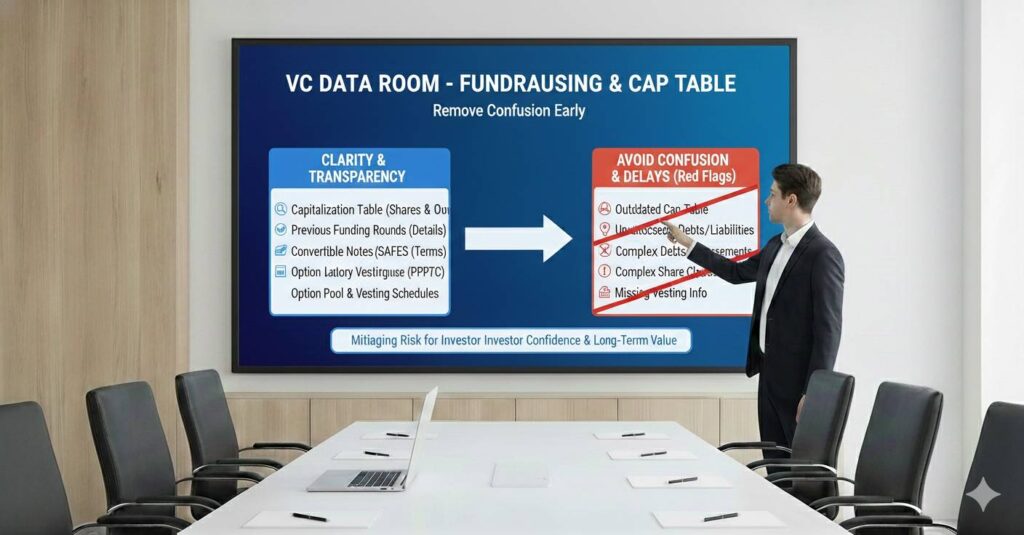
This folder should include:
Your current cap table.
Any SAFEs or notes.
Option pool details.
Past term sheets, if they matter.
Your current round terms, if you are already sharing them.
The cap table must be accurate. If it is messy, fix it now. Cap table confusion can kill deals late, which is the worst time.
If you do not have a clean cap table tool, at least have a clean spreadsheet that matches legal docs.
The final touch: create a “questions” doc so you control the flow
As investors review, they will ask the same questions. Create a simple doc called “Investor Q&A” where you add answers over time.
This keeps your replies consistent. It also helps you spot patterns. If five investors ask the same question, you can improve your deck, your data room, or your story.
Data Room Setup for a VC Round
What this section will do for you
In this next part, we will go from “general structure” to a data room that feels calm, complete, and fast to review. The goal is not to impress anyone with volume. The goal is to make it easy for a partner to say, “I see the full picture,” without sending you a long list of requests.
A strong room also protects you. It limits confusion, reduces risky oversharing, and keeps you from rewriting the same answers on repeat. When your room is well built, diligence becomes a smooth checklist, not a wrestling match.
If you want your data room to show real defensibility, not just product promise, Tran.vc can help you build the IP layer early. You can apply anytime at https://www.tran.vc/apply-now-form/
The one rule that keeps everything clean
Before you upload a single file, decide how you will name files and how you will sort folders. This sounds small, but it is the difference between “easy” and “painful.” Investors will not tell you they are frustrated. They will just slow down.
Use a simple numbering style so folders stay in order. When folders are stable, you can add documents over time without breaking the room.
Also decide what “latest” means. If you update metrics weekly, then each key file should show the latest week, and the old ones should move to an archive. This prevents an investor from reading an old file and asking a question you already answered.
A practical approach to permissions and sharing
Share the room as view-only by default. That keeps your files safe and stops accidental edits. If an investor asks for downloads, you can enable it for that person, or you can provide a separate export for the few files they truly need.
Keep access tied to real names and work emails. Avoid “anyone with the link” for a live fundraise. You want to know who is in the room, because diligence is not only about facts. It is also about process.
Make one person the owner of the room. If many people upload, styles change, file names drift, and duplicates appear. Central control makes the room feel like one voice.
Folder 00: Read Me and Deal Snapshot
Why this folder matters more than most founders think
Most investors do not open every file. They skim, form a view, and then go deeper only if the first pass feels strong. Your “Read Me” controls that first pass.
This is also where you can reduce anxiety before it appears. If you have an unusual setup, like a long enterprise sales cycle, or heavy R&D spend, you can mention it upfront in a calm way. When you do that early, it feels like honesty, not damage control.
What to write in the Read Me
Keep it short, but not vague. Say what you do, who you sell to, and what problem you solve. Then state what round you are raising, how much, and the general use of funds.
Add a simple “where things are” guide. For example, tell them where financials live, where customer proof lives, and where IP documents live. This prevents the classic investor email that says, “Where is your cap table?” even though it is already there.
How to show updates without creating clutter
Investors often ask, “What changed since last week?” You can prevent this by adding a small update note inside the Read Me. Write the date, and list the two or three meaningful updates, like new revenue, a key hire, or a new pilot.
This makes you look sharp and makes the investor feel they are tracking a moving company, not a static folder.