
Most startup founders think there are only two choices:
- file a patent, or
- keep it secret.
There is a third move that many teams miss. It can be faster. It can be cheaper. And in the right moment, it can protect you from a competitor trying to lock you out of your own work.
That move is defensive publishing.
Defensive publishing means you publicly share enough details about your idea so it becomes “known” to the world. Once it is known, it can block other people from patenting the same thing later. In plain terms: you are planting a flag that says, “This existed on this date.” And that flag can matter a lot if someone else tries to claim they invented it.
But here is the part that gets confusing: if you publish, you may also kill your own chance to patent it later. So defensive publishing is not a “cheap patent.” It is a different tool. Sometimes it is the best tool. Sometimes it is a painful mistake.
This article will help you know the difference.
At Tran.vc, we see this choice show up all the time with AI, robotics, and deep tech teams. You are moving fast. You are building real tech. You do not want to burn months or cash on the wrong IP move. You also do not want to wake up one day and learn a competitor patented a method you were already using.
If you want help deciding what to publish, what to patent, and what to keep quiet, you can apply any time here: https://www.tran.vc/apply-now-form/
Before we go deeper, let’s make the goal very clear.
A patent is trying to give you a legal “no one else can do this” right.
Defensive publishing is trying to make sure no one else can get that right for the same thing.
So the question is not “Which is better?” The question is: What is the risk in front of you right now? And which tool reduces that risk the most?
Over the next sections, we are going to talk about when defensive publishing beats filing a patent, how it works in real life, and how to do it without hurting your company. We will keep it practical. We will talk like founders, not like a law book.
What defensive publishing really is
The plain meaning in startup words
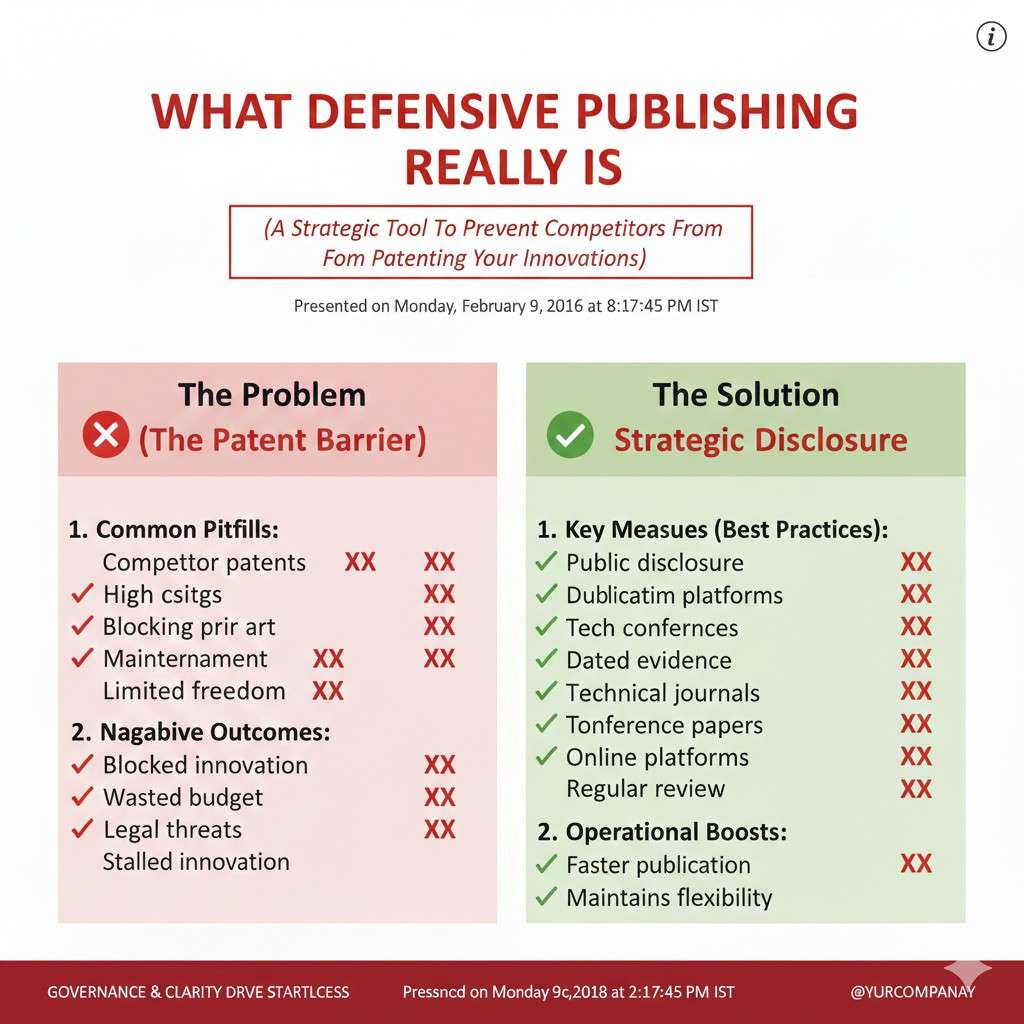
Defensive publishing is when you share your technical idea in public, with enough detail that a patent office can treat it as “already known.” When something is already known, it is harder for another person to patent the same thing later.
Think of it like putting a timestamp on your invention in a place the world can see. You are not asking for a legal monopoly the way a patent does. You are trying to stop someone else from getting that monopoly against you.
This is why it is called “defensive.” You are not attacking the market with exclusive rights. You are defending your freedom to build, sell, and grow without getting blocked by a later patent.
What it is not
Defensive publishing is not a patent. It does not give you a right to stop others from using the idea. If you publish a method for robot grasp planning, a competitor can read it and use it too. The value is that they cannot easily claim they invented it after your publication date.
It is also not the same as a “blog post with a few vague lines.” If the details are thin, it might not work. A defensive publication needs enough technical clarity that a trained person could understand what you mean and how you do it.
It is also not the same as “open source.” Open source is about license terms and sharing code with rules. Defensive publishing can include code, but its main job is to create prior art, not to run a community.
Why founders use it
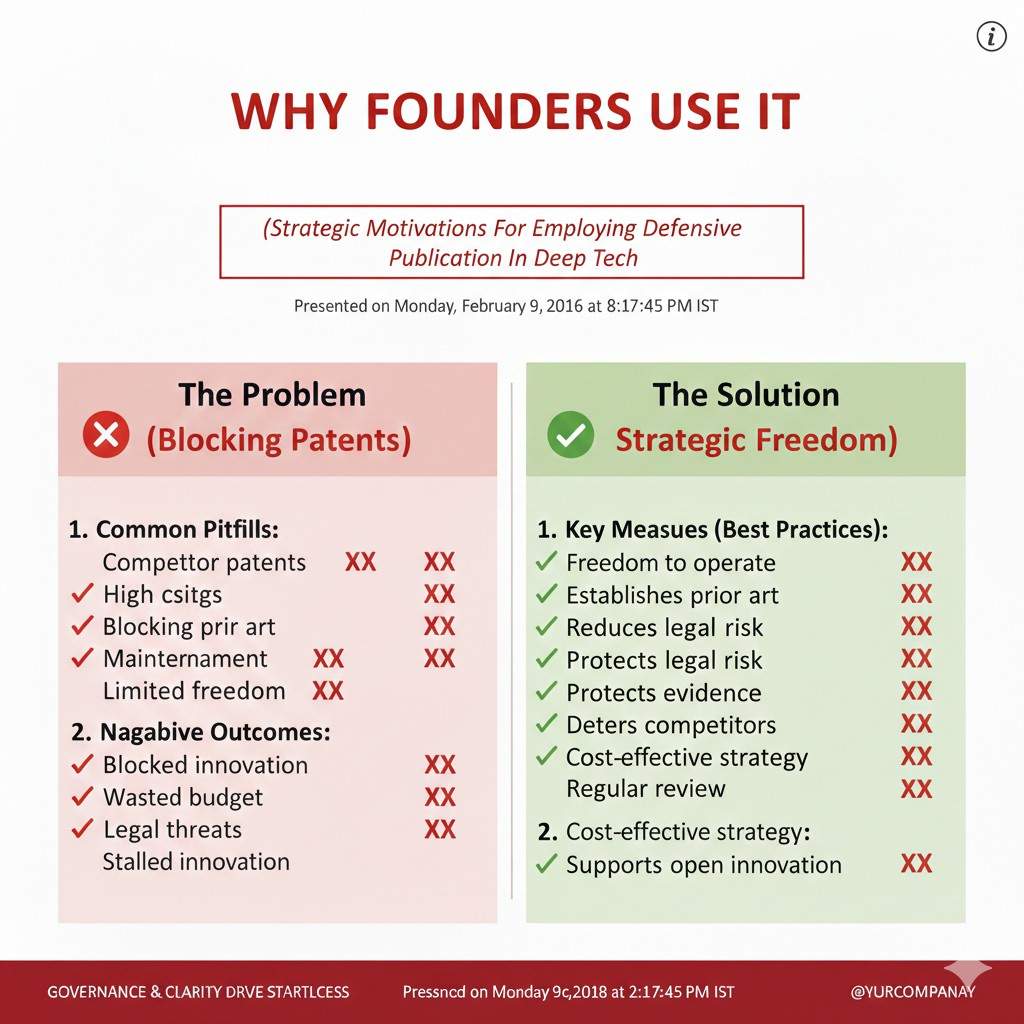
Startups use defensive publishing when they want to move fast and reduce the chance of being trapped later. It can be useful when the idea is important, but not worth the cost or time of a patent right now.
It can also be useful when the idea is likely to be copied anyway, or when the tech changes so quickly that a long patent process feels like a slow race.
If you are unsure which bucket your idea falls into, Tran.vc helps founders sort this out early. You can apply any time here: https://www.tran.vc/apply-now-form/
What a patent really does
The core promise
A patent is a legal right that can let you stop others from making, using, or selling an invention in a country, for a limited time. In return, you must describe the invention in a formal document so the public learns it.
That trade is the heart of the patent system. You disclose your method. The government gives you a time-based shield, if you meet the legal rules.
For a startup, the goal is often simple. You want to build a moat that is hard to cross. You want something investors respect. You want leverage if a large company copies you.
The real cost is not just money
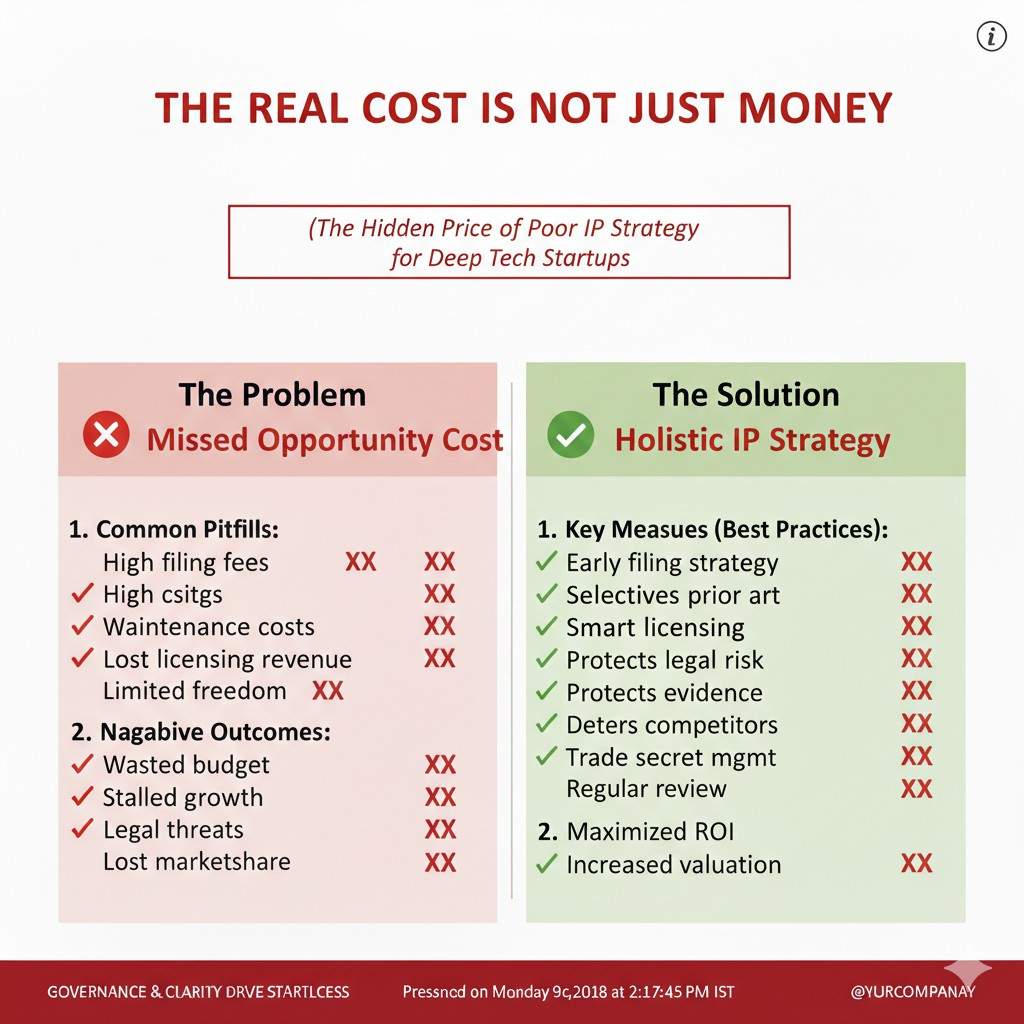
Founders often focus on filing fees, attorney fees, and drawings. Those costs matter, but the hidden cost is time and attention. A strong patent application needs careful thinking. It forces decisions about what the invention is, what makes it new, and where it might be used.
That work can be valuable because it sharpens strategy. But it is still work. It pulls senior builders into long reviews. It can slow the pace if you do it at the wrong moment.
There is also a time gap. A patent is not “done” when you file. It can take years to issue. During that time, you may have something called “patent pending,” but the enforceable right usually comes later.
The patent risk founders ignore
A patent is a public document. It tells your competitors what you do. It can also tell them what you did not claim, which can guide them around you.
If you file a weak patent, you may spend money and reveal your approach, without getting strong protection. That is one reason the choice is not simply “patent good, publish bad.” Quality matters.
At Tran.vc, the goal is not to file for the sake of filing. The goal is to build strong IP that matches your real product path, so your filings become assets investors can trust. If you want that kind of hands-on help, apply here: https://www.tran.vc/apply-now-form/
The key difference between defensive publishing and patents
Exclusive control versus open proof
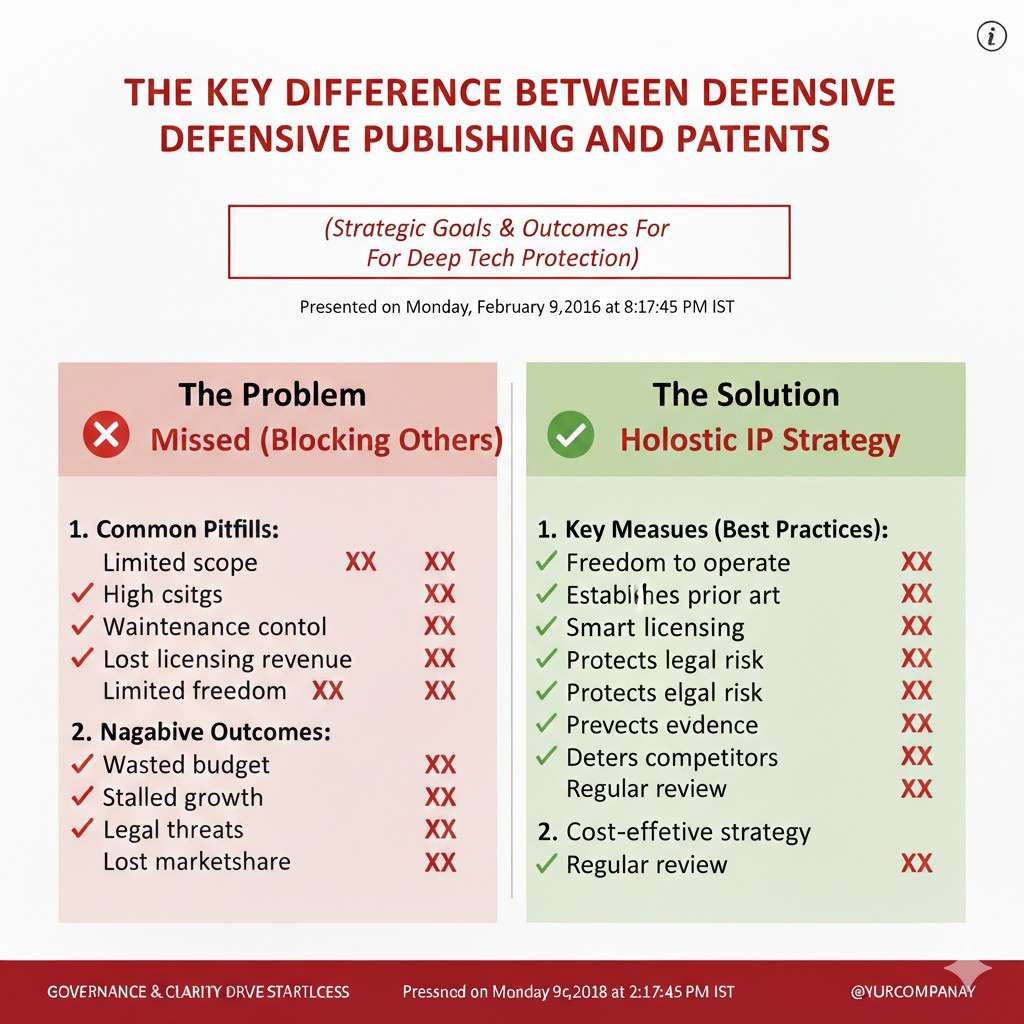
A patent is about control. It is trying to give you the right to say “no” to others.
Defensive publishing is about proof. It is trying to make sure nobody else can claim control over the same thing later.
That difference changes how you think about every technical decision. With patents, you are often asking, “How do we claim this so others cannot copy it?” With defensive publishing, you are asking, “How do we describe this so others cannot patent it?”
How each one changes your business position
With a patent, you can sometimes negotiate. You can license. You can scare off copycats. You can raise money with a story that has legal teeth behind it.
With defensive publishing, you cannot stop copying, but you can reduce the risk of being blocked. In markets where many teams are building similar things at the same time, that freedom can be the difference between shipping and getting stuck in legal fear.
In simple terms, a patent can help you win a fight. Defensive publishing helps you avoid getting forced into a fight you did not start.
The “one-way door” problem
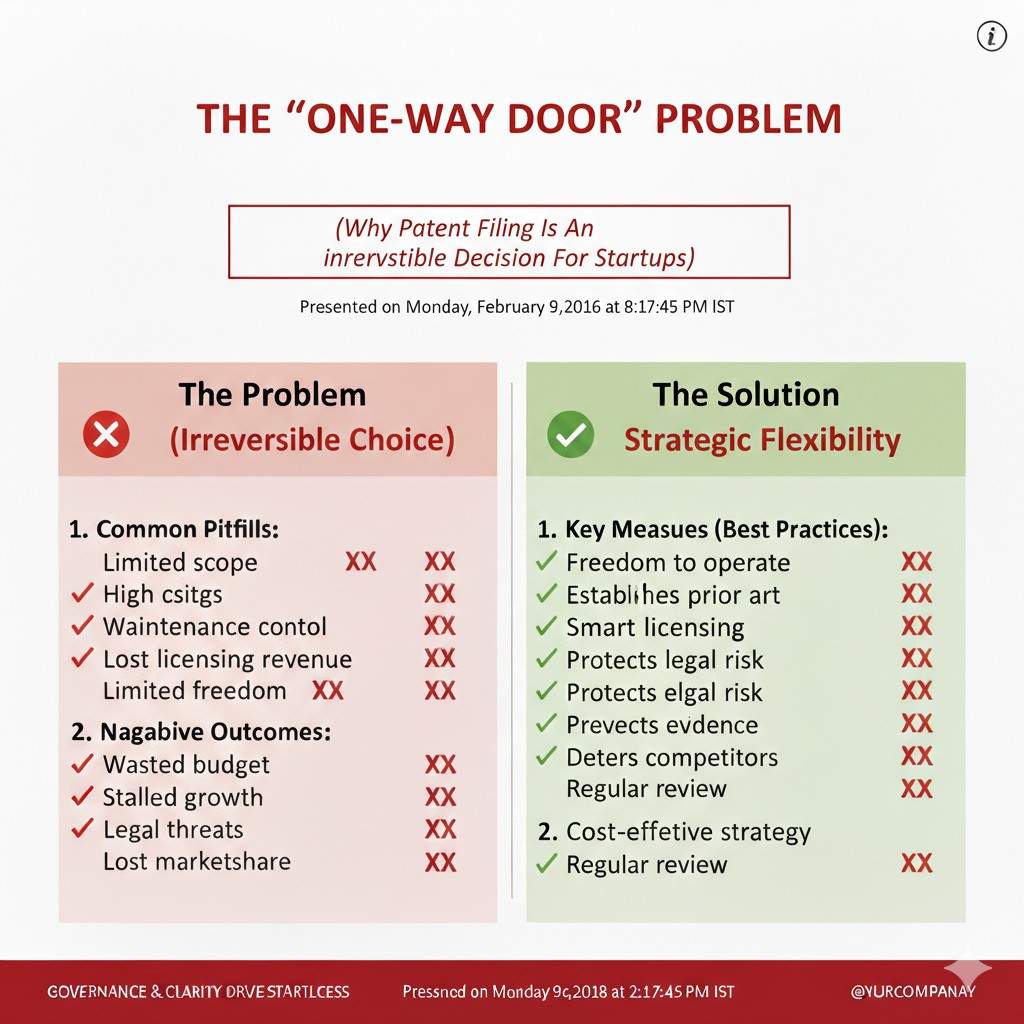
This part is important. Defensive publishing can be a one-way door. Once you publish an invention publicly, you may lose the ability to patent it later, depending on the country and timing.
In the United States, there is a one-year grace period in many cases, but outside the U.S. many places require absolute novelty, which can mean public disclosure kills your chance right away.
So defensive publishing is not something you do casually. It should be a planned move tied to a real IP map for your company.
When defensive publishing beats filing a patent
When your real risk is lock-out, not copying
Many founders fear copying. That fear is real, but it is not always the biggest risk in the early stage.
Sometimes the bigger risk is lock-out. Lock-out is when another company files patents around an idea you already use, and later threatens you, or demands payment, or tries to slow you down.
This can happen in crowded areas like AI pipelines, robotics control loops, sensor fusion, or training tricks. Multiple teams may arrive at similar methods because the field pushes everyone in the same direction.
If you are worried about lock-out, defensive publishing can be a smart shield. It does not stop copying, but it can stop someone from patenting the same method and using it as a weapon.
When the invention changes every month
Some inventions are stable. A core mechanical design for a robot gripper might remain the same for years. A new battery chemistry might be stable enough to protect.
Other inventions change fast. A model training recipe might shift every few weeks as you test new data, new loss functions, or new deployment constraints. If you file too early, your patent may describe a version you no longer ship.
In those fast areas, defensive publishing can make more sense. It lets you “stamp” what you have now, so nobody else patents it, while you keep building toward the real long-term version you might patent later.
The move is not “never patent.” The move is “publish the fast-moving layer, patent the stable core.”
When you want to keep your claims focused
Patents are strongest when they claim the true heart of your advantage. If you patent every small idea, you can end up with many weak filings that cost money and distract you.
Defensive publishing can take pressure off. It can cover the smaller ideas that are useful, but not worth a full filing.
This is similar to how some teams treat documentation. You do not write a long report for every small change. You write a full spec for the parts that matter most. Defensive publishing can be that lighter method for parts that are important, but not central.
When investors care more about freedom to operate
Not every investor wants a huge patent portfolio. Many care about whether your company can operate without getting blocked.
If you can show that key parts of your space are already documented as prior art, it can reduce fear. It can show you understand IP strategy rather than treating it like a checkbox.
This is especially true when your company sells into enterprise or regulated areas, where customers may ask IP questions. You do not want to say, “We hope nobody sues us.” You want to show that you took steps to reduce risk.
Tran.vc can help you decide which parts to patent and which parts to publish, so your story is clear when you talk to investors. Apply here whenever you are ready: https://www.tran.vc/apply-now-form/
The “prior art” idea in simple terms
Why a patent office cares what was already public
Patent systems are built on a basic rule: you cannot patent something that was already known. The patent office checks whether your invention is new and non-obvious compared to what came before.
Anything that was public before your filing date can count. Papers, blog posts, product manuals, conference slides, videos, and sometimes even public code repositories can matter.
When you defensively publish, you are trying to create a clear public record that becomes part of that “what came before.”
What makes a defensive publication strong
The best defensive publication is clear, dated, and detailed. It should explain the problem, the method, and at least one workable example.
A weak defensive publication is vague. If it reads like marketing, it may not help you. If it hides the key technical steps, it may not count as real prior art.
Your goal is not to impress readers. Your goal is to make it hard for someone to claim novelty later.
How detailed is “enough”
A good mental test is this. If a skilled engineer in your field read your publication, could they build a basic version without guessing the key steps?
You do not have to share every secret. But you must share the part that makes the invention real. If you keep the core step hidden, the publication may fail as a shield.
This is where founders often need guidance. They either share too little and gain no protection, or they share too much and give away their edge.
At Tran.vc, we help teams strike that balance and build a plan that fits their market and timeline. Apply here: https://www.tran.vc/apply-now-form/
Where founders go wrong with defensive publishing
Publishing because it feels easier
Defensive publishing can feel like the quick path. You write a post, put it online, and move on.
But if you treat it as a shortcut, you can harm your future. You might destroy your chance to patent something that later becomes the core of your business.
The right mindset is not “publish to avoid patents.” The right mindset is “publish to prevent lock-out, while preserving the option to patent what truly matters.”
Publishing in the wrong place
Not all public disclosures are equal in practice. Some are easy for patent examiners to find. Others are buried and rarely discovered.
If the goal is to create prior art that can be used, you want a place that is accessible, time-stamped, and credible. You also want it to be written in a way that a later reviewer can understand.
A random webpage that disappears in a year is not ideal. A document that is hard to find is not ideal. A post with missing details is not ideal.
Publishing without connecting it to product strategy
Your IP moves should match your product path.
If your startup’s moat is in a specific control method, or a unique data engine, or a hardware layout, then you should protect that core with care. Defensive publishing should support that plan, not replace it.
The best teams use defensive publishing as one tool in a wider system. They decide what they want to own, what they want to keep as a trade secret, and what they want to block others from owning.