
Most founders do not pick a company type because they love legal forms. They pick one because they want to ship, hire, raise, and sleep at night.
But your choice at the start can either make the next 12–24 months smooth… or quietly expensive.
If you are building robotics, AI, or any deep tech product, you will almost always face the same fork in the road:
Do you form a Delaware C-Corp, or do you start as an LLC?
This sounds like paperwork. It is not. It is a leverage choice.
A company type affects how investors look at you, how you grant equity, how taxes work, how clean your cap table stays, how your IP is owned, and how painful it will be to change later. The good news is you can make this decision like an engineer: by understanding the system and picking the path with fewer hidden traps.
And if you want help building an IP moat while you do it, you can apply to Tran.vc anytime here: https://www.tran.vc/apply-now-form/
The simple “job” of your company type
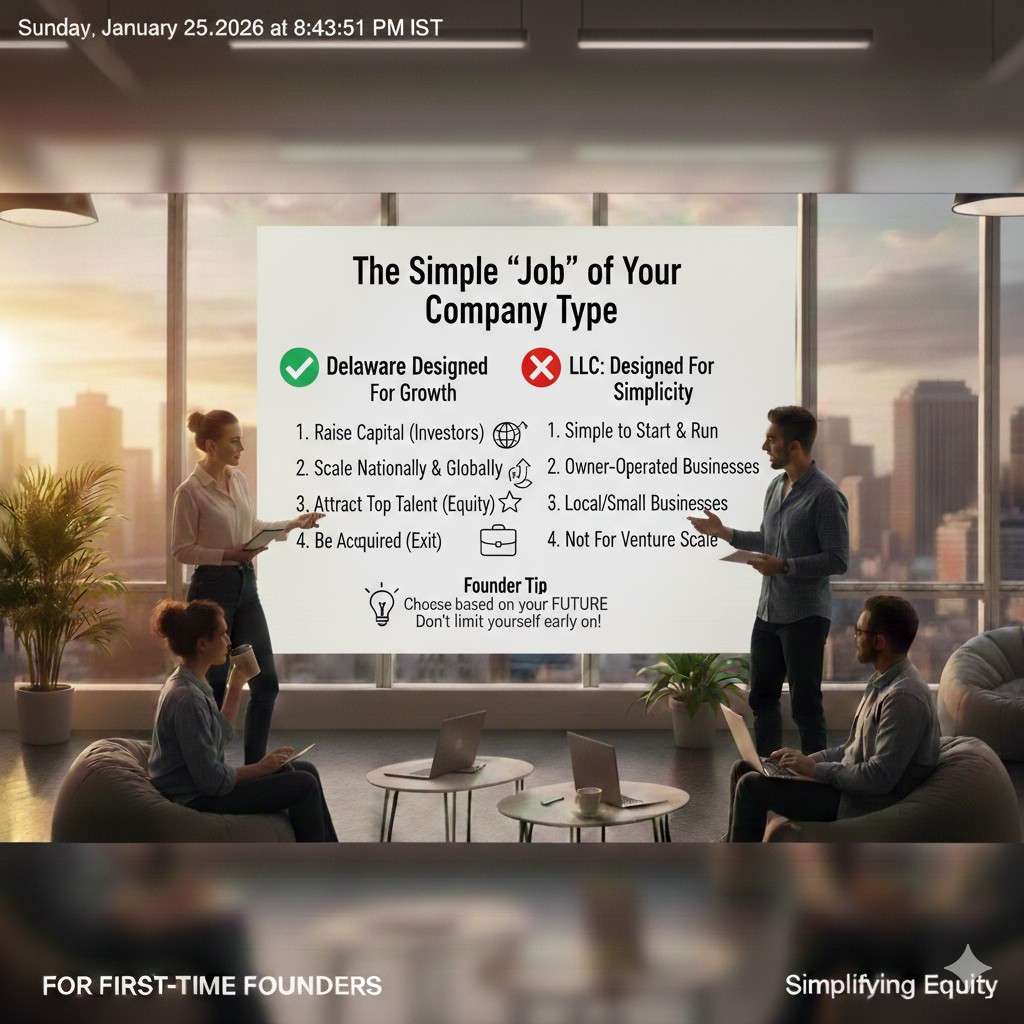
Your company type is a container. The container needs to do four big jobs:
It needs to hold ownership in a clear way.
It needs to hold your IP so investors trust it.
It needs to handle taxes without surprises.
It needs to support fundraising when you are ready.
Both LLCs and C-Corps can hold a business. But they behave very differently under stress. Fundraising is stress. Hiring is stress. A co-founder leaving is stress. A big customer demanding contract terms is stress. The wrong container cracks when the pressure rises.
Start with the thing founders often miss: your future investor
If you are building a lifestyle business, consulting firm, small agency, local shop, or a solo product that you plan to keep private, an LLC can be great. It is flexible, simple, and often cheaper to run early.
But Tran.vc works with robotics, AI, and deep tech founders. Most of these teams want one or more of these outcomes:
A priced seed round
A SAFE round from angels
A venture round later
Equity grants to early hires
A clean path to an acquisition
In that world, your investor is not just giving money. They are buying a structure they can live inside.
Most institutional investors strongly prefer, and often require, a Delaware C-Corp. This is not because they hate LLCs. It is because their funds have rules, tax limits, and paperwork systems built around C-Corps.
That one fact alone ends many debates.
Still, you should not decide based on a rule of thumb. You should understand why.
The Delaware C-Corp: why it became the default
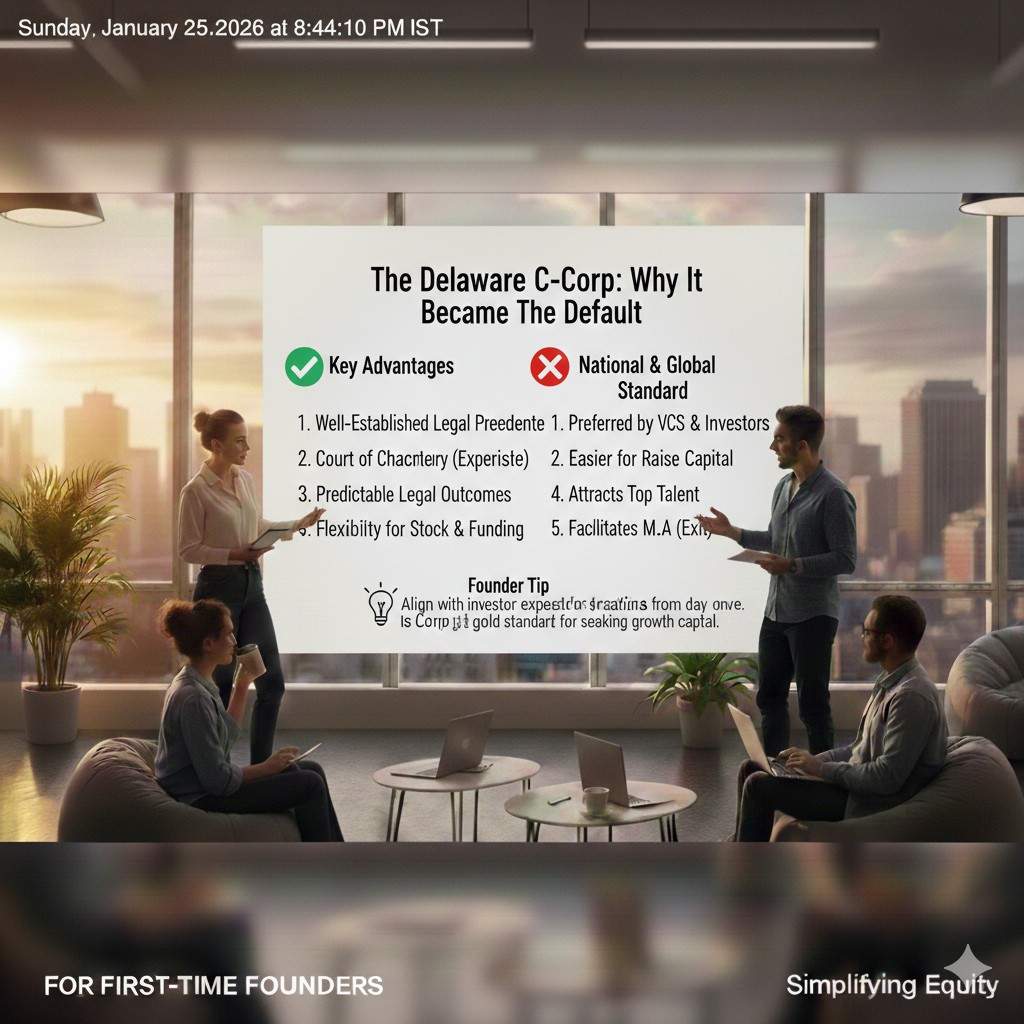
A Delaware C-Corp is not magic. It is just a corporation formed in Delaware. Yet it is the standard for startups that plan to raise.
There are three reasons.
First: predictable law.
Delaware has a long history of company law. Courts handle business cases often. The rules are clear. Investors like clear rules because it lowers risk.
Second: equity is easy to work with.
Corporations issue shares. Those shares can be split, granted, and tracked in a clean way. This matters when you want stock options for employees, restricted stock for founders, and a cap table that does not turn into a puzzle.
Third: fundraising tools fit well.
SAFEs, priced rounds, preferred stock, option pools, board seats, and standard venture terms all fit naturally in a C-Corp.
There is a reason most accelerators push founders to be a Delaware C-Corp before demo day. They want deals to close fast. C-Corp is the fast lane.
The LLC: why many founders still start there
LLCs are popular for good reasons.
They can be simple to form.
They often have fewer formal rules.
They can allow flexible profit sharing.
They can provide pass-through taxation, which can be helpful in some cases.
So why not start as an LLC “for now” and convert later?
Because “later” is where hidden pain lives.
The biggest trap: converting later is not always clean

Founders often say, “We will do an LLC now, then flip to a C-Corp when investors show up.”
Sometimes that works. Sometimes it becomes a slow, messy project at the worst time: when you are trying to close a round.
Here is why it gets hard.
IP ownership can get blurry.
If your IP was created while you were an LLC, you must make sure it is fully owned by the entity that later becomes the C-Corp. If you have contractors, co-founders, advisors, or early collaborators, you need signed IP assignment. If anything is missing, the conversion will shine a bright light on it. Investors will ask questions. Deals slow down.
Tran.vc’s whole model is built around helping founders lock down IP early, before that spotlight hits. If you want that kind of support, you can apply here: https://www.tran.vc/apply-now-form/
Membership interests are not the same as shares.
In an LLC, ownership is often tracked as “units” or membership interests. You can make it work, but it is not the same as corporate stock. Converting units into shares can create confusion and mistakes if it is not done carefully.
Taxes can surprise you.
Depending on how the LLC was taxed, how assets are treated, and how the conversion is structured, you might trigger taxable events. Many founders only learn this when their lawyer or accountant says, “We need to talk.”
Investor documents do not fit as well.
Most startup financing templates assume a corporation. If you show up as an LLC, you can still raise, but the paper will be custom. Custom paper means more legal time. More legal time means more cost and slower closing.
In short: “LLC now, C-Corp later” sounds simple, but it can be a detour that costs you momentum.
The founder-friendly question is not “Which is cheaper today?”
It is “Which keeps me in control and reduces future friction?”
Control is not just voting power. It is your ability to move fast without needing to redo work.
Founders lose control in small ways:
A round takes three extra months, so they accept worse terms.
An IP gap scares a lead investor, so they settle for a smaller check.
A messy structure scares away top hires, so they delay building the team.
A tax surprise forces them to pull money out, weakening the runway.
The founder-friendly choice is the one that helps you avoid those traps.
Let’s talk about what investors actually want to see

If you pitch angels or seed funds, they do not only evaluate your product. They evaluate whether you are “financeable.”
That word sounds cold, but it is practical.
They want to know:
Can we invest without tax problems?
Can we get preferred stock?
Can we enforce standard rights?
Can we be confident the company owns the IP?
Can employees get options in a normal way?
Can future rounds happen smoothly?
A Delaware C-Corp answers “yes” in a familiar way.
An LLC answers “maybe,” and “it depends,” and “we need to see your operating agreement.”
Even if you are brilliant, “it depends” creates delay. Delay reduces leverage.
The hiring reality: options are a language
Early startup hiring is not like big company hiring. You may not pay top cash. You often offer equity.
In a C-Corp, stock options are standard. People understand them. Platforms, lawyers, and templates support them.
In an LLC, you can grant profits interests or unit-based equity, but many candidates do not understand it. Some get nervous. Some need extra tax advice. Some simply say no.
When you are trying to recruit a robotics engineer or ML lead, the last thing you want is to teach equity math in the offer call.
C-Corp equity is not perfect, but it is widely understood. That reduces friction, which is founder-friendly.
The IP angle: your structure signals seriousness

Deep tech is different from simple apps. If you are building an algorithm, a control system, a model architecture, a sensor fusion stack, or a robotics workflow, your defensibility is not just speed. It is also ownership and protection.
Your structure is part of that story.
A Delaware C-Corp with clean invention assignment and a clear IP plan tells a simple story:
“This company owns what it builds.”
That story matters when investors ask, “What stops a big player from copying you?”
Patents are one part of the answer. Clear ownership is another.
Tran.vc invests up to $50,000 in-kind in patenting and IP services to help founders build that moat early, before they raise. If that sounds like what you need, apply here: https://www.tran.vc/apply-now-form/
But what about taxes? People say LLC is “better for taxes”
You will hear this a lot, so let’s make it plain.
An LLC is often taxed as a pass-through entity. That means the profits (and sometimes losses) flow through to the owners’ personal taxes.
A C-Corp is taxed as its own entity. If it pays profits out as dividends, those dividends can be taxed again at the owner level. People call that “double tax.”
So founders think: LLC must be better.
But early-stage startups usually are not throwing off profits. They are burning cash to build. So the “double tax” point often does not matter early.
Also, a C-Corp can qualify for something many founders care about later: Qualified Small Business Stock treatment (often called QSBS). If you qualify and you hold shares long enough, you may be able to exclude a large amount of gains from federal tax when you sell. This is not guaranteed and has rules, but it is a real reason many startup founders choose C-Corp from day one.
An LLC does not typically give you the same QSBS pathway because QSBS is tied to C-Corp stock.
Taxes are personal, so you should always talk to a tax pro. But as a broad founder strategy, “LLC is better for taxes” is often an oversimplification for venture-style startups.
The “Delaware” part: do you have to be in Delaware?
You can form a C-Corp in many states. So why Delaware?
Because investors and lawyers are used to it. It is less about geography and more about standardization.
If you are based in California, you may still incorporate in Delaware and register as a foreign corporation in California. That adds some fees, yes. But it can reduce legal friction later. Again: founder-friendly often means less friction when it counts, not the smallest cost today.
The real founder choice: what kind of company are you building?
Here is a simple way to decide, without getting lost:
If you plan to raise outside capital from angels or funds, or you want employee options, or you want to be acquisition-ready, a Delaware C-Corp is usually the cleanest path.
If you plan to stay small, stay profitable, distribute profits, and not raise venture, an LLC can be a strong fit.
Most robotics and AI startups that aim big end up needing the C-Corp path.
The tactical part: how to choose like a founder, not like a forum thread
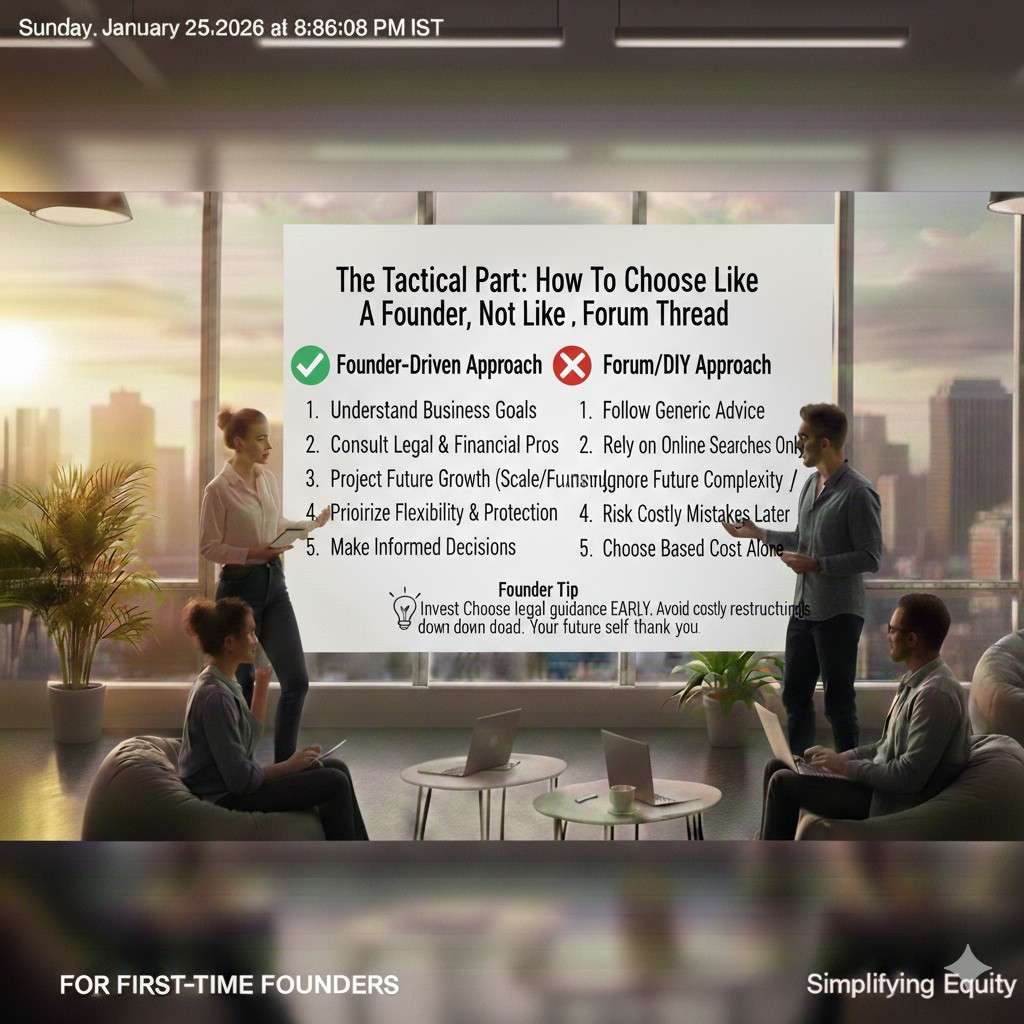
When you decide, do not start with internet opinions. Start with your roadmap.
Ask yourself:
In the next 12 months, will I raise a SAFE?
In the next 18–24 months, will I likely raise a priced round?
Will I hire employees who expect options?
Will I want a clean cap table for due diligence?
Will patents matter for our moat?
If you answer “yes” to two or more, you are already leaning C-Corp.
And if patents matter, you should treat your structure and your IP plan as one combined decision. You do not want a legal structure that makes IP assignment confusing or delayed.
Tran.vc exists to help founders get this right early, with real patent strategy and filings, without forcing you to chase VC too soon. You can apply anytime: https://www.tran.vc/apply-now-form/
Delaware C-Corp vs LLC: The Founder-Friendly Choice
The decision is not paperwork, it is a growth lever
Most founders do not wake up excited to choose a legal form. You choose it because you want to build fast, hire well, and raise money when the time is right. The tricky part is that the company type you pick today can quietly shape what becomes easy or painful later.
A founder-friendly choice is not the one that feels simplest on day one. It is the one that keeps your future clean, so you do not lose weeks fixing structure problems during a fundraise or a big partnership. If you are building robotics, AI, or deep tech, this choice matters even more because your product is often tied to valuable IP.
If you want help locking down your IP early, Tran.vc invests up to $50,000 in-kind in patent and IP services for technical founders. You can apply anytime at https://www.tran.vc/apply-now-form/
What your company type really does for you
Think of your company type like a container that holds your business. It holds your ownership, your IP, your contracts, and the rules for how money and control move. If the container is built for your future, it stays strong as you grow. If it is not, it can crack at the worst time.
When you are small, almost any container works. When you start hiring, raising, and signing serious deals, the rules inside the container start to matter. That is when founders learn that “simple now” can become “costly later.”
The founder-friendly question to ask first
The question is not, “Which one is cheaper to form?” The better question is, “Which one reduces friction when I need to move fast?” Most founders lose leverage through delays, not through one-time fees.
A slow fundraise can push you into taking worse terms. A messy ownership setup can scare away strong hires. A weak IP story can weaken investor trust. These are not legal problems in theory. They are business problems in real life.
Where Tran.vc fits into this decision
If you are building something that can be copied, IP is not optional. Your structure and your IP plan need to match, because investors will check both. A clean entity that clearly owns the inventions is part of what makes your company feel real and investable.
Tran.vc helps founders build that foundation early, before seed, so you are not scrambling later. If that is relevant to you, apply anytime at https://www.tran.vc/apply-now-form/
The Delaware C-Corp
Why it became the default for startups that plan to raise
A Delaware C-Corp is popular because it is predictable. Investors, lawyers, and startup operators have seen it many times. That familiarity makes deals move faster and makes negotiation cleaner, because fewer things feel “new.”
Delaware also has a long history of business law, and the courts there handle business cases often. This matters because investors care about how disputes are handled and how rules are interpreted. When rules are clear, risk feels lower.
For founders, the biggest advantage is that most startup fundraising tools were designed with a C-Corp in mind. When your structure matches what the market expects, you spend less time explaining and more time building.