
Most startups do not fail because the product is bad. They fail because the company is not “clean” when it matters.
A clean company is simple: the business owns what it is selling.
That sounds obvious. Yet many strong teams ship real code, land early users, even raise a small round… and still get stuck when a serious investor asks one basic question:
“Do you own the IP?”
This is where employee IP agreements come in. They are not “legal paperwork.” They are a VC-ready standard. They are proof that your company will not lose its core tech later because of a missing signature, a past side project, a contractor who never assigned rights, or a co-founder who left with the keys.
If you want to raise with confidence, these agreements should be set up early, written clearly, and signed by every person who touches your product.
And if you want help doing this the right way, you can apply anytime here: https://www.tran.vc/apply-now-form/
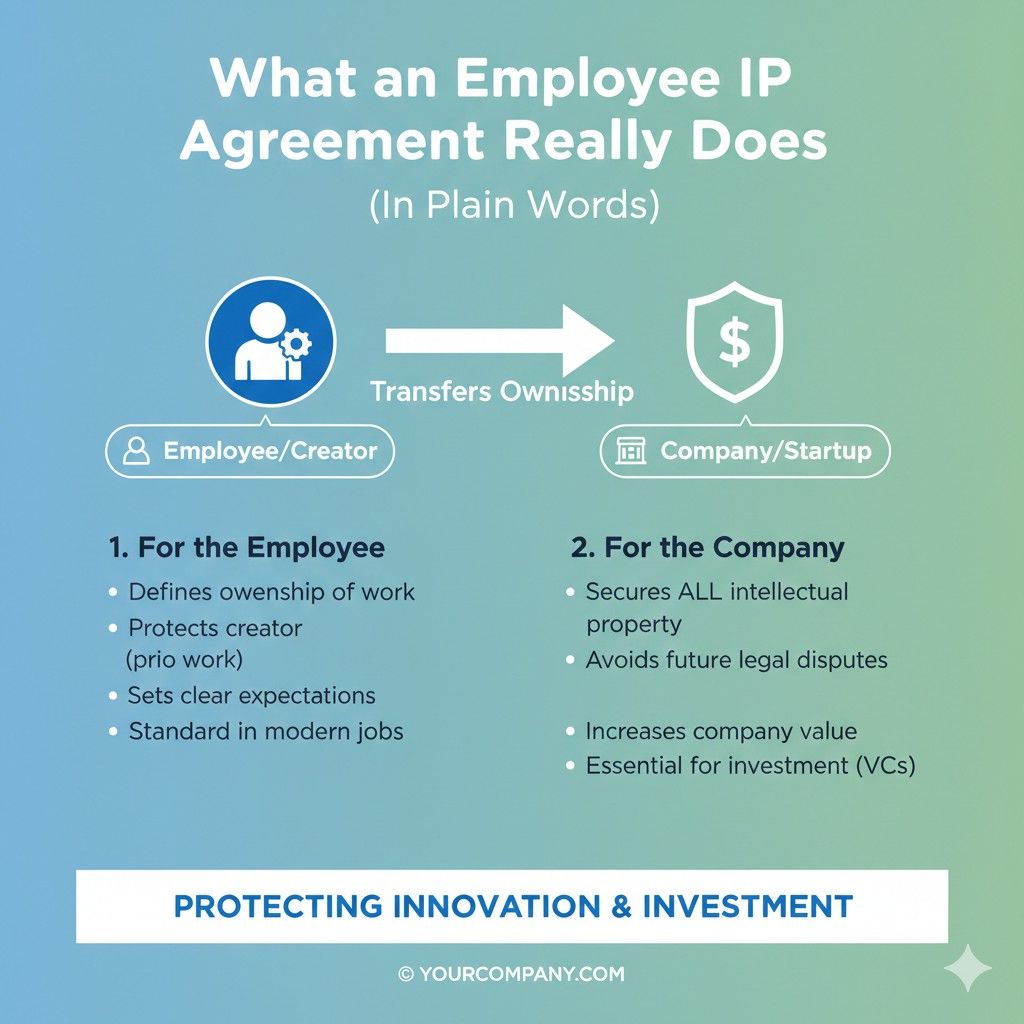
What an employee IP agreement really does (in plain words)
When an investor says “IP,” they mean the thing that makes your startup yours.
For AI and robotics teams, that usually includes:
Your code and models
Your training methods and data pipeline
Your edge deployment tricks
Your sensor fusion logic
Your control loops and planning stack
Your custom hardware designs
Your test methods, calibration steps, and build notes
Your product name and brand assets
Your confidential know-how
The problem is that none of this “automatically” belongs to the company just because someone worked on it. In many places, the rules are not as simple as founders think. Even when the law helps employers, investors still want clear contracts. Why? Because contracts reduce risk. Investors do not like surprises. They especially do not like lawsuits about who owns the core tech.
An employee IP agreement is the document that says, in clear terms:
- the person will keep company secrets private
- the inventions they create for the job belong to the company
- they will sign future paperwork needed for patents and filings
- they will not bring in someone else’s secrets or code
- they will return company materials when they leave
That is the heart of it.
If you only remember one thing, remember this: Investors do not fund “ideas.” They fund ownership. Ownership needs paper.
The VC lens: what investors are afraid of
A good investor is trained to look for hidden landmines. Employee IP is a common one.
Here are a few real situations that make deals slow down or die:
A key engineer wrote the first version of the stack before joining, and the startup never clarified if that code was assigned.
A founder hired a friend as a “contractor,” paid them in crypto or favors, and never got an IP assignment.
A senior hire joined from a big company and reused “familiar” code patterns that are not actually safe to reuse.
A developer used a copyleft open-source license in a key part of the product, and now the company may have to open-source their own code.
A co-founder left early and still owns part of the patent rights because nothing was signed.
None of these problems feel urgent when you are trying to ship. But they become urgent when you want to raise. At that moment, the investor’s lawyer starts asking for proof.
A VC-ready standard means you can answer quickly:
“Yes, everyone signed the right agreements before they started.”
“Yes, we have invention assignment and confidentiality in place.”
“Yes, we track outside projects and open-source use.”
“Yes, we can file patents without chasing old team members.”
That is what “clean” looks like.
If you want Tran.vc to help you build this kind of clean foundation—especially if you are building AI, robotics, or other deep tech—apply here: https://www.tran.vc/apply-now-form/
Why early-stage teams get this wrong (and how to avoid it)
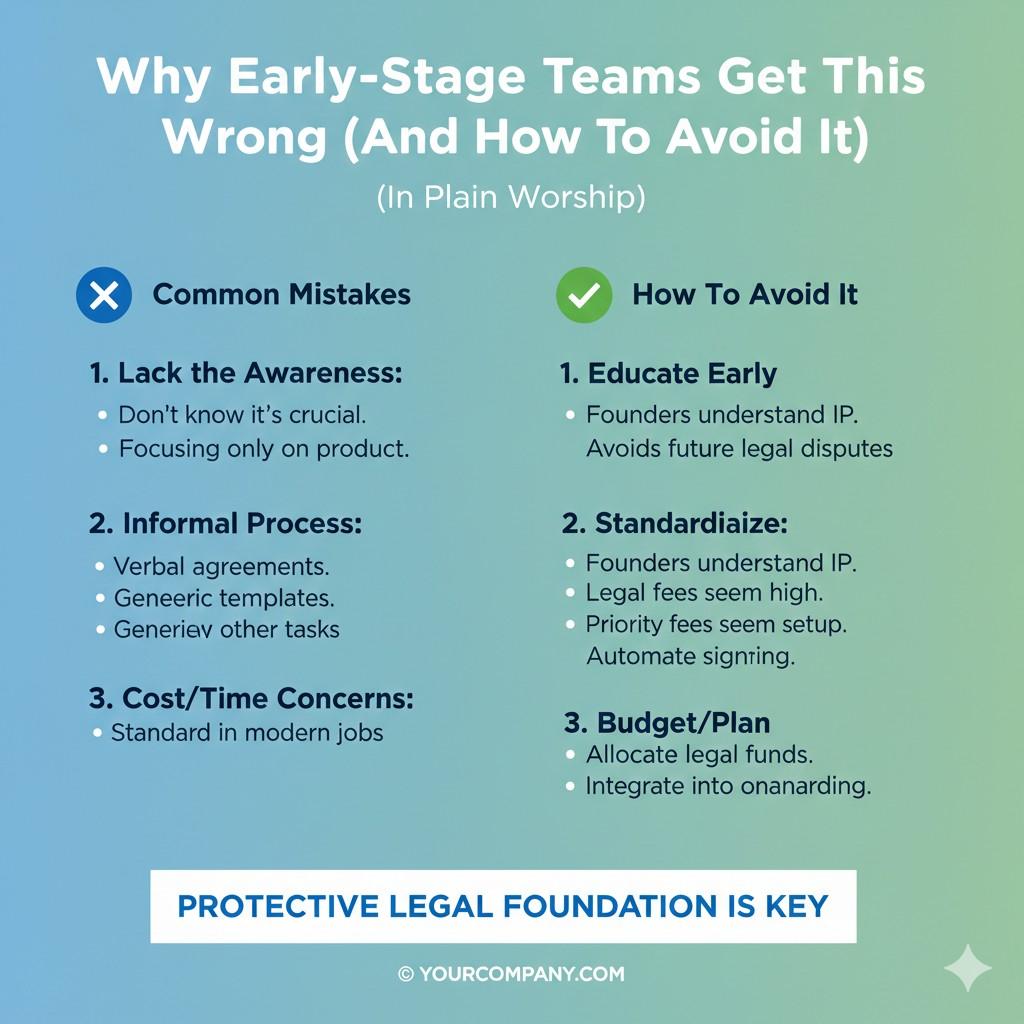
Most founders do not ignore IP on purpose. They just assume it will be fine.
Common reasons:
They think “we paid them, so we own it.”
They are friends with the early team and feel awkward asking for signatures.
They are moving fast and do not want “legal slowing us down.”
They use a template that looks official but misses key clauses.
They are in multiple countries and do not know which rules apply.
Let’s fix the mindset first.
If you are building a real company, you are not “being weird” by asking for an IP agreement. You are being responsible. The best people you hire will respect that. In fact, many of them expect it. Serious engineers have seen startups fall apart over messy ownership.
Also, the right agreement can be short and readable. It does not have to be scary. The goal is not to trap people. The goal is to make ownership clear, so everyone can focus on building.
A good process feels like this:
“Before you start, we sign the same set of documents we use for everyone. It protects the company and it protects you too. It’s standard.”
That sentence alone can remove most tension.
The core parts of a VC-ready employee IP agreement
Third-party code and materials must be handled like a real risk
You need the agreement to say the employee will not bring in someone else’s confidential information, code, files, drawings, or data. This is not about mistrust. It is about stopping accidents before they happen.
A common “accident” looks innocent: someone copies a small block of code from an old job, or reuses a private script they wrote while employed elsewhere. Another one is bringing over internal docs, test logs, customer lists, or hardware specs from a prior employer. Even if the person means well, it can create a legal mess.
Investors worry about this because it can trigger claims later. If a past employer says, “That robotics stack was built on our work,” your fundraising can freeze. Even worse, your product can get forced changes at the worst time.
Open-source rules should be named, not assumed
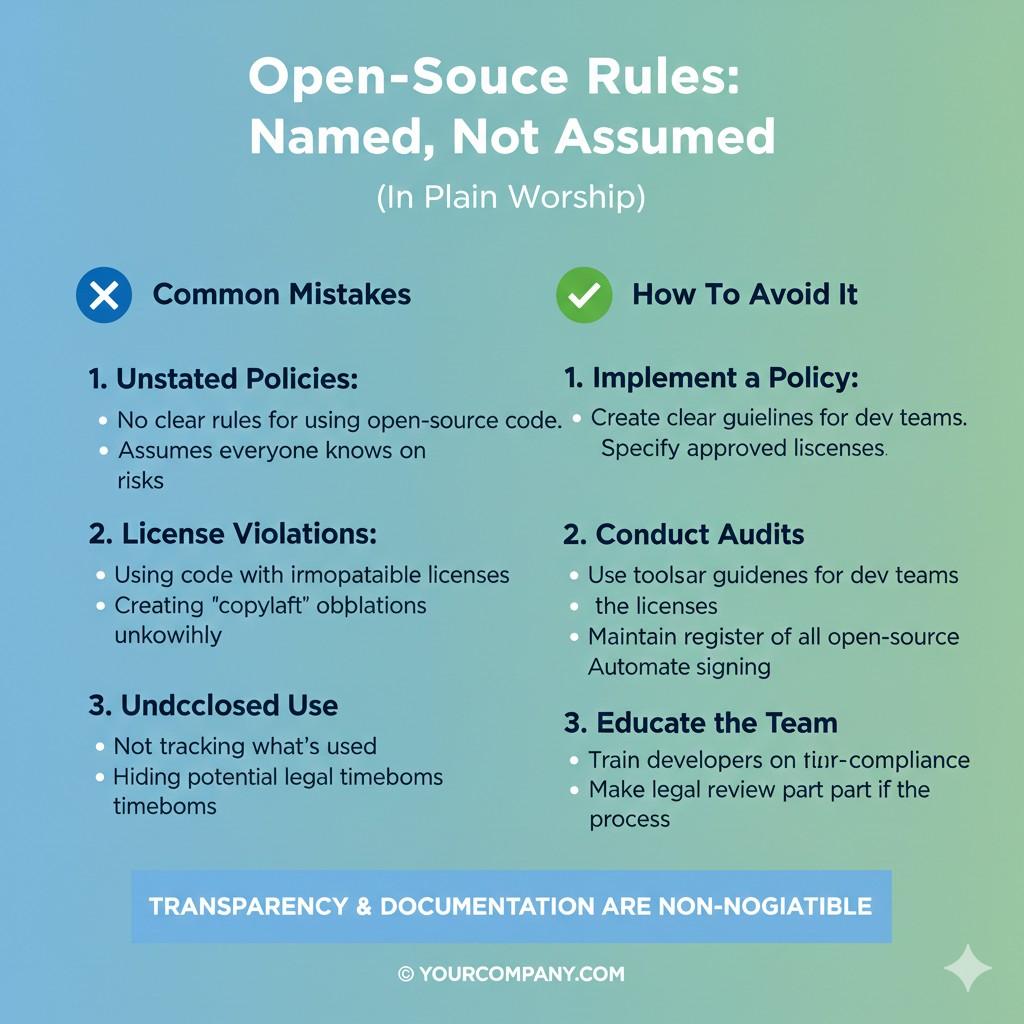
Most startups use open source. That is normal. But some licenses can force you to share your own source code if you ship a product that includes that open-source piece in the wrong way.
A VC-ready agreement does not need to teach license law. It should do two simple things: require employees to follow the company’s open-source policy, and require them to disclose open-source use in the product when the policy says they must.
Even if your policy is basic today, putting the obligation in writing gives you control. It also tells investors you treat IP like an asset, not like an afterthought.
The “return everything” clause matters more than founders think
When a person leaves, the risk is not always theft. Often it is loose ends. Laptops with code, personal drives with CAD files, Slack exports, notebooks with build steps, and credentials saved in a browser.
A good agreement clearly says that all company materials must be returned, and that copies must be deleted. It also says the person will not keep access to systems after leaving. This is not harsh. It is standard safety for a company that wants to grow.
If you want Tran.vc to help you set this up in a clean way, with an IP plan that matches what you are building, you can apply anytime at https://www.tran.vc/apply-now-form/
“Employee” vs “contractor” vs “advisor” is not a small detail
Investors treat each category differently
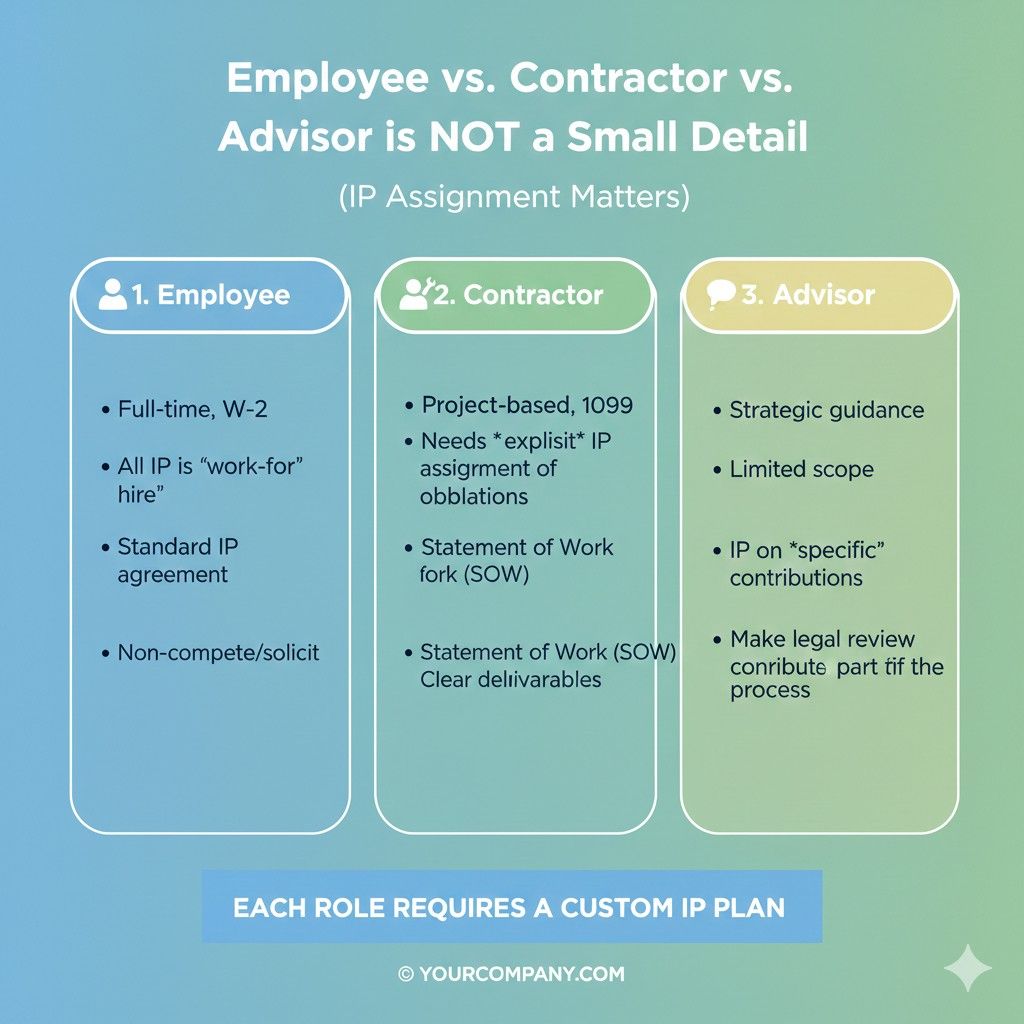
Founders often use the word “team” as one big bucket. Investors do not. They separate people by legal status, because ownership rules change based on the relationship.
An employee usually signs an invention assignment as part of onboarding. A contractor often needs a separate agreement that is even more explicit, because contractors are commonly treated as independent creators unless rights are assigned in writing.
Advisors can be even trickier. They may give ideas, designs, connections, or hands-on help. If they touch product strategy or technical architecture, you want clear language about who owns what comes out of that work.
Why contractors create the most surprise risk
In early-stage startups, contractors are common. They move fast, they cost less upfront, and they feel simple. But if you forget the IP assignment, you can end up in a painful spot where the contractor owns part of your core code.
Then, when you go to raise, the investor asks for proof that the company owns everything. You scramble to find the contractor. They are busy, or upset, or gone. Now you are negotiating under pressure, and pressure creates bad outcomes.
This is why a VC-ready standard means every person who builds, designs, writes, tests, or ships signs the right paper before work starts. Not after the first sprint. Not after the first demo. Before.
Advisors and “helpful friends” still need clear boundaries
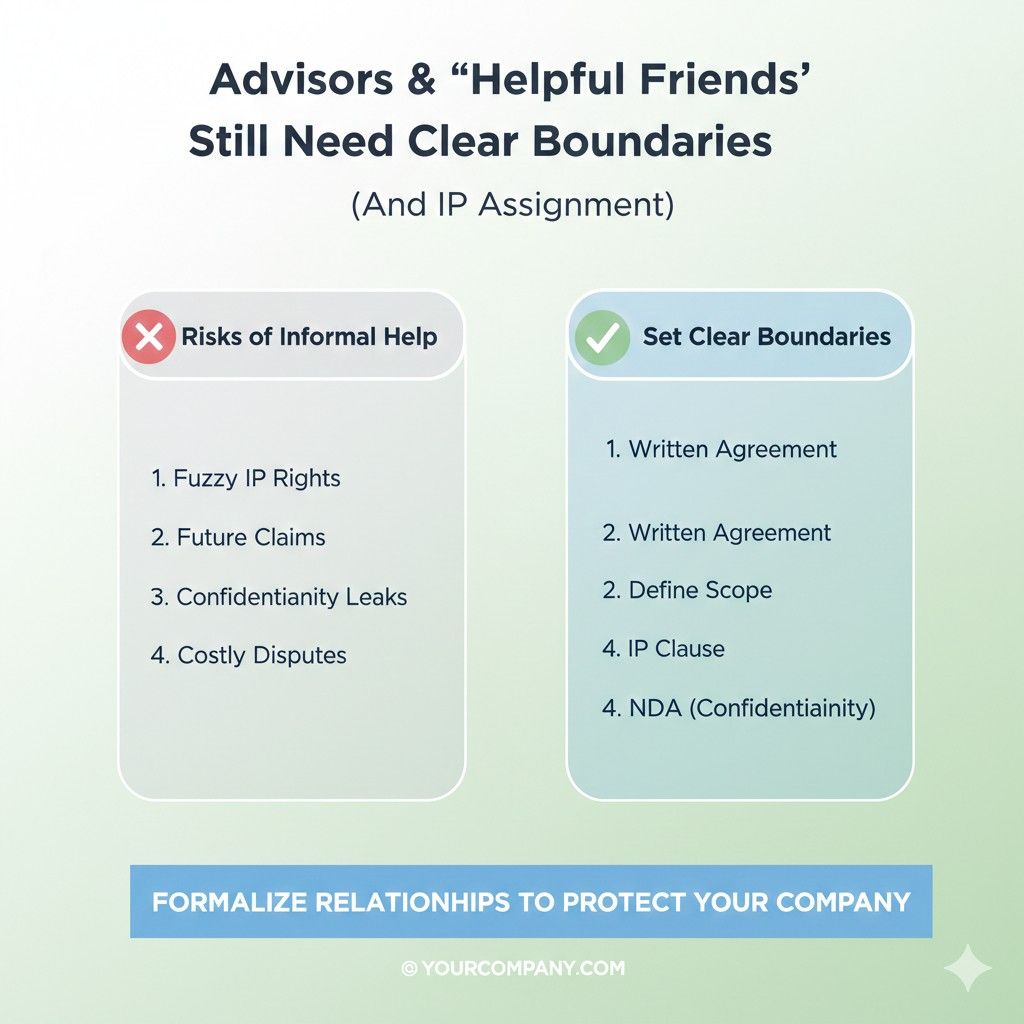
Many founders get help from friends who are senior engineers or researchers. They jump on a call, suggest changes, maybe write a quick patch, maybe share a design doc. It feels casual.
But once someone contributes to the product, you have to treat it like a contribution. If the friend later joins another company, or if you have a disagreement, you do not want a debate over whether their input created ownership rights.
A short advisor agreement with clear IP terms can protect both sides. It keeps the relationship friendly because it removes ambiguity.
The biggest hidden gap: founders often forget themselves
Founders also need invention assignment
It sounds strange, but it is very common: the company has employee agreements, but the founders never signed a founder invention assignment.
Investors notice this fast. They want to know that the founders have assigned all relevant rights to the company. That includes anything built before incorporation that is now part of the product.
If the founders do not sign, the company may not fully own its own foundation. That is a scary sentence to a VC, even if everyone “means well.”
Pre-incorporation work should be cleaned up on purpose
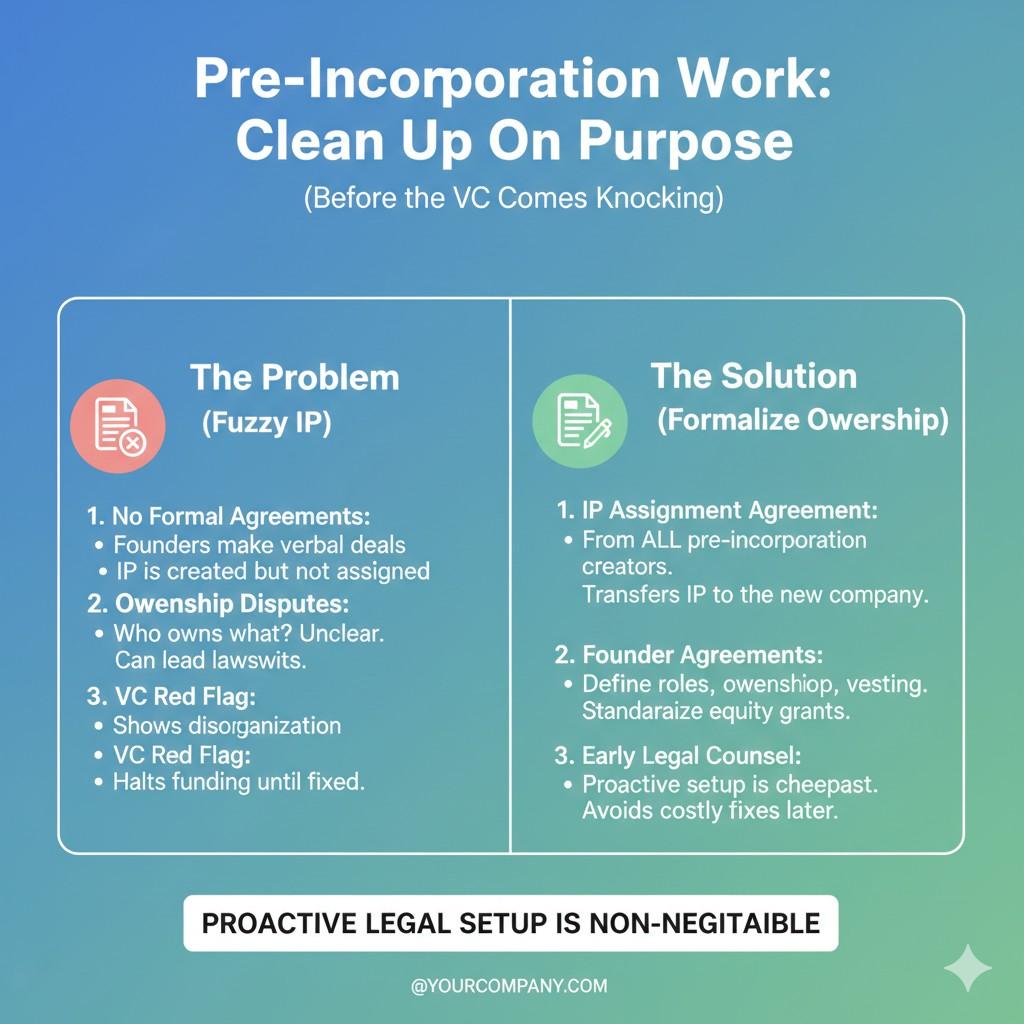
Most founders build before they form the company. They write early code, test models, prototype hardware, and talk to users. That is normal.
But once the company exists, that work should be formally assigned into it. A simple document can do this. Without it, the story becomes messy: “The company uses the founder’s code, but the founder owns it personally.” That is not the structure investors want.
If you are not sure whether your early work is cleanly inside the company, this is exactly the kind of thing Tran.vc helps with as part of building an IP-rich, fundable foundation. Apply anytime at https://www.tran.vc/apply-now-form/
How VCs check this during diligence
They ask for proof, not promises
Founders often say, “We have it handled.” Investors reply, “Great—please share the signed agreements.”
That is the key. The standard is not that you intend to do it. The standard is that you have it done, and you can show it.
Investors and their lawyers often request a simple set of items: a cap table, incorporation docs, and IP documents. If your IP file is messy, the deal slows down. If it is missing, the deal can die.
They look for coverage and consistency
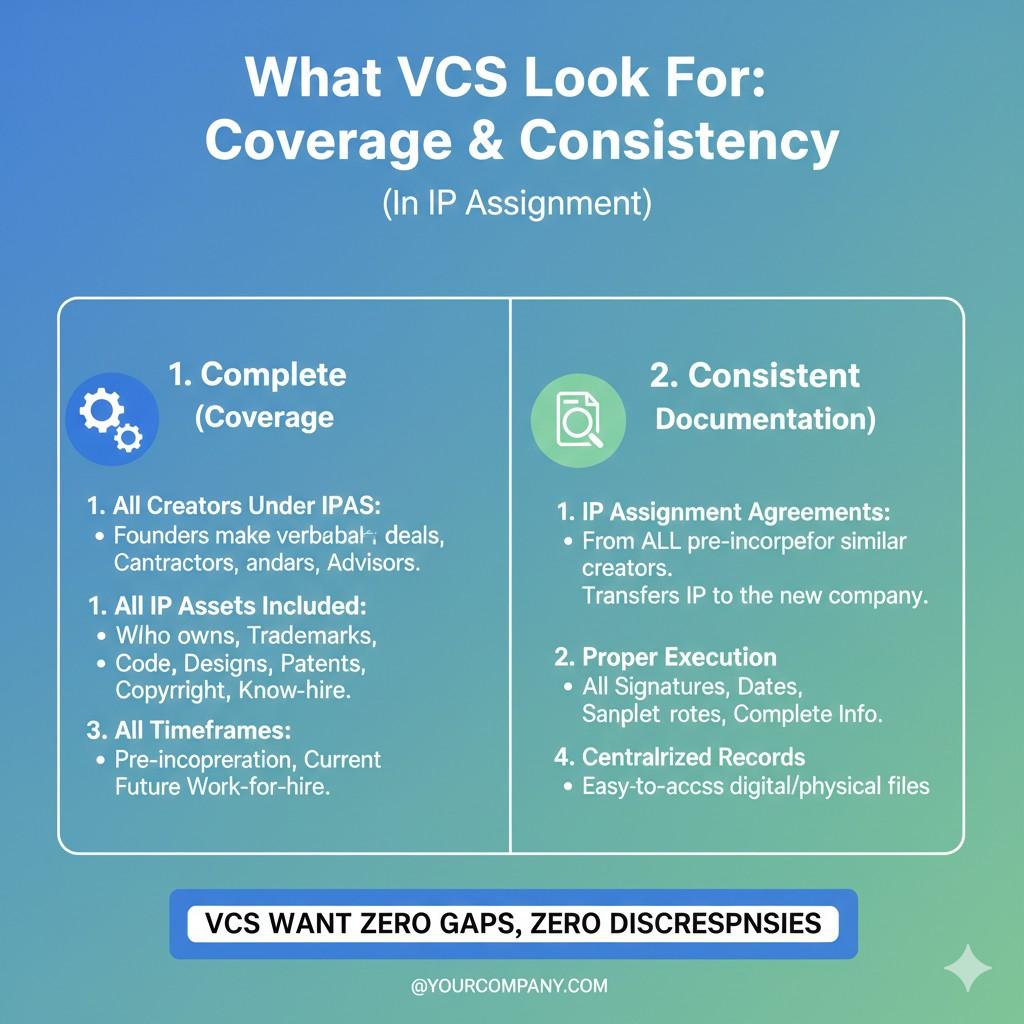
A common failure mode is partial coverage. Maybe your two employees signed, but your contractor did not. Maybe one person used an old template with different terms. Maybe your advisor agreement says something that conflicts with your employee agreement.
When lawyers see inconsistency, they assume risk. Risk means extra work. Extra work means delays. Delays can cost you the round if the market shifts or the investor loses focus.
A VC-ready standard is boring in a good way. It is consistent. It is complete. It is easy to review.
They look for “future cooperation” for patents
If you plan to file patents—and for AI and robotics, you often should—investors want to know you can do it smoothly.
Patent filings often need inventor signatures, declarations, and assignments. If a key contributor leaves and refuses to sign, you have a problem. A well-written agreement reduces that risk because it commits the person, in advance, to help with these steps.
This is one reason Tran.vc focuses so much on early IP foundations. Patents are not just forms. They are process. Apply anytime at https://www.tran.vc/apply-now-form/
How to implement this without slowing the team
Make it part of onboarding, not a special event
Founders sometimes treat IP paperwork as a “conversation.” They schedule a meeting, they explain the risk, they negotiate line by line. That burns time and creates weird emotions.
A better approach is to make it standard onboarding. The tone is calm and routine: “Here are our standard documents. Everyone signs them. Then we ship.”
When it is routine, it feels fair. When it is only used for certain people, it feels personal. You want routine.
Use plain language where you can
Some legal language must be precise. But the surrounding communication can be simple. When someone joins, tell them what the agreement is for in plain words:
“It keeps company info private, and it confirms the company owns what we build together.”
That sentence is enough for most people. You do not need to lecture them. You just need to set expectations and keep the process smooth.
Keep a clean record, in one place
Signing is not the end. You also need to store agreements so you can find them fast.
In diligence, speed matters. If it takes you two weeks to locate signed copies, you look disorganized. If you can share a complete set in one day, you look like a team that can handle bigger responsibilities.
A simple folder structure, a clear naming rule, and a short checklist can save you later. This is not “ops busywork.” It is fundraising readiness.
Common clauses that cause confusion, and how to handle them
The “side projects” issue needs a respectful approach
People worry that an invention assignment means the company owns everything they think about, forever. That fear can create tension, especially with strong engineers who build things in their free time.
The best fix is clarity. Side projects can be protected by listing them as excluded inventions. Also, many agreements limit assignment to things related to the company’s business, or created using company time and resources.
The right balance depends on your location and your risk profile, but the goal is consistent: avoid gray areas without being unfair.
Non-compete language can backfire
In many places, broad non-competes are not enforceable, and trying to use them can create trust issues with hires. Also, investors do not need you to “lock people in” with harsh terms.
What investors do care about is confidentiality, non-solicit in some cases, and clean IP assignment. If you overreach, you can create problems you did not need.
A VC-ready standard is not about being aggressive. It is about being clean, reasonable, and enforceable.
Moral rights and international contributors can be overlooked
If you hire outside the U.S., or work with contributors in other countries, IP rules can change. Some places have stronger “moral rights” concepts for creators, and assignments can require extra steps.
You do not need to become an expert in every country. But you should not ignore it. If you have cross-border talent, you want templates that match those realities.
This is another area where getting expert help early can save months later.
If you want Tran.vc to help you put the right structure in place—so your company looks VC-ready without slowing down product—apply anytime at https://www.tran.vc/apply-now-form/