
AI and robotics startups move fast. Code ships overnight. Models improve in weeks. Hardware gets smaller, smarter, and cheaper every year.
But while your product evolves quickly, your legal protection does not.
Patents move slowly. Competitors do not.
If you are building an AI system, a robotics platform, a perception engine, or a new control method, your biggest risk is not that you cannot build it. Your biggest risk is that someone else builds something similar and locks you out of key markets.
A global patent strategy is not something you think about after raising a round. It is something you design from day one.
At Tran.vc, we work with technical founders who want to build real moats, not hype. We invest up to $50,000 in in-kind patent and IP services to help you protect what truly matters before you scale. If you are building in AI or robotics and want to do this right, you can apply anytime at https://www.tran.vc/apply-now-form/
Now let us break down how global patent strategy actually works for AI and robotics startups — in simple terms, and in a way you can act on.
Why Global Patent Strategy Matters More in AI and Robotics
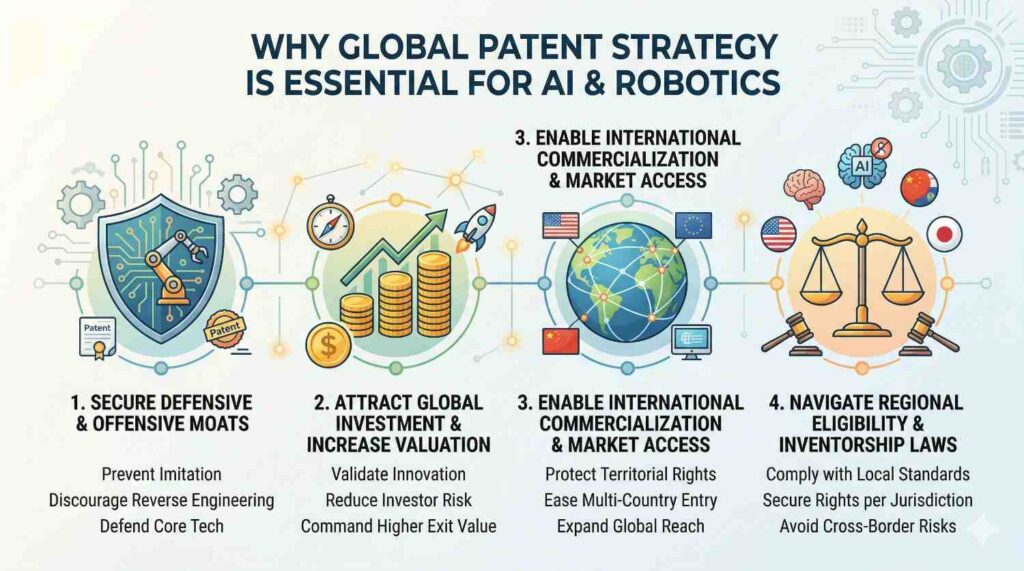
Software startups used to get away with moving fast and ignoring patents. Many relied on speed and network effects. AI and robotics are different.
In AI, your core value may sit inside a training pipeline, a model architecture, a data processing method, or a feedback loop. In robotics, your value may sit inside mechanical design, motion control, hardware-software interaction, or sensor fusion.
These are not just features. They are inventions.
And inventions can be copied.
Large companies have global legal teams. They file in many countries at once. They think in decades, not quarters. If you only think about your home country, you are already behind.
A global patent strategy does three simple things:
It protects your core invention in key markets.
It increases your value in the eyes of serious investors.
It gives you leverage in partnerships and future exits.
Without it, you are building on land you do not fully control.
With it, you are building an asset.
This is why Tran.vc focuses so heavily on IP from the beginning. We do not hand you cash and disappear. We help you design the legal foundation that makes your AI or robotics company defensible. If you want to build that kind of foundation, you can start here: https://www.tran.vc/apply-now-form/
Step One: Know What You Are Actually Protecting
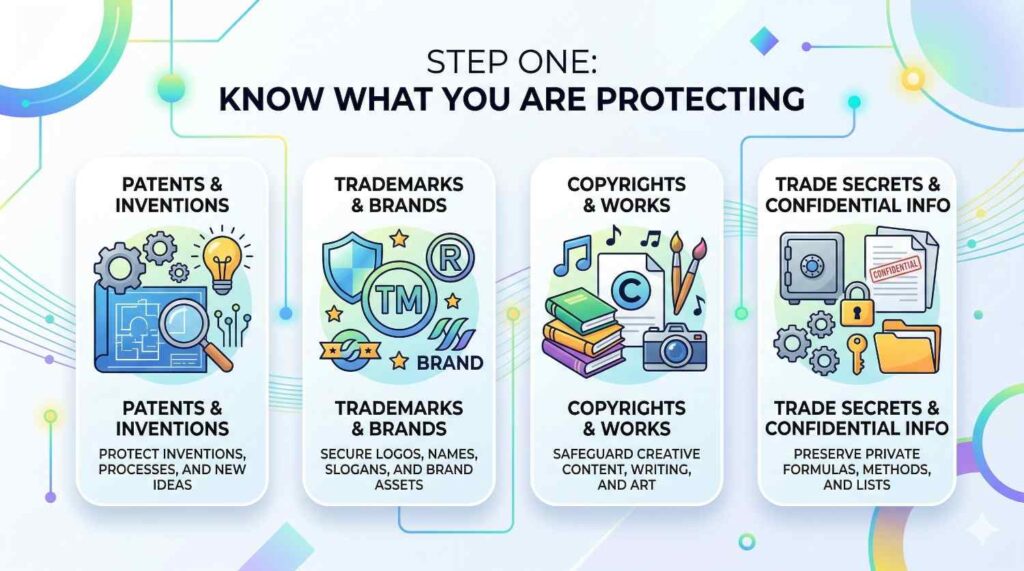
Most founders think patents protect products. They do not.
Patents protect inventions.
If you are building a robotics arm, you cannot patent “a robot arm.” But you may be able to patent a new torque control method, a new joint structure, or a new calibration process.
If you are building an AI model, you cannot patent “an AI that predicts disease.” But you may be able to patent a new training pipeline, a specific architecture, a novel data transformation method, or a system that combines hardware and AI in a new way.
The first step in a global strategy is clarity.
You need to ask:
What is the core technical insight here?
What is hard to replicate?
What took real invention?
This is where many startups go wrong. They rush to file something broad and vague. The patent ends up weak. It looks impressive on paper, but it does not block competitors.
Strong patent strategy is precise. It focuses on the true engine of your advantage.
At Tran.vc, we spend serious time with founders unpacking their architecture and design decisions. We ask hard questions. We trace where the novelty lives. Only then do we design filings. That early clarity saves years of regret.
If you are unsure what part of your AI or robotics system is patent-worthy, that is exactly the kind of problem we help solve. You can apply to work with us here: https://www.tran.vc/apply-now-form/
Step Two: Think International From Day One
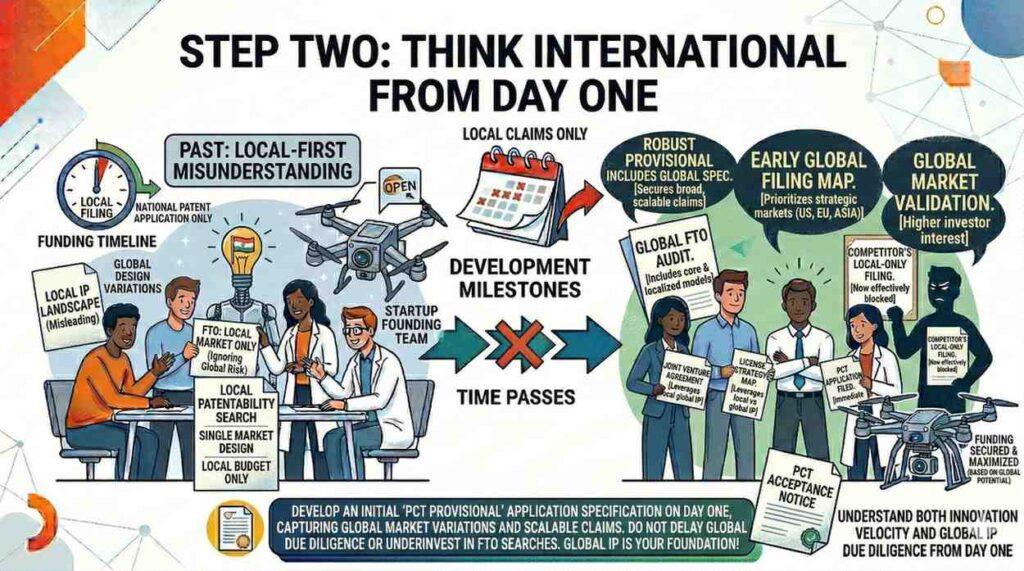
Many startups file only in their home country because it feels cheaper and simpler.
That can be a costly mistake.
AI and robotics are global industries. Your competitors may be in the United States, Europe, China, Japan, or South Korea. Manufacturing may happen in one country. Sales may happen in another.
Patents are territorial. A US patent protects you only in the United States. It does nothing in Germany. It does nothing in China.
So the question becomes: where will value be created?
There are three angles to think about.
First, where will you sell?
Second, where will competitors likely operate?
Third, where will manufacturing happen?
If your robotics hardware will be manufactured in Asia, you need to think about protection there. If your AI platform targets enterprise customers in Europe, that market matters.
You do not need to file everywhere. That would be expensive and unnecessary.
You need a strategy.
Often, startups begin with a priority filing in one country, then use international frameworks to delay final country decisions while they test the market. This gives you time to raise capital and validate traction without losing global rights.
But timing matters. Miss certain deadlines and you permanently lose options.
This is not something to improvise.
A thoughtful global filing roadmap allows you to balance cost and coverage. It helps you avoid filing too early in too many places, but also prevents you from closing doors by accident.
At Tran.vc, we help founders map this out before they even raise a seed round. Our goal is simple: give you leverage, not stress. If you want to build your company with that kind of foresight, apply here: https://www.tran.vc/apply-now-form/
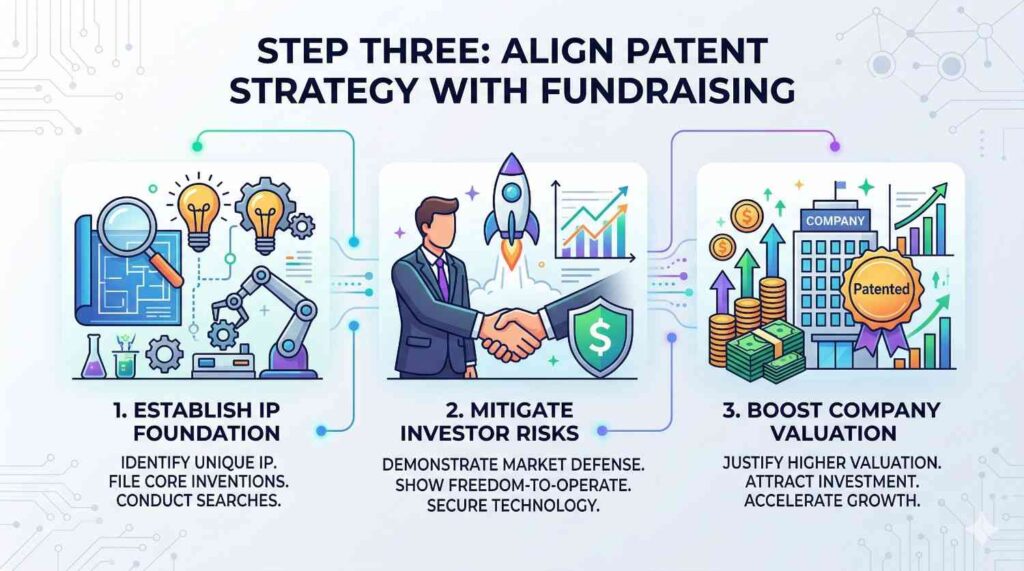
Step Three: Align Patent Strategy With Fundraising
Here is a hard truth.
Serious investors look at your IP.
They may not admit it directly. They may focus on traction, team, or market. But when a deal gets serious, they ask about defensibility.
If your AI startup has no filings, no strategy, and no plan, that creates risk. If your robotics company depends on hardware innovation but has no protection, that lowers valuation power.
On the other hand, when you can say:
“We have filed around our core control system.”
“We have international coverage planned in our key markets.”
“We built our IP roadmap alongside product development.”
That changes the tone of the conversation.
You are no longer just building features. You are building assets.
This is especially important in AI right now. Many investors worry about commoditization. Models become open source. APIs get cheaper. Differentiation fades.
Strong IP signals depth. It shows you are not just wrapping a user interface around someone else’s model.
It shows you have invented something real.
At Tran.vc, we invest up to $50,000 in in-kind patent and IP services precisely because we know this changes how you raise. It shifts you from a story-driven pitch to an asset-backed one.
If you want to raise with strength instead of desperation, start by protecting what matters. You can apply today at https://www.tran.vc/apply-now-form/
Step Four: Avoid the Most Common Global Patent Mistakes
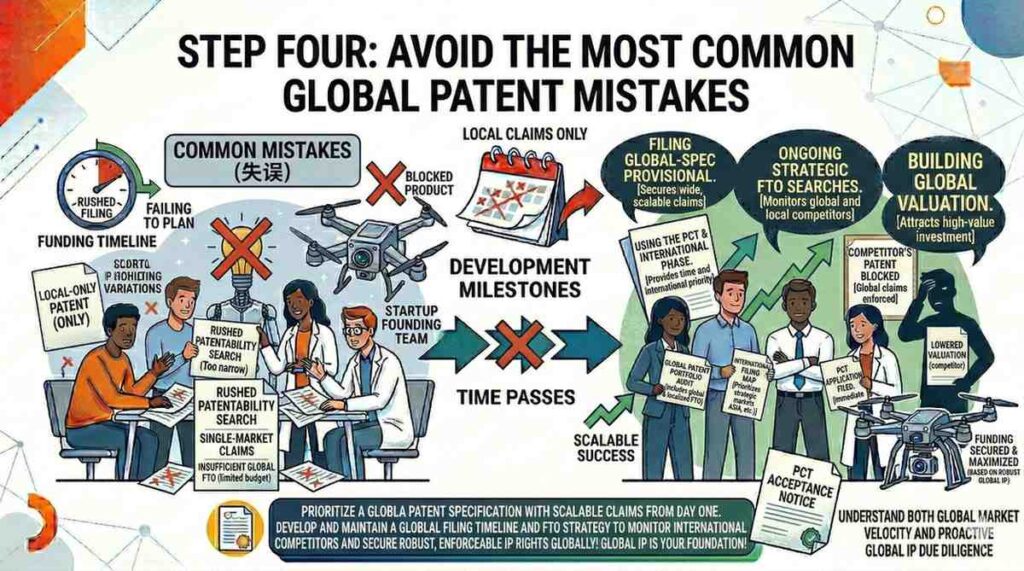
AI and robotics founders are brilliant engineers. But most are new to global IP strategy. That is completely normal.
Here are patterns we see often.
Some file too late. They publish papers, release demos, or present at conferences before filing. In many countries, that destroys patent rights.
Some file too early. They draft a rushed application before the invention is fully shaped. The result is narrow claims that competitors can easily design around.
Some rely only on provisional filings and never convert them properly.
Some treat patents as paperwork instead of strategic tools.
A global patent strategy requires coordination between engineering, business, and legal thinking.
For example, if your robotics startup is planning to enter Germany in two years, that should influence filing timelines now. If your AI system depends on a custom hardware board, your claims should reflect that integrated system, not just the algorithm.
Strong IP is not about volume. It is about precision and foresight.
This is why we work closely with founders, not just as investors but as partners. We have built companies ourselves. We have filed patents. We understand the tension between moving fast and building defensibility.
And we believe you should not have to choose between them.
If you are serious about building an AI or robotics company that lasts, not just one that raises quickly, this is your moment to think bigger.
International Filing Routes for AI and Robotics Startups
Understanding the Paris Convention Path
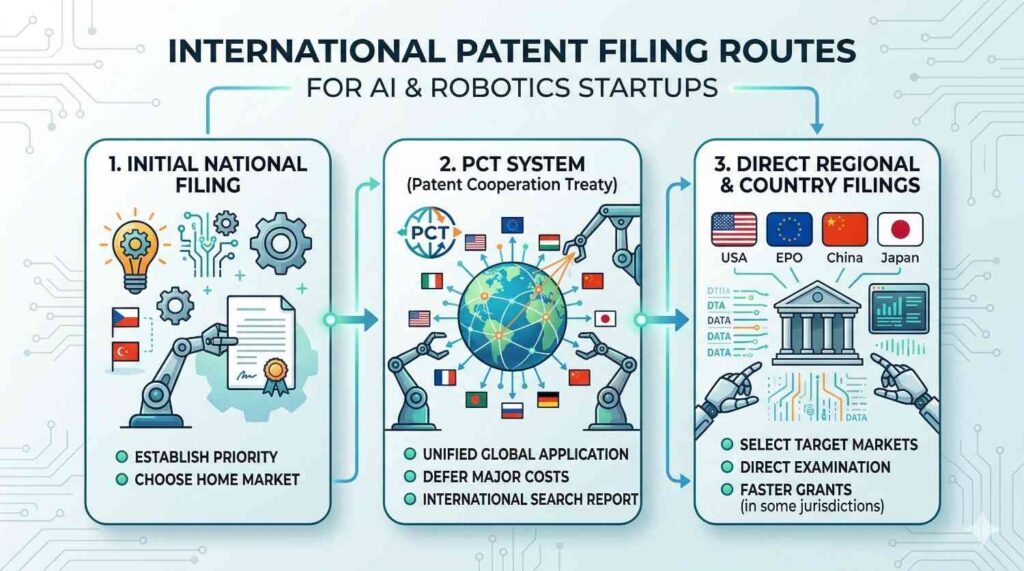
When you file your first patent application in one country, that filing gives you a priority date. From that date, you usually have 12 months to file in other countries while keeping the same priority.
This system exists under the Paris Convention. It allows you to test your idea in the market for a short period before making larger global decisions. For many early AI and robotics startups, this first year is critical. It is often the period when you are refining your prototype, speaking to customers, and possibly raising your first institutional round.
The key is that this 12-month window is strict. If you miss it, you lose the right to claim that original priority date in other countries. That can expose you to risk if competitors file similar inventions after seeing your public demo or launch.
A smart strategy uses this first year wisely. You do not rush into filing everywhere. You use the time to validate where real demand exists and where competitors are active. Then, before the deadline, you expand protection into the jurisdictions that matter most.
This is where planning becomes powerful. At Tran.vc, we help founders map out that first year clearly so they do not make rushed or emotional decisions. If you want that level of strategic guidance from day one, you can apply at https://www.tran.vc/apply-now-form/
Using the PCT to Buy Time and Stay Flexible
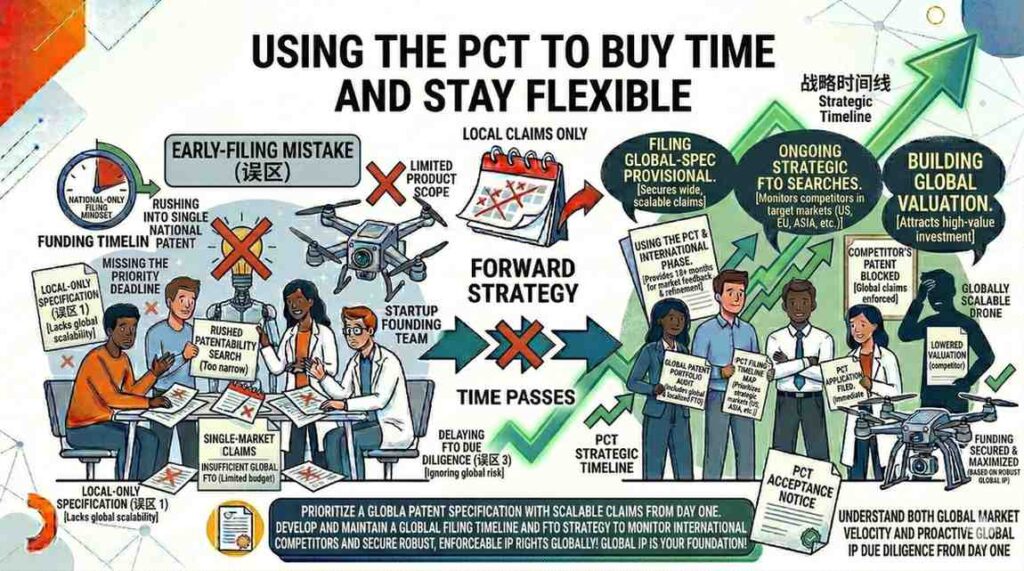
Another common route is the Patent Cooperation Treaty, often called the PCT. Instead of filing directly in many individual countries within 12 months, you can file a single international application under the PCT system.
This does not give you a global patent. There is no such thing as one worldwide patent. But it does extend your timeline. In many cases, it gives you up to 30 months from your original filing date before you must choose specific countries.
For AI and robotics startups, this extra time can be very valuable. Technology evolves quickly. Market focus may shift. You may discover that your largest customers are in Europe instead of the United States, or that manufacturing will happen in Japan instead of China.
The PCT route allows you to delay expensive national filings while still keeping your options open. During this time, you also receive an international search report. This gives insight into prior art and helps you understand how strong your invention may be.
However, the PCT should not be used blindly. It is a strategic tool, not a default choice. For some startups with clear geographic targets and strong funding, direct national filings may make more sense. For others, the PCT creates breathing room that aligns better with fundraising timelines.
At Tran.vc, we do not treat these routes as administrative steps. We treat them as business decisions that shape your future leverage. If you are unsure which path fits your company, that is exactly why we exist. You can start the conversation here: https://www.tran.vc/apply-now-form/
Choosing the Right Countries for Protection
Where Your Customers Actually Are

Global strategy does not mean filing everywhere. It means filing where it counts. The first question to ask is simple: where will your paying customers be located?
If you are building AI software for enterprise clients, your main markets may include the United States, Canada, the United Kingdom, Germany, or other parts of Europe. If you are building robotics hardware for industrial automation, key markets may include Germany, Japan, South Korea, and China.
Patents are strongest where you can enforce them. If you do not plan to sell in a specific country and your competitors are unlikely to operate there, filing in that country may not bring meaningful value.
A focused approach protects revenue streams, not ego. It is not about showing a long list of jurisdictions in your pitch deck. It is about protecting the regions that will drive real income over time.
Where Your Competitors Operate and Manufacture
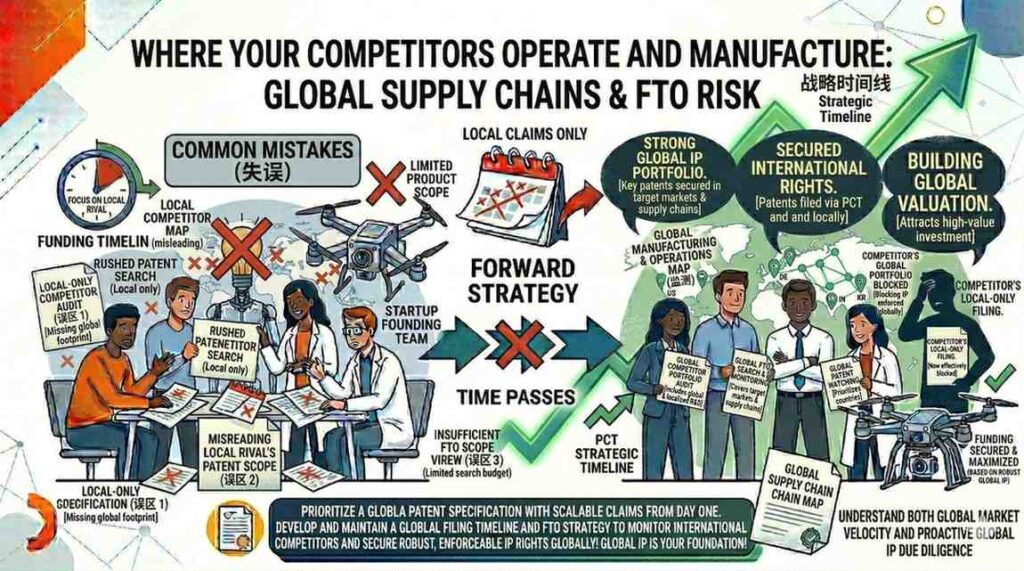
The second layer of analysis involves your competitors. Even if you do not plan to sell in a country, it may still matter if competitors manufacture or distribute from there.
For robotics startups especially, manufacturing hubs play a major role. If your hardware will be produced in Asia, protecting your invention in those manufacturing countries can create leverage. It may prevent competitors from making similar products in the same facilities.
In AI, enforcement may focus more on markets where the software is deployed or where servers operate. Understanding how and where infringement might occur shapes your filing map.
This is not guesswork. It requires thinking carefully about your supply chain, your partnerships, and your long-term scale plan. Many early-stage founders do not pause to think at this level because they are focused on building product. Yet this strategic lens can define your power five years from now.
Tran.vc works closely with founders to align IP geography with real business strategy. We help you avoid wasting capital on irrelevant jurisdictions while ensuring you do not leave critical gaps. If you are building something that deserves long-term protection, apply at https://www.tran.vc/apply-now-form/
Enforcement Realities in AI and Robotics
A Patent Is Only as Strong as Your Willingness to Defend It
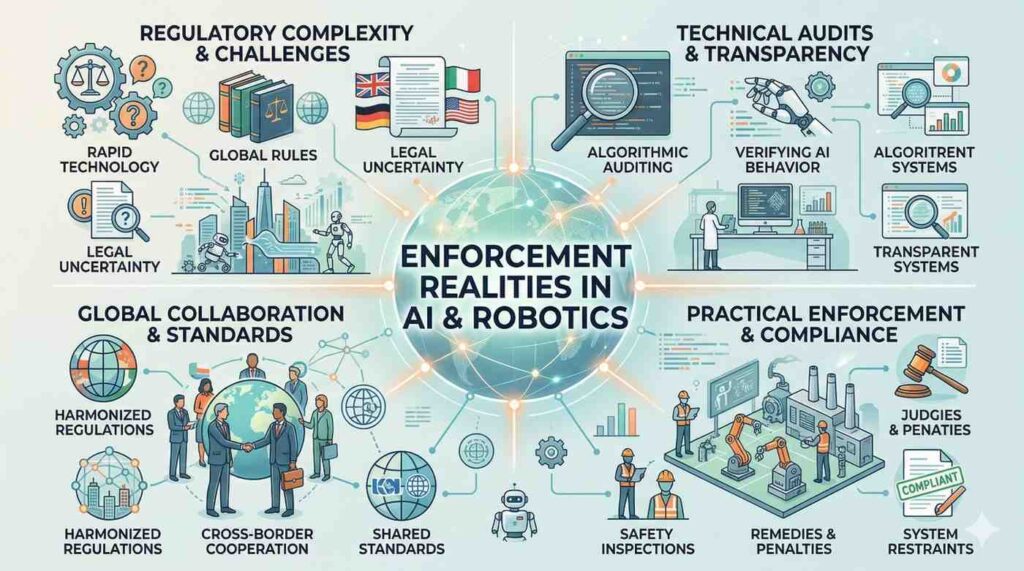
Filing a patent is one step. Enforcing it is another. Many founders assume that once a patent is granted, competitors will automatically stay away. That is not always true.
In some industries, large players may test the boundaries. They may believe a startup lacks the resources to enforce its rights. This is why your patent strategy must consider not just where you file, but how credible your position appears.
Well-drafted claims, thoughtful prosecution, and alignment with real commercial products increase your strength. Investors also take enforcement potential seriously. A strong portfolio backed by experienced counsel signals that you are prepared, not naive.
For AI startups, enforcement may require proving how a competitor’s system operates internally, which can be complex. For robotics, physical products may make infringement easier to observe, but technical claim drafting remains critical.
This is why patents should be written with enforcement in mind from the beginning. They should not just describe what you built. They should define clear boundaries that can be defended in court if necessary.
Building Leverage Without Going to Court
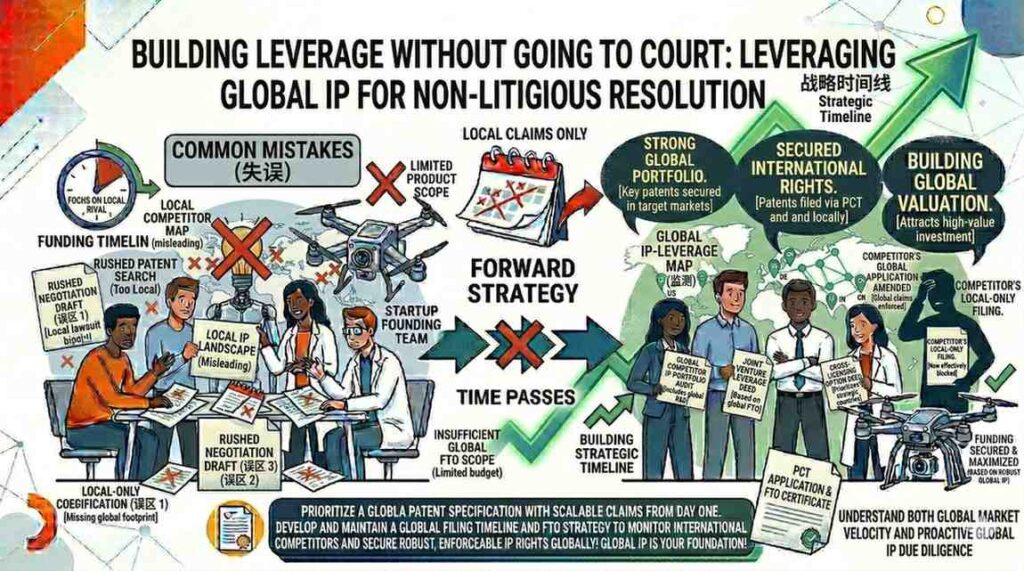
It is important to understand that enforcement does not always mean litigation. Often, the existence of strong patents creates negotiation power. It can influence licensing discussions, joint ventures, or acquisition talks.
In robotics especially, cross-licensing is common in mature markets. In AI, as platforms grow and overlap increases, intellectual property can shape partnership terms.
A well-planned global patent strategy increases optionality. It allows you to enter conversations with strength rather than fear. It gives you something tangible to stand on beyond market traction.
At Tran.vc, our focus is not just on filing documents. It is on helping you build assets that increase leverage across fundraising, partnerships, and exits. If you want to grow your startup with that mindset, you can apply here: https://www.tran.vc/apply-now-form/
Building an IP Moat That Scales With Your Product
Aligning Patent Filings With Product Roadmaps
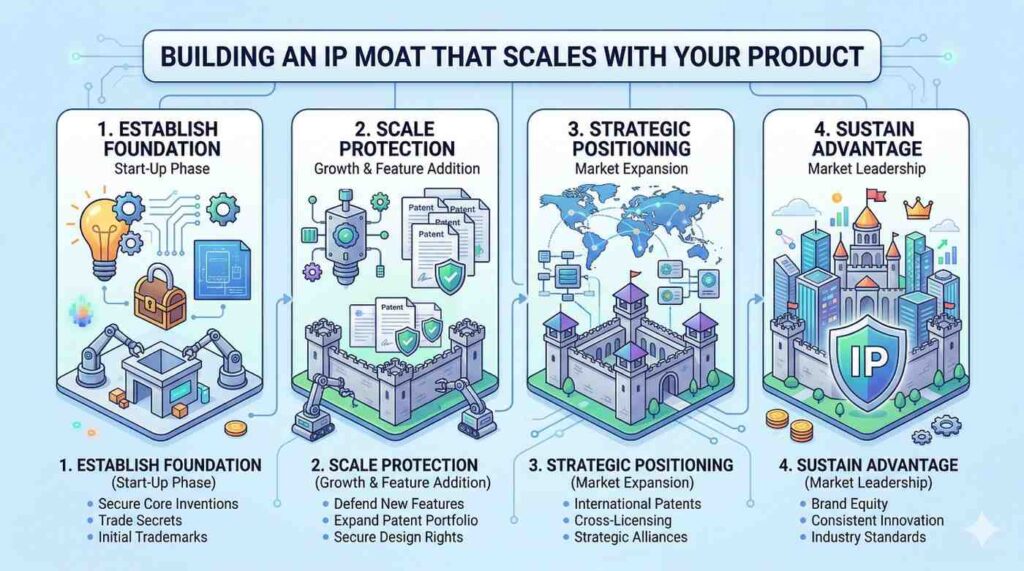
An IP moat is not built in one filing. It evolves as your product evolves. For AI and robotics startups, innovation is continuous. New model improvements, new hardware iterations, and new system integrations emerge over time.
Your patent strategy should mirror that growth. Early filings may focus on core architecture or foundational methods. Later filings can expand into improvements, optimizations, and specialized use cases.
This layered approach creates depth. Instead of one broad but fragile patent, you develop a portfolio that covers multiple aspects of your system. Competitors then face a web of protection, not a single barrier.
To do this effectively, patent discussions must become part of product planning. When your engineering team designs a new module or breakthrough feature, someone should ask whether it introduces novel technical elements worth protecting.
At Tran.vc, we encourage founders to treat IP review as part of their build cycle. It becomes a habit, not an afterthought. Over time, this discipline compounds into a serious moat.
Protecting the Integration Between AI and Hardware
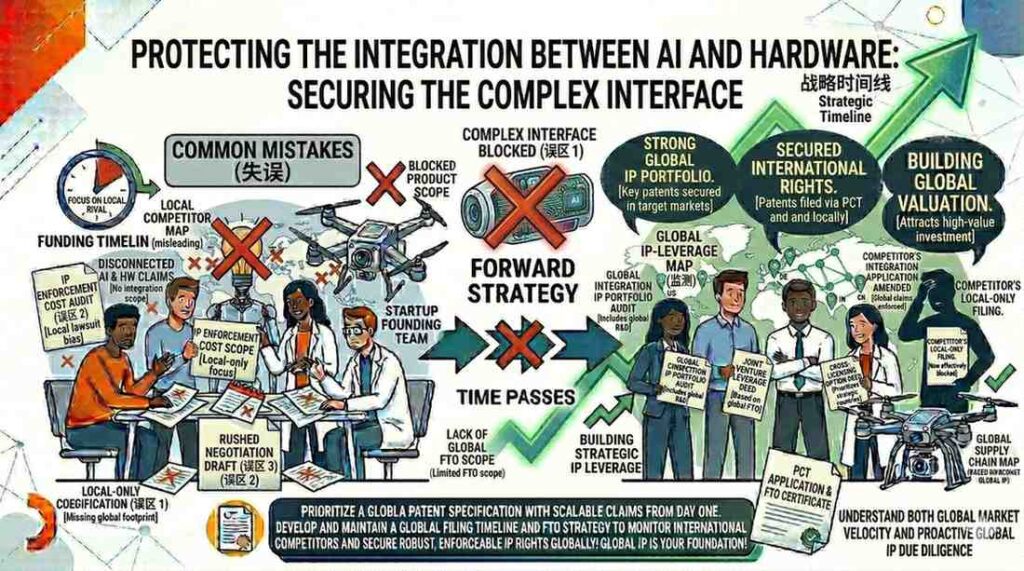
One of the most powerful areas for protection in robotics startups lies in the integration between software and hardware. Many companies focus only on the mechanical structure or only on the algorithm. The real defensibility often sits at the intersection.
For example, a new control algorithm that only works because of a unique sensor configuration may be stronger when claimed as an integrated system. An AI model trained using feedback from a specific robotic mechanism may create protection that competitors cannot easily replicate without copying both sides.
These system-level claims can be difficult to design around. They reflect the real engineering insight that ties the product together.
Founders who think holistically about their inventions build stronger positions. Instead of isolating components, they protect the way everything works together.
This systems mindset is at the heart of how Tran.vc approaches IP strategy. We look at your full stack, from code to hardware, and help you identify where true novelty lives.
If you are building AI or robotics technology that deserves this level of protection, you do not have to figure it out alone. Apply anytime at https://www.tran.vc/apply-now-form/