
Most founders ask the wrong question at pre-seed.
They ask, “How much can I raise?”
The better question is, “How much should I raise so I stay in control, move fast, and build something real?”
The amount you raise at pre-seed shapes everything that comes next. It affects your ownership. It affects your pressure level. It affects how investors see you at seed. It even affects how your team thinks and works.
Raise too little, and you may run out of time before you prove anything meaningful. Raise too much, and you may give away too much of your company before you even know what you truly have.
This stage is not about raising the biggest round. It is about raising the right round.
In this article, we will break down how to think about your pre-seed raise in a clear, simple way. You will learn how to decide your number, what most founders get wrong, and why building real assets like patents and strong IP can change the math in your favor.
Let’s start with the basics.
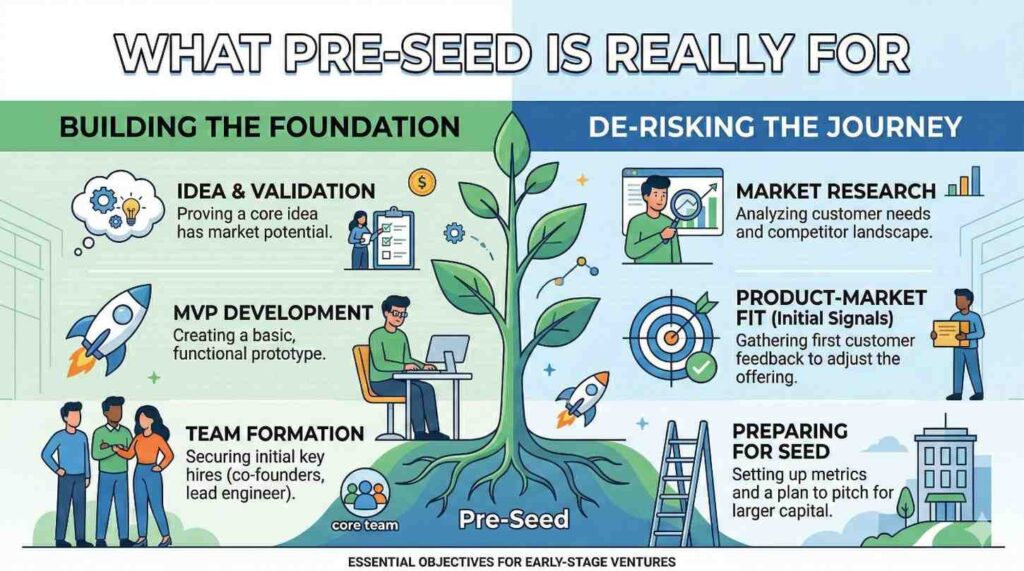
What Pre-Seed Is Really For
Pre-seed is not about scaling.
It is not about hiring a big team.
It is not about growth hacks or ad spend.
Pre-seed is about one thing: buying enough time to prove that your idea deserves to exist.
That is it.
At this stage, you are trying to answer a few hard questions.
Can we build it?
Does anyone care?
Can we protect it?
Will this become something defensible, or is it easy to copy?
If you are building in AI, robotics, or deep tech, this stage matters even more. Your tech might be complex. Your build time may be longer. Your edge may come from your algorithm, your system design, or your hardware innovation.
In those cases, your early capital must support more than just product development. It must support building a moat.
This is where many founders miss the mark.
They raise just enough to code a prototype. But they do not protect what they are building. They delay patents. They skip IP strategy. They assume they can handle it later.
Later often becomes too late.
At Tran.vc, we see this all the time. Smart technical founders build something impressive, but they do not turn it into a protected asset early. When they raise their seed round, investors ask, “What stops a bigger company from copying this?”
If you cannot answer that clearly, your leverage drops.
That is why how much you raise is tied to what you build during that time.
Pre-seed is not just about runway. It is about positioning.
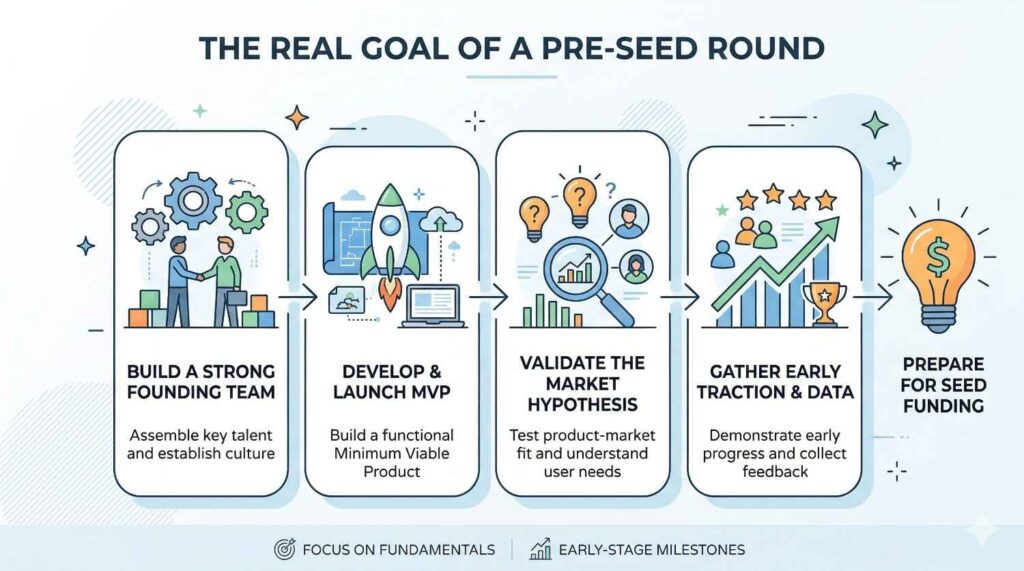
The Real Goal of a Pre-Seed Round
Before you decide on a number, you need to define your target.
Not your valuation.
Your milestone.
What must be true 12 to 18 months from now so that strong seed investors say yes?
If you do not know that, you are guessing.
Most strong seed investors want to see one of three things.
First, clear proof that people want your product. That means real usage, real pilots, or real revenue.
Second, strong technical proof. This is critical in AI and robotics. You must show that your core system works and has unique value.
Third, defensibility. This is the part founders often skip. Investors want to know that if this works, you own it. They want to see patents filed or at least a smart IP plan in motion.
Your pre-seed raise should fund the path to those outcomes.
Not more. Not less.
If you raise $300,000 but your milestone needs $800,000 to reach, you are setting yourself up for stress. You will either rush your progress or return to the market too early.
If you raise $3 million when you only need $800,000, you may give up too much equity. You also create high expectations before you have real proof.
Both paths are risky.
The right raise is the amount that gives you enough time and focus to hit a meaningful milestone, without burning your future.
What Most Founders Get Wrong
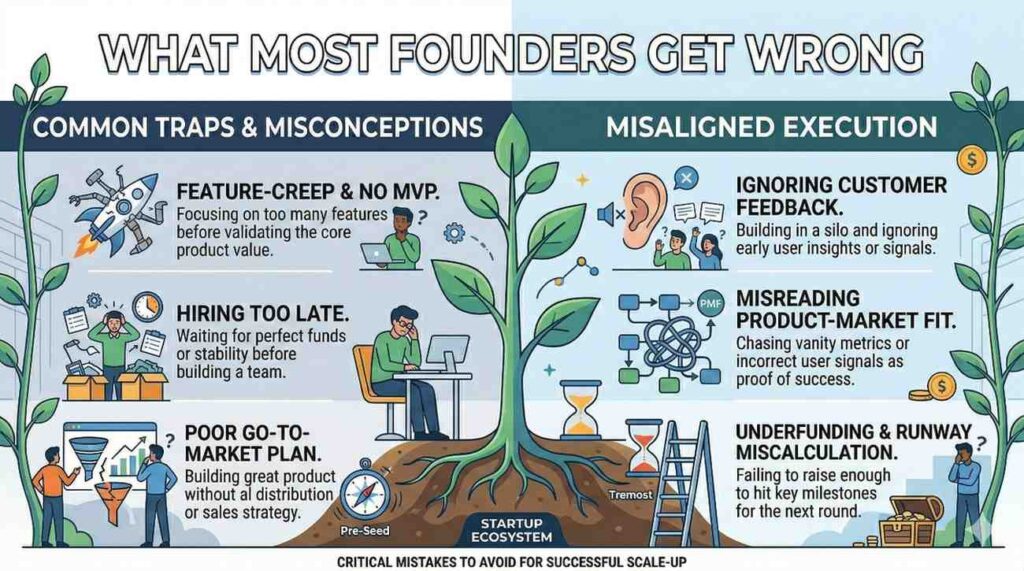
Many technical founders underestimate time.
They think they can ship in six months.
It takes twelve.
They think customers will convert fast.
They need longer sales cycles.
They assume patent filings are simple.
They are not.
When you misjudge time, you misjudge money.
Another mistake is copying what others raised.
You hear that another AI startup raised $2 million at pre-seed. So you assume that is the standard.
But their needs may be different. Their burn may be higher. Their team may be larger. Their goals may be more aggressive.
Your number must reflect your plan, not the market noise.
There is also ego in play.
Some founders feel that a bigger round signals strength. They believe that raising more makes them look serious.
Smart investors know better.
Raising too much at pre-seed can signal that you lack capital discipline. It can also make your next round harder. If your valuation jumps too high too early, your seed round must justify that jump.
If your traction does not match your valuation, you risk a flat round or a down round. That hurts morale. It hurts your cap table. It hurts your story.
This is why the pre-seed number matters so much.
It shapes your next chapter.
A Practical Way to Decide Your Raise
Start simple.
How many months do you need to hit your next clear milestone?
Be honest. Add buffer. Things always take longer.
Let’s say you need 15 months.
Now calculate your monthly burn.
Include founder salaries, even if small. Include engineering costs. Include cloud expenses. Include legal costs for IP filings. Include basic operations.
Do not ignore patent strategy. If you are building real technology, early filings matter. They take time and money. Planning for them at pre-seed can save you later.
Multiply your burn by your runway months.
That gives you a base number.
Now add a safety margin. Not to waste. To breathe.
That final number is closer to what you should raise.
For many deep tech founders, this may land between $500,000 and $1.5 million.
But the exact figure is not the point.
The point is alignment.
Your raise should match your milestone plan.
Not hype.
Not comparison.
Not pressure.
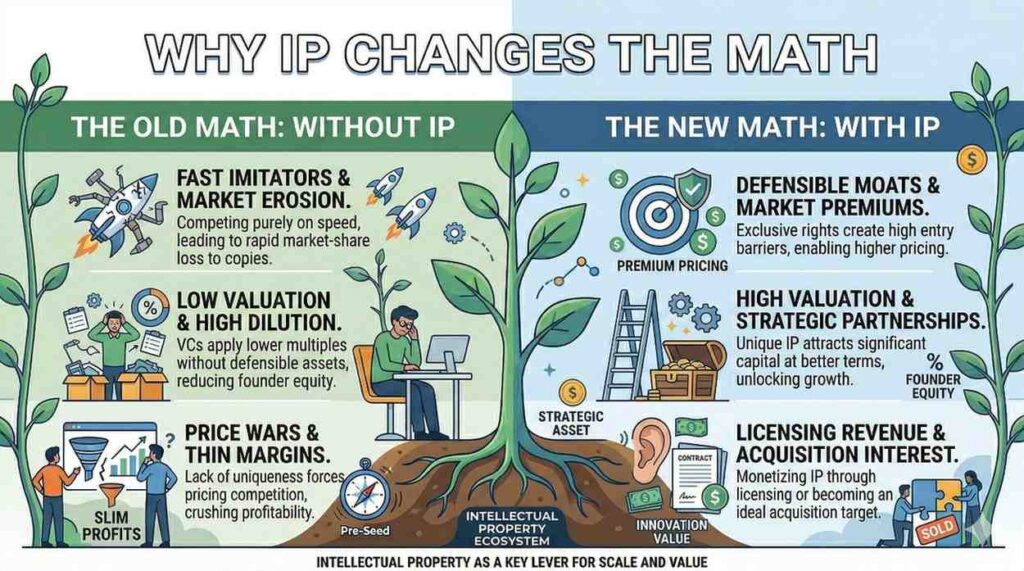
Why IP Changes the Math
Here is where things get interesting.
If you are building in AI, robotics, or deep tech, your intellectual property is often your core value.
But many founders treat IP like an afterthought.
They plan to file patents after raising a large seed round. They assume they can clean it up later.
This is risky.
First, early filings can secure priority. In fast-moving fields like AI, timing matters.
Second, early IP planning can shape your product roadmap. You may discover that small design choices can create stronger protection.
Third, investors feel more confident when they see that you take defensibility seriously from day one.
This is where firms like Tran.vc come in.
Instead of just writing a check and stepping back, Tran.vc invests up to $50,000 in in-kind patent and IP services at the pre-seed stage. That means real patent strategy. Real filings. Real guidance from experts who understand both startups and deep tech.
This changes your capital planning.
If part of your pre-seed need is IP work, and that is covered through in-kind services, you may not need to raise as much cash. You can protect your core technology without draining your runway.
That gives you leverage.
It lets you move forward with confidence.
If you are building something hard, something technical, something that could define a market, you should not leave protection to chance.
You can apply anytime at https://www.tran.vc/apply-now-form/ to see how this kind of support can shape your early round.
Ownership and Control: The Hidden Cost
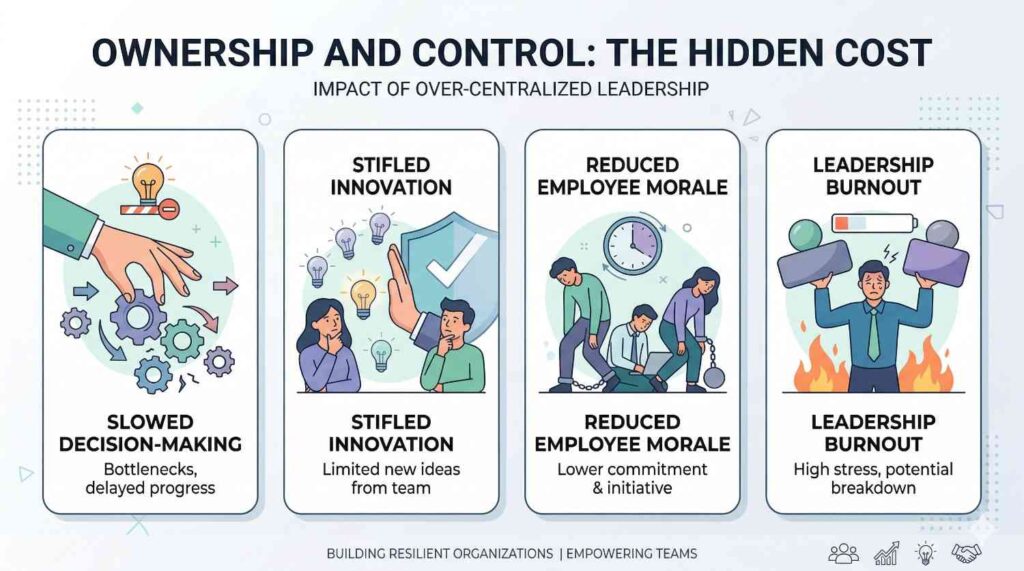
Every dollar you raise costs you ownership.
At pre-seed, your company is mostly vision. You do not yet have strong metrics to support a high valuation.
So the more you raise, the more you may give up.
If you give up too much too early, you reduce your flexibility later.
You may feel pressure from investors who want fast growth, even if your product needs careful development.
You may struggle to structure your seed round cleanly.
You may regret early terms.
This is why raising the right amount is not just a financial choice. It is a strategic choice.
Pre-seed should give you time to build strength, not weaken your position.
If you can reach your next milestone with a focused round, strong IP, and clear traction, your seed raise becomes easier and stronger.
You negotiate from power, not fear.
Understanding the Common Pre-Seed Ranges
Why Most Pre-Seed Rounds Fall Between $500K and $1.5M
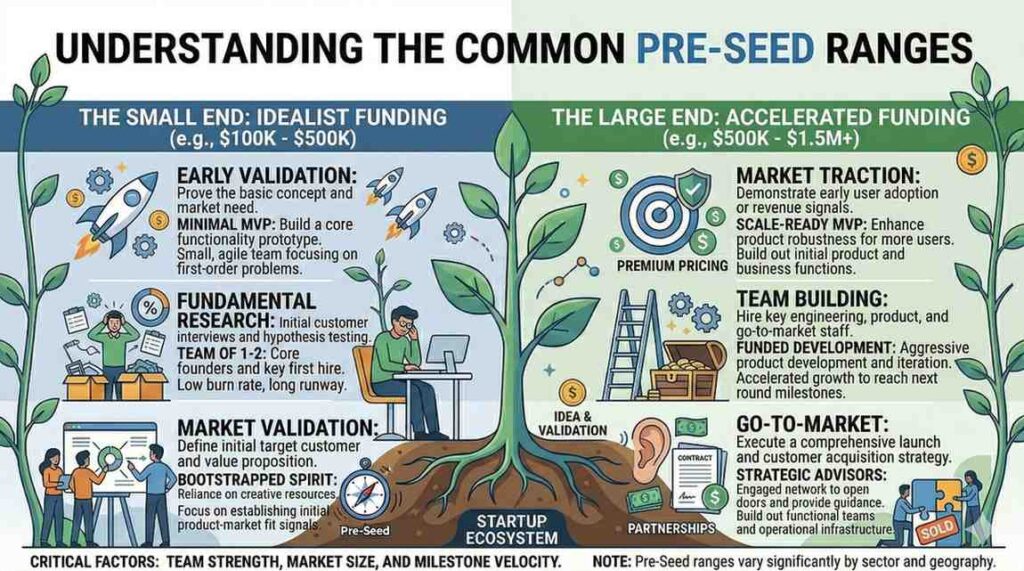
If you look across serious early-stage tech startups, you will notice a pattern. Most real pre-seed rounds land somewhere between $500,000 and $1.5 million. This is not random. It reflects what most technical teams need to reach meaningful proof.
For AI, robotics, and deep tech startups, the work is rarely light. You are not just building a landing page and testing ads. You are building systems, models, hardware components, or complex software that require time and focus.
A round below $500,000 can work if you already have a strong prototype or you are building very lean. But for most deep tech founders, that amount often feels tight once you factor in engineers, infrastructure, and legal work for IP.
On the other end, once you move above $1.5 million at pre-seed, expectations begin to rise quickly. Investors will expect faster traction, faster hiring, and faster proof. That pressure can push founders into scaling before the foundation is ready.
The goal is not to match what others are raising. The goal is to understand what gives you enough time to build real value without creating weight you cannot carry.
How Business Model Impacts Your Raise
Your ideal pre-seed number depends heavily on what you are building and who you are selling to. A robotics company selling into manufacturing will look very different from an AI SaaS tool targeting small businesses.
If your sales cycle is long, such as enterprise or industrial contracts, you must plan for slower revenue. That means you need enough runway to survive those long conversations. Raising too little in that case can trap you in constant fundraising mode.
If you are building infrastructure or core AI models, your research and iteration cycle may take longer. That requires deeper technical work before revenue even starts. Underestimating that time is one of the most common mistakes founders make.
If your model allows fast pilots or early paid trials, your runway may not need to be as long. But even then, you should budget carefully for product refinement and IP protection.
Each model carries its own rhythm. Your raise should match that rhythm, not someone else’s story.
Designing Your Milestone Before Choosing Your Number
Defining a Clear “Seed-Ready” Outcome
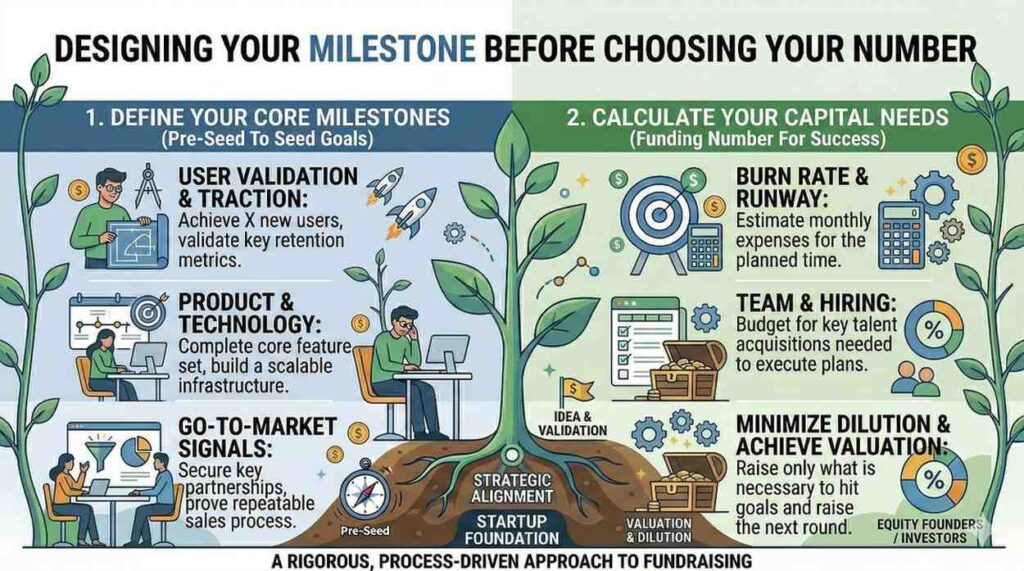
Before deciding how much to raise, you must define what “ready for seed” means for your company. Without that clarity, your number is just a guess.
For some founders, seed readiness means a working product with five paying customers. For others, it means a completed pilot with a large enterprise partner. In deep tech, it might mean validated performance data and at least one filed patent application protecting the core system.
You must be specific. Vague goals like “grow users” or “improve traction” are not enough. Investors at seed will look for proof that risk has been reduced in a meaningful way.
When you define your seed milestone clearly, your pre-seed raise becomes much easier to calculate. You are no longer raising money to “build.” You are raising money to achieve a measurable shift in your company’s strength.
That shift is what unlocks better terms later.
Mapping Time to Capital
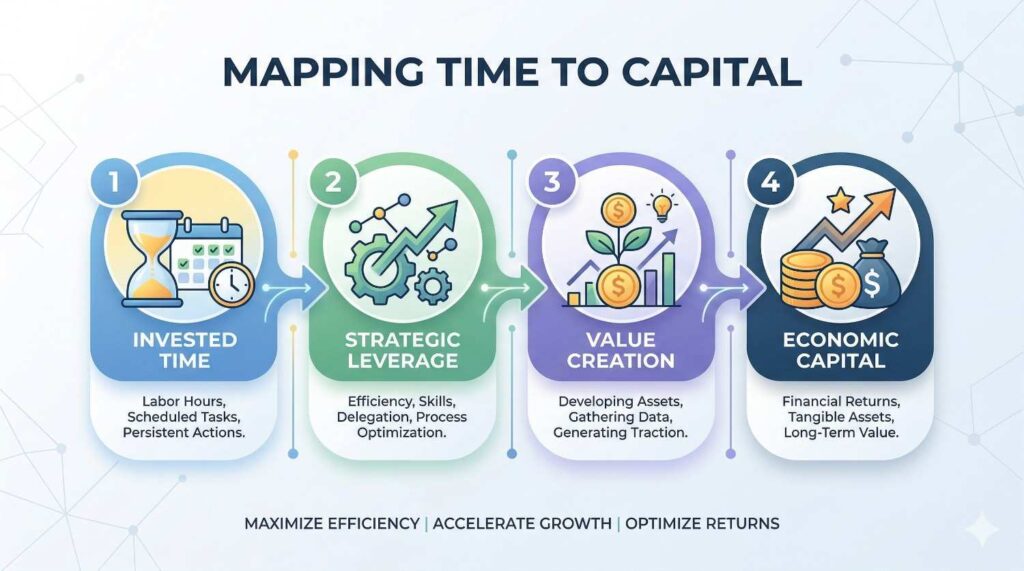
Once your milestone is clear, the next step is to map time realistically. If you believe it will take twelve months, plan for fifteen. Delays are normal in technical work.
Now examine your true monthly cost. Include modest founder salaries. Even if you are paying yourself very little, account for it. Burnout is expensive, even if it does not show up on a spreadsheet.
Add engineering costs, cloud usage, hardware components, legal support, patent filings, and basic operations. Many founders forget to include IP expenses in their early planning. That is a mistake that often leads to rushed or delayed filings.
Multiply your monthly burn by the number of months required. Then add a buffer so you are not operating in constant fear. This total is your practical pre-seed target.
When you plan this way, your raise becomes strategic instead of emotional.
Valuation and the Trap of Raising Too Much
The Hidden Risk of High Early Valuations
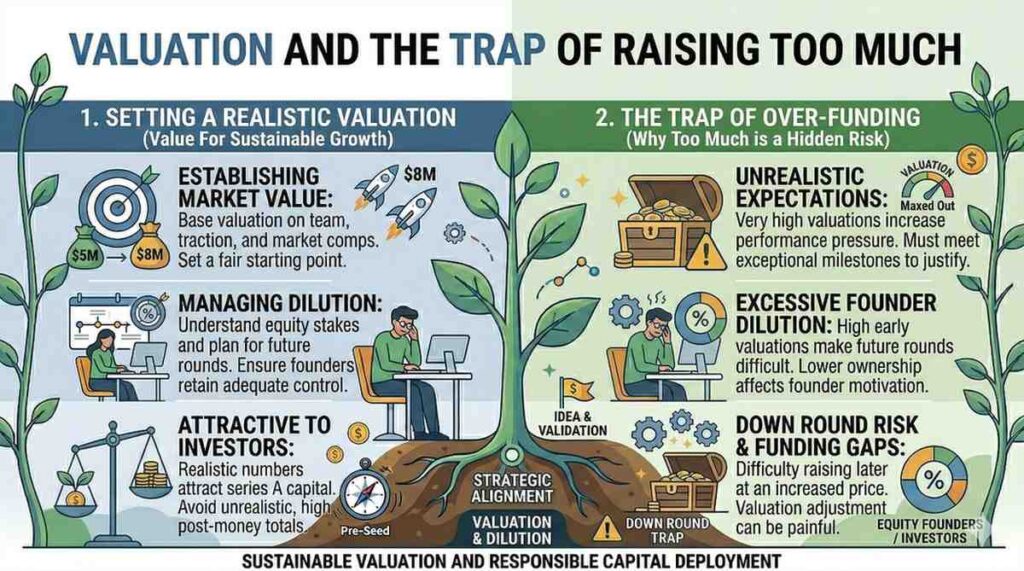
Many founders believe a high valuation is always good. It feels like validation. It feels like success. But at pre-seed, a high valuation can quietly create future problems.
If you raise a large round at an aggressive valuation before you have strong traction, your next round must justify a meaningful increase. If you cannot show that growth clearly, investors may hesitate.
A flat round or down round can damage your story. It affects morale. It complicates your cap table. It reduces confidence from future investors.
Pre-seed should give you momentum, not pressure. A fair valuation tied to real progress is often far healthier than a flashy number that sets unrealistic expectations.
Strong founders think two rounds ahead. They ask how today’s raise will shape tomorrow’s options.
Ownership Is a Strategic Asset
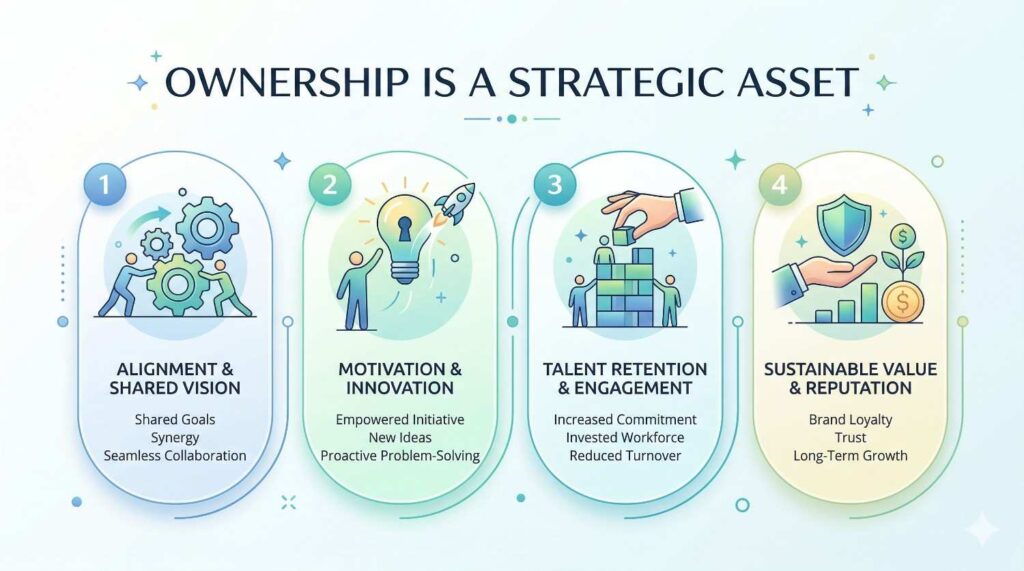
At pre-seed, you still own most of your company. That ownership is powerful. It gives you flexibility in decision-making. It allows you to move with conviction.
If you give away too much equity too early, you reduce your control over future outcomes. You may feel pushed to chase growth before your product is ready. You may feel forced into strategies that do not align with your long-term vision.
Raising the right amount helps you protect not just your IP, but your authority as a founder.
This is why Tran.vc focuses on supporting technical founders without forcing them into oversized early rounds. By investing up to $50,000 in in-kind patent and IP services, the firm helps you build real defensibility without requiring excessive dilution.
That support can reduce the cash you need to raise while strengthening your company’s foundation. It shifts your position from fragile to confident.
If you are building something technical and defensible, you can apply anytime at https://www.tran.vc/apply-now-form/ to explore how this structure can support your pre-seed strategy.
The Role of IP in Determining How Much to Raise
Why Defensibility Should Be Budgeted Early
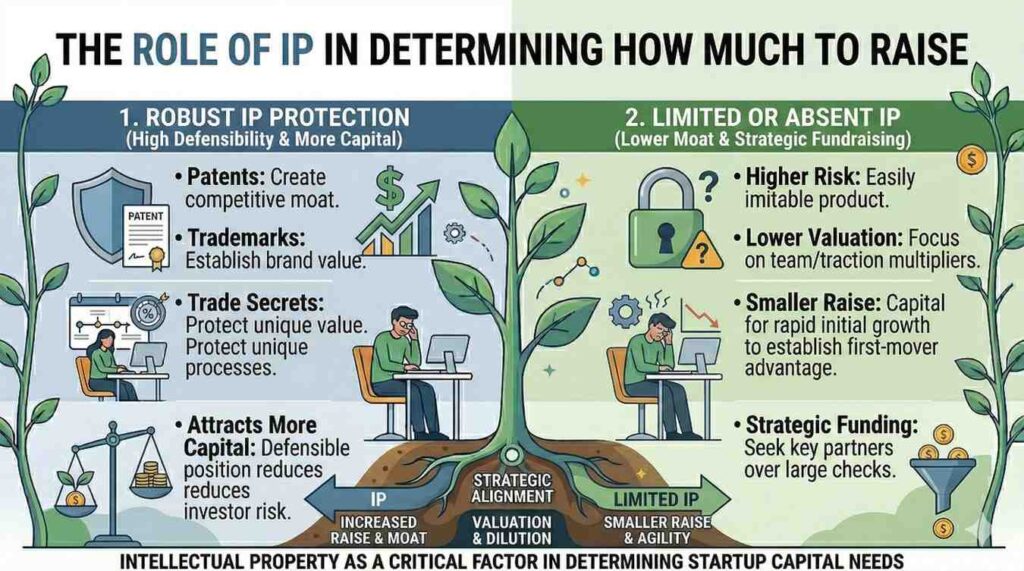
In AI and robotics, your advantage often lies in what others cannot easily copy. That advantage might be in your model architecture, your training method, your hardware design, or your system integration.
If you delay protecting these elements, you risk losing priority. You also risk entering seed conversations without a clear moat.
Including IP planning in your pre-seed budget changes how you calculate your raise. It forces you to think about long-term value, not just short-term product milestones.
Early patent filings do not guarantee success. But they show seriousness. They show that you understand the importance of ownership in a competitive market.
Investors notice that discipline.
How In-Kind IP Support Changes the Equation
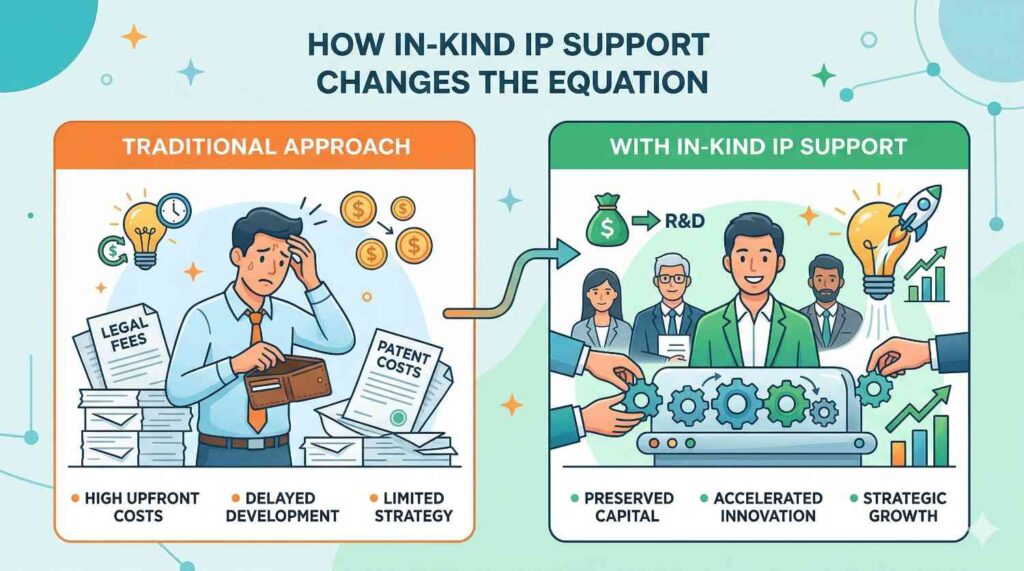
When part of your IP cost is covered through in-kind support, your capital plan becomes more efficient. Instead of using precious cash on early filings, you can allocate funds to engineering and validation while still protecting your core invention.
This is one of the unique advantages of working with a partner like Tran.vc. Rather than offering only capital, the firm provides hands-on patent strategy and filings from experienced professionals who understand both startups and deep tech.
That early structure can influence how much you truly need to raise in cash. It may allow you to stay lean while building a stronger foundation than competitors who ignore IP.
The result is a pre-seed round that feels lighter but accomplishes more.
This balance between capital, control, and protection is what defines a smart early raise.
If you are building in AI, robotics, or deep tech, you can apply anytime here: